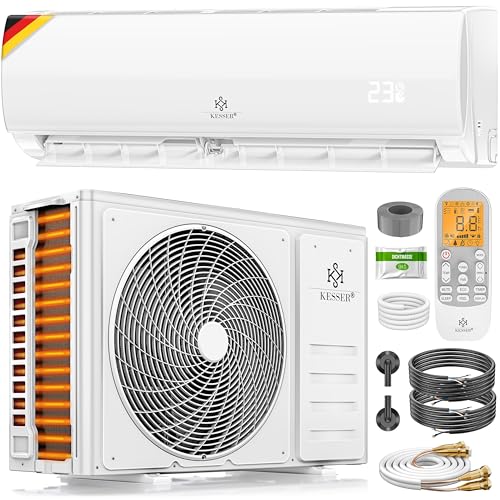
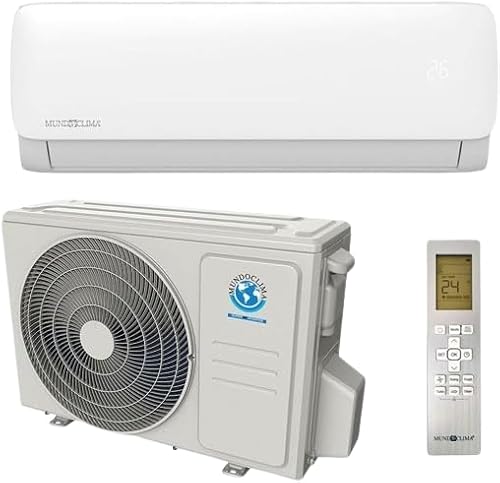
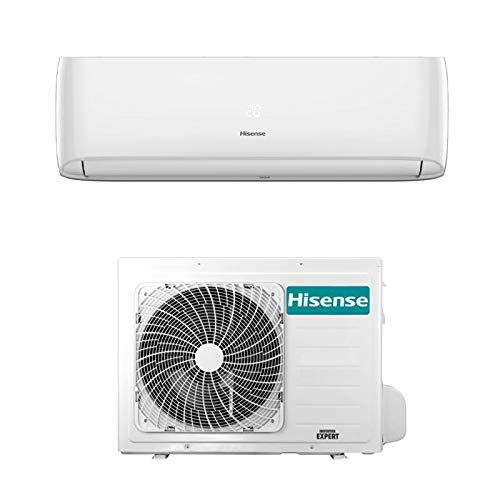
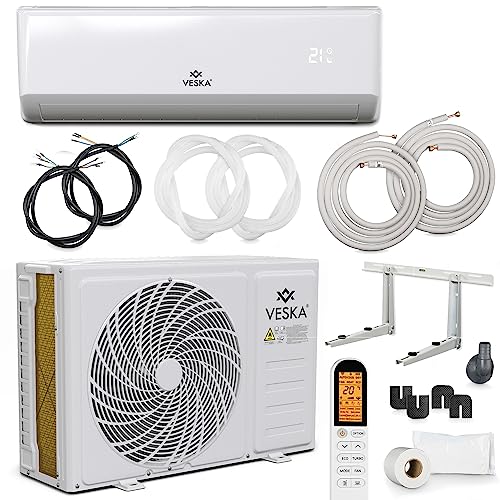
Which brands make the best small air conditioners?
Among air conditioners rated for rooms up to 30 m², the brands with the highest average scores are as follows.
- Toshiba (Average overall score: 8.1)
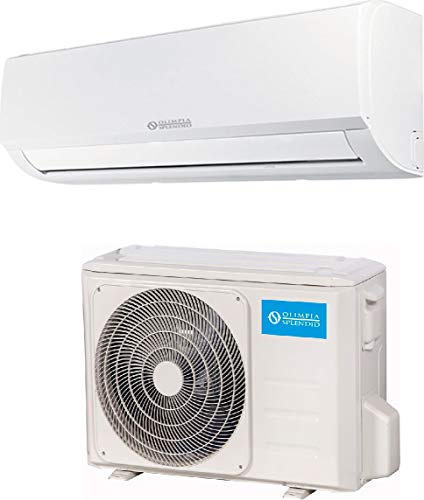
- Olimpia Splendid (Average overall score: 7.5)
- Daikin (Average overall score: 7.5)
The chart below ranks brands by average overall score among air conditioners rated for rooms up to 30 m².
[horizontal-chart-06400541288375439367164541802705897029383983586701]
What physical dimensions are considered small for an air conditioner?
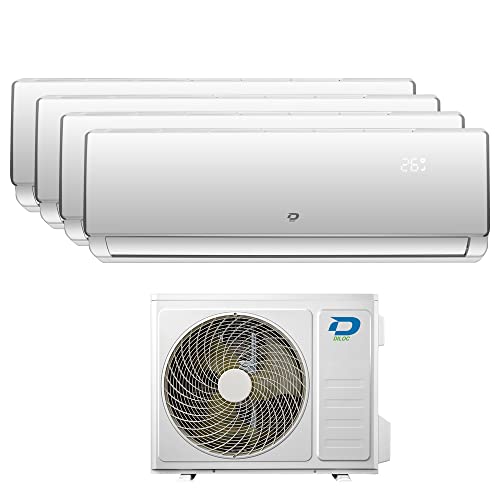
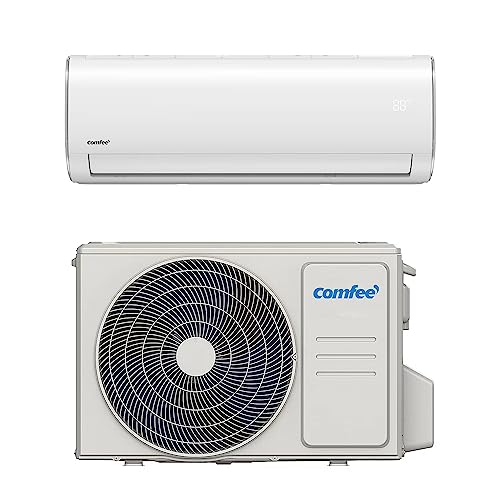
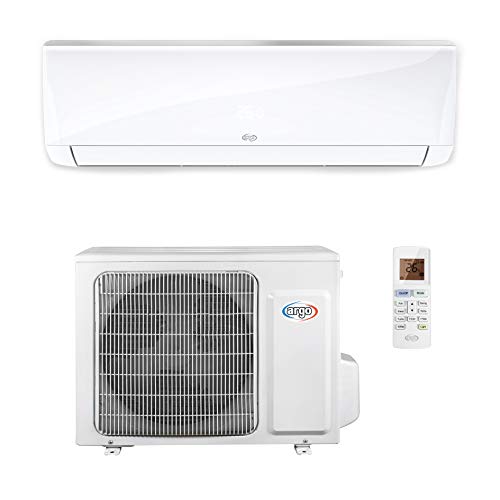
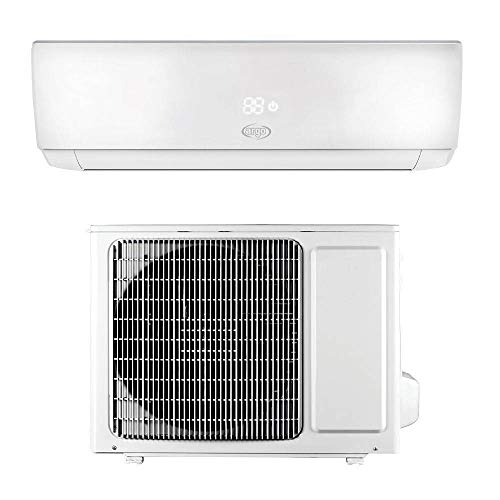
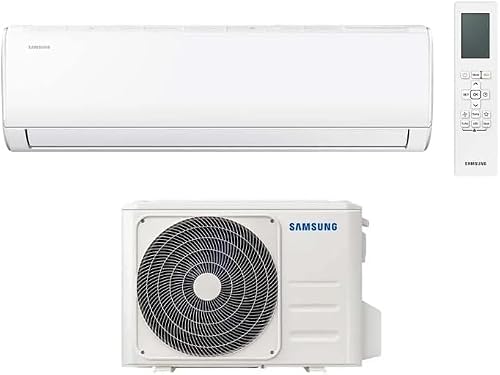
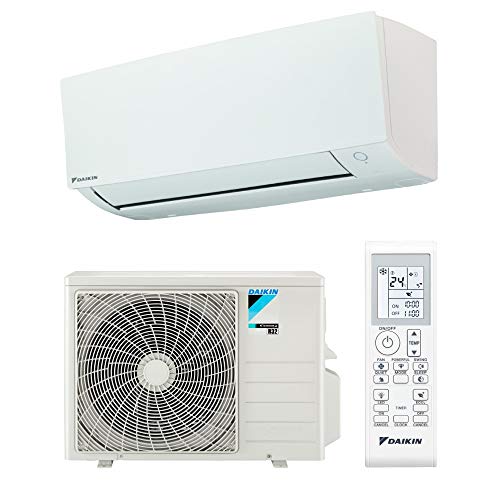
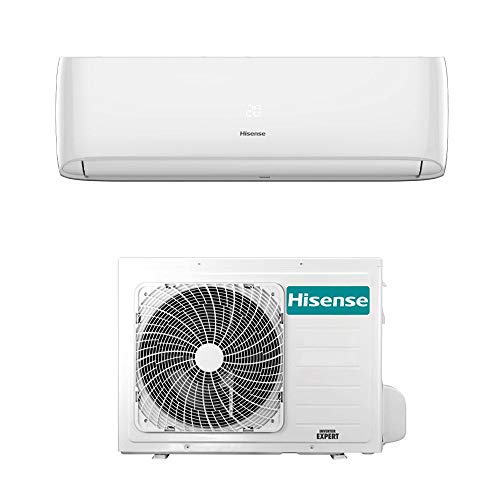
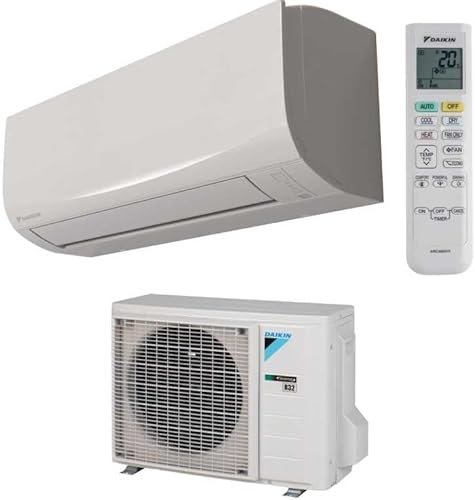
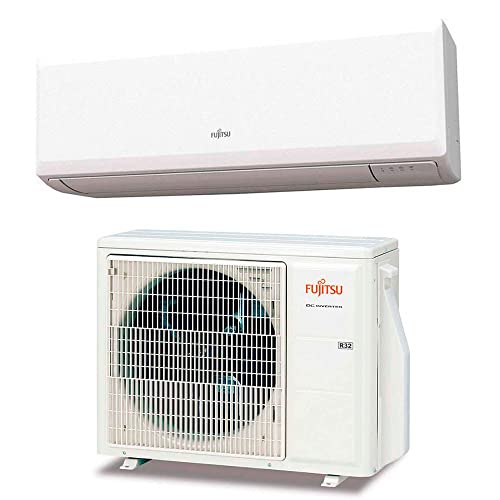
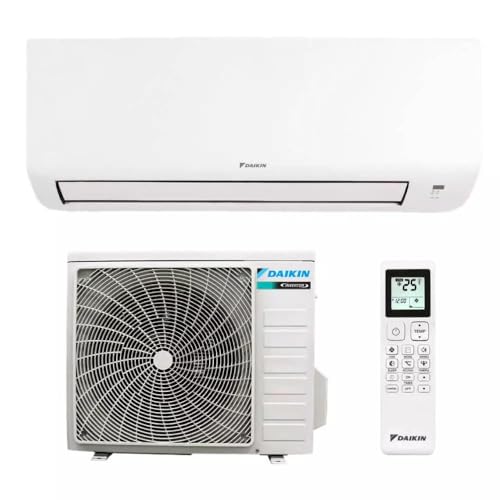
A small wall-mounted air conditioner usually has an indoor unit around 75–90 cm wide and roughly 20–30 cm deep, although the exact dimensions vary by capacity and design.
Measure the wall, side clearances, ceiling distance, airflow path, and space for pipework before ordering. A slim indoor unit is not enough if the outdoor unit, drain route, or service access cannot fit the property.
Portable units are a different product type with a floor footprint and exhaust hose. Do not use wall-mounted split dimensions to judge portability, and do not assume that a physically small cabinet can cool a room with high solar gain.
What room size is suitable for a small air conditioner?
A small air conditioner is usually suitable for a room of about 15–30 m² when insulation, glazing, ceiling height, and solar exposure are ordinary. Bedrooms, home offices, and smaller living rooms often fit this range.
A top-floor room with large windows, open doors, or kitchen heat may need more capacity even at the same floor area. Use the recommended area as a starting reference and ask the installer to consider the heat load; oversizing can cycle, while undersizing can run loudly without reaching the target.
What cooling capacity do small air conditioners have?
Small air conditioners commonly provide about 2.0–3.5 kW of cooling, with the suitable output depending on the room's heat load rather than cabinet size alone.
Around 2.0–2.5 kW can suit a well-insulated bedroom or office, while roughly 3.0–3.5 kW may be needed for a sunny living room or a space near the upper end of the 30 m² range. These are practical starting bands, not universal rules.
Compare rated cooling capacity, indoor airflow, and part-load control in the same units. A larger label does not guarantee faster comfort if the installation has poor airflow or the room loses heat through glazing.
Are small air conditioners less efficient or noisier?
Small air conditioners are not automatically less efficient or noisier; performance depends on compressor control, fan design, capacity match, and operating mode. A correctly sized inverter can run quietly and efficiently at low output.
An oversized system may cycle, while an undersized one may stay at high fan speed. Compare SEER, SCOP, low-mode sound, maximum sound, and minimum output, then consider that a small room makes any indoor noise more noticeable because the bed or desk is close to the unit.
What makes a small air conditioner easy to move and store?
A wall-mounted split air conditioner is not designed to be moved or stored after installation; the indoor and outdoor units are connected by refrigerant pipework, drainage, and wiring.
For genuine portability, look for a floor-standing portable unit with manageable weight, lockable casters, a short setup path, and a properly sealed exhaust hose. Portable systems usually trade lower installation effort for more indoor noise and less efficient heat rejection.
If the system will stay in one room, prioritise compact indoor dimensions, accessible filters, service clearance, and a neat drain route instead of portability. Moving a fixed split system requires qualified recovery and reinstallation work.
How much do small air conditioners cost?
Small air conditioners cost about £300-£900 for equipment, with professional installation priced separately. Entry split systems near £300-£400 cover basic cooling and heating, while quieter, more efficient, or connected units commonly sit around £400-£900.
Portable products have a different cost and installation profile, but their exhaust, noise, and running-cost trade-offs should be compared with a fixed split system. Add pipework, brackets, electrical work, drainage, and commissioning when budgeting for a wall-mounted unit.
The chart below shows the price distribution of air conditioners rated for rooms up to 30 m².
[vertical-chart-06477442599844480131138875780509194647260065731247]
What should you check before buying a small air conditioner?
Before buying a small air conditioner, check the following factors:
- Room heat load: Use area as a starting point, then include glazing, insulation, ceiling height, sunlight, and appliance heat. A 15–30 m² room can need different capacity depending on these conditions.
- Cooling capacity: Compare roughly 2.0–3.5 kW options against the calculated load, not just the lowest price. Oversizing can cause cycling, while undersizing can keep the fan loud during hot weather.
- Indoor dimensions: Measure width, depth, ceiling clearance, airflow direction, and service access. Confirm that the outdoor unit, pipe route, and condensate drain also fit the property.
- Sound level: For a bedroom or office, look for low-mode sound around 20–25 dB and inspect the maximum value. A smaller cabinet is not necessarily quieter.
- Efficiency and heating: Compare SEER and SCOP, and check whether heating output suits the shoulder season or winter use. The most efficient cooling label may not be the best heating choice.
- Fixed or portable: Choose a fixed split for quieter efficient room comfort and a portable design only when installation must be temporary. Portable units need an exhaust route and usually make more indoor noise.
- Installation and maintenance: Confirm drainage, electrical supply, outdoor clearance, filter access, commissioning, warranty, and local service. A compact unit still needs enough space for safe maintenance.