Scored using VR headsets Methodology v3.0
VR headsets Methodology v3.0
Mathematical & Unbiased Scoring
Products in this category are scored under Frontum VR headsets Methodology v3.0: the technical score from the specifications is the base, and independent expert and video reviews (up to ±0.5 points), owner opinions (up to ±0.3) and best-of lists (up to +0.3) move it up or down.
Explore VR headsets Methodology v3.0

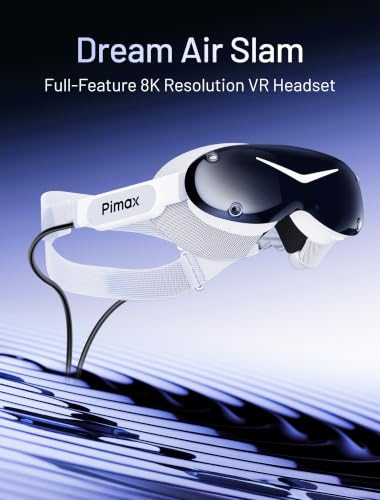
Pimax Dream Air review: 90 specs compared

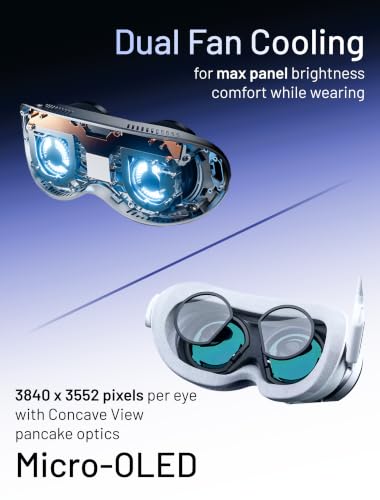
Avg. price:~£2,480Weight:170 gResolution:3840x3552Refresh rate:90 HzDisplay type:Micro-OLEDDevice type:PC VR

Pimax Dream Air Review: Compare 90 technical specifications, 9 expert and video reviews and 11 best-of lists to see how this product ranks in the VR headsets category and whether it is worth buying.
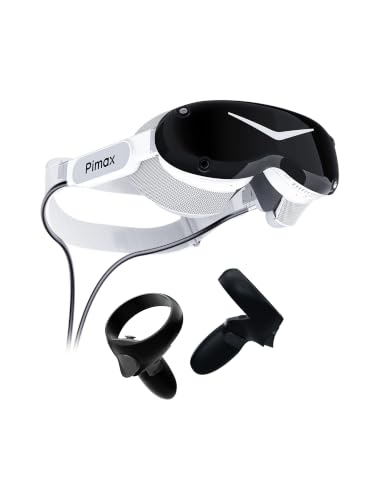
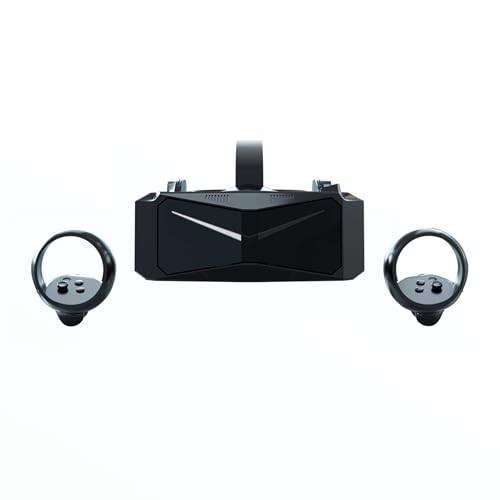
Pimax Dream Air
8.0/10

Overall score

Score
8.0/ 10
✕
What it is
Our main score for this model, 1–10. It combines specs, best-of lists, expert reviews and owners.
How we count it
Parts: Technical score 35%, List score 30%, Reviews score 25%, Sentiment score 10%
Marks: Each part gets a mark out of 10. For reviews, lists and owners, a typical model in this category gets about 8 and the best one gets 10.
No data yet: A part with no data shows "?". It counts as the mark of a weaker model in this category (4 in 5 models with data score higher). This way, models with reviews, lists and owners usually come out ahead.
Score distribution
▼
<55-66-77-88-99-10
Score components

35%

7.9

Technical score

30%

8.5

List score

25%

7.9

Reviews score

10%

7.6

Sentiment score

▲Better than 85% of VR headsets
5.9

Value for money

Value for money
5.9/ 10
✕
What it is
An indicator that combines the VR headset's overall rating with its cost.
When it matters
When you are looking for a VR headset with a good balance between quality and price.
Score distribution
▼
<55-66-77-88-99-10
Score components

70%

8.0

Overall score

30%

1.0

Price

▼Worse than 95%
7.9

Technical score

Technical score
7.9/ 10
✕
What it is
How good the specs are compared with the other models in this category, 1–10.
How we count it
Areas: We rate the specs in each area against the other models in this category.
Weighting: The areas that matter most to buyers count more. The shares are shown under Score components.
Share: The technical score is 35% of the overall score.
Score distribution
▼
<55-66-77-88-99-10
Score components

58%

8.3

Display

22%

7.4

Tracking

10%

8.7

Controls & Audio

4%

4.0

Hardware

3%

6.1

Connectivity

3%

8.3

Design & Power

★Better than 92%
7.9

Reviews score

Reviews score
7.9/ 10
✕
What it is
Average grade from independent test sites, magazines and video reviewers, 1–10.
How we count it
Grades: Each review's own score is converted to 1–10; without one, we grade the review ourselves. Big test sites count more, short reviews half as much as full tests. A video review counts half.
Score: The average grade is 80% of the review mark; the number of reviews is the other 20% (1 review = 5, the typical number in this category = 8, the most-reviewed model = 10).
Enough data: With few reviews, the average grade is pulled toward the typical grade of this category. No reviews yet: 7.2 for now.
Share: Reviews count 25% of the overall score.
Score distribution
▼
<55-66-77-88-99-10

80%

8.2

Average grade

20%

6.8

Popularity

Grades by review (9)
3 reviews: 0 with a printed score, 3 estimated from the review. 6 video reviews, each counting half as much as a written test. Reviews count 25% of the overall score.
User ratings collected online are not part of this score.
▲Better than 60%
8.5

List score

List score
8.5/ 10
✕
What it is
How often independent test sites, magazines and video reviewers put this model in their best-of lists for this category.
How we count it
Points: The model in the most lists of this category gets 10; the others get 8 to 10 in proportion. In no list yet: 7.5. Lists count 30% of the overall score.
Enough data: Every list counts, even a single one. With fewer than 5 best-of lists in the category, this part is left out.
Lists with this model (11)
List score: in 11 of 63 lists (17%)
▲Better than 76%
  • pimax-dream-air
  • pimax-dream-air
  • pimax-dream-air
  • pimax-dream-air
  • pimax-dream-air
  • pimax-dream-air
  • pimax-dream-air
  • pimax-dream-air
  • pimax-dream-air
pimax-dream-air
pimax-dream-air
pimax-dream-air
pimax-dream-air
pimax-dream-air
pimax-dream-air
pimax-dream-air
pimax-dream-air
pimax-dream-air
Where to buy
*As an Amazon Associate, we earn from qualifying purchases.
Best rankings
Available: ranking among products currently available (including other versions of this product).All: ranking among all products in the database.

What reviewers say about the Pimax Dream Air

Based on 3 · 6

Reviewers praise the excellent image quality and light weight, but note it needs a powerful PC and tracking opinions are split.
Praised
Mixed views
Criticised
Pick a topic to see who said what

What owners say about the Pimax Dream Air

Based on 158 owners sharing their experience in online comments

42%positive17%mixed41%negative

Owners praise the stunning OLED image and immersion, while uncomfortable fit, unreliable tracking, and software problems make the experience uneven.

What owners dislike

  • The default face gasket and strap are uncomfortable, causing forehead pressure and pain after about half an hour, and the front of the headset gets hot.35
  • SLAM and Lighthouse controllers can drift, float or jitter when held still, and weapons may flip or fail to aim in shooters.23
  • Owners report setup problems, including the Pimax Play software crashing, SteamVR and game compatibility issues, and runtime fixes needed for tracking.21
  • The default face interface leaves a narrow field of view, and owners say the view is clipped at the edges until they fit a Studioform gasket.18
  • Several owners received units with dead pixels, faulty lenses, black screens or connection faults, and some had to request replacements.16
  • Owners report barrel distortion, warping near the lens centre and edges, brown tint, and colour fringing, with glare around bright objects.14
  • Owners say Pimax support is slow, shipping and refund promises went unmet, and replacement parts such as the facial interface were delayed for months.13
  • The rear cable and splitter box sit behind the neck, catch on the chair or head when turning, and get hot, which makes seated use awkward.12
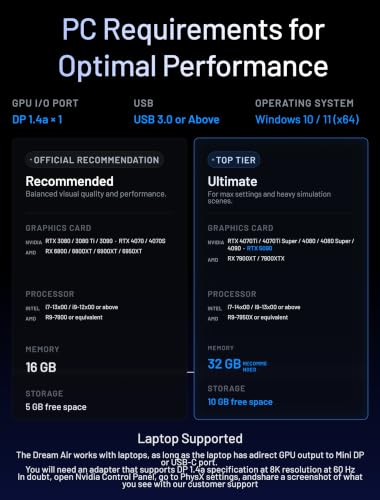
  • The headset costs about two thousand euros or more and needs a powerful GPU, such as an RTX 5090, to run sims at high resolution and frame rate.12
  • Owners say persistence blur and double images appear during head movement, and smart smoothing causes further artefacts.12

Points mentioned by at least 3 owners, most mentioned first.

Loading...
Loading category ranking...

VR headsets model ranking

Ranked #9 of 63 models in VR headsets (Overall score)

Technical Specifications of VR headset Pimax Dream Air

Technical score
Technical score
7.9/ 10
✕
What it is
How good the specs are compared with the other models in this category, 1–10.
How we count it
Areas: We rate the specs in each area against the other models in this category.
Weighting: The areas that matter most to buyers count more. The shares are shown under Score components.
Share: The technical score is 35% of the overall score.
Score distribution
▼
<55-66-77-88-99-10
Score components:

58%

8.3

Display

22%

7.4

Tracking

10%

8.7

Controls & Audio

4%

4.0

Hardware

3%

6.1

Connectivity

3%

8.3

Design & Power

7.9
Reviews score
7.9
List score
8.5
Value for money
Value for money
5.9/ 10
✕
What it is
An indicator that combines the VR headset's overall rating with its cost.
When it matters
When you are looking for a VR headset with a good balance between quality and price.
Score distribution
▼
<55-66-77-88-99-10
Score components:

70%

8.0

Overall score

30%

1.0

Price

5.9
Resolution
3840x3552
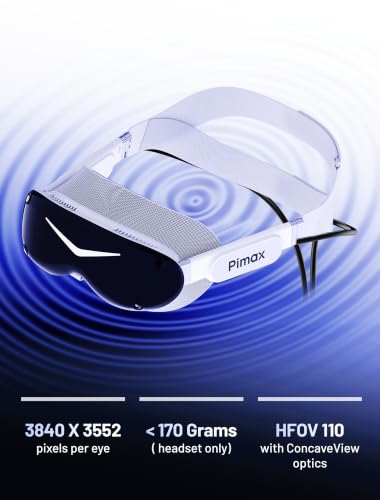
This VR headset has a screen resolution of 3840x3552 which is higher than that of 97.8% of VR headsets.
Screen size
1.35 inches
Refresh rate
90 Hz
This VR headset supports a refresh rate of 90 Hz which is higher than in 17.8% of VR headsets and equal to that in 51.1% of VR headsets.
Visible FoV (horizontal)
110 °
This VR headset offers a horizontal FoV of 110 ° which is wider than that of 62.1% of VR headsets and equal to that of 22.4% of VR headsets.
Visible FoV (vertical)
?
Show more
What reviewers say
Tracking type
inside-out
360° head tracking
yes
This VR headset supports full 360° head tracking. 1.6% of VR headsets support this tracking mode.
N. of tracking sensors
4
N. of cameras
4
This VR headset has 4 cameras which is more than in 63.5% of VR headsets and equal to that in 15.9% of VR headsets.
Tracking frequency
?
Show more
What reviewers say
Operating system
Windows
OpenXR support
yes
This VR headset supports OpenXR. 43.8% of VR headsets support this cross-platform VR standard.
Wireless PC streaming
no
This VR headset does not support wireless PC streaming. 31.3% of VR headsets support cable-free PC VR streaming.
Wi-Fi connectivity
no
This VR headset does not have Wi-Fi. 31.3% of VR headsets have Wi-Fi connectivity.
Wi-Fi version
N/A
Show more
Touch controllers
yes
This VR headset includes touch controllers. 30.4% of VR headsets come with dedicated hand controllers.
Game controller included
yes
This VR headset includes a game controller. 41.3% of VR headsets ship with controllers in the box.
Spatial audio
yes
This VR headset supports spatial audio. 16.7% of VR headsets support spatial audio.
N. of speakers
2
This VR headset has 2 speakers which is more than in 43.3% of VR headsets and equal to that in 56.7% of VR headsets.
N. of microphones
2
This VR headset includes 2 microphones, which is more than 52.5% of VR headsets and equal to 42.4% of VR headsets.
Show more
Device type
PC VR
Chipset
N/A
CPU clock speed
N/A
GPU model
N/A
RAM capacity
N/A
Show more
What reviewers say
Battery capacity
N/A
Battery life
N/A
Charging time
N/A
Weight
170 g
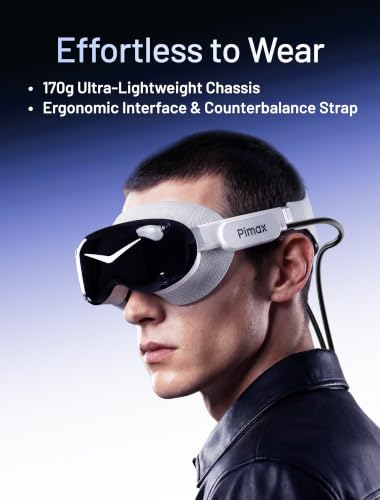
This VR headset weighs 170 g which is lighter than 96.6% of VR headsets.
Headstrap type
?
Show more
What reviewers say

Pimax Dream Air vs the average VR headset

246810TotalDisplayTrackingConnectivityControls & AudioHardwareDesign & Power
  • Better lens type
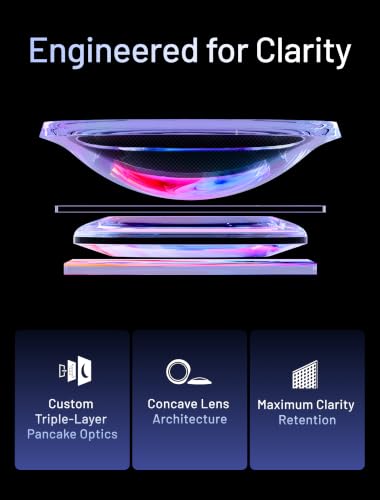
    This VR headset uses pancake lenses, while the average VR headset uses fresnel lenses.
    pancake vs fresnel
  • Eye and gaze tracking
    This VR headset supports eye and gaze tracking, the average VR headset does not. 15.4% of VR headsets include this tracking feature.
  • Higher screen resolution
    This VR headset has a higher screen resolution than the average VR headset (3840x3552 vs 2000x2040). The average VR headset has a screen resolution of 2000x2040.
    3840x3552 vs 2000x2040
  • See-through mode
    This VR headset supports see-through mode, the average VR headset does not. 40.3% of VR headsets offer passthrough viewing.
  • Supports hand tracking
    This VR headset supports hand tracking, the average VR headset does not. 21.5% of VR headsets support hand tracking.
  • 9 ° wider horizontal FoV
    This VR headset has a higher horizontal visible FoV than the average VR headset (110 ° vs 101 °). The average VR headset offers a horizontal visible FoV of 101 °.
    110 ° vs 101 °
  • Wider IPD adjustment range
    This VR headset has a higher IPD adjustment range than the average VR headset (58–72 mm vs 60–68 mm). The average VR headset supports an IPD adjustment range of 60–68 mm.
    58–72 mm vs 60–68 mm
  • 7 years newer release date
    This VR headset is newer than the average VR headset (2026 vs 2019). The average VR headset was released in 2019.
    2026 vs 2019
  • 14.9% higher list score
    List score
    8.5/ 10
    ✕
    What it is
    How often independent test sites, magazines and video reviewers put this model in their best-of lists for this category.
    How we count it
    Points: The model in the most lists of this category gets 10; the others get 8 to 10 in proportion. In no list yet: 7.5. Lists count 30% of the overall score.
    Enough data: Every list counts, even a single one. With fewer than 5 best-of lists in the category, this part is left out.
    Lists with this model (11)
    List score: in 11 of 63 lists (17%)
    8.5 vs 7.4
  • 9.7% higher review score
    Reviews score
    7.9/ 10
    ✕
    What it is
    Average grade from independent test sites, magazines and video reviewers, 1–10.
    How we count it
    Grades: Each review's own score is converted to 1–10; without one, we grade the review ourselves. Big test sites count more, short reviews half as much as full tests. A video review counts half.
    Score: The average grade is 80% of the review mark; the number of reviews is the other 20% (1 review = 5, the typical number in this category = 8, the most-reviewed model = 10).
    Enough data: With few reviews, the average grade is pulled toward the typical grade of this category. No reviews yet: 7.2 for now.
    Share: Reviews count 25% of the overall score.
    Score distribution
    ▼
    <55-66-77-88-99-10

    80%

    8.2

    Average grade

    20%

    6.8

    Popularity

    Grades by review (9)
    3 reviews: 0 with a printed score, 3 estimated from the review. 6 video reviews, each counting half as much as a written test. Reviews count 25% of the overall score.
    User ratings collected online are not part of this score.
    7.9 vs 7.2
  • Better lens type
    This VR headset uses pancake lenses, while the average VR headset uses fresnel lenses.
    pancake vs fresnel
  • Higher screen resolution
    This VR headset has a higher screen resolution than the average VR headset (3840x3552 vs 2000x2040). The average VR headset has a screen resolution of 2000x2040.
    3840x3552 vs 2000x2040
  • Wider IPD adjustment range
    This VR headset has a higher IPD adjustment range than the average VR headset (58–72 mm vs 60–68 mm). The average VR headset supports an IPD adjustment range of 60–68 mm.
    58–72 mm vs 60–68 mm
  • 9 ° wider horizontal FoV
    This VR headset has a higher horizontal visible FoV than the average VR headset (110 ° vs 101 °). The average VR headset offers a horizontal visible FoV of 101 °.
    110 ° vs 101 °
  • 7 years newer release date
    This VR headset is newer than the average VR headset (2026 vs 2019). The average VR headset was released in 2019.
    2026 vs 2019
  • Eye and gaze tracking
    This VR headset supports eye and gaze tracking, the average VR headset does not. 15.4% of VR headsets include this tracking feature.
  • See-through mode
    This VR headset supports see-through mode, the average VR headset does not. 40.3% of VR headsets offer passthrough viewing.
  • Supports hand tracking
    This VR headset supports hand tracking, the average VR headset does not. 21.5% of VR headsets support hand tracking.
  • 2 more cameras
    This VR headset has more cameras than the average VR headset (4 vs 2). The average VR headset has 2 cameras.
    4 vs 2
  • 1 more microphones
    This VR headset includes more microphones than the average VR headset (2 vs 1). The average VR headset includes 1 microphones.
    2 vs 1
  • 69.6% lighter
    This VR headset is lighter than the average VR headset (170 g vs 560 g). The average VR headset weighs 560 g.
    170 g vs 560 g
  • Not compatible with Android
    This VR headset is not compatible with Android, the average VR headset is. 54% of VR headsets support Android pairing or companion apps.
  • Not compatible with Android
    This VR headset is not compatible with Android, the average VR headset is. 54% of VR headsets support Android pairing or companion apps.

Video reviews

Hands-on testing, unboxing, and real-world video evaluations

9.0
MartydudeVR
≈ estimated
18/09/2026
Long-term review · 3 months of daily use
Verdict
Pimax Dream Air is recommended for its size, tracking and visuals, with comfort and a small field of view as minor trade-offs.
8.0
GizmoSlipTech
≈ estimated
08/09/2026
Long-term test · tracking, comfort and sim use
Verdict
Pimax Dream Air has excellent visuals and comfort, but tracking dropouts and recentering problems take patience to work around.
9.0
VoodooDE VR - english version -
≈ estimated
25/06/2026
Long-term test · several months of regular use
Verdict
Pimax Dream Air is still a top pick for PCVR users with a powerful PC, despite its high price.
8.0
Jacobfov
≈ estimated
11/06/2026
Hands-on review · comfort, audio and tracking tests
Verdict
Pimax Dream Air is worth it for social VR users with a wired setup, as the visuals justify the cable.
Brand video
Not graded

Expert reviews

In-depth analysis and verdict from leading tech publications

8.0
simracingcockpit.gg
≈ estimated
06/08/2026
Sim racing review · SLAM tracking
Verdict
The Pimax Dream Air SLAM suits seated drivers who lack base stations; its tracking is no better, but nothing needs mounting or powering.
7.0
fselite.net
≈ estimated
06/08/2026
Hands-on review · Flight simulator headset
Verdict
The Pimax Dream Air is a light, sharp headset for flight sims, but a face gasket that fits poorly causes discomfort and light leaks.
9.0
skarredghost.com
≈ estimated
15/04/2026
Hands-on first look · Compact micro-OLED headset
Verdict
The Pimax Dream Air Lighthouse is a compact, lightweight micro-OLED headset with vivid pictures, but it ships without motion controllers and its concave lenses collect dust.

Third-party reviews

What customers like about Pimax Dream Air

  • At 170 g it is very light on the head.
  • Eye tracking is built in.
  • Hand tracking is built in.
  • The 3840 x 3552 pixel micro-OLED panel gives sharp detail per eye.
  • No base station is needed for tracking.
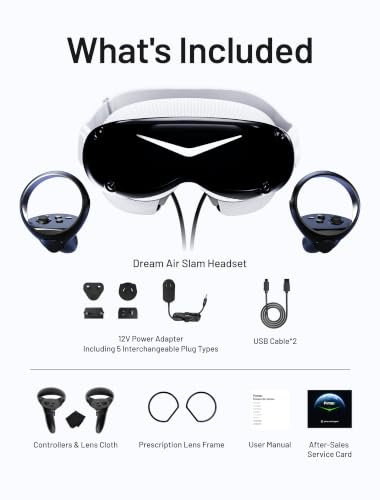
  • Spatial audio and a game controller are included.

What customers don't like about Pimax Dream Air

  • There is no Wi-Fi, so a cable links the headset to the PC.
  • There is no wireless PC streaming.
  • Color passthrough is missing.
  • There is no depth sensor.
  • There is no adjustable diopter.

Verdict

If long sessions leave your neck sore, the Pimax Dream Air is worth a close look. At 170 g it feels very light on the face. Its micro-OLED panel has 3840 x 3552 pixels per eye, and the 90 Hz refresh rate keeps motion smooth. Eye tracking and hand tracking both work without extra base stations. Pancake lenses and spatial audio come as standard. The trade-off is connection: there is no Wi-Fi and no wireless PC streaming, so a cable runs to the PC. Color passthrough is missing, so you cannot see the room in color while wearing it. It suits someone who wants a light, sharp headset with hand and eye tracking, and who is happy with a wired PC link.

Compare Pimax Dream Air with other products in the VR headsets category

1Product to compare no. 1
VS
2Product to compare no. 2
VS
3Product to compare no. 3 (optional)

Graphic comparison of Pimax Dream Air and other products in the VR headsets category

No results found