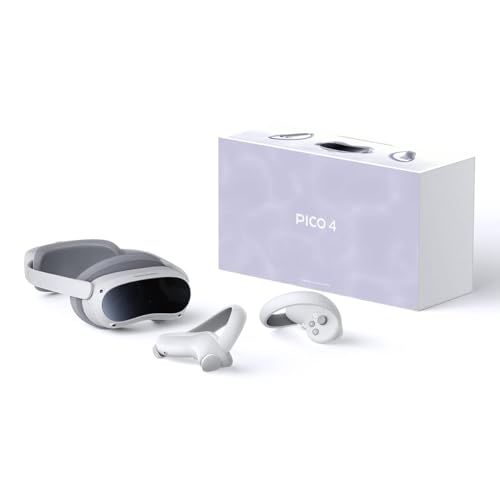
PICO 4 review. Compare 89 technical specifications and user reviews to see how it ranks among VR headsets and if it is worth buying.
Overall score
What it is: An overall evaluation of the VR headset's quality, based on technical analyses and user reviews.
When it matters: When you need a quick reference to identify the best VR headsets on the market.
Score components:
80.0%
Technical Score
20.0%
User score
Technical Score
What it is: An assessment of the VR headset's technical performance, covering eight key areas: display quality, tracking, comfort, controllers, connectivity, audio, battery, and design.
When it matters: When you want to compare VR headsets based on technical performance and available features.
Score components:
58.0%
Display & Optics
22.0%
Tracking & Sensors
10.0%
Controls & Audio
4.0%
Hardware
3.0%
Connectivity
3.0%
Design & Power
User score
What it is: A rating that combines user reviews and the total number of reviews received by the VR headset.
When it matters: When you want to know how a VR headset performs in real use and how reliable it remains over time according to user feedback.
Score components:
70.0%
User reviews
30.0%
Popularity
Score components:
40.0%
Refresh rate
35.0%
Touch controllers
25.0%
Resolution
Score components:
40.0%
Resolution
35.0%
Display type
25.0%
Visible FoV (horizontal)
Available: ranking among products currently available (including other versions of this product).
All: ranking among all products in the database.
#2 in Best Cheap VR Headsets
#2 in Best Pico VR Headsets
#6 in Best VR Headsets
#11 in Best Gaming VR Headsets
What it is: An assessment of the VR headset's technical performance, covering eight key areas: display quality, tracking, comfort, controllers, connectivity, audio, battery, and design.
When it matters: When you want to compare VR headsets based on technical performance and available features.
Score components:
58.0%
Display & Optics
22.0%
Tracking & Sensors
10.0%
Controls & Audio
4.0%
Hardware
3.0%
Connectivity
3.0%
Design & Power
What it is: A rating that combines user reviews and the total number of reviews received by the VR headset.
When it matters: When you want to know how a VR headset performs in real use and how reliable it remains over time according to user feedback.
Score components:
70.0%
User reviews
30.0%
Popularity
What it is: An indicator that combines the VR headset's overall rating with its cost.
When it matters: When you are looking for a VR headset with a good balance between quality and price.
Score components:
60.0%
Overall score
40.0%
Price
Importance: HIGH
Importance: LOW
Importance: HIGH
Good value: >100 Hz
Importance: HIGH
Good value: >105 °
Importance: HIGH
Good value: >97 °
Importance: HIGH
Importance: HIGH
Good value: >850 ppi
Importance: MEDIUM
Good value: >120 nits
Importance: MEDIUM
Importance: MEDIUM
Good value: >44 mm
Importance: HIGH
Importance: MEDIUM
Importance: MEDIUM
Importance: LOW
Importance: LOW
Importance: LOW
Importance: MEDIUM
Importance: LOW
Importance: MEDIUM
Good value: >4
Importance: LOW
Good value: >700 Hz
Importance: LOW
Importance: MEDIUM
Importance: LOW
Importance: LOW
Importance: MEDIUM
Importance: MEDIUM
Importance: MEDIUM
Importance: LOW
Importance: LOW
Importance: LOW
Importance: LOW
Importance: LOW
Importance: LOW
Importance: LOW
Importance: LOW
Importance: LOW
Importance: LOW
Importance: LOW
Importance: LOW
Importance: LOW
Importance: LOW
Importance: LOW
Good value: >0
Importance: LOW
Importance: LOW
Importance: LOW
Importance: LOW
Importance: LOW
Importance: LOW
Importance: MEDIUM
Importance: LOW
Importance: LOW
Importance: LOW
Importance: LOW
Importance: LOW
Importance: LOW
Importance: LOW
Importance: LOW
Good value: >20 hours
Importance: LOW
Importance: LOW
Good value: <135 g
Importance: LOW
Importance: LOW
Importance: LOW
Good value: >3 GHz
Importance: LOW
Importance: LOW
Good value: >8 GB
Importance: LOW
Good value: >128 GB
Importance: LOW
Good value: >3000
Importance: LOW
Good value: >850
Importance: LOW
Good value: >5000 MHz
Importance: LOW
Good value: >690 MHz
Importance: LOW
Good value: >6
Importance: LOW
Importance: LOW
Good value: >3
Importance: LOW
Good value: <7 nm
Importance: LOW
Importance: LOW
Importance: LOW
Good value: >4900 mAh
Importance: LOW
Good value: <2.5 hours
Importance: LOW
Good value: <500 g
Importance: LOW
Importance: LOW
Importance: LOW
Good value: <100 mm
Importance: LOW
Good value: <180 mm
Importance: LOW
Good value: <116 mm
Importance: LOW
Importance: LOW
Importance: LOW
Good value: >35 °C
Importance: LOW
Good value: <3 °C
Importance: LOW
Good value: >2020
Importance: MEDIUM
Importance: HIGH
Importance: HIGH
Good value: >850 ppi
Importance: MEDIUM
Importance: MEDIUM
Importance: MEDIUM
Importance: MEDIUM
Importance: HIGH
Good value: >97 °
Importance: LOW
Good value: >20 hours
Importance: HIGH
Importance: MEDIUM
Good value: >44 mm
Importance: MEDIUM
Good value: >120 nits
Importance: LOW
Importance: LOW
Good value: <135 g
Importance: LOW
Good value: >690 MHz
(Reviews last updated: July 2026)
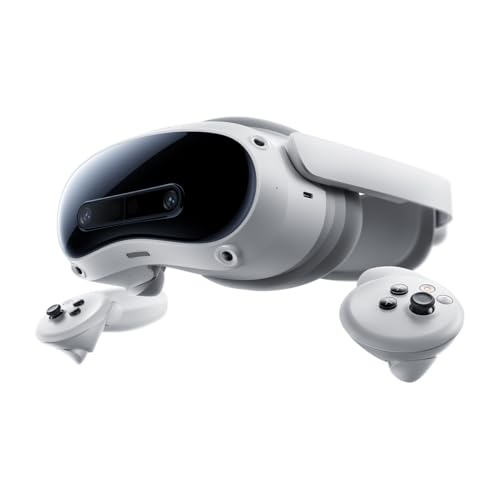
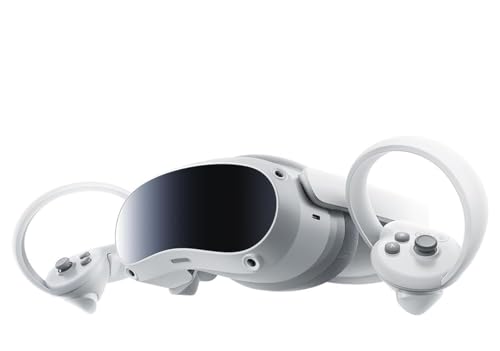
The Pico 4 is a budget-friendly standalone VR headset that matches or beats its main rival, the Meta Quest 2, in physical hardware specifications. It is lighter to wear thanks to a well-balanced design that moves the battery to the back of the strap. It also uses thin pancake lenses to reduce front bulkiness. Inside, the device features a sharp 2,160 x 2,160 pixel-per-eye screen and an extra 2GB of RAM compared to Meta's headset. It also boasts full-color video passthrough for looking at your physical surroundings. Despite these strong hardware upgrades, the headset feels like a work in progress due to an unpolished software experience. A major drawback is that the smooth 90Hz refresh rate is hidden in experimental settings, while the default 72Hz mode can cause motion sickness. The color passthrough lacks accurate depth perception, and the headset lacks a standard headphone jack. Finally, its digital storefront misses out on highly popular exclusive games like Beat Saber and Resident Evil 4 VR.
The Pico 4 VR headset by ByteDance is a strong competitor to the Meta Quest 2, offering impressive hardware upgrades at a competitive European price of €429 (128GB) and €499 (256GB). Its standout pros include a slim, compact design made possible by advanced pancake lenses, and an adjustable head strap with a rear-mounted battery that balances weight comfortably on the head. Visually, it outperforms the Quest 2 by delivering a sharper 2,160x2,160 per-eye resolution, a wider 105-degree field of view, and a higher-resolution full-colour passthrough camera. Furthermore, its responsive motion-tracking controllers feature punchy vibrating haptics and a familiar button layout that handles fast-paced games effortlessly. Despite the superior hardware, the Pico 4 falls short due to a significantly smaller app ecosystem and missing software capabilities. Major gaming hits like Beat Saber, Resident Evil 4, and Moss, alongside key social and productivity apps like VRChat, are completely absent. The reviewer notes additional cons, including a lack of built-in controller-free hand tracking, the absence of smart features like phone notifications, and a lack of true system exclusives. Ultimately, while the Pico 4...
The Pico 4 is a top-tier standalone VR headset offering high value with superior ergonomics, featuring a slim profile via pancake lenses and a comfortable, balanced weight distribution. It boasts sharp, 2160x2160 per-eye LCD displays, a 105° field of view, 90Hz refresh rate, and precise controller tracking. Key drawbacks include a limited standalone app library compared to competitors, a stiff, potentially uncomfortable stock face cushion, and reliance on streaming for PC VR rather than a dedicated DisplayPort connection. However, its color passthrough, stepless IPD adjustment, and overall performance make it a strong, feature-rich device.
The Trusted Reviews analysis presents the Pico 4 as a highly capable, lightweight, and well-balanced standalone VR headset featuring impressive pancake lenses and a sharp, high-resolution screen that eliminates the screen-door effect. Its pros include a comfortable design with rear-mounted batteries, easy setup, and a functional color passthrough mode. However, the review highlights a significant drawback in its limited native app library compared to Meta’s ecosystem, lacking key titles like Beat Saber. Ultimately, while lauded as a strong hardware contender for PC VR streaming, the content deficit makes it hard to recommend over a Quest for standalone gaming.
The Pico 4 is a lightweight, standalone VR headset that excels in hardware design, offering a compelling alternative to the Meta Quest 2. Weighing 586g with its non-detachable strap, it ensures excellent comfort and balance by placing its 5300mAh battery at the rear of the headband. On the positive side, the headset features high-quality pancake optics that minimize bulk while delivering an impressively wide 105-degree field of view and superior image clarity via a 4K+ resolution display. It boasts accurate head and controller tracking, a 16MP full-colour pass-through camera, 8GB of RAM for snappy performance, and a lower price tag than its closest rival. However, the Pico 4 falls short on software availability and ecosystem depth. Its primary drawback is a content store that lacks major VR hits and exclusive titles found on Meta's platform, such as Beat Saber and Resident Evil 4 VR. Additional cons include a display refresh rate capped at 90Hz—which trails behind the Quest 2's 120Hz—and a battery life that only lasts between two to three hours. Furthermore, its wireless PC VR streaming capability suffers from...
The PICO 4 is a standalone VR headset praised for its competitive pricing, high resolution, and lightweight comfort. It features an advanced Qualcomm Snapdragon XR2 processor, pancake lenses providing a 2160×2160 resolution per eye (surpassing standard 4K), a 105-degree field of view, and a 90Hz refresh rate that ensures smooth visual performance. A major highlight is its exceptional weight distribution, which balances the load evenly around the head to eliminate front-heaviness and allow for hours of comfortable gameplay. Setting up the device is highly intuitive, and the package includes thoughtful additions like a glasses spacer and a 20W fast-charging plug for its 5300mAh battery, which delivers two to three hours of runtime. Its 16MP RGB camera provides a high-quality colour passthrough mode, easily activated by a double tap to the side, which helps users safely map play spaces up to 10m x 10m or seamlessly check their real-world surroundings. However, the headset does have a few minor drawbacks. The optical-tracking controllers, while generally well-designed and powered by two AA batteries, occasionally suffer from minor responsiveness issues in specific "dead zones"....
The Pico 4 is a standalone virtual reality headset that beats the Meta Quest 2 in almost every hardware category while remaining highly affordable. It features two crisp high-resolution displays, motorized IPD adjustments, and a balanced design with the battery placed in the back of the headstrap. It also uses large pancake lenses that get rid of bulky rings and ugly "god ray" glares, giving you a wider field of view and a much smaller, lighter headset profile. Users will also love the full-color pass-through mode, a fantastic built-in microphone, and premium controllers that have capacitive touch and functional tracking rings that prevent you from banging your hands together. Furthermore, it shines as an amazing wireless PCVR headset when paired with the Virtual Desktop application. Despite these huge wins, the Pico 4 does have a few drawbacks that buyers should keep in mind. The built-in battery life is quite short and will only last for a maximum of two hours of playtime. The pancake lenses do absorb quite a bit of light, meaning the overall screen display is not as...
Pico 4 Review Summary The Pico 4 standalone VR headset from ByteDance provides a lightweight, easy-to-set-up hardware experience with an integrated motorized interpupillary distance (IPD) adjustment system and highly reliable wireless PC VR streaming capabilities. Its build quality is robust, offering sharp display features through pancake lenses and a surprisingly clear, full-colour passthrough view. However, the device is severely held back by a barren standalone application ecosystem that lacks major titles like Beat Saber, alongside an unpolished user interface that constantly pushes borderline-NSFW video recommendations. Furthermore, almost all of its advanced hardware specifications come with prominent drawbacks. Visuals are marred by massive god rays in high-contrast scenes and a narrow lens sweet spot that triggers notable eye and neck strain. The physical head strap is uncomfortable and accumulates sweat, while the controllers suffer from inaccurate tracking and faulty accelerometers that disrupt gameplay. Additionally, the headset bleeds battery life rapidly while in standby mode, and downloading the official PC streaming tool requires bypassing multiple Windows security warnings. Ultimately, because competitors like the Meta Quest series offer vastly superior software ecosystems and...
After two months, the PICO 4 is praised for its exceptional visual clarity, provided by pancake lenses, and a comfortable, balanced design featuring a rear-mounted battery. The reviewer appreciates the lightweight feel and the reliable, battery-powered controllers, which offer a significant visual upgrade over older Fresnel-based hardware. Conversely, the review highlights drawbacks including rapid controller battery drain, noticeable weight that causes neck fatigue during long sessions, and subpar tracking accuracy. Furthermore, the limited 2 to 4-hour headset battery life is insufficient for extended, immersive social VR usage.
In this GameStar review, the Pico 4 standalone VR headset is highlighted as a technically superior, budget-friendly competitor to the Meta Quest 2 for 420 Euros. Its design offers exceptional ergonomics because the front portion weighs only 295 grams, while the battery is positioned at the back of the strap to split the 586 grams total mass evenly across the head. Visual execution is another strong suit, featuring individual LCD displays with 2160 × 2160 pixels per eye running up to 90Hz. Coupled with flat, lightweight pancake lenses, the unit eliminates the screen-door effect and sweet-spot hunting while delivering an impressive 105-degree field of view. It also functions efficiently as a wireless PCVR gaming headset and features lightweight, ringless controllers. Despite its strong hardware, the review identifies a major flaw: a highly restricted and barren software library in the official Pico Store, which lacks staple VR titles like Beat Saber. Additionally, the integrated LCD panels produce washed-out colors where deep space appears dark gray rather than true black. Other notable downsides listed by GameStar include a mediocre battery life, light...
The Pico 4 VR headset offers notable physical improvements but falls short in overall visual and structural execution. On the positive side, its pancake lenses significantly reduce the weight and thickness of the front visor by 40 percent compared to the Meta Quest 2. This design choice delivers an excellent, wide sweet spot and outstanding edge-to-edge clarity that keeps the display sharp even when looking toward the outer boundaries. Additionally, the device features a seamless motorized IPD adjustment system between 58mm and 72mm, precise controller tracking that avoids physical clipping when reloading in games, and highly functional PC-VR streaming over Wi-Fi 6 or a USB-C link cable. Conversely, the review highlights several critical hardware flaws that disrupt immersion. The optical benefits are diminished by internal reflections (ghosting) that make high-contrast scenes look blurry, alongside a comparatively dark display and prominent "Mura" pixel-uniformity issues that create artifacts resembling small holes in a fabric mesh. The non-replaceable plastic halo headstrap provides poor stability during fast head movements and creates uncomfortable pressure on the forehead. Furthermore, the color passthrough mode is highly distorted...
The Pico 4 is a lightweight, well-balanced stand-alone VR headset from ByteDance that operates without base stations or external sensors. Powered by a Qualcomm XR2 processor and 8 GB of RAM, it features pancake lenses providing a sharp resolution of 2,160 x 2,160 pixels per eye—roughly 32% more pixels than the Meta Quest 2. Key advantages highlighted in the review include high wearing comfort with an adjustable rear-mounted battery pack, easy setup assisted by a colour pass-through camera, precise controller tracking, and excellent integrated audio quality. The display also minimises traditional visual issues like the screen-door effect and "god rays". However, the headset has several downsides, primarily its short battery life, which lasts between 1.5 and 2 hours in practical testing despite a 2.5-hour official rating. The integrated, closed App Store also has a limited game selection, notably missing major titles like Beat Saber. Additional drawbacks include limited physical ports, a low-resolution pass-through camera, and glitchy experimental hand tracking. Fortunately, the closed ecosystem limits can be bypassed by connecting the device to a PC via a cable or a 5-GHz...
The Pico 4 is an affordable, high-quality 2-in-1 standalone VR headset that delivers an immersive wireless gaming experience without requiring a powerful PC. It features an ergonomic design with a 5,300 mAh battery built into the rear of the strap, which ensures an incredibly balanced weight distribution during active movement. Equipped with a Qualcomm Snapdragon XR2 processor and Pancake lenses, the device outputs a crisp 4K resolution (4320×2160 total) alongside a wide 105° field of view and smooth inside-out 6 DoF tracking. The package is explicitly tailored to be user-friendly, offering an adjustable lens system via software, an included glasses spacer for comfort, and ergonomic 178-gram controllers featuring a battery life of up to 80 hours. On the positive side, the headset stands out for its strong price-to-performance ratio (priced between €429 and €499), high build quality, native SteamVR support, built-in hand tracking, and the lack of a mandatory social media account requirement. However, the device is held back by a relatively short standalone battery life of only 2.5 to 3 hours per charge. Additionally, while the integrated WiFi 6...
The Heise Online review positions the Pico 4 as a budget-friendly, standalone VR headset featuring high-resolution 2160x2160 pancake lenses and balanced, comfortable, rear-weighted battery design. While boasting strong hardware, it is limited by a smaller app ecosystem and a less mature operating system compared to Meta. In contrast, the Meta Quest Pro is targeted at professionals, offering superior build quality, advanced mixed-reality features, and high-end, color-rich optics. However, the Quest Pro is hampered by a high price, lower panel resolution than the Pico 4, and front-loaded, uncomfortable design for extended use.
The Galaxus review highlights the Pico 4 as a comfortable, high-resolution standalone VR headset with excellent pancake lenses, good weight balance, and precise tracking. Key strengths include 2,160 x 2,160 pixel-per-eye resolution, full-color passthrough via a 16 MP RGB camera, and strong performance for PC VR gaming. Conversely, the review finds a limited native app store, lack of a 3.5mm headphone jack, and uncomfortable facial padding. Significant concerns are also raised regarding the data-sharing policies of the parent company, ByteDance.
The Galaxus review identifies the Pico 4 as a capable, comfortable, and budget-friendly alternative to the Meta Quest 2, highlighting its superior ergonomics, balanced weight distribution with a rear battery, and clear 4K-plus pancake lenses. Key advantages include precise controller tracking, a convenient color passthrough mode, and excellent performance for wireless PC VR streaming, according to the review. Conversely, the review notes a lackluster standalone app store, which lacks major titles compared to Meta's ecosystem, along with some unoptimized game ports. Significant concerns are raised regarding ByteDance’s data privacy, and the hardware lacks a 3.5mm headphone jack, making it less ideal for purely standalone use than its competitors.
The Frandroid review positions the Pico 4 as an impressive, budget-friendly standalone VR headset that serves as a strong competitor to the Meta Quest 2. A major highlight of the device is its exceptional design and comfort. By shifting the battery to the back of the headstrap, Pico achieved excellent weight distribution that relieves pressure on the face. Additionally, the headset includes a precise rear adjustment dial natively, features comfortable, overlapping-resistant tracking arches on its controllers, and delivers crisp visuals via an LCD screen boasting a sharp 2160 x 2160 pixels per eye resolution. The audio system is equally immersive, and the integration of a full-color passthrough camera makes navigating physical play spaces seamless. However, the reviewer notes a few critical drawbacks, most notably the severely limited standalone app store, which misses major VR staples like Beat Saber and Moss. While the built-in Qualcomm XR2 processor handles mobile games well, the native graphics look somewhat cheap, meaning the headset only unlocks its full visual potential when connected to a gaming PC via the Streaming Assistant to run SteamVR. Unfortunately, this...
summary of the Pico 4 review: Summary of the Pico 4 Review The Pico 4 is a well-designed and affordable standalone VR headset that presents a strong technical challenge to the Meta Quest 2. Its primary strengths lie in its excellent ergonomics and display quality. Thanks to its compact "pancake" lenses, the front module is much thinner, and the headset achieves an optimal weight balance by integrating its 5300 mAh battery into the rear strap. It delivers an incredibly sharp visual experience via two 2.56-inch LCD screens with a high resolution of 2160 x 2160 pixels per eye, a 90 Hz refresh rate, a wide 105° field of view, and a motorized inter-pupillary distance (IPD) adjustment tool. Additionally, it features comfortable, highly accurate tracking controllers with excellent button layout and battery life, improved proximity audio built into the side straps, and a design spacious enough to comfortably accommodate users wearing eyeglasses. Despite its strong hardware, the Pico 4 falls short of its main competitor in software functionality and social integration. Its native game catalogue remains smaller, and advanced features like...
The Galaxus review highlights the Pico 4 as a strong, comfortable standalone VR headset, featuring excellent weight distribution due to the back-mounted battery and thin pancake lenses with 2,160 x 2,160 pixels per eye. Pros include a wide 105-degree field of view, flawless tracking, a convenient colour passthrough mode, and great performance in wireless PC VR mode. Conversely, the review notes a limited standalone game library compared to Meta, alongside less premium-feeling controllers and rigid facial padding. Furthermore, the review emphasizes that the device replaces US-based data collection with ByteDance's, posing similar data privacy concerns for users.
in English: Review Summary The Pico 4 is a lightweight and modern standalone virtual reality headset that challenges the Meta Quest 2 with superior hardware specifications and comfort. Weighing only 295 grams, its balanced design places the battery at the back of the strap to act as a counterweight, significantly reducing pressure on the user's face. Visually, the headset drastically reduces the "screen-door effect" by utilizing flat Pancake lenses, which deliver a generous 105° field of view and an impressive per-eye resolution of 2160×2160 pixels. Running on an open Android operating system, it allows users to easily sideload external Android apps via APK files, making it an excellent and highly accessible choice for PC-tethered VR (PCVR) streaming. Pros and Cons Pros: The headset boasts excellent visual clarity, a wide field of view, a lightweight and highly comfortable ergonomic design, an open Android ecosystem for customization, and a helpful full-colour passthrough mode. Cons: On the downside, its battery life is highly disappointing, capped at a maximum of two hours (frequently dropping to 1.5 hours during native gameplay). Additionally, the official Pico...
The Digitec review of the Pico 4 VR headset highlights its lightweight, balanced design—featuring a 5,300 mAh battery in the rear strap for improved comfort—and impressive 4K+ resolution with a 105-degree field of view. The device also excels in PC VR streaming via Wi-Fi or USB-C and features a useful color passthrough mode. Conversely, the review notes a weak standalone native game store compared to Meta's ecosystem and suggests the controllers feel flimsy with sub-optimal ergonomics. Additionally, the review highlights that the headset necessitates exchanging data tracking with Meta for privacy risks associated with ByteDance, recommending it primarily for PC-tethered usage.
The Pico 4 stands out as a highly capable all-in-one VR headset that positions itself as a stronger alternative to the Meta Quest 2, primarily due to its superior visual performance and ergonomic design. Equipped with advanced pancake lenses, the device achieves a notably slim and lightweight front profile weighing just 295 grams. It delivers an immersive visual experience with a "4K+" resolution of 2160 x 2160 pixels per eye, a high pixel density of 1200 PPI, and an expansive 105-degree field of view. Performance is driven by the Qualcomm Snapdragon XR2 processor paired with 8 GB of RAM, allowing it to handle multiple applications and demanding games smoothly. Additionally, the inclusion of a 16 MP RGB front camera introduces functional full-colour video passthrough, which greatly simplifies the initial tracking boundary configuration for users. The headset features distinct operational trade-offs despite its technological strengths. On the positive side, its pros include exceptional comfort over long play sessions due to a balanced design that mounts the battery on the back of the strap, a competitive price point (€429 for 128 GB)...
The GamerGen review rates the PICO 4 VR headset an impressive 18 out of 20, concluding that while it may not completely kill off the Meta Quest, it is a highly praised, major update to the consumer VR market. Tested daily over three months, the device stands out as a powerful standalone competitor backed by ByteDance. Its core visual and design upgrades position it as a new baseline standard for mainstream virtual reality. Key Pros and Cons from the Review Pros: Pancake lenses that create a thinner profile. High-resolution 4320 x 2160 display (2160x2160 per eye). Rear-mounted 5,300 mAh battery for superior weight balance. Motorised, step-by-step IPD adjustment (62–72 mm). Integrated 16 MP RGB camera for full-colour passthrough. Robust Qualcomm XR2 processor with 8 GB of RAM. Lightweight headset body weighing only 295 grams. Cons: The software ecosystem and PICO Store library face stiff competition from Meta's established platform. It acts more as a polished update rather than a groundbreaking VR revolution. Standalone performance relies on a deeply optimized Android-based OS, meaning users remain dependent on PICO's storefront growth for...
The Hobby Consolas review highlights the PICO 4 as a highly competitive, standalone virtual reality headset that establishes itself as a superior hardware alternative to the Meta Quest 2. On the positive side, the headset excels in ergonomics and design by integrating the battery into the rear head strap, which balances the weight perfectly and eliminates front-heavy facial pressure. Its innovative pancake lenses vastly minimize visual artifacts like "god rays," offering a significantly sharper 2160×2160 per-eye resolution and an expanded 105-degree field of view that feels much more natural than traditional Fresnel optics. Additionally, it features motorized IPD adjustments, 8GB of RAM for smooth menu navigation, a full-color passthrough camera, and seamless, low-latency PC VR streaming capabilities via the Streaming Assistant app or Virtual Desktop. However, the review points out several hardware and software limitations that prevent it from being a flawless device. On the software side, the PICO operating system lags behind Meta's mature ecosystem, missing convenient quality-of-life options like smartphone notification syncing and precise hand-tracking support out of the box. Its standalone digital storefront is also notably smaller,...
The Pico 4 VR headset is a strong standalone competitor to the Oculus Quest 2, offering a premium and elegant design right out of the box. Reviewers praise its lightweight build and excellent comfort, which is achieved by using thin pancake lenses and placing the battery in the rear head strap to balance out the weight. It features a sharp 4K+ resolution display (2160p per eye) that delivers great visual clarity, motorized interpupillary distance (IPD) software settings, and comfortable haptic controllers with great battery life. Additionally, it includes built-in 3D stereo speakers and is fully compatible with Steam VR on PC via streaming or a cable connection. However, the headset has a few notable drawbacks. The screen's refresh rate maxes out at 90Hz, falling short of the smoother 120Hz found on the Quest 2. Its standalone software and game store still have room for improvement when compared to Meta's ecosystem, even though it features a varied catalog. Battery life remains a bottleneck, lasting only two to three hours of continuous play. Finally, the headset completely lacks a physical headphone jack,...
The Pico 4 VR headset stands out as a highly capable and affordable standalone competitor to the Meta Quest 2, offering a premium and balanced hardware experience at a competitive price point of €429 for the 128 GB model and €499 for the 256 GB version. Powered by the Qualcomm Snapdragon XR2 processor and an upgraded 8 GB of RAM, the device delivers smooth menu navigation and fluent performance. On the hardware front, its primary strengths are its remarkable comfort—driven by a lightweight 586-gram design that perfectly counterbalances the battery at the back—and its superior, sharp dual LCD displays (2160 x 2160p per eye) equipped with pancake lenses that eliminate visual artifacts and offer a wide 105-degree field of view. Additionally, users benefit from a motorized interpupillary distance (IPD) adjustment directly through the settings menu and a useful, full-color passthrough safety camera. Despite its strong hardware value, the review notes several design and ecosystem drawbacks that hold the Pico 4 back from total dominance. A major physical omission is the lack of a 3.5mm headphone jack, forcing users to choose...
Summary of Pros and Cons Pros Cons Sharp 4K+ Visuals: Crisp presentation using modern pancake lenses. Lower Refresh Rate: Maximum of 90 Hz instead of 120 Hz standard. Superior Comfort: Great 50/50 balance due to rear-mounted battery. Cold Colors: Image output displays a somewhat pale or "washed out" tint. Motorized IPD: Motorized, software-controlled lens adjustment (52–72mm). No Headphone Jack: No minijack port for traditional wired headphones. Flexible PC VR: Native, seamless wireless/wired link to Steam VR. Sparse Standalone Library: Native game store library remains a step behind Meta.
The review on HT Noticias positions the Pico 4 as a formidable, highly competitive standalone alternative to the long-dominant Meta Quest 2. On the hardware front, the review highlights several major pros, emphasizing its superior design and technical specifications. The Pico 4 features advanced pancake lenses that eliminate the annoying glare found in older optics, dual LCD screens boasting a crisp 2160 × 2160 resolution per eye, and a wider horizontal field of view. Ergonomically, it outshines its competitor with a balanced design that mounts the battery at the rear of the strap, reducing facial pressure and eliminating the need to purchase an aftermarket comfort strap. It also introduces a motorized, software-controlled physical interpupillary distance (IPD) adjustment to perfectly align with the user's eyes. YouTube · Despite these clear technological triumphs, the review identifies significant cons that hold the device back, primarily rooted in its ecosystem and software. Its standalone operating system is noted to lag nearly three years behind Meta’s highly refined platform, leaving the Pico store with a much smaller library of native games and applications. Furthermore, while...
The Pico 4 is a standalone VR headset produced by ByteDance (the parent company of TikTok) that competes directly with Meta’s Quest 2. Weighing just 295 grams, this lightweight and comfortable device is powered by a Snapdragon Xr2 chip, 8GB of RAM, and pancake optics that deliver a 4K+ resolution at a 90 Hz refresh rate. The review highlights several notable advantages, including its easy setup, a balanced retail price starting at €429 for the 128GB version, ergonomics that comfortably accommodate prescription glasses, and the inclusion of a full-colour passthrough feature. It also features integrated 3D spatial audio and ergonomic controllers, offering a solid two hours of intensive battery life per charge. However, the headset comes with distinct drawbacks, particularly regarding its ecosystem and hardware limitations. The main negative aspect is its growing but still limited software library, which lacks major blockbusters like Resident Evil 4 VR, resulting in a small user community that makes finding multiplayer matchups difficult without switching to Asian or American servers. On the hardware side, the device completely lacks a 3.5 mm headphone jack, forcing...
The Multiplayer.it review evaluates the PICO 4 as a structurally solid and exceptionally lightweight virtual reality headset that is ultimately difficult to recommend due to poor timing and an underwhelming ecosystem. Released by ByteDance, the hardware aligns technologically with the Meta Quest 2, powered by the same Qualcomm Snapdragon XR2 processor but boosted with 8 GB of RAM. Its standout hardware feature includes pancake LCD lenses providing a 2160 x 2160 resolution per eye and motorized interpupillary distance (IPD) software adjustments. However, the reviewer notes that the device arrived right as next-generation options like the Meta Quest 3 and PSVR2 hit the market, making its stagnant €399/€469 price point highly uncompetitive. Pros and Cons Summary Pro: Extreme comfort and lightweight front design achieved by placing the battery on the back of the head strap. Pro: Good quality, highly ergonomic controllers included in the package. Pro: Seamless PC VR functionality via USB-C or wireless streaming to play Steam libraries. Con: An inferior app store that completely lacks Meta and Sony exclusives, and is slow to adopt basic social apps. Con: Flawed...
The TechPrincess review highlights the PICO 4 as a comfortable, ergonomically designed standalone VR headset featuring balanced weight distribution, superior pancake lenses for visual clarity, and precise inside-out tracking. While offering a generous 105° field of view and capable wireless PC VR streaming, the device is praised for its hardware design over its predecessor. However, the analysis notes significant drawbacks regarding display quality, which produces dark, slightly washed-out colors and some peripheral artifacts. A major limitation is the limited native PICO Store software library, making the headset heavily dependent on PC VR to reach its full potential, according to the review.
The Pico 4 stands out as a highly competitive standalone VR headset, offering notable hardware upgrades over the Meta Quest 2 at a lower price point. Its pros include an incredibly lightweight chassis weighing under 300 grams (excluding the rear-mounted battery), which delivers a perfectly balanced and comfortable fit. Visually, the headset shines with its sharp 2160×2160 resolution per eye and pancake lenses that completely eliminate god rays. Performance is further boosted by 8GB of RAM (2GB more than Quest 2), resulting in faster loading times and smoother gameplay. Additionally, it introduces motorized IPD adjustment through software and a full-colour passthrough feature. However, the headset is held back by several notable cons regarding software limitations and missing hardware connections. On the hardware side, the Pico 4 completely removes the dedicated DisplayPort found on its predecessor, restricting PCVR use to compressed USB-C or wireless connections that suffer from visual artifacts and connection stability issues. It also bafflingly lacks a built-in 3.5mm headphone jack, forcing users to rely on low-volume built-in speakers, Bluetooth, or awkward USB-C adapters. Furthermore, while the general game...
The PICO 4 VR headset, backed by TikTok's parent company ByteDance, serves as a strong competitor to the Meta Quest 2, leveraging a competitive launch price of approximately €429 for the 128 GB model. Powered by a Qualcomm Snapdragon XR2 processor with 8 GB of RAM, the hardware boasts impressive specifications including a 4K resolution (4,320x2,160 pixels), pancake lenses that reduce light artifacts, and a wide 105° field of view. Structurally, it features a well-balanced design that distributes its 586-gram weight evenly between the front and back by placing the battery at the rear, and it includes a welcomed electronic pupillary distance adjustment within the software. The package also comes practical with solid tracking controllers, an RGB camera setup for colour passthrough, and an included glasses spacer. Despite these hardware strengths, the review highlights notable software and design drawbacks. A significant issue is the prominent motion sickness experienced during testing—even during calmer games like table tennis—caused by a combination of the wide field of view, the default refresh rate (which requires an experimental mode to reach 90Hz), and a visible...
The Pico 4 is an all-in-one virtual reality headset from ByteDance that delivers a solid, cable-free 4K VR experience powered by the Qualcomm XR2 platform. Structurally, it features a highly compact, ski-goggle-like aesthetic with an impressively light front-mask weight of just 295 grams, paired with an ergonomic, rigid rear strap that balances the unit comfortably on the user's head. On the technical side, it features dual 2.56-inch LCD displays providing a combined 4,320 x 2,160 resolution, a 90 Hz refresh rate, pancake optics with a 105° field of view, and a 16 MP RGB passthrough camera that allows users to see their real-world surroundings with a simple gesture. The integrated 3D spatial audio system performs exceptionally well, while its 5300 mAh battery delivers roughly 3 hours of active runtime. The review highlights several distinct pros and cons regarding its real-world performance: Pros: Highlights include its excellent, lightweight ergonomics that minimize motion sickness, seamless PC VR integration through the Streaming Assistant app (over Wi-Fi 6 or USB-C), and strong multimedia functionality for shared 4K movie viewing. Additionally, its unique built-in PICO...
The Back To VR review defines the Pico 4Go to product viewer dialogue for this item. as a high-quality standalone headset featuring a compact design, balanced comfort, motorized IPD adjustment, and crisp pancake lenses. While offering excellent PC VR performance and color pass-through, the hardware suffers from minor geometric distortion at the lens edges, a rigid facial interface, and lacks a 3.5mm headphone jack. YouTube· The review highlights that the headset's main drawback is its late market release, resulting in a poor competitive position against the established Meta Quest 2 ecosystem and limited appeal to current PC VR users. Although recommended for new users, the lack of a direct DisplayPort connection and a fragmented game library limit its appeal for veterans, according to Back To VR.
Compare