HTC VIVE Pro Eye Review | 89 Data compared

double-arrow
  • Avg. price in UK: ~£1,500
  • Avg. price in US: ~$1,600
  • Weight: 800 g
  • Resolution: 1440x1600
  • Refresh rate: 90 Hz
  • Display type: OLED
  • Device type: PC VR

HTC VIVE Pro Eye review. Compare 89 technical specifications and user reviews to see how it ranks among vr headsets and if it is worth buying.

7.0

Overall score

What it is: An overall evaluation of the VR headset's quality, based on technical analyses and user reviews.

When it matters: When you need a quick reference to identify the best VR headsets on the market.

Score components:

80.0%

6.9

Technical Score

20.0%

7.5

User score

Very good
6.9

Technical Score

What it is: An assessment of the VR headset's technical performance, covering eight key areas: display quality, tracking, comfort, controllers, connectivity, audio, battery, and design.

When it matters: When you want to compare VR headsets based on technical performance and available features.

Score components:

58.0%

7.0

Display & Optics

22.0%

7.0

Tracking & Sensors

10.0%

7.3

Controls & Audio

4.0%

4.0

Hardware

3.0%

7.7

Connectivity

3.0%

5.8

Design & Power

Good
7.5

User score

What it is: A rating that combines user reviews and the total number of reviews received by the VR headset.

When it matters: When you want to know how a VR headset performs in real use and how reliable it remains over time according to user feedback.

Score components:

70.0%

10

User reviews

30.0%

1.5

Popularity

User score:
United Kingdom
amazon
5.0
(6)

(Reviews last updated: July 2026)

Very good
  • 7.2
    Gaming

    Score components:

    40.0%

    5.5

    Refresh rate

    35.0%

    10

    Touch controllers

    25.0%

    6.1

    Resolution

  • 6.9
    Movies

    Score components:

    40.0%

    6.1

    Resolution

    35.0%

    8.8

    Display type

    25.0%

    5.6

    Visible FoV (horizontal)

  • htc-vive-pro-eye
  • htc-vive-pro-eye
htc-vive-pro-eye
htc-vive-pro-eye

Best prices in UK

Best rankings

?

Available: ranking among products currently available (including other versions of this product).
All: ranking among all products in the database.

Verdict

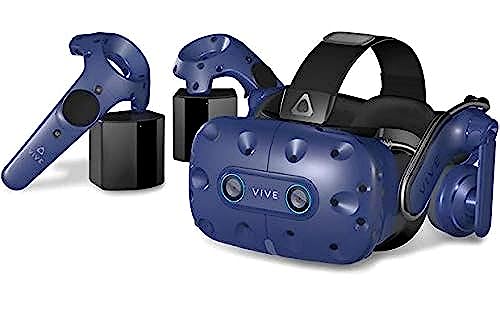
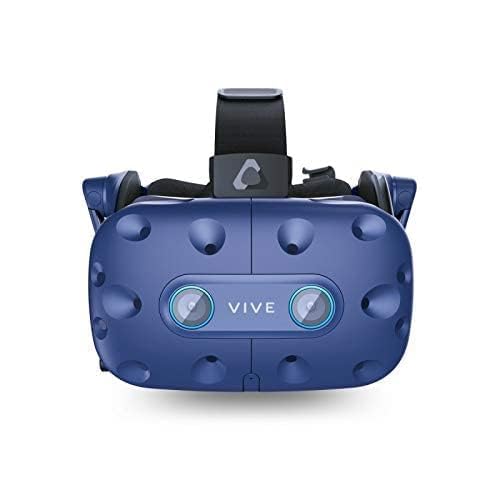
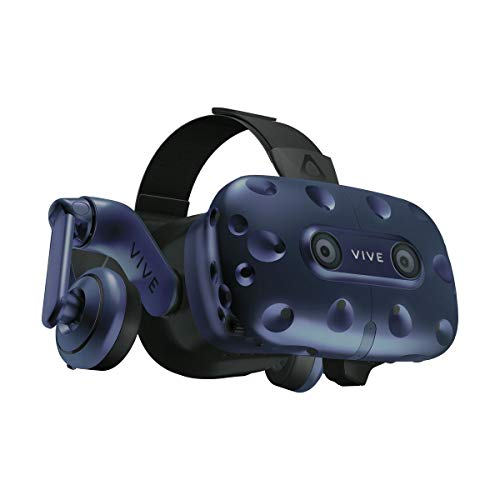
The HTC Vive Pro EyeGo to product viewer dialog for this item. is a professional-grade PC-VR headset featuring dual 3.5-inch AMOLED displays with a combined resolution of 2880 x 1600 pixels (1440 x 1600 per eye), a 90 Hz refresh rate, and a 110-degree field of view. Its defining characteristic is the integrated precision eye-tracking system powered by Tobii, which enables native foveated rendering to optimize GPU workloads and allows for intuitive gaze-based navigation. Major pros include superior color contrast from its OLED panels, highly accurate SteamVR 2.0 room-scale tracking, and built-in spatial audio headphones. However, the headset carries some notable cons, including high total retail costs, the requirement of external base stations and controllers, and visible glare or internal reflections in high-contrast environments due to its lens design.

Technical Specifications of HTC VIVE Pro Eye

Technical Score

What it is: An assessment of the VR headset's technical performance, covering eight key areas: display quality, tracking, comfort, controllers, connectivity, audio, battery, and design.

When it matters: When you want to compare VR headsets based on technical performance and available features.

Score components:

58.0%

7.0

Display & Optics

22.0%

7.0

Tracking & Sensors

10.0%

7.3

Controls & Audio

4.0%

4.0

Hardware

3.0%

7.7

Connectivity

3.0%

5.8

Design & Power

6.9
HTC VIVE Pro Eye has a technical score of 6.91 points, which is higher than 67.4% of VR headsets.
User score

What it is: A rating that combines user reviews and the total number of reviews received by the VR headset.

When it matters: When you want to know how a VR headset performs in real use and how reliable it remains over time according to user feedback.

Score components:

70.0%

10

User reviews

30.0%

1.5

Popularity

User score:
United Kingdom
amazon
5.0
(6)

(Reviews last updated: July 2026)

7.5
HTC VIVE Pro Eye has a user score of 7.46 points, which is lower than 79.6% of VR headsets.
Popularity
What it is: An indicator based on the number of reviews received by the VR headset.
When it matters: When you prefer to buy a product chosen and reviewed by many other consumers.
1.5
HTC VIVE Pro Eye has a popularity of 1.5 points, which is lower than 61.2% of products in this category.
Ratio quality/price

What it is: An indicator that combines the VR headset's overall rating with its cost.

When it matters: When you are looking for a VR headset with a good balance between quality and price.

Score components:

60.0%

7.0

Overall score

40.0%

2.6

Price

5.7
HTC VIVE Pro Eye has a quality-to-price ratio of 5.7 points, which is lower than 89.8% of products in this category.
Resolution
What it is: The total number of pixels displayed on the screen, expressed as width x height, determining sharpness.
When it matters: When you want crisp text and sharp details in photos and videos.

Importance: HIGH

1440x1600
HTC VIVE Pro Eye has a screen resolution of 1440x1600 which is lower than that of 51.3% of VR headsets and equal to that of 15.4% of VR headsets.
Screen size
What it is: The physical diagonal measurement of the display area, usually expressed in inches.
When it matters: When you want a larger image area that can feel more immersive in games, movies, and VR apps.

Importance: LOW

Good value: >4.41 inches

3.5 inches
Refresh rate
What it is: The number of times per second the display updates the image, measured in Hertz (Hz); higher rates offer smoother motion.
When it matters: When you want scrolling to feel fluid and games to look smoother.

Importance: HIGH

Good value: >102 Hz

90 Hz
HTC VIVE Pro Eye supports a refresh rate of 90 Hz which is higher than in 23.1% of VR headsets and equal to that in 51.3% of VR headsets.
Visible FoV (horizontal)
What it is: Measures the visible horizontal field of view of the image, expressed in degrees.
When it matters: When you want a wider left-to-right view for racing, shooters, and room-scale immersion.

Importance: HIGH

Good value: >105.7 °

100 °
HTC VIVE Pro Eye offers a horizontal FoV of 100 ° which is wider than that of 47.4% of VR headsets and equal to that of 10.5% of VR headsets.
Visible FoV (vertical)
What it is: Measures the visible vertical field of view of the image, expressed in degrees.
When it matters: When a taller visible image helps scenes feel less cropped above and below your view.

Importance: HIGH

Good value: >97.5 °

98 °
HTC VIVE Pro Eye offers a vertical FoV of 98 ° which is wider than that of 69.4% of VR headsets and equal to that of 2.8% of VR headsets.
Show more
Tracking type
What it is: Specifies the tracking method used for positional detection, such as inside-out or outside-in.
When it matters: When you want to know whether tracking depends on onboard cameras or external hardware.

Importance: LOW

outside-in
360° head tracking
What it is: Shows whether the headset can track head movement across a full 360-degree space.
When it matters: When you turn around often in room-scale games and do not want tracking blind spots.

Importance: MEDIUM

yes
HTC VIVE Pro Eye supports full 360° head tracking. 2% of VR headsets support this tracking mode.
N. of tracking sensors
What it is: Counts the integrated sensors used for positional or motion tracking.
When it matters: When you compare how much built-in hardware the headset uses for motion tracking.

Importance: LOW

Good value: >4.2

32
N. of cameras
What it is: Counts the built-in cameras used for tracking, passthrough, or environmental sensing.
When it matters: When passthrough quality, room mapping, and inside-out tracking matter to your setup.

Importance: MEDIUM

Good value: >4.2

2
HTC VIVE Pro Eye has 2 cameras which is more than in 39.6% of VR headsets and equal to that in 18.8% of VR headsets.
Tracking frequency
What it is: Indicates how often the tracking system updates position data, measured in hertz.
When it matters: When you want fast motion tracking to stay stable during quick head or hand movement.

Importance: LOW

Good value: >718 Hz

1,000 Hz
HTC VIVE Pro Eye has a tracking frequency of 1000 Hz which is higher than that of 27.8% of VR headsets and equal to that of 66.7% of VR headsets.
Show more
Operating system
What it is: The primary system software that manages the headset's hardware, apps, and core functions.
When it matters: When you have a preference for the user interface and app ecosystem.

Importance: LOW

Windows
OpenXR support
What it is: Indicates whether the headset supports the OpenXR standard for compatible VR software.
When it matters: When you want broader compatibility with VR apps across different software platforms.

Importance: LOW

yes
HTC VIVE Pro Eye supports OpenXR. 37.8% of VR headsets support this cross-platform VR standard.
Wireless PC streaming
What it is: Shows whether the headset can receive PC VR content over a wireless connection.
When it matters: When you want PC VR without a cable running from the headset to your computer.

Importance: LOW

yes
HTC VIVE Pro Eye supports wireless PC streaming. 65.3% of VR headsets support cable-free PC VR streaming.
Wi-Fi connectivity
What it is: The ability of the headset to connect to a wireless network.
When it matters: When you want wireless downloads, streaming, updates, or online features without relying on a cable.

Importance: LOW

no
HTC VIVE Pro Eye does not have Wi-Fi. 38.8% of VR headsets have Wi-Fi connectivity.
Wi-Fi version
What it is: Version of Wi-Fi standard supported.
When it matters: When compatibility with your router and wireless setup affects download speeds, streaming quality, or latency.

Importance: LOW

N/A
Show more
Touch controllers
What it is: Shows whether dedicated motion controllers are included for hand-based input in VR.
When it matters: When your favorite games rely on precise hand input rather than hand tracking alone.

Importance: MEDIUM

yes
HTC VIVE Pro Eye includes touch controllers. 28.6% of VR headsets come with dedicated hand controllers.
Game controller included
What it is: Indicates whether game controllers are included in the standard package.
When it matters: When you want a complete VR package and do not want to buy controllers separately.

Importance: LOW

no
HTC VIVE Pro Eye does not include a game controller. 65.3% of VR headsets ship with controllers in the box.
Spatial audio
What it is: Supports immersive spatial audio playback.
When it matters: When movies, games, and VR experiences feel better with more immersive positional sound.

Importance: LOW

yes
HTC VIVE Pro Eye supports spatial audio. 10.6% of VR headsets support spatial audio.
N. of speakers
What it is: Counts the built-in speakers used for audio playback.
When it matters: When you plan to use the headset without separate headphones or external speakers.

Importance: LOW

2
HTC VIVE Pro Eye has 2 speakers which is more than in 39.1% of VR headsets and equal to that in 60.9% of VR headsets.
N. of microphones
What it is: The number of microphones built into the headset or its integrated hardware.
When it matters: When voice chat, voice commands, or in-headset recording quality matter to your setup.

Importance: LOW

2
HTC VIVE Pro Eye includes 2 microphones, which is more than 44.2% of VR headsets and equal to 48.8% of VR headsets.
Show more
Device type
What it is: Describes the overall headset class, such as standalone, PC VR, or mixed reality.
When it matters: When you choose between a standalone headset, a PC VR model, or mixed-reality use.

Importance: LOW

PC VR
Chipset
What it is: The central System-on-Chip (SoC) that houses the CPU, GPU, modem, and other core processing components.
When it matters: When you want to know the specific engine powering your device's speed and features.

Importance: LOW

N/A
CPU clock speed
What it is: Indicates the base operating frequency of the main processor, measured in gigahertz.
When it matters: When you compare standalone headset speed for games, menus, and mixed-reality apps.

Importance: LOW

Good value: >2.86 GHz

N/A
GPU model
What it is: The official model name of the graphics processor used in the tablet.
When it matters: When you compare graphics hardware for gaming, video editing, or benchmarks.

Importance: LOW

N/A
RAM capacity
What it is: States the installed RAM capacity used for system operation and multitasking.
When it matters: When you want smoother multitasking and better headroom for demanding VR apps.

Importance: LOW

Good value: >9.3 GB

N/A
Show more
Battery capacity
What it is: The amount of electric charge the battery can store, usually measured in mAh.
When it matters: When you want longer untethered play time without recharging the headset too often.

Importance: LOW

Good value: >4980 mAh

N/A
Charging time
What it is: Time required for a full charge.
When it matters: When charging speed, charging method, or battery upkeep convenience matters to your routine.

Importance: LOW

Good value: <2.3 hours

N/A
Weight
What it is: The total weight of the headset, affecting how heavy it feels during use.
When it matters: When you want a headset that feels lighter and more comfortable during longer VR sessions.

Importance: LOW

Good value: <484.2 g

800 g
HTC VIVE Pro Eye weighs 800 g which is heavier than 91.1% of VR headsets and equal to the weight of 2.2% of VR headsets.
Headstrap type
What it is: Identifies the design of the headstrap used to secure the headset on the user's head.
When it matters: When comfort, balance, and pressure distribution matter during long VR sessions.

Importance: LOW

rigid halo
HTC VIVE Pro Eye uses a rigid halo headstrap, which is more comfortable than the design on 44.9%.
Body material
What it is: The main material used for the headset body or housing.
When it matters: When you care about how sturdy, premium, or lightweight the headset feels over time.

Importance: LOW

plastic
Show more

HTC VIVE Pro Eye vs the average VR headset

  • Eye and gaze tracking
    HTC VIVE Pro Eye supports eye and gaze tracking, the average VR headset does not. 16% of VR headsets include this tracking feature.
    What it is: Indicates whether the headset can detect eye position and gaze direction.
    When it matters: When you want eye-tracked rendering, gaze-based menus, or more natural social avatars.

    Importance: MEDIUM

    HTC VIVE Pro Eye supports eye and gaze tracking, the average VR headset does not. 16% of VR headsets include this tracking feature.
  • Supports eye relief adjustment
    HTC VIVE Pro Eye supports eye relief adjustment, the average VR headset does not. 25% of VR headsets support eye relief adjustment.
    What it is: Shows whether the distance between the eyes and lenses can be adjusted for comfort or glasses clearance.
    When it matters: When you wear glasses or need more space between your eyes and the lenses.

    Importance: MEDIUM

    HTC VIVE Pro Eye supports eye relief adjustment, the average VR headset does not. 25% of VR headsets support eye relief adjustment.
  • 47 nits higher peak brightness
    HTC VIVE Pro Eye has a higher peak brightness than the average VR headset (147 nits vs 100 nits). The average VR headset has a peak brightness of 100 nits.
    What it is: The absolute maximum brightness a small portion of the screen can achieve briefly, usually when displaying HDR content.
    When it matters: When you watch HDR content and want highlights like explosions or sunlight to look realistic.

    Importance: MEDIUM

    Good value: >129 nits

    HTC VIVE Pro Eye has a higher peak brightness than the average VR headset (147 nits vs 100 nits). The average VR headset has a peak brightness of 100 nits.147 nits vs 100 nits
  • 3 ° wider vertical FoV
    HTC VIVE Pro Eye has a higher vertical visible FoV than the average VR headset (98 ° vs 95 °). The average VR headset offers a vertical visible FoV of 95 °.
    What it is: Measures the visible vertical field of view of the image, expressed in degrees.
    When it matters: When a taller visible image helps scenes feel less cropped above and below your view.

    Importance: HIGH

    Good value: >97.5 °

    HTC VIVE Pro Eye has a higher vertical visible FoV than the average VR headset (98 ° vs 95 °). The average VR headset offers a vertical visible FoV of 95 °.98 ° vs 95 °
  • Wireless PC VR streaming
    HTC VIVE Pro Eye supports wireless PC streaming, the average VR headset does not.
    What it is: Shows whether the headset can receive PC VR content over a wireless connection.
    When it matters: When you want PC VR without a cable running from the headset to your computer.

    Importance: LOW

    HTC VIVE Pro Eye supports wireless PC streaming, the average VR headset does not.
  • Supports SteamVR
    HTC VIVE Pro Eye supports SteamVR, the average VR headset does not. 50% of VR headsets support this PC VR ecosystem.
    What it is: Indicates whether the headset supports the SteamVR ecosystem for compatible PC VR content.
    When it matters: When you want confidence that the headset can access the SteamVR software ecosystem in normal supported use.

    Importance: LOW

    HTC VIVE Pro Eye supports SteamVR, the average VR headset does not. 50% of VR headsets support this PC VR ecosystem.
  • Wider IPD adjustment range
    HTC VIVE Pro Eye has a higher IPD adjustment range than the average VR headset (60.7–73.5 mm vs 60–70 mm). The average VR headset supports an IPD adjustment range of 60–70 mm.
    What it is: Defines the range within which the lens spacing can be adjusted, usually measured in millimeters.
    When it matters: When you need the headset to fit users with narrower or wider interpupillary distance.

    Importance: MEDIUM

    HTC VIVE Pro Eye has a higher IPD adjustment range than the average VR headset (60.7–73.5 mm vs 60–70 mm). The average VR headset supports an IPD adjustment range of 60–70 mm.60.7–73.5 mm vs 60–70 mm
  • Supports eye relief adjustment
    HTC VIVE Pro Eye supports eye relief adjustment, the average VR headset does not. 25% of VR headsets support eye relief adjustment.
  • 47 nits higher peak brightness
    HTC VIVE Pro Eye has a higher peak brightness than the average VR headset (147 nits vs 100 nits). The average VR headset has a peak brightness of 100 nits.
  • 3 ° wider vertical FoV
    HTC VIVE Pro Eye has a higher vertical visible FoV than the average VR headset (98 ° vs 95 °). The average VR headset offers a vertical visible FoV of 95 °.
  • Wider IPD adjustment range
    HTC VIVE Pro Eye has a higher IPD adjustment range than the average VR headset (60.7–73.5 mm vs 60–70 mm). The average VR headset supports an IPD adjustment range of 60–70 mm.
  • Eye and gaze tracking
    HTC VIVE Pro Eye supports eye and gaze tracking, the average VR headset does not. 16% of VR headsets include this tracking feature.
  • Wireless PC VR streaming
    HTC VIVE Pro Eye supports wireless PC streaming, the average VR headset does not.
  • Supports SteamVR
    HTC VIVE Pro Eye supports SteamVR, the average VR headset does not. 50% of VR headsets support this PC VR ecosystem.
  • 0.2% lower pixel density
    HTC VIVE Pro Eye has a lower pixel density than the average VR headset (615 ppi vs 616 ppi). The average VR headset has a pixel density of 616 ppi.
  • Requires base stations
    HTC VIVE Pro Eye requires external base stations, the average VR headset does not. 0% of VR headsets work without external base stations.
  • No 3.5 mm jack
    HTC VIVE Pro Eye does not include a 3.5 mm audio jack, the average VR headset does. 61.2% of VR headsets include wired audio output.
  • Old Bluetooth version
    HTC VIVE Pro Eye supports an older Bluetooth version than the average VR headset (4.2 vs 5.2). The average VR headset uses Bluetooth 5.2.
  • No game controller included
    HTC VIVE Pro Eye does not include a game controller, the average VR headset does. 64% of VR headsets ship with controllers in the box.
  • 31% heavier controllers
    HTC VIVE Pro Eye is heavier than the average VR headset (203 g vs 155 g). The average controller weighs 155 g.
  • 5 h shorter controller battery life
    HTC VIVE Pro Eye has a lower controller battery life than the average VR headset (7 h vs 12 h). The average controller battery lasts 12 h.
  • 37.2% heavier
    HTC VIVE Pro Eye is heavier than the average VR headset (800 g vs 583 g). The average VR headset weighs 583 g.
  • Requires base stations
    HTC VIVE Pro Eye requires external base stations, the average VR headset does not. 0% of VR headsets work without external base stations.
    What it is: Shows whether external base stations are needed for full positional tracking.
    When it matters: When you want to avoid buying and mounting extra tracking stations around the room.

    Importance: LOW

    HTC VIVE Pro Eye requires external base stations, the average VR headset does not. 0% of VR headsets work without external base stations.
  • No game controller included
    HTC VIVE Pro Eye does not include a game controller, the average VR headset does. 64% of VR headsets ship with controllers in the box.
    What it is: Indicates whether game controllers are included in the standard package.
    When it matters: When you want a complete VR package and do not want to buy controllers separately.

    Importance: LOW

    HTC VIVE Pro Eye does not include a game controller, the average VR headset does. 64% of VR headsets ship with controllers in the box.
  • 37.2% heavier
    HTC VIVE Pro Eye is heavier than the average VR headset (800 g vs 583 g). The average VR headset weighs 583 g.
    What it is: The total weight of the headset, affecting how heavy it feels during use.
    When it matters: When you want a headset that feels lighter and more comfortable during longer VR sessions.

    Importance: LOW

    Good value: <484.2 g

    HTC VIVE Pro Eye is heavier than the average VR headset (800 g vs 583 g). The average VR headset weighs 583 g.800 g vs 583 g
  • 31% heavier controllers
    HTC VIVE Pro Eye is heavier than the average VR headset (203 g vs 155 g). The average controller weighs 155 g.
    What it is: States the weight of one controller, usually measured in grams.
    When it matters: When controller comfort matters during long sessions or active rhythm and fitness games.

    Importance: LOW

    Good value: <132.3 g

    HTC VIVE Pro Eye is heavier than the average VR headset (203 g vs 155 g). The average controller weighs 155 g.203 g vs 155 g
  • 5 h shorter controller battery life
    HTC VIVE Pro Eye has a lower controller battery life than the average VR headset (7 h vs 12 h). The average controller battery lasts 12 h.
    What it is: States the maximum operating time of the controllers before the batteries need recharging or replacement.
    When it matters: When you play often and do not want controller batteries interrupting long sessions.

    Importance: LOW

    Good value: >22.5 hours

    HTC VIVE Pro Eye has a lower controller battery life than the average VR headset (7 h vs 12 h). The average controller battery lasts 12 h.7 h vs 12 h
  • No 3.5 mm jack
    HTC VIVE Pro Eye does not include a 3.5 mm audio jack, the average VR headset does. 61.2% of VR headsets include wired audio output.
    What it is: Indicates whether a 3.5 mm analog audio jack is available for wired headphones or headsets.
    When it matters: When you want to plug in wired headphones without using adapters or USB audio.

    Importance: LOW

    HTC VIVE Pro Eye does not include a 3.5 mm audio jack, the average VR headset does. 61.2% of VR headsets include wired audio output.
  • Old Bluetooth version
    HTC VIVE Pro Eye supports an older Bluetooth version than the average VR headset (4.2 vs 5.2). The average VR headset uses Bluetooth 5.2.
    What it is: Version of Bluetooth supported by the device.
    When it matters: When compatibility with your phone, computer, accessories, or wireless setup affects how well the headset fits into your ecosystem.

    Importance: LOW

    HTC VIVE Pro Eye supports an older Bluetooth version than the average VR headset (4.2 vs 5.2). The average VR headset uses Bluetooth 5.2.4.2 vs 5.2
  • 0.2% lower pixel density
    HTC VIVE Pro Eye has a lower pixel density than the average VR headset (615 ppi vs 616 ppi). The average VR headset has a pixel density of 616 ppi.
    What it is: The concentration of pixels on the display, measured in pixels per inch (PPI), affecting image clarity.
    When it matters: When you want the image to look perfectly smooth with no visible pixels.

    Importance: HIGH

    Good value: >852.7 ppi

    HTC VIVE Pro Eye has a lower pixel density than the average VR headset (615 ppi vs 616 ppi). The average VR headset has a pixel density of 616 ppi.615 ppi vs 616 ppi

Graphic comparison of HTC VIVE Pro Eye and

Attribute category
Attribute
No results found

Third-party reviews

United Kingdom

(Reviews last updated: July 2026)

What customers like about HTC VIVE Pro Eye?

  • Native built-in eye tracking allows for hands-free menu navigation and improved user analytics.
  • Foveated rendering technology focuses processing power on where the user is looking, enhancing perceived resolution while reducing PC load.
  • High-resolution dual AMOLED displays provide vibrant colors, deep blacks, and a significantly reduced 'screen door effect' compared to standard models.
  • Improved comfort and ergonomics featuring a balanced head strap and easier adjustments for long-term wear.
  • Integrated high-fidelity spatial audio and microphones enhance immersion without needing external headphones.

What customers dislike about HTC VIVE Pro Eye?

  • Extremely high price point makes it cost-prohibitive for most individual consumers and casual gamers.
  • Demanding hardware requirements necessitate a high-end, powerful PC to utilize the headset's full potential.
  • Software and driver setup can be finicky, sometimes requiring manual recalibration of sensors or controllers in SteamVR.
  • Limited consumer content currently supports native eye-tracking features, as the device is primarily targeted at enterprise and professional markets.

Expert reviews

S
slashgear.com
09/01/2019

The HTC VIVE Pro Eye introduces integrated eye-tracking technology developed in partnership with Tobii, which drastically improves the realism and visual fidelity of virtual reality. A major benefit of this hardware is its support for foveated rendering, which mirrors natural human vision by dedicating maximum graphic processing power exclusively to where the user is looking while...Read more

E
engadget.com
09/01/2019

The HTC Vive Pro Eye features integrated Tobii eye-tracking, enabling foveated rendering for a sharper, more immersive visual experience without noticeable peripheral degradation. This technology functions as both a controller-free input method and a tool for gathering user gaze data, marking a significant advancement in VR. However, the headset is heavily targeted at enterprise...Read more

R
rockpapershotgun.com
03/06/2019

The HTC Vive Pro Eye is a virtual reality headset made for businesses that features impressive built-in Tobii eye-tracking technology. A major benefit of this headset is foveated rendering, which sharpens the image exactly where you look and blurs your peripheral vision. This smart feature saves computing power, helps lower-end PCs run smoother, and brings out amazing details like...Read more

D
digitaltrends.com
23/08/2019

The HTC Vive Pro Eye is an enterprise-focused virtual reality headset that distinguishes itself by integrating official, built-in eye-tracking technology. Visually and structurally identical to the standard Vive Pro, it utilizes a navy blue and black color scheme and supports both wired and wireless setups. The core advantage of its eye-tracking capability is the enablement of...Read more

W
windowscentral.com
09/01/2019

The Windows Central review highlights the HTC Vive Pro Eye as a subtle yet highly impactful iteration of the standard Vive Pro platform. The primary innovation is integrated Tobii hardware embedded inside the headset lenses, allowing for precise eye tracking. A key functional benefit of this feature is gaze tracking, which records exactly where users look during training software,...Read more

P
pocket-lint.com
08/01/2019

The HTC Vive Pro Eye is a pro-level VR headset that introduces native eye-tracking technology to provide a glimpse into a controller-free future. Tested at CES 2019, the device uses advanced sensors to track where a user is looking, allowing them to navigate menus effortlessly without hand controls. It utilizes Nvidia's foveated rendering, which optimizes performance by only...Read more

P
pmc.ncbi.nlm.nih.gov
20/04/2023

The review of PMC10136368 indicates that the built-in eye tracker of the HTC Vive Pro Eye VR headset delivers reliable calibration and high central tracking accuracy, but suffers from peripheral degradation and eyewear interference. A major advantage (pro) of this system is its robust calibration reliability, which was successfully achieved across all participants over multiple...Read more

P
pmc.ncbi.nlm.nih.gov
09/02/2021

The HTC Vive Pro Eye exhibits a mixed performance when evaluated for home-based clinical ophthalmology applications, showcasing high structural potential alongside distinct tracking errors at extreme angles. On the positive side, the hardware registers a solid median temporal latency of 58.1 milliseconds across both the Tobii Pro and SRanipal SDKs, satisfying the threshold...Read more

T
tweakers.net
09/01/2019

The HTC Vive Pro Eye is an iterative update to the standard Vive Pro, introducing integrated eye-tracking technology to reduce necessary GPU rendering power. It retains the exact same exterior design, comfort level, fit, and controllers as its predecessor. The standout feature is its support for foveated rendering. This technique renders the exact center point of the user's focus at...Read more

V
vr-bril.nl
25/05/2019

The HTC Vive Pro 2, as reviewed on VR-bril.nl, offers an elite PC VR experience defined by a 5K resolution display and a wide 120-degree field of view, delivering highly detailed, immersive visuals for intense gaming. The headset is noted for its improved comfort compared to previous models, along with superior 3D spatial audio. Conversely, the review highlights the high cost as a...Read more

Video reviews

Compare HTC VIVE Pro Eye with

VS
VS

Compare