Meta Quest 3S review. Compare 89 technical specifications and user reviews to see how it ranks among VR headsets and if it is worth buying.
Overall score
What it is: An overall evaluation of the VR headset's quality, based on technical analyses and user reviews.
When it matters: When you need a quick reference to identify the best VR headsets on the market.
Score components:
80.0%
Technical Score
20.0%
User score
Technical Score
What it is: An assessment of the VR headset's technical performance, covering eight key areas: display quality, tracking, comfort, controllers, connectivity, audio, battery, and design.
When it matters: When you want to compare VR headsets based on technical performance and available features.
Score components:
58.0%
Display & Optics
22.0%
Tracking & Sensors
10.0%
Controls & Audio
4.0%
Hardware
3.0%
Connectivity
3.0%
Design & Power
User score
What it is: A rating that combines user reviews and the total number of reviews received by the VR headset.
When it matters: When you want to know how a VR headset performs in real use and how reliable it remains over time according to user feedback.
Score components:
70.0%
User reviews
30.0%
Popularity
Score components:
40.0%
Refresh rate
35.0%
Touch controllers
25.0%
Resolution
Score components:
40.0%
Resolution
35.0%
Display type
25.0%
Visible FoV (horizontal)
Available: ranking among products currently available (including other versions of this product).
All: ranking among all products in the database.
#3 in Best Cheap VR Headsets
#3 in Best Meta VR Headsets
#6 in Best Gaming VR Headsets
#7 in Best VR Headsets
What it is: An assessment of the VR headset's technical performance, covering eight key areas: display quality, tracking, comfort, controllers, connectivity, audio, battery, and design.
When it matters: When you want to compare VR headsets based on technical performance and available features.
Score components:
58.0%
Display & Optics
22.0%
Tracking & Sensors
10.0%
Controls & Audio
4.0%
Hardware
3.0%
Connectivity
3.0%
Design & Power
What it is: A rating that combines user reviews and the total number of reviews received by the VR headset.
When it matters: When you want to know how a VR headset performs in real use and how reliable it remains over time according to user feedback.
Score components:
70.0%
User reviews
30.0%
Popularity
What it is: An indicator that combines the VR headset's overall rating with its cost.
When it matters: When you are looking for a VR headset with a good balance between quality and price.
Score components:
60.0%
Overall score
40.0%
Price
Importance: HIGH
Importance: LOW
Importance: HIGH
Good value: >100 Hz
Importance: HIGH
Good value: >105 °
Importance: HIGH
Good value: >97 °
Importance: HIGH
Importance: HIGH
Good value: >850 ppi
Importance: MEDIUM
Good value: >120 nits
Importance: MEDIUM
Importance: MEDIUM
Good value: >44 mm
Importance: HIGH
Importance: MEDIUM
Importance: MEDIUM
Importance: LOW
Importance: LOW
Importance: LOW
Importance: MEDIUM
Importance: LOW
Importance: MEDIUM
Good value: >4
Importance: LOW
Good value: >700 Hz
Importance: LOW
Importance: MEDIUM
Importance: LOW
Importance: LOW
Importance: MEDIUM
Importance: MEDIUM
Importance: MEDIUM
Importance: LOW
Importance: LOW
Importance: LOW
Importance: LOW
Importance: LOW
Importance: LOW
Importance: LOW
Importance: LOW
Importance: LOW
Importance: LOW
Importance: LOW
Importance: LOW
Importance: LOW
Importance: LOW
Importance: LOW
Good value: >0
Importance: LOW
Importance: LOW
Importance: LOW
Importance: LOW
Importance: LOW
Importance: LOW
Importance: MEDIUM
Importance: LOW
Importance: LOW
Importance: LOW
Importance: LOW
Importance: LOW
Importance: LOW
Importance: LOW
Importance: LOW
Good value: >20 hours
Importance: LOW
Importance: LOW
Good value: <135 g
Importance: LOW
Importance: LOW
Importance: LOW
Good value: >3 GHz
Importance: LOW
Importance: LOW
Good value: >8 GB
Importance: LOW
Good value: >128 GB
Importance: LOW
Good value: >3000
Importance: LOW
Good value: >850
Importance: LOW
Good value: >5000 MHz
Importance: LOW
Good value: >690 MHz
Importance: LOW
Good value: >6
Importance: LOW
Importance: LOW
Good value: >3
Importance: LOW
Good value: <7 nm
Importance: LOW
Importance: LOW
Importance: LOW
Good value: >4900 mAh
Importance: LOW
Good value: <2.5 hours
Importance: LOW
Good value: <500 g
Importance: LOW
Importance: LOW
Importance: LOW
Good value: <100 mm
Importance: LOW
Good value: <180 mm
Importance: LOW
Good value: <116 mm
Importance: LOW
Importance: LOW
Importance: LOW
Good value: >35 °C
Importance: LOW
Good value: <3 °C
Importance: LOW
Good value: >2020
Importance: MEDIUM
Importance: HIGH
Good value: >100 Hz
Importance: MEDIUM
Importance: MEDIUM
Importance: MEDIUM
Importance: MEDIUM
Good value: >4
Importance: HIGH
Importance: LOW
Good value: >20 hours
Importance: LOW
Importance: HIGH
Importance: HIGH
Good value: >97 °
Importance: HIGH
Good value: >105 °
Importance: LOW
Importance: LOW
Importance: LOW
Good value: <116 mm
Importance: LOW
Good value: >850
(Reviews last updated: July 2026)
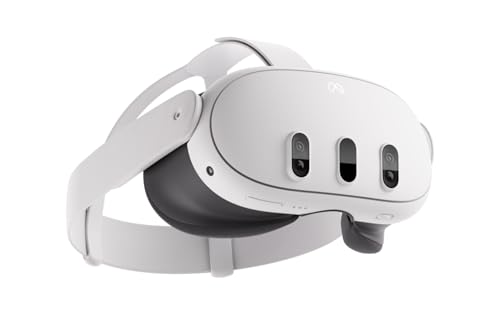
The Meta Quest 3S provides an exceptional, budget-friendly entry into virtual reality by combining the top-tier Qualcomm Snapdragon XR2 Gen 2 processor from the flagship Quest 3 with the more affordable body design of the older Quest 2. Priced at £290 (€330/$300), it delivers twice the processing speed of its predecessor, resulting in smoother performance, faster app loading times, and a highly responsive ecosystem. Standout advantages include a vast standalone game library, excellent colour pass-through cameras that enable clear mixed-reality experiences, built-in spatial audio speakers, and highly accurate hand controllers. The headset is also praised for its comfortable, adjustable strap design and its seamless compatibility with PC VR setups. However, Meta cut several corners to maintain this aggressive price point, primarily by reusing the older generation Fresnel lenses and screen from the Quest 2. This hardware restriction results in a narrower sweet spot, with noticeable blurriness around the edges of your vision and text that lacks sharpness. Consequently, the device is poorly suited for productivity tasks, password management, and media consumption outside of gaming. Additional drawbacks include a modest two-hour...
Meta Quest 3S Review Summary The Meta Quest 3S is Meta’s budget-friendly entry point into mixed reality, priced at £220 ($300) for the base 128GB model. Powered by the advanced Qualcomm Snapdragon XR2 Gen 2 chip, it matches the performance and speed of the more expensive Quest 3, delivering faster load times and sharper graphics compared to its predecessor. Its standout feature is an upgraded color passthrough camera array that maps the user's physical environment, making it an excellent, safer device for mixed-reality fitness apps and active games. It also features lighter plastic housing and compact controllers that omit the bulky tracking rings of older generations. However, Meta cut costs by utilizing the older fresnel lenses and the same 1,832x1,920-pixel-per-eye display resolution as the discontinued Quest 2, making text look slightly muddy compared to the Quest 3's crisp pancake lenses. Battery life remains restrictive at less than three hours per charge, requiring frequent recharging sessions. Additionally, the headset continues to feel uncomfortable during extended gameplay sessions and lacks a dedicated headphone jack. Ultimately, while it is a massive value upgrade...
The Meta Quest 3S is an exceptional and affordable gateway into next-generation virtual reality, earning a near-perfect 9.5 review score. Equipped with the same powerful Snapdragon XR2 Gen 2 processor and 8 GB of RAM as the pricier Quest 3, the 3S delivers highly responsive, smooth performance across menus and demanding gameplay, supported by a fluid 120Hz refresh rate. Its lightweight design, weighing 515 grams, provides a comfortable fit for extended play sessions, and the included glasses spacer efficiently blocks out external light. Standout positive features include its top-tier ergonomic controllers, an intuitive user onboarding experience, and an impressive battery life of 3.5 to 4.5 hours—firmly outlasting both the Quest 3 and Quest Pro. It also excels as a media device, allowing users to seamlessly stream Xbox Cloud Gaming titles directly to the headset. However, the lower $299.99 retail price requires clear hardware compromises, primarily regarding visual fidelity. Unlike the Quest 3's dual displays, the Quest 3S utilizes a single LCD display, dropping the resolution to 1832 x 1920 pixels per eye. This reduction in clarity is particularly noticeable for...
The Meta Quest 3S is a highly capable budget VR headset retailing at $299 for the 128GB version, delivering next-generation performance by utilizing the same powerful Snapdragon XR2 Gen 2 chipset and Touch Plus controllers as the premium Quest 3. The review highlights several standout pros, including its exceptional full-color mixed reality quality, improved hand tracking in low-light environments, and thousands of compatible games like the bundled Batman: Arkham Shadow. Additionally, it features unique hardware advantages over the standard Quest 3, such as built-in IR illuminators for tracking spatial movement in pitch-black rooms and a dedicated physical mixed reality toggle button on the bottom of the device for seamless environmental awareness. However, Meta achieved this aggressive price point through a few notable hardware compromises that serve as the main cons. The headset reuses the older, thicker Fresnel lenses and lower-resolution display from the Quest 2, resulting in a duller image, a small central "sweet spot" for clarity, and a constricting 90-degree field of view compared to the Quest 3's 110-degree pancake optics. This lower pixel density and increased lens fog...
Meta Quest 3S Review Summary The Meta Quest 3S serves as Meta’s budget-friendly entry into virtual reality, retailing at a highly accessible $299 for the 128 GB model. On the positive side, it delivers excellent performance value by utilizing the exact same Snapdragon XR2 Gen 2 chip and 8 GB of RAM found in the premium Quest 3. This allows it to seamlessly run demanding new standalone titles like Batman: Arkham Shadow and reliably stream PC VR games. Additionally, it comes bundled with the capable Touch Plus controllers and features full color passthrough for mixed reality experiences. However, achieving this low price point requires significant hardware compromises that heavily impact visual clarity. The headset relies on older Fresnel lenses instead of advanced pancake lenses, creating a narrow central "sweet spot" that leaves the display edges noticeably blurry and prone to distracting lens flares. Users are also limited to just three fixed interpupillary distance (IPD) presets, which can cause severe eye strain or persistent blurriness if their eyes do not perfectly align with those settings. Other notable downsides include a lower...
The Meta Quest 3S acts as a budget-friendly alternative to the premium Meta Quest 3, offering identical hardware performance but utilizing a cheaper optical stack to lower the price. Both headsets are powered by the Snapdragon XR2 Gen 2 chipset and 8GB of RAM, providing the same smooth graphical capabilities, mixed reality full-color pass-through, and access to the Horizon store. The main advantages of the Quest 3S include its significantly lower entry price, a dedicated physical Action button for instant pass-through access, and a slightly longer battery runtime during standard operations. However, it compromises heavily on design and visual clarity, featuring bulkier Fresnel lenses, a narrower field of view, a smaller IPD range that can only be adjusted in three rigid steps, and a single LCD panel with a lower resolution. In contrast, the premium Meta Quest 3 justifies its higher price tag with a much slimmer chassis design and advanced pancake lenses that provide a wider field of view, a larger visual sweet spot, and continuous manual IPD adjustment via a physical wheel. It also holds key design advantages,...
The Meta Quest 3S is an outstanding, budget-friendly standalone VR headset that replaces the aging Quest 2 as the new entry-level standard. Priced at $299.99, it blends the processing power and advanced capabilities of the premium Quest 3 with the display hardware of its predecessor. It features the powerful Qualcomm Snapdragon XR2 Gen 2 chip, 8GB of RAM, and identical Touch controllers, alongside upgraded 4MP full-colour pass-through cameras that allow users to view their physical surroundings in colour rather than monochrome. The headset is highly versatile, operating seamlessly as a standalone unit or tethered to a PC via a Link Cable to run SteamVR games with enhanced graphics. Several specific pros and cons define the device's overall value. The primary pros include its highly inexpensive price point, an incredibly fast processor, and the inclusion of full-colour pass-through video. Additionally, it boasts a vast library of compatible apps and games, alongside an improved average battery life of 2.5 hours, outlasting the more expensive Quest 3. Conversely, the main cons center on its visual compromise; it uses older Fresnel lenses and inherits...
The Meta Quest 3S is identified as a top-tier, affordable entry-level headset, leveraging the same Snapdragon XR2 Gen 2 processor, mixed-reality pass-through, and Touch Plus controllers as the premium Quest 3. It delivers high-performance 90Hz-120Hz gameplay and broad access to Meta's app library, offering significant value over previous budget models. However, this lower price point requires compromises, most notably the use of older, thick Fresnel lenses that result in a smaller field of view and lower visual clarity compared to the Quest 3's pancake lenses. Additional drawbacks include a lower resolution display, the absence of a 3.5mm headphone jack, and the removal of the physical depth sensor. YouTube
The Meta Quest 3S is an exceptional, budget-friendly virtual reality headset designed for beginners or returning users, retailing at $299.99 for the 128GB version and $399.99 for the 256GB version. Powered by the robust Qualcomm Snapdragon XR2 Gen 2 chipset, it delivers the exact same application and game library as the more expensive Quest 3. Key advantages of the device include its highly intuitive Horizon OS setup, comfortable 514g lightweight design, and the inclusion of well-designed motion controllers that support hand-tracking. Furthermore, it boasts an upgraded, full-color, low-lag passthrough video feature that enhances mixed-reality experiences, alongside a competitive battery life of roughly two and a half hours. To achieve its lower price point, Meta made deliberate hardware compromises that serve as the headset's main drawbacks. The Quest 3S features a lower-resolution single LCD display (1832 x 1920 pixels per eye) and utilizes older Fresnel lenses, which limits its field of view to 96 degrees horizontal and 90 degrees vertical. This results in a noticeable dip in visual sharpness and a narrower view compared to the Quest 3's advanced pancake lenses....
The Meta Quest 3S stands out as the best overall VR headset for its value, offering a robust game and app library, excellent mixed-reality color passthrough, and speedy performance powered by the Snapdragon XR2 Gen 2 processor—all at an affordable starting price of $299. It serves as a highly versatile device suitable for gaming, fitness, and media consumption. However, to achieve this lower price point, Meta made strategic compromises, such as utilizing cheaper Fresnel lenses instead of pancake optics, dropping the 3.5mm audio jack, and delivering a lower-resolution display with a narrower viewing angle. Reviewers also noted that it has a relatively short battery life and can become uncomfortable during extended wear. For users willing to spend an extra $200, the step-up Meta Quest 3 is crowned the best standalone VR headset on the market. It upgrades the experience with sharper pancake lenses that eliminate light glare, a higher 2K per-eye resolution (combined 4K), a wider 110-degree field of view, and a built-in 3.5mm headphone jack. It also features a physical IPD adjustment wheel and a dedicated depth sensor for...
The Meta Quest 3S is a budget-friendly hybrid VR headset that balances the hardware internals of the Quest 3 with the legacy optics of the Quest 2. It is equipped with a powerful Snapdragon XR2 Gen 2 processor and 8 GB of RAM, enabling it to play demanding modern titles like Batman: Arkham Shadow with smooth, low-latency responsiveness. Key advantages include full-colour passthrough cameras, a dedicated hardware action button to easily toggle between VR and real-world environments, and an accessible entry price of $299 for the 128 GB model. It also provides straightforward wireless or wired connectivity options for PC VR integration via Air Link and Type-C cabling. However, the headset makes several notable compromises to maintain its lower price point. It relies on older, single-panel LCD Fresnel lenses which suffer from distortion and blurriness at the outer edges of your vision, unlike the sharper pancake lenses found on the standard Quest 3. Additional drawbacks include the lack of a 3.5 mm audio jack, a basic cloth head strap that users will likely want to replace, and a restrictive physical...
The Meta Quest 3S serves as an excellent entry-level mixed-reality headset, bridging the gap between the premium Quest 3 and the aging Quest 2. Priced at a budget-friendly $299.99 for the 128GB version, it inherits the powerful Snapdragon XR2 Gen2 processor, 4MP full-color passthrough cameras, and light, ring-less Touch Plus controllers from the Quest 3. These internal specs deliver exceptionally smooth standalone gaming performance at 90Hz and 120Hz, seamlessly handling demanding titles like Asgard's Wrath 2 and Blade & Sorcery: Nomad. Furthermore, because of its lower display resolution, it maintains high framerates better and boasts a superior battery life of around two full hours per charge compared to the Quest 3. Its user-friendly interface, physical action button for swift mode-switching, and full-color mixed reality allow for immersive experiences where games can dynamically interact with real-world home geometry. However, the cost savings come with notable hardware downgrades inherited directly from the Quest 2. The most significant drawback is the use of older Fresnel lenses instead of the Quest 3's crisp pancake lenses, resulting in a lower 1832 x 1920 resolution, a...
The Meta Quest 3S is highlighted as an excellent budget-friendly VR and mixed-reality headset, featuring the same powerful Qualcomm Snapdragon XR2 Gen 2 processor as the pricier Quest 3. It supports a robust library of standalone games, offers full-color pass-through for mixed reality, and can be tethered to a PC for enhanced performance. However, to maintain a low price point, the device uses older Fresnel lenses and a single LCD panel, resulting in a less sharp image and narrower field of view compared to the Quest 3. Additionally, the controller tracking requires the controllers to remain within the front-facing sensor view, which can limit tracking precision in certain scenarios. YouTube
The Meta Quest 3S review on Stuff awards the standalone VR headset a 5 out of 5 rating, crowning it an excellent, well-rounded entry point for virtual reality newcomers. The device shares the exact same inside-out tracking, Qualcomm Snapdragon XR2 Gen 2 processor, 8GB of RAM, and clever ring-free Touch Plus controllers as the more premium Meta Quest 3. These components ensure snappy load times and smooth performance across Meta’s extensive library of standalone VR and mixed-reality content, as well as great compatibility with PCVR games. Prominent pros highlighted in the review include its highly affordable pricing, access to the largest standalone software ecosystem, and impressive full-colour mixed-reality passthrough capabilities. However, Meta achieved this aggressive pricing by making clear hardware compromises, particularly in visual presentation and overall physical ergonomics. The most notable cons are the use of older-generation Fresnel lenses—which display noticeable "god ray" visual artifacts and grey shadows—instead of the clearer, modern pancake optics found on the Quest 3. Furthermore, the resolution is limited to 1832×1920 per eye on a single LCD screen, and the device features a restrictive...
The Meta Quest 3S provides an affordable and powerful entry point into virtual reality, functioning as a budget-friendly alternative to the standard Quest 3. Equipped with the exact same fast processor and operating speed as its more expensive sibling, the headset delivers a smooth and responsive performance across everyday applications, fitness software, and gaming. It features a refreshed operating system (OS 7.1) that supports multitasking with up to three active windows running side-by-side, drawing distinct design cues from Apple's interface. Furthermore, the device offers a full-colour pass-through mode of comparable quality to the Quest 3, allowing users to safely view their real-world surroundings without removing the 514-gram headset. Despite its high-end processing power, the lower price point results in notable compromises regarding display clarity and control mechanics. The primary drawback is its downgraded lens system and lower resolution, which produces a somewhat pixelated display that is poorly suited for reading text, working, or high-detail productivity tasks. While the device includes built-in hand tracking, the gesture controls often feel jerky and unreliable compared to premium competitors like the Apple Vision Pro,...
summary of the Meta Quest 3s review: The Meta Quest 3s stands out as an exceptional, highly comfortable, and easy-to-use all-in-one standalone VR headset available at an attractive entry-level price of around €330 to €350. Powered by the Snapdragon XR2 Gen2 chip alongside 8 GB of RAM, the hardware delivers strong, smooth 120 Hz gaming performance with surprisingly minimal noise and heat generation. Its high-quality color cameras enable an impressive mixed-reality experience, complemented by great internal spatial audio and highly robust, responsive controllers. Users can easily customize their physical boundaries in passthrough mode, and the headset is even roomy enough to be worn comfortably over regular prescription glasses without using the included spacer. However, the lower price point does bring a few noticeable compromises. The headset's display has a resolution of 1,832 x 1,920 pixels, which results in a lower pixel density (by nearly 500 ppi) and less sharpness when compared directly to the standard Meta Quest 3. Additionally, the built-in battery lasts roughly 1.5 to 2 hours per session, but it frustratingly takes almost just as long to fully...
Meta Quest 3S Review Summary The Meta Quest 3S serves as a budget-friendly "light" version of the Quest 3, starting at €329.99, and effectively sets a new standard for entry-level VR headsets. On the positive side, it packs the exact same powerful internal hardware as its more expensive sibling—featuring the Qualcomm Snapdragon XR2 Gen 2 processor with 8 GB of RAM—which ensures smooth performance and full compatibility with all Meta Store and exclusive Quest 3 games. It also includes the identical, high-quality motion controllers of the top model, delivers excellent tracking, features WiFi 6E support, and provides an impressive, unabridged Mixed Reality mode with full-colour passthrough. To meet the lower price point, the Quest 3S makes compromises, notably by using older Fresnel lenses, which, according to the GameStar review, result in more glare and reduced edge-to-edge sharpness. Additionally, the headset suffers from limited battery life (roughly 1.5 to 2.5 hours) and a less comfortable, basic head strap. Other cutbacks include the lack of a 3.5mm headphone jack and only three fixed, rather than adjustable, lens distance (IPD) settings. Nevertheless, due...
The Meta Quest 3S offers a highly affordable entry point into virtual reality at a competitive price of €329 for the 128 GB variant, backed by an impressive standalone featureset. Powered by the robust Snapdragon XR2 Gen 2 processor paired with 8 GB of RAM, the headset delivers smooth, high-performance gameplay for demanding VR titles and handles multitasking seamlessly. Its tracking capabilities are highly stable, matching the flagship Quest 3 and even performing better in low-light environments due to an integrated infrared sensor. Users gain full access to Meta's vast app ecosystem and smooth PC-VR streaming via Link or Wi-Fi, making it a powerful budget options for pure gaming. However, major compromises were made in optics, comfort, and user onboarding, making it difficult to fully recommend for VR beginners. The biggest drawback is the use of outdated Fresnel lenses, which feature a narrow "sweet spot" and cause noticeable blurriness toward the edges, alongside visual distractions like "god rays" and lens reflections. This edge-blur necessitates unnatural head movements, heavily limiting its usefulness for mixed-reality multitasking, productivity apps, or reading text. Additionally,...
The Meta Quest 3S is an affordable entry-level Mixed Reality headset priced at a baseline of €329.99, featuring the same powerful Snapdragon XR2 Gen2 processor, GPU, and RAM as the more expensive Meta Quest 3. Its lower display resolution actually provides a noticeable performance boost, enabling seamless 90 Hz or 120 Hz gaming for intensive standalone and PC-VR titles. Key advantages include its excellent 4-megapixel full-colour passthrough cameras for high-quality mixed reality, an intuitive setup process, lightweight Touch Plus controllers, and a dedicated hardware action button to toggle immersion modes. Furthermore, its 4324 mAh battery outperforms the Quest 3 by lasting a solid two hours during heavy usage. However, the cost savings stem from using the older Fresnel lenses from the Quest 2 instead of the premium pancake lenses found in the Quest 3. This hardware regression results in a significantly smaller optical sweet spot, a narrower field of view (96H/90V), and a lower resolution of 1832 x 1920 pixels per eye. Interpupillary distance (IPD) adjustment is also limited to three fixed settings between 58–68 mm, making clear image calibration...
Comprehensive Review Summary This review evaluates six virtual reality headsets, highlighting that standalone, wireless operation via Wi-Fi has become the industry standard for mainstream devices. The Apple Vision Pro ranks as the top-performing premium option (Test Note: 1.4), praised for its incredibly sharp 3,386 ppi (34 PPD) display, highly intuitive gesture control without physical controllers, seamless integration into the Apple ecosystem, and high-quality passthrough cameras. However, its massive €3,999 price tag makes it inaccessible for average consumers, it requires an iPhone to use, the Solo Loop headband causes discomfort during extended wear, and prescription lens inserts cost extra. For budget-conscious buyers, the Meta Quest 3S earns the "value tip" award at roughly €330, utilising the same fast processor as its larger sibling for great responsive speeds. Yet, it compromises with a slightly pixelated display that is unfit for virtual office use, and its hand-gesture tracking can be sluggish or erratic. For the average consumer, the Meta Quest 3 (Test Note: 2,1) offers the best overall balance of performance and price (€519), featuring a refined user interface, sharp display, reliable physical...
The Meta Quest 3S is a highly affordable standalone Virtual and Mixed Reality headset tailored specifically for VR beginners, operating entirely without a PC or console. Powered by a Snapdragon XR2 Gen 2 processor with 8GB RAM, the device delivers fluid performance across all tested games without any lag. Its key strengths include highly precise 6DOF room tracking (which remains reliable even when controllers are briefly behind your back), seamless Wi-Fi 6e or cable connectivity to a gaming PC for thousands of SteamVR games, and smooth 3D stereo RGB passthrough for Mixed Reality experiences. It features an intuitive user interface with access to the massive Horizon Store, high-quality microphone audio, responsive hand tracking, and a dedicated face insert that comfortably accommodates glasses. However, Meta made specific hardware cutbacks to achieve its low price point of €329 for the 128GB version and €439 for the 256GB version. The headset utilizes an older, less modern Fresnel lens design, which causes minor God-Ray or light injection artifacts. The LC-display offers a relatively low resolution of 1832x1920 pixels (20 PPD), resulting in a slight,...
The Meta Quest 3S is a budget-friendly mixed reality headset designed to make spatial computing accessible to a broader audience. It packs the identical high-performance Snapdragon XR2 Gen 2 processor and 8GB of RAM found in the more expensive Quest 3. This hardware ensures seamless, fluid gameplay for demanding titles like Batman: Arkham Shadow and Asgard's Wrath 2. Furthermore, its upgraded 4-megapixel color cameras deliver an excellent, low-latency passthrough experience for mixed reality tasks and casual multi-window browsing. The headset also retains a comfortable, easy-to-adjust strap system and the highly ergonomic Touch Plus controllers. However, achieving this lower price point required significant compromises regarding the optical system. The Quest 3S recycles the older Quest 2 Fresnel lenses and lower-resolution LCD displays (1832 x 1920 pixels per eye), which results in a tighter 96° field of view and noticeable blurring around the edges of the image. Minor text and details can feel strenuous to read during extended productivity sessions. Additionally, Meta completely removed the 3.5mm headphone jack, forcing users to rely entirely on integrated directional speakers or Bluetooth headphones. Hand-tracking controls...
The Meta Quest 3S review emphasizes its strategy of maintaining the core processing power of the standard Quest 3 while cutting specific hardware costs to hit a lower entry-level price point. Equipped with the same Qualcomm Snapdragon XR2 Gen 2 chipset and 8 GB of RAM, the headset delivers identical processing performance, easily handling demanding native games like Batman: Arkham Shadow and smoothly executing PC VR streaming via Steam Link. Its mixed reality capabilities remain highly functional, utilizing the same external sensor configuration to scan rooms, enable hand-tracking, and deliver an efficient color pass-through "real-world" view. Furthermore, the review highly praises Meta's robust, mature, and user-friendly Horizon OS. However, the affordability of the headset requires significant downgrades in display technology and physical comfort. The review details that the Quest 3S reverts to the older Fresnel lenses and a lower resolution of 1832 x 1920 pixels per eye—matching the outdated Quest 2. This combination restricts the horizontal field of view to 97° (down from the Quest 3's 110°) and results in a noticeably blurrier image, color separation at the edges, and...
The Presse-citron review highlights the Meta Quest 3S as an affordable, introductory headset that successfully opens up mixed reality to the general public. On the positive side, its budget-friendly price of €330 makes it nearly half the price of the Quest 3 and significantly cheaper than competing high-end headsets. Despite the cheaper build, the light 515 g matte plastic design and intuitive straps offer a highly comfortable fit for long-term wear. Performance is another major win, as it utilizes the exact same powerful Snapdragon XR2 Gen 2 chip and 8 GB of RAM as the premium Quest 3, allowing for seamless mixed reality tracking even in low-light environments. Additionally, the battery life is quite solid, delivering up to 2.5 hours of standalone use without needing an external pocket battery. Conversely, the review points out several notable hardware downgrades implemented to achieve the lower price point. The most prominent con is the visual quality; by opting for older Fresnel lenses instead of modern Pancake lenses, the edges of the display remain inherently blurry. The resolution is also noticeably lower at 773...
The Meta Quest 3S serves as a highly compelling entry-level mixed reality headset, purposefully priced at €330 to democratise virtual reality for newcomers. Driven by the powerful Snapdragon XR2 Gen 2 processor paired with 8GB of RAM, the device delivers a fluid, responsive interface and runs major standalone titles seamlessly, including the bundled Batman: Arkham Shadow. Its pass-through capability—powered by color cameras and dual LED projectors—allows users to safely navigate physical spaces, read smartphone messages, and track their hands even in darker rooms. Additional advantages include its lightweight build, a built-in 18W fast-charging power supply, and respectable built-in audio speakers that eliminate the absolute necessity of external headphones. However, the aggressive pricing demands significant technological concessions, most notably in display quality. The Fresnel lenses provide a relatively narrow 96-degree field of view and only three fixed manual adjustments for pupillary distance, leading to blurry edges and a visible pixel grid that makes text-heavy office tasks or 3D movie-watching sub-optimal. Furthermore, the controllers are powered by disposable AA batteries rather than a rechargeable internal power supply, and the hand-tracking feature experiences...
The 01net review of the Meta Quest 3S outlines it as an excellent and affordable entry point into virtual reality, highlighting an unbeatable value proposition. Priced starting at €330, it retains the high performance of the premium Quest 3 by incorporating the same powerful Snapdragon XR2 Gen 2 chip and 8 GB of RAM. The standalone device delivers optimal comfort through an exceptionally balanced weight distribution of its 514-gram body. Backed by Horizon OS, it leverages the best VR software ecosystem on the market, offering outstanding performance in gaming with immersive experiences like Batman: Arkham Shadow. It is also praised for its battery life, providing roughly 2.5 hours of autonomy—surpassing the more expensive Quest 3 model. However, the reviewer details notable drawbacks resulting from the cost-cutting compromises made to achieve its low price point. The most significant sacrifices are the screens and optics, which use outdated Fresnel lenses and the lower-resolution displays from the Quest 2 (1832 x 1920 pixels per eye), causing more visible pixelation. Consequently, the full-color video passthrough for mixed reality is less convincing, appearing grainy and...
The Meta Quest 3S is a highly competitive, budget-friendly standalone VR/MR headset equipped with a powerful Snapdragon XR2 Gen 2 processor and 8GB of RAM, ensuring smooth performance in demanding titles like Batman: Arkham Shadow. It features an LCD screen with a resolution of 1832 x 1920 pixels per eye and up to a 120Hz refresh rate, delivering a clear central display. Key advantages include its exceptionally aggressive pricing (starting at €359.99 for the 128GB version), comfortable design with a breathable facial cushion, and highly convincing full-colour mixed reality passthrough via 4-megapixel cameras. The headset also utilizes the ergonomic Touch Plus controllers and includes a convenient dedicated hardware button underneath to swap instantly between VR and AR modes. However, several cost-cutting trade-offs are present. The headset relies on older Fresnel lenses instead of the pancake lenses found on the standard Quest 3, causing peripheral blurring and distracting light halos ("god rays") around bright objects. It completely removes the 3.5mm headphone jack, forcing users to rely on the built-in spatial speakers, Bluetooth audio, or a USB-C adapter. Additionally, its 96-degree field...
This review highlights the Meta Quest 3S as an exceptionally high-value virtual reality headset, offering a significant performance leap over the aging Quest 2 for a starting price of €330. Powered by the robust Qualcomm Snapdragon XR2 Gen 2 chipset—the same processor found in the higher-end Quest 3—the device delivers faster load times, seamless mixed reality experiences, and stable frame rates of 60 fps or higher even during graphically intensive games like Asgard's Wrath. Furthermore, users benefit from precise Touch Plus controllers and an integrated spatial awareness boundary feature that enhances user safety by mapping physical surroundings. The bundle includes 8GB of RAM, 128GB of storage, and a free copy of Batman: Arkham Shadow, which solidifies it as one of the most compelling console recommendations currently on the market. However, the lower price point necessitates several hardware compromises. To cut production costs, Meta reused the legacy Fresnel lenses featuring a 1832 x 1920 per-eye resolution from the Quest 2, sacrificing the pristine clarity of the Quest 3’s 4K pancake optics. Another major drawback is the complete omission of a 3.5mm...
The Meta Quest 3S is a budget-friendly virtual reality headset that delivers a highly capable standalone VR and mixed-reality experience at a fraction of the cost of the standard Quest 3. On the positive side, it shares the exact same high-performance Qualcomm Snapdragon XR2 Gen 2 chipset, 8 GB of RAM, and Adreno 740 GPU as its premium counterpart, ensuring identical processing power. It also features the same impressive Meta Quest Touch Plus controllers, built-in stereo speakers, and tracking capability via six degrees-of-freedom (DoF) sensors and four internal cameras, which replicate the premium augmented reality experience. Additionally, testing revealed that the Quest 3S surprisingly offers slightly better battery life despite physically having a smaller battery capacity. However, achieving this lower price point required notable hardware compromises. The most significant drawback is the regression to older Fresnel lenses instead of the advanced Pancake lenses used in the standard Quest 3, forcing users to move their entire head rather than just their eyes to look around smoothly. This downgrade reduces the field of view to 96° horizontal and 90° vertical (down from...
The VR Italia review positions the Meta Quest 3S as a highly strategic entry-level standalone headset that functions as a bridge to next-generation VR gaming. Priced competitively starting at €329 for the 128 GB model (and €439 for 256 GB), its biggest advantage is that it shares the exact same Snapdragon XR2 Gen 2 processor as the more premium Meta Quest 3. This hardware symmetry allows the budget device to deliver smooth, equivalent in-game performance and native compatibility with demanding future titles. Additional prominent pros include the introduction of full-colour passthrough for functional mixed reality, the inclusion of ergonomic Quest 3 Touch Plus controllers with superior haptic feedback, and integrated Wi-Fi 6E which significantly improves PCVR streaming via Air Link. However, the review details notable drawbacks resulting from Meta's cost-cutting compromises. The most significant disadvantage is the retention of older Fresnel lenses inherited from the Quest 2, which suffer from a smaller sweet spot of sharpness and distracting visual reflections compared to the Quest 3’s superior pancake lenses. Additionally, the hardware features a lower overall resolution of 1800×1920 pixels per...
The Gamereactor Italia review gives the Meta Quest 3S an overall score of 8 out of 10, framing it as a highly aggressive budget alternative to the standard Quest 3. Priced significantly lower at €290 for the 128GB version, it effectively lowers the barrier to entry for consumers who are curious about virtual and augmented reality but hesitant about the cost. The reviewer emphasizes that the headset replicates nearly the same core experience as the more expensive model, making it an impressive standalone value. Pros and Cons Breakdown Pros: Aggressive Pricing: At €290 for 128GB, it offers a substantial financial saving over the standard Quest 3. Uncompromised Core Hardware: It retains the powerful Qualcomm Snapdragon XR2 Gen 2 chipset, Adreno 740 GPU, and 8GB of RAM, ensuring identical app performance. Full Feature Parity: Includes the exact same Meta Quest Touch Plus controllers, six degrees of freedom (DoF) tracking, built-in stereo speakers, and four internal cameras for mixed reality. Longer Battery Life: Despite utilizing a technically smaller battery, the 3S achieved a slightly longer battery lifespan during tests. Cons: Inferior Fresnel...
Review Overview The Meta Quest 3S is a highly accessible, entry-level virtual reality headset priced at €329.99, making it an excellent alternative to the premium €549.99 Meta Quest 3. Running on the powerful Snapdragon XR2 Gen 2 processor with 8GB of RAM, it shares the same core performance as its more expensive sibling but cuts costs by utilizing lower-resolution Fresnel lenses (1832 x 1920) and a fixed, three-position IPD adjustment. The reviewer highlights native games like Batman: Arkham Shadow as standout, highly immersive experiences that brilliantly utilize physical actions like throwing Batarangs and gliding. Additionally, multiplayer titles like Breachers showcase intense, competitive gameplay, while the system serves well as a virtual media hub for streaming content on giant simulated screens. Pros and Cons Pros Affordability: At €329, it offers a great entry point into VR with available installment payment options. High Immersion: Native games and racing simulators like F1 24 deliver exceptional environmental realism. Media Capabilities: Acts as a great virtual home cinema using apps like YouTube and Prime Video. Core Hardware: Uses the same high-end processor and RAM as...
The Meta Quest 3 and Quest 3S significantly upgrade the mobile virtual reality experience, bringing notable hardware improvements over the older Quest 2 model. Equipped with the new Snapdragon XR2 Gen 2 chip, the headsets deliver faster loading times, quicker motion response, and vastly sharper graphic performance. A major standout feature is the full-color passthrough capability, which enhances mixed reality experiences by blending high-resolution virtual items into the user's actual physical room. Furthermore, the Quest 3 features a lighter, more balanced design that drastically improves physical ergonomics and overall user comfort during extended gameplay sessions. Despite these clear technological steps forward, buyers must weigh explicit trade-offs depending on which variant they choose. The primary drawback of the standard Meta Quest 3 is its higher price point, whereas the budget-friendly Quest 3S suffers from noticeably lower image resolution and less overall graphical processing power. Additionally, the standard Quest 3 model heavily prioritises high-end, advanced mixed reality features, meaning those who opt for the cheaper Quest 3S variant will miss out on the highest tier of visual precision required for intensive games.
Compare