Scored using VR headsets Methodology v3.0
VR headsets Methodology v3.0
Mathematical & Unbiased Scoring
Products in this category are scored under Frontum VR headsets Methodology v3.0: the technical score from the specifications is the base, and independent expert and video reviews (up to ±0.5 points), owner opinions (up to ±0.3) and best-of lists (up to +0.3) move it up or down.
Explore VR headsets Methodology v3.0

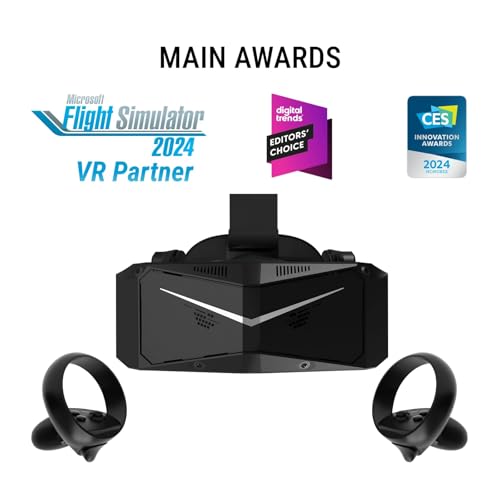
Pimax Crystal Light review: 90 specs compared

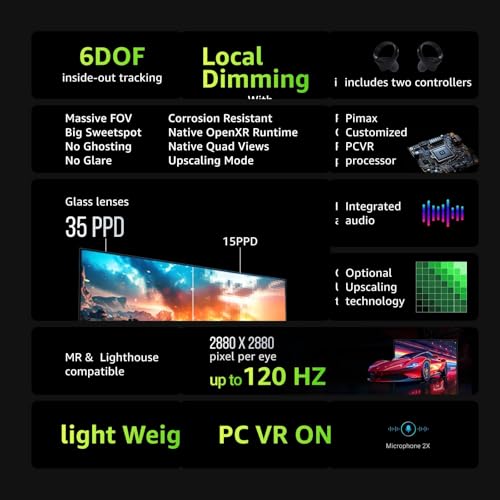
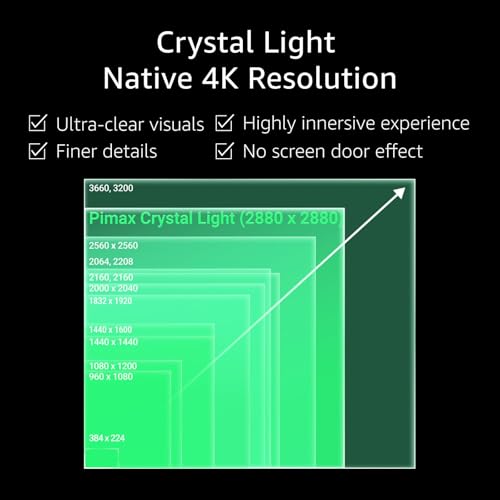
Avg. price:~£1,040Weight:815 gResolution:2880x2880Refresh rate:120 HzDisplay type:QLEDDevice type:PC VR

Pimax Crystal Light Review: Compare 90 technical specifications, 14 expert and video reviews and 19 best-of lists to see how this product ranks in the VR headsets category and whether it is worth buying.
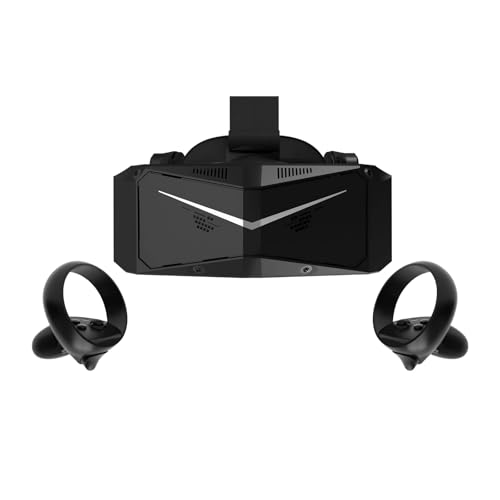
Pimax Crystal Light
8.0/10

Overall score

Score
8.0/ 10
✕
What it is
Our main score for this model, 1–10. It combines specs, best-of lists, expert reviews and owners.
How we count it
Parts: Technical score 35%, List score 30%, Reviews score 25%, Sentiment score 10%
Marks: Each part gets a mark out of 10. For reviews, lists and owners, a typical model in this category gets about 8 and the best one gets 10.
No data yet: A part with no data shows "?". It counts as the mark of a weaker model in this category (4 in 5 models with data score higher). This way, models with reviews, lists and owners usually come out ahead.
Score distribution
▼
<55-66-77-88-99-10
Score components

35%

7.7

Technical score

30%

8.6

List score

25%

7.9

Reviews score

10%

7.3

Sentiment score

▲Better than 84% of VR headsets
7.1

Value for money

Value for money
7.1/ 10
✕
What it is
An indicator that combines the VR headset's overall rating with its cost.
When it matters
When you are looking for a VR headset with a good balance between quality and price.
Score distribution
▼
<55-66-77-88-99-10
Score components

70%

8.0

Overall score

30%

5.0

Price

▼Worse than 58%
7.7

Technical score

Technical score
7.7/ 10
✕
What it is
How good the specs are compared with the other models in this category, 1–10.
How we count it
Areas: We rate the specs in each area against the other models in this category.
Weighting: The areas that matter most to buyers count more. The shares are shown under Score components.
Share: The technical score is 35% of the overall score.
Score distribution
▼
<55-66-77-88-99-10
Score components

58%

8.7

Display

22%

6.0

Tracking

10%

8.7

Controls & Audio

4%

4.0

Hardware

3%

6.2

Connectivity

3%

5.2

Design & Power

▲Better than 89%
7.9

Reviews score

Reviews score
7.9/ 10
✕
What it is
Average grade from independent test sites, magazines and video reviewers, 1–10.
How we count it
Grades: Each review's own score is converted to 1–10; without one, we grade the review ourselves. Big test sites count more, short reviews half as much as full tests. A video review counts half.
Score: The average grade is 80% of the review mark; the number of reviews is the other 20% (1 review = 5, the typical number in this category = 8, the most-reviewed model = 10).
Enough data: With few reviews, the average grade is pulled toward the typical grade of this category. No reviews yet: 7.2 for now.
Share: Reviews count 25% of the overall score.
Score distribution
▼
<55-66-77-88-99-10

80%

8.1

Average grade

20%

7.1

Popularity

Grades by review (14)
3 reviews: 1 with a printed score, 2 estimated from the review. 11 video reviews, each counting half as much as a written test. Reviews count 25% of the overall score.
User ratings collected online are not part of this score.
▲Better than 60%
8.6

List score

List score
8.6/ 10
✕
What it is
How often independent test sites, magazines and video reviewers put this model in their best-of lists for this category.
How we count it
Points: The model in the most lists of this category gets 10; the others get 8 to 10 in proportion. In no list yet: 7.5. Lists count 30% of the overall score.
Enough data: Every list counts, even a single one. With fewer than 5 best-of lists in the category, this part is left out.
Lists with this model (19)
List score: in 19 of 86 lists (22%)
▲Better than 84%
  • pimax-crystal-light
  • pimax-crystal-light
  • pimax-crystal-light
  • pimax-crystal-light
  • pimax-crystal-light
  • pimax-crystal-light
  • pimax-crystal-light
  • pimax-crystal-light
pimax-crystal-light
pimax-crystal-light
pimax-crystal-light
pimax-crystal-light
pimax-crystal-light
pimax-crystal-light
pimax-crystal-light
pimax-crystal-light
Where to buy
*As an Amazon Associate, we earn from qualifying purchases.
Best rankings
Available: ranking among products currently available (including other versions of this product).All: ranking among all products in the database.

What reviewers say about the Pimax Crystal Light

Based on 2 · 12

Reviewers rave about the stunning image quality, especially for sim racing and flight, but find the headset bulky and heavy.
Praised
Mixed views
Criticised
Pick a topic to see who said what

What owners say about the Pimax Crystal Light

Based on 200 owners sharing their experience in online comments

38%positive9%mixed53%negative

Owners praise the clear, immersive image, while lens defects, setup hassles and uneven reliability spoil the experience.

What owners dislike

  • Owners report faulty lenses from quality control problems, with distortion, warping or dead pixels that needed replacement.49
  • Owners say the sweet spot is tiny, with blur, distortion and colour fringing outside it, and the image is hard to focus.23
  • Owners say Pimax support replies slowly and returns or replacements take weeks, with lens problems dragging on for months.23
  • Owners say getting the headset running well needs many hours of software setup, runtime changes and config file edits.22
  • Owners say Pimax software and firmware updates often break things, and it needs two monitors disconnected or specific settings to work.22
  • Owners say the headset is heavy, hot and uncomfortable, with pressure on the nose and forehead after 30 to 45 minutes.20
  • Owners say games stutter and frame rates drop, so they need a very powerful PC and many lowered settings to run smoothly.15
  • Owners say tracking drifts, jitters or freezes, and controllers and roomscale resets can be unreliable.13
  • Owners say the price is too high for what they get, and many think a Quest 3 offers similar clarity for far less money.10
  • Owners say lens distortion and tracking stutters cause eye strain and headaches, and some feel nauseous during use.8

Points mentioned by at least 3 owners, most mentioned first.

Loading...
Loading category ranking...

VR headsets model ranking

Ranked #10 of 63 models in VR headsets (Overall score)

Technical Specifications of VR headset Pimax Crystal Light

Technical score
Technical score
7.7/ 10
✕
What it is
How good the specs are compared with the other models in this category, 1–10.
How we count it
Areas: We rate the specs in each area against the other models in this category.
Weighting: The areas that matter most to buyers count more. The shares are shown under Score components.
Share: The technical score is 35% of the overall score.
Score distribution
▼
<55-66-77-88-99-10
Score components:

58%

8.7

Display

22%

6.0

Tracking

10%

8.7

Controls & Audio

4%

4.0

Hardware

3%

6.2

Connectivity

3%

5.2

Design & Power

7.7
Reviews score
7.9
List score
8.6
Value for money
Value for money
7.1/ 10
✕
What it is
An indicator that combines the VR headset's overall rating with its cost.
When it matters
When you are looking for a VR headset with a good balance between quality and price.
Score distribution
▼
<55-66-77-88-99-10
Score components:

70%

8.0

Overall score

30%

5.0

Price

7.1
Resolution
2880x2880
This VR headset has a screen resolution of 2880x2880 which is higher than that of 91.3% of VR headsets and equal to that of 2.2% of VR headsets.
Screen size
6 inches
Refresh rate
120 Hz
This VR headset supports a refresh rate of 120 Hz which is higher than in 71.1% of VR headsets and equal to that in 24.4% of VR headsets.
Visible FoV (horizontal)
110 °
This VR headset offers a horizontal FoV of 110 ° which is wider than that of 62.1% of VR headsets and equal to that of 22.4% of VR headsets.
Visible FoV (vertical)
?
Show more
What reviewers say
Tracking type
inside-out
360° head tracking
yes
This VR headset supports full 360° head tracking. 1.6% of VR headsets support this tracking mode.
N. of tracking sensors
4
N. of cameras
4
This VR headset has 4 cameras which is more than in 63.5% of VR headsets and equal to that in 15.9% of VR headsets.
Tracking frequency
?
Show more
Operating system
Windows
OpenXR support
yes
This VR headset supports OpenXR. 43.8% of VR headsets support this cross-platform VR standard.
Wireless PC streaming
no
This VR headset does not support wireless PC streaming. 31.3% of VR headsets support cable-free PC VR streaming.
Wi-Fi connectivity
no
This VR headset does not have Wi-Fi. 31.3% of VR headsets have Wi-Fi connectivity.
Wi-Fi version
N/A
Show more
Touch controllers
yes
This VR headset includes touch controllers. 30.4% of VR headsets come with dedicated hand controllers.
Game controller included
yes
This VR headset includes a game controller. 41.3% of VR headsets ship with controllers in the box.
Spatial audio
yes
This VR headset supports spatial audio. 16.7% of VR headsets support spatial audio.
N. of speakers
2
This VR headset has 2 speakers which is more than in 43.3% of VR headsets and equal to that in 56.7% of VR headsets.
N. of microphones
2
This VR headset includes 2 microphones, which is more than 52.5% of VR headsets and equal to 42.4% of VR headsets.
Show more
What reviewers say
Device type
PC VR
Chipset
N/A
CPU clock speed
N/A
GPU model
N/A
RAM capacity
N/A
Show more
What reviewers say
Battery capacity
N/A
Battery life
N/A
Charging time
N/A
Weight
815 g
This VR headset weighs 815 g which is heavier than 94.8% of VR headsets.
Headstrap type
?
Show more
What reviewers say

Pimax Crystal Light vs the average VR headset

246810TotalDisplayTrackingConnectivityControls & AudioHardwareDesign & Power
  • 33.3% higher refresh rate
    This VR headset has a higher refresh rate than the average VR headset (120 Hz vs 90 Hz). The average VR headset has a refresh rate of 90 Hz.
    120 Hz vs 90 Hz
  • See-through mode
    This VR headset supports see-through mode, the average VR headset does not. 40.3% of VR headsets offer passthrough viewing.
  • Better lens type
    This VR headset uses aspheric lenses, while the average VR headset uses fresnel lenses.
    aspheric vs fresnel
  • Higher screen resolution
    This VR headset has a higher screen resolution than the average VR headset (2880x2880 vs 2000x2040). The average VR headset has a screen resolution of 2000x2040.
    2880x2880 vs 2000x2040
  • 9 ° wider horizontal FoV
    This VR headset has a higher horizontal visible FoV than the average VR headset (110 ° vs 101 °). The average VR headset offers a horizontal visible FoV of 101 °.
    110 ° vs 101 °
  • Wider IPD adjustment range
    This VR headset has a higher IPD adjustment range than the average VR headset (58–72 mm vs 60–68 mm). The average VR headset supports an IPD adjustment range of 60–68 mm.
    58–72 mm vs 60–68 mm
  • Includes compass
    This VR headset features a compass, the average VR headset does not. 34.6% of VR headsets include a compass sensor.
  • 16.2% higher list score
    List score
    8.6/ 10
    ✕
    What it is
    How often independent test sites, magazines and video reviewers put this model in their best-of lists for this category.
    How we count it
    Points: The model in the most lists of this category gets 10; the others get 8 to 10 in proportion. In no list yet: 7.5. Lists count 30% of the overall score.
    Enough data: Every list counts, even a single one. With fewer than 5 best-of lists in the category, this part is left out.
    Lists with this model (19)
    List score: in 19 of 86 lists (22%)
    8.6 vs 7.4
  • 9.7% higher review score
    Reviews score
    7.9/ 10
    ✕
    What it is
    Average grade from independent test sites, magazines and video reviewers, 1–10.
    How we count it
    Grades: Each review's own score is converted to 1–10; without one, we grade the review ourselves. Big test sites count more, short reviews half as much as full tests. A video review counts half.
    Score: The average grade is 80% of the review mark; the number of reviews is the other 20% (1 review = 5, the typical number in this category = 8, the most-reviewed model = 10).
    Enough data: With few reviews, the average grade is pulled toward the typical grade of this category. No reviews yet: 7.2 for now.
    Share: Reviews count 25% of the overall score.
    Score distribution
    ▼
    <55-66-77-88-99-10

    80%

    8.1

    Average grade

    20%

    7.1

    Popularity

    Grades by review (14)
    3 reviews: 1 with a printed score, 2 estimated from the review. 11 video reviews, each counting half as much as a written test. Reviews count 25% of the overall score.
    User ratings collected online are not part of this score.
    7.9 vs 7.2
  • 33.3% higher refresh rate
    This VR headset has a higher refresh rate than the average VR headset (120 Hz vs 90 Hz). The average VR headset has a refresh rate of 90 Hz.
    120 Hz vs 90 Hz
  • Better lens type
    This VR headset uses aspheric lenses, while the average VR headset uses fresnel lenses.
    aspheric vs fresnel
  • Higher screen resolution
    This VR headset has a higher screen resolution than the average VR headset (2880x2880 vs 2000x2040). The average VR headset has a screen resolution of 2000x2040.
    2880x2880 vs 2000x2040
  • Wider IPD adjustment range
    This VR headset has a higher IPD adjustment range than the average VR headset (58–72 mm vs 60–68 mm). The average VR headset supports an IPD adjustment range of 60–68 mm.
    58–72 mm vs 60–68 mm
  • 9 ° wider horizontal FoV
    This VR headset has a higher horizontal visible FoV than the average VR headset (110 ° vs 101 °). The average VR headset offers a horizontal visible FoV of 101 °.
    110 ° vs 101 °
  • 5 years newer release date
    This VR headset is newer than the average VR headset (2024 vs 2019). The average VR headset was released in 2019.
    2024 vs 2019
  • See-through mode
    This VR headset supports see-through mode, the average VR headset does not. 40.3% of VR headsets offer passthrough viewing.
  • Includes compass
    This VR headset features a compass, the average VR headset does not. 34.6% of VR headsets include a compass sensor.
  • 2 more cameras
    This VR headset has more cameras than the average VR headset (4 vs 2). The average VR headset has 2 cameras.
    4 vs 2
  • 1 more microphones
    This VR headset includes more microphones than the average VR headset (2 vs 1). The average VR headset includes 1 microphones.
    2 vs 1
  • 16% lighter controllers
    This VR headset is lighter than the average VR headset (126 g vs 150 g). The average controller weighs 150 g.
    126 g vs 150 g
  • 45.5% heavier
    This VR headset is heavier than the average VR headset (815 g vs 560 g). The average VR headset weighs 560 g.
    815 g vs 560 g
  • Not compatible with Android
    This VR headset is not compatible with Android, the average VR headset is. 54% of VR headsets support Android pairing or companion apps.
  • Not compatible with Android
    This VR headset is not compatible with Android, the average VR headset is. 54% of VR headsets support Android pairing or companion apps.
  • 45.5% heavier
    This VR headset is heavier than the average VR headset (815 g vs 560 g). The average VR headset weighs 560 g.
    815 g vs 560 g

Video reviews

Hands-on testing, unboxing, and real-world video evaluations

9.0
Next Level Sim Gaming
≈ estimated
09/01/2026
Hands-on test · iRacing, RaceRoom and Assetto Corsa use
Verdict
Pimax Crystal Light is still worth buying in 2026 for sim racers who want smooth, immersive VR without paying a premium price.
8.0
Anoraker
≈ estimated
01/11/2025
Hands-on review · gaming, tracking and roaming comparison
Verdict
Pimax Crystal Light is worth it for PC gamers who want top image quality above all, but not for roaming or tracking.
8.0
LegacyPixlVR
✓ explicit
14/10/2025
Hands-on review · games, tracking and headset weight
Verdict
Pimax Crystal Light suits hardcore resolution fans with a powerful PC, though its weight and cost hold it back.
Not graded
Brand video
Not graded
Hands-on video, no verdict

Expert reviews

In-depth analysis and verdict from leading tech publications

4.5
mediaberry.co.uk
✓ explicit
19/01/2025
Hands-on review · Wired PC headset
Verdict
The Pimax Crystal Light has sharp displays, but its bulky build and wired setup suit enthusiasts with a powerful PC, not casual players.
9.0
mrtv.co
≈ estimated
20/01/2025
Hands-on review · Enthusiast PC headset
Verdict
The Pimax Crystal Light remains a top pick for enthusiast PC VR in 2025, with sharp visuals and built-in tracking, though its size and weight show its age.

Third-party reviews

What customers like about Pimax Crystal Light

  • 2880 x 2880 pixels per eye keeps small text sharp.
  • A 120 Hz refresh rate keeps motion smooth.
  • The 110 degree horizontal view feels roomy.
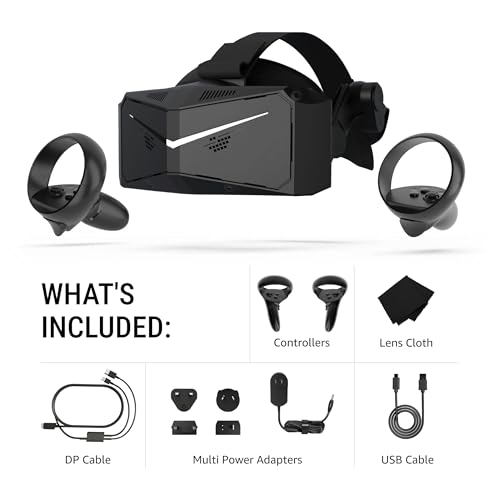
  • Touch controllers and a game controller are both in the box.
  • Spatial audio and haptic feedback are included.
  • OpenXR support means it works with OpenXR-based VR software.

What customers don't like about Pimax Crystal Light

  • At 815 g it is heavy for long sessions.
  • There is no wireless PC streaming, so a cable is needed.
  • There is no eye tracking.
  • There is no hand tracking.
  • There is no color passthrough to see the room.

Verdict

At 2880 x 2880 pixels per eye, the Pimax Crystal Light is a sharp PC headset for sim and racing fans who want small text to stay readable. Its 120 Hz QLED panel keeps motion smooth, and the 110 degree view feels roomy. Touch controllers and a game controller come in the box, so there is less to buy. Spatial audio and haptic feedback add to the sense of being in the cockpit. There is no wireless PC streaming, so a cable runs from the PC, over USB-C or DisplayPort 1.4. The headset weighs 815 g, and that is the main trade-off. There is no eye tracking, no hand tracking and no color passthrough. It suits a sim fan who wants sharp detail and does not mind a cable and a heavier headset.

Compare Pimax Crystal Light with other products in the VR headsets category

1Product to compare no. 1
VS
2Product to compare no. 2
VS
3Product to compare no. 3 (optional)

Graphic comparison of Pimax Crystal Light and other products in the VR headsets category

No results found