Scored using Smartwatches Methodology v3.0
Smartwatches Methodology v3.0
Mathematical & Unbiased Scoring
Products in this category are scored under Frontum Smartwatches Methodology v3.0: the technical score from the specifications is the base, and independent expert and video reviews (up to ±0.5 points), owner opinions (up to ±0.3) and best-of lists (up to +0.3) move it up or down.
Explore Smartwatches Methodology v3.0

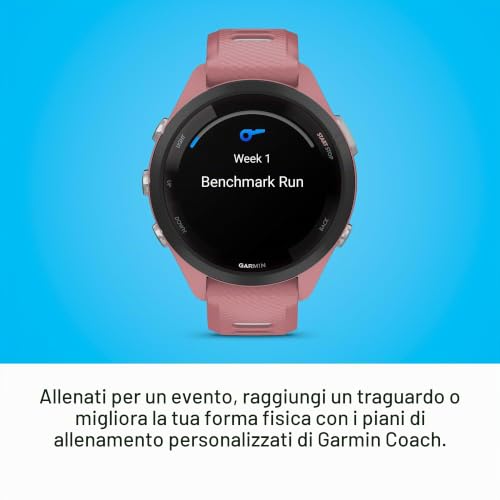
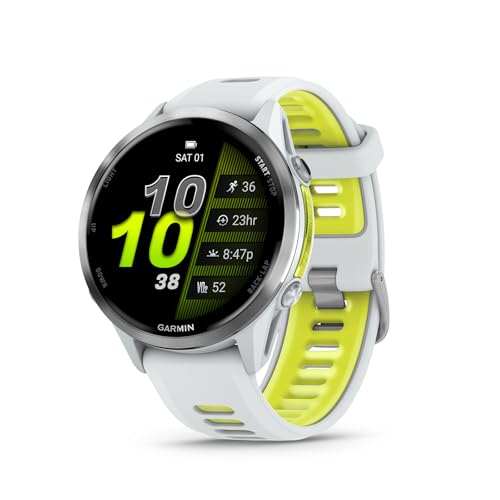
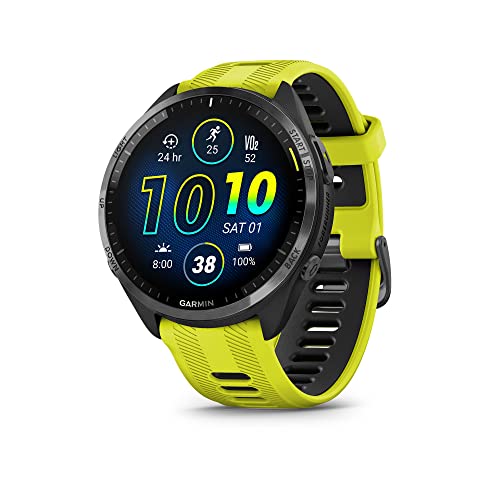
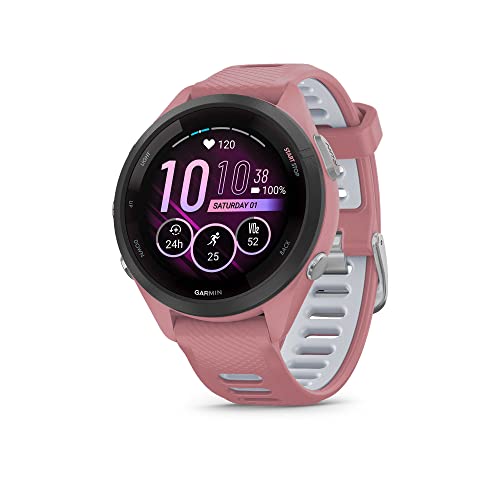
Garmin Forerunner 265S review: 127 specs compared

Avg. price:~£?Screen size:1.1 inchBattery life:15 daysDisplay type:AMOLED

Garmin Forerunner 265S Review: Compare 127 technical specifications, 9 expert and video reviews and 2 best-of lists to see how this product ranks in the Smartwatches category and whether it is worth buying.
Garmin Forerunner 265S
8.2/10

Overall score

Score
8.2/ 10
✕
What it is
Our main score for this model, 1–10. It combines specs, best-of lists, expert reviews and owners.
How we count it
Parts: Technical score 35%, List score 30%, Reviews score 25%, Sentiment score 10%
Marks: Each part gets a mark out of 10. For reviews, lists and owners, a typical model in this category gets about 8 and the best one gets 10.
No data yet: A part with no data shows "?". It counts as the mark of a weaker model in this category (4 in 5 models with data score higher). This way, models with reviews, lists and owners usually come out ahead.
Score distribution
▼
<55-66-77-88-99-10
Score components

35%

8.1

Technical score

30%

8.1

List score

25%

8.2

Reviews score

10%

8.8

Sentiment score

▲Better than 89% of smartwatches
?

Value for money

Value for money
✕
What it is
An indicator that combines the smartwatch's overall rating with its cost.
When it matters
When you are looking for a smartwatch with a good balance between quality and price.
Score distribution
▼
<55-66-77-88-99-10
Score components

70%

8.2

Overall score

30%

?

Price

Price not known yet
8.1

Technical score

Technical score
8.1/ 10
✕
What it is
How good the specs are compared with the other models in this category, 1–10.
How we count it
Areas: We rate the specs in each area against the other models in this category.
Weighting: The areas that matter most to buyers count more. The shares are shown under Score components.
Share: The technical score is 35% of the overall score.
Score distribution
▼
<55-66-77-88-99-10
Score components

24%

8.0

Health

21%

9.9

Fitness

16%

7.6

Battery

14%

8.6

Smart features

12%

7.6

Connectivity

9%

8.1

Display & Design

4%

1.7

Hardware

▲Better than 87%
8.2

Reviews score

Reviews score
8.2/ 10
✕
What it is
Average grade from independent test sites, magazines and video reviewers, 1–10.
How we count it
Grades: Each review's own score is converted to 1–10; without one, we grade the review ourselves. Every review counts the same: written or video, short or full test.
Score: The average grade is 80% of the review mark; the number of reviews is the other 20% (1 review = 5, the typical number in this category = 8, the most-reviewed model = 10).
Enough data: With few reviews, the average grade is pulled toward the typical grade of this category. No reviews yet: 7.5 for now.
Share: Reviews count 25% of the overall score.
Score distribution
▼
<55-66-77-88-99-10

80%

8.4

Average grade

20%

7.3

Popularity

Grades by review (9)
6 reviews + 3 videos, average 8.6/10. Reviews count 25% of the overall score.
User ratings collected online are not part of this score.
▲Better than 67%
8.1

List score

List score
8.1/ 10
✕
What it is
How often independent test sites, magazines and video reviewers put this model in their best-of lists for this category.
How we count it
Points: The model in the most lists of this category gets 10; the others get 8 to 10 in proportion. In no list yet: 7.5. Lists count 30% of the overall score.
Enough data: Every list counts, even a single one. With fewer than 5 best-of lists in the category, this part is left out.
Lists with this model (2)
List score: in 2 of 119 lists (2%)
▲Better than 83%
Loading...
Loading category ranking...

Smartwatches model ranking

Ranked #86 of 777 models in Smartwatches (Overall score)

Technical Specifications of smartwatch Garmin Forerunner 265S

Technical score
Technical score
8.1/ 10
✕
What it is
How good the specs are compared with the other models in this category, 1–10.
How we count it
Areas: We rate the specs in each area against the other models in this category.
Weighting: The areas that matter most to buyers count more. The shares are shown under Score components.
Share: The technical score is 35% of the overall score.
Score distribution
▼
<55-66-77-88-99-10
Score components:

24%

8.0

Health

21%

9.9

Fitness

16%

7.6

Battery

14%

8.6

Smart features

12%

7.6

Connectivity

9%

8.1

Display & Design

4%

1.7

Hardware

8.1
Reviews score
8.2
List score
8.1
Value for money
Value for money
8.7/ 10
✕
What it is
An indicator that combines the smartwatch's overall rating with its cost.
When it matters
When you are looking for a smartwatch with a good balance between quality and price.
Score distribution
▼
<55-66-77-88-99-10
Score components:

70%

8.2

Overall score

30%

?

Price

8.7
Heart rate monitor
yes
This smartwatch includes a heart rate monitor. 9.5% of smartwatches include a heart rate monitor.
Blood oxygen monitoring
yes
This smartwatch supports blood oxygen monitoring. 30.4% of smartwatches support blood oxygen monitoring.
ECG
no
This smartwatch does not support ECG. 18% of smartwatches support ECG.
Irregular heart rate warnings
yes
This smartwatch supports irregular heart rate warnings. 49.5% of smartwatches support irregular heart rate warnings.
HRV tracking
yes
This smartwatch supports HRV tracking. 54.9% of smartwatches support HRV tracking.
Show more
What reviewers say
Accelerometer
yes
This smartwatch includes an accelerometer. 0.5% of smartwatches include an accelerometer.
Barometer
yes
This smartwatch includes a barometer. 46.5% of smartwatches include a barometer.
Gyroscope
yes
This smartwatch includes a gyroscope. 28.9% of smartwatches include a gyroscope.
Cadence sensor
yes
This smartwatch includes a cadence sensor. 67.2% of smartwatches include a cadence sensor.
Distance tracking
yes
This smartwatch supports distance tracking. 3.7% of smartwatches support distance tracking.
Show more
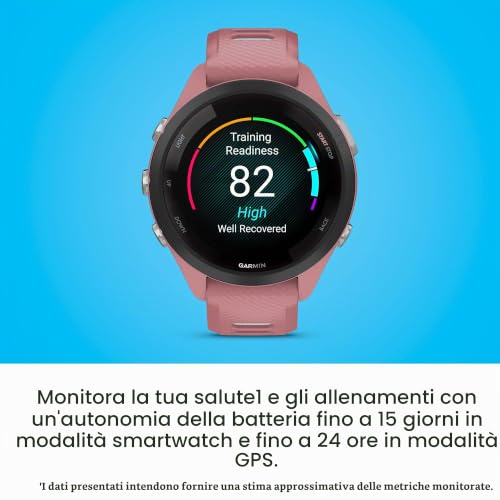
Battery life
15 days
This smartwatch lasts 15 days on a charge, which is longer than 83% of Smartwatches and the same as 3.9% of Smartwatches.
Battery life in training mode
?
Battery life with GPS on
24 h
This smartwatch lasts 24 h with GPS on, which is longer than 56.7% of Smartwatches and the same as 2.9% of Smartwatches.
Battery power
?
Charge time
?
Show more
What reviewers say
Operating system
Garmin OS
This smartwatch runs Garmin OS, which is more advanced than the system in 70.8% of Smartwatches and equal to 9.2% of Smartwatches.
Software update frequency
occasional
This smartwatch has occasional software update support which is more active than that of 54% of smartwatches and equal to that of 40.2% of smartwatches.
Third-party app support
yes
This smartwatch supports third-party apps. 48.5% of smartwatches support third-party apps.
Notifications
yes
This smartwatch supports notifications. 0.3% of smartwatches support notifications.
Voice assistant support
?
Show more
Cellular module
no
This smartwatch does not include a cellular module. 16.6% of smartwatches include a cellular module.
SIM cards
0
GPS
yes
This smartwatch supports GPS. 40.3% of smartwatches support GPS.
Galileo support
yes
This smartwatch supports Galileo navigation. 56.5% of smartwatches support Galileo navigation.
Dual-frequency GPS
yes
Garmin Forerunner 265S supports dual-frequency GPS. 85% of Smartwatches offer this.
Show more
What reviewers say
Screen size
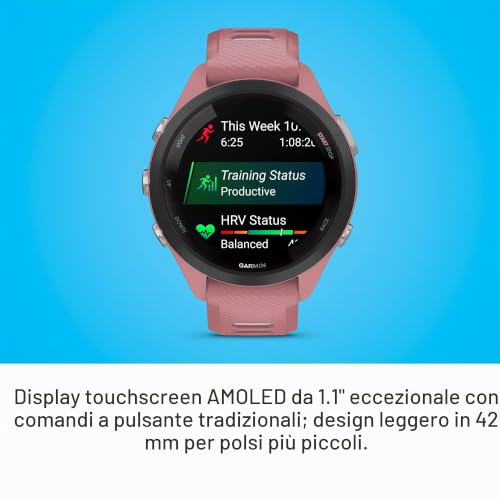
1.1 inch
This smartwatch has a 1.1 inch screen, which is smaller than 94.1% of Smartwatches and the same as 1.3% of Smartwatches.
Display type
AMOLED
This smartwatch uses AMOLED, which is more advanced than the screen in 46.9% of Smartwatches and equal to 53.1% of Smartwatches.
Resolution
360x 360
This smartwatch has a display resolution of 360x360 which is higher than that of 47% of smartwatches and equal to that of 6.1% of smartwatches.
Pixel density
463 ppi
This smartwatch has a pixel density of 463 ppi, which is higher than 96.5% of Smartwatches and equal to 1.1% of Smartwatches.
Display brightness
?
Show more
What reviewers say
CPU speed
?
Processor model
?
RAM
?
Internal storage
8 GB
This smartwatch has 8 GB of internal storage, which is more than 65.5% of Smartwatches and equal to 11.3% of Smartwatches.
External memory slot
no
This smartwatch does not include an external memory slot. 0.3% of smartwatches include an external memory slot.
Show more

Garmin Forerunner 265S vs the average smartwatch

246810TotalHealthFitnessBatteryConnectivityDisplay & DesignSmart featuresHardware
  • 8 days longer battery life
    This smartwatch runs longer per charge than the average smartwatch (15 days vs 7 days). The average smartwatch runs for 7 days on a charge.
    15 days vs 7 days
  • Temperature sensing
    This smartwatch includes a temperature sensor, the average smartwatch does not. 31.9% of smartwatches include a temperature sensor.
  • Crash detection capability
    This smartwatch supports crash detection, the average smartwatch does not. 14% of smartwatches support crash detection.
  • Readiness score
    This smartwatch supports readiness scores, the average smartwatch does not. 19.8% of smartwatches support readiness scores.
  • HRV tracking
    This smartwatch supports HRV tracking, the average smartwatch does not. 45.2% of smartwatches support HRV tracking.
  • More advanced operating system
    This smartwatch runs a more advanced operating system than the average smartwatch (Garmin OS vs Proprietary OS).
    Garmin OS vs Proprietary OS
  • Emergency SOS
    This smartwatch includes Emergency SOS, the average smartwatch does not. 44.8% of smartwatches include Emergency SOS.
  • NFC functionality
    This smartwatch supports NFC, the average smartwatch does not. 45.6% of smartwatches support NFC.
  • 17.1% higher review score
    Reviews score
    8.2/ 10
    ✕
    What it is
    Average grade from independent test sites, magazines and video reviewers, 1–10.
    How we count it
    Grades: Each review's own score is converted to 1–10; without one, we grade the review ourselves. Every review counts the same: written or video, short or full test.
    Score: The average grade is 80% of the review mark; the number of reviews is the other 20% (1 review = 5, the typical number in this category = 8, the most-reviewed model = 10).
    Enough data: With few reviews, the average grade is pulled toward the typical grade of this category. No reviews yet: 7.5 for now.
    Share: Reviews count 25% of the overall score.
    Score distribution
    ▼
    <55-66-77-88-99-10

    80%

    8.4

    Average grade

    20%

    7.3

    Popularity

    Grades by review (9)
    6 reviews + 3 videos, average 8.6/10. Reviews count 25% of the overall score.
    User ratings collected online are not part of this score.
    8.2 vs 7.0
  • 17.3% higher sentiment score
    8.8 vs 7.5
  • 12.6% better value for money
    Garmin Forerunner 265S has a higher value-for-money score than the average smartwatch (8.74 vs 7.8).
    8.74 vs 7.76
  • Temperature sensing
    This smartwatch includes a temperature sensor, the average smartwatch does not. 31.9% of smartwatches include a temperature sensor.
  • Readiness score
    This smartwatch supports readiness scores, the average smartwatch does not. 19.8% of smartwatches support readiness scores.
  • HRV tracking
    This smartwatch supports HRV tracking, the average smartwatch does not. 45.2% of smartwatches support HRV tracking.
  • Weight tracking
    This smartwatch supports weight tracking, the average smartwatch does not. 41.9% of smartwatches support weight tracking.
  • Water intake tracking
    This smartwatch tracks water intake, the average smartwatch does not. 44.1% of smartwatches track water intake.
  • 2 years newer
    This smartwatch was released more recently than the average smartwatch (2023 vs 2021). The average smartwatch was released in 2021.
    2,023 vs 2,021
  • Perspiration monitoring
    This smartwatch tracks perspiration, the average smartwatch does not. 15.1% of smartwatches track perspiration.
  • External heart rate monitor support
    This smartwatch supports external heart rate monitor compatibility, the average smartwatch does not. 46.6% of smartwatches support external heart rate monitor compatibility.
  • Cadence tracking
    This smartwatch includes a cadence sensor, the average smartwatch does not. 32.9% of smartwatches include a cadence sensor.
  • 8 days longer battery life
    This smartwatch runs longer per charge than the average smartwatch (15 days vs 7 days). The average smartwatch runs for 7 days on a charge.
    15 days vs 7 days
  • 3 h longer GPS battery life
    This smartwatch lasts longer with GPS on than the average smartwatch (24 h vs 21 h). The average smartwatch lasts 21 h with GPS on.
    24 h vs 21 h
  • NFC functionality
    This smartwatch supports NFC, the average smartwatch does not. 45.6% of smartwatches support NFC.
  • Supports Wi-Fi
    This smartwatch supports Wi-Fi, the average smartwatch does not. 43.5% of smartwatches support Wi-Fi.
  • Supports ANT+
    This smartwatch supports ANT+, the average smartwatch does not. 13% of smartwatches support ANT+.
  • Supports dual-frequency GPS
    Garmin Forerunner 265S supports dual-frequency GPS, while the average smartwatch does not. 15.1% of Smartwatches support dual-frequency GPS.
  • Galileo satellite support
    This smartwatch supports Galileo navigation, the average smartwatch does not. 43.6% of smartwatches support Galileo navigation.
  • Stronger display glass
    This smartwatch uses Corning Gorilla Glass 3 display glass, while the average smartwatch uses mineral glass.
    Corning Gorilla Glass 3 vs mineral glass
  • 137 ppi sharper screen
    This smartwatch has a sharper screen than the average smartwatch (463 ppi vs 326 ppi). The average smartwatch has a pixel density of 326 ppi.
    463 ppi vs 326 ppi
  • 4 mm slimmer strap
    This smartwatch has a slimmer strap than the average smartwatch (18 mm vs 22 mm). The average smartwatch has a 22 mm strap.
    18 mm vs 22 mm
  • Crash detection capability
    This smartwatch supports crash detection, the average smartwatch does not. 14% of smartwatches support crash detection.
  • More advanced operating system
    This smartwatch runs a more advanced operating system than the average smartwatch (Garmin OS vs Proprietary OS).
    Garmin OS vs Proprietary OS
  • Emergency SOS
    This smartwatch includes Emergency SOS, the average smartwatch does not. 44.8% of smartwatches include Emergency SOS.
  • More frequent updates
    This smartwatch receives occasional software updates, while the average smartwatch receives ended updates.
    occasional vs ended
  • 2x more internal storage
    This smartwatch has more internal storage than the average smartwatch (8 GB vs 4 GB). The average smartwatch has 4 GB of internal storage.
    8 GB vs 4 GB
  • No speaker
    This smartwatch does not include a built-in speaker, the average smartwatch does. 56.7% of smartwatches include a built-in speaker.
  • 0.3 inch smaller display
    This smartwatch has a smaller screen than the average smartwatch (1.1 inch vs 1.4 inch). The average smartwatch has a 1.4 inch screen.
    1.1 inch vs 1.4 inch
  • 1 fewer microphones
    This smartwatch has fewer microphones than the average smartwatch (0 vs 1). The average smartwatch has 1 microphones.
    0 vs 1
  • Basic battery type
    This smartwatch uses a Li-ion battery, while the average smartwatch uses Li-Po.
    Li-ion vs Li-Po
  • 60 fewer exercise types
    This smartwatch includes fewer exercise types than the average smartwatch (30 vs 90). The average smartwatch includes 90 exercise types.
    30 vs 90
  • 1.2 mm thicker
    This smartwatch is thicker than the average smartwatch (12.9 mm vs 11.7 mm). The average smartwatch is 11.7 mm thick.
    12.9 mm vs 11.7 mm
  • No smart alarm
    This smartwatch does not support a smart alarm, the average smartwatch does. 50.6% of smartwatches support smart alarms.
  • 60 fewer exercise types
    This smartwatch includes fewer exercise types than the average smartwatch (30 vs 90). The average smartwatch includes 90 exercise types.
    30 vs 90
  • Basic battery type
    This smartwatch uses a Li-ion battery, while the average smartwatch uses Li-Po.
    Li-ion vs Li-Po
  • 0.3 inch smaller display
    This smartwatch has a smaller screen than the average smartwatch (1.1 inch vs 1.4 inch). The average smartwatch has a 1.4 inch screen.
    1.1 inch vs 1.4 inch
  • 1.2 mm thicker
    This smartwatch is thicker than the average smartwatch (12.9 mm vs 11.7 mm). The average smartwatch is 11.7 mm thick.
    12.9 mm vs 11.7 mm
  • No smart alarm
    This smartwatch does not support a smart alarm, the average smartwatch does. 50.6% of smartwatches support smart alarms.
  • No speaker
    This smartwatch does not include a built-in speaker, the average smartwatch does. 56.7% of smartwatches include a built-in speaker.
  • 1 fewer microphones
    This smartwatch has fewer microphones than the average smartwatch (0 vs 1). The average smartwatch has 1 microphones.
    0 vs 1

Video reviews

Hands-on testing, unboxing, and real-world video evaluations

9.0
Verified Reviews
≈ estimated
25/01/2026
Long-term test · 21 days of runs, GPS and recovery
Verdict
Garmin Forerunner 265S is worth the extra cost for runners with smaller wrists who want accurate GPS and recovery guidance.
8.7
AbbyBReviewing
✓ explicit
21/03/2023
3-week review · daily use, display, sleep and health tracking
Verdict
Garmin Forerunner 265S is a strong all-round pick for its price, quality, performance and battery life, despite curved-screen and SpO2 problems.
Overview video
Overview video

What reviewers agree on

Based on 6 · 3

Reviewers praise the sharp display, helpful recovery insights and compact size, but miss proper maps and find always-on mode disappointing.
Praised
Criticised
Pick a topic to see who said what

Expert reviews

In-depth analysis and verdict from leading tech publications

9.0
theverge.com
✓ explicit
15/03/2023
Hands-on review · Running watch
Verdict
The Garmin Forerunner 265S suits intermediate runners who want an always-on OLED screen and six and a half days of battery, though it lacks advanced maps.
9.0
trustedreviews.com
✓ explicit
03/05/2023
Hands-on review · Multisport watch
Verdict
The Garmin Forerunner 265S is a solid running and multisport watch; its bright AMOLED screen and reliable GPS suit runners who want a colorful, compact Garmin.
9.0
mystylegrid.com
≈ estimated
04/01/2026
Hands-on review · Running watch
Verdict
The Garmin Forerunner 265S is a compact running watch with accurate multi-band GPS and recovery guidance, best for runners who value training advice over detailed maps.
5.0
duncanmartin.com
≈ estimated
01/08/2024
Long-term review · Multisport watch
Verdict
The Garmin Forerunner 265S is a good GPS and music watch for logging workouts, but its wrist heart rate sensor is unreliable without a chest strap.
10
womensrunning.co.uk
✓ explicit
07/06/2023
Hands-on review · Running watch
Verdict
The Garmin Forerunner 265S suits busy runners who want structured training help, with a bright AMOLED screen and a week of training between charges.
9.0
pocket-lint.com
✓ explicit
20/11/2023
Hands-on review · Sports watch
Verdict
The Garmin Forerunner 265S is a compact sports watch whose AMOLED screen and accurate heart rate suit runners, though always-on mode drains the battery.

Third-party reviews

What we like about Garmin Forerunner 265S

  • 15 days of battery life in smartwatch mode.
  • 24 h of GPS battery life covers a long run on one charge.
  • The AMOLED screen is easy to read at a glance in full sun.
  • Music stored on the watch means the phone can stay at home.
  • The 41.7 mm case suits small and medium wrists.
  • Crash detection and a readiness score add safety and training guidance.

What we don't like about Garmin Forerunner 265S

  • The 1.1 inch screen is small.
  • There are no onboard maps or turn-by-turn directions.
  • Always-on mode drains the battery faster.
  • Wrist heart rate can lag during sharp intervals, so a chest strap helps.
  • There is no fall detection.

Verdict

15 days of battery life sets the Garmin Forerunner 265S apart, and its case suits smaller wrists. The AMOLED screen is easy to read at a glance in full sun. Music is stored on the watch, so the phone can stay at home. Dual-frequency GPS keeps tracks steady near buildings, and it works with ANT+ sensors. Crash detection is included, and the band is 18 mm wide. The 1.1 inch screen is the trade-off, and it has no onboard maps or turn-by-turn directions. Always-on mode drains the battery faster, so it is worth keeping off. With 24 h of GPS, a long run is covered on one charge. It suits a runner with a smaller wrist who wants a light watch, music on the run and few charges.

Compare Garmin Forerunner 265S with other Smartwatches

1Product to compare no. 1
VS
2Product to compare no. 2
VS
3Product to compare no. 3 (optional)

Graphic comparison of Garmin Forerunner 265S and other Smartwatches

No results found