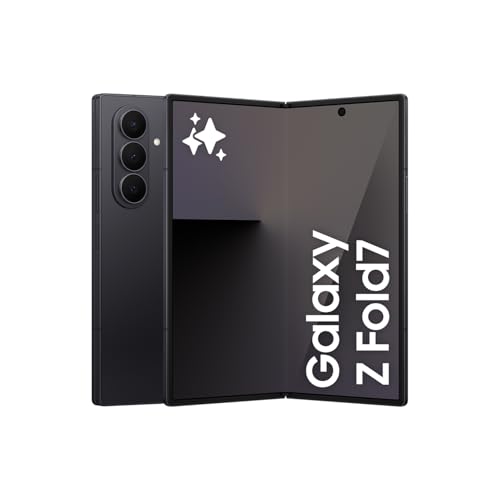
Samsung Galaxy Z Fold 7 (12GB + 512GB) review. Compare 197 technical specifications and user reviews to see how this product ranks in the Smartphones category and whether it is worth buying.
Overall score
What it is: An overall evaluation of the smartphone's quality, based on technical analyses and user reviews.
When it matters: When you need a quick reference to identify the best smartphones on the market.
Score components:
90.0%
Technical Score
10.0%
User score
Technical Score
What it is: An assessment of the smartphone's technical performance, covering eight key areas: performance & hardware, software, camera, connectivity, display, battery, audio, and design.
When it matters: When you want to compare smartphones based on technical performance and available features.
Score components:
25.0%
Performance & Hardware
18.0%
Camera
15.0%
Display
15.0%
Battery
10.0%
Software
10.0%
Connectivity
4.0%
Audio
3.0%
Design
User score
What it is: A rating that combines user reviews and the total number of reviews received by the smartphone
When it matters: When you want to know how a smartphone handles daily tasks and how reliable it remains over time according to user feedback.
Score components:
70.0%
User reviews
30.0%
Popularity

Available: ranking among products currently available (including other versions of this product).
All: ranking among all products in the database.
#4 in Best Samsung Phones
#21 in Best Smartphones for Seniors
#34 in Best Android Smartphones
#38 in Best Smartphones
#38 in Best NFC Smartphones
#38 in Best 5G Smartphones
#38 in Best AI Smartphones
#57 in Best Value Smartphones
#70 in Best Camera Smartphones
#500 in Best Battery Life Smartphones
What it is: An assessment of the smartphone's technical performance, covering eight key areas: performance & hardware, software, camera, connectivity, display, battery, audio, and design.
When it matters: When you want to compare smartphones based on technical performance and available features.
Score components:
25.0%
Performance & Hardware
18.0%
Camera
15.0%
Display
15.0%
Battery
10.0%
Software
10.0%
Connectivity
4.0%
Audio
3.0%
Design
What it is: A rating that combines user reviews and the total number of reviews received by the smartphone
When it matters: When you want to know how a smartphone handles daily tasks and how reliable it remains over time according to user feedback.
Score components:
70.0%
User reviews
30.0%
Popularity
What it is: An indicator that combines the smartphone's overall rating with its cost.
When it matters: When you are looking for a smartphone with a good balance between quality and price.
Score components:
60.0%
Overall score
40.0%
Price
Importance: LOW
Importance: HIGH
Importance: HIGH
Good value: >12 GB
Importance: MEDIUM
Good value: >256 GB
Importance: MEDIUM
Good value: >3.2 GHz
Importance: LOW
Importance: MEDIUM
Good value: >1500
Importance: LOW
Good value: >4000
Importance: LOW
Good value: 8+
Importance: LOW
Importance: LOW
Good value: >950 MHz
Importance: LOW
Good value: >700
Importance: LOW
Good value: >1000
Importance: LOW
Good value: >2500
Importance: MEDIUM
Good value: >6000
Importance: LOW
Good value: >8000
Importance: MEDIUM
Good value: >12000
Importance: LOW
Good value: >5000
Importance: LOW
Good value: >1800
Importance: LOW
Good value: >3200 MHz
Importance: LOW
Good value: 5
Importance: LOW
Good value: > 50 GB/s
Importance: LOW
Good value: 4
Importance: LOW
Good value: >16 GB
Importance: MEDIUM
Good value: <6 nm
Importance: MEDIUM
Good value: >9 W
Importance: LOW
Importance: LOW
Good value: >8192 KB
Importance: LOW
Good value: >2048 KB
Importance: LOW
Good value: >512 KB
Importance: LOW
Good value: >100000 million
Importance: LOW
Good value: 3.3
Importance: LOW
Good value: 3.2
Importance: LOW
Good value: 2.0/3.0
Importance: LOW
Importance: LOW
Importance: LOW
Importance: MEDIUM
Importance: LOW
Importance: LOW
Importance: LOW
Importance: LOW
Importance: LOW
Importance: LOW
Importance: LOW
Importance: LOW
Importance: LOW
Importance: LOW
Importance: LOW
Importance: LOW
Importance: LOW
Importance: LOW
Importance: LOW
Importance: LOW
Importance: LOW
Importance: LOW
Importance: LOW
Importance: LOW
Importance: LOW
Importance: LOW
Importance: LOW
Importance: LOW
Importance: LOW
Importance: LOW
Importance: LOW
Importance: LOW
Importance: LOW
Importance: LOW
Importance: LOW
Importance: LOW
Importance: LOW
Importance: MEDIUM
Good value: >50 MP
Importance: MEDIUM
Importance: HIGH
Good value: >60
Importance: LOW
Good value: ≥1.2 µm
Importance: MEDIUM
Good value: >2.5x
Importance: MEDIUM
Importance: LOW
Importance: LOW
Importance: LOW
Importance: LOW
Good value: ≥2
Importance: LOW
Importance: LOW
Importance: LOW
Importance: LOW
Good value: >16 MP
Importance: LOW
Importance: LOW
Importance: LOW
Importance: LOW
Importance: MEDIUM
Importance: LOW
Importance: LOW
Importance: LOW
Importance: LOW
Importance: LOW
Importance: LOW
Importance: LOW
Importance: LOW
Importance: LOW
Importance: LOW
Importance: LOW
Importance: LOW
Importance: LOW
Importance: LOW
Importance: LOW
Importance: LOW
Importance: LOW
Importance: LOW
Importance: LOW
Importance: LOW
Importance: LOW
Good value: >130
Importance: LOW
Good value: >120
Importance: LOW
Good value: ≥2
Importance: LOW
Importance: LOW
Importance: LOW
Importance: LOW
Importance: LOW
Importance: LOW
Good value: >5.2
Importance: LOW
Importance: LOW
Importance: LOW
Importance: LOW
Good value: 3.1/3.2
Importance: LOW
Importance: LOW
Importance: LOW
Good value: ≥2
Importance: LOW
Importance: LOW
Importance: LOW
Importance: LOW
Importance: LOW
Importance: LOW
Importance: LOW
Importance: LOW
Importance: LOW
Importance: LOW
Importance: LOW
Importance: LOW
Importance: LOW
Importance: LOW
Importance: LOW
Importance: LOW
Good value: ≥6.6 inches
Importance: MEDIUM
Importance: LOW
Good value: >400 ppi
Importance: MEDIUM
Importance: MEDIUM
Good value: ≥120 Hz
Importance: LOW
Importance: LOW
Good value: >300 Hz
Importance: LOW
Good value: >800 nits
Importance: LOW
Good value: >1300 nits
Importance: LOW
Good value: >1000 nits
Importance: LOW
Importance: LOW
Importance: LOW
Importance: LOW
Importance: LOW
Importance: LOW
Importance: LOW
Importance: LOW
Importance: HIGH
Good value: >5000 mAh
Importance: MEDIUM
Good value: >60 W
Importance: LOW
Importance: LOW
Good value: <45 min
Importance: LOW
Importance: LOW
Good value: >40 W
Importance: LOW
Importance: LOW
Good value: >10 W
Importance: LOW
Importance: LOW
Importance: MEDIUM
Importance: LOW
Good value: >800
Importance: LOW
Importance: LOW
Importance: LOW
Importance: LOW
Importance: LOW
Good value: ≥3
Importance: LOW
Importance: LOW
Importance: LOW
Importance: LOW
Importance: LOW
Importance: LOW
Importance: LOW
Good value: <162 mm
Importance: LOW
Good value: <75 mm
Importance: LOW
Good value: <8 mm
Importance: LOW
Good value: <190 g
Importance: LOW
Good value: <98cm³
Importance: LOW
Importance: LOW
Importance: LOW
Importance: LOW
Importance: LOW
Importance: LOW
Good value: ≥1.5 m
Importance: LOW
Importance: LOW
Good value: >8
Importance: LOW
Importance: LOW
Importance: MEDIUM
Good value: >2.5x
Importance: HIGH
Good value: >60
Importance: MEDIUM
Good value: >3.2 GHz
Importance: MEDIUM
Importance: MEDIUM
Good value: >6000
Importance: MEDIUM
Good value: <6 nm
Importance: LOW
Importance: MEDIUM
Good value: >256 GB
Importance: LOW
Importance: LOW
Importance: HIGH
Good value: >5000 mAh
Importance: LOW
Good value: ≥1.2 µm
Importance: LOW
Importance: LOW
Importance: LOW
Good value: >400 ppi
(Reviews last updated: August 2026)
(Reviews last updated: August 2026)
(Reviews last updated: August 2026)
The Samsung Galaxy Z Fold 7 is highlighted as a slim, fast, and refined foldable that feels like a standard phone when closed. Key advantages include a 200-megapixel camera system, an immersive 8-inch screen, and the powerful Snapdragon 8 Elite chip. However, the review identifies significant drawbacks, particularly the high price tag starting at $2,499.99 CAD and "abysmal" 25W charging speeds. While battery life is considered solid, it does not match top-tier traditional flagships. Ultimately, the Z Fold 7 is positioned as a top-tier "multi-tool" for power users, offering a "fresh and fun" experience despite the lack of a bundled charger and S Pen support.
The Samsung Galaxy Z Fold 7 is described as remarkably thin and light, featuring a larger 8-inch internal display and a wider 6.5-inch cover screen. It incorporates the Snapdragon 8 Elite for Galaxy chipset and a 200MP primary camera, supported by Galaxy AI features and a seven-year software update commitment. However, the device has significant cons, including a high price, removed S Pen support, slow 25W charging, difficulty opening due to thinness, lack of dust protection (IP48 rating), and non-upgraded secondary camera lenses.
The Samsung Galaxy Z Fold 7 is described as a "magically slender" device with a thin and light design, a larger 8-inch interior display, and a wider 6.5-inch cover screen. Pros include a 200-megapixel main camera and a powerful Snapdragon 8 Elite chip, along with a shallower display crease and solid battery life. Key cons are its high starting price of $1,999 and the removal of S Pen support, as well as difficulty opening the thin device and a visible punch-hole selfie camera.
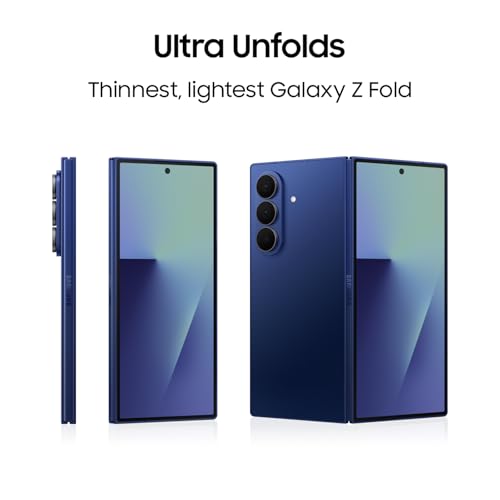
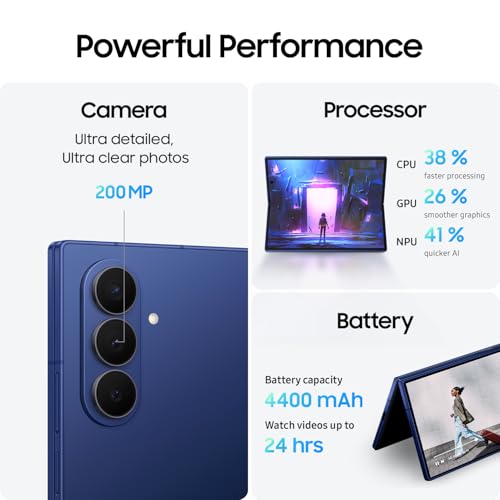
According to a Droid Life review, the Samsung Galaxy Z Fold 7 represents a significant improvement with a slimmer, lighter design weighing 215g and measuring 4.5mm unfolded. Key advantages include a new 200MP camera system, a redesigned hinge that minimizes the gap when folded, and enhanced 6.5-inch outer and 8.2-inch inner displays with a less visible crease. However, a major drawback is the battery life, attributed to a 4,400mAh battery that drains quickly during heavy use, causing "battery anxiety". The device also lacks S Pen support, a feature present in the previous model, due to the display's design prioritizing thinness. The Z Fold 7 runs Android 16 (One UI 8) powered by a Snapdragon 8 Elite processor, offering smooth performance, though large camera bumps are a minor practical and aesthetic con.
The Samsung Galaxy Z Fold 7 is rated 8/10, described as having perfected the foldable formula with a significant design overhaul that makes the device feel like a standard "slate" phone when folded, featuring a corrected aspect ratio for the cover display. Pros include a massive 200MP main camera and an 8-inch internal display with deep blacks and a nearly invisible crease, but cons include the total loss of S Pen support and a large camera bump causing wobble. While the Snapdragon 8 Elite chip offers strong burst speeds, performance can throttle significantly under sustained load, and the 4,400mAh battery struggles with heavy daily use, making the device a high-cost niche flagship despite its improvements.
CNET reviews the Samsung Galaxy Z Fold 7 as a significant step for foldable phones due to its remarkably slim design, measuring 8.9mm folded and 4.2mm unfolded, making it thinner than many standard smartphones. Key improvements include a wider 6.5-inch cover screen, a larger 8-inch internal display with less noticeable crease, a powerful Snapdragon 8 Elite processor, and a 200-megapixel camera. However, the review highlights drawbacks such as the high $2,000 starting price, the removal of S Pen support, and a stagnant 4,400-mAh battery with slow 25W charging. Minor issues like app formatting problems, a prominent camera bump causing wobble, and difficulty prying the device open are also noted.
Mashable's review describes the Samsung Galaxy Z Fold 7 as a significant design improvement over previous models, highlighting its sleek form factor (8.9mm folded, 4.2mm unfolded) and improved 6.5-inch cover display with a 21:9 aspect ratio. Powered by the Snapdragon 8 Elite chip, the phone performs well for multitasking and gaming, and features a 200MP main camera, though some apps are not optimized for the 8-inch inner display's aspect ratio. The primary drawbacks are the 4,400mAh battery life (around 20 hours of HD video playback), the lack of S Pen support and dust resistance (IP48 rating), and its high starting price of $1,999.
TechRadar describes the Samsung Galaxy Z Fold 7 as a significant generational leap in foldable phone design, feeling as thin and light as a standard flagship. Key pros include its incredibly thin build, a powerful new 200MP main camera system, and the integration of Galaxy AI features, while cons are the removal of S Pen support and a high starting price. While performance is strong with a custom Snapdragon processor and optimized software for multitasking, the battery life is just sufficient for a full day of moderate use, representing a minor drawback.
PCMag designates the Samsung Galaxy Z Fold 7 as a leading foldable, highlighting its refined, thinner design (0.35 inches), lighter weight (7.58 ounces), and improved 6.5-inch outer display with a 21:9 aspect ratio. Key advantages include an IP48 rating, a less noticeable crease, top-tier performance from the Snapdragon 8 Elite chip, and a 200MP main camera, though it lacks S Pen support, has average battery life, and supports slow 25W charging. The device runs Android 16 with OneUI 8, featuring advanced AI tools and promising seven years of updates, making it a powerful, albeit expensive, productivity tool.
The Samsung Galaxy Z Fold 7 marks a significant design shift, featuring an ultra-thin, lightweight chassis, a larger 8-inch internal display, and a 6.5-inch cover screen. Key improvements include a 200MP main camera sensor, the Snapdragon 8 Elite processor, and a more durable Armor FlexHinge. Despite these advances, the device sacrifices S Pen support for its slim profile, relies on a smaller 4,400mAh battery, and retains slow 25W charging.
The Tech Advisor review characterizes the Samsung Galaxy Z Fold 7 as a "massive upgrade" featuring a significantly thinner and lighter 8.9mm design that feels like a standard phone when closed. It boasts a refined, shallower crease, an 8-inch internal display, and the performance-driven Snapdragon 8 Elite chip. Key pros include the improved ergonomics, a more usable 21:9 cover screen ratio, and robust performance, making it a top contender in the foldable market. However, notable cons include the removal of S Pen support for the thinner chassis, stagnant battery/charging speeds compared to rivals, and potential performance throttling during intense gaming.
The Forbes Vetted review describes the Samsung Galaxy Z Fold 7 as a significant, ultra-thin and light design overhaul that finally makes the device feel like a traditional slab phone when closed. Featuring a 200MP main camera and the Snapdragon 8 Elite chip, the phone offers flagship performance, though the pursuit of a 215g, 8.9mm profile results in the notable omission of S Pen support. Despite performance pros and improved battery, cons include slow 25W charging, thermal management issues under load, and a high $2,000 price point.
The Samsung Galaxy Z Fold 7 (Special Edition) features a significantly slimmer 0.9 cm profile and reduced 215-gram weight compared to predecessors, addressing previous ergonomic critiques. It boasts upgraded 8-inch and 6.5-inch OLED displays with 2,600-nit brightness, alongside a 200 MP main camera that brings photographic capabilities closer to the S25 Ultra. While the Snapdragon 8 Elite provides high performance, the design sacrifices S Pen support for the thinner form factor, introduces a significant camera hump, and results in shorter, roughly 10-hour battery life.
According to heise online, the Samsung Galaxy Z Fold 7 focuses on reducing bulk, measuring just 8.9 mm thick and weighing 215 grams, which allows it to feel similar to a traditional smartphone. The device features an 8-inch inner OLED display and a 6.5-inch cover screen with a 21:9 aspect ratio, powered by the high-performance Qualcomm Snapdragon 8 Elite chip. While the camera system is upgraded to a 200MP main sensor, it brings compromises like the removal of S Pen support and a 4,400 mAh battery with 25W charging. heise onlineKey pros highlighted include the significantly lighter, thinner design and improved display usability, along with seven years of software support. Conversely, the primary cons involve the loss of S Pen functionality, mediocre battery capacity, and slow charging speeds.
The Samsung Galaxy Z Fold 7, as tested in the review, marks a significant design shift by adopting a 8.9mm slim profile and 215g weight that finally matches the hand-feel of a standard smartphone. Its 21:9 cover screen improves one-handed usability, while the 8-inch, 2,600-nit inner display boasts a near-invisible crease. Powered by the Snapdragon 8 Elite and equipped with the S25 Ultra’s 200MP main camera, the device offers top-tier performance and photography. However, the review notes significant compromises, including the removal of S Pen support and a challenging, hard-to-open hinge design. Battery life, featuring a 4,400mAh cell, often requires mid-day charging, and the 25W charging speed is considered dated compared to competitors. Despite these issues, the refined, lighter, and more practical form factor is highly praised.
The Spiegel review highlights the Samsung Galaxy Z Fold7 as a "faster, slimmer, but weaker-batteried" device, featuring a radical design shift to just 8.9mm thick with a more functional 6.5-inch cover display. The device offers a top-tier internal experience with an 8-inch AMOLED display and a high-performance Snapdragon 8 Elite chip, featuring a 200-megapixel main sensor for improved imaging. However, the thinner profile comes with trade-offs, including average 4,400 mAh battery life, 25W charging, limited telephoto zoom, and the removal of S Pen support.
According to the Connect.de review, the Samsung Galaxy Z Fold 7 introduces a significantly thinner (8.9 mm) and lighter (215 g) design with a wider 6.5-inch outer display, enhancing its "slab" phone feel. The device boasts superior performance via the Snapdragon 8 Elite, a upgraded 200-megapixel main camera, and a 7-year update guarantee, paired with a bright 8-inch internal display. However, key drawbacks include the removal of S Pen support to achieve the slim design, slow 25W charging, and a high entry price.
The Samsung Galaxy Z Fold 7, as tested by Les Numériques, introduces a new, thinner (8.9 mm) and lighter (215g) design that significantly improves portability and ergonomics. Key improvements include a more practical 21:9 aspect ratio for the 6.5-inch cover display, making it feel more like a conventional smartphone. The 8.0-inch internal screen features enhanced brightness (2,600 nits) and a less visible, more durable crease. Technically, the device is powered by the Snapdragon 8 Elite chip and boasts a 200-megapixel main camera sensor, bringing top-tier performance and photography capabilities similar to the S25 Ultra. However, achieving this thinner profile comes with compromises, most notably the removal of S Pen support. The 4,400 mAh battery is limited to 25W charging, which feels outdated compared to competitors.
The Samsung Galaxy Z Fold 7 marks a significant advancement in foldable design, featuring a notably thinner (8.9mm) and lighter (215g) profile while narrowing the gap with traditional smartphones. Key pros include the implementation of a 200MP main camera for superior photography, refined display panels with less visible creases, and the robust Snapdragon 8 Elite chipset. The device, supported by One UI 8, also improves productivity through enhanced AI-powered multitasking capabilities. Despite these improvements, the review identifies critical drawbacks, most notably the slow 25W charging speed and a tendency to overheat under heavy usage. Additional cons include a cold camera white balance, a high $2,000 price point, and the loss of S Pen support due to the thinner, more fragile design. The device maintains a solid, durable construction with IP48 water resistance.
The Samsung Galaxy Z Fold 7 debuts as a significantly refined, ultra-thin, and lightweight foldable, measuring just 8.9mm thick and weighing 215 grams. It features a refined 6.5-inch cover screen and an 8-inch internal display with nearly invisible creases, though it sacrifices S Pen support and lacks full dust resistance to achieve this design. Powered by the Snapdragon 8 Elite, the device brings a 200MP camera and advanced Galaxy AI via One UI 8, positioning it as a top-tier productivity powerhouse. However, the device is constrained by a 4,400mAh battery, slow 25W charging, a high $1,999 price point, and a camera bump causing wobbling on surfaces. For a detailed breakdown of these features, read the review on Phonandroid.
The Journal du Geek review calls the Samsung Galaxy Z Fold7 a design revolution, featuring a 4.2mm unfolded and 8.9mm closed thickness with a more usable 21:9 cover screen. It boasts the fast Snapdragon 8 Elite, a 200MP camera sensor, and improved One UI 8 software, though it lacks S Pen support. However, at roughly €2,099, the phone is very expensive, suffers from significant camera bump wobble, and features mediocre battery life with slow 25W charging.
The Samsung Galaxy Z Fold 7 introduces a significant design shift with an ultra-slim 8.9mm profile and 215g weight, making it feel like a standard smartphone when closed. It boasts a 6.5-inch outer screen and a near-perfect 8-inch inner AMOLED display with a less visible crease, alongside top-tier performance from the Snapdragon 8 Elite. However, this redesign results in the loss of S Pen support, while the screen contrast, 25W charging speed, and limited dust protection (IP48) are identified as key drawbacks. For more detailed,, visit Les Numériques.
The Samsung Galaxy Z Fold 7 marks a turning point for foldable devices, shedding its "prototype" feel with a record-breaking 8.9 mm thickness and a light 215-gram weight. Driven by the Snapdragon 8 Elite and One UI 8, the device features improved 8-inch and 6.5-inch screens with a reduced crease and a natural 21:9 cover display ratio, making it a viable, ergonomic daily driver. NumeramaKey improvements include a 200 MP main camera approaching S-series quality, but the device is held back by a high €2,099 starting price and the lack of a periscope zoom, preventing it from being a full "Ultra" replacement. Design flaws include a wobbly, unstable form factor when flat, alongside a conservative battery technology choice, despite providing all-day, "tough" performance. Numerama
The Samsung Galaxy Z Fold 7 is expected to feature a more ergonomic design with a wider cover screen and a nearly invisible internal crease. While powered by the latest Snapdragon processor and boasting advanced Galaxy AI features, the device remains heavier than competitors and retains a 256GB base storage limit without expandable memory. Although the 50MP main camera produces excellent photos, the under-display camera still offers lower quality and the device faces criticism for slow, 25W-45W charging speeds.
According to Frandroid, the Samsung Galaxy Z Fold 7 is a significantly refined, thin, and light foldable (215g, 8.9mm) featuring a more practical 6.9-inch external screen. It delivers top-tier performance with the Snapdragon 8 Elite and introduces a 200MP main camera, though it can run warm during heavy usage. However, the device is hampered by frustrating 25W charging, average 4,400mAh battery life, and the removal of integrated S Pen support.
The Samsung Galaxy Z Fold7, reviewed by iGizmo.it, marks a major advancement in design, featuring a record-thin 8.9 mm profile (when closed) and a lighter 215g weight, paired with robust materials like Advanced Armor Aluminum. While enhancing portability, the design’s significant drawback is the protruding camera module, which causes the device to wobble on flat surfaces. Hardware performance is driven by the Snapdragon 8 Elite and a 200MP main camera, alongside larger 6.5-inch external and 8-inch internal AMOLED displays with reduced creasing. A major compromise for this thinness is the removal of the S Pen digitizer, disappointing users who rely on stylus input. Software-wise, the device features Android 16, One UI 8, and advanced AI, though the 4,400 mAh battery and 25W charging speed are considered underwhelming. Positioned as a "luxury" device, it starts at €2,199. For more details, visit iGizmo.it.
The Samsung Galaxy Z Fold 7, reviewed by DDay.it, sets a new standard for foldables by achieving a remarkably thin 8.9 mm profile and 215g weight, effectively eliminating the "bulky" feel of previous models. It features a functional 6.5-inch external screen with a natural 21:9 aspect ratio and an 8-inch internal screen with an improved hinge design. Powered by the Snapdragon 8 Elite, the device delivers high-end performance, further bolstered by a 200MP main camera that significantly elevates photography capabilities. Despite these advancements, the pursuit of a thinner design results in notable trade-offs, including the removal of S Pen support and a disappointing 4,400 mAh battery with slow 25W charging. The 3x optical zoom, while functional, lags behind competitors offering more advanced telephoto lenses. Consequently, the device is positioned as a highly refined but expensive option for users prioritizing form factor over battery longevity and active stylus functionality.
The Samsung Galaxy Z Fold 7 is praised for its ultra-thin 8.9 mm profile and light 215-gram weight, making it feel like a standard smartphone. It boasts a large 8-inch internal screen with 2600 nits brightness and features the Snapdragon 8 Elite processor, providing flagship performance. However, the, device costs €2,199, lacks S Pen support for enhanced thinness, and offers only average battery life. Il
According to a Multiplayer.it review, the Samsung Galaxy Z Fold 7 sets a new standard for foldable durability, featuring an impressively thin design that withstands extreme stress tests. The device boasts significant structural strength, highlighted by an Armor FlexHinge capable of 500,000 folds and Advanced Armor Aluminum construction that successfully resists bending and pressure. While outer surfaces offer excellent scratch resistance with Gorilla Glass Victus 2, the inner display remains delicate and vulnerable to permanent marking at lower,,, Mohs scale levels. Despite its rugged exterior performance against dust and water, the device poses high repairability challenges and shows susceptibility to thermal concerns, such as screen burn-in under direct heat.
The SmartWorld.it review calls the Samsung Galaxy Z Fold 7 a "technological and constructive prodigy" boasting an improved 21:9 aspect ratio external screen, a 4.2mm thin unfolded profile, and a light 216-gram weight. It features a top-tier Snapdragon 8 Elite processor, a 2,600-nit 8-inch internal display, and a major upgrade to a 200MP main camera. However, the design compromises include the removal of S Pen support, unchanged 3x/ultra-wide lenses, average battery life, and slow 25W charging.
Andrea Galeazzi describes the Samsung Galaxy Z Fold 7 as a significant leap in maturity, highlighting its improved portability with a 8.9mm folded thickness, 4.2mm unfolded thickness, and a 215g weight. This design allows it to feel like a standard flagship, offering a major pro for usability, although the device can feel slippery and unbalanced without a case. The 6.5-inch external screen is lauded for its improved aspect ratio, while the 8-inch internal display features an almost invisible crease and excellent brightness. Powered by the Snapdragon 8 Elite, performance is top-tier, but the square inner screen aspect ratio is less ideal for 16:9 video consumption, and the high price remains a factor. Cameras include a capable 200MP main sensor, but they fall short of the S25 Ultra's level, especially in low-light and 3x zoom scenarios. While featuring an IP48 rating for water resistance, the 4,400 mAh battery is described as a 'conservative' choice for a device intended for high-intensity,, all-day use.
The Samsung Galaxy Z Fold 7 introduces a significant design overhaul, featuring a thinner (8.9 mm) and lighter (215 g) body compared to the Z Fold 6, alongside larger 6.5-inch outer and 8-inch inner displays with improved aspect ratios. Key camera upgrades include a 200 MP main sensor and a sharper 10 MP punch-hole selfie camera, while performance is driven by the faster Snapdragon 8 Elite chip. However, the Fold 7 drops S Pen support, a major drawback compared to the Fold 6, and retains the same 4,400 mAh battery and 25W charging, which are considered outdated for a premium device. While the Fold 7 represents a major, more user-friendly design leap, the Fold 6 remains a viable, cheaper alternative for those who need the stylus.
The Samsung Galaxy Z Fold 7 introduces a significantly thinner 8.9mm design and lighter 215-gram chassis, featuring a wider 21:9 cover screen and a massive 8-inch inner display with 2,600 nits brightness. Powered by the Snapdragon 8 Elite, it boasts a 200-megapixel primary camera, Android 16, and advanced Galaxy AI features, making it a major step forward for usability. Despite improvements, the device removes S Pen support, has a 4,400mAh battery with limited 25W charging, and carries a high $2,000 price point.
The ICT Magazine review labels the Samsung Galaxy Z Fold 7 a significant, long-awaited improvement in foldable technology, driven by a slimmer 8.9mm design and a lighter 215g frame. Key improvements include a more practical 21:9 cover screen, a 2,600-nit, 8.0-inch inner display, and a drastically reduced screen crease. Performance is top-tier with the Snapdragon 8 Elite, though the 4,400 mAh battery struggles under heavy use. Pros highlighted include a 200MP main camera that matches S-series quality, high-end specifications like Wi-Fi 7, and advanced Galaxy AI functionality. The device acts as a "2-in-1" device, significantly improving multitasking capabilities. However, cons include the removal of S Pen support to achieve the thin design, 25W charging, and a pronounced camera bump. The high price tag remains a barrier.
The Samsung Galaxy Z Fold 7 introduces a significantly thinner 8.9mm profile, a 215g weight, and a wider 6.5-inch cover screen for improved usability. Key upgrades include a 200-megapixel main camera and a larger, brighter 8-inch internal display with a nearly invisible crease, powered by the Snapdragon 8 Elite chipset and Android 16. Performance is driven by the Snapdragon 8 Elite chip, allowing for fast, multi-app multitasking enhanced by new Galaxy AI tools like "Side-by-Side Editing." However, achieving the slimmer design required removing S Pen support, and the larger camera module causes notable wobbling when placed flat. Despite these advancements, the device is limited to slower 25W charging and a 4,400mAh battery that may not last through heavy daily use. The phone is positioned as a premium device with a starting price around €2,099, lacking full dust resistance despite its IP48 rating.
The Samsung Galaxy Z Fold7 marks a significant design overhaul, featuring a much thinner and lighter chassis (215g) and a wider 6.5-inch cover screen that mimics a traditional smartphone. It boasts a 200MP main camera and a brighter, 8-inch, 120Hz interior screen with a nearly invisible crease. Powered by a specialized Snapdragon 8 Elite chip, the device excels in performance, though it sacrifices S Pen support to achieve its slim form factor. Key pros include the refined, lightweight design, improved camera, and high-end processing power, while cons include the loss of S Pen functionality, slow 25W charging, and limited battery life. The phone also lacks official dust resistance and can heat up during intense gaming sessions.
Here is a detailed summary of the hands-on preview for Samsung's 2025 foldable lineup: The Samsung Galaxy Z Fold 7 represents a significant design leap, focusing on a much thinner form factor. It has been reduced to just 8.9mm when folded (down from 12.2mm), making it nearly as slim as a standard S25 Ultra. Pros include the powerhouse Snapdragon 8 Elite chip and a major camera upgrade to a 200-megapixel main sensor, mirroring the Ultra series. However, cons include a steep price increase to €2,099, stagnant 4400 mAh battery tech, and relatively low base storage/RAM (256GB/12GB) for its premium price tag. The Samsung Galaxy Z Flip 7 focuses on display and efficiency improvements. Its standout pro is the enlarged 4.1-inch cover display with ultra-thin 1.25mm borders, which provides a much more modern aesthetic. It features the new Exynos 2500 3nm chip and an increased 4300 mAh battery for better longevity. On the con side, while the outer screen is larger, there are still questions regarding its actual functionality compared to competitors like Motorola, and the inner screen remains a standard...
The Samsung Galaxy Z Fold7 is recognized for its refined, thinner (8.9mm), and lighter (215g) design, featuring an 8-inch main display with a nearly invisible crease and a more usable 6.5-inch cover screen. While praised for its premium feel, the design compromises include the removal of integrated S Pen support. Equipped with the Snapdragon 8 Elite for Galaxy, the device offers top-tier performance, enhanced by a 200MP main camera that significantly boosts photographic capabilities. However, the auxiliary cameras (telephoto and ultrawide) show limited improvements over the previous generation, leaving zoom performance behind dedicated camera flagships. Battery life remains around one day with moderate use, and the 25W charging speed is considered slow by modern standards. The device comes with a high, $2,000 starting price and carries an IP48 rating for water and limited dust resistance. For more details, visit Samsung.
The Samsung Galaxy Z Fold7 and Z Flip7 are lauded for significant hardware refinements, featuring thinner, lighter designs that compete directly with traditional flagship phones. The Z Fold7 highlights include an 8.9mm folded thickness, 215g weight, 8-inch main screen, and improved 200MP camera, though it compromises by removing S Pen support. The Z Flip7 boasts a larger 4.1-inch "Flex Window," a 4,300mAh battery, and a 6.9-inch inner screen, running on the Exynos 2500 chip. Both devices face criticism regarding slow 25W charging speeds and high price points exceeding $2,000. While cameras are upgraded, the telephoto and ultra-wide lenses lack top-tier enhancements, and the return to a punch-hole selfie camera is noted. Overall, the community views them as mature, addressing previous bulkiness issues. For more details, visit Tweakers.net.
The Samsung Galaxy Z Fold 7, as reviewed by AndroidPlanet.nl, introduces a significantly thinner 4.2mm (open) profile, a lighter 215g weight, and a wider 6.5-inch cover screen that makes it feel like a standard smartphone. Key performance upgrades include the Snapdragon 8 Elite processor, an improved 200-megapixel main camera sensor, and a brighter 8-inch inner display, with a seven-year software support promise. Despite these advancements, the device faces criticism for its €2,099 price, the removal of S Pen support, average 4,400mAh battery life, and 25W charging, along with dated secondary camera sensors. Android Planet

Compare