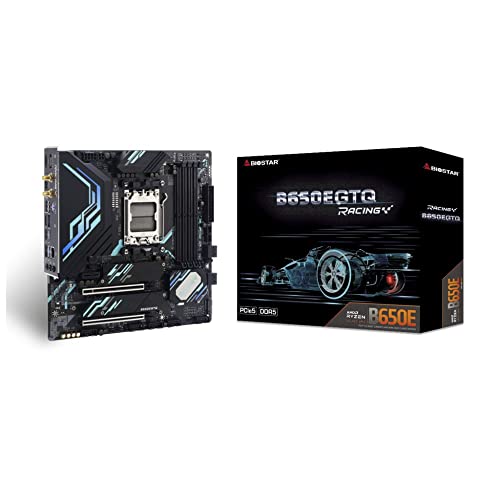
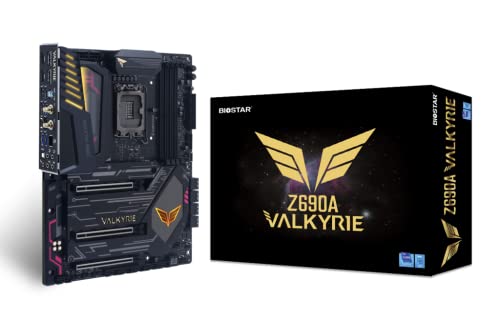
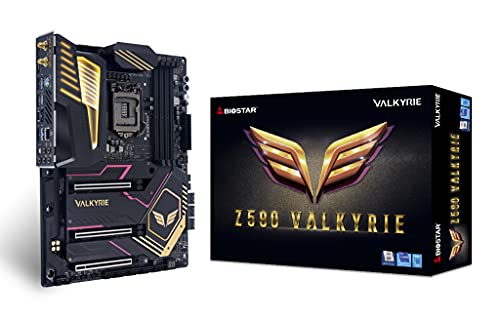
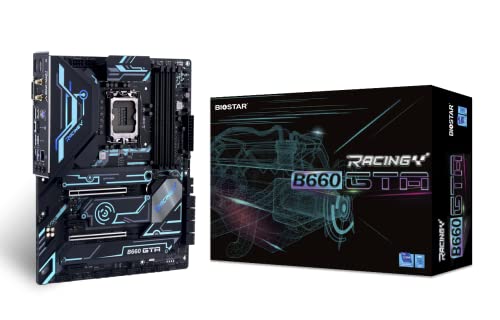
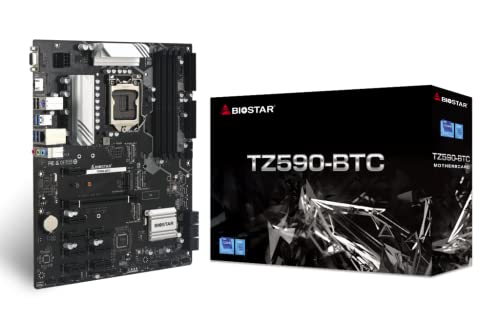
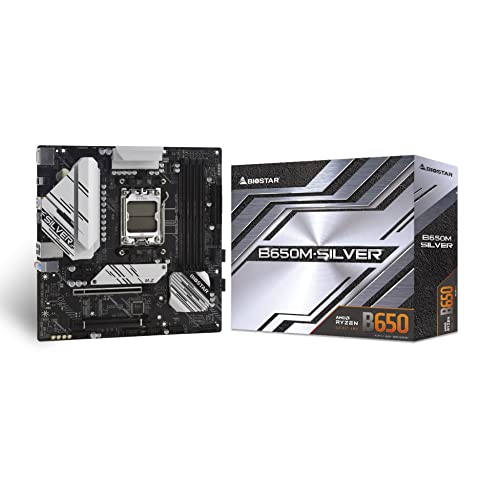
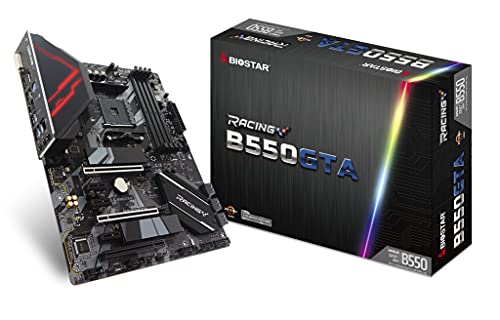
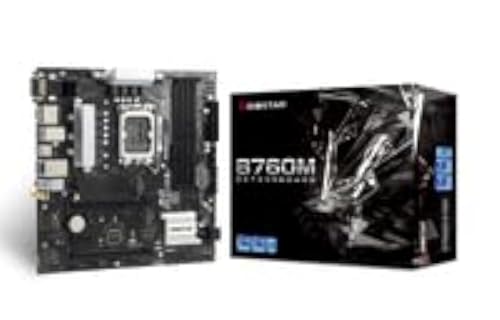
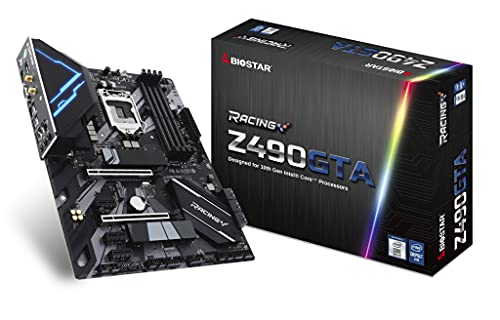
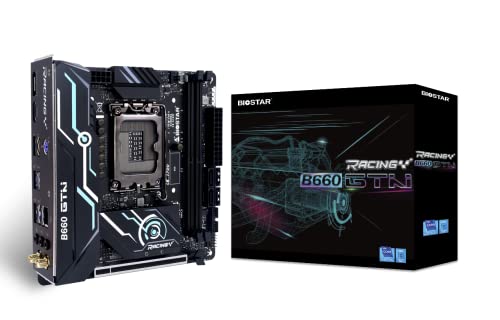
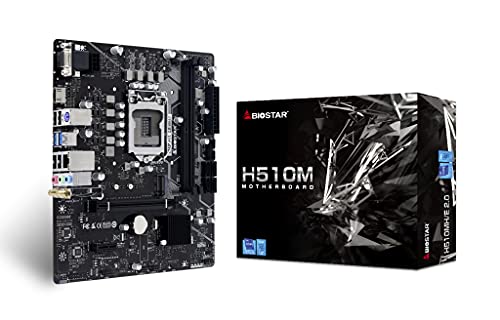
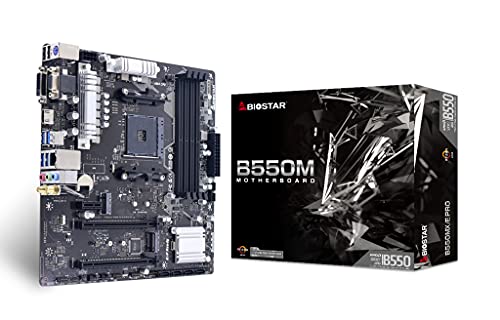
Are Biostar motherboards good?
Biostar motherboards have an average overall score of 6.8, ranking #8 among all motherboard brands, and a user rating of 6.2, placing them at #10 based on user reviews.
Biostar motherboards are generally considered budget-friendly options that target entry-level and mid-range users. They cover essential features for daily computing and light gaming, with decent stability for the price.
Biostar often appeals to users who want a functional board without spending extra on premium features. Their boards are also known for wide compatibility with different processors, which makes them practical choices for affordable builds.
On the downside, Biostar does not usually match the build quality, durability, or advanced features seen in brands like Asus, MSI, or Gigabyte. Overclocking support and high-end performance tuning tend to be limited, and availability of models can also be smaller compared to bigger brands.
The best Biostar motherboards are as follows.
- BIOSTAR Z890 Valkyrie (Overall score: 8.59 points)
- BIOSTAR X870E Valkyrie (Overall score: 8.52 points)
The chart below ranks motherboard brands by average overall score.
[horizontal-chart-12588743876552819512164314463740724746191265422285]


What are the main advantages of Biostar motherboards?
The main advantages of Biostar motherboards are the following:
- Price to performance ratio: Biostar motherboards usually cost between £60 and £110, which is lower than many competitors in the same segment, so they fit well for budget and mid-range PC builds.
- Solid entry-level gaming support: Many Biostar boards in the Racing and B series include PCIe x16 slots with reinforced steel, support for discrete GPUs, and decent VRM setups that handle CPUs up to 125 W TDP.
- Storage options: Even cheaper models support NVMe M.2 PCIe 3.0 x4 (up to 32 Gb/s), and mid-range boards integrate two M.2 slots that support both SATA and PCIe drives.
- Memory support: Most recent Biostar motherboards support DDR4 up to 128 GB at speeds around 3200–3600 MHz (overclocked), which is adequate for gaming and content creation in low-cost builds.
- BIOS features: The UEFI BIOS interface is relatively simple and stable, with basic overclocking functions (multiplier, voltage, memory profiles) that are user-friendly for beginners.
- Compact board availability: Biostar produces many Micro-ATX and Mini-ITX models, which suit small form factor cases while still supporting modern CPUs and GPUs.
What are the main disadvantages of Biostar motherboards?
The disadvantages of Biostar motherboards are the following:
- Limited high-end models: Biostar rarely produces premium boards with advanced VRM phases, PCIe 5.0, or DDR5 support, so enthusiasts often prefer Asus, MSI, or Gigabyte for top-tier performance.
- Fewer connectivity options: USB 3.2 Gen2 and Thunderbolt support is less common, and networking often relies on standard Realtek LAN chips instead of higher-end Intel 2.5 GbE solutions.
- Basic audio section: Many Biostar motherboards use entry-level Realtek ALC892 or ALC897 codecs, which lack high SNR levels and audio capacitors found in more expensive boards.
- Lower resale and brand reputation: Biostar has less market presence compared to Asus or MSI, which reduces demand in second-hand markets and perception among PC enthusiasts.
- Software ecosystem: Biostar’s software utilities for monitoring, fan control, or RGB lighting are limited in features and less polished than competitors’ suites.
Who makes Biostar motherboards?
Biostar motherboards are manufactured by Biostar Microtech International Corp., a Taiwanese company founded in 1986.
The company is headquartered in New Taipei City, Taiwan, and focuses on designing and producing motherboards, graphics cards, industrial PCs, and storage products. Biostar is one of the smaller Taiwanese motherboard manufacturers compared to Asus, MSI, or Gigabyte, but it has built a reputation for affordable products targeted at budget and mid-range segments.
How popular are Biostar motherboards worldwide?
Biostar motherboards are a small player worldwide, with shipments in 2024 estimated at around 3 million units and a global market share close to 2 %, which placed the brand far behind Asus, MSI, Gigabyte, and ASRock. Biostar focused mainly on budget and entry-level boards, though it also released some models for gaming and mining.
The brand performed strongest in Asia, especially in Taiwan and parts of China, where its share reached about 4 %, while in Europe and North America it remained below 2 %.
What are the main Biostar motherboard series?
Biostar motherboards come in the following series:
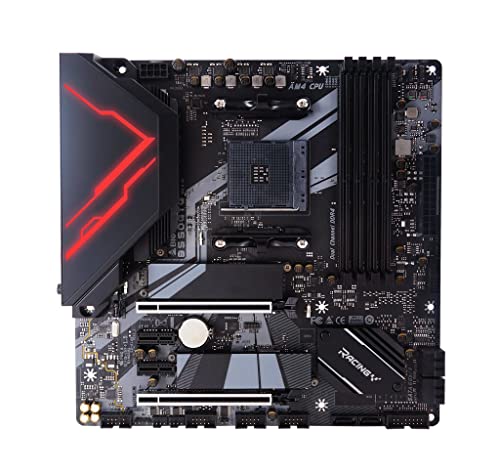
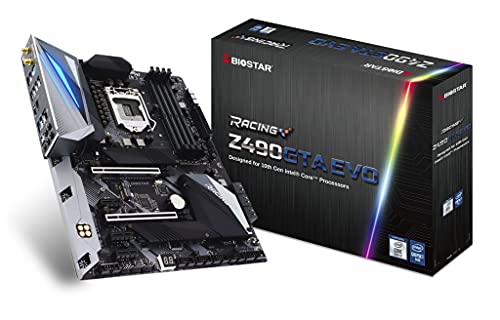
- Racing series: High-performance motherboards built for gamers and PC enthusiasts. They support the latest Intel and AMD platforms, have advanced cooling options, reinforced PCIe slots, RGB lighting, and features that focus on overclocking stability and speed.
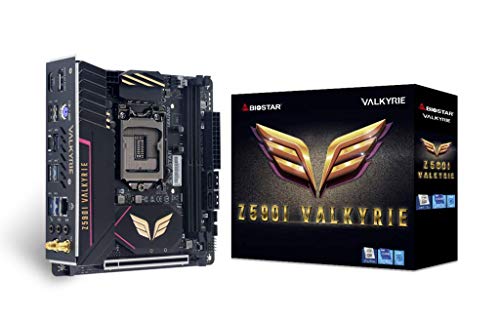
- Valkyrie series: Premium gaming motherboards that sit above the Racing line. They use stronger power delivery systems, high-quality materials, and expanded connectivity. These boards target users who want maximum performance, advanced overclocking headroom, and durable build quality.
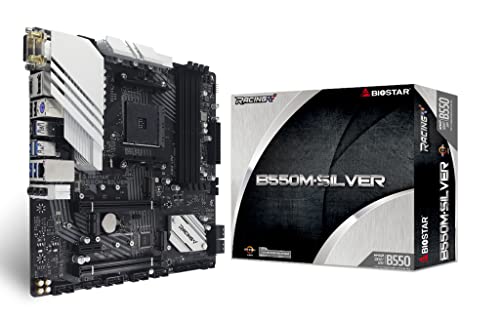
- Silver series: Mid-range motherboards that balance cost and performance. They support both Intel and AMD CPUs, include solid VRM design, and usually come with modern storage support like NVMe M.2 slots and decent audio solutions.
- Hi-Fi series: Boards designed with a focus on audio quality. They integrate high-end audio capacitors, isolated PCB audio layers, and dedicated amplifiers. This series suits users who want better sound performance directly from the motherboard without a separate sound card.
- TB series (Thunderbolt): Motherboards that integrate Thunderbolt technology. They deliver faster data transfer and expanded connectivity for external devices, which benefits professionals working with large files such as video editors and designers.
- A series: Entry-level motherboards designed for budget systems. They are simple and reliable, with basic features for standard desktop use. This line targets users who want stability and affordability without advanced extras.
- B series: Business-focused motherboards aimed at office systems. They include long lifecycle support, stable components, and corporate-level reliability. These boards focus on efficiency and durability in professional environments.
How much do Biostar motherboards cost?
Biostar motherboards cost between £45 and £170 depending on the chipset, socket type, and series.
Entry-level boards for Intel and AMD platforms start near £45 and are suitable for basic desktop builds, while mid-range models with gaming features, RGB support, and faster connectivity usually range from £90 to £130. High-end Biostar boards with more advanced power phases, PCIe 4.0 or 5.0 support, and multiple M.2 slots can reach up to £170.
The following chart shows the price distribution of Biostar motherboards.
[vertical-chart-17136359383321471076086754985124211485930548051387]
What should you consider while choosing the best Biostar motherboard?
When selecting the best Biostar motherboard, you need to consider the following factors:
- Socket type and CPU support: Biostar motherboards support different processor architectures through specific sockets like AM5 for AMD Ryzen 7000/8000 series and LGA 1700 for 12th to 14th generation Intel Core processors. The B650MT series supports AMD Ryzen 7000/8000 series with AM5 socket, while the H610 series handles Intel Core processors through LGA 1700. You must match the socket type with your intended processor as this determines the entire platform architecture.
- Memory support and capacity: DDR5 memory support has become standard in modern Biostar motherboards, with the B650M-SILVER supporting up to 192 GB DDR5 RAM and speeds reaching 6000+ MHz. The B650MT series handles dual-channel DDR5 with speeds from 4800 MHz to 6000+ MHz overclocked, while older series like H610 still use DDR4 memory up to 64 GB capacity. Higher memory capacity and faster speeds translate to better multitasking and application performance.
- Chipset features: The chipset determines available features and expansion slots, with B650 chipsets supporting PCIe 5.0 for NVMe drives and multiple M.2 slots for storage expansion. B660 series motherboards like the B660GTA feature 17-phase power delivery and support DDR4-5000 with multiple PCIe slots. Z890 and Z590 series motherboards target enthusiasts with advanced overclocking features and more expansion slots compared to budget H610 chipsets.
- Form factor: Biostar produces motherboards in ATX, mATX, and mini-ITX form factors to fit different case sizes and build requirements. The B650M-SILVER uses micro ATX format for compact builds while B660GTA uses full ATX (305 × 244 mm) for maximum expansion. Form factor affects the number of expansion slots, memory slots, and overall connectivity options available.
- Storage interface support: Modern Biostar motherboards include multiple M.2 slots with PCIe 4.0 and 5.0 support alongside traditional SATA III connectors for various storage configurations. The B660GTA offers 8× SATA III ports and 3× M.2 slots (2× PCIe 4.0 and 1× PCIe 3.0), while B650 series focuses on PCIe 5.0 M.2 support for faster NVMe drives. More M.2 slots and faster PCIe generations allow for better storage performance and flexibility.