
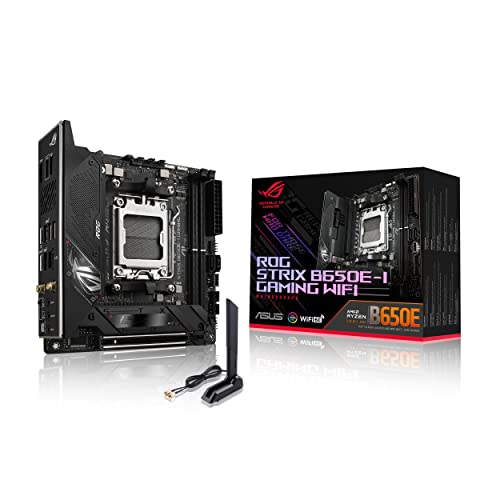
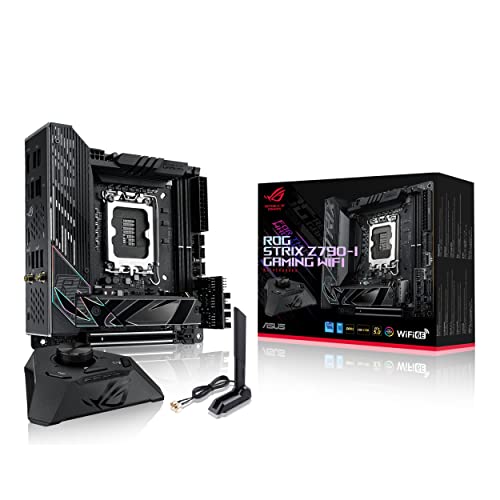
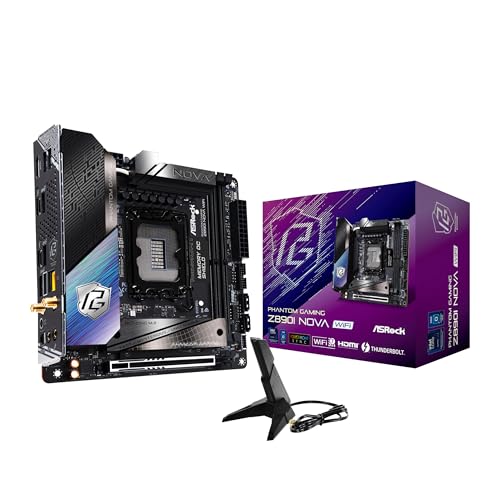
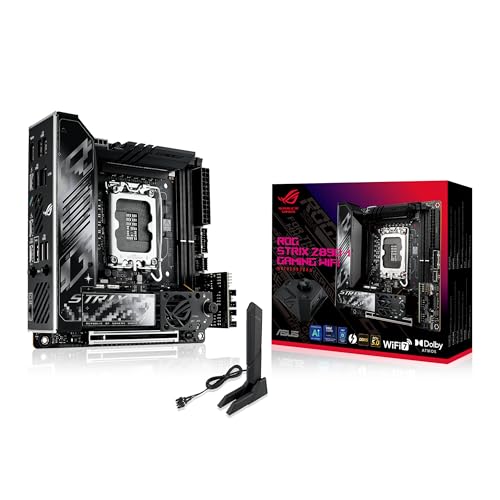
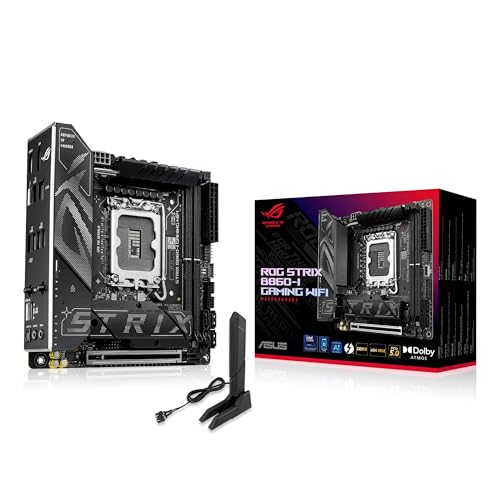
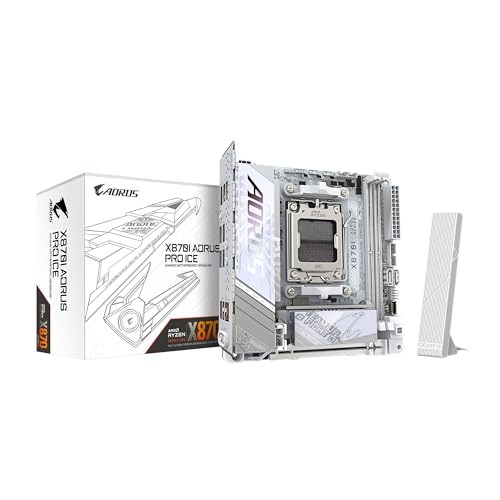
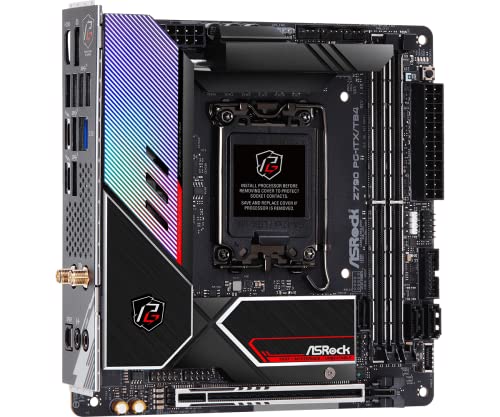
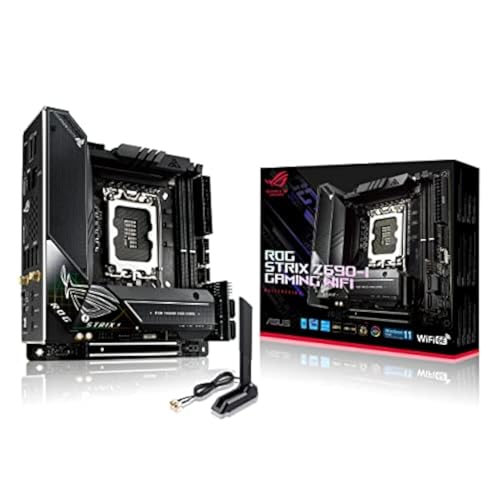
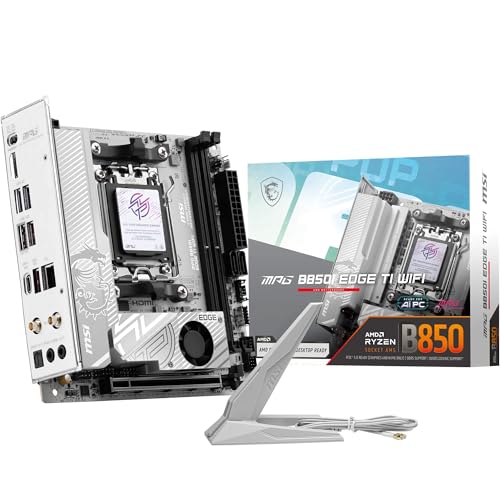
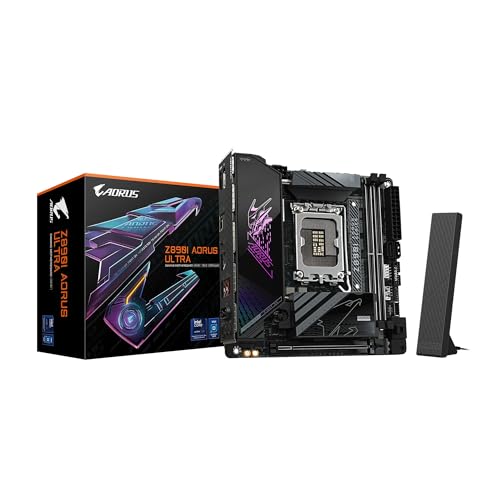
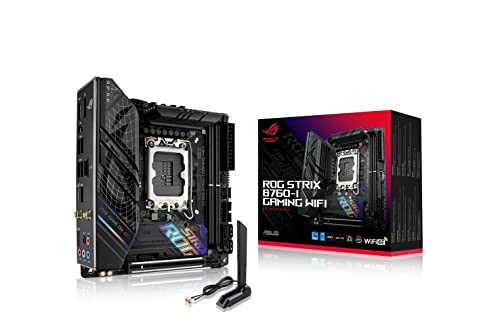
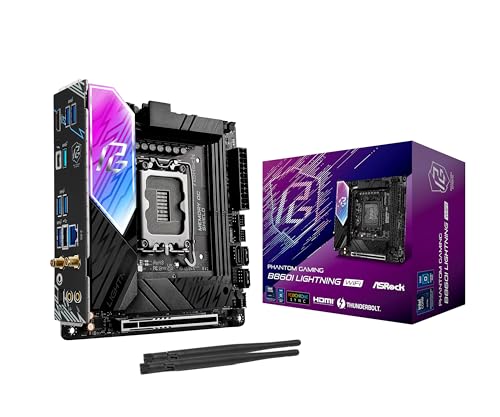
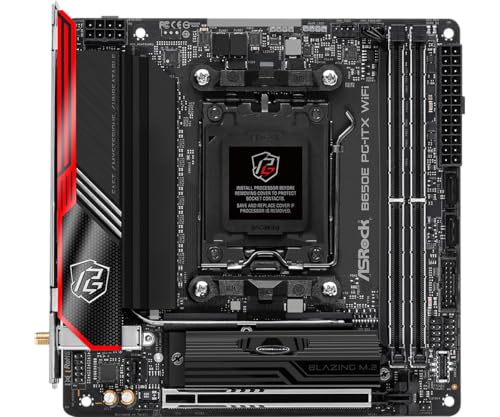
What is an Mini-ITX motherboard?
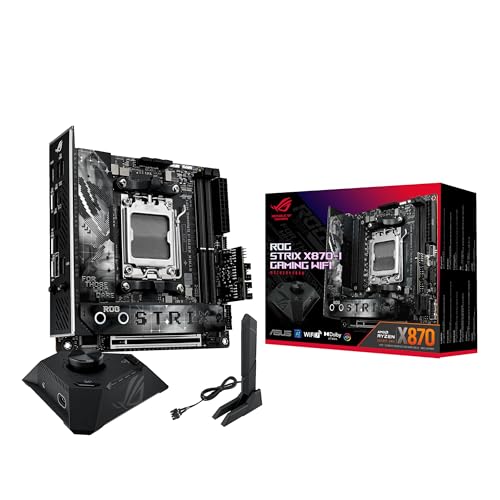
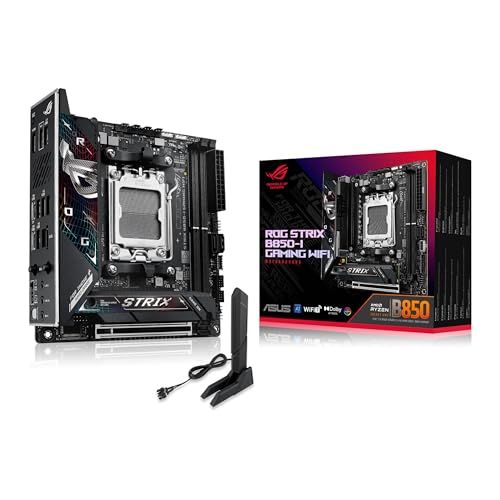
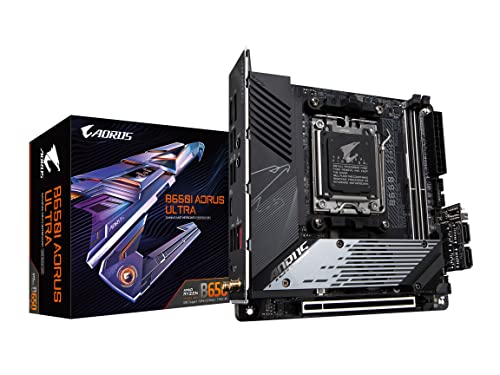
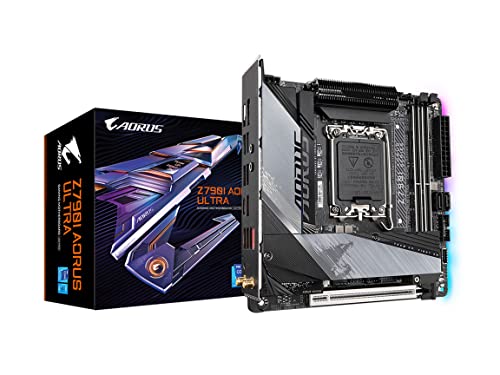
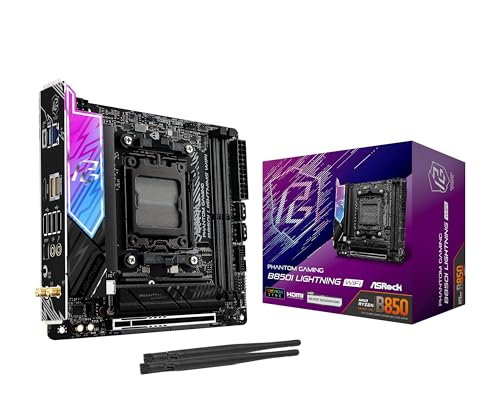
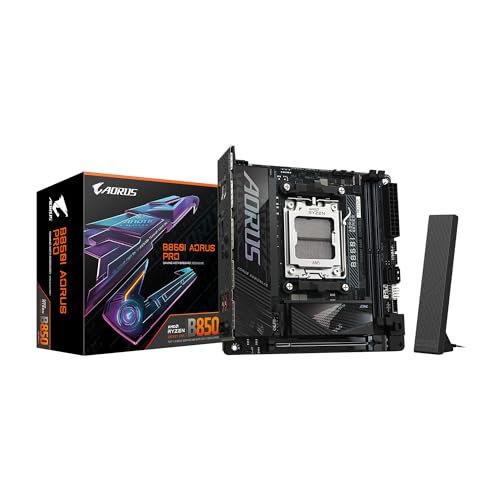
A Mini-ITX motherboard is a small motherboard format that measures 170 × 170 mm. It belongs to the ITX family and was designed to fit compact cases while still supporting a complete desktop system. Mini-ITX boards have the same square shape across all models, so they are easy to recognize and install in cases that support small form factor builds.
Despite their reduced size, Mini-ITX motherboards support standard desktop components such as modern CPU sockets, RAM slots, and storage connections.
How does Mini-ITX differ from ATX or Micro-ATX?
Mini-ITX differs from ATX and Micro-ATX mainly in size and expansion capability.
Mini-ITX boards measure 170 × 170 mm, which is smaller than Micro-ATX (244 × 244 mm) and much smaller than ATX (305 × 244 mm). This compact format limits the number of RAM slots, PCIe slots, and other connectors, but it fits in smaller cases where space is the main priority. ATX and Micro-ATX boards, in contrast, support more components, more expansion slots, and higher RAM capacities.
Which brands make Mini-ITX motherboards in 2025?
The best Mini-ITX motherboard brands are as follows.
- ASUS (Overall score: 7 points)
- GIGABYTE (Overall score: 6.6 points)
- ASRock (Overall score: 6.3 points)
The chart below ranks Mini-ITX motherboard brands by average overall score.
[horizontal-chart-16428077604321960616155070325483887155480303840083]
How much do the best Mini-ITX motherboards cost?
The best Mini-ITX motherboards cost between £130 and £300, depending on chipset, features, and brand.
Entry-level boards with fewer connectivity options and simpler power delivery stay closer to the lower end, while premium models that support the newest processors and advanced features sit at the top of this range.
High-end Mini-ITX boards often use the latest Intel Z-series or AMD X-series chipsets, which raise the price above £220. These boards usually include advanced cooling solutions, stronger VRMs, and more robust BIOS features. Mid-range models around £170 often balance compact design with stable performance, which suits most gaming and small form factor builds.
The following chart shows the price distribution of Mini-ITX motherboards.
[vertical-chart-11042405440434113681113905824120203341540239667162]
What CPU socket types do Mini-ITX motherboards support?
Mini-ITX motherboards support the same CPU socket types as ATX or Micro-ATX motherboards since they use the same chipsets and processor families.
For Intel, common socket types include LGA1200, LGA1700, and older versions such as LGA1151, which means they can run processors from Core i3 up to Core i9 depending on the generation. For AMD, Mini-ITX boards use sockets such as AM4 or AM5, which support Ryzen CPUs across multiple series.
Which chipsets do Mini-ITX motherboards use?
Mini-ITX motherboards use a wide range of chipsets that span across multiple CPU architectures and manufacturers.
Intel Mini-ITX boards utilize chipsets such as Z790, Z690, B660, H610 for 12th and 13th generation CPUs, while older generations use Z490, B460, H410, Z390, B365, and H310 chipsets.
AMD Mini-ITX motherboards feature X670E, X670, B650E, B650 chipsets for AM5 socket CPUs, and X570, B550, A520, X470, B450, A320 chipsets for AM4 socket processors. Server-grade Mini-ITX boards also exist with chipsets like Intel C256 and C236 for Xeon processors.
What memory types do Mini-ITX motherboards support?
Mini-ITX motherboards support the same memory types as other desktop motherboards, depending on the chipset and CPU socket.
Most modern Mini-ITX boards use DDR4 or DDR5 memory (depending on whether they support Intel 12th/13th generation or AMD Ryzen 7000 series), while older models use DDR3. The supported type always matches the platform specifications, so Intel and AMD versions differ.
How much RAM can Mini-ITX motherboards handle?
Mini-ITX motherboards can handle up to 64 GB of RAM in most modern models, although some high-end boards with advanced chipsets support as much as 128 GB. The exact capacity depends on the chipset and CPU compatibility, since the memory controller is integrated in the processor.
Most Mini-ITX boards come with two DIMM slots, so the maximum RAM depends on the largest module size supported. For example, if each slot supports 32 GB DDR4 or DDR5 sticks, the total capacity is 64 GB. With newer platforms that support 64 GB modules per slot, Mini-ITX boards can reach 128 GB, which is enough even for professional workloads.
What PCIe versions do Mini-ITX motherboards support?
Mini-ITX motherboards support different PCIe versions depending on the chipset and generation. Older Mini-ITX models often support PCIe 2.0, while more recent boards use PCIe 3.0 or PCIe 4.0. The newest high-end Mini-ITX motherboards built for modern Intel or AMD platforms can also support PCIe 5.0, which doubles bandwidth compared to PCIe 4.0.
Since Mini-ITX motherboards usually include only one full-length PCIe x16 slot, the version of that slot matters for graphics cards and high-performance add-in cards. PCIe 4.0 is common in many Mini-ITX gaming and workstation boards, while PCIe 5.0 is typically found in premium models that support the latest CPUs.
What connectivity options do Mini-ITX motherboards have?
Mini-ITX motherboards have a wide range of connectivity options that cover both internal and external devices. Most models include rear I/O ports with USB connections (USB 2.0, USB 3.2 Gen 1 or Gen 2, and in newer boards USB-C), HDMI or DisplayPort outputs for integrated graphics, and audio jacks. Ethernet ports are standard, with some boards supporting 2.5 GbE or higher. Many Mini-ITX boards also integrate Wi-Fi and Bluetooth modules, which add wireless connectivity without extra expansion cards.
Internally, Mini-ITX boards provide headers for additional USB ports, audio connections, and front-panel connectors.
Storage connectivity usually comes through SATA ports and one or two M.2 slots that support NVMe SSDs. Expansion is limited compared to larger boards, but most models include a single PCIe x16 slot that connects to a dedicated GPU or other expansion card.