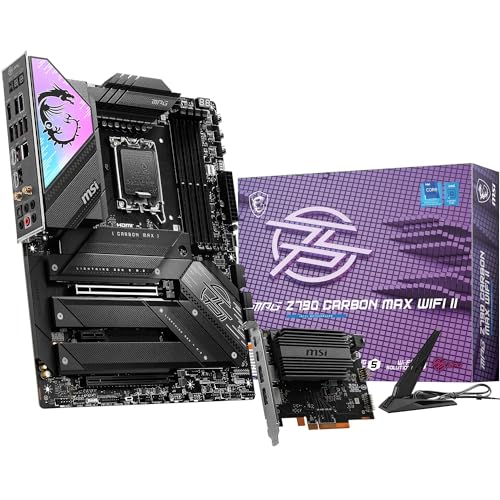
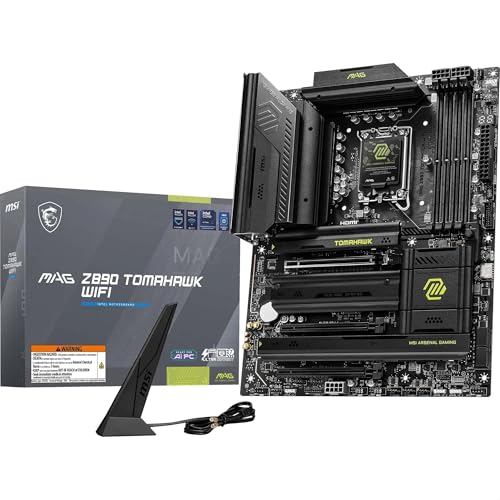
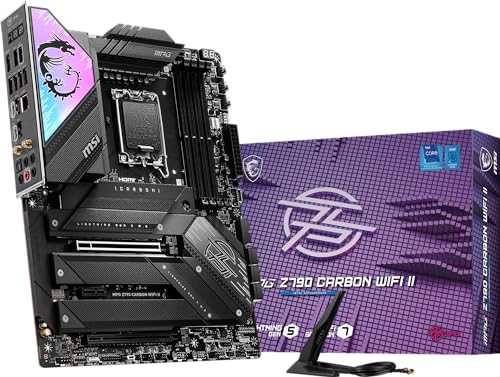
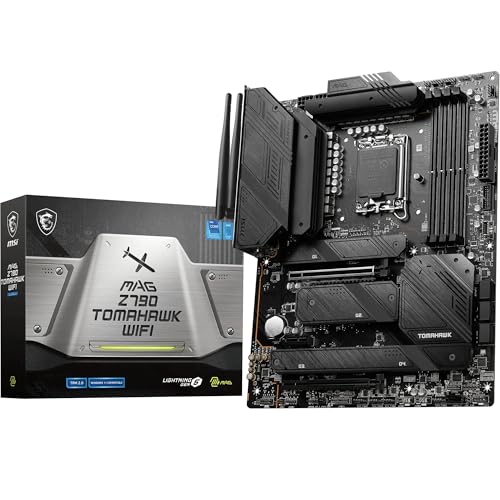
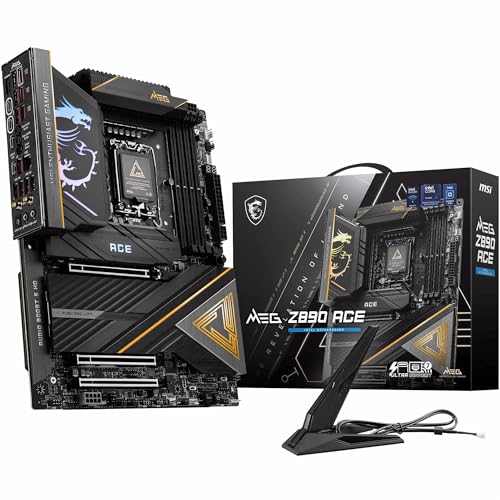
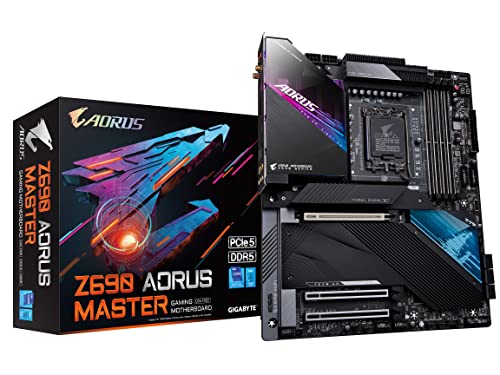
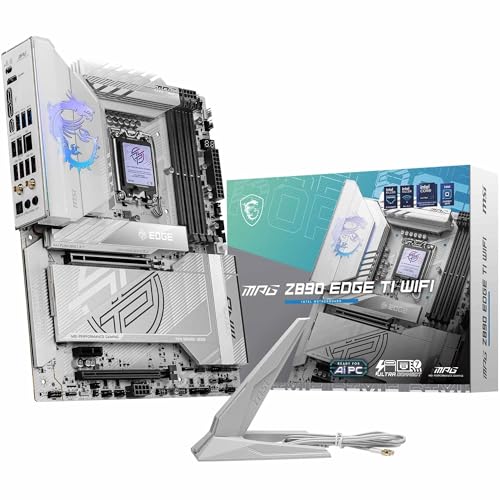
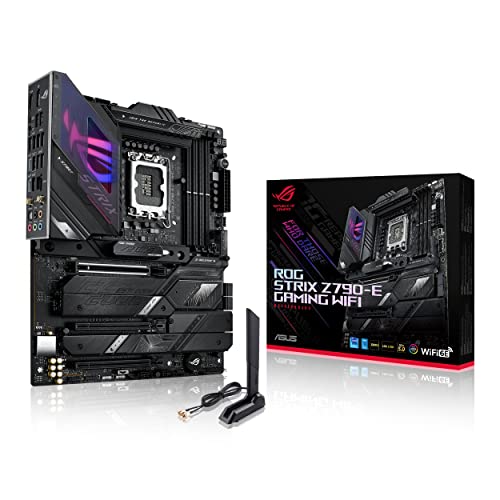
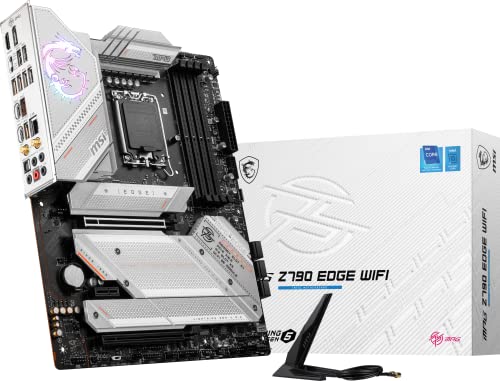
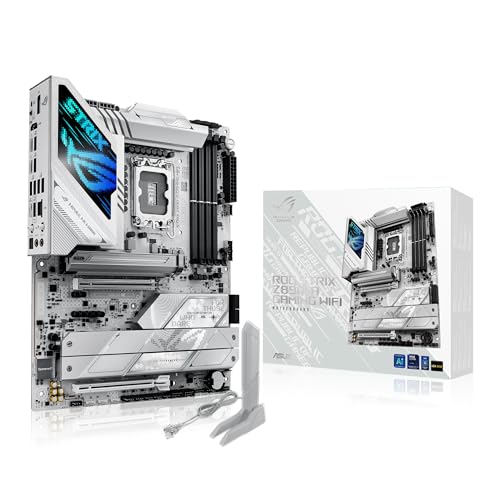
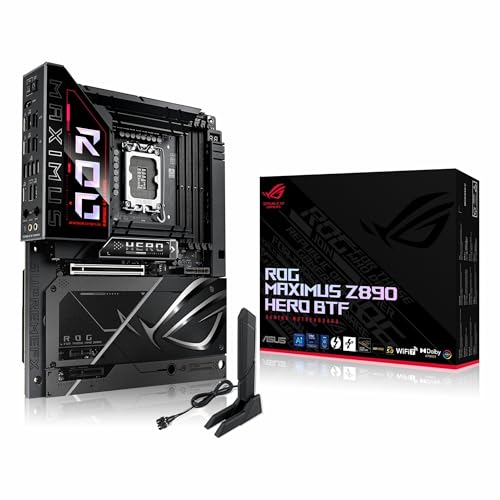
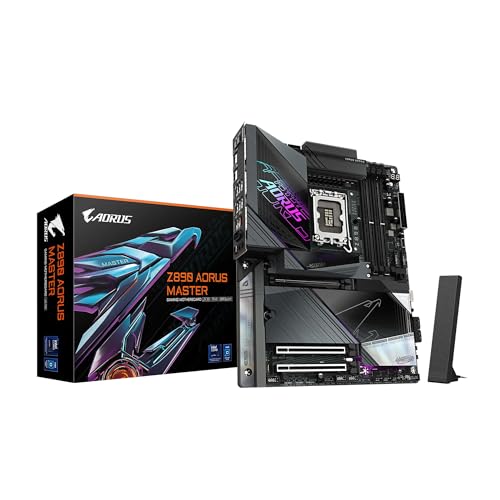
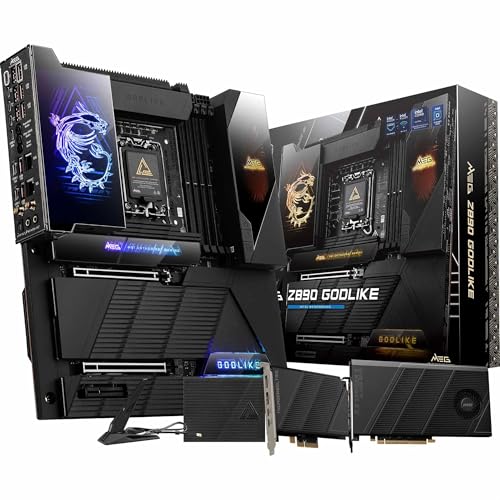
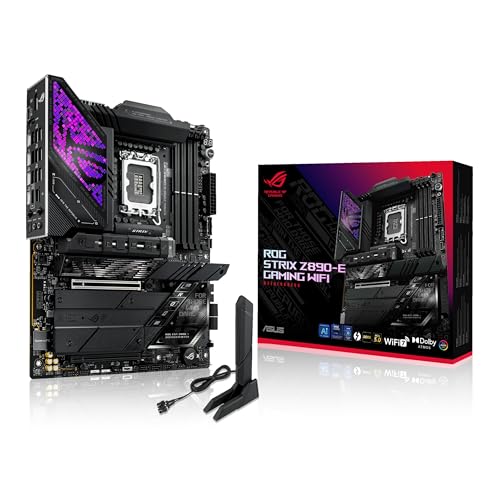
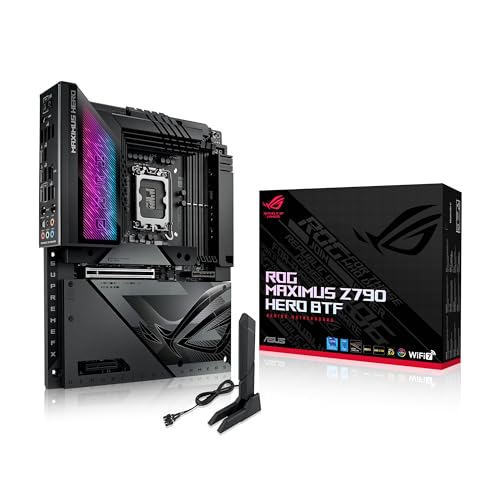
What is an Intel motherboard?
An Intel motherboard is a main circuit board that supports Intel processors and connects all the hardware of a computer. It contains the CPU socket for Intel CPUs, memory slots for RAM, and expansion slots for graphics cards and storage devices. It also manages the flow of data between components, so it acts as the foundation of a PC.
What makes Intel motherboards different from AMD motherboards?
Intel motherboards use a variety of CPU sockets depending on the generation and class of processors.
The most common current socket is LGA 1700, which supports Intel’s 12th, 13th, and 14th generation Core processors based on the Alder Lake, Raptor Lake, and Raptor Lake Refresh architectures. This socket has 1700 contact pins and works with both DDR4 and DDR5 memory depending on the motherboard model.
Older Intel platforms rely on other sockets. LGA 1200 supports 10th and 11th generation Comet Lake and Rocket Lake CPUs, while LGA 1151 was used for multiple generations before that, including Skylake, Kaby Lake, Coffee Lake, and Comet Lake Refresh in certain revisions.
High-end desktop platforms use larger sockets such as LGA 2066, which supports Core X-series processors. For servers and workstations, Intel uses specialized sockets like LGA 4189 or LGA 4677 for Xeon processors.
Which brands make the best Intel motherboards?
The best Intel motherboard brands are as follows.
- MSI (Overall score: 8.9 points)
- ASUS (Overall score: 8.9 points)
- GIGABYTE (Overall score: 8.8 points)
The chart below ranks Intel motherboard brands by average overall score.
[horizontal-chart-18076385253386893605178519262570437905434068013046]
What CPU sockets do Intel motherboards use?
Intel motherboards use several CPU sockets depending on the processor generation and market segment.
Current Intel desktop motherboards primarily utilize the LGA 1700 socket for 12th, 13th, and 14th generation Core processors (Alder Lake, Raptor Lake, and Raptor Lake Refresh), while server and high-end desktop platforms use LGA 1200 for 10th and 11th generation processors, LGA 2066 for Core X-series processors, and LGA 4677 for Xeon Scalable processors. The LGA (Land Grid Array) naming convention indicates the number of contact points between the CPU and socket.
Intel's socket evolution follows a pattern where new CPU generations often require new sockets due to changes in pin count, power delivery, and feature sets. The LGA 1151 socket served 6th through 9th generation Core processors with two revisions (v1 and v2), while older sockets like LGA 1155, LGA 1156, and LGA 775 supported previous generation processors.
Which chipsets do Intel motherboards use?
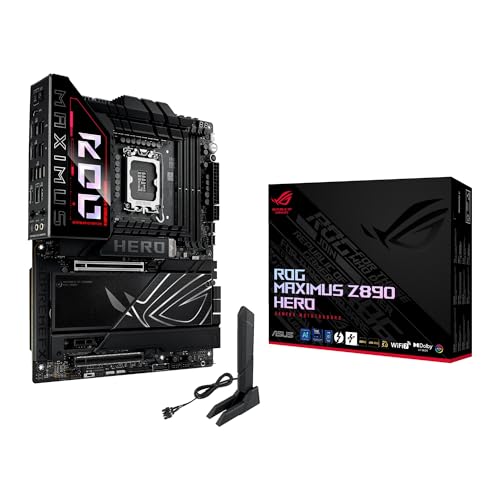
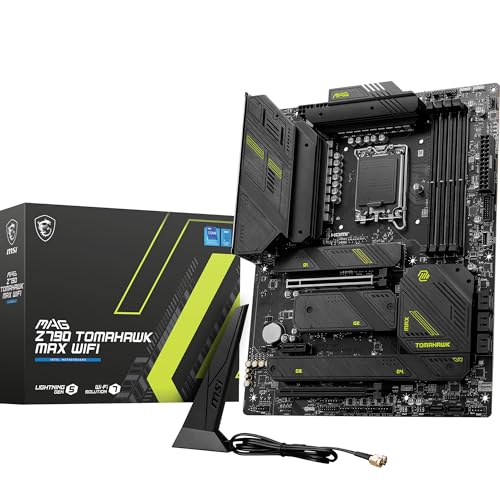
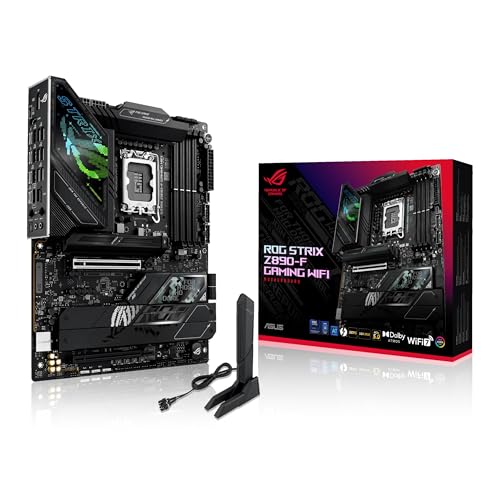
Intel motherboards usually use mainstream, performance, and entry-level Intel chipsets such as B760, Z790, B860, Z890, H770, and H610.
The most common choice for many mainstream Intel builds is usually a B-series chipset, while Z-series chipsets are aimed more at higher-end boards with stronger expansion, tuning, and connectivity options. H-series chipsets are more limited and often appear on simpler or cheaper models.
Older Intel boards in the market can also use earlier chipsets such as B660, Z690, B560, Z590, or H510, so the exact chipset still depends on the CPU generation and socket you want to support.
The Intel motherboard supports DDR memory modules, and the type depends on the generation.
Older Intel motherboards support DDR3, while newer models use DDR4 or DDR5. DDR5 is now standard on the most recent platforms, while DDR4 remains common in mid-range and budget models. The supported memory type is tied to the chipset and CPU generation, so a motherboard designed for 12th or 13th Gen Intel processors supports DDR4 or DDR5, but not both at the same time.
What memory types do Intel motherboards support?
The Intel motherboard supports DDR memory modules, and the type depends on the generation.
Older Intel motherboards support DDR3, while newer models use DDR4 or DDR5. DDR5 is now standard on the most recent platforms, while DDR4 remains common in mid-range and budget models. The supported memory type is tied to the chipset and CPU generation, so a motherboard designed for 12th or 13th Gen Intel processors supports DDR4 or DDR5, but not both at the same time.
How much RAM can Intel motherboards handle?
Intel motherboards provide PCIe and expansion options that depend on the chipset and CPU generation.
Most current Intel motherboards use PCIe 4.0 or PCIe 5.0 lanes from the processor for the main graphics card slot and high-speed storage, while the chipset adds additional PCIe 3.0 or PCIe 4.0 lanes. This setup supports multiple GPUs, NVMe SSDs, and other add-in cards, so it gives flexibility for gaming, content creation, or workstation use.
Expansion options also include M.2 slots for NVMe SSDs (some with PCIe 4.0 x4 bandwidth), SATA connectors for storage drives, and slots for Wi-Fi or Bluetooth modules.
What PCIe versions do Intel motherboards support?
Intel motherboards support PCIe versions that range from PCIe 3.0 up to PCIe 5.0, depending on the chipset and generation of the processor.
Older Intel boards such as those with 300-series chipsets use PCIe 3.0, while more recent models built for 10th and 11th generation CPUs add PCIe 4.0 support. With the release of 12th and 13th generation processors on the LGA 1700 socket, Intel motherboards advanced to PCIe 5.0 for the primary x16 graphics slot and PCIe 4.0 for additional lanes.
How many expansion slots do Intel motherboards provide?
Intel motherboards provide different numbers of expansion slots depending on the chipset and form factor.
Most models include a mix of PCI Express x16 slots for graphics cards and PCI Express x1 slots for add-in cards such as network adapters or sound cards. Entry-level motherboards often have one PCIe x16 slot and one or two PCIe x1 slots, while higher-end models can feature two or three PCIe x16 slots and multiple PCIe x1 slots.
The exact layout depends on the board design and intended use. ATX motherboards usually have more expansion slots than Micro-ATX or Mini-ITX boards because they have more physical space. Some premium Intel boards support multiple GPUs through two or more reinforced PCIe x16 slots, while smaller boards limit expansion to a single graphics card slot with one or two additional PCIe x1 slots.
How much do Intel motherboards cost?
Intel motherboards cost between £70 and £550 depending on the chipset, form factor, and supported features.
Entry-level boards with basic H610 or B660 chipsets usually fall near 80–£110, while mid-range options such as B760 or H770 reach 150–£220. High-end motherboards that use chipsets like Z790 or workstation-class models go from £260 up to £550.
The price depends not only on the chipset but also on expansion support, VRM design, memory compatibility, and connectivity. Boards with premium features such as PCIe 5.0 slots, DDR5 support, and advanced cooling systems cost more than simpler models that focus on basic use.
The following chart shows the price distribution of Intel motherboards.
[vertical-chart-10226594936546925460081266873152918677043557370554]