
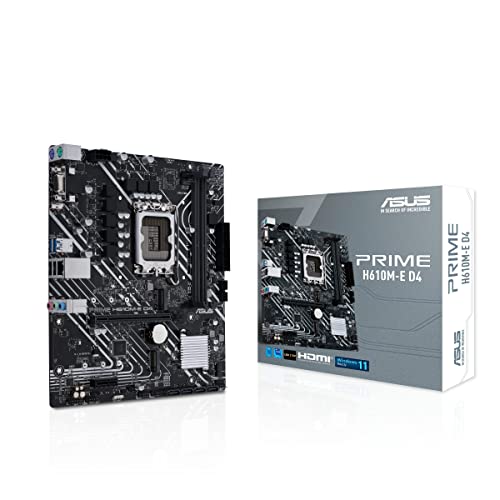
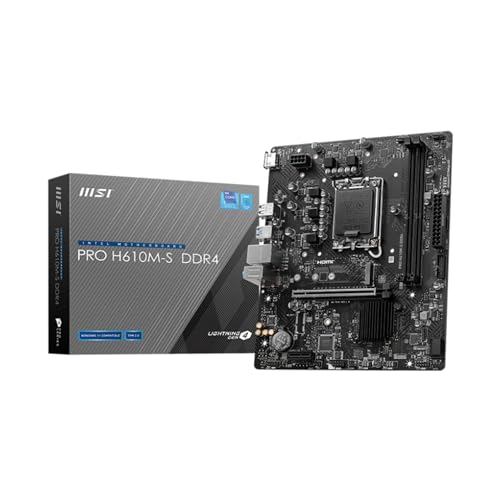
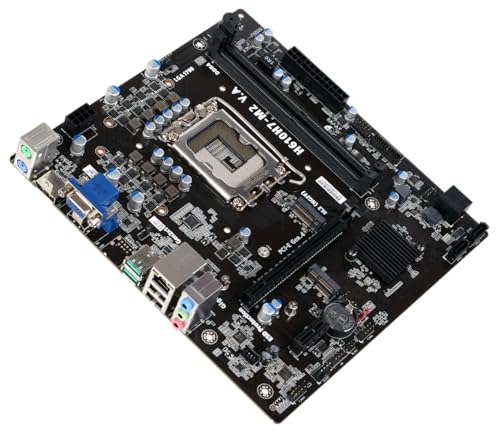
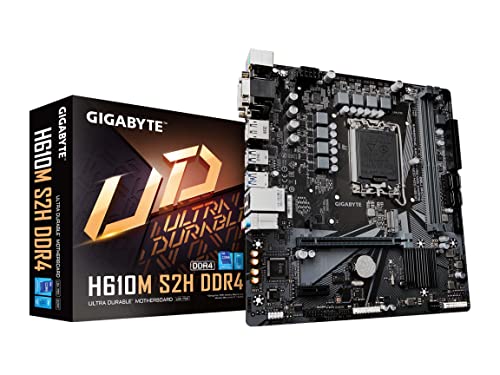
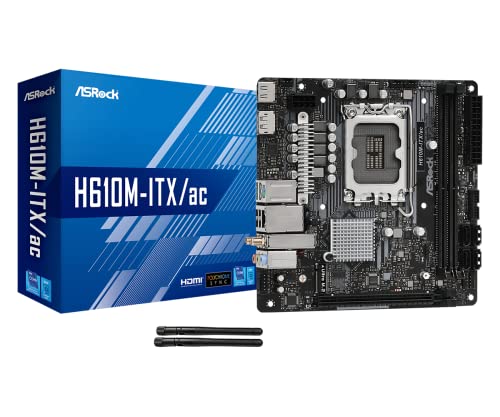
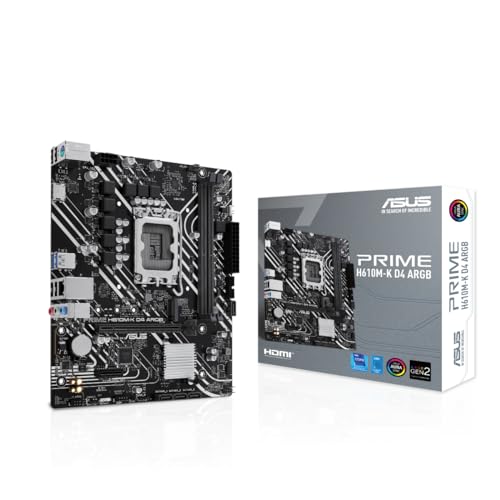
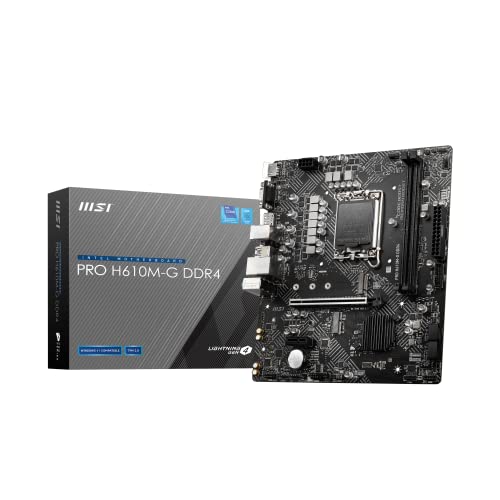
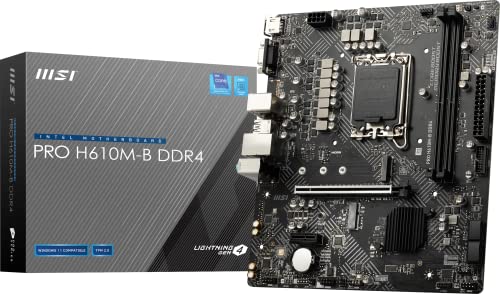
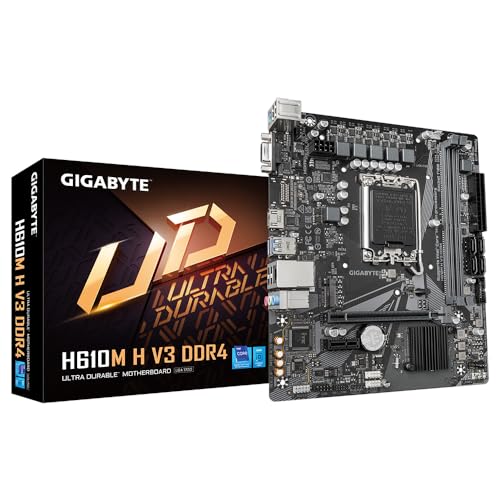
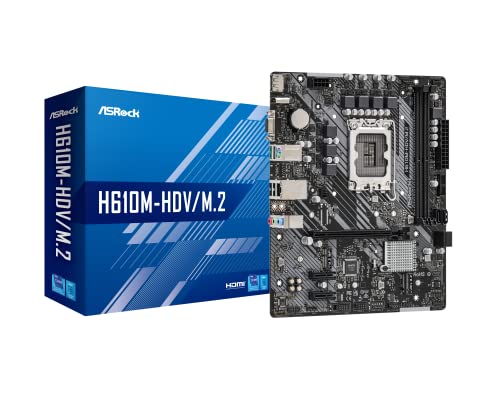
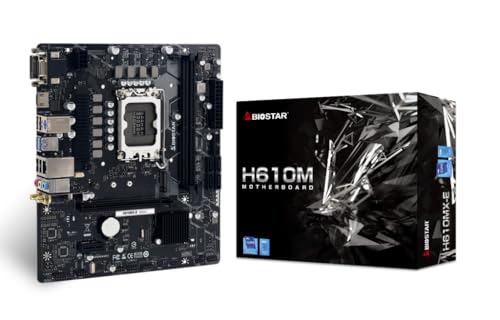
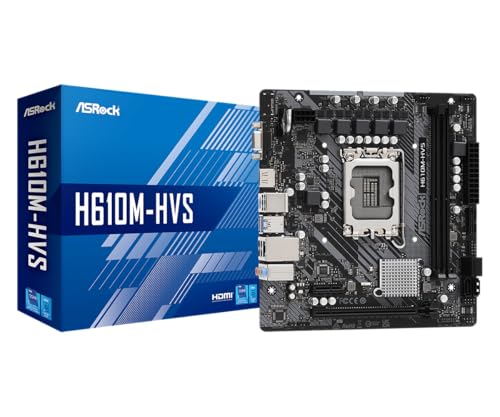
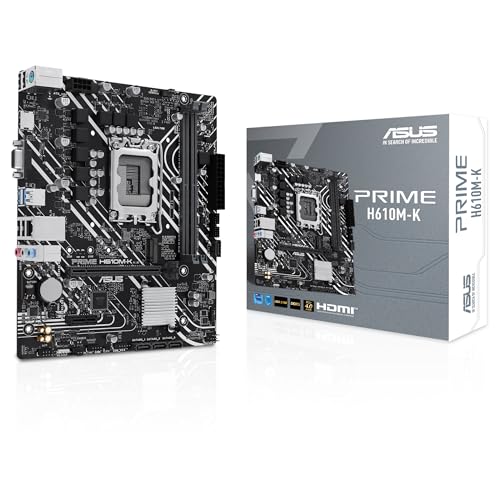
What is an H610 motherboard?
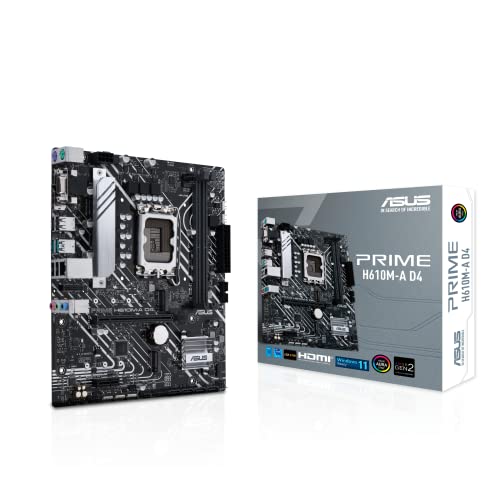
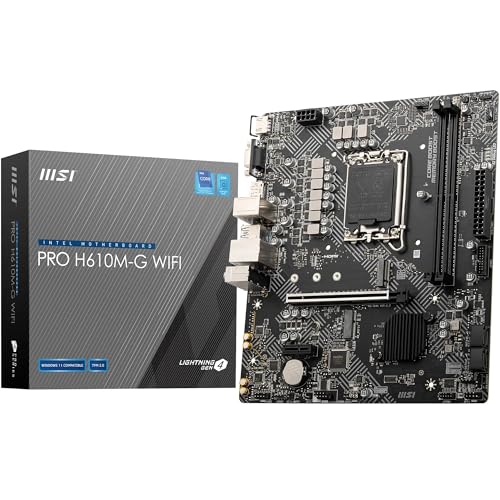
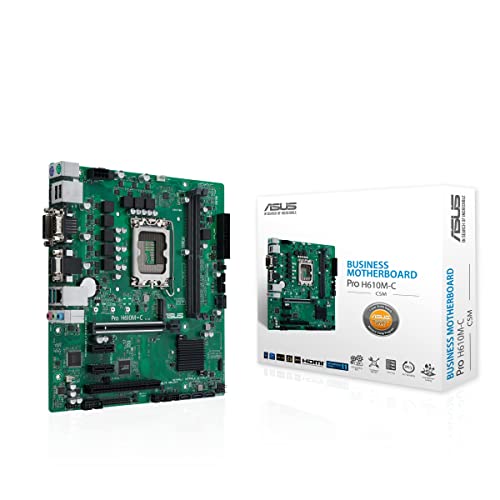
An H610 motherboard is an entry-level chipset from Intel’s 600 series, designed for 12th and 13th generation Alder Lake and Raptor Lake processors. It provides the basic features needed to run these CPUs but strips out most of the advanced capabilities found in higher-end chipsets like B660, H670, or Z690.
It usually supports DDR4 or DDR5 memory, depending on the specific board model, but with fewer slots and lower maximum capacities compared to premium options. Expansion options are also limited, with fewer PCIe lanes available, often just one main PCIe x16 slot for a graphics card and minimal additional connectivity for storage or peripherals.
The H610 is aimed at budget systems where cost and simplicity matter more than flexibility or performance tuning. Unlike higher chipsets, it does not support CPU overclocking and typically lacks features like PCIe 5.0, multiple M.2 slots, or fast networking options such as 2.5 GbE. It is most commonly used in office PCs, entry-level home desktops, or compact builds where efficiency and low price are the priorities. This makes it a solid choice for users who only need reliable everyday performance without investing in premium gaming or workstation features.
Which brands make the best H610 motherboards?
The best H610 motherboard brands are as follows.
- ASUS (Overall score: 4.8 points)
- MSI (Overall score: 4.8 points)
- ASRock (Overall score: 4.7 points)
The chart below ranks H610 motherboard brands by average overall score.
[horizontal-chart-03589162974708014910009313038381604951410921271565]
How much do H610 motherboards cost?
H610 motherboards cost between £70 and £130 depending on brand, model, and included features.
Basic models stay close to £70 to £90, while higher-end versions with better power delivery, extra connectivity, or reinforced build reach £110 to £130. Prices can vary between regions and retailers, but the overall range remains consistent.
These boards target entry-level Intel 12th and 13th Gen processors, so most models come with DDR4 memory support, limited PCIe lanes, and fewer expansion slots. Higher priced H610 motherboards may support DDR5 memory, have better audio chips, or stronger cooling designs.
The following chart shows the price distribution of H610 motherboards.
[vertical-chart-03991002794246259218112148699556438249760621173335]
What should you consider while choosing the best H610 motherboard?
Choosing the best H610 motherboard requires careful evaluation of several technical factors as follows:
- Form factor compatibility: The motherboard form factor determines physical compatibility with your PC case. H610 motherboards come primarily in micro-ATX format which fits most standard and compact cases. Micro-ATX boards measure approximately 244mm x 305mm and provide sufficient space for essential components while maintaining compact dimensions.
- Memory support and configuration: Memory compatibility affects system performance and future upgrade potential. H610 motherboards support dual-channel DDR4 memory up to 64GB with maximum speeds of 3200MHz through XMP profiles. Most boards feature 2 DIMM slots which limits memory configuration options but reduces costs compared to 4-slot designs.
- Expansion slots and storage options: PCIe slot configuration determines graphics card and expansion card compatibility. H610 boards typically include 1 PCIe 4.0 x16 slot for graphics cards and 1-2 PCIe 3.0 x1 slots for additional expansion cards. Storage options vary between models with 1-2 M.2 slots supporting PCIe 3.0 and 4-6 SATA 6Gb/s ports for traditional drives.
- VRM design and power delivery: Voltage Regulator Module configuration affects CPU power delivery stability and performance. Higher-end H610 models feature 6+1+1 VRM designs which support more demanding processors and better power efficiency. Basic models use 4+1+1 configurations which handle entry-level CPUs adequately.
- Connectivity and I/O features: Port configuration impacts peripheral connectivity and future expansion needs. H610 motherboards provide 6-13 USB ports with varying speeds including USB 3.2 Gen 1 and Gen 2 ports. Network connectivity includes Gigabit Ethernet with some premium models featuring 2.5GbE for faster networking.