Scored using Drones Methodology v3.0
Drones Methodology v3.0
Mathematical & Unbiased Scoring
Products in this category are scored under Frontum Drones Methodology v3.0: the technical score from the specifications is the base, and independent expert and video reviews (up to ±0.5 points), owner opinions (up to ±0.3) and best-of lists (up to +0.3) move it up or down.
Explore Drones Methodology v3.0

BETAFPV Air75 II review: 97 specs compared

Avg. price:~£110Max flight time:7.5 minVideo resolution:N/AMax transmission distance:?

BETAFPV Air75 II Review: Compare 97 technical specifications and 19 expert and video reviews to see how this product ranks in the Drones category and whether it is worth buying.
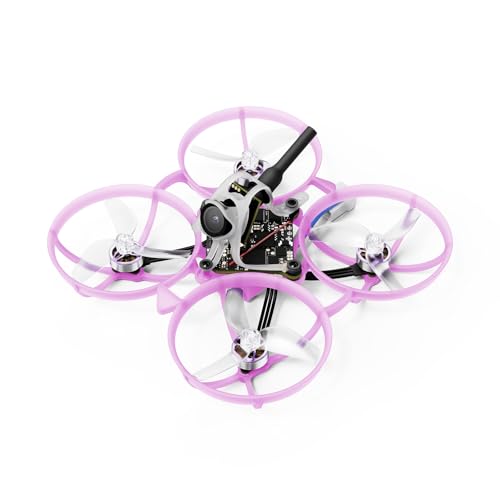
BETAFPV Air75 II
7.1/10

Overall score

Score
7.1/ 10
✕
What it is
Our main score for this model, 1–10. It combines specs, best-of lists, expert reviews and owners.
How we count it
Parts: Technical score 40%, List score 30%, Reviews score 25%, Sentiment score 5%
Marks: Each part gets a mark out of 10. For reviews, lists and owners, a typical model in this category gets about 8 and the best one gets 10.
No data yet: A part with no data shows "?". It counts as the mark of a weaker model in this category (4 in 5 models with data score higher). This way, models with reviews, lists and owners usually come out ahead.
Score distribution
<55-66-77-88-99-10
Score components

40%

5.7

Technical score

30%

?

List scoreNot enough data yet, so we use 7.5, the mark of a weaker model in this category

25%

8.4

Reviews score

5%

8.6

Sentiment score

â–²Better than 55% of drones
7.9

Value for money

Value for money
7.9/ 10
✕
What it is
An indicator that combines the drone's overall rating with its cost.
When it matters
When you are looking for a drone with a good balance between flight quality, camera features, and price.
Score distribution
<55-66-77-88-99-10
Score components

70%

7.1

Overall score

30%

9.9

Price

â–²Better than 78%
5.7

Technical score

Technical score
5.7/ 10
✕
What it is
How good the specs are compared with the other models in this category, 1–10.
How we count it
Areas: We rate the specs in each area against the other models in this category.
Weighting: The areas that matter most to buyers count more. The shares are shown under Score components.
Share: The technical score is 40% of the overall score.
Score distribution
<55-66-77-88-99-10
Score components

26%

6.1

Flight

24%

5.6

Camera

20%

4.0

Safety

16%

6.1

Connectivity

14%

7.3

Battery & Design

â–¼Worse than 61%
8.4

Reviews score

Reviews score
8.4/ 10
✕
What it is
Average grade from independent test sites, magazines and video reviewers, 1–10.
How we count it
Grades: Each review's own score is converted to 1–10; without one, we grade the review ourselves. Every review counts the same: written or video, short or full test.
Score: The average grade is 80% of the review mark; the number of reviews is the other 20% (1 review = 5, the typical number in this category = 8, the most-reviewed model = 10).
Enough data: With few reviews, the average grade is pulled toward the typical grade of this category. No reviews yet: 7.5 for now.
Share: Reviews count 25% of the overall score.
Score distribution
<55-66-77-88-99-10

80%

8.4

Average grade

20%

8.2

Popularity

Grades by review (19)
1 review + 18 videos, average 8.6/10. Reviews count 25% of the overall score.
User ratings collected online are not part of this score.
â–²Better than 72%
?

List score

List score
7.5/ 10
✕
What it is
How often independent test sites, magazines and video reviewers put this model in their best-of lists for this category.
How we count it
Points: The model in the most lists of this category gets 10; the others get 8 to 10 in proportion. In no list yet: 7.5. Lists count 30% of the overall score.
Enough data: Every list counts, even a single one. With fewer than 10 best-of lists in the category, this part is left out.
Lists with this model (0)
Not in any best-of list yet, so this part counts as 7.5. Models in a list get 8 to 10.
Not in any best-of list yet
  • betafpv-air75-ii
  • betafpv-air75-ii
  • betafpv-air75-ii
  • betafpv-air75-ii
  • betafpv-air75-ii
  • betafpv-air75-ii
  • betafpv-air75-ii
  • betafpv-air75-ii
  • betafpv-air75-ii
betafpv-air75-ii
betafpv-air75-ii
betafpv-air75-ii
betafpv-air75-ii
betafpv-air75-ii
betafpv-air75-ii
betafpv-air75-ii
betafpv-air75-ii
betafpv-air75-ii
Where to buy
*As an Amazon Associate, we earn from qualifying purchases.
Best rankings
Available: ranking among products currently available (including other versions of this product).All: ranking among all products in the database.

What reviewers say about the BETAFPV Air75 II

Based on 1 · 23

Reviewers love its punchy power, nimble handling and tiny size, but flight time disappoints and crash toughness splits opinion.
Praised
Mixed views
Criticised
Pick a topic to see who said what

What owners say about the BETAFPV Air75 II

Based on 58 owners sharing their experience in online comments

59%positive8%mixed33%negative

Owners love its fast, powerful, fun flight, while fragile parts and recurring throttle, wiring, and signal problems frustrate them.

What owners dislike

  • Several owners say frames break in spots and canopies break often, with props and motors also failing after repeated crashes.8
  • Owners report the newer flight controller flies away or shakes with high PID settings, and some see prop wash or bouncing on arming.6
  • A small throttle stick movement sends the drone shooting up, making altitude hard for new pilots to control; some want smoother settings.5
  • Some owners get static or no video even at 400 mW, and one reports weaker signal than a lower-power Meteor.5
  • Owners report motor wires coming unsoldered from the board, sometimes within a week and without a hard crash, so they resolder them often.5

Points mentioned by at least 3 owners, most mentioned first.

Loading...
Loading category ranking...

Technical Specifications of drone BETAFPV Air75 II

Technical score
Technical score
5.7/ 10
✕
What it is
How good the specs are compared with the other models in this category, 1–10.
How we count it
Areas: We rate the specs in each area against the other models in this category.
Weighting: The areas that matter most to buyers count more. The shares are shown under Score components.
Share: The technical score is 40% of the overall score.
Score distribution
<55-66-77-88-99-10
Score components:

26%

6.1

Flight

24%

5.6

Camera

20%

4.0

Safety

16%

6.1

Connectivity

14%

7.3

Battery & Design

5.7
Reviews score
8.4
List score
?
Value for money
Value for money
7.9/ 10
✕
What it is
An indicator that combines the drone's overall rating with its cost.
When it matters
When you are looking for a drone with a good balance between flight quality, camera features, and price.
Score distribution
<55-66-77-88-99-10
Score components:

70%

7.1

Overall score

30%

9.9

Price

7.9
Max flight time
7.5 min
This drone has a max flight time of 7.5 min, shorter than 91.5% of drones.
Max flight distance
?
Max flight speed
?
Max wind resistance
?
Max service ceiling (ASL)
?
Show more
What reviewers say
Video resolution
N/A
4K camera
no
This drone does not support 4K video. 54.6% of drones support 4K video.
Sensor size
?
Main camera megapixels
N/A
Max movie bitrate
?
Show more
What reviewers say
Obstacle detection
no
This drone does not support obstacle detection. 31% of drones support obstacle detection.
Return to Home (RTH)
no
This drone does not support Return-to-Home (RTH). 67.5% of drones support Return-to-Home (RTH).
GPS
no
This drone does not support GPS. 65.2% of drones support GPS.
GNSS systems supported
none
This drone supports none GNSS systems, which are less comprehensive than those of 65.8% and the same as those of 34.2%.
Obstacle sensing directions
N/A
Show more
What reviewers say
Max transmission distance
?
Transmission latency
?
Video transmission system
Analog
This drone uses Analog for video transmission, which is less advanced than the system used by 92.3% and the same as that used by 3.1%.
Live view quality
?
Remote control
no
This drone does not have a handheld remote controller. 95.5% of drones offer this.
Show more
Battery capacity
480 mAh
This drone has a battery capacity of 480 mAh, smaller than 92.2% of drones.
Battery energy
?
Charging time
?
Weight
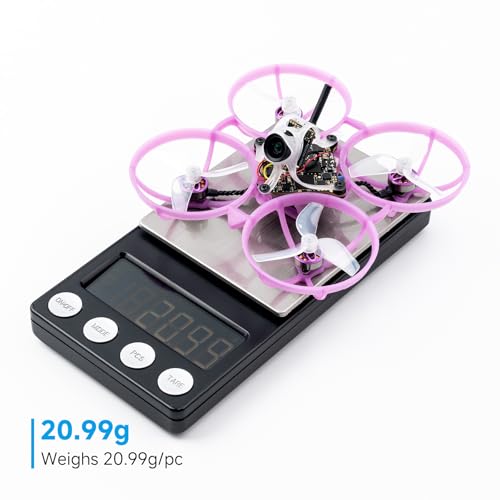
20.9 g
This drone weighs 20.9 g, lighter than 99.5% of drones.
Removable battery
yes
This drone has a removable battery. 0.5% of drones have a removable battery.
Show more
What reviewers say

BETAFPV Air75 II vs the average drone

246810TotalFlightCameraSafetyConnectivityBattery & Design
  • 91.5% lower weight
    This drone is lighter than the average drone (20.9 g vs 246 g). The average drone weighs 246 g.
    20.9 g vs 246 g
  • Includes propeller guards
    This drone has propeller guards, while the average drone does not. 33.3% of drones offer them.
  • FPV camera
    This drone has an FPV camera, while the average drone does not.
  • 161 mm shorter body length
    This drone is shorter than the average drone (114 mm vs 275 mm). The average drone is 275 mm long.
    114 mm vs 275 mm
  • 127 mm narrower width
    This drone is narrower than the average drone (114 mm vs 241 mm). The average drone width is 241 mm.
    114 mm vs 241 mm
  • 3 years newer release date
    This drone is newer than the average drone (2026 vs 2023). The average drone was released in 2023.
    2026 vs 2023
  • More modern charging port
    This drone uses proprietary for charging, while the average drone uses micro-USB.
    proprietary vs micro-USB
  • 6.3% higher review score
    Reviews score
    8.4/ 10
    ✕
    What it is
    Average grade from independent test sites, magazines and video reviewers, 1–10.
    How we count it
    Grades: Each review's own score is converted to 1–10; without one, we grade the review ourselves. Every review counts the same: written or video, short or full test.
    Score: The average grade is 80% of the review mark; the number of reviews is the other 20% (1 review = 5, the typical number in this category = 8, the most-reviewed model = 10).
    Enough data: With few reviews, the average grade is pulled toward the typical grade of this category. No reviews yet: 7.5 for now.
    Share: Reviews count 25% of the overall score.
    Score distribution
    <55-66-77-88-99-10

    80%

    8.4

    Average grade

    20%

    8.2

    Popularity

    Grades by review (19)
    1 review + 18 videos, average 8.6/10. Reviews count 25% of the overall score.
    User ratings collected online are not part of this score.
    8.4 vs 7.9
  • 3 years newer release date
    This drone is newer than the average drone (2026 vs 2023). The average drone was released in 2023.
    2026 vs 2023
  • FPV camera
    This drone has an FPV camera, while the average drone does not.
  • Includes propeller guards
    This drone has propeller guards, while the average drone does not. 33.3% of drones offer them.
  • 91.5% lower weight
    This drone is lighter than the average drone (20.9 g vs 246 g). The average drone weighs 246 g.
    20.9 g vs 246 g
  • 161 mm shorter body length
    This drone is shorter than the average drone (114 mm vs 275 mm). The average drone is 275 mm long.
    114 mm vs 275 mm
  • 127 mm narrower width
    This drone is narrower than the average drone (114 mm vs 241 mm). The average drone width is 241 mm.
    114 mm vs 241 mm
  • More modern charging port
    This drone uses proprietary for charging, while the average drone uses micro-USB.
    proprietary vs micro-USB
  • Fewer GNSS systems
    This drone supports none GNSS systems, while the average drone supports GPS, GLONASS, Galileo, BeiDou.
    none vs GPS, GLONASS, Galileo, BeiDou
  • More basic transmission system
    This drone uses Analog for video transmission, while the average drone uses SkyLink 2.0.
    Analog vs SkyLink 2.0
  • 12.5 min shorter flight time
    This drone offers shorter max flight time than the average drone (7.5 min vs 20 min). The average drone offers 20 min of max flight time.
    7.5 min vs 20 min
  • No subject tracking
    This drone cannot track subjects, while the average drone can.
  • No return-to-home (RTH)
    This drone does not support return-to-home (RTH), while the average drone does.
  • No GPS
    This drone does not have GPS, while the average drone does.
  • 1,720 mAh less battery capacity
    This drone has a smaller battery capacity than the average drone (480 mAh vs 2,200 mAh). The average drone battery has a capacity of 2,200 mAh.
    480 mAh vs 2,200 mAh
  • Fewer photo format options
    This drone supports none photo formats, while the average drone supports JPEG, DNG (RAW).
    none vs JPEG, DNG (RAW)
  • 12.5 min shorter flight time
    This drone offers shorter max flight time than the average drone (7.5 min vs 20 min). The average drone offers 20 min of max flight time.
    7.5 min vs 20 min
  • Non-foldable design
    This drone does not have a foldable design, while the average drone does.
  • Fewer photo format options
    This drone supports none photo formats, while the average drone supports JPEG, DNG (RAW).
    none vs JPEG, DNG (RAW)
  • Narrower tilt range
    This drone has a narrower tilt range than the average drone (manual only ° vs -90 to 20 °).
    manual only ° vs -90 to 20 °
  • Fewer video codec options
    This drone supports none video codecs, while the average drone supports H.264/AVC.
    none vs H.264/AVC
  • No memory card slot
    This drone does not have a memory card slot, while the average drone does.
  • Fewer video format options
    This drone supports none video formats, while the average drone supports MP4.
    none vs MP4
  • 3 x lower digital zoom
    This drone offers less digital zoom than the average drone (0 x vs 3 x). The average drone offers 3 x of digital zoom.
    0 x vs 3 x
  • No 4K video
    This drone does not support 4K video, while the average drone does.
  • 128 GB lower memory card limit
    This drone supports less external storage than the average drone (0 GB vs 128 GB). The average drone supports up to 128 GB of external storage.
    0 GB vs 128 GB
  • Fewer GNSS systems
    This drone supports none GNSS systems, while the average drone supports GPS, GLONASS, Galileo, BeiDou.
    none vs GPS, GLONASS, Galileo, BeiDou
  • No subject tracking
    This drone cannot track subjects, while the average drone can.
  • No return-to-home (RTH)
    This drone does not support return-to-home (RTH), while the average drone does.
  • No GPS
    This drone does not have GPS, while the average drone does.
  • No POI mode
    This drone does not support POI mode, while the average drone does.
  • 4 fewer flight modes
    This drone offers fewer intelligent flight modes than the average drone (0 vs 4). The average drone offers 4 intelligent flight modes.
    0 vs 4
  • No compass
    This drone does not have a compass, while the average drone does.
  • 86.7% higher takeoff weight
    This drone has a higher max takeoff weight than the average drone (33 g vs 249 g). The average drone has a max takeoff weight of 249 g.
    33 g vs 249 g
  • No headless mode
    This drone does not support headless mode, while the average drone does.
  • No beginner mode
    This drone does not support beginner mode, while the average drone does.
  • No altitude hold
    This drone does not support altitude hold, while the average drone does.
  • More basic transmission system
    This drone uses Analog for video transmission, while the average drone uses SkyLink 2.0.
    Analog vs SkyLink 2.0
  • No handheld remote
    This drone does not have a handheld remote controller, while the average drone does. 95.1% of drones offer one.
  • Basic companion app
    This drone uses the None companion app, while the average drone uses HS FPV.
    None vs HS FPV
  • No wireless file transfer
    This drone does not support wireless file transfer, while the average drone does.
  • 1,720 mAh less battery capacity
    This drone has a smaller battery capacity than the average drone (480 mAh vs 2,200 mAh). The average drone battery has a capacity of 2,200 mAh.
    480 mAh vs 2,200 mAh

Video reviews

Hands-on testing, unboxing, and real-world video evaluations

9.0
Kris Talks Tech
≈ estimated
20/10/2026
Racing version review · outdoor flights, crashes and repairs
Verdict
BETAFPV Air75 II Racing version is recommended for its good balance of performance, flight time and durability.
9.0
MultiBuild
≈ estimated
06/08/2026
Hands-on review · flight time, crash and durability notes
Verdict
BETAFPV Air75 II is recommended, especially for beginners wanting longer flight time, though it is aggressive out of the box.
9.0
FPVwine
≈ estimated
17/06/2026
Hands-on review · windy outdoor flight test
Verdict
BETAFPV Air75 II is fast and handles wind well, and it is easy to recommend.
7.0
MrHappeFPV
≈ estimated
01/06/2026
Throttle tuning test · flights and crash damage
Verdict
BETAFPV Air75 II is twitchy out of the box, but throttle tweaks make it much easier to fly.
9.5
AndyRC
≈ estimated
27/05/2026
Hands-on review · range, battery and freestyle flying
Verdict
BETAFPV Air75 II is a freestyle whoop with good power and strong analog range, but batteries drain fast and wind makes gates tricky.
8.0
MrHappeFPV
≈ estimated
11/05/2026
Hands-on review · flights, durability and flight times
Verdict
BETAFPV Air75 II is worth it for intermediate to advanced pilots who can repair fragile builds.
9.0
DRONE PH
≈ estimated
05/05/2026
Hands-on review · unboxing, binding and flight test
Verdict
BETAFPV Air75 II offers impressive speed and performance in a light build, a good pick for beginners learning FPV.
9.0
Mangorille
≈ estimated
07/04/2026
Hands-on review · multi-day flight tests and pit tuning
Verdict
BETAFPV Air75 II impresses straight out of the box, but the camera is the weak point.
9.5
Half Chrome
≈ estimated
28/03/2026
Hands-on review · beginner recommendation and flight footage
Verdict
BETAFPV Air75 II is close to ideal as a first FPV drone for new pilots.
9.0
Squadding Quads
≈ estimated
20/02/2026
Hands-on review · downpour and flight test
Verdict
BETAFPV Air75 II is a good starting point for newcomers, with plenty of power and a lot of fun to fly.
8.0
Onewheelcody
≈ estimated
21/03/2025
Range test · 400 mW line-of-sight flights
Verdict
BETAFPV Air75 II has strong line-of-sight range for a small drone, though hills and trees block the signal.
8.0
FPVwine
≈ estimated
31/07/2026
Quick update · follow-up after two flights
Verdict
BETAFPV Air75 II is very fast and fun, but its thin Champion frame suits experienced pilots, so keep spare frames on hand.
More graded video reviews (4)
creator’s own scoreestimated by us

Third-party reviews

What customers like about BETAFPV Air75 II

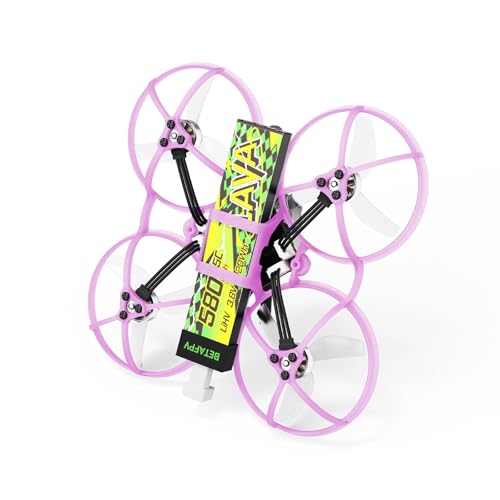
  • About 7.5 minutes per 480 mAh battery, long for a whoop
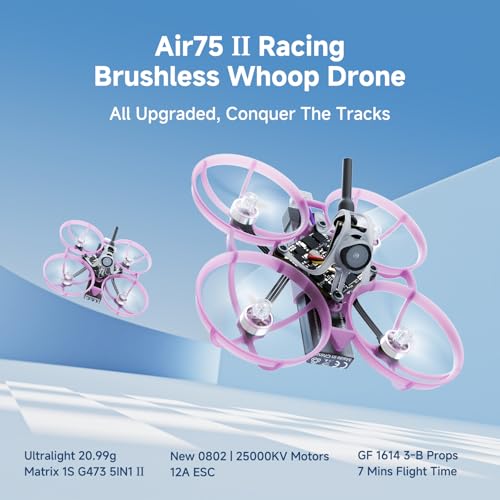
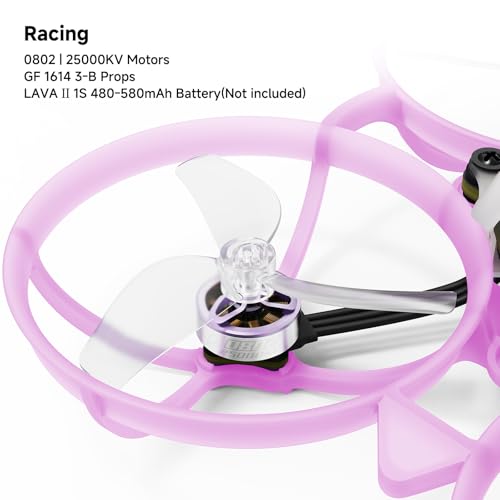
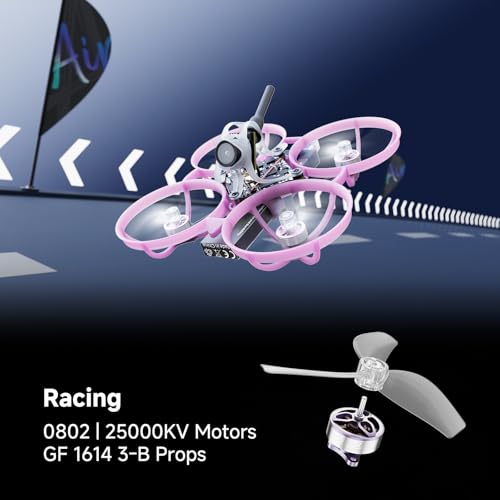
  • Light 20.9 g brushless build
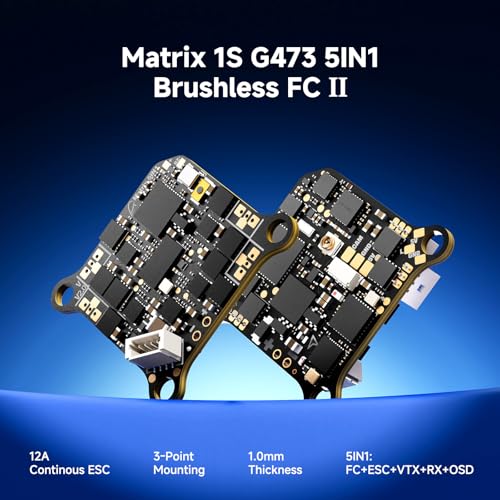
  • Compact Matrix 5-in-1 flight controller
  • Low-latency analog FPV video
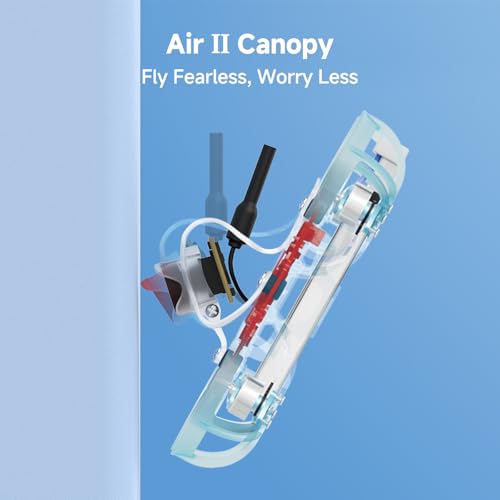
  • Ducted design tolerates light crashes

What customers don't like about BETAFPV Air75 II

  • No remote included, radio and goggles needed
  • No altitude hold or GPS, not for beginners
  • Analog video is less sharp than digital systems
  • Indoor and calm-weather use only

Verdict

The BETAFPV Air75 II is a lightweight brushless whoop for FPV pilots who want a little more power and flight time than the smallest 65 mm class. It weighs 20.9 g and runs on a 480 mAh battery rated for about 7.5 minutes, which is long for an indoor whoop. Its Matrix 5-in-1 flight controller keeps the build compact, and the ducted design makes it tolerant of light crashes in rooms and gyms. An analog video link delivers the low-latency feed that racers and freestyle pilots prefer. Like its smaller sibling, it is aimed at experienced flyers: there is no altitude hold or GPS, and no remote comes in the box, so you need your own radio and goggles. For FPV pilots who want a fast, nimble micro quad with extra endurance, it is a strong pick.

Compare BETAFPV Air75 II with other drones

1Product to compare no. 1
VS
2Product to compare no. 2
VS
3Product to compare no. 3 (optional)

Graphic comparison of BETAFPV Air75 II and other drones

No results found