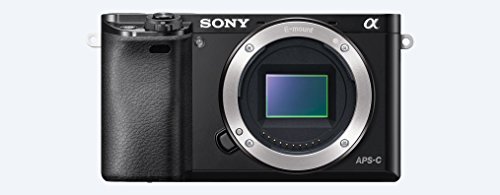
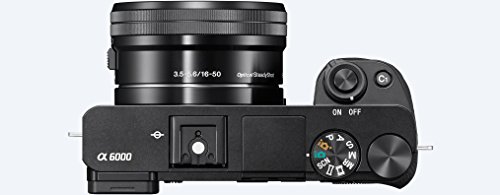
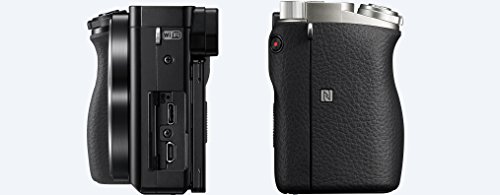
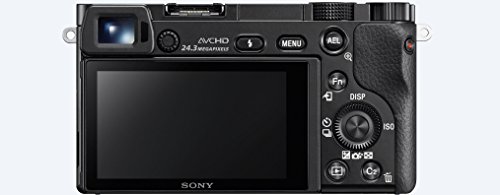
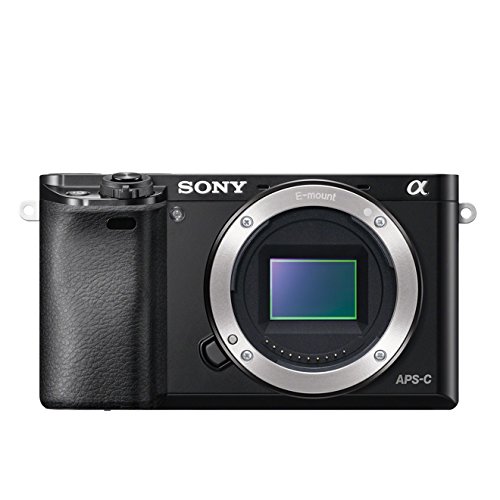
Sony A6000 review. Compare 108 technical specifications and user reviews to see how it ranks among cameras and if it is worth buying.
Overall score
What it is: An overall evaluation of the camera's quality, based on technical analyses and user reviews.
When it matters: When you need a quick reference to identify the best cameras on the market.
Score components:
90.0%
Technical Score
10.0%
User score
Technical Score
What it is: An assessment of the camera's technical performance, covering eight key areas: image quality, autofocus, video features, stabilization, lens compatibility, connectivity, battery, and design.
When it matters: When you want to compare cameras based on technical performance and available features.
Score components:
28.0%
Sensor & Image
25.0%
Photo Features
18.0%
Video & Audio
14.0%
Display & Design
8.0%
Battery & Power
7.0%
Connectivity & Storage
User score
What it is: A rating that combines user reviews and the total number of reviews received by the camera.
When it matters: When real-world owner satisfaction and review volume matter to your decision.
Score components:
70.0%
User reviews
30.0%
Popularity
Score components:
25.0%
Sensor size
20.0%
Main camera megapixels
20.0%
Dual card slots
15.0%
N. of focus points
10.0%
RAW photo capture
10.0%
Phase-detection autofocus (photos)
Score components:
35.0%
Weight
30.0%
Battery life (CIPA)
20.0%
Sensor-shift stabilization
15.0%
GPS
Score components:
30.0%
Price
20.0%
Weight
20.0%
AF tracking
20.0%
Battery life (CIPA)
10.0%
Touchscreen
Score components:
30.0%
Main camera megapixels
25.0%
Sensor size
20.0%
Main camera pixel size
15.0%
Sensor-shift stabilization
10.0%
RAW photo capture
Score components:
30.0%
Weight
25.0%
Thickness
20.0%
AF low-light sensitivity
15.0%
Sensor-shift stabilization
10.0%
Eye detection AF (human)
Score components:
30.0%
Sensor size
25.0%
Main camera pixel size
20.0%
Eye detection AF (human)
15.0%
Main camera megapixels
10.0%
Sensor-shift stabilization
Score components:
30.0%
Weight
25.0%
Battery life (CIPA)
20.0%
Min operating temperature
15.0%
Sensor-shift stabilization
10.0%
GPS
Available: ranking among products currently available (including other versions of this product).
All: ranking among all products in the database.
#18 in Best Cameras under £200
#22 in Best Sony Cameras
#22 in Best Sony Mirrorless Cameras
#43 in Best Cameras under £300
#72 in Best Mirrorless Cameras
#77 in Best Cameras for Portraits
#95 in Best Cameras
#95 in Best Digital Cameras
#272 in Best Travel Cameras
#293 in Best Cameras for Hiking
What it is: An assessment of the camera's technical performance, covering eight key areas: image quality, autofocus, video features, stabilization, lens compatibility, connectivity, battery, and design.
When it matters: When you want to compare cameras based on technical performance and available features.
Score components:
28.0%
Sensor & Image
25.0%
Photo Features
18.0%
Video & Audio
14.0%
Display & Design
8.0%
Battery & Power
7.0%
Connectivity & Storage
What it is: A rating that combines user reviews and the total number of reviews received by the camera.
When it matters: When real-world owner satisfaction and review volume matter to your decision.
Score components:
70.0%
User reviews
30.0%
Popularity
What it is: An indicator that combines the camera's overall rating with its cost.
When it matters: When you want to know how much overall quality you get for the price.
Score components:
60.0%
Overall score
40.0%
Price
Importance: HIGH
Good value: Full frame or larger
Importance: HIGH
Good value: At least 20 MP
Importance: HIGH
Good value: At least 3.5 µm
Importance: LOW
Importance: MEDIUM
Good value: At least ISO 25,600
Importance: MEDIUM
Importance: MEDIUM
Good value: At least 14-bit
Importance: LOW
Importance: LOW
Importance: LOW
Importance: LOW
Importance: LOW
Importance: LOW
Importance: LOW
Importance: LOW
Importance: MEDIUM
Importance: LOW
Importance: LOW
Importance: LOW
Importance: LOW
Importance: LOW
Importance: HIGH
Good value: At least 200 points
Importance: HIGH
Importance: MEDIUM
Importance: LOW
Importance: LOW
Importance: MEDIUM
Importance: MEDIUM
Importance: HIGH
Good value: At least 5 stops
Importance: LOW
Importance: MEDIUM
Good value: At least 10 fps
Importance: LOW
Importance: LOW
Importance: LOW
Importance: LOW
Importance: LOW
Importance: LOW
Importance: LOW
Importance: LOW
Importance: LOW
Importance: LOW
Importance: LOW
Importance: LOW
Importance: LOW
Importance: LOW
Importance: LOW
Importance: LOW
Good value: At least 200,000 actuations
Importance: LOW
Good value: At least 10x
Importance: HIGH
Good value: At least 3840 px
Importance: MEDIUM
Good value: At least 200 Mbps
Importance: MEDIUM
Good value: At least 10-bit
Importance: LOW
Importance: LOW
Importance: LOW
Importance: LOW
Importance: LOW
Importance: LOW
Importance: LOW
Good value: At least 30 min
Importance: LOW
Importance: LOW
Importance: LOW
Importance: LOW
Importance: LOW
Good value: At least 2 microphones
Importance: LOW
Importance: LOW
Importance: LOW
Importance: LOW
Importance: MEDIUM
Good value: 500 g or less
Importance: LOW
Importance: LOW
Importance: LOW
Importance: MEDIUM
Importance: MEDIUM
Good value: At least 2.36 million dots
Importance: LOW
Good value: 100%
Importance: LOW
Importance: LOW
Good value: At least 120 Hz
Importance: MEDIUM
Good value: At least 3 in
Importance: LOW
Importance: LOW
Importance: LOW
Importance: LOW
Importance: LOW
Importance: LOW
Importance: LOW
Good value: At least 10 m
Importance: LOW
Importance: LOW
Importance: LOW
Importance: LOW
Importance: MEDIUM
Good value: At least 400 shots
Importance: LOW
Good value: At least 1,500 mAh
Importance: LOW
Importance: LOW
Importance: LOW
Importance: LOW
Importance: LOW
Importance: LOW
Importance: LOW
Importance: LOW
Importance: LOW
Importance: LOW
Importance: LOW
Importance: LOW
Importance: LOW
Importance: LOW
Importance: LOW
Importance: LOW
Importance: LOW
Importance: LOW
Importance: HIGH
Importance: HIGH
Good value: At least 200 points
Importance: MEDIUM
Good value: At least ISO 25,600
Importance: LOW
Importance: MEDIUM
Good value: At least 10 fps
Importance: MEDIUM
Importance: HIGH
Good value: At least 20 MP
Importance: LOW
Importance: MEDIUM
Importance: MEDIUM
Good value: At least 14-bit
Importance: MEDIUM
Good value: At least 2.36 million dots
Importance: LOW
Good value: At least 1,500 mAh
Importance: MEDIUM
Good value: At least 400 shots
(Reviews last updated: July 2026)
The DPReview evaluation highlights the Sony Alpha a6000 as a highly responsive mirrorless camera featuring a 24.3MP APS-C sensor, class-leading image quality, and a blazing fast 179-point hybrid autofocus system capable of 11 fps shooting. Notable pros include improved controls, customizable buttons, an electronic first-curtain shutter, and robust 1080/60p video, offering excellent value for money. Compromises noted in the review include the lack of a touchscreen, the absence of a dedicated microphone jack, and a lower-resolution SVGA viewfinder compared to the previous model. Additional drawbacks involve heavy-handed JPEG noise reduction, the omission of an electronic level, and significant softness from the default 16-50mm kit lens.
The Sony a6000 is a highly portable, budget-friendly APS-C mirrorless camera that provides an impressive alternative to bulky DSLR systems. Priced under $600 for the body, it features a 24.3-megapixel CMOS sensor and can shoot at a remarkably fast continuous burst rate of 11 frames per second. The camera utilizes 179 phase-detection auto-focus points covering nearly the entire frame, which provides decent tracking accuracy for moving subjects. Additionally, it features an articulating 3-inch widescreen LCD screen that is highly useful for low-angle shooting, built-in Wi-Fi support via the Sony PlayMemories mobile app for seamless photo transfers, and expanding functionality through downloadable in-camera applications like the time-lapse tool. However, the camera has some clear limitations that users should consider. Its primary drawbacks include a notably short battery life—yielding only about 280 to 325 shots per charge on average due to the smaller NP-FW50 battery—and a slight delay in the electronic viewfinder that can occasionally cause photographers to miss exact moments of action. Furthermore, while the autofocus system is excellent for its price, it hits its accuracy limits during full 11 fps...
The Lonely Speck review identifies the Sony a6000 as a top budget-friendly camera for astrophotography, praising its bright live-view, highly customizable physical controls, and helpful tilting LCD screen. It specifically highlights a "sweet spot" for noise performance between ISO 1600 and 6400, making it an excellent entry-level choice. Conversely, the camera exhibits a noticeable pink amplifier glow when lifting shadows in post-processing, and its sensor performance is not class-leading compared to higher-end alternatives. Additional drawbacks include a strictly functional design and a complex, unorganized menu system that necessitates button customization.
The Sony A6000 is a highly capable, budget-friendly mirrorless camera featuring a 24.3-megapixel APS-C sensor, an electronic viewfinder, and a tilting display. Designed as a compact and versatile all-rounder, it excels in capturing action with an impressive shooting speed of 11 frames per second with accurate autofocus tracking across 179 focus points. Its lightweight build and popular E-mount design provide extensive upgrade flexibility, allowing it to seamlessly fit native lenses or full-frame alternatives via adapters. Photographers can enjoy strong image quality, highly customisable physical controls, focus peaking for manual lenses, and integrated Wi-Fi for fast smartphone image transfers. Despite these strengths, the reviewer notes several downsides to consider before purchasing. The compact camera body limits the size of the battery, resulting in a shorter battery life that typically requires carrying spares. Additionally, the A6000 completely lacks modern touchscreen functionality, lacks 4K video recording capabilities (capping performance at Full HD 1080P), and features a somewhat confusing menu structure that takes time to learn. Low-light shooters should also expect noise to become visibly apparent once the sensitivity is pushed past ISO 3200....
The Photography Life review defines the Sony A6000 as a highly versatile, compact, and affordable mirrorless camera, praising its 24.3MP APS-C sensor for delivering exceptional image quality and dynamic range. Key strengths include a fast hybrid autofocus system and impressive continuous shooting speeds, making it an excellent choice for travel and daily photography. Conversely, the review notes significant limitations, including a very short battery life and the lack of a touchscreen, which may restrict user experience. The camera also falls short for modern videographers, lacking 4K recording capabilities and an external microphone jack.
The Sony A6000 remains a powerful entry-level contender for stills photographers despite its 2014 launch date, featuring a competitive 24.3-megapixel APS-C CMOS sensor and an impressive 11fps continuous burst rate. The hybrid autofocus system utilizes 179 phase-detection and 25 contrast-detection points, delivering highly responsive performance and exceptionally sharp image resolution at lower ISO settings. While its older image processing struggles with auto white balance consistency under artificial light, the raw files preserve a rich tonal range that responds well to selective editing. Built-in Wi-Fi, NFC, a 3-inch tilting LCD, and a built-in 1.44 million-dot electronic viewfinder offer great physical utility, though the body can feel front-heavy when paired with larger zoom lenses. The review highlights distinct pros and cons that reflect the camera's age and design choices. On the positive side, its major strengths include a sharp 24MP sensor, powerful stills capabilities, highly responsive autofocus, and a built-in electronic viewfinder. Conversely, the camera's notable drawbacks include poor handling when attached to larger lenses, a complete lack of 4K video recording, and noticeably degraded image quality at high ISO settings, where...
The Sony A6000, despite being originally released in 2014, remains a highly capable and excellent value-for-money mirrorless camera for enthusiast and beginner stills photographers. Equipped with a 24.3MP APS-C sensor, the camera produces bright, vibrant images with an impressive level of dynamic range that easily allows users to recover details from shadows and highlights when shooting in RAW mode. Its standout performance features include an exceptionally fast and accurate hybrid autofocus system alongside a competitive 11fps continuous burst shooting mode, making it easy to capture fast action. The lightweight body features a tilting LCD screen for flexible shooting angles, and it serves as a fantastic, affordable entry point into Sony’s wider E-mount lens ecosystem. However, the camera clearly shows its age when it comes to video and modern handling ergonomics. Video resolution tops out at Full HD (1080p), lacking modern 4K capabilities which limits future-proofing and cropping flexibility. Furthermore, it severely handicaps content creators due to the lack of a 3.5mm microphone input, no headphone jack, and a screen that does not flip around for self-framing. For general operation, users...
The Sony Alpha A6000 stands as a highly capable, compact successor to the NEX-6, offering phenomenal performance, features, and image quality for its price point. Its absolute standout feature is the internal overhaul, specifically a 24-megapixel APS-C sensor packed with 179 phase-detect autofocus points that blanket almost the entire frame. This hybrid autofocus system delivers an extraordinary continuous burst shooting speed of 11.1fps with full subject tracking, vastly outperforming competitive SLRs and older CSC models. Additionally, the A6000 boasts lifelike colour accuracy with minimal image noise up to ISO 1600, an upgraded menu system, an intuitive in-camera tutorial guide, and enhanced 1080p video recording with clean HDMI output and zebra patterns. Despite its stellar performance, the camera makes a few notable compromises to hit its competitive price tag. On the downside, the resolution of the electronic viewfinder (EVF) has dropped from 2.4 million dots on the previous model to 1.44 million dots, resulting in a smaller, merely average viewing experience. Battery charging must be done directly inside the camera body—preventing you from charging a spare while shooting—and the body material...
The Sony A6000 is reviewed as a highly capable, budget-friendly, and compact APS-C camera, offering exceptional value with a 24-megapixel sensor, 11 fps RAW shooting, and fast, accurate autofocus. Notable advantages include its portable design, built-in Wi-Fi, and a customizable interface. Key drawbacks include the lack of 4K video recording, a confusing menu system, and higher noise levels at maximum ISO compared to full-frame alternatives. Additionally, the camera requires a fast memory card for its high-speed burst mode and suffers from limited battery life.
In her review, photographer Nina Mace endorses the Sony a6000 as an ideal, lightweight travel camera capable of producing high-quality 24-megapixel images, highlighting features like a flip-out screen, fast autofocus, and excellent high ISO performance for night shots. While she praises its portability and ease of use, she notes that the standard kit lens is soft at the edges, often requiring a 10-15% crop for better sharpness, and the camera lacks the superior low-light capability of larger, more expensive sensors.
Adam Rhodes’ review positions the Sony A6000 as a highly capable, budget-friendly, and compact APS-C camera, highlighting its 24.3-megapixel sensor and 1/4000 shutter speed as ideal for beginners. Despite being an older model, the A6000 is deemed worth buying in 2025 as an affordable, reliable workhorse for stills photography. However, the analysis notes significant limitations, specifically the lack of 4K video recording and an inability to flip the screen for self-viewing, which hinders vlogging. Additionally, the older autofocus system struggles with tracking fast-moving subjects compared to modern alternatives.
The Sony Alpha a6000 demonstrates exceptional speed with a blazing 11 frames per second (fps) high-speed burst mode and responsive controls, making it highly capable for tracking fast-moving subjects. Crucially, the camera maintains continuous autofocus across all shooting speeds, positioning it as a top performer in the mirrorless market. However, the camera faces operational constraints during heavy shooting, with the buffer filling up after approximately 21 RAW+JPEG files. Once this limit is reached, users experience significant waiting periods for buffer clearing, during which, certain camera settings remain locked.
The Sony A6000 is described as a competent, ultra-lightweight, and budget-friendly APS-C mirrorless camera featuring super-fast autofocus and excellent image quality that rivals more expensive full-frame options. Key advantages include a capable electronic viewfinder and high performance when paired with the 16-50mm PZ OSS kit lens, offering high value for its price. Conversely, the camera's drawbacks include a complex menu system and, at times, "computer-like" ergonomics that lack the feel of traditional DSLRs. While capable, pushing the camera to its maximum ISO of 25,600 is largely unnecessary, as it can compromise image clarity compared to lower, more usable settings.
Sony A6000 Review Summary However, the camera suffers from several distinct drawbacks, most notably a heavily pixelated, low-quality electronic viewfinder and an equally underwhelming LCD display panel. Videographers will likely face frustration due to the complete lack of software-based audio level controls, the absence of the superior XVID codec found in the cheaper A5100 model, and a lack of touchscreen functionality. On the hardware side, the battery life is relatively weak, forcing users to buy a separate third-party charger to avoid wearing out the camera's direct charging port. Finally, while the lens mount offers adaptability, the 16-50mm kit lens features a clumsy focus ring, a noticeable edge vignette, and sharp results only at f/8, limiting its overall out-of-the-box performance.
The LensVid review highlights the Sony A6000 as a lightweight, robust mirrorless camera featuring a high-resolution 24.3-megapixel APS-C sensor, a useful 90-degree tilting screen, and excellent low-light performance. Key ergonomic advantages include a well-placed top dial, customizable buttons, and a highly versatile, compact design suitable for travel. YouTube · Conversely, the review notes significant ergonomic drawbacks, specifically the uncomfortable and poorly placed far-right video button that causes accidental, unintended recording. Additional criticisms include a non-intuitive side-to-side menu navigation and a preference for different, more conventional button mapping for focusing.
Gavin Hardcastle’s review on Fototripper positions the Sony A6000 as a highly capable, lightweight, and durable secondary camera, boasting a 24.3-megapixel sensor with excellent dynamic range for pulling details out of RAW files. Its standout performance features include a 179-point autofocus system and a fast 11 frames-per-second burst rate ideal for action, despite the kit lens offering poor corner sharpness. Drawbacks include lack of internal microphone volume control, poor battery life, no 4K recording, and an unbalanced, "ridiculous" feel when using large legacy lenses, according to the review.
The Sony A6000 is presented as a capable, budget-friendly all-rounder, featuring a 24-megapixel APS-C sensor, fast 11 fps shooting, and robust autofocus in a compact, portable body. Key advantages include extensive customization options, built-in Wi-Fi, and a versatile E-mount system that makes it highly adaptable for various photography needs. However, the review notes significant limitations, including poor battery life, a lack of touchscreen functionality, and a non-articulating rear screen. Video capabilities are limited to 1080p without 4K, and the menu system is described as confusing, which may pose challenges for new users. Sony
The Sony Alpha 6000 (ILCE-6000) is a highly capable mirrorless system camera (DSLM) that establishes itself as a top-tier APS-C model offered at a very competitive price. It delivers outstanding image quality from its 24-megapixel sensor, achieving a remarkable level of edge sharpness and detail retention while maintaining low noise levels up to ISO 6,400. The camera excels in performance speed, utilizing 204 autofocus points that lock focus quickly even in low-light conditions, and it captures high-speed burst shots at up to 11 RAW or JPEG frames per second. Additionally, it features a smooth electronic viewfinder with 1.4 million pixels, a tilting 3-inch display, and built-in Wi-Fi and NFC connectivity for wireless image transfers and smartphone remote control. Despite these strengths, the review highlights several compromises made to achieve its low price point. The build quality feels solid, but the body is constructed entirely from plastic and lacks weather sealing against dust and splashes. Furthermore, its tilting screen lacks touch functionality, and the electronic viewfinder actually has a lower resolution than its predecessor. Battery life is another drawback, lasting about...
The dkamera.de review of the Sony Alpha 6000 highlights its excellent price-to-performance ratio, driven by a 24-megapixel APS-C sensor that produces high-detail images with low noise. Key strengths include a fast 11 frames-per-second burst rate, a 179-point hybrid autofocus system, built-in Wi-Fi/NFC, and a tilting screen. Conversely, the review notes the absence of a touchscreen and electronic level, alongside a limitation to 1080p video recording. Other drawbacks include aggressive JPEG noise reduction, inconsistent flash metering, and relatively short battery life.
Despite its excellent performance-to-price ratio, the camera comes with notable trade-offs. While the compact Sony E 16-50mm F3,5-5,6 OSS PZ kit lens offers smooth motorized zooming and effective image stabilization, its edge sharpness is poor and it suffers from extreme uncorrected distortion and heavy vignetting at wide angles. Color reproduction is inconsistent, with the red and green channels showing significant deviations from standard values. From an operational standpoint, the camera lacks a dedicated 3.5mm microphone input and manual audio leveling, which limits its utility for advanced audio recording. Additionally, creative image effects are restricted solely to JPEG shooting, and the camera is packaged without an external charger, forcing users to charge the battery directly inside the camera body. To help me tailor any further camera advice or alternative suggestions, could you share a bit more context? What is your maximum budget for a camera setup? What types of photography or videography are you planning to focus on (e.g., travel, sports, vlogging)? Do you prefer a compact kit lens or are you willing to invest in sharper, premium lenses?
The CHIP review outlines the Sony Alpha 6000 (ILCE-6000) as a highly capable mirrorless system camera (DSLM) that serves as the new sub-1,000 Euro flagship, replacing the older NEX-6 and NEX-7 models. At its core, the device boasts a newly developed 24-megapixel APS-C image sensor paired with an exceptionally fast 179-phase-point hybrid autofocus system that seamlessly tracks subjects across Tageslicht and low-light environments. Photographers benefit from extensive physical controls, including a dedicated mode dial, a command wheel for adjusting aperture or shutter speed, and an impressive 11 frames-per-second continuous burst mode. Additionally, the camera features an innovative "Multi frame-modus" that captures 5 consecutive images to automatically extract the lowest ISO segments, significantly minimizing visual noise during high-sensitivity shoots up to ISO 25,600. For modern connectivity, it integrates Wi-Fi and NFC to easily transfer files directly to mobile devices. While the review notes excellent image quality, fluid sharpness, and a compact, lightweight 16-50mm kit lens under 100 grams, it highlights several specific hardware omissions that keep the package from being completely perfect. On the positive side (Pros), the camera delivers outstanding,...
The Sony Alpha 6000 is a highly praised, lightweight, and compact mirrorless camera that is widely considered a legendary and affordable option for beginners and hobbyists. Reviewers love its great value for money and solid 24.3-megapixel image quality, which remains impressive for standard daylight and landscape shooting. The camera boasts a quick, reliable autofocus for stationary subjects, a comfortable grip, and a huge selection of compatible lenses. Professional photographer Stephan Wiesner even noted that its action and night sky performance once rivalled top-tier DSLR cameras. However, users point out several notable drawbacks tied to its older technology. The camera lacks modern features like an in-body image stabilizer, a touchscreen, and a fully articulating side-flip screen, offering only a tilting display instead. The autofocus struggles with fast-moving subjects, and both the screen and viewfinder suffer from low resolution. Additionally, its low-light performance falls short compared to newer models, the electronic-only shutter option is missing, and older Sony color science can lean slightly green. Despite these limits, the community highly recommends it as a budget-friendly entry point into photography.
The Sony Alpha 6000 remains a compact and versatile APS-C mirrorless camera that balances strong performance with user-friendly handling. It excels in daylight photography, delivering sharp, detail-rich 24-megapixel images with minimal noise, and maintains high image quality even in low-light environments. Action and street photographers will benefit from its rapid burst-shooting capability of 10 frames per second, a responsive hybrid phase-detection autofocus system, and an exceptionally low shutter lag of 0.18 seconds. Designed for everyday portability, it features a small handgrip for a secure hold, customizable control dials for quick manual adjustments, and an electronic OLED viewfinder, though the viewfinder's eye cup is small enough that ambient light can seep in. Despite these strengths, the camera's age is evident in its technical limitations and slower hardware operation. Its video capabilities are restricted to Full HD (1080p), missing the 4K standard expected in modern devices, and it suffers from a sluggish startup time of 2.35 seconds. Additionally, the 7.5-centimeter tilting screen lacks touch functionality, and the included 16-50mm power zoom kit lens operates with a loud internal motor. The review ultimately...
The Sony Alpha 6000 is a highly capable and exceptionally lightweight APS-C mirrorless camera (462 grams with the kit lens) that functions as an excellent companion for travel and long hiking trips. The reviewer praises its superb 24.3-megapixel image quality, impressive dynamic range, and its ability to handle low-light conditions and long exposures with minimal noise. Its physical design offers highly functional ergonomics, featuring two customizable control dials that mirror the manual handling of a large DSLR, a tilting OLED electronic viewfinder, a flip screen, and integrated Wi-Fi connectivity. Additionally, the camera supports RAW format shooting and provides an outstanding overall price-to-performance ratio, making it ideal for high-quality prints up to 100 cm. However, the camera comes with notable trade-offs, primarily its lightweight plastic body which lacks weatherproofing and required a firmware update to resolve an occasional screen freezing bug. It completely lacks built-in GPS functionality, and the display screen can only tilt vertically in a single direction rather than flipping out entirely. Furthermore, its battery life is merely average, providing around 360 shots per charge. The bundled 16-50mm kit...
The reviewer evaluated the Sony Alpha 6000, concluding it offers the best price-to-performance ratio for beginner and hobby travel photographers, costing around €400. Weighing only 464 grams with its 16-50mm kit lens, this compact, mirrorless camera features a 24.3-megapixel APS-C sensor, an exceptionally fast hybrid autofocus with eye detection, and built-in Wi-Fi/NFC for mobile sharing. Key pros highlighted include its lightweight and highly portable form factor, excellent image quality with reliable high-ISO noise control, intuitive operation, and an ergonomic battery grip that accommodates smaller hands comfortably. However, the reviewer noted several cons that ultimately led her to upgrade to full-frame models for professional blogging. The LCD screen only tilts rather than articulating fully or flipping upward, which limits flexible shooting angles. Additionally, the electronic viewfinder is positioned on the far left rather than the centre, and the camera lacks a dedicated cursor to manually shift focus points across the screen. Battery life is also highly variable, draining faster when paired with larger telephoto lenses or used in cold weather conditions.
The Sonntagmorgen review crowns the Sony Alpha 6000 as the top value-for-money choice in the entry-level system camera tier, praising it for offering an exceptionally strong package for its lower price segment. It is heavily lauded for its standout pros, which include a powerful 24.3 MP APS-C sensor that delivers superb image quality, excellent low-light noise control, and an impressive dynamic range for post-processing. Additionally, the reviewer highlights the camera's class-leading burst mode of 11 frames per second and an incredibly quick, reliable autofocus tracking system. Its physical architecture is also a plus, combining a compact, pocketable form factor with a deep, comfortable handgrip and highly customisable physical buttons, all rounded out by a helpful built-in electronic viewfinder (EVF). However, the review points out clear cons that highlight the age of this mirrorless model. The most significant drawbacks are the complete lack of a 4K video recording mode—limiting video capture to Full HD—and the absence of a touchscreen or full selfie-flip display. Video creators are further limited by the missing 3.5mm microphone jack, making direct external audio input difficult. The...
The Sony Alpha 6000 is a compact APS-C mirrorless camera that stands out for its aggressive pricing and exceptional image quality up to ISO 3200, delivering great dynamic range and gentle grain. Its standout feature is an incredibly effective hybrid autofocus system, utilizing 179 phase-detection points covering 90% of the frame, paired with a Bionz X processor that allows for a fast burst rate of 10.6 frames per second. The camera's ergonomics are highly intuitive, featuring a well-designed grip, dual control dials, a sharp electronic viewfinder, and an integrated tilting screen. However, the reviewer heavily criticizes the camera's sluggish performance, specifically noting a frustratingly slow startup time and excessively long buffer write times that render the device temporarily unavailable after shooting bursts. Furthermore, the 16-50mm OSS kit lens is described as terrible due to inconsistent sharpness and soft edges, prompting a strong recommendation to buy the body only. Additional drawbacks include poorly optimized, confusing menus, the baffling absence of an electronic level, and disappointing video quality that suffers from noise and flickering despite offering clear audio capture.
The Sony Alpha 6000 review by Labo Fnac highlights a compact hybrid camera that packs a high level of technical innovation. The lab praises the camera's pros, which include its sharp 24.3-megapixel sensor and its clear 100% coverage OLED viewfinder. It stands out for its fast shooting speeds, reaching a swift 11 frames per second in burst mode. Additionally, its new hybrid autofocus system, which uses 179 phase-detection points and 25 contrast-detection points, is highly effective. The camera also controls digital noise very well up to 3200 ISO. However, the review also notes a few cons for this camera setup. The testing revealed that the camera suffers from a long startup time and a slightly slow first shutter release. When it comes to low-light photography, image smoothing becomes quite heavy and aggressive once you shoot above 6400 ISO. For video, it is limited to standard 1080p recording at 50 frames per second. Despite these few downsides, the kit earned an impressive 4 out of 5 stars from the lab.
The Sony Alpha 6000 is characterized as a high-performance, affordable "bombshell" that effectively replaced the NEX-6 and NEX-7 models. Its standout features include a highly capable 24.3 MP APS-C sensor that delivers impressive image quality, particularly due to the absence of a low-pass filter. The review highlights its significantly improved ergonomics, featuring a PASM mode dial, seven customizable buttons, and a more intuitive menu system inspired by the Sony RX and Alpha 7 series. Additionally, it boasts a fast autofocus system with 179 phase-detection points and an 11 fps burst rate with AF tracking, making it versatile for various shooting conditions. However, the review points out several drawbacks, most notably the disappointing performance of the 16-50mm kit lens, which struggles to match the sensor's high resolution, resulting in soft corners and unremarkable background rendering. The electronic viewfinder (EVF) also saw a resolution downgrade compared to its predecessor, falling to 1.44 million dots, which can feel grainy and difficult to use in bright sunlight. Other practical cons include the lack of a touchscreen, short battery life (approximately 360 shots), and the...
The review evaluates the performance of the Sony Alpha 6000 (A6000) mirrorless camera, testing whether its autofocus system is faster than traditional entry-level and mid-range DSLRs like the Canon EOS 1200D and Nikon D5300. Based on laboratory testing of a retail unit, the A6000 delivers mixed results in pure speed but excels in autofocus capabilities. On the positive side, its hybrid autofocus system—boasting 179 phase-detection points across 90% of the frame and 25 contrast-detection points—offers impressive, wide, and highly accurate subject tracking that matches or exceeds high-end expert cameras. Additionally, it features a blistering burst rate of 10.6 frames per second (maintaining cadence up to 30 frames in JPEG or 20 in RAW+JPEG) and shows excellent consistency with a fixed 0.63-second interval between consecutive shots. It also completely outperforms standard DSLRs in speed when using the rear screen or electronic viewfinder, avoiding the catastrophic autofocus slowdowns that DSLRs experience in Live View mode. However, the camera suffers from notable drawbacks regarding its overall startup time and performance in comparison to standard DSLRs using optical viewfinders. The primary con is its...
The DXOMARK review of the Sony A6000 awards the mirrorless camera an overall sensor score of 82 points, positioning it competitively within the top tier of APS-C sensor devices. Launched in February 2014, the camera achieves strong individual metrics, including a 24.1 bits score for Portrait (colour depth), 13.1 Evs for Landscape (dynamic range), and a 1347 ISO rating for Sports (low-light performance). DXOMARK’s data highlights that the camera matches or even outperforms several notable rivals, surpassing the Olympus OM-D E-M10 Mark II (73 points), the Panasonic Lumix DMC-GX80 (71 points), and the Canon EOS M100 (78 points). Imaging Resource The primary pros identified in the review focus on the high-performing sensor, which delivers excellent colour depth, strong dynamic range, and a notable low-light advantage over high-end competitors. However, the key cons noted include a slightly reduced resolution in the electronic viewfinder and a minor reduction in base dynamic range when compared to its older predecessor, the NEX-7. Furthermore, while the sensor scores high overall, its dense megapixel count introduces minor low-light noise limitations compared to a few larger-pixel configurations...
The Sony A6000 is a highly compact APS-C mirrorless camera released in 2014 that offers strong performance for its budget-friendly price point of €369.00. Its primary advantages include an efficient and rapid hybrid autofocus system that covers the entire sensor, 11 frames-per-second continuous shooting, and excellent 24-megapixel image quality up to 3200 ISO. It also features an electronic viewfinder and intuitive controls with two adjustment dials. However, its drawbacks include a slow startup time, lengthy buffer writing periods, a lacking video implementation restricted to 1080p, a lack of weather sealing, and highly complex menu navigation. Additionally, the standard 16-50mm kit lens is noted for its poor quality. In contrast, the Nikon Z30 is a newer, €800.00 APS-C hybrid camera released in 2022 designed primarily for vloggers and content creators. On the positive side, it features 4K UHD video capabilities at 30 fps, a weather-sealed body, a responsive 11 fps RAW burst rate with a deeper 35-image buffer, and a fully articulating 3-inch touchscreen that simplifies video framing. Its autofocus system is equally reactive and delivers highly effective face tracking. Despite...
The Sony Alpha 6000 kit with the E 16-50mm f/3.5-5.6 PZ OSS lens is a Mirrorless Interchangeable Lens Camera (MILC) that received a good overall test score of 65 out of 100. Originally published in June 2014 and currently listed as no longer on the market, its last recorded price was €525.22. The camera features a 24.0-megapixel APS-C sensor with a 1.5x crop factor, shoots maximum 1080p Full HD video, and supports RAW file recording. It is equipped with an electronic viewfinder, a 2.9-inch vertically tiltable LCD screen (non-touch), and provides an average battery life capable of taking up to 360 photos per full charge. Physically, the setup weighs 354 grams and has compact dimensions of 13 x 6.8 x 4.7 cm, making it a portable option for everyday photography. In terms of performance, the review highlights several distinct pros and cons for this camera kit. On the positive side, it delivers excellent outdoor photo quality and top-tier image stabilization, both earning perfect 5-star ratings. The electronic viewfinder is also highly rated at 5 stars, while portrait quality, low-light photography,...
The Xataka Foto review highlights the Sony A6000 as a highly competitive mirrorless camera that serves as a technological reference point for amateur photographers looking for great performance at a lower price point than the full-frame A7 series. The camera marks a significant evolution from the NEX-6, boasting a major resolution increase with its 24.3-megapixel APS-C CMOS sensor and the integration of the advanced Bionz X processor. Its standout feature is an exceptionally fast hybrid autofocus system featuring 179 phase-detection points, which delivers excellent tracking and allows for continuous shooting speeds of up to 11 frames per second with autofocus tracking. Additionally, the review praises the improved user interface menu system, the highly customizable control buttons, and the upgraded connectivity options, which include NFC and remote control capabilities via a PC or Mac. Despite its strengths, the review notes several design compromises and downgrades that hold the camera back from being truly enthusiastic. The most prominent negative point is the electronic viewfinder, which is inexplicably smaller and has a lower resolution than its predecessor. Furthermore, the 3-inch LCD screen is...
The Sony a6000 is highlighted as an exceptionally lightweight, compact, mirrorless camera that challenges the necessity of heavy DSLRs for travel photography, offering similar or better image quality than rival models like the Canon 60D or Nikon D7100. Equipped with a 24-megapixel APS-C sensor, the camera excels in low-light environments and handles high ISO settings beautifully, reaching up to ISO 25600 with minimal grain and incredibly fast autofocus during indoor or night shooting. It features an informative electronic viewfinder that displays a real-time simulation of the final image and captures highly satisfying video with swift focus response, making it a compelling alternative for travelers looking to save their backs from heavy gear. However, the review points out several notable drawbacks, particularly regarding processing speeds and handling. When using a tripod for long-exposure photography exceeding five seconds, the camera becomes very slow to process images, and it fails to match standard DSLRs in overall quality when deep depth of field is required. Furthermore, the included 16-50mm kit lens is described as frustratingly slow when zooming or trying to focus in dark...
The Sony A6000 is an extremely compact and lightweight mirrorless camera weighing just 350g, making it highly suitable for landscape photography and long mountain hikes. Its standout feature is an innovative autofocus system equipped with 179 phase-detection points built directly onto the 24-megapixel APS-C sensor. This setup delivers DSLR-like AF tracking performance paired with a remarkably fast 11 frames-per-second continuous shooting speed and a solid buffer capacity (22 RAW or 50 JPEG files). Additionally, the camera yields image quality, resolution, and dynamic range that easily rival mid-range DSLRs up to ISO 1600 or 3200, while benefiting from an electronic first-curtain shutter that drastically reduces micro-vibrations in macro and landscape shots. On the downside, the review highlights several usability limitations, particularly regarding the camera's physical design and ecosystem. The 16:9 aspect ratio LCD screen is poorly optimized for viewing photos, completely lacks touchscreen functionality, and gets blocked by tripod plates when trying to tilt it. Battery life from the NP-FW50 unit is also quite short, requiring users to carry multiple spares. Furthermore, the high-resolution 24MP sensor easily exposes the optical flaws...
summary of the Sony A6000 review: Review Summary The Sony A6000 is a highly capable mirrorless camera that marks a significant evolution from the NEX-6, transitioning the series into the unified "Alpha" branding. It features an impressive 24.3-megapixel APS-C sensor paired with a fast Bionz X processor, delivering excellent overall image quality and a highly efficient hybrid autofocus system with 179 phase-detection points. The camera offers comfortable ergonomics with a substantial grip and the welcome return of a traditional top dial and flash hot shoe. Additionally, it features effective built-in image stabilisation, an integrated pop-up flash, and Wi-Fi connectivity, making it a highly versatile, pocket-friendly option for daily use or as a secondary "walk-around" camera. However, the reviewer highlights several notable drawbacks, particularly regarding the standard 16-50mm kit lens, which suffers from poor edge sharpness and fails to match the high resolution of the new sensor. While the in-camera JPEG processing is generally good, Sony’s aggressive noise reduction can create an undesirable "watercolour effect" and a loss of contrast at sensitivities above 400 ISO—an issue best avoided by shooting in...
The Sony Alpha a6000 is an highly eclectical mirrorless camera featuring a 24.3 megapixel APS-C sensor and a BIONZ X image processor, making it suitable for beginners, advanced amateurs, and professionals looking for a lightweight second body. Reviewers from prominent sites like Juzaphoto and DPReview universally praise its outstanding hybrid autofocus system with 179 phase-detection points, its rapid 11 FPS burst shooting mode, and its overall compact size and low weight. Additionally, it offers sharp image quality, excellent noise control at high ISO settings up to 3200, a highly customisable button layout, a tilting LCD monitor, built-in Wi-Fi, and top-tier Full HD video capabilities for its class—all delivered at an exceptionally competitive and accessible price point. Despite the overwhelming praise, the review highlights several distinct drawbacks, most notably the lack of a touchscreen interface and a display that suffers from poor visibility under direct sunlight. Users also note that the LCD monitor is only tilting rather than fully articulating, and the camera lacks an electronic level indicator. Performance-wise, the built-in flash exposure can sometimes be inconsistent, battery life is relatively...
The Sony a6000 is a compact, lightweight mirrorless camera that balances solid performance with an affordable price point, making it highly suitable for beginners, vloggers, and photographers seeking a secondary body. It features a 24.3-megapixel APS-C CMOS sensor, a Bionz X image processor, and a highly responsive hybrid autofocus system boasting 179 phase-detection points that cover 92% of the frame. The camera delivers an impressive 11 frames per second continuous shooting speed and offers up to 13 stops of dynamic range, yielding highly flexible and workable RAW files. For video, it supports Full HD recording up to 60 frames per second with comprehensive manual controls, offering an excellent entry point for videography within its price tier. However, the camera has notable limitations, starting with the omission of an audio jack, which restricts real-time headphone monitoring for video creators. The automatic JPEG processing suffers from an aggressive context-based noise reduction and excessive sharpening, meaning users must tweak menu settings or stick to RAW files for the best results. Additional drawbacks include a low-power built-in flash, a slightly convoluted menu layout, short...
The Sony a6000 remains a highly capable and cost-effective mirrorless camera for videographers, particularly when evaluated against its successor, the a6300. While it completely lacks 4K recording capabilities, it actually outperforms the a6300 when shooting in standard 1080p, delivering cleaner, sharper, and more detailed Full HD footage. Available at roughly half the price of the a6300, it serves as an excellent entry point for semi-professional projects, travel vlogging, and indie filmmaking. This significant cost advantage allows budget-conscious creators to redirect their funds toward high-quality lenses and lighting equipment, which often have a greater impact on the final visual look than the camera body itself. However, opting for the older a6000 comes with notable trade-offs in features and usability. On the downside, the camera lacks a dedicated external microphone jack, requiring filmmakers to rely on a separate external audio recorder and sync their sound manually in post-production. Additionally, it lacks a flat log profile for advanced color grading, does not feature weather sealing to protect against rain or dust, and underperforms compared to the a6300 at high ISO settings in low-light...
This review of the Sony Alpha 6000 (a6000) system camera, written by professional nature photographer Johan van der Wielen, evaluates how well this compact mirrorless camera performs as a lightweight alternative to a heavy DSLR setup. Despite initial skepticism due to its tiny size, the reviewer was highly impressed by its professional-grade capabilities, noting its 24-megapixel APS-C sensor, RAW shooting capabilities, and traditional physical dials that allow for quick manual adjustments. In field tests, the camera delivered sharp, vibrant images with excellent contrast and handled backlighting well with minimal lens flare. For low-light and night photography, the reviewer found the image noise to be perfectly acceptable and highly usable up to ISO 3200. Furthermore, its mirrorless design allows it to shoot at a rapid 11 frames per second, offering exceptionally fast and accurate autofocus in daylight. However, the review highlights several downsides, particularly regarding ergonomics and low-light handling. The camera's physical buttons are very small, making them nearly impossible to operate while wearing gloves in the field. While the 16-50mm kit lens functions adequately, its electronic zoom is somewhat sluggish...
The Sony A6000 is a highly compact, lightweight (344 grams) APS-C mirrorless camera that punches well above its weight class for its affordable €439 price tag (body only). It is equipped with a 24-megapixel sensor, an impressive burst shooting speed of 11 frames per second with continuous autofocus, and a hybrid autofocus system boasting 179 phase-detection and 25 contrast-detection points covering 92% of the frame. Key advantages include its excellent electronic viewfinder, reliable image quality, great value for money, and a massive selection of compatible E-mount lenses from Sony, Sigma, and Tamron. However, the camera shows its age in several areas compared to newer models like the A6100. Notable disadvantages include the lack of touchscreen functionality, missing Bluetooth connectivity, and the absence of real-time autofocus tracking. Video capabilities are basic, limiting users to 1080p Full HD at 60 fps with no 4K option or slow-motion modes. Additionally, there is no internal body image stabilisation (IBIS), the battery life is rated for a modest 310 shots, and the autofocus can struggle to lock onto targets in dimly lit indoor environments.
Compare