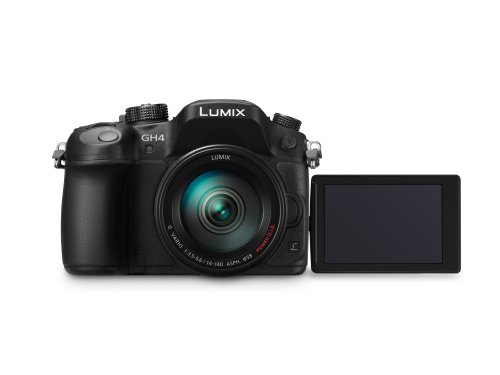
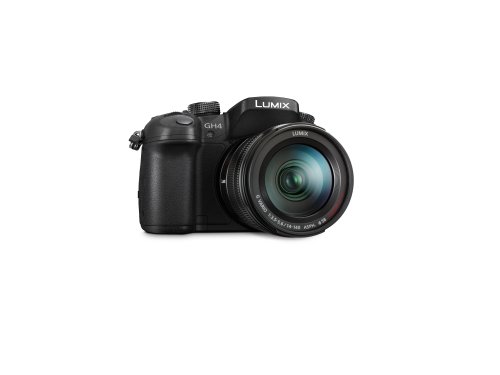
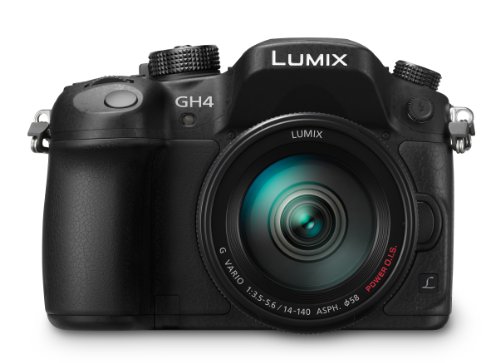
Panasonic LUMIX DMC GH4 review. Compare 108 technical specifications and user reviews to see how it ranks among cameras and if it is worth buying.
Overall score
What it is: An overall evaluation of the camera's quality, based on technical analyses and user reviews.
When it matters: When you need a quick reference to identify the best cameras on the market.
Score components:
90.0%
Technical Score
10.0%
User score
Technical Score
What it is: An assessment of the camera's technical performance, covering eight key areas: image quality, autofocus, video features, stabilization, lens compatibility, connectivity, battery, and design.
When it matters: When you want to compare cameras based on technical performance and available features.
Score components:
28.0%
Sensor & Image
25.0%
Photo Features
18.0%
Video & Audio
14.0%
Display & Design
8.0%
Battery & Power
7.0%
Connectivity & Storage
User score
What it is: A rating that combines user reviews and the total number of reviews received by the camera.
When it matters: When real-world owner satisfaction and review volume matter to your decision.
Score components:
70.0%
User reviews
30.0%
Popularity
Score components:
25.0%
Sensor size
20.0%
Main camera megapixels
20.0%
Dual card slots
15.0%
N. of focus points
10.0%
RAW photo capture
10.0%
Phase-detection autofocus (photos)
Score components:
35.0%
Weight
30.0%
Battery life (CIPA)
20.0%
Sensor-shift stabilization
15.0%
GPS
Score components:
30.0%
Price
20.0%
Weight
20.0%
AF tracking
20.0%
Battery life (CIPA)
10.0%
Touchscreen
Score components:
30.0%
Main camera megapixels
25.0%
Sensor size
20.0%
Main camera pixel size
15.0%
Sensor-shift stabilization
10.0%
RAW photo capture
Score components:
30.0%
Weight
25.0%
Thickness
20.0%
AF low-light sensitivity
15.0%
Sensor-shift stabilization
10.0%
Eye detection AF (human)
Score components:
30.0%
Sensor size
25.0%
Main camera pixel size
20.0%
Eye detection AF (human)
15.0%
Main camera megapixels
10.0%
Sensor-shift stabilization
Score components:
30.0%
Weight
25.0%
Battery life (CIPA)
20.0%
Min operating temperature
15.0%
Sensor-shift stabilization
10.0%
GPS
Available: ranking among products currently available (including other versions of this product).
All: ranking among all products in the database.
#1 in Best Cameras under £500
#8 in Best Cameras under £200
#13 in Best Panasonic Lumix Cameras
#18 in Best Cameras for Beginners
#30 in Best Cameras under £300
#39 in Best Cameras for YouTube
#40 in Best Vlogging Cameras
#61 in Best Mirrorless Cameras
#67 in Best Cameras for Portraits
#72 in Best 4K Cameras
#76 in Best Cameras
What it is: An assessment of the camera's technical performance, covering eight key areas: image quality, autofocus, video features, stabilization, lens compatibility, connectivity, battery, and design.
When it matters: When you want to compare cameras based on technical performance and available features.
Score components:
28.0%
Sensor & Image
25.0%
Photo Features
18.0%
Video & Audio
14.0%
Display & Design
8.0%
Battery & Power
7.0%
Connectivity & Storage
What it is: A rating that combines user reviews and the total number of reviews received by the camera.
When it matters: When real-world owner satisfaction and review volume matter to your decision.
Score components:
70.0%
User reviews
30.0%
Popularity
What it is: An indicator that combines the camera's overall rating with its cost.
When it matters: When you want to know how much overall quality you get for the price.
Score components:
60.0%
Overall score
40.0%
Price
Importance: HIGH
Good value: Full frame or larger
Importance: HIGH
Good value: At least 20 MP
Importance: HIGH
Good value: At least 3.5 µm
Importance: LOW
Importance: MEDIUM
Good value: At least ISO 25,600
Importance: MEDIUM
Importance: MEDIUM
Good value: At least 14-bit
Importance: LOW
Importance: LOW
Importance: LOW
Importance: LOW
Importance: LOW
Importance: LOW
Importance: LOW
Importance: LOW
Importance: MEDIUM
Importance: LOW
Importance: LOW
Importance: LOW
Importance: LOW
Importance: LOW
Importance: HIGH
Good value: At least 200 points
Importance: HIGH
Importance: MEDIUM
Importance: LOW
Importance: LOW
Importance: MEDIUM
Importance: MEDIUM
Importance: HIGH
Good value: At least 5 stops
Importance: LOW
Importance: MEDIUM
Good value: At least 10 fps
Importance: LOW
Importance: LOW
Importance: LOW
Importance: LOW
Importance: LOW
Importance: LOW
Importance: LOW
Importance: LOW
Importance: LOW
Importance: LOW
Importance: LOW
Importance: LOW
Importance: LOW
Importance: LOW
Importance: LOW
Importance: LOW
Good value: At least 200,000 actuations
Importance: LOW
Good value: At least 10x
Importance: HIGH
Good value: At least 3840 px
Importance: MEDIUM
Good value: At least 200 Mbps
Importance: MEDIUM
Good value: At least 10-bit
Importance: LOW
Importance: LOW
Importance: LOW
Importance: LOW
Importance: LOW
Importance: LOW
Importance: LOW
Good value: At least 30 min
Importance: LOW
Importance: LOW
Importance: LOW
Importance: LOW
Importance: LOW
Good value: At least 2 microphones
Importance: LOW
Importance: LOW
Importance: LOW
Importance: LOW
Importance: MEDIUM
Good value: 500 g or less
Importance: LOW
Importance: LOW
Importance: LOW
Importance: MEDIUM
Importance: MEDIUM
Good value: At least 2.36 million dots
Importance: LOW
Good value: 100%
Importance: LOW
Importance: LOW
Good value: At least 120 Hz
Importance: MEDIUM
Good value: At least 3 in
Importance: LOW
Importance: LOW
Importance: LOW
Importance: LOW
Importance: LOW
Importance: LOW
Importance: LOW
Good value: At least 10 m
Importance: LOW
Importance: LOW
Importance: LOW
Importance: LOW
Importance: MEDIUM
Good value: At least 400 shots
Importance: LOW
Good value: At least 1,500 mAh
Importance: LOW
Importance: LOW
Importance: LOW
Importance: LOW
Importance: LOW
Importance: LOW
Importance: LOW
Importance: LOW
Importance: LOW
Importance: LOW
Importance: LOW
Importance: LOW
Importance: LOW
Importance: LOW
Importance: LOW
Importance: LOW
Importance: LOW
Importance: LOW
Importance: MEDIUM
Good value: At least 10 fps
Importance: HIGH
Good value: At least 3840 px
Importance: MEDIUM
Good value: At least 200 Mbps
Importance: MEDIUM
Good value: At least ISO 25,600
Importance: LOW
Importance: MEDIUM
Importance: LOW
Importance: LOW
Importance: MEDIUM
Good value: At least 14-bit
Importance: HIGH
Good value: Full frame or larger
Importance: MEDIUM
Good value: 500 g or less
Importance: LOW
Importance: HIGH
Good value: At least 20 MP
Importance: LOW
Importance: LOW
Importance: MEDIUM
(Reviews last updated: July 2026)
The DPReview evaluation concludes that the Panasonic Lumix DMC-GH4 is a groundbreaking stills/video hybrid camera, highly praised for capturing detailed internal 4K video in both UHD and DCI formats. Key strengths include a robust, weather-sealed magnesium alloy body, excellent battery life, a responsive OLED EVF, and the efficient "Depth-from-Defocus" (DFD) autofocus technology. Despite receiving a Gold Award, the 16-megapixel Micro Four Thirds sensor suffers from weak low-light performance beyond ISO 3200, according to the review. Furthermore, the GH4 introduces a significant crop factor in 4K, has a somewhat aggressive sharpening algorithm for JPEGs, and lacks Auto ISO in manual movie mode, which inhibits exposure management.
The EOSHD Panasonic GH4 Review praises the camera as an affordable, high-utility "cinematic monster" that sets a new standard for independent filmmakers. Retailing at $1699, its standout feature is a highly efficient internal 4K H.264 codec that delivers manageable file sizes while drastically reducing moire and aliasing compared to standard DSLRs. The author highlights major pros, including its exceptional ability to oversample 4K footage down to 10bit 4:4:4 1080p, which vastly improves luma and color data in post-production. Additional benefits include cinematic tools like the Panasonic VariCam profiles (CinelikeD and CinelikeV), 96fps slow-motion capabilities, Speed Booster compatibility for achieving a Super 35mm look, uncompromised battery life, a high-resolution articulated LCD and EVF, and the optional YAGH interface unit for advanced XLR and HD-SDI connectivity. However, the review details specific hardware compromises and cons that filmmakers must navigate. The camera's low-light performance hits a definitive ceiling at ISO 3200, making it less capable than pricier competitors like the Canon C100 or Sony FS100 in dark environments. It also exhibits higher-than-average rolling shutter skew when operating in 4K mode, alongside a noticeable...
The DXOMARK sensor review of the Panasonic Lumix DMC-GH4 highlights the camera as a formidable hybrid contender that excels in both video and stills engineering. Equipped with a 16-megapixel Live MOS sensor and a powerful quad-core Venus image processor, the GH4 achieves an impressive overall DxOMark score of 74 points, leading the Four-Thirds database at the time of its release. Key pros of the sensor include its excellent color discrimination scored at 23.2 bits and a very wide dynamic range of 12.8 Evs at base ISO, allowing it to closely match its primary rival, the Olympus OM-D E-M1, and keep pace with aging APS-C sensors from ISO 200 onwards. Furthermore, it introduces massive video upgrades, offering in-camera DCI 4K and UHD 4K recording alongside 1080p capture up to 200 Mbps, complete with weather-sealed housing and up to 12 fps continuous RAW shooting. Conversely, the review notes several technical cons tied directly to the physical constraints of its smaller sensor size. The most notable drawback is its slightly below-par low-light capability when compared to larger APS-C or full-frame rival systems. Additionally,...
The Amateur Photographer review highlights the Panasonic Lumix DMC-GH4 as a fast, well-built hybrid camera featuring a 16.05-megapixel Micro Four Thirds sensor and Depth from Defocus (DFD) technology, which achieves lock-on focus in 0.07 seconds. Key advantages include 12fps burst shooting in AF-S mode, a 1/8000sec maximum shutter speed, and high-utility features like focus peaking in a robust body. Conversely, the review notes that the DFD autofocus technology only functions with compatible Lumix lenses, limiting fast performance with adapted glass. Additionally, the Micro Four Thirds sensor faces limitations in low-light, high-ISO noise performance and shallow depth-of-field compared to larger sensor alternatives.
Panasonic GH4 Review Summary The Panasonic Lumix GH4 is a highly versatile mirrorless Micro Four Thirds camera designed to appeal equally to still photographers and videographers. Boasting a 16MP sensor and a rugged, weather-sealed magnesium alloy body, it introduces cutting-edge features like Depth from Defocus (DFD) contrast detection autofocus, an electronic shutter reaching 1/8000 sec, a 2.4M dot OLED viewfinder, and a fully articulated touch screen. For videographers, the camera is a revolutionary, affordable powerhouse capable of internal 4K recording (both Cinema 4K and Ultra-HD) to an SD card, variable frame rates up to 96 FPS in full HD, and professional 10-bit 4:2:2 video output via HDMI. The camera's primary advantages include its outstanding 4K video versatility, blazing-fast 49-point autofocus, excellent ergonomics with 10 customizable buttons, and a highly useful "Silent Mode" that enables a completely quiet electronic shutter. However, it does come with notable drawbacks. Its ISO performance peaks in usability at ISO 3200 to 6400, while higher sensitivities like 12,800 and 25,600 are deemed completely unusable due to noise. Additionally, it lacks a built-in ND filter—requiring an external...
The Panasonic GH4 is a professional-grade, compact mirrorless camera (DSLM) that delivers exceptional image and video quality, challenging the traditional dominance of heavy DSLR systems. Originally announced in 2014, it brings cinematic 4K (Ultra HD) recording capabilities directly to the camera without the need for an external recorder, offering a more affordable entry point for filmmakers. Beyond its standalone video prowess, the camera features outstanding build quality, excellent ergonomics with a deep grip, and an innovative Depth from Defocus (DFD) contrast autofocus system that allows it to achieve blisteringly fast continuous shooting speeds of up to 12 frames per second with a mechanical shutter. The combination of a high-resolution electronic viewfinder (EVF), a weather-sealed body, and a fully articulating touchscreen display makes it a versatile tool for sports, action, and street photography. The review highlights several key advantages and distinct drawbacks of the hybrid system. On the positive side, its major pros include very fast continuous autofocus (up to 20 fps with an electronic shutter), an ultra-fast 1/8000 second maximum shutter speed, excellent dynamic range, and top-tier Ultra HD 4K...
Panasonic Lumix GH4 Review Summary The Panasonic Lumix GH4 is a compact, lightweight Micro Four Thirds mirrorless camera that offers standout video capabilities, including in-camera 4K recording and high-speed 1080p video at 96fps. Weighing about half as much as a comparable DSLR kit, its portability makes it ideal for outdoor adventure and documentary style productions. The camera provides extensive picture profile adjustments—such as custom curves and pedestal levels—enabling shooters to establish a flat base profile that preserves highlight and shadow details in harsh, bright environments. Additionally, the 4K footage downsamples beautifully to a razor-sharp 1080p timeline, giving editors the freedom to crop, reframe, or digitally pan without any noticeable loss in image quality. However, several notable drawbacks prevent the GH4 from earning a definitive recommendation for flawless professional use. Low-light performance is weak, as footage captured at or above ISO 3200 suffers from soft rendering and excessive purple grain noise. Long-exposure night timelapses suffer from a problematic green-to-magenta color shift between sequential frames. The reviewer also noted sluggish file playback and encountered several technical glitches during critical shooting windows, including...
The Panasonic Lumix GH4 is lauded by What Digital Camera as a versatile, durable, and weather-sealed flagship, earning an 89% rating for its superior 4K video capabilities and incredibly fast 0.07-second autofocus. Its DSLR-styled body features a responsive OLED viewfinder and a 3-inch articulated screen, making it a powerful tool for hybrid shooters. Conversely, the review identifies significant weaknesses in its Tracking AF system, noting it often loses focus on moving subjects. Additionally, reviewers found the 16.05-megapixel resolution limiting and the camera's control scheme to be overly complex for some users.
The provided text is a real-world, long-term review of the Panasonic Lumix GH4 by professional photographer Daniel J. Cox, who shot nearly 200,000 images across two bodies in various extreme climates. The author heavily praises the camera’s Micro Four Thirds system for its small size and lightweight build, which makes travel easy without compromising on high-quality image production. Key operational strengths include exceptional ergonomics with perfectly placed buttons for white balance, ISO, and exposure compensation, a reliable top-right on/off switch, a robust buffer that handles 12 frames per second, and intuitive touch-screen autofocus capabilities. Furthermore, the reviewer lauds its 4K video and specialized "4K Photo Mode," which allows photographers to extract sharp 8-megapixel stills from 30fps footage to capture precise action moments. Despite his overall praise, Cox highlights several prominent design flaws and technical limitations. The most frustrating physical issue is the rubber eyepiece, which detaches easily and is frequently lost, alongside loose-fitting plastic lens shades on lenses like the 12-35mm F/2.8. On the technical side, the infrared-based wireless flash system proves highly inconsistent and unreliable unless used at very...
The Panasonic Lumix DMC-GH4 review, conducted by cinematographer Shane Hurlbut, ASC, and his assistant David Weldon, concludes that the camera functions and feels more like a broadcast video camera than a traditional cinema camera. Tested alongside competitors like the Canon 5D Mark III and Canon C100, the GH4’s primary advantage is its highly affordable price point ($1,697.99 at the time) for providing internal 4K and 4K UHD recording options, a feature heavily praised by independent shooters. Additional positive specifications include an available external interface unit (DMW-YAGH) that supports professional 2-channel mono XLR inputs, full-sized HDMI, and quad-link SDI outputs for 4:2:2 10-bit external recording. The camera body also features user-friendly shooting tools such as focus peaking, zebras, a flexible flip-out LCD screen, and variable slow-motion recording up to 96fps. However, the review highlights significant drawbacks regarding image quality and sensor performance. Right out of the box, the camera produces an excessively sharp, digital appearance with very little organic falloff on the edges of subjects. Testing revealed that setting the camera to its native base ISO of 800 introduced a heavy,...
Panasonic Lumix GH4 Review Summary The Panasonic Lumix GH4 is a highly versatile Micro Four Thirds mirrorless camera celebrated as a groundbreaking flagship model for offering internal 4K video recording (both UHD and Cinema 4K) at 100Mbit/s without pixel scaling. Video professionals benefit from a world-frequency camera system, high 1080p bitrates up to 200Mbps (All-Intra), 1080p slow-motion up to 96fps, focus peaking, zebra patterns, and an optional high-end DMW-YAGH professional docking station. Beyond its industry-leading video capabilities, it serves as an excellent stills camera featuring a weather-sealed body, a fully articulated 3-inch OLED touchscreen, a high-resolution 2,359k-dot electronic viewfinder, a robust 1/8000 mechanical shutter, silent electronic shutter options, and stellar 12fps continuous shooting. It also features built-in Wi-Fi with NFC and an exceptional battery life that beats out major competitors in its class. Despite these strengths, the camera has notable limitations, starting with its 16-Megapixel sensor resolution which shows no major leap in raw stills quality and lacks phase-detect autofocus points. Because it relies entirely on a contrast-based autofocus system, continuous tracking for moving subjects drops the burst speed down...
The Panasonic DMC-GH4 is a $1700 hybrid stills/motion camera with a micro four thirds (MFT) lens mount that stands out as a highly anticipated tool for video work and indie filmmaking. Visually and physically similar to its predecessor, the GH3, it features a lightweight, compact DSLR form factor weighing 1.25 lbs that is easy to mount on a magic arm. The camera excels by introducing native 4K recording alongside robust shooting aids, including a highly responsive 2.36 million-pixel OLED electronic viewfinder (EVF) and a crisp 3-inch touchscreen LCD. Notable pros include its instant boot time, excellent battery life using long-lasting DMW-BLF19PP batteries, a much stronger SD card door latch compared to the GH3, and highly useful, customizable exposure tools like dual zebra settings and multi-coloured focus peaking. However, the camera has several physical and software limitations. In terms of cons, the I/O area relies on rubbery hinge covers that can block the movement of the flip-out monitor if not pressed completely flat, and it utilizes a finicky micro-HDMI connector that is difficult to align. On the body, the Fn2 and...
The Panasonic Lumix GH4 features a highly customizable autofocus system allowing users to define specific AF areas, though it suffers from inconsistent performance and frequent tracking drops. Conversely, the 2.36-million-dot OLED viewfinder offers exceptional magnification, brightness, and a high refresh rate that minimizes lag, making it a standout feature. Further enhancing usability, the 3-inch, 1.04-million-dot vari-angle touchscreen provides high responsiveness and flexibility, capable of rotating for versatile shooting angles.
The Panasonic Lumix DMC-GH4 is highly praised as an exceptional Micro Four Thirds mirrorless camera that excels in videography, featuring standout capabilities like crisp DCI and UHD 4K video recording, variable frame rates up to 96fps for smooth slow-motion footage, and a built-in time-lapse feature that renders movies in-camera. Reviewers highlight its highly functional design, which includes an articulated OLED touchscreen, a weather-sealed magnesium alloy body, excellent battery life, and high-end tools like focus peaking and zebra patterns. It offers extensive versatility through features like the Extended Teleconverter—which boosts lens reach without sacrificing resolution—built-in Wi-Fi control, and the capability to adapt almost any lens, including Canon L glass via a Metabones Speedbooster. Despite its strengths, the GH4 has some notable drawbacks, particularly regarding stills image quality and handling. Because of its smaller Micro Four Thirds sensor, its dynamic range and overall still photo quality lack the depth of full-frame DSLRs, though shooting in RAW does offer a notable improvement. Its physical DSLR shape is ergonomically optimized for photography rather than video, meaning filmmakers will likely require a tripod, stabilizer, or...
Panasonic GH4 Review Summary The Panasonic Lumix GH4 is a highly capable mirrorless Micro Four Thirds camera that stands out as an affordable option for shooting true 4K and UHD video under $2,000. Its strengths lie in its extensive video features, including manual audio controls, a headphone jack, a bright OLED touchscreen, and professional tools like focus peaking, zebra striping, and an integrated electronic viewfinder (EVF). When filming in 4K, the extra resolution provides excellent detail and sharpness that allows users to reframe, crop, or add fake movement like pans and zooms in post-production when delivering in 1080p. Additionally, the built-in timelapse mode is highly functional, saving raw photo files for advanced editing. Ergonomically, it offers a solid mid-range DSLR-like grip, a clean menu system suitable for beginners, and a convenient flat "CineD" picture profile that maximizes dynamic range without requiring heavy color grading. However, the camera comes with notable limitations, particularly regarding its low-light performance and sensor size. Image noise and digital artifacts become visible above ISO 800, and the video quality aggressively falls apart with mushy details and...
The Have Camera Will Travel review highlights the Panasonic Lumix GH4 as a compact, mirrorless camera that blends high-end video capabilities with a quiet shutter mechanism. Its light form factor and internal, dual-mode stabilization make it well-suited for travel, wildlife photography, and handheld shooting. Have However, the review notes that the contrast-detection autofocus system, while smooth, falls short of professional-level DSLR performance. Additionally, maximizing the camera's extensive, layered custom features requires developing advanced technical skills. Have
Panasonic Lumix DMC-GH4 Review Summary The Panasonic Lumix DMC-GH4 is a top-tier Micro Four Thirds mirrorless camera that delivers exceptional performance for both photography and high-end videography. It boasts outstanding 16-megapixel image quality with superb detail retention and sharp line resolution, even at elevated sensitivities like ISO 12,800. Speed is another core strength; the camera features a lightning-fast autofocus system and rapid continuous shooting capabilities—reaching up to 9.7 JPEG or 8.5 RAW frames per second—making it highly capable for sports photography. Its robust, weather-sealed magnesium alloy body is packed with features, including three jog dials for manual adjustments, a responsive 3-inch touchscreen, a built-in flash, and an impressive battery life capable of capturing up to 860 still frames per charge. The definitive highlight of the GH4 is its cinematic video mode, making it the first affordable system camera to support internal Ultra-HD and Cinema-4K video recording. It records Ultra-HD (3840 x 2160) at 25 fps with a 100 Mbps bitrate, and Full-HD up to 200 Mbps, providing incredible flexibility for post-production. Audio features are equally robust, featuring built-in stereo mics...
The Digitalkamera.de review highlights the Panasonic Lumix DMC-GH4 as a professional hybrid camera, praising its fast single-point DFD autofocus and comprehensive 4K video features like zebra patterns and a bright OLED viewfinder. Key advantages include robust build quality with locking dials and an articulated screen, though it is noted that the sensor size limits extreme shallow depth-of-field capabilities. YouTube · Conversely, the review identifies significant weaknesses in continuous autofocus tracking, which often struggles and hunts during video, alongside an awkward, recessed rear control dial. Furthermore, the Micro Four Thirds sensor imposes a 2x to 2.3x crop factor, which may not suit photographers looking for ultra-wide perspectives. YouTube
Summary The Panasonic Lumix GH4 is a high-performance system camera that excels in speed and video quality, earning the top spot on Computer Bild's leaderboard upon review. It features an upgraded 16-megapixel image sensor with a rapid 50-millisecond readout time that drastically minimizes rolling-shutter distortion and enables continuous shooting up to 12 frames per second. The camera features an ultra-fast autofocus system that clocks in at 0.18 seconds in daylight and 0.20 seconds in dim lighting. For filmmakers, it supports Full-HD recording up to a high-quality 200 Mbps bitrate and captures professional 4K videos in both Ultra-HD (3840x2160) and cinema 4K2K (4096x2160) standards. Additionally, it integrates a weather-sealed body, an upgraded 2.36 million-dot electronic viewfinder, Wi-Fi, and NFC technology for password-free smartphone remote control. Pros and Cons Pros: Excellent daylight photo and video output, high-speed 4K recording, exceptionally fast autofocus, 12 fps burst shooting, weatherproofing, and a detailed electronic viewfinder. Cons: Mediocre battery life, a weak built-in flash, a narrower field of view in 4K mode due to pixel-by-pixel sensor cropping, and increased image noise at ISO settings above 1600...
of the Panasonic Lumix DMC-GH4 The camera's defining achievement is its groundbreaking video capability, setting a new benchmark by offering affordable, broadcast-quality 4K/UHD video recording directly to the memory card. Video production is heavily enhanced by professional features such as timecodes, zebra patterns, full manual exposure, stereo audio control, and dedicated headphone/microphone jacks. Despite its strengths, the review notes a few minor limitations, including slightly small physical buttons, a rear command dial that sits too deeply into the body, a somewhat sticky built-in flash mechanism, and the lack of a dual memory card slot for backup recording. Pros & Cons At A Glance Pros Cons Groundbreaking 4K Video: Incredible detail and extensive professional video tools (Zebra, Timecode). Ergonomic Quirks: Physical control buttons are a bit too small. Blazing Speed: Fires up to 13.1 fps bursts and focuses in just 0.13 seconds. Sunken Control Dial: Rear command dial is recessed slightly too far. Pro-Grade Build: Weather-resistant magnesium body with a highly flexible articulating screen. Single Storage Slot: Missing a secondary card slot for overflow/backup. Strong Low-Light: Low noise up to ISO...
The PC-WELT review of the Panasonic Lumix DMC-GH4 highlights it as a groundbreaking mirrorless camera, being the first in its class to introduce 4K video recording (Cinema 4K at 24 fps and UHD at 30 fps). Powered by a newly developed quad-core processor, the camera boasts exceptional operational speed, delivering burst shooting up to 40 frames per second via its electronic shutter. Its robust, dust- and splash-proof body houses a 3-inch vari-angle OLED touchscreen and offers dual physical ports for both a microphone and headphones, alongside wireless capabilities like Wi-Fi and NFC. Key design highlights include a "Silent Mode" that utilizes an electronic shutter to suppress all camera sounds, in-camera RAW processing, and an innovative "Depth from Defocus" (DFD) contrast-based autofocus system using 49 points. However, the review uncovers notable performance trade-offs, particularly regarding still photo image quality. Laboratory testing reveals an effective sensor resolution efficiency of only 4.4 megapixels out of its native 16.05-megapixel sensor, showing flat sharpness at medium and long focal lengths, combined with heavy center over-sharpening at wide angles. This aggressive sharpening causes visible image noise...
summary of the Panasonic Lumix GH4's performance as a still photo camera: Review Summary The reviewer breaks away from the Panasonic GH4's established reputation as a pure video camera to evaluate its capabilities strictly for still photography, concluding that it delivers excellent, professional-grade image quality that easily rivals the Olympus E-M1. A major standout feature is its highly reliable and fast autofocus system, which performs exceptionally well even in low-light environments. The camera excels in ergonomics, functioning as a comfortable "hand-pleaser" with a grip that handles well even in larger hands, and offers a robust array of physical buttons alongside an intuitive touch menu. Furthermore, the author highly praises its seamless, out-of-the-box WiFi integration with the Shuttersnitch iPad app for client viewing, alongside its highly impressive battery life. However, the camera suffers from notable handling and design drawbacks when compared to its Olympus counterpart. The reviewer dislikes the sub-optimal layout of the adjustment dials and criticizes the fully articulating screen, which must be flipped out to the left before it can tilt, preferring a simpler up-and-down tilting mechanism instead. A...
This slashCAM low-light review highlights the Panasonic GH4 as a groundbreaking camera for its price point, offering the best available internal 4K video performance in low-light environments for a Micro Four Thirds (MFT) camera. The testing reveals distinct operational advantages depending on the selected picture profile; the Standard profile delivers immediately rich, vibrant colors and highly accurate white balance, while the conservative CinelikeD profile acts as a practical log format that retains decent color saturation and is highly adaptable for quick grading or S-curve adjustments in post-production without requiring dedicated LUTs. Lab evaluations under a dim 12 LUX environment showed that the GH4 manages noise efficiently and retains sharp details, drastically outperforming 4K competitors with smaller sensors (such as the 1-inch Sony AX100) when paired with a fast lens like a Zeiss 50mm F1.4. Additionally, downscaling its native 4K footage down to 1080p effectively functions as a natural denoising process, generating remarkably clean and crisp low-light results. Despite these significant strides over its predecessor, the review clarifies that the camera cannot escape physical sensor limitations. The primary drawback is that...
The Panasonic Lumix GH4 is a pioneering Micro Four Thirds mirrorless camera acclaimed for bringing internal 4K video recording to the consumer market. Built into a robust body with ergonomics similar to its predecessor, it features a 16-megapixel CMOS sensor and a fast Venus Engine processor. Reviewers praise the camera as a "war machine" for video production, highlighted by its exceptional autofocus speed, 11 frames-per-second burst shooting capability, and extensive customization options. It also provides a comprehensive suite of professional video assists, such as focus peaking, zebra patterns, and Cinelike gamma profiles, alongside advanced connectivity options including uncompressed HDMI output, headphone jacks, and microphone inputs. Despite its professional-grade video prowess, the review notes several technical and practical limitations. A major drawback is the inclusion of only a single SD card slot, which limits backup options for critical shoots. Additionally, the sensor lacks internal image stabilisation, and individual video clips are artificially capped at a maximum duration of 29 minutes and 59 seconds. The camera also forces a crop factor when shooting in 4K by using only the central portion of...
The Panasonic Lumix DMC-GH4 is a high-performance mirrorless camera that stands out particularly for its exceptional 4K video capabilities, making it a viable rival to dedicated professional video cameras. It features a 17.2-megapixel Live MOS sensor and an upgraded processing engine housed in a robust, ergonomic body with extensive physical dials and ten programmable shortcut buttons. The camera offers an improved 3-inch articulating OLED touchscreen alongside a sharp 2.36-million-dot OLED viewfinder. In lab tests, the GH4 demonstrated excellent color accuracy in daylight, an incredibly rapid and sensitive autofocus system, and an efficient built-in pop-up flash. However, the camera has notable limitations, specifically a dramatic drop in image resolution when using a telephoto lens and slight vignetting at wide angles. Its performance at very high ISO levels is weak, causing a loss in texture quality, and the automated white balance struggles somewhat under tungsten lighting. Additionally, users must navigate an incredibly dense and complex menu structure. From a hardware perspective, the device lacks a second SD card slot and relies on older, slower USB 2.0 connectivity rather than USB 3.0, which...
However, the camera shows clear limitations regarding low-light performance and sensor hardware. Its ISO capabilities top out effectively at 3200, beyond which fine details are heavily degraded by noticeable image noise. Furthermore, the GH4 lacks in-body image stabilisation (IBIS), meaning users must rely heavily on optically stabilised lenses. Other downsides include an electronic viewfinder that feels slightly laggy and low-res, massive 4K file sizes that quickly drain storage media, and the lack of a dual SD card slot for instant file backups. Despite these issues and being older hardware, its significantly lower market price compared to the newer GH5 makes it an attractive budget alternative for sports and action videographers.
based on the provided text: The Panasonic Lumix GH4 is a highly capable hybrid camera that stands out as an exceptional value for money, packing pro-level features into a compact, weather-sealed magnesium alloy body. On the positive side, its major strengths lie in its video capabilities, offering internal 4K recording in both MP4 and MOV formats, alongside high bitrates up to 200mbps (ALL-I) and a highly creative Variable Frame Rate (VFR) feature reaching 96fps. For photography, it features an upgraded 16MP CMOS sensor, an incredibly fast "Depth From Defocus" (DFD) autofocus system (0.07s), 12fps burst shooting, and a very welcome focus peaking tool. Ergonomically, the physical mode dial lock is praised for preventing accidental setting shifts during fast-paced shooting. However, the camera has notable limitations, particularly regarding high ISO performance, where images at 12800 and 25600 suffer from heavy noise, making low-light performance beyond ISO 3200 less than ideal. Video shooters should note that all internal codecs are restricted to 8-bit color, requiring an expensive, non-retrocompatible external DMW-YAGH dock to achieve uncompressed 10-bit output. Furthermore, taking full advantage of the...
The Panasonic Lumix GH4 review focuses heavily on the camera's groundbreaking, highly versatile video capabilities. It is celebrated as an unconventional, hybrid workhorse that bridges the gap between consumer mirrorless cameras and professional cinema rigs. The review praises its professional-grade design, advanced settings layout, and the introduction of top-tier video tools that cater directly to demanding videographers and indie filmmakers. YouTube ·Mr. 50 Pros and Cons Pros: The camera excels by introducing true internal Cinema 4K (4096x2160) and UHD 4K recording at high bitrates up to 100 Mbps. It delivers exceptional image crispness, virtually zero moiré, and high-quality 1080p recording at up to 200 Mbps using ALL-Intra compression. Filmmakers benefit from advanced features like variable frame rates up to 96fps for slow motion, focus peaking, zebra patterns, timecodes, and professional cinema color profiles like Cine-Like D. Furthermore, its robust weather-sealed chassis, stellar battery life, and lack of standard recording time limits make it highly reliable for continuous shooting. Cons: On the downside, the Micro Four Thirds sensor inherits natural physical limitations, resulting in subpar low-light sensitivity and a lack of...
The Panasonic Lumix DMC-GH4 receives an overall score of 57/100 from CameraRace, highlighted by its lightweight, weather-sealed design and strong versatility score of 82/100. Key advantages include fast contrast-detect autofocus, a quick mechanical burst mode, and a fully articulated display, making it a capable tool for active shooting scenarios. Conversely, the camera's Micro Four Thirds sensor results in a lower image quality score of 43/100, placing it in the bottom 29% of competitors for low-light performance. Further drawbacks noted in the evaluation include a comfort rating in the bottom 36% of its category and a 500-shot per charge battery, which may restrict, long shooting sessions. YouTube ·B&H Photo
The Panasonic Lumix GH4 review on Xataka Foto highlights the mirrorless camera as a highly capable hybrid flagship model. The reviewer praises its solid, weather-sealed magnesium alloy construction and a scaled-down DSLR ergonomics setup that comfortably fits small-to-medium hands. On the performance side, its primary advantages include an outstanding 12 fps mechanical burst rate (which can jump up to 40 fps using the electronic shutter), a lightning-fast contrast-detection autofocus system, and an excellent 4K video recording mode. Furthermore, the user interface is incredibly seamless thanks to a sharp 3-inch rotating OLED touchscreen and a robust battery life that easily exceeds 500 shots, matching typical DSLR performance. Conversely, the review highlights several distinct drawbacks, particularly regarding the camera's Micro Four Thirds sensor limitations. Its resolution is capped at just 16 megapixels, which limits massive image enlargements or severe cropping during post-processing. Digital noise becomes noticeable starting at ISO 3,200 and becomes very visible at higher ranges, making it less ideal for critical low-light conditions. Mechanically, the camera completely lacks internal in-body image stabilization (IBIS) and suffers from an absence of a...
The Panasonic Lumix GH4 stands out as a highly competent mirrorless camera that bridges the gap between photography and high-end video production. The review highlights its primary selling point: the ability to record both UHD video (3840 x 2160 pixels) at up to 30 frames per second (FPS) and standard cinematic 4K (4096 x 2160 pixels) at 24 FPS. Equipped with a 16-megapixel Micro Four Thirds sensor and a 4-core Venus Engine processor, the camera delivers excellent performance across photography and videography, leaving a very positive impression regarding its overall versatility. YouTube · In terms of specific pros and cons, the camera excels with its extraordinary burst shooting speeds, solid noise management at high ISO settings (up to 6400 for video), and robust build quality featuring reflex-style ergonomics. It also brings major professional features to a compact body, such as compatibility with high-bitrate recording up to 200 Mbps in Full HD and an interface expansion option for XLR or SDI connectors. However, the review notes some drawbacks, including limitations in dynamic range when using the standard Rec. 709 color space,...
The Xataka review highlights the Panasonic Lumix GH4 as a highly disruptive, budget-friendly DSLM camera optimized primarily for video professionals and advanced enthusiasts. The core strength of the camera is its ability to record internal, high-bitrate Cinema 4K (4096 x 2160) at 24p and UHD 4K at 30p/24p, utilizing a 1:1 pixel sampling method that produces outstandingly detailed video without pixel mapping. Additional internal pros include its versatile compression profiles (100 Mbps IPB and 200 Mbps ALL-i), integrated slow-motion capabilities up to 96fps, and cinematic picture styles like Cinelike-D and Cinelike-V. For high-end productions, the camera supports uncompressed 10-bit 4:2:2 output via HDMI, or full workflow customization via the external DMW-YAGH interface box, which provides professional XLR and SDI connectivity. On the downside, the reviewer notes that the GH4 relies on the REC 709 color space, which makes color grading less flexible in post-production compared to dedicated film-log or RAW recording systems like those found on Blackmagic cameras. Because the sensor crops top and bottom margins to maintain a true 1:1 pixel readout for 4K video, it alters the focal...
The Panasonic Lumix DMC-GH4 is a high-quality mirrorless 4K camera designed to serve as a powerful tool for filmmakers and independent video productions. Priced at €1,499 for the body alone, it offers remarkable value by competing directly with cameras that cost twice as much or more. Powered by a quad-core Venus Engine processor, it boasts a lightning-fast contrast autofocus system with a tracking delay of just 0.07 seconds, allowing for 7 frames per second with active continuous autofocus. Additionally, the camera features excellent 4:4:2 colour sampling, zebra formatting, focus peaking, an intuitive user interface, a highly responsive touchscreen, and useful physical audio controls including dedicated headphone and microphone jacks. Despite its standout video capabilities, the review highlights several drawbacks when using the device. The all-black magnesium alloy body is solid and features a comfortable grip, but its generic design lacks aesthetic personality and charm compared to rivals like Olympus, Fuji, or Sony. Photographically, the 16.05-megapixel MOS sensor outputs somewhat soft images by default, falling short of the image quality and depth of field offered by professional full-frame DSLRs. Finally, the...
The Panasonic Lumix DMC-GH4 is a robust Micro Four Thirds mirrorless camera featuring a magnesium alloy, weather-sealed body that balances ergonomics with exceptional build quality. Built around a 16-megapixel Live MOS sensor and the advanced Venus Engine 9AHD processor, the GH4 achieves rapid performance, including an impressive autofocus speed of 0.07 seconds using its 49-zone Depth From Defocus (DFD) system, and continuous shooting up to 12 fps. For video creators, it stands out by offering internal Cinema 4K and Ultra HD recording at 100 Mbps, alongside standard Full HD up to 200 Mbps. Reviewers highlight its high-resolution 1,036k-dot OLED touchscreen, ultra-sharp 2,360k-dot electronic viewfinder, and extensive physical customization options as major design strengths that deliver excellent value for independent videomakers. Despite its strong performance, the camera has notable limitations. The most prominent drawbacks include the presence of only a single SD card slot and a natural disadvantage in high-ISO low-light conditions, where noise reduction artifacts compromise fine details at sensitivities past ISO 3200 compared to larger APS-C or full-frame sensors. Furthermore, achieving a highly shallow, cinematic depth of field requires...
Panasonic Lumix GH4 Review Summary The Panasonic Lumix GH4 is a highly versatile micro four-thirds mirrorless camera that balances powerful photography capabilities with near-professional video performance. Featuring a 16-megapixel effective CMOS sensor, it stands out for its unique ability to record Cinema DCI (4096×2160) and UltraHD (3840×2160) 4K video directly onto a memory card at 100 Mbps. In terms of photographic capabilities, the camera is incredibly fast and precise, delivering sharp images with great dynamic range and a robust 12 frames per second (fps) burst rate in RAW mode. Key advantages of the GH4 include its excellent Variable Frame Rate option (up to 96 fps for genuine slow-motion effects), high-quality 200 Mbps Full HD All-Intra compression, a fast Depth from Defocus (DFD) autofocus system, and flexible 4:2:2 10-bit HDMI outputs for external recording. However, the camera has some drawbacks, primarily tied to the natural limitations of the micro four-thirds format and its software interface. Because the sensor size is smaller than APS-C or full-frame sensors, its light sensitivity is only sufficient, showing noticeable noise at ISO 3200, particularly in 4K...
The Panasonic Lumix GH4 review by Roberto on Patatofriendly details his experience using this micro 4/3 mirrorless camera as his primary device for photos and videos during a 70-day road trip in America. Even though a newer model (the GH5) has been released, the author argues that the GH4 remains a highly relevant purchase due to its strong performance and significantly reduced price. The camera features a compact and lightweight body (around 560g for the body alone), 4K video recording capabilities, five customisable buttons, and an NFC tag for quick social media sharing via smartphone. The review highlights several specific pros and cons regarding the camera's design and fieldwork utility. The main advantages include a weather-sealed, tropicalised magnesium alloy body that withstands dust and rain, an ergonomic DSLR-like grip that remains easy to handle with one hand, and a fully articulating 360-degree touchscreen display perfect for vlogging. Additionally, it offers exceptional battery performance that easily lasts a full day of shooting, alongside a rare dual 3.5mm audio jack system for both an external microphone and headphones, allowing direct audio quality...
The Panasonic Lumix GH4 is a Micro Four Thirds camera that offers high-quality 4K video recording on an SD card at an affordable price point under €1,400. It provides a wide range of advanced, professional-grade settings that allow for immense flexibility and excellent detail, especially when the settings match the specific shooting environment. Additionally, it can be expanded into a more robust production setup using a dedicated interface unit for XLR and SDI connections. However, the camera has a steep learning curve and is not easy to use right out of the box. Users who incorrectly adjust parameters—like blindly using the "Cinelike D" profile, maxing out the master pedestal, or enabling "idynamic" settings—will face severe video noise and a massive loss of image detail, even at a low 200 ISO. Ultimately, the camera lacks a single "perfect" setup, meaning operators must constantly tweak settings based on lighting to avoid mediocre, unusable footage.
Compare