Scored using Cameras Methodology v1.0
Cameras Methodology v1.0
Mathematical & Unbiased Scoring
Products in this category are evaluated mathematically under Frontumo Cameras Methodology v1.0 using verified laboratory benchmarks, technical specifications, and authentic consumer ratings with 0% commercial bias.
Explore Cameras Methodology v1.0

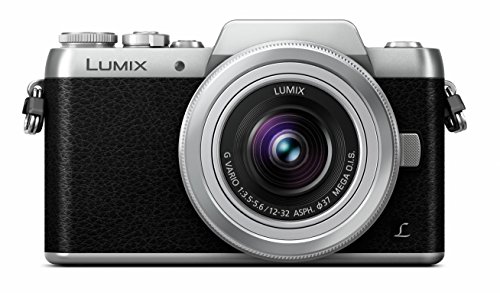
Panasonic LUMIX DMC GF7 Review | 108 Data compared

Avg. price:~£200Sensor size:four thirdsWeight:266 gBattery life (CIPA):230 shots

Panasonic LUMIX DMC GF7 Review: Compare 108 technical specifications and user reviews to see how this product ranks in the Cameras category and whether it is worth buying.

5.5

Overall score

Score
5.5/ 10
✕
What it is
An overall evaluation of the camera's quality, based on technical analyses and user reviews.
When it matters
When you need a quick reference to identify the best cameras on the market.
Score distribution
â–¼
<55-66-77-88-99-10
Score components

90%

5.4

Technical score

10%

7.2

User score

â–²Better than 62% of cameras
5.4

Technical score

Technical score
5.4/ 10
✕
What it is
An assessment of technical performance for products in the Cameras category across these key areas: Sensor & Image, Photo Features, Video & Audio, Display & Design, Battery & Power, Connectivity & Storage.
When it matters
When you want to compare cameras based on technical performance and available features.
Score distribution
â–¼
<55-66-77-88-99-10
Score components

28%

6.5

Sensor & Image

25%

4.6

Photo Features

18%

5.0

Video & Audio

14%

6.7

Display & Design

8%

2.9

Battery & Power

7%

4.9

Connectivity & Storage

â–²Better than 61% of cameras
7.2

User score

User score
7.2/ 10
✕
What it is
A rating that combines user reviews and the total number of reviews received by the camera.
When it matters
When real-world owner satisfaction and review volume matter to your decision.
Score distribution
â–¼
<55-66-77-88-99-10
Score components

70%

9.0

User ratings

30%

3.2

Number of reviews

Based on 4 buyer reviews from online shops.
How we calculate this
User ratings – average star rating across all shop listings, weighted by how many reviews each has, on a 1–10 scale.
Number of reviews – how many buyer reviews the product has, on a logarithmic scale; the 8% most-reviewed models in the category get 10.
â–¼Worse than 92% of cameras
Loading...
Loading category ranking...

Technical Specifications of camera Panasonic LUMIX DMC GF7

Technical score
Technical score
5.4/ 10
✕
What it is
An assessment of technical performance for products in the Cameras category across these key areas: Sensor & Image, Photo Features, Video & Audio, Display & Design, Battery & Power, Connectivity & Storage.
When it matters
When you want to compare cameras based on technical performance and available features.
Score distribution
â–¼
<55-66-77-88-99-10
Score components:

28%

6.5

Sensor & Image

25%

4.6

Photo Features

18%

5.0

Video & Audio

14%

6.7

Display & Design

8%

2.9

Battery & Power

7%

4.9

Connectivity & Storage

5.4
User score
User score
7.2/ 10
✕
What it is
A rating that combines user reviews and the total number of reviews received by the camera.
When it matters
When real-world owner satisfaction and review volume matter to your decision.
Score distribution
â–¼
<55-66-77-88-99-10
Score components

70%

9.0

User ratings

30%

3.2

Number of reviews

Based on 4 buyer reviews from online shops.
How we calculate this
User ratings – average star rating across all shop listings, weighted by how many reviews each has, on a 1–10 scale.
Number of reviews – how many buyer reviews the product has, on a logarithmic scale; the 8% most-reviewed models in the category get 10.
7.2
Popularity
Popularity
3.2/ 10
✕
What it is
An indicator based on the number of reviews received by the camera.
When it matters
When you want to see which cameras attract the most buyer attention and review activity.
Score distribution
â–¼
<55-66-77-88-99-10
Popularity:
Panasonic LUMIX DMC GF7 has a popularity score of 3.2, which is higher than 51.8% of cameras.
3.2
Value for money
Value for money
6.7/ 10
✕
What it is
An indicator that combines the camera's overall rating with its cost.
When it matters
When you want to know how much overall quality you get for the price.
Score distribution
â–¼
<55-66-77-88-99-10
Score components:

60%

5.5

Overall score

40%

9.5

Price

6.7
Sensor size
four thirds
Sensor size
four thirds
This camera uses a sensor classified as four thirds; it is larger than the sensor in 49% of cameras and the same size as the sensor in 8.1% of cameras.
Main camera megapixels
16 MP
Main camera megapixels
16 MP
This camera has a sensor resolution of 16 MP, which is lower than that of 61.9% of cameras and equal to that of 10.1% of cameras.
Main camera pixel size
3.77 µm
Main camera pixel size
3.77 µm
This camera has sensor pixels measuring 3.77 µm, which are larger than those in 60.8% of cameras and the same size as those in 1.1% of cameras.
Base ISO
200
Base ISO
200
This camera has a base ISO of 200 which is higher than that of 84.7% of cameras and equal to that of 13.9% of cameras.
Max ISO
ISO 25600 ISO
Max ISO
ISO 25,600
This camera reaches a maximum sensitivity of ISO 25,600, which is higher than that of 75.6% of cameras and equal to that of 12.5% of cameras.
Show more
Lens mount
Micro Four Thirds
Built-in focus motor
no
Built-in focus motor
no
This camera does not have a built-in focus motor. 11% of cameras have a built-in focus motor.
N. of focus points
23
N. of focus points
23
This camera has 23 focus points, more than the number offered by 44.6% of cameras and equal to the number offered by 5.7% of cameras.
Phase-detection autofocus (photos)
no
Phase-detection autofocus (photos)
no
This camera does not support phase-detection autofocus for photos. 37.5% of cameras support phase-detection autofocus for photos.
AF tracking
yes
AF tracking
yes
This camera supports AF tracking. This feature is available on 88% of cameras.
Show more
Max video resolution
1920 px
Max video resolution
1920 px
This camera supports 1920 px video recording which is higher quality than that of 28.7% of cameras and equal to that of 47.1% of cameras.
Video bitrate
28 Mbps
Video bitrate
28 Mbps
This camera has a video bitrate of 28 Mbps which is lower than that of 51.9% of cameras and equal to that of 8.7% of cameras.
Video bit depth
8 bit
Video bit depth
8 bit
This camera supports video at 8 bit, a bit depth higher than that of 7.8% of cameras and equal to that of 80.6% of cameras.
Video chroma subsampling
4:2:0
Video chroma subsampling
4:2:0
This camera supports 4:2:0 video chroma subsampling which is more advanced than that of 7.8% of cameras and equal to that of 69.9% of cameras.
Video codecs
H.264
Show more
Type
mirrorless
Weight
266 g
Weight
266 g
This camera weighs 266 g which is lighter than 66.8% of cameras and equal to the weight of 0.1% of cameras.
Width
106.5 mm
Width
106.5 mm
This camera has a width of 106.5 mm which is narrower than 71.9% of cameras and equal to that of 0.3% of cameras.
Height
64.6 mm
Height
64.6 mm
This camera has a height of 64.6 mm which is shorter than 67.6% of cameras and equal to that of 0.1% of cameras.
Thickness
33.3 mm
Thickness
33.3 mm
This camera has a thickness of 33.3 mm which is thinner than 70.1% of cameras and equal to that of 0.2% of cameras.
Show more
Battery life (CIPA)
230 shots
Battery life (CIPA)
230 shots
This camera has a CIPA-rated battery life of 230 shots, which is shorter than that of 79.1% of cameras and equal to that of 3% of cameras.
Battery capacity
680 mAh
Battery capacity
680 mAh
This camera has a battery capacity of 680 mAh which is smaller than the batteries in 92.7% of cameras and equal to those in 2.8% of cameras.
Removable battery
yes
Removable battery
yes
This camera has a removable battery, and 98.7% of cameras include one.
USB Power Delivery (PD)
no
USB Power Delivery (PD)
no
This camera does not support USB Power Delivery. 10.1% of cameras support USB Power Delivery.
Wi-Fi connectivity
yes
Wi-Fi connectivity
yes
This camera supports Wi-Fi. This feature is available on 47.8% of cameras.
802.11 b/g/n
Wi-Fi version
Wi-Fi 4 (802.11n)
Wi-Fi version
Wi-Fi 4 (802.11n)
This camera uses Wi-Fi version Wi-Fi 4 (802.11n) which is newer than that of 54.2% of cameras and equal to that of 35.6% of cameras.
Bluetooth connectivity
no
Bluetooth connectivity
no
This camera does not have Bluetooth. 22.7% of cameras support Bluetooth.
Bluetooth version
N/A
USB Type-C
no
USB Type-C
no
This camera does not include USB Type-C. 14.6% of cameras use USB-C.
Show more

Panasonic LUMIX DMC GF7 vs the average camera

246810TotalDisplay & DesignSensor & ImagePhoto FeaturesVideo & AudioBattery & PowerConnectivity & Storage
  • 19,200 ISO higher maximum sensitivity limit
    Max ISO
    25,600 ISO
    This camera has a higher maximum sensitivity than the average camera (25600 ISO vs 6400 ISO). The average camera reaches a maximum sensitivity of 6400 ISO.
    25,600 ISO vs 6,400 ISO
  • Human eye AF
    Eye detection AF (human)
    yes
    This camera supports human eye-detection AF, the average camera does not.
  • Supports slow-motion video
    Slow-motion video
    yes
    This camera supports slow-motion video, the average camera does not.
  • Sensor cleaning system
    Sensor cleaning system
    yes
    This camera includes a sensor cleaning system, the average camera does not.
    Supersonic Wave Filter.
  • Has a touchscreen
    Touchscreen
    yes
    This camera has a touchscreen, the average camera does not. 36.6% of cameras support touchscreen input.
  • Supports Wi-Fi connectivity
    Wi-Fi connectivity
    yes
    This camera supports Wi-Fi, the average camera does not. 47.8% of cameras support Wi-Fi.
    802.11 b/g/n
  • Smartphone remote control
    Smartphone remote control
    yes
    This camera supports smartphone remote control, the average camera does not. 46.2% of cameras support smartphone remote control.
    via Panasonic Image App
  • Built-in timelapse
    Timelapse function
    yes
    This camera includes timelapse capture, the average camera does not.
  • Has a touchscreen
    Touchscreen
    yes
    This camera has a touchscreen, the average camera does not. 36.6% of cameras support touchscreen input.
  • 129 g lighter
    Weight
    266 g
    This camera is lighter than the average camera (266 g vs 395 g). The average camera weighs 395 g.
    266 g vs 395 g
  • 13.4 mm narrower
    Width
    106.5 mm
    This camera is narrower than the average camera (106.5 mm vs 119.9 mm). The average camera has a width of 119.9 mm.
    106.5 mm vs 119.9 mm
  • 1 more customizable buttons
    Customizable button count
    1
    This camera has more customizable buttons than the average camera (1 vs 0). The average camera offers 0 customizable buttons.
    1 vs 0
  • 12.7 mm thinner
    Thickness
    33.3 mm
    This camera is thinner than the average camera (33.3 mm vs 46 mm). The average camera has a thickness of 46 mm.
    33.3 mm vs 46 mm
  • 19,200 ISO higher maximum sensitivity limit
    Max ISO
    25,600 ISO
    This camera has a higher maximum sensitivity than the average camera (25600 ISO vs 6400 ISO). The average camera reaches a maximum sensitivity of 6400 ISO.
    25,600 ISO vs 6,400 ISO
  • Sensor cleaning system
    Sensor cleaning system
    yes
    This camera includes a sensor cleaning system, the average camera does not.
    Supersonic Wave Filter.
  • 0.43 µm larger sensor pixels
    Main camera pixel size
    3.77 µm
    This camera has larger sensor pixels than the average camera (3.8 µm vs 3.34 µm). The average sensor pixel size is 3.34 µm.
    3.77 µm vs 3.34 µm
  • 100 higher base ISO
    Base ISO
    200
    This camera has a higher base ISO than the average camera (200 vs 100). The average camera has a base ISO of 100.
    200 vs 100
  • 2 newer
    Release date
    2015
    This camera is newer than the average camera (2015 vs 2013). The average camera was released in 2013.
    January 2015
    2,015 vs 2,013
  • Human eye AF
    Eye detection AF (human)
    yes
    This camera supports human eye-detection AF, the average camera does not.
  • Supports touch autofocus
    Touch autofocus
    yes
    This camera supports touch autofocus, the average camera does not. 34.9% of cameras support touch autofocus.
  • 210 s longer maximum exposure
    Longest shutter speed
    240 s
    This camera supports a longer maximum exposure than the average camera (240 s s vs 30 s s). The average camera supports a longest shutter speed of 30 s s.
    240 s vs 30 s
  • In-camera panorama mode
    In-camera panorama mode
    yes
    This camera includes an in-camera panorama mode, the average camera does not.
  • Supports slow-motion video
    Slow-motion video
    yes
    This camera supports slow-motion video, the average camera does not.
  • Built-in timelapse
    Timelapse function
    yes
    This camera includes timelapse capture, the average camera does not.
  • Supports 24p cinema mode
    24p cinema mode
    yes
    This camera supports 24p cinema mode, the average camera does not. 44% of cameras support this mode.
  • Supports Wi-Fi connectivity
    Wi-Fi connectivity
    yes
    This camera supports Wi-Fi, the average camera does not. 47.8% of cameras support Wi-Fi.
    802.11 b/g/n
  • Smartphone remote control
    Smartphone remote control
    yes
    This camera supports smartphone remote control, the average camera does not. 46.2% of cameras support smartphone remote control.
    via Panasonic Image App
  • Lower RAW bit depth
    RAW bit depth
    12-bit
    This camera supports lower RAW bit depth than the average camera (12-bit vs 14-bit). The average camera supports 14-bit RAW capture.
    12-bit vs 14-bit
  • No hot shoe
    Hot shoe
    no
    This camera does not have a hot shoe, the average camera does.
  • Smaller sensor
    Sensor size
    four thirds
    This camera has a smaller sensor than the average camera (four thirds vs APS-C).
    four thirds vs APS-C
  • 440 mAh smaller battery capacity
    Battery capacity
    680 mAh
    This camera has a lower battery capacity than the average camera (680 mAh vs 1120 mAh). The average camera has a battery capacity of 1120 mAh.
    680 mAh vs 1,120 mAh
  • 100 shots fewer shots per charge
    Battery life (CIPA)
    230 shots
    This camera has shorter battery life than the average camera (230 shots vs 330 shots). The average camera delivers 330 shots per charge.
    230 shots vs 330 shots
  • Lower sensor resolution
    Main camera megapixels
    16 MP
    This camera has a lower sensor resolution than the average camera (16 MP vs 16.2 MP). The average camera has a sensor resolution of 16.2 MP.
    16 MP vs 16.2 MP
  • 290 points lower DxOMark Sports score
    DxOMark sports score
    553 points
    This camera has a lower DxOMark sports score than the average camera (553 points vs 843 points). The average camera has a DxOMark sports score of 843 points.
    553 points vs 843 points
  • 0.6 points lower DxOMark Portrait score
    DxOMark portrait score
    22.4 points
    This camera has a lower DxOMark portrait score than the average camera (22.4 points vs 23 points). The average camera scores 23.0 points.
    22.4 points vs 23.0 points
  • 10.4% lower user score
    User score
    7.2/ 10
    ✕
    What it is
    A rating that combines user reviews and the total number of reviews received by the camera.
    When it matters
    When real-world owner satisfaction and review volume matter to your decision.
    Score distribution
    ▼▼
    <55-66-77-88-99-10
    Panasonic LUMIX DMC GF7
    the average camera
    Panasonic LUMIX DMC GF7 has a lower user score than the average camera (7.25 vs 8.000).
    7.25 vs 8
  • No hot shoe
    Hot shoe
    no
    This camera does not have a hot shoe, the average camera does.
  • Lower RAW bit depth
    RAW bit depth
    12-bit
    This camera supports lower RAW bit depth than the average camera (12-bit vs 14-bit). The average camera supports 14-bit RAW capture.
    12-bit vs 14-bit
  • Smaller sensor
    Sensor size
    four thirds
    This camera has a smaller sensor than the average camera (four thirds vs APS-C).
    four thirds vs APS-C
  • Lower sensor resolution
    Main camera megapixels
    16 MP
    This camera has a lower sensor resolution than the average camera (16 MP vs 16.2 MP). The average camera has a sensor resolution of 16.2 MP.
    16 MP vs 16.2 MP
  • 290 points lower DxOMark Sports score
    DxOMark sports score
    553 points
    This camera has a lower DxOMark sports score than the average camera (553 points vs 843 points). The average camera has a DxOMark sports score of 843 points.
    553 points vs 843 points
  • 0.6 points lower DxOMark Portrait score
    DxOMark portrait score
    22.4 points
    This camera has a lower DxOMark portrait score than the average camera (22.4 points vs 23 points). The average camera scores 23.0 points.
    22.4 points vs 23.0 points
  • 0.2 points lower DxOMark Landscape score
    DxOMark landscape score
    12.2 points
    This camera has a lower DxOMark landscape score than the average camera (12.2 points vs 12.4 points). The average camera scores 12.4 points.
    12.2 points vs 12.4 points
  • 2 Mbps lower video bitrate
    Video bitrate
    28 Mbps
    This camera has a lower video bitrate than the average camera (28 Mbps vs 30 Mbps). The average camera records at 30 Mbps.
    28 Mbps vs 30 Mbps
  • 440 mAh smaller battery capacity
    Battery capacity
    680 mAh
    This camera has a lower battery capacity than the average camera (680 mAh vs 1120 mAh). The average camera has a battery capacity of 1120 mAh.
    680 mAh vs 1,120 mAh
  • 100 shots fewer shots per charge
    Battery life (CIPA)
    230 shots
    This camera has shorter battery life than the average camera (230 shots vs 330 shots). The average camera delivers 330 shots per charge.
    230 shots vs 330 shots

Video reviews

Hands-on testing, unboxing, and real-world video evaluations

Expert reviews

In-depth analysis and verdict from leading tech publications

E
ephotozine.com
20/01/2015
Summary of the review
P
pocket-lint.com
08/02/2015
Summary of the review
W
whatdigitalcamera.com
13/04/2015
Summary of the review
A
amateurphotographer.com
04/06/2015
Summary of the review
F
focus-review.com
12/07/2015
Summary of the review
C
cameralabs.com
23/03/2015
Summary of the review
R
reviewed.com
22/01/2016
Summary of the review
C
chip.de
30/01/2015
Summary of the review
D
dkamera.de
22/07/2018
Summary of the review
C
connect-living.de
08/04/2015
Summary of the review
K
krone.at
12/09/2015
Summary of the review
C
chip.de
10/02/2015
Summary of the review
D
digitalphoto.de
16/06/2015
Summary of the review
L
lesnumeriques.com
01/06/2016
Summary of the review
L
leclaireur.fnac.com
16/11/2016
Summary of the review
Q
quechoisir.org
01/03/2015
Summary of the review
0
01net.com
13/02/2015
Summary of the review
P
photoetmac.com
28/02/2015
Summary of the review
O
onatestepourvous.fr
18/07/2017
Summary of the review
C
camerarace.com
N/A
Summary of the review
S
saggiamente.com
01/08/2016
Summary of the review
F
fotocamerapro.it
29/07/2017
Summary of the review
T
tweakers.net
07/05/2015
Summary of the review
F
focus-review.com
05/07/2015
Summary of the review
P
portablegear.nl
20/01/2015
Summary of the review

Third-party reviews

Based on 4 buyer reviews from online shops.
Reviews last updated: July 2026 · How we calculate this

What we like about Panasonic LUMIX DMC GF7

  • Extremely compact and lightweight design, making it jacket-pocketable
  • Fast and accurate autofocus performance, even in low-light conditions
  • 180-degree tilting touchscreen is ideal for selfies and vlogging
  • Excellent image quality for its size, utilizing the same sensor as higher-end models like the GX7
  • Affordable price point compared to similar ultra-compact mirrorless cameras

What we don't like about Panasonic LUMIX DMC GF7

  • Short battery life requires carrying spares for a full day of shooting
  • Lack of an electronic viewfinder (EVF) and a hot shoe for external accessories
  • Small, cramped physical controls can be difficult for users with larger hands
  • Missing In-Body Image Stabilization (IBIS), relying entirely on lens-based stabilization
  • Playback mode is noted to be slow with low-resolution review images
  • No 4K video recording, capped at 1080p HD

Verdict

The Panasonic Lumix DMC-GF7 is a compact mirrorless camera featuring a 16-megapixel Micro Four Thirds Live MOS sensor and a Venus Engine processor, capable of Full HD 1080/60p video recording. Designed with a retro aesthetic, its defining characteristic is a 3.0-inch 1,040k-dot touchscreen LCD that tilts 180 degrees for selfie-oriented shooting, complemented by automated 'Face' and 'Buddy' shutter modes. Key performance specs include a fast Light Speed AF system, an ISO range of 100–25,600, and a continuous burst rate of 5.8 fps. Its main advantages are its portable, lightweight build (266g), high-quality JPEG output, and integrated Wi-Fi for remote control and image transfer. However, it lacks a viewfinder and external flash hot-shoe, suffers from a relatively short battery life (approximately 230 shots), and its predominantly plastic construction feels less robust than higher-end models.

Compare Panasonic LUMIX DMC GF7 with other products in the Cameras category

1Product to compare no. 1
VS
2Product to compare no. 2
VS
3Product to compare no. 3 (optional)

Graphic comparison of Panasonic LUMIX DMC GF7 and other products in the Cameras category

No results found