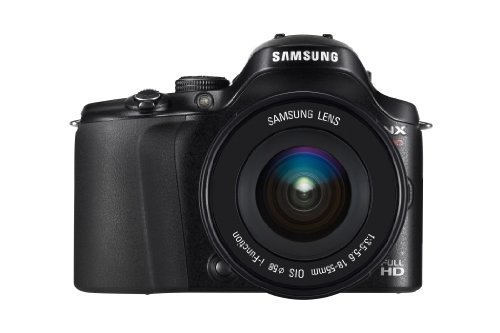
Samsung NX30 review. Compare 108 technical specifications and user reviews to see how it ranks among cameras and if it is worth buying.
Overall score
What it is: An overall evaluation of the camera's quality, based on technical analyses and user reviews.
When it matters: When you need a quick reference to identify the best cameras on the market.
Score components:
90.0%
Technical Score
10.0%
User score
Technical Score
What it is: An assessment of the camera's technical performance, covering eight key areas: image quality, autofocus, video features, stabilization, lens compatibility, connectivity, battery, and design.
When it matters: When you want to compare cameras based on technical performance and available features.
Score components:
28.0%
Sensor & Image
25.0%
Photo Features
18.0%
Video & Audio
14.0%
Display & Design
8.0%
Battery & Power
7.0%
Connectivity & Storage
User score
What it is: A rating that combines user reviews and the total number of reviews received by the camera.
When it matters: When real-world owner satisfaction and review volume matter to your decision.
Score components:
70.0%
User reviews
30.0%
Popularity
Score components:
25.0%
Sensor size
20.0%
Main camera megapixels
20.0%
Dual card slots
15.0%
N. of focus points
10.0%
RAW photo capture
10.0%
Phase-detection autofocus (photos)
Score components:
35.0%
Weight
30.0%
Battery life (CIPA)
20.0%
Sensor-shift stabilization
15.0%
GPS
Score components:
30.0%
Price
20.0%
Weight
20.0%
AF tracking
20.0%
Battery life (CIPA)
10.0%
Touchscreen
Score components:
30.0%
Main camera megapixels
25.0%
Sensor size
20.0%
Main camera pixel size
15.0%
Sensor-shift stabilization
10.0%
RAW photo capture
Score components:
30.0%
Weight
25.0%
Thickness
20.0%
AF low-light sensitivity
15.0%
Sensor-shift stabilization
10.0%
Eye detection AF (human)
Score components:
30.0%
Sensor size
25.0%
Main camera pixel size
20.0%
Eye detection AF (human)
15.0%
Main camera megapixels
10.0%
Sensor-shift stabilization
Score components:
30.0%
Weight
25.0%
Battery life (CIPA)
20.0%
Min operating temperature
15.0%
Sensor-shift stabilization
10.0%
GPS
Available: ranking among products currently available (including other versions of this product).
All: ranking among all products in the database.
#2 in Best Samsung Cameras
#4 in Best Cameras under £500
#12 in Best Cameras under £200
#23 in Best Cameras for Beginners
#35 in Best Cameras under £300
#41 in Best Vlogging Cameras
#47 in Best Low Light Cameras
#70 in Best Mirrorless Cameras
#87 in Best Cameras
What it is: An assessment of the camera's technical performance, covering eight key areas: image quality, autofocus, video features, stabilization, lens compatibility, connectivity, battery, and design.
When it matters: When you want to compare cameras based on technical performance and available features.
Score components:
28.0%
Sensor & Image
25.0%
Photo Features
18.0%
Video & Audio
14.0%
Display & Design
8.0%
Battery & Power
7.0%
Connectivity & Storage
What it is: A rating that combines user reviews and the total number of reviews received by the camera.
When it matters: When real-world owner satisfaction and review volume matter to your decision.
Score components:
70.0%
User reviews
30.0%
Popularity
What it is: An indicator that combines the camera's overall rating with its cost.
When it matters: When you want to know how much overall quality you get for the price.
Score components:
60.0%
Overall score
40.0%
Price
Importance: HIGH
Good value: Full frame or larger
Importance: HIGH
Good value: At least 20 MP
Importance: HIGH
Good value: At least 3.5 µm
Importance: LOW
Importance: MEDIUM
Good value: At least ISO 25,600
Importance: MEDIUM
Importance: MEDIUM
Good value: At least 14-bit
Importance: LOW
Importance: LOW
Importance: LOW
Importance: LOW
Importance: LOW
Importance: LOW
Importance: LOW
Importance: LOW
Importance: MEDIUM
Importance: LOW
Importance: LOW
Importance: LOW
Importance: LOW
Importance: LOW
Importance: HIGH
Good value: At least 200 points
Importance: HIGH
Importance: MEDIUM
Importance: LOW
Importance: LOW
Importance: MEDIUM
Importance: MEDIUM
Importance: HIGH
Good value: At least 5 stops
Importance: LOW
Importance: MEDIUM
Good value: At least 10 fps
Importance: LOW
Importance: LOW
Importance: LOW
Importance: LOW
Importance: LOW
Importance: LOW
Importance: LOW
Importance: LOW
Importance: LOW
Importance: LOW
Importance: LOW
Importance: LOW
Importance: LOW
Importance: LOW
Importance: LOW
Importance: LOW
Good value: At least 200,000 actuations
Importance: LOW
Good value: At least 10x
Importance: HIGH
Good value: At least 3840 px
Importance: MEDIUM
Good value: At least 200 Mbps
Importance: MEDIUM
Good value: At least 10-bit
Importance: LOW
Importance: LOW
Importance: LOW
Importance: LOW
Importance: LOW
Importance: LOW
Importance: LOW
Good value: At least 30 min
Importance: LOW
Importance: LOW
Importance: LOW
Importance: LOW
Importance: LOW
Good value: At least 2 microphones
Importance: LOW
Importance: LOW
Importance: LOW
Importance: LOW
Importance: MEDIUM
Good value: 500 g or less
Importance: LOW
Importance: LOW
Importance: LOW
Importance: MEDIUM
Importance: MEDIUM
Good value: At least 2.36 million dots
Importance: LOW
Good value: 100%
Importance: LOW
Importance: LOW
Good value: At least 120 Hz
Importance: MEDIUM
Good value: At least 3 in
Importance: LOW
Importance: LOW
Importance: LOW
Importance: LOW
Importance: LOW
Importance: LOW
Importance: LOW
Good value: At least 10 m
Importance: LOW
Importance: LOW
Importance: LOW
Importance: LOW
Importance: MEDIUM
Good value: At least 400 shots
Importance: LOW
Good value: At least 1,500 mAh
Importance: LOW
Importance: LOW
Importance: LOW
Importance: LOW
Importance: LOW
Importance: LOW
Importance: LOW
Importance: LOW
Importance: LOW
Importance: LOW
Importance: LOW
Importance: LOW
Importance: LOW
Importance: LOW
Importance: LOW
Importance: LOW
Importance: LOW
Importance: LOW
Importance: HIGH
Good value: At least 200 points
Importance: HIGH
Importance: MEDIUM
Good value: At least ISO 25,600
Importance: MEDIUM
Importance: LOW
Importance: LOW
Importance: LOW
Importance: LOW
Importance: MEDIUM
Importance: MEDIUM
Good value: At least 14-bit
Importance: MEDIUM
Good value: At least 200 Mbps
Importance: LOW
Importance: LOW
The DPReview evaluation of the Samsung NX30 highlights an enthusiast-oriented, SLR-style mirrorless camera featuring a 20.3-megapixel APS-C CMOS sensor that delivers good image quality and sharp details, alongside a unique pull-out, tilting electronic viewfinder (EVF) and a bright, articulating 3-inch Super AMOLED touchscreen. The camera is praised for its snappy hybrid autofocus, fast 9 fps continuous shooting, and robust, market-leading Wi-Fi and NFC connectivity, though it is limited by significant LCD and EVF display lag in low-light environments and a maximum ISO of 3200 for Auto ISO. Additional drawbacks identified in the review include mediocre tactile quality on the rear control dial, occasional over-processing in JPEG images, and noticeable moiré and compression artifacts in video mode.
The Samsung NX30 is a high-end mirrorless camera offering a DSLR-like design, a 20MP APS-C sensor, and an articulated EVF, with praised features including an 8.6fps burst rate and excellent high ISO performance. It boasts advanced connectivity, including Wi-Fi/NFC, and a sharp, vari-angle OLED touchscreen for flexible shooting. However, the review notes drawbacks such as a limited burst buffer, a bulky form factor compared to competitors, and the lack of an external battery charger. Additionally, availability is limited due to a lack of body-only purchasing options.
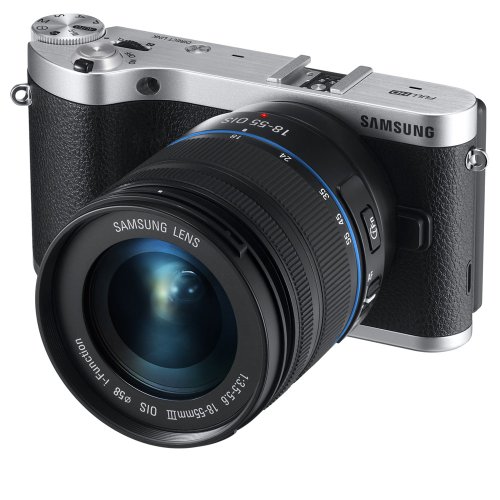
The Samsung NX30 is an APS-C mirrorless camera that offers comfortable, DSLR-style handling with a deep grip, twin control dials, and a lightweight 375g body. It features a highly responsive, 3-inch fully articulating Super AMOLED touchscreen and a unique pull-out electronic viewfinder (EVF) that tilts up to 80 degrees. Performance is driven by a 20.3-megapixel sensor, a Hybrid AF system, and wireless features like NFC and Wi-Fi that enable quick mobile pairing and direct Dropbox uploads. Additionally, the package includes a copy of Adobe Photoshop Lightroom 5. While the camera excels with its beautiful display, fast autofocus, and useful iFn lens button, it suffers from several notable drawbacks. Image details become heavily smudged in JPEG format from ISO 3,200 onwards due to aggressive noise reduction, though shooting in RAW mitigates this up to ISO 6,400. The EVF exhibits noticeable lag and feels relatively small under low-light conditions. Finally, the camera lacks an external battery charger, requiring in-camera charging, and faces tough market competition due to its high S$1,369 price point relative to rivals like the Sony Alpha 6000.
The Samsung NX30 features a 20.3-Mpix APS-C CMOS sensor paired with a hybrid autofocus system, achieving a DxOMark score of 76. Key advantages include its flexible, pull-out and tiltable 2.36-M dot EVF, a highly bright 3.0-inch AMOLED tilt touchscreen, and robust wireless options via Wi-Fi and NFC. Video capabilities are highly competent, boasting Full HD recording at up to 60fps, a dedicated microphone socket with manual audio levels, and an uncompressed HDMI output. Its metal alloy construction is surprisingly compact and lightweight, and it delivers solid continuous burst shooting at 9 frames per second. Despite being a well-rounded option, the NX30 falls short in low-light and overall sensor performance when stacked against its closest competitors. It sits behind cheaper APS-C options like the Sony A6000 and Nikon D5300, which offer superior image quality. Furthermore, its larger sensor yields only a marginal, modest performance improvement (roughly a 1/3-stop gain) over smaller Micro Four Thirds options like the Panasonic Lumix GX7 and Olympus PEN E-P5. For videographers, the distinct omission of a headphone socket is an additional usability drawback for real-time audio...
The Samsung NX30 is a mirrorless, DSLR-style camera that offers excellent ergonomics, a lightweight body, and an intuitive physical control layout featuring a comfortable rubberised grip. It stands out for its highly functional fully articulating touchscreen, which simplifies menu navigation, and its exceptionally fast and accurate autofocus system. Additional strengths include extensive wireless connectivity options like Wi-Fi and NFC, an impressive battery life, and high-quality image performance when shooting in optimal lighting conditions between ISO 100 and 800. However, the camera falls short for advanced and professional users due to significant limitations in its sensor performance and user interface. Image quality and dynamic range plummet dramatically once sensitivity hits ISO 1600, resulting in heavy noise and unrecoverable highlights or shadows. Furthermore, the user experience is hampered by a slow startup time, a puzzling menu system, a frustrating folder-based playback mode, and an irritating telescoping electronic viewfinder that experiences a jarring auto-focus delay when looking through it.
The Samsung NX30 mirrorless camera review by Chester Tan highlights it as a significantly upgraded, pro-grade choice designed for old-school photographers who appreciate robust manual control. Built around a 20.3MP APS-C CMOS sensor and a fast Hybrid AF system, the camera delivers great image tonality and details at low ISO settings, bundled with Adobe Lightroom 5 to enhance processing. Its physical design borrows heavily from DSLRs, featuring an exceptionally generous hand grip that balances heavy lenses comfortably, a responsive touch screen, and a unique tiltable electronic viewfinder (EVF). The camera heavily excels in its ecosystem-leading "Smart Camera" Wi-Fi and NFC features, allowing for seamless sharing options like Photo Beam, AutoShare, and a Remote Viewfinder Pro app that lets users fully control PASM modes and parameters from a smart device. However, the review details a few notable hardware limitations and user experience drawbacks. The high ISO performance, while improved over previous models due to aggressive noise reduction, causes a loss in fine image details and remains inferior to premium DSLRs. Performance issues include a freezing "Processing" screen when the image buffer...
Samsung NX30 The Samsung NX30 is a mirrorless midrange camera featuring a 20.3-megapixel APS-C sensor, a hybrid autofocus system combining phase and contrast detection, and advanced social media connectivity features like built-in Wi-Fi and NFC. Designed similarly to an SLR but significantly lighter, it features a unique tiltable electronic viewfinder (EVF) that can pull upward by up to 90 degrees, alongside a folding and rotating 3-inch AMOLED touchscreen. The camera delivers an impressive continuous shooting speed of 8.4 frames per second in JPEG mode and boasts a dynamic range of 10.9 stops. Additionally, it offers excellent color reproduction in daylight and comes bundled with Adobe Photoshop Lightroom 5 for high-quality RAW processing. Pros and Cons The review highlights several distinct strengths and weaknesses of the camera: Pros: Ergonomics & Display: Features a comfortable grip, a fully articulating touchscreen, and a uniquely hinged EVF ideal for macro photography. Image Quality: Delivers clean, detailed photos with minimal noise at lower sensitivities below ISO 3200. Value-Added Software: Includes a full, free retail version of Lightroom. Cons: Viewfinder Performance: The EVF suffers from slow...
The Expert Reviews evaluation positions the Samsung NX30 as a highly capable flagship mirrorless camera that blends Compact System Camera (CSC) technology with traditional SLR-inspired design. It is praised for its exceptional, class-leading ergonomics, boasting a deeply contoured handgrip and thumb rest that provide a remarkably snug fit. Standout physical features include a pin-sharp, pull-out tilting electronic viewfinder (EVF) and a highly responsive 3-inch touchscreen that facilitates easy focus tracking. On the performance side, the camera achieves rapid burst shooting speeds of up to 8.4fps, seamlessly pairs with Android devices through elegantly implemented Wi-Fi and NFC connectivity, and delivers rich, punchy photo quality with sharp fine details from its 20-megapixel APS-C sensor and excellent 18-55mm kit lens. However, the review highlights several critical shortcomings that prevent the NX30 from being a runaway success. The camera struggles significantly with continuous autofocus, which drops performance to a slow 1.9fps, and its high-ISO output exhibits more noticeable image noise at higher sensitivities than its direct Sony and Fujifilm competitors. Video capture is limited by compression artifacts on complex textures, distracting digital noise reduction...
The Samsung NX30 is evaluated as a capable, enthusiast-level compact system camera (CSC) featuring DSLR-like handling, a superior Super AMOLED screen, and robust Wi-Fi/NFC connectivity. Key strengths include a unique, upward-tilting electronic viewfinder and an improved handgrip that offers secure handling. Conversely, the review identifies the somewhat plasticky build quality and slight processing speed issues as primary drawbacks, preventing it from reaching top-tier premium status. While offering good dynamic range, the 20.1-megapixel sensor suffers from heavy noise reduction at ISO 1600 and above, which affects fine detail.
Samsung NX30 Review Summary Key Pros & Cons Pros: Highly intuitive overall operation, excellent out-of-camera image quality with great detail, and a highly versatile tilting and swivelling AMOLED screen paired with a unique tiltable eye-level viewfinder. Cons: A high launch price tag (£899), an inconveniently placed SD card and battery compartment at the base of the handgrip that gets blocked when mounted on a tripod, and the lack of a standalone battery charger since the camera relies solely on in-camera USB charging.
The Samsung NX30 is a lightweight, 20.3-megapixel Compact System Camera (CSC) designed to deliver DSLR-quality images and interchangeable lens versatility in a more portable package. Tested during a hiking holiday in Yellowstone National Park, the camera excelled with its user-friendly "Smart" shooting modes, such as Panorama and a multi-shot "Best Face" feature. Its standout physical features include a highly flexible, flippable touchscreen display that supports touch-to-focus and selfies, alongside an angle-adjustable electronic viewfinder. Additionally, it offers seamless modern connectivity through built-in Wi-Fi, automatic Dropbox uploading, and NFC capabilities. However, the reviewer noted several drawbacks, including a premium retail price of £899.99 and a body that is bulkier than rival mirrorless cameras, making it conspicuous during casual use. For capturing distant wildlife, the bundled 18-55mm kit lens lacked sufficient reach, though the high sensor resolution allowed for clean cropping. Minor design flaws were also highlighted: the electronic viewfinder requires users to remove eyeglasses to activate, the "Rich Tones" color profile occasionally created unrealistic orange tints indoors, and an awkwardly placed video record button introduced camera shake at the end of Full...
summary of pros and cons is quite distinct. The pros include its fast autofocus, a dedicated burst mode shooting dial for capturing action sequences, and the lightweight yet high-quality build of the body. The primary con mentioned is the high price point of approximately $1,100, which the reviewer suggests is best mitigated by finding a bundle deal that includes multiple lenses to truly realise the camera's value. Additionally, for those uninterested in technical specifications, the camera’s complexity compared to a smartphone might be a hurdle, though its ease of sharing helps bridge that gap. Are you looking for a current camera recommendation, or
However, the reviewer details notable drawbacks that led to their decision not to keep the camera. The 20-megapixel sensor delivers virtually identical image quality and high-ISO performance to previous models, making the advertised sensor upgrades negligible in practical use. A primary pain point is the power supply: the camera uses a new battery type incompatible with earlier models, excludes a dedicated external battery charger, and relies solely on in-camera USB charging. Additionally, the software contains several bugs, such as random autofocus lock-ups requiring a system restart. Furthermore, overly restrictive firmware configurations frustrate usability, including an artificial four-minute limit on Bulb mode with un-switchable noise reduction, an Auto ISO range that caps out at 3200, and the inability to transfer RAW files directly over WiFi without a tedious workaround.
The Samsung NX30 is a mirrorless system camera featuring a 20-megapixel APS-C CMOS sensor and a DRIM-IV image processor that delivers very good overall performance. In terms of image quality, the camera produces highly detailed images with low image noise, showing excellent clarity up to ISO 1,600 before texturing noticeably drops off around ISO 6,400. Operationally, the NX30 stands out for its high-speed performance, yielding a fast autofocus lock of 0.22 seconds, a brief 0.02-second shutter lag, and a rapid burst mode capable of capturing up to 8.8 frames per second for 27 consecutive JPEGs. Additionally, its physical construction provides great handling alongside strong hardware features, including a flexible, tiltable electronic viewfinder with 2.36 million subpixels, and a fully articulating 3.0-inch touchscreen display. Video quality is also highly rated, offering Full HD 1080p recording at up to 60 frames per second with mic-level adjustment options and an external 3.5mm microphone jack. Despite these strengths, the camera exhibits notable bottlenecks during continuous shooting. When switching to RAW or combined JPEG+RAW formats, the internal buffer fills rapidly, dropping the burst rate to...
The Digitalkamera.de review of the Samsung NX30 highlights a refined DSLR-style body boasting excellent ergonomics, a tilting electronic viewfinder, and a fully articulating Super AMOLED touchscreen. Key performance strengths include a fast hybrid autofocus system, 8.8 fps continuous shooting, and high-quality image output from the 20.3-megapixel APS-C sensor. Conversely, the review notes functional design flaws, including a bottom-mounted memory card slot and a mode dial prone to accidental adjustments. Additionally, the camera displays noticeable low-light lag on screen and aggressive JPEG noise reduction at high ISO levels.
The Samsung NX30 mirrorless system camera earns strong marks for its impressive 20-megapixel APS-C sensor, delivering excellent image sharpness, minimal noise up to ISO 3,200, and great detail retention that rivals higher-end models. Its standout physical attribute is a highly innovative, 90-degree tilting electronic viewfinder with 2.4 million pixels, allowing photographers to comfortably shoot low-to-the-ground angles. Additionally, the camera boasts a sharp, fully-articulating 3-inch touchscreen, solid 1080p video recording at 50fps, a rapid 8 frames-per-second continuous burst mode, and seamless wireless connectivity via Wi-Fi and NFC. As an added value bonus, Samsung generously packs a full retail copy of Adobe Lightroom 5 right inside the box. Despite these advantages, the review points out clear limitations that prevent it from being a perfect all-rounder. The primary flaw is its slow autofocus in low-light environments, which compromises the camera's ability to capture spontaneous snapshots when the sun goes down. While the burst mode is initially fast, the internal buffer fills up almost instantly after just one second when shooting raw files. Testers also noticed that the displays are prone to visible stuttering...
The Samsung NX30 is a mirrorless system camera styled like a traditional SLR that blends strong image quality with an extensive array of connectivity features. Equipped with a 20-megapixel APS-C sensor, the camera delivers sharp, high-contrast images and an impressive dynamic range of 11.7 stops at ISO 100, remaining usable even up to ISO 1600 despite some detail loss from noise reduction. Key physical advantages include an innovative electronic viewfinder that can be pulled out and tilted upward by 80 degrees, a very bright 3-inch articulating AMOLED touchscreen, and an ergonomic grip with dedicated physical dials that make handling exceptionally intuitive. Additionally, it supports smooth Full HD video recording at 60fps with optical and digital image stabilisation, alongside robust wireless features like Wi-Fi, NFC, and automatic photo transferring to smart devices. However, the review highlights several distinct drawbacks, most notably the camera's hybrid autofocus system, which drops significantly in speed and performance under low-light conditions. The automated eye sensor, meant to toggle seamlessly between the screen and the viewfinder, also proved sluggish or entirely unresponsive in bright ambient light. Performance-wise,...
The Heise review positions the Samsung NX30 as a mid-range, mirrorless competitor to DSLRs, highlighting its improved ergonomics with a deeper, comfortable handgrip. Key pros include a versatile, telescoping electronic viewfinder (EVF) that tilts up to 80 degrees and a highly responsive 3-inch Super AMOLED touchscreen. Additionally, the camera features a fast hybrid autofocus system and supports high-speed 9 frames-per-second continuous shooting. Conversely, the review notes significant cons, starting with a plasticky, less-than-premium body material, contrary to its, and a large design that sacrifices the compact nature of mirrorless systems. While the 20.3-megapixel APS-C sensor provides good image quality at low ISOs, performance drops with visible noise and reduced detail in shadows at ISO 1600 or higher. Furthermore, the system experiences slow data processing, causing lags when writing files during high-speed bursts. YouTube ·Tony &
The review of the Samsung NX30 by Warumduscher focuses heavily on its real-world performance during night photography in Cologne, Germany. The reviewer heavily praises the 20.3-megapixel APS-C CMOS sensor for its excellent dynamic range and low-light power, especially when shooting in RAW format, which provided noticeable gains in sharpness and detail retention compared to JPEG. Key strengths highlighted include its lightweight and highly compact body compared to bulky full-frame DSLRs, a highly responsive and brilliant AMOLED monitor that allows for seamless image checking on-site, and the ability to be recharged via a portable power bank during active shoots. Conversely, the review identifies a few practical setbacks, particularly when using the camera alongside minimalist travel accessories. The reviewer noted that capturing perfectly aligned night shots proved difficult because their Gorillapod tripod was hard to securely lock down, causing multiple original images to turn out crooked. Additionally, the overall process of experimenting with advanced features like exposure bracketing for HDR imagery proved to be quite complex and required a steep learning curve to adequately adjust values in the camera menus. Despite these...
This 2014 review evaluates eight compact cameras, highlighting the Sony Cybershot DSC-RX100 II as the standout performer. Key pros across the top-tier models include excellent image quality at low ISO settings, robust build quality, and integrated electronic viewfinders on models like the Nikon Coolpix P7800 and Olympus Stylus 1. The Sony RX100 II is specifically praised for its large 1-inch sensor, class-leading detail reproduction, WiFi connectivity, and a tilting display. Other highly rated options, such as the Panasonic Lumix LF1 and Canon Powershot G16, are commended for traditional handling, strong ergonomics, and pocket-friendly dimensions that justify the continued relevance of the compact camera class. Conversely, the review notes several significant drawbacks, most notably sluggish autofocus performance and a sharp drop in image quality at higher sensitivities. Superzoom models like the Panasonic Lumix TZ61 and Sony Cybershot HX60V suffer from slow telephoto autofocus, visible color fringing, and corner softness. Furthermore, many of the tested cameras are held back by limited wide-angle capabilities starting at 28mm rather than a more versatile 24mm, as seen with the Canon G16 and Olympus Stylus 1....
The review on Testgiraffe.de presents an initial product overview and hands-on preview of the Samsung Smart Camera NX30, which launched as an expandable mirrorless camera system available as a standalone body or a full kit with an 18-55mm lens. A major highlight of the review is the camera's built-in Wi-Fi and NFC connectivity, which allows photographers to instantly post, save, and share their photos directly to social networks like Facebook, YouTube, and Flickr. The reviewer notes that this is a significant advantage in the modern social digital era and expresses excitement about testing its real-world performance over a multi-week trial period. Several key hardware specifications and "pros" are highlighted, including a 20.3-megapixel APS-C CMOS sensor for clean low-light performance, a fast hybrid autofocus system, and a rapid continuous shooting speed of 9 frames per second. Additional advantages feature an extremely fast 1/8,000-second shutter speed, 1080/60p Full HD video capabilities, and a highly versatile tilting electronic viewfinder combined with a fully articulating Super AMOLED touchscreen display. While the article focuses heavily on promotional features and specifications, the pricing of €691.77 (recorded...
This 2014 digital camera review from the Austrian consumer organisation Konsument evaluates 120 models—divided into compact and top-tier cameras (DSLRs, mirrorless system cameras, and premium bridge models)—to help consumers find a high-quality alternative to smartphone photography. The guide underscores that overall image quality relies heavily on lens quality and processing software rather than just high megapixel counts, advising buyers to pay closer attention to larger sensor surfaces, such as APS-C and full-frame, which produce less noise in dim lighting. It also highlights modern camera features, pointing out that built-in Wi-Fi and NFC have significantly improved device networking and smartphone remote control, while built-in video modes have largely made traditional camcorders obsolete. The review outlines specific pros and cons across individual models and broader categories to guide the purchase decision. For advantages, premium compacts like the Sony DSC-RX 100 III and Canon PowerShot G16 offer exceptional image quality and fast performance in pocket-sized forms, while high-end DSLRs like the Nikon DF receive top marks for daylight shooting and optical viewfinders. Conversely, notable drawbacks include the poor video capabilities of the Fuji...
Samsung NX30 Review Summary The Samsung NX30 is a mirrorless camera featuring a 20.3-megapixel APS-C CMOS sensor paired with a DRIME IV processor, which expands its sensitivity range up to ISO 25,600. It stands out for its deep, redesigned handgrip that significantly improves handling compared to its predecessor, alongside an articulated 3-inch AMOLED touchscreen. A key highlight is its unique electronic viewfinder (EVF) that can tilt vertically for flexible shooting angles. While the camera offers brisk day-to-day operation—booting up in under a second and providing a burst rate of 8 frames per second in JPEG—its overall performance score is heavily penalised by a severely underpowered buffer. The camera earns high praise for its excellent image quality up to ISO 1600, silent operation, and the highly intuitive iFn button built into its lenses. The 18-55mm kit lens delivers sharp details with minimal chromatic aberration. However, the review highlights several critical flaws, most notably the excruciatingly slow buffer write times that can leave the camera unavailable for up to two minutes after shooting a burst. Additionally, the autofocus system tends to hunt...
The Samsung NX30 is a well-built mirrorless camera that offers a lightweight body (375g bare) combined with an excellent, deep DSLR-style grip that appeals to serious photographers. Its standout features include a sharp 20.3 Mpx APS-C sensor, a highly flexible fully-articulating screen, and a unique tiltable electronic viewfinder (EVF) that allows for comfortable shooting angles. On the performance side, the review praises the pleasant color rendering in daylight, an impressive 9 frames-per-second burst mode, a useful 3.5mm microphone jack for video recording, and a substantial lens ecosystem. Additionally, the inclusion of a full version of Adobe Lightroom 5 in the box adds significant value for shooting in RAW. However, the review highlights significant ergonomic issues, specifically noting that the small, deeply recessed buttons—particularly for video recording—are difficult to operate. Performance in low light is a major drawback, with noticeable digital noise appearing at ISO 1600, which is inferior to competing models. Finally, while the buffer issues of previous models are resolved, the hybrid autofocus system struggles in low-light conditions compared to its daytime performance. YouTube ·Tony &
In this long-term review of the Samsung NX30, the author highlights the mirrorless camera as a highly versatile, everyday companion that effectively replicates the physical feel and operation of a traditional DSLR in a much lighter package. The camera's dual-command dials (thumb and index) make full manual operation incredibly intuitive, and its mode dial stands out with highly customizable "C1" and "C2" user-preference profiles. While the reviewer admits that the raw image rendering falls slightly behind competitors like Fujifilm, utilizing high-quality glass like the 30mm f/2.0 or 80mm f/1.4 lens completely transforms the device into a powerful tool capable of delivering professional shooting results. The primary pros of the camera revolve around its physical handling and smart capabilities, including an exceptionally practical swivel touchscreen, built-in electronic leveling, and seamless Wi-Fi and NFC connectivity that allows for instant JPEG transfers directly to a smartphone. On the downside, the review notes that the camera is a step down in baseline photo rendering compared to rivals when using the standard kit lens, and RAW file transfers are entirely unsupported over Wi-Fi. Additionally, video...
The Samsung Smart Camera NX30 is a high-end hybrid camera designed for photography enthusiasts who want to transition to serious digital photography without the budget or technical complexity of a traditional SLR. It features a 20.3-megapixel sensor, an adjustable electronic viewfinder, and a highly flexible tilting rear screen that provides excellent maneuverability. A standout feature is the unique "iFn" (iFunction) button on the lenses, which allows beginners to adjust settings like ISO, aperture, and shutter speed while previewing the changes live on the screen. The camera also comes equipped with built-in Wi-Fi for easy photo sharing on the go, a remarkably quiet shutter, an impressive battery life, and a free bundle of Adobe Lightroom 5 software. Despite its strong performance, the review highlights a few areas that could be improved. The author experienced a noticeable shutter lag, which was especially obvious when comparing the camera's speed to a standard SLR. Additionally, the physical control buttons on the body are described as being too small for comfortable use. Finally, the camera feels a bit heavy to carry around, and the reviewer...
The Samsung NX30 mirrorless camera features a 20 MP APS-C CMOS sensor and the DRIMe IV image processor, delivering impressive, highly detailed image quality and vibrant colors. Key design strengths highlighted in the review include an irproachable build quality, comfortable overall ergonomics, an all-direction orientable touchscreen, and a unique upward-tilting electronic viewfinder. Photographers will also benefit from highly reactive initial startup times, sharp Full HD video recording at 24 frames per second with clear stereo sound, and built-in modern connectivity features like Wi-Fi and NFC. However, the review points out several notable weaknesses, particularly concerning the camera's buffering performance. There is a disappointing delay when taking consecutive photos, forcing the user to wait up to several minutes for shots to display on screen. Furthermore, switching between the electronic viewfinder and the screen feels sluggish, and the autofocus tends to hunt or lose tracking in low-light environments or during video capture. The camera also lacks a dedicated headphone jack, suffers from noticeable image smoothing above 800 ISO, and lacks built-in body image stabilization, meaning it relies entirely on compatible stabilized lenses.
The Samsung NX30 (tested with the 18-55mm III OIS kit lens) is a high-end hybrid mirrorless camera featuring a 20-megapixel sensor and manual shooting modes (PASM). The expert review highlights several prominent advantages, including its fast responsiveness, high image quality even in low-light environments, and good video quality under well-lit conditions. Users will benefit from highly functional hardware components like a quality tilting electronic viewfinder, a swivelling touchscreen display, a hot shoe for external flash units, and built-in Wi-Fi and NFC connectivity. Additionally, the kit lens includes a configurable control ring to easily adjust shooting parameters on the fly. However, the camera does have notable drawbacks regarding its multimedia performance. The tester explicitly regrets its poor video quality when shooting in reduced lighting conditions, alongside an overall mediocre sound recording quality. Potential buyers should also note that this specific model is no longer actively sold on the market.
The Samsung NX30 is an enthusiast-focused mirrorless camera with an overall score of 60/100, featuring a 20.3-megapixel APS-C sensor and rapid 9 fps shooting. Strengths include a highly comfortable, versatile design with a fully articulating Super AMOLED touchscreen and a unique tilting electronic viewfinder. Conversely, the camera displays limited low-light image quality with aggressive noise reduction and noticeable display lag in dim environments. Additionally, its bulky, 375-gram DSLR-style form factor makes it less compact than many competitors.
The Samsung NX30 is a highly capable, DSLR-styled mirrorless hybrid camera that balances modern smart features with dedicated manual controls. It stands out for its unique, pull-out and tiltable electronic viewfinder (EVF) alongside a highly vibrant, fully articulating 3-inch Super AMOLED touchscreen that makes framing shots at difficult angles incredibly seamless. Equipped with a 20.3-megapixel APS-C CMOS sensor and a fast hybrid autofocus system, it captures punchy, high-resolution images and shoots continuous bursts up to 9 frames per second. Its exceptional, class-leading Wi-Fi and NFC smart connectivity suite enables seamless social sharing, instant phone photo syncing, and robust wireless remote control capabilities. YouTube ·B&H Photo Despite these advanced technical specifications, the camera suffers from several notable drawbacks. Reviewers frequently criticize its polycarbonate construction, noting that the exterior body feels overly plasticky and lacks the premium build quality expected in its price tier. Performance also drops considerably in low-light conditions, resulting in visible image noise in shadow regions, slow autofocus hesitation, and noticeable lag on both the EVF and the live view display. Additional grievances highlight a sluggish image processing speed...
However, the camera suffers from several noteworthy drawbacks. The primary complaint from Les Numériques focuses on a sluggish image processor buffer, creating excessively long wait times when saving continuous burst shots before the camera becomes responsive again. Its overall construction relies heavily on plastic, which can make a premium-priced camera feel slightly cheap and less durable than its metal-bodied competitors. Furthermore, the live view and EVF can suffer from noticeable lag when operating in low-light conditions, and image noise spikes noticeably once the sensitivity climbs to ISO 1600 or higher.
The Samsung Smart Camera NX30 is evaluated as a highly flexible semi-professional mirrorless camera that blends a DSLR-inspired form factor with advanced mirrorless capabilities. Built around a 20.3-megapixel APS-C CMOS sensor and the DRIMe IV image processor, the NX30 delivers excellent overall image quality, featuring clean, low-noise results at modest ISO levels, high detail retention, and a wide dynamic range,,,. A standout feature is its hybrid autofocus system (combining 105 phase-detect and 247 contrast-detect points), which provides exceptional speed and accuracy. Reviewers highly praise its physical ergonomics, highlighted by a deep, secure handgrip, an intuitive touchscreen Super AMOLED interface, robust Wi-Fi/NFC connectivity, and an innovative, high-quality electronic viewfinder (EVF) that is both extensible and tiltable,,,,. The camera also records video at 1080/60p and generously includes Adobe Photoshop Lightroom 5 in the box,. Despite these strengths, the review notes several compromises. Performance limitations include a tendency to slightly saturate high highlights in high-contrast settings, alongside considerable noise and potential green color shifts when shooting above ISO 6,400,,,. Physically, its bulkier design deviates from standard compact mirrorless models, which might alienate users...
The Samsung NX30 is a versatile, compact mirrorless camera styled like a traditional DSLR, providing a comfortable grip and an intuitive layout ideal for entry-level photographers. It features a 20.3-megapixel APS-C CMOS sensor, a 3.0-inch tilting touchscreen display, and a unique pull-out electronic viewfinder that assists when shooting at difficult angles. The reviewer found it capable enough to serve as a primary camera, noting its strong performance with external lighting gear in studio settings and the high value added by the inclusion of Adobe Lightroom 5 software. In terms of performance, the camera has clear strengths and limitations. The notable pros include its fast 9 frames-per-second burst rate, smooth smartphone-like touchscreen navigation, and excellent image quality at sensitivities up to ISO 3200. Conversely, the primary cons involve its autofocus capabilities; the camera struggles to lock focus quickly in low-light environments, and the overall focus speed may not satisfy dedicated sports photographers. Additionally, image quality noticeably degrades beyond ISO 3200, making the maximum ISO 25,600 setting usable only as a last resort, preferably when converted to black-and-white to mask the heavy...
Samsung NX30 Review Summary The Samsung NX30 is a mirrorless midrange camera featuring a 20-megapixel APS-C sensor, a hybrid autofocus system combining phase and contrast detection, and extensive social media connectivity tools like built-in Wi-Fi and NFC. Designed with an SLR-style lightweight plastic body and a comfortable handgrip, it stands out with a unique electronic viewfinder (EVF) that can be pulled out and tilted upward up to 90 degrees, alongside a fully articulating 3-inch AMOLED touchscreen,,. Performance-wise, it achieves a fast continuous shooting speed of 8.4 frames per second in JPEG and RAW, offers a total dynamic range of 10.9 stops, and provides highly neutral colour reproduction in daylight,,. Additionally, the camera includes a valuable free license for Adobe Photoshop Lightroom 5.6. The camera's main advantages include its practical, user-friendly handling, excellent image quality at lower ISO settings (under ISO 3200), and advanced wireless features like remote smartphone operation and a "Baby Monitor" mode,,. However, it has notable drawbacks: the EVF suffers from slow, jittery refresh rates, a post-shot blackout, and susceptibility to stray outdoor light that can cause it...
The Computer Idee review identifies the Samsung NX30 as a capable mirrorless camera featuring a 20.3-megapixel APS-C sensor, a unique tilting electronic viewfinder, and a high-contrast 3-inch AMOLED touchscreen. Key advantages include its ergonomic grip, fast 9 fps continuous shooting, and comprehensive Wi-Fi/NFC connectivity. Conversely, the review notes a heavily plasticky build quality and a bulkier, heavier form factor compared to rivals. Performance bottlenecks include occasional processing delays during high-speed shooting, less reliable autofocus during video, and noise in low-light conditions.
The provided URL links to a professional review of the Samsung NX30 mirrorless camera on Shoot.be. The camera is built around a 20-megapixel APS-C format image sensor, aligning its basic imaging capabilities with models like the Galaxy NX and NX300. A massive highlight of this model is its updated image processor, which vastly improves performance and allows the camera to achieve much higher shooting and processing speeds. In terms of specifics, the review outlines several clear advantages and drawbacks. On the pros side, the camera benefits from this upgraded processing engine, resulting in snappier performance, faster continuous burst shooting, and quicker overall handling. However, a notable con is that because it retains the same 20-megapixel APS-C sensor configuration found in previous generations, it does not offer a significant leap forward in raw image resolution or low-light pixel quality compared to its predecessors.
Compare