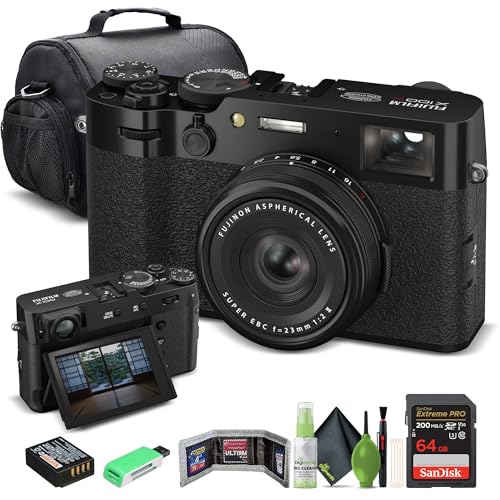
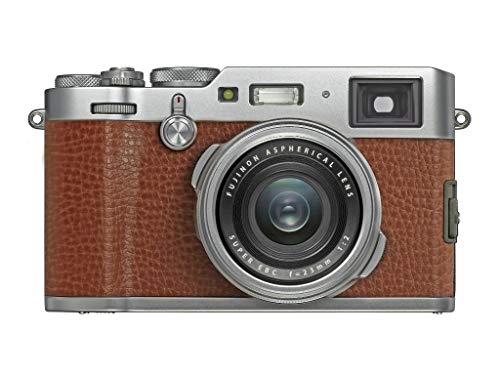
Fujifilm X100V review. Compare 108 technical specifications and user reviews to see how it ranks among cameras and if it is worth buying.
Overall score
What it is: An overall evaluation of the camera's quality, based on technical analyses and user reviews.
When it matters: When you need a quick reference to identify the best cameras on the market.
Score components:
90.0%
Technical Score
10.0%
User score
Technical Score
What it is: An assessment of the camera's technical performance, covering eight key areas: image quality, autofocus, video features, stabilization, lens compatibility, connectivity, battery, and design.
When it matters: When you want to compare cameras based on technical performance and available features.
Score components:
28.0%
Sensor & Image
25.0%
Photo Features
18.0%
Video & Audio
14.0%
Display & Design
8.0%
Battery & Power
7.0%
Connectivity & Storage
User score
What it is: A rating that combines user reviews and the total number of reviews received by the camera.
When it matters: When real-world owner satisfaction and review volume matter to your decision.
Score components:
70.0%
User reviews
30.0%
Popularity

(Reviews last updated: July 2026)
Score components:
25.0%
Sensor size
20.0%
Main camera megapixels
20.0%
Dual card slots
15.0%
N. of focus points
10.0%
RAW photo capture
10.0%
Phase-detection autofocus (photos)
Score components:
35.0%
Weight
30.0%
Battery life (CIPA)
20.0%
Sensor-shift stabilization
15.0%
GPS
Score components:
30.0%
Price
20.0%
Weight
20.0%
AF tracking
20.0%
Battery life (CIPA)
10.0%
Touchscreen
Score components:
30.0%
Main camera megapixels
25.0%
Sensor size
20.0%
Main camera pixel size
15.0%
Sensor-shift stabilization
10.0%
RAW photo capture
Score components:
30.0%
Weight
25.0%
Thickness
20.0%
AF low-light sensitivity
15.0%
Sensor-shift stabilization
10.0%
Eye detection AF (human)
Score components:
30.0%
Sensor size
25.0%
Main camera pixel size
20.0%
Eye detection AF (human)
15.0%
Main camera megapixels
10.0%
Sensor-shift stabilization
Score components:
30.0%
Weight
25.0%
Battery life (CIPA)
20.0%
Min operating temperature
15.0%
Sensor-shift stabilization
10.0%
GPS
Available: ranking among products currently available (including other versions of this product).
All: ranking among all products in the database.
#5 in Best Compact Cameras
#20 in Best Fujifilm Cameras
#103 in Best 4K Cameras
#103 in Best Cameras for Portraits
#104 in Best Cameras
#104 in Best Digital Cameras
#836 in Best Travel Cameras
#850 in Best Cameras for Hiking
What it is: An assessment of the camera's technical performance, covering eight key areas: image quality, autofocus, video features, stabilization, lens compatibility, connectivity, battery, and design.
When it matters: When you want to compare cameras based on technical performance and available features.
Score components:
28.0%
Sensor & Image
25.0%
Photo Features
18.0%
Video & Audio
14.0%
Display & Design
8.0%
Battery & Power
7.0%
Connectivity & Storage
What it is: A rating that combines user reviews and the total number of reviews received by the camera.
When it matters: When real-world owner satisfaction and review volume matter to your decision.
Score components:
70.0%
User reviews
30.0%
Popularity

(Reviews last updated: July 2026)
What it is: An indicator that combines the camera's overall rating with its cost.
When it matters: When you want to know how much overall quality you get for the price.
Score components:
60.0%
Overall score
40.0%
Price
Importance: HIGH
Good value: Full frame or larger
Importance: HIGH
Good value: At least 20 MP
Importance: HIGH
Good value: At least 3.5 µm
Importance: LOW
Importance: MEDIUM
Good value: At least ISO 25,600
Importance: MEDIUM
Importance: MEDIUM
Good value: At least 14-bit
Importance: LOW
Importance: LOW
Importance: LOW
Importance: LOW
Importance: LOW
Importance: LOW
Importance: LOW
Importance: LOW
Importance: MEDIUM
Importance: LOW
Importance: LOW
Importance: LOW
Importance: LOW
Importance: LOW
Importance: HIGH
Good value: At least 200 points
Importance: HIGH
Importance: MEDIUM
Importance: LOW
Importance: LOW
Importance: MEDIUM
Importance: MEDIUM
Importance: HIGH
Good value: At least 5 stops
Importance: LOW
Importance: MEDIUM
Good value: At least 10 fps
Importance: LOW
Importance: LOW
Importance: LOW
Importance: LOW
Importance: LOW
Importance: LOW
Importance: LOW
Importance: LOW
Importance: LOW
Importance: LOW
Importance: LOW
Importance: LOW
Importance: LOW
Importance: LOW
Importance: LOW
Importance: LOW
Good value: At least 200,000 actuations
Importance: LOW
Good value: At least 10x
Importance: HIGH
Good value: At least 3840 px
Importance: MEDIUM
Good value: At least 200 Mbps
Importance: MEDIUM
Good value: At least 10-bit
Importance: LOW
Importance: LOW
Importance: LOW
Importance: LOW
Importance: LOW
Importance: LOW
Importance: LOW
Good value: At least 30 min
Importance: LOW
Importance: LOW
Importance: LOW
Importance: LOW
Importance: LOW
Good value: At least 2 microphones
Importance: LOW
Importance: LOW
Importance: LOW
Importance: LOW
Importance: MEDIUM
Good value: 500 g or less
Importance: LOW
Importance: LOW
Importance: LOW
Importance: MEDIUM
Importance: MEDIUM
Good value: At least 2.36 million dots
Importance: LOW
Good value: 100%
Importance: LOW
Importance: LOW
Good value: At least 120 Hz
Importance: MEDIUM
Good value: At least 3 in
Importance: LOW
Importance: LOW
Importance: LOW
Importance: LOW
Importance: LOW
Importance: LOW
Importance: LOW
Good value: At least 10 m
Importance: LOW
Importance: LOW
Importance: LOW
Importance: LOW
Importance: MEDIUM
Good value: At least 400 shots
Importance: LOW
Good value: At least 1,500 mAh
Importance: LOW
Importance: LOW
Importance: LOW
Importance: LOW
Importance: LOW
Importance: LOW
Importance: LOW
Importance: LOW
Importance: LOW
Importance: LOW
Importance: LOW
Importance: LOW
Importance: LOW
Importance: LOW
Importance: LOW
Importance: LOW
Importance: LOW
Importance: LOW
Importance: HIGH
Good value: At least 200 points
Importance: MEDIUM
Importance: HIGH
Importance: MEDIUM
Good value: At least 200 Mbps
Importance: LOW
Importance: MEDIUM
Good value: At least 10 fps
Importance: HIGH
Good value: At least 20 MP
Importance: LOW
Importance: LOW
Importance: MEDIUM
Good value: 500 g or less
Importance: LOW
(Reviews last updated: July 2026)
The DPReview Fujifilm X100V review awards the camera an 87% Gold Award, highlighting its 26MP X-Trans APS-C sensor, improved 23mm F2 lens, and a tilting 1.62M-dot touchscreen. Key pros include the upgraded 3.69M-dot hybrid viewfinder, 4-stop ND filter, and improved 4K video functionality with Eterna film simulation. Conversely, the review notes cons including the lack of full weather-sealing without an optional adapter, the removal of the physical D-pad, and a 10-minute 4K recording limit. Additionally, the camera lacks internal image stabilization (IBIS) and the lens design can limit autofocus speed for tracking fast subjects.
The PCMag review highlights the Fujifilm X100V as a refined, premium compact camera featuring an upgraded 23mm f/2 lens, a 26.1MP APS-C sensor, and a versatile tilting touchscreen. It is praised for delivering exceptionally sharp images, fast 11fps shooting, and a unique hybrid viewfinder, making it a top choice for street and travel photographers. However, the camera lacks in-body image stabilization (IBIS), causing handheld video to be shaky, and it requires an optional adapter to achieve full weather sealing. Additionally, the review notes slower UHS-I card speeds and occasionally inconsistent autofocus tracking.
Fujifilm X100V Review Summary The Fujifilm X100V is a premium retro-styled compact mirrorless camera featuring a 26.1MP APS-C X-Trans BSI CMOS 4 sensor and an upgraded 23mm f/2 fixed lens, delivering a massive intergenerational jump in image quality and sharpness. Key advantages of this iteration include a significantly faster autofocus system, a multi-functional tilt-shift touchscreen LCD that sits perfectly flush with the body, and a highly improved hybrid optical/electronic viewfinder boasting crisp 3.69 MP resolution. Furthermore, it introduces a major leap forward in movie-making capabilities with extensive video menu options, a redesigned ergonomic grip that reduces accidental power adjustments, a modern USB-C port, and expanded film simulations like Classic Negative. Despite these heavy upgrades, the camera does carry a few notable limitations. The most critical drawbacks are the total lack of in-body image stabilization—which limits its performance for smoother handheld video work—and the restriction to only a single SD card slot, meaning users who require immediate backup redundancy will still need to look toward higher-tier models like the X-Pro3. Additionally, seasoned Fujifilm users may mourn the permanent removal of the...
Fujifilm X100V Review Summary The Fujifilm X100V updates the compact camera lineup by introducing a 26MP X-Trans CMOS 4 sensor and an X-Processor 4 chip, paired with a redesigned, fixed 23mm f/2 lens. This updated optical design significantly fixes a notable flaw of its predecessors by drastically improving close-focusing sharpness and clarity when shooting wide-open at f/2. The camera's exterior blends classic retro film-camera styling with a newly integrated, flush-sitting two-way tilting touchscreen LCD and an upgraded 3.69M-dot OLED electronic viewfinder. Furthermore, the autofocus system sees a major boost with 425 phase-detect points covering the array, providing faster acquisition in low-light conditions, while video features are expanded to include 4K recording up to 30fps. On the positive side, reviewers praise the X100V for its gorgeous physical styling, robust build quality, excellent overall image quality, and the addition of weather-sealing—though this requires purchasing an optional adapter ring and protective filter. The improved lens performance wide-open and faster low-light autofocus also serve as major highlights. However, the camera does have several drawbacks, most notably the frustrating removal of the physical 4-way directional...
The Fujifilm X100V is an exceptionally mature, professional-grade compact camera tailored for travel, documentary, and street photographers who value portability and discretion over a bulky interchangeable lens system. It upgrades the user experience with a sharp, newly redesigned 23mm f/2.0 fixed lens (35mm equivalent) paired with a high-resolution 26.1MP APS-C X-Trans 4 sensor. Significant physical upgrades include a seamless two-way articulating touchscreen that allows for creative shooting angles without adding extra bulk, an intuitive locking mechanism for the combined shutter speed/ISO dial, and a customisable Quick menu layout. Under the hood, the camera introduces a built-in 4-stop neutral density filter, an improved hybrid optical/electronic viewfinder, and 4K video capabilities at up to 30 fps, alongside an incredibly quiet leaf shutter that permits high-speed flash synchronisation. However, the reviewer points out several design compromises and physical shortcomings. A major caveat is that while the aluminum-and-metal body is weather-sealed, the built-in lens is not; achieving full weather resistance requires purchasing an optional AR-X100 adapter ring and a PRF-49 protection filter. Usability is slightly hindered by a hard-to-activate Q button, sub-optimal touchscreen gesture...
The Fujifilm X100V is a premium, compact, retro rangefinder-style mirrorless camera featuring a 26.1-megapixel APS-C X-Trans sensor and a built-in 23mm fixed prime lens (35mm equivalent). Designed with street, travel, and daily architecture photographers in mind, the fifth-generation camera stands out for its high-end image quality, brilliant ergonomics, and dial-controlled operation. Key strengths highlighted in the review include a newly developed lens that improves corner sharpness and reduces distortion, significantly faster autofocus, a thin two-way tilting touchscreen, and 4K video capabilities. Furthermore, its low-light performance is exceptionally strong, producing astoundingly clean and pleasing images even when pushed up to ISO 6400. Despite its high praise, the camera has notable limitations, primarily rooted in its intentional physical restraint. The camera body itself is newly weather-resistant, but the lens is not, meaning users must purchase an additional attachment to fully weather-seal the system. Because it features a fixed prime lens, it lacks any built-in zoom, forcing photographers who want alternate focal lengths to rely strictly on external 28mm or 50mm conversion attachments. Additionally, implementing performance-boosting settings—such as lengthening the sleep timer or...
The Fujifilm X100V mirrorless camera significantly improves upon its predecessors, most notably through a redesigned Mark II lens that delivers vastly superior contrast, sharpness, and reduced chromatic aberrations when shooting wide open at f/2. It eliminates the distracting ghosting and flares seen in previous models, making it excellent for clean night imagery. The updated leaf shutter increases the usable shutter speed to 1/2000 at f/2. Equipped with an upgraded X-Trans 4 sensor and full Phase Detection Autofocus (PDAF) coverage, the camera tracks moving subjects effectively and locks focus confidently in low-light environments, dramatically lowering the number of out-of-focus frames. Other highly praised design pros include a stronger 4-stop internal ND filter for long-exposure photography, a highly customizable Quick (Q) menu, a bright, tilting LCD screen that stays perfectly flush with the body profile, and robust weather-sealing once an adapter ring and filter are attached. Despite these notable strengths, the reviewer notes several design changes and missing features that could be improved. A major frustration is the omission of the physical four-way selector button layout, which disrupts muscle memory and forces...
Overview of the Fujifilm X100V The Fujifilm X100V is a highly capable and compact premium compact camera that excels as a versatile "jack of all trades" for travel, street, and landscape photography. Built with a solid, weather-sealed aluminum body, it features a fixed 23mm f/2 lens (equivalent to a 35mm full-frame field of view) and a back-illuminated 26.1-megapixel APS-C X-Trans CMOS 4 sensor. Its standout hardware features include a unique hybrid optical/electronic viewfinder (OVF/EVF), a handy 4-stop built-in ND filter, and a touch-enabled, tilting 3-inch LCD screen that makes shooting from creative angles effortless. While it commands a premium retail price of $1,400, its portable weight of 1.05 lbs and outstanding center sharpness—even wide open at f/2—make it a favorite for photographers seeking high performance in a small form factor. Pros and Cons Pros Superb Sharpness: Delivers razor-sharp images across the frame, dramatically improving upon the soft close-up performance of its predecessors. Hybrid Viewfinder: Features a unique, high-quality OVF/EVF combination that works incredibly well on bright trails or for tracking motion in street photography. Compact & Weatherproof: Weighs only 1.05...
The Fujifilm X100V is a highly sought-after, 26.1-megapixel APS-C sensor camera that generated massive social media hype, driving its second-hand market price up to $3,000 USD compared to its original $1,400 USD retail price. In terms of pros, the reviewer highlights its slick, compact aesthetic, highly straightforward analog-style physical dials, and an internal 4-stop ND filter ideal for daytime video. Additionally, its built-in customizable film simulations deliver excellent "as-shot" JPEG images for social media, while the capability to record simultaneous RAW files preserves future editing flexibility for growing photographers. However, the review outlines notable cons regarding its suitability for beginners, emphasizing that novice photographers will likely outgrow the fixed 35mm lens and be forced to purchase an entirely new camera body to try different focal lengths. While the fixed lens encourages disciplined composition by forcing users to "zoom with their feet," it severely limits long-term versatility. Ultimately, the reviewer advises beginners to bypass the internet hype and instead invest in interchangeable lens alternatives like the Fujifilm X-T4 or X-T5, which offer the same great film simulations but provide a better...
The Fujifilm X100V is highly praised as an exceptional everyday point-and-shoot camera that successfully bridges the gap between pocket-sized convenience and professional-tier performance. The reviewer, a cinematographer who values intuitive toolsets, highlights that the compact, vintage-inspired design effortlessly blends into casual settings without intimidating subjects, mimicking a quaint film camera. Key standalone features include an upgraded, sharp 23mm f/2 fixed lens that eliminates the soft, hazy edges found in prior models, a built-in 4-stop ND filter, a helpful tilting rear screen, and a unique rangefinder-esque hybrid optical/electronic viewfinder (OVF/EVF) providing a 150% view of the composition area. Additionally, its internal hardware mirrors the robust X-T4, delivering gorgeous 4K video capabilities and access to renowned film simulation recipes (such as Classic Negative) that can be adjusted post-shoot via an intuitive in-camera RAW editor. Despite its stellar daily performance, the review notes a few key drawbacks to consider before purchasing. On the physical side, the camera lacks In-Body Image Stabilization (IBIS) and its native lens barrel is not entirely weather-sealed unless you purchase an external filter adapter ring and filter attachment. The...
The Fujifilm X100V is highly praised as a premium, vintage-styled compact camera featuring an updated, sharp 23mm f/2 fixed prime lens, a 26-megapixel X-Trans sensor, a discrete leaf shutter, and a flush tilting screen. Its lightweight design makes it an excellent everyday travel companion that delivers high-quality out-of-camera JPEGs using signature Film Simulations like ACROS and Velvia. Furthermore, the f/2 aperture provides distinct advantages over small-sensor competitors by allowing pleasing background blur and shallow depth-of-field for portraits and close-up details. However, the camera has notable design and functional drawbacks, including an easily misaligned exposure compensation dial and an unreliable Android phone application that rapidly drains the modest battery life. Achieving full weather-sealing requires buying additional, bulky lens accessories rather than being supported natively out of the box. Additionally, the fixed 35mm-equivalent lens limits composition flexibility, as tightly cropped images lose quality quickly, and the panorama mode frequently produces highly variable results marred by banding artifacts.
The MPB review highlights the Fujifilm X100V as a refined, compact, and high-speed camera ideal for travel and street photography, featuring a 26.1-megapixel BSI sensor that produces excellent low-light, "filmic" image quality. Furthermore, it boasts improved 4K video capabilities and a liberating fixed-prime lens that encourages focusing on the moment. Key considerations include the lack of zoom versatility, which may not suit all photographers, and the necessity of purchasing an optional adapter ring and filter to ensure full weather sealing. Despite these limitations, the X100V is highly recommended for its sharp imaging and portability.
The Fujifilm X100V is highly praised by the reviewer as an exceptionally designed and versatile APS-C camera, highlighting it as one of the most appealing digital cameras ever made. The body introduces significant design improvements, featuring premium sandblasted and anodized aluminum plates, a newly redesigned stable battery door, and an innovative, completely flat tilt screen that deactivates the viewfinder's eye sensor when flipped out. Its standout hybrid viewfinder offers an upgraded 3.69-million-dot OLED EVF and an sharp OVF with flawless diopter correction. Performance-wise, the camera utilizes a highly capable sensor and processor shared with higher-end models, a super-fast and precise autofocus system, a 4-stop integrated ND filter, and weather sealing—though complete weather resistance strictly requires attaching an additional front lens filter. Despite its near-perfection, the reviewer notes several downsides, including an exposure compensation dial that turns too easily because it completely lacks a locking button. The OVF introduces a minor inconvenience with its parallax compensation frame lines, which remain locked to the last focal setting rather than defaulting to infinity. Additionally, the camera suffers from noticeable heat dissipation near the...
Ken Rockwell praises the Fujifilm X100V as a premium, all-metal camera with a sharp lens, hybrid viewfinder, and a quiet leaf shutter that allows for high-speed flash sync. It excels in people photography, delivering excellent auto-exposure and skin tones. However, the review notes significant downsides, including the removal of the rear four-way controller, forcing reliance on a less efficient touch screen, as well as a slow menu system and dull default colors. Due to these handling flaws, the review recommends the older X100F for better usability.
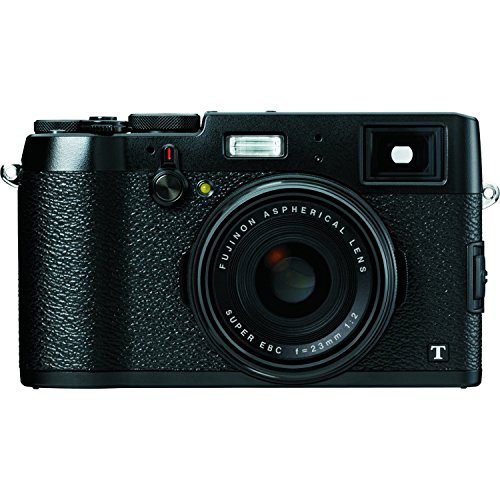
The Fujifilm X100V is a retro-styled, premium compact camera featuring an extra-large 26-megapixel APS-C sensor and a bright, fixed Fujinon 23mm f/2 lens (35mm equivalent). It shares its powerful image processor and autofocus system—boasting up to 425 phase-detection points—with Fujifilm's larger X-T3 and X-T4 system cameras. A major highlight is its unique hybrid viewfinder, allowing users to toggle between a large 3.69-million-subpixel electronic viewfinder and a Leica-style optical rangefinder layout. The camera emphasizes physical handling with dedicated top dials for shutter speed, ISO, and exposure compensation, alongside a physical aperture ring on the lens. While it supports 4K video recording at 30fps, its video capabilities are structurally limited by a strict 10-minute continuous recording cap. Pros and Cons Pro: Outstanding image quality with excellent low-light performance and dynamic range. Pro: Highly flexible dual optical and electronic hybrid viewfinder. Pro: Fast, reliable 425-point autofocus with quick joystick control. Pro: Compact, lightweight body built with an intuitive, analog-style interface. Con: Complete lack of an internal image stabilisation system. Con: No optical zoom, restricting users to conversion lenses for alternative focal lengths. Con:...
The Florian Renz Blog highlights the Fujifilm X100V as a beautiful, highly compact camera ideal for travel and landscape photography. Key advantages include its 26-megapixel APS-C sensor, an excellent fixed 23mm F2 lens, useful built-in ND filters, and popular film simulations like Classic Chrome. The review notes that its vintage aesthetics and physical control dials make it a joy to operate, while its weatherproofing allows it to withstand heavy storms and dusty festivals. Furthermore, its compatibility with conversion lenses and NiSi filters elevates its utility for professional travel projects. However, the reviewer discusses significant long-term drawbacks, most notably a severe overheating issue during normal photo use. In warm climates like India, the camera repeatedly displayed heat warnings and shut down, causing the photographer to miss key moments. Other complaints involve a cheap and fiddly battery door mechanism, slow and unreliable software connectivity with the Fujifilm mobile app, and a crowded rear interface following the removal of the D-pad. Lastly, the "focus by wire" electronic manual focus design lacks physical focus stops or distance markings, which makes street photography via zone...
The Fujifilm X100V is an advanced APS-C compact camera featuring a fixed 23mm f/2 lens (35mm equivalent) and a signature hybrid optical-electronic viewfinder. In terms of performance, it excels with a sharp 26-megapixel sensor, fast autofocus response speeds (0.16 seconds), and continuous shooting up to 11 fps with the mechanical shutter or 20 fps electronically. Key design upgrades include a 4.4 mm tilting touchscreen monitor with improved 1.62-million-dot resolution, an updated OLED electronic viewfinder, a new 4K video mode (up to 30p), a sharper lens element, and a built-in 4-stop ND filter. The camera body also offers splash-water protection, though full weather-sealing requires buying an optional lens filter. The review highlights several clear advantages and disadvantages of the camera. The primary pros include significantly improved JPEG image quality, exceptional high-speed performance, low image noise, and an innovative hybrid viewfinder system. On the downside, the major cons are the lack of in-body image stabilization (which competitor Ricoh GR III includes) and outdated SD card support limited to UHS-I speeds. Additionally, the buffer slows down after 17–18 consecutive RAW shots, the camera...
Here is a detailed summary of the Fujifilm X100V review: Summary of the Review The reviewer highlights several major upgrades in the Fujifilm X100V, particularly praising its design and image quality. A key structural improvement is the addition of a slim, beautifully integrated tilting touchscreen that does not add bulk to the camera's profile. The camera boasts excellent build quality with premium materials, an improved ISO dial, and weather resistance when paired with an optional adapter ring and protection filter. Optically, the updated Fujinon 23mm f2.0 lens delivers very sharp, high-contrast results and a pleasing bokeh. Furthermore, the out-of-camera JPEGs and internal film simulations are exceptionally good, often rendering post-processing on a computer unnecessary. However, the reviewer points out several notable drawbacks, particularly regarding the autofocus system, which felt less reliable and prone to failing more often than on the X-Pro3. Ergonomically, the omission of the dedicated Viewmode button and the D-pad was disappointing, and the touchscreen occasionally re-enabled itself, causing the focus point to shift accidentally when touched by the user's nose. Video performance is also limited; while it...
The digitalkamera.de review highlights the Fujifilm X100V as a premium, highly creative fixed-lens compact featuring a 26-megapixel X-Trans CMOS 4 sensor and a refined, ultra-thin tilting touchscreen. Key improvements include a redesigned 23mm f/2 lens for superior edge-to-edge sharpness, along with a 4-stop built-in ND filter and an excellent hybrid viewfinder. However, the review notes that achieving full weather sealing requires a separately purchased adapter ring and filter, adding to the high cost. Additional drawbacks include awkward tripod mounting that obstructs the battery/SD card slot and limited 4K video recording, which does not support the internal ND filter.
The Fujifilm X100V is a premium 26-megapixel APS-C compact camera that beautifully balances an analog retro design with modern performance upgrades. In his comprehensive expert review on *fotowissen, professional photographer Peter Roskothen highlights significant evolutionary improvements over its predecessor, the X100F. These include a sharper, newly formulated 23mm f/2 lens (35mm full-frame equivalent) featuring a 4-stop ND filter, an upgraded 3.69-million-dot hybrid viewfinder, and a two-way tilting touchscreen display that greatly aids low-angle horizontal shooting. Performance is further enhanced by snappy phase-detection autofocus operational down to -5EV, a 14-bit RAW capability, and robust battery performance that easily lasts a full day of shooting. The camera delivers brilliant, low-noise image quality matching the interchangeable-lens X-T4, further enriched by Fujifilm’s signature built-in film simulations. Despite its near-perfection, the reviewer notes several distinct engineering omissions and physical limitations that hold the camera back from reaching its full potential. The most critical flaw highlighted is the complete lack of image stabilisation (IBIS or OIS), which makes handheld long-exposure street photography difficult. Ergonomically, the camera features an inadequate front and thumb grip—requiring third-party accessories for...
The Heise Medien review describes the Fujifilm X100V as a premium compact camera featuring an improved 23mm f/2.0 lens and a 26.1-megapixel sensor that deliver exceptional image sharpness. Key advantages noted include a useful tilting touchscreen, a versatile hybrid viewfinder, a 4-stop ND filter, and a near-silent shutter, making it excellent for street photography. However, the review points out that full weather sealing requires optional accessories, and the camera lacks a second SD card slot. Other drawbacks include the lack of a substantial handgrip, limited battery life, a shallow buffer for continuous shooting, and the fixed focal length limitation.
The Fujifilm X100V receives a solid 4.1 out of 5 stars from community reviews, praised as a highly portable and inspiring camera that excels at generating a "film look" directly through JPEG files. Users frequently highlight its compact form factor, premium build quality, sharp 26.1-megapixel APS-C sensor, and the inclusion of a highly practical tilting touchscreen display and built-in ND filter. The integrated film simulations, such as Classic Chrome, are major workflow advantages, allowing photographers to bypass time-consuming RAW processing in Lightroom and transfer images directly to smartphones. Additionally, the autofocus is noted as fast and reliable during daytime shooting, and the body achieves weather resistance when paired with an optional protective filter. However, the camera is not without its drawbacks, and it lacks standard features like built-in image stabilisation. Critics point out that the camera can feel sluggish, sometimes taking 1 to 2 seconds to save an image after shooting, while the autofocus motor is noticeably louder than comparable Fujifilm lenses. For eyeglass wearers, the hybrid viewfinder can feel cramped and pixelated compared to full-frame viewfinders, and the physical...
The Fujifilm X100V is an exceptional premium compact camera that blends a nostalgic, rangefinder-inspired design with modern technical capabilities. Its standout feature is an improved 23mm fixed lens (35mm equivalent) that finally delivers sharp, high-quality images even when shooting wide open at f/2. Photographers will appreciate its unique hybrid optical/electronic viewfinder, highly customizable manual controls, excellent ISO sensitivity management, and a newly added vertically tilting touchscreen. The camera also steps up its utility with impressive burst shooting speeds—reaching up to 20 frames per second using the electronic shutter—and a highly capable uncropped 4K DCI video mode that delivers beautiful image profiles. However, the camera does come with notable compromises, particularly regarding its autofocus system, which can be noisy and sluggish when shifting focus planes. It completely lacks in-body image stabilization, making steady handheld video recording a significant challenge. Additionally, users must deal with limited dynamic range when recovering extreme shadows or highlights, and an awkward battery/memory card door located on the bottom of the camera. Finally, while Fujifilm advertises weather-sealing for this model, full environmental protection is not native to...
The Phototrend review highlights the Fujifilm X100V as a refined, premium 26.1 Mpx APS-C compact expert camera that successfully balances professional-grade performance with an ultra-portable design. Built for the first time with an elegant aluminium body, it retains its iconic retro rangefinder aesthetic and incredibly quiet leaf shutter, making it an excellent tool for street photographers and photojournalists. The primary standout feature is its completely redesigned 23 mm f/2 fixed lens (a 35 mm full-frame equivalent), which delivers vastly improved corner sharpness, fine detail retrieval, and excellent close-up micro-contrast without needing to step down the aperture. Additional pros noted in the review include impressive ISO performance up to 3200, a highly customisable in-camera JPEG engine, a very sharp hybrid optical/electronic viewfinder, and a convenient tilting touchscreen LCD that folds flush against the camera body. Despite giving it a strong overall rating of 8.3 out of 10, the reviewer lists several notable cons and design omissions. The most critical missing feature is the complete absence of optical image stabilisation (IBIS), which limits handheld flexibility at low shutter speeds. Furthermore, the camera's...
The Fujifilm X100V is a highly capable and versatile compact camera that seamlessly blends a neo-vintage aesthetic with modern functionality. It features a robust metal and faux-leather build, a 26.1-megapixel APS-C X-Trans CMOS 4 sensor, and a redesigned fixed 23mm f/2 lens. Significant hardware upgrades include the addition of weather and dust resistance, alongside a flush-fitting tilting touchscreen that provides enhanced shooting control. The camera is noted for its exceptional image resolution—allowing for severe crops of up to 75% while maintaining excellent print quality—and outstanding detail retention when photographing organic textures like hair, fabric, foliage, and minerals. Additionally, it provides great low-light performance across 250 and 500 Lux environments and features Fujifilm's beloved analog film simulation modes for direct artistic expression. Despite its high versatility across street, portrait, and nature photography, the review highlights a few drawbacks. The primary optical flaw is a slight tendency to produce occasional chromatic aberrations. Furthermore, achieving full weather resistance requires purchasing separate lens accessories to seal the front element. Overall, the X100V stands as a creative, travel-friendly powerhouse that justifies its reputation with excellent...
The Fujifilm X100V is a high-end compact camera equipped with a 26 MP X-Trans sensor, a newly redesigned 23mm f/2 fixed lens, and a versatile hybrid optical/digital viewfinder. A major highlight of this model is its physical overhaul, which introduces a perfectly integrated tilting rear screen that remains completely flush against the body when not in use. The camera boasts superb build quality, an improved, more practical ISO dial mechanism, and built-in weather sealing—though fully protecting it from water requires purchasing an optional €199 weather-sealing kit. Performance-wise, the upgraded lens delivers dramatically sharper image contrast and excellent sharpness even at a wide-open f/2 aperture, complemented by a silent "Leaf Shutter" mechanism that enables high-speed flash sync, a built-in 4-stop ND filter for photography, and a fast autofocus system carried over from the X-T3 and X-T30 lines. Despite these strong features, the reviewer highlights a few notable drawbacks that impact overall usability and ergonomics. The most frustrating issue is a laggy two-second image-saving buffer when shooting in RAW, which slows down quick sequential shooting and likely stems from the manufacturer keeping...
According to UFC-Que Choisir, the Fujifilm X100V is a high-performance premium compact camera featuring a 26.1-megapixel APS-C sensor and an upgraded 23mm f/2 lens that delivers exceptional image quality. The camera is noted for its retro design, robust metal construction, versatile hybrid viewfinder, and fast autofocus, making it an excellent choice for street photography. Key limitations highlighted include a high price point, lack of internal image stabilization (IBIS), and the need for a separate adapter and filter for full weather sealing. Additionally, the review notes minor disadvantages, such as potential autofocus hunting in low-contrast scenes and difficult access to the battery/SD card slot while on a tripod.
The Fujifilm X100V is a premium, retro-styled compact expert camera praised for its exceptional image quality and pocket-friendly design. Equipped with a 26.1 Mpx APS-C sensor and a newly redesigned fixed 23mm f/2 lens (35mm equivalent), it delivers impressive sharpness across the frame and excellent low-light noise management up to ISO 3200 or 6400. Key strengths include its versatile, slim form factor weighing just 478g, a unique hybrid optical/electronic viewfinder, and a beautifully integrated tilting touchscreen that does not add any physical bulk. Furthermore, users benefit from a built-in 4-stop ND filter for shooting in bright daylight and highly coveted analog-style film simulations that provide distinct aesthetics straight out of the camera. However, the camera has notable limitations, starting with the creative constraint of a non-interchangeable prime lens. It completely lacks image stabilization, which complicates handheld shooting in low light or at slow shutter speeds. Weather sealing is only partial; to fully weather-seal the lens junction, you must purchase a separate adapter ring and protection filter. Additionally, battery life is relatively limited, video recording is strictly capped at 10 minutes...
The Photolari review highlights the Fujifilm X100V as an excellent, premium compact camera that serves as a fantastic secondary tool, especially for street photography. On the positive side, it delivers superb image quality on par with the X-T3 and X-T4 thanks to its new 26-megapixel X-Trans sensor and an optimized 23mm f/2 lens, which notably improves performance when shooting close-up subjects. Design enhancements are highly praised, particularly the inclusion of a helpful new tilting touchscreen and a rear joystick that replaces the old directional pad, making the camera more agile and streamlined. Furthermore, its overall autofocus response is fast enough to support street shooting at speeds up to 11 frames per second. However, the reviewer points out several notable drawbacks for a camera in this premium €1,500 price range. A major criticism is that the body is not fully weather-sealed out of the box; complete sealing requires users to purchase an optional lens adapter and filter. The autofocus can also become hesitant and inconsistent when using face and eye tracking modes. Additionally, the battery life remains somewhat limited at just...
The Fujifilm X100V marks a major shift in its premium compact camera lineup, replacing several long-standing design elements with substantial hardware updates. For a launch price of €1,499, this fifth-generation model introduces a 26-megapixel X-Trans CMOS 4 sensor and X-Processor 4 combo, substantially improving autofocus precision, face detection, burst shooting, and battery efficiency (up to 420 shots using the optical viewfinder). Key design upgrades include a crisp 3.69-million-dot OLED electronic viewfinder, 4K video recording up to 30fps, a USB-C 3.1 port, and a redesigned 23mm lens that incorporates an additional aspherical element to deliver sharper corner-to-corner contrast. Additionally, it features a more practical, lockable physical ISO dial mechanism and a modern aluminum build with a sleek, satin-coated finish. The review highlights several prominent pros and cons regarding its functionality: Pros: Tilting Touchscreen: A highly requested, seamlessly integrated tilting screen with touch functionality that doesn't disrupt the camera's classic profile. Optical Improvements: The updated lens formula provides significantly higher edge-to-edge sharpness and better image contrast when shooting wide open. Enhanced Performance: Noticeably faster overall operation, reliable face tracking, minimized rolling shutter,...
The Albedo Media review highlights the Fujifilm X100V as a major, well-balanced leap forward for the series, praised for its refined aesthetics and substantial operational speed increases. Standout pros include an upgraded 26 MP X-Trans sensor paired with a sharper, newly redesigned 23mm f/2 lens that utilizes an extra aspherical element to deliver highly uniform center-to-corner image clarity. Physical usability is greatly improved by a crisp, 1.6-million-dot 2-way tilting touchscreen and a superior 3.7-million-dot OLED hybrid viewfinder. The camera introduces weather sealing to the lineup for the first time, features a more effective 4-stop internal physical ND filter, and enters the video market by offering advanced 4K recording capabilities with F-Log support. Conversely, the review outlines several prominent cons regarding the camera's ergonomics and cost. The rear design has been over-simplified by eliminating the traditional menu D-pad (cruceta), and the repositioned, downsized Quick Menu [Q] button is placed in an awkward position that actively compromises its real-world functionality. Furthermore, the newly introduced weather sealing is incomplete out of the box; because of the lens movements, users must purchase an additional...
The Fujifilm X100V is highly praised as a near-perfect modern compact camera that retains a classic, retro appeal through its intuitive dial controls and tactile design. This generation introduces significant hardware upgrades, including a faster 26-megapixel X-Trans APS-C sensor, an improved autofocus system with reliable eye tracking, and a higher-resolution electronic viewfinder. A major highlight is its completely redesigned 23mm f/2 pancake lens, which remedies past close-up sharpness issues at wide apertures while remaining fully compatible with older wide and teleconverter accessories. Additionally, it integrates a flexible, tilting touchscreen LCD and a built-in neutral density filter for bright environments. Despite these stellar upgrades, the review points out a few distinct disadvantages. For example, the camera tends to overheat quickly when recording high-quality 4K video, a side effect of its tight internal layout and weather sealing. Furthermore, the weather-resistant body is only partial out of the box, requiring users to purchase an additional adapter ring and lens filter to fully seal it. Some purists might also dislike the controversial removal of the physical cross-directional D-Pad on the rear, a change driven...
The Photolari review highlights the Fujifilm X100V as a premium APS-C compact camera that brings major internal and ergonomic upgrades while preserving its classic, elegant aesthetic. Key pros include a new 26-megapixel X-Trans CMOS sensor paired with an updated 23mm f/2 II fixed lens, which delivers significantly sharper image contrast and resolution compared to older models. For the first time in the series, the camera introduces a tilting touchscreen that seamlessly flushes into the body, a highly advanced face and eye-tracking autofocus system inherited from the X-T3, and a partially weather-sealed body. However, the review details notable cons, specifically its increased retail price of 1,500 euros, making it a substantial financial investment for a compact camera. Additionally, full weather sealing is not complete out of the box; users must purchase an extra adapter ring and a front filter to fully protect the moving lens mechanism. The physical interface has also changed with the removal of the rear D-Pad (directional cross keys), forcing users to rely entirely on the joystick and touchscreen shortcuts for navigation.
The Fujifilm X100V marks the fifth generation of the highly regarded premium compact series, introducing a retro-inspired, lightweight body that serves as an excellent companion for street, travel, and social photography. This iteration introduces a redesigned 23mm f/2 II lens featuring two aspherical elements to correct chromatic aberrations and boost resolution. It works alongside a 26.1-megapixel back-illuminated X-Trans 4 sensor and a high-resolution 3.69-million-dot electronic viewfinder. The camera excels in providing exceptional color fidelity, highly precise photometry, and faithful automatic white balance. It delivers superb image quality with rich detail up to ISO 6,400, while further expanding its creative appeal with 17 film simulation modes, including the "Classic Neg" option. The review highlights distinct pros and cons regarding the camera's modernized design choices. On the positive side, the standout upgrade is the flawless integration of a new 3-inch tilting touchscreen LCD, providing much-needed shooting flexibility without compromising the camera's iconic classic aesthetics. However, the reviewer sharply criticizes the removal of the traditional four-way button navigation pad. Forcing users to rely on touch gestures for essential settings like white balance and...
The Fujifilm X100V is a compact APS-C mirrorless camera that stands out because it features a high-quality fixed Fujinon 23mm f/2.0 lens (35mm equivalent) instead of interchangeable lenses. It runs on a powerful 26.1 MP X-Trans 4 sensor and an X-Processor 4, delivering highly detailed images, rich colours, and great performance even at high ISO settings. The camera is highly praised for its solid titanium and magnesium build, excellent image quality, a built-in ND filter, and an advanced hybrid viewfinder that lets you switch between optical and electronic views. It is especially well-suited for street, travel, and landscape photography due to its compact form factor and fast hybrid autofocus system. On the downside, the camera has a few notable flaws, including a complex menu system and limited battery life, which drains very quickly during 4K video recording. While the 3-inch LCD touchscreen is sharp and tilts horizontally, its limited movement prevents it from flipping around to the front. This lack of a fully articulating screen, combined with a mediocre video stabilization system, makes it unusable for comfortable vlogging despite its...
The Fujifilm X100V is a premium, lightweight compact camera built for street, reportage, and portrait photography. It features a redesigned 23mm f/2 fixed lens with two aspherical elements and a 4-stop internal ND filter, paired with a 26-megapixel X-Trans CMOS 4 sensor and an X-Processor Pro 4. Key hardware upgrades include a highly requested 3-inch tilting touchscreen LCD and an enhanced hybrid OLED viewfinder with a 100fps refresh rate in boost mode. The camera also boasts a fast autofocus system inherited from the X-T3, which features up to 425 phase-detection points, highly accurate eye tracking, and excellent low-light performance down to -3EV. For video, it supports uncropped 4K recording up to 30fps with the Eterna film simulation and 10-bit output via micro HDMI. Key Pros & Cons Pro: Outstanding overall image quality and a robust, premium weather-sealed aluminum body. Pro: Highly intuitive and tactile handling due to its physical control dials. Pro: Versatile tilting touchscreen that unlocks creative shooting angles. Pro: Blazing-fast autofocus with improved tracking algorithm consistency. Con: Total lack of image stabilization for both stills and video. Con:...
The Fujifilm X100V marks the fifth generation of the series, introducing a major redesign to its built-in Super EBC 23mm II lens by incorporating an aspherical element. This upgrade specifically targets the technical shortcomings of past models, allowing the camera to resolve higher resolution files with exceptional corner-to-corner sharpness even when shooting wide open at f/2. A standout strength highlighted in the review is the camera's professional-grade weather sealing, which protected it against harsh environmental conditions like rain, sand, and dust during eight months of field testing. Furthermore, its compatibility with screw-on conversion lenses, such as the TCL X100II, enhances focal flexibility without exposing the digital sensor to environmental elements, making it an incredibly reliable and compact setup for street photography, travel, and casual documentation. Despite these solid upgrades, the review sheds light on a few functional drawbacks. The weather sealing is not natively complete out of the box; because the inner lens elements move during autofocusing, users are forced to purchase and mount an optional adapter and filter to fully seal the gap in the lens barrel. Additionally, while...
The Fujifilm X100V is a high-quality, niche premium compact camera designed specifically for street and reportage photography, featuring a 26.1 Mpixel X-Trans CMOS IV APS-C sensor inherited from the X-T3. It introduces notable performance enhancements over its predecessor (the X100F), such as an upgraded hybrid viewfinder optimised for its fixed 23mm (35mm equivalent) lens, improved face/eye-detection autofocus, and a native sensitivity starting at ISO 160. The camera features a redesigned lens with an extra aspherical element, significantly boosting edge-to-edge sharpness when shooting wide open between f/2 and f/2.8, while maintaining a central leaf shutter that seamlessly syncs with flash at high speeds. Additionally, it transitions to modern workflows by adding 4K DCI/UHD video recording up to 30p, an improved high-speed continuous shooting rate of 11 fps, a higher-resolution 1.62M-dot tilting touchscreen display, and an updated USB-C interface. The clear advantages (pros) of the X100V include its enhanced lens resolution at wider apertures, expanded AF tracking zone coverage, superior autofocus low-light sensitivity (-5 EV), and an extended battery life that yields 350-420 shots per charge. However, the review identifies several notable...
The TechRadar review crowns the Fujifilm X100V as the best premium compact camera on the market, blending a 1950s-inspired vintage aesthetic with top-tier modern capabilities. Equipped with a 26.1MP X-Trans CMOS 4 APS-C sensor and the X-Processor 4, it delivers superb JPEG image quality, excellent sharpness even when shooting wide open at f/2, and impressive low-light performance up to ISO 6400. Key pros highlighted include its newly introduced flush-fitting tilting touchscreen—perfect for street photography angles—an upgraded 3.69-million-dot hybrid electronic/optical viewfinder, crisp 4K/30p video capture, and a re-engineered 23mm f/2 fixed lens featuring two aspherical elements to reduce distortion. Despite its high praise, the review points out several distinct cons and design compromises. The most significant limitations are its premium price tag and the fact that its fixed 23mm focal length restricts shooting versatility, making it unsuitable for photographers who require a zoom lens. Additionally, the camera is not fully weather-sealed out of the box; achieving complete environmental resistance requires purchasing an additional AR-X100 adapter ring and a PRF-49 protective filter. Ergonomically, TechRadar notes that the autofocus—while fast and reliable for...
summary of the Fujifilm X100 vs. X100V comparison review: The author evaluates the Fujifilm X100V as a modern, highly capable evolution of the original 2010 FinePix X100, finding that it dominates in usability, mechanical performance, and optics. Pros for the X100V include a vastly superior autofocus system, excellent high-ISO handling, and a redesigned 23mm f2 lens that delivers greater sharpness, fewer chromatic aberrations, and better flare resistance compared to older models. Additionally, the camera is praised for its rapid, precise performance, intuitive handling, and sharp, elegant silver body design. However, a major con for the X100V is its X-Trans 4 sensor output; the reviewer notes that images appear slightly underexposed, warmer, flatter, and lack the crispness and unique character found in earlier generations. In contrast, the original X100 "liscia" is celebrated purely for its magical, analog-like image quality, though it falls short in technical capabilities. Pros for the legacy 10-year-old camera include a Bayer sensor that produces inherently brighter images, colder tones, and an irreplaceable, poetic rendering with distinct contrast and "crispness". On the downside, its cons are significant by...
The MPB review highlights the Fujifilm X100V as a premium, compact, and retro-styled tool ideal for street and travel photography, featuring a 26.1MP X-Trans CMOS 4 sensor, a sharper 23mm f/2 lens, and a useful 90-degree tilting touchscreen. Its key strengths include excellent image quality with iconic film simulations and a lightweight, durable build. However, the camera lacks built-in image stabilization (IBIS), requires an external adapter for full weather-sealing, and suffers from a short battery life, potential overheating issues, and complex menu navigation.
The Fujifilm X100V is a premium premium compact camera designed with an APS-C format 26.1-megapixel X-Trans CMOS sensor and a fixed 23mm F2 lens, offering image quality equivalent to the advanced X-Pro3 system camera. It retains its iconic retro rangefinder design with high-quality aluminium plating but introduces several modern enhancements, such as a 3-inch tilting touchscreen that folds without adding bulk, and a joystick to replace the old 4-way selector. Additionally, it features an upgraded hybrid viewfinder with a much sharper 3.7-million-dot electronic display and a redesigned optical formula featuring two aspherical elements to improve edge-to-edge sharpness. For the first time in the series, it offers dust and weather sealing, though this requires purchasing an additional AR-X100 adapter ring and PRF-49 protective filter to be fully functional. The review highlights several prominent advantages, including excellent sharpness across the entire frame even when shooting wide open at F2, a faster X-Processor 4 that boosts autofocus tracking, and 17 built-in film simulations like the new Classic Neg. The camera also boasts improved battery capacity (up to 420 shots using the optical viewfinder),...
The Shoot.be review highlights the Fujifilm X100V as a highly versatile, premium compact camera that excels as an everyday companion for travel and street photography. A major praise is its redesigned 23mm f/2 lens, which delivers significantly sharper images, stronger contrast, and better close-up performance compared to its predecessors. The review also highly commends the inclusion of a tilting touchscreen display that enhances framing flexibility, alongside a unique hybrid viewfinder and an advanced 26.1-megapixel X-Trans CMOS 4 sensor that produces punchy, high-quality images directly out of the camera using popular film simulations. Additionally, its silent leaf shutter facilitates excellent flash synchronization and discreet shooting in public spaces. YouTube · On the downside, the review notes specific physical and functional trade-offs that prevent it from being a flawless all-rounder. Most notably, the camera lacks in-body image stabilisation (IBIS), which limits its effectiveness for handheld long exposures and stable video capture. Video functionality as a whole feels secondary, as the menus are not highly intuitive for movie recording, and the compact body layout is prone to overheating issues during extended indoor shoots....
The DIGIFOTO Starter review positions the Fujifilm X100V as a premium, "back to basic" compact camera featuring a fixed 23mm lens (35mm full-frame equivalent). The reviewer emphasizes that its deceptive simplicity masks highly advanced internals inherited from larger flagship models, notably a 26.1-megapixel X-Trans 4 APS-C sensor, an intelligent 45-point autofocus system with face and eye detection, and an expanded ISO range of 160 to 12,800. Tested during a pandemic lockdown, the camera proved its worth as a "shoot-and-go" companion by excelling in spontaneous, fast-paced shooting scenarios where its fixed focal length simplified composition decisions, yielding great low-light performance and beautiful color reproduction. The evaluation highlights several definitive pros and cons for the system: Pros: Highly compact and stylish design; outstanding, vibrant colors and strong ISO low-light capabilities; and a fixed prime lens that brings compositional focus and peace of mind. Cons: Total lack of in-body image stabilization (IBIS) and a steep retail price tag of €1,499, which is considered quite expensive for a compact camera. Ultimately, the reviewer strongly recommends the X100V for street or documentary photographers looking to...
The Fujifilm X100V is an iconic, retro-styled premium compact camera highly praised by reviewers as the ultimate tool for street, documentary, and travel photography. It packs the high-end 26.1-megapixel APS-C X-Trans 4 sensor and X-Processor 4 found in Fujifilm's larger professional bodies into a lightweight, pocket-sized frame. Major upgrades over its predecessor include a significantly sharper, redesigned Fujinon 23mm f/2 Mark II fixed prime lens (35mm full-frame equivalent), a fast 425-point autofocus system with advanced eye and face tracking, and the introduction of 4K video at 30fps. Reviewers consistently highlight its exceptional hybrid optical/electronic viewfinder (EVF with 3.69 million pixels) and a newly integrated, ultra-thin tilting touchscreen that fits perfectly flush against the body. The camera excels in producing outstanding, sharp image quality across both RAW and JPEG formats with realistic color rendition via Fujifilm’s famous film simulations, while offering impressive burst rates of up to 20fps and a useful built-in 4-stops ND filter. However, it does come with notable drawbacks, most significantly the lack of built-in image stabilization (IBIS), making it less ideal for handheld video. The fixed lens...
The Fujifilm X100V is a premium, advanced compact camera praised by the Dutch consumer organisation Consumentenbond for its high-quality construction and retro, metallic aesthetic. Designed with strong ergonomics, it features an effective thumb rest and provides an excellent one-handed grip. The camera stands out for its well-structured menu system, appropriately sized and positioned physical buttons, and a dedicated aperture ring on its fixed 27mm effective (23.5 x 15.6mm) APS-C sensor lens. Key technical highlights noted in the overview include a versatile hybrid viewfinder, hybrid autofocus, and the convenience of syncing GPS data directly from a smartphone. In terms of distinct advantages, the review highlights the camera's superb physical handling and its unique hybrid shooting mechanisms, which blend classic analogue control with modern features. Conversely, the primary limitation identified during the testing process involves the optics of the fixed focal length lens (35mm equivalent, 1x optical zoom). Because the lens cannot zoom, testers noted a drawback where they had to physically reduce the distance to the test setups in order to get them completely into the frame.
Compare