Scored using Cameras Methodology v3.0
Cameras Methodology v3.0
Mathematical & Unbiased Scoring
Products in this category are scored under Frontum Cameras Methodology v3.0: the technical score from the specifications is the base, and independent expert and video reviews (up to ±0.5 points), owner opinions (up to ±0.3) and best-of lists (up to +0.3) move it up or down.
Explore Cameras Methodology v3.0

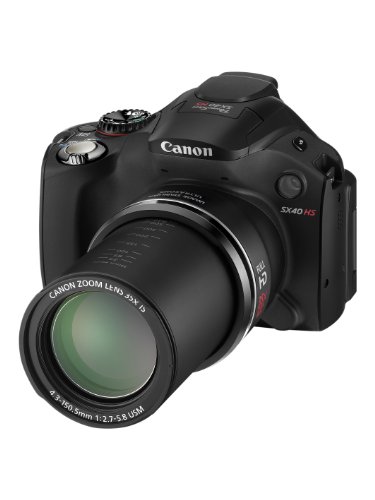
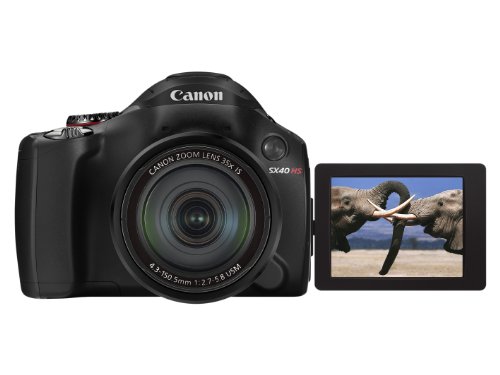
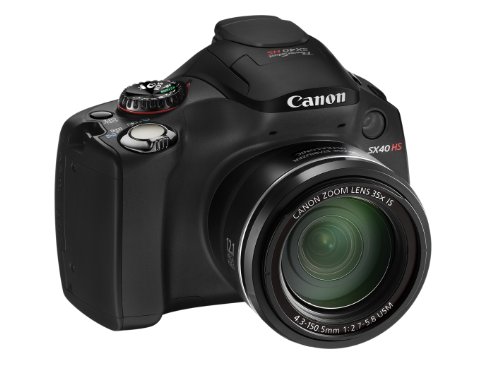
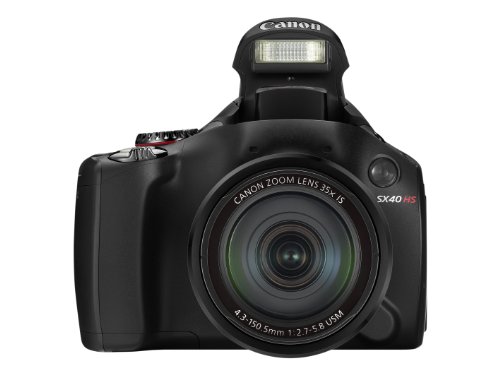
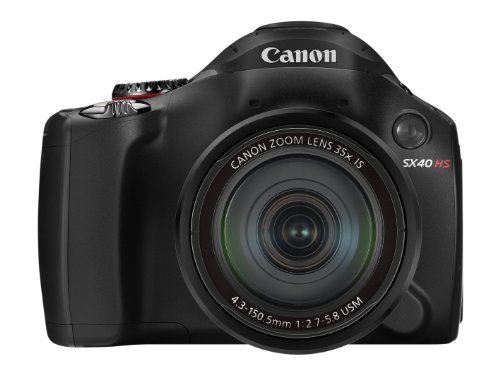
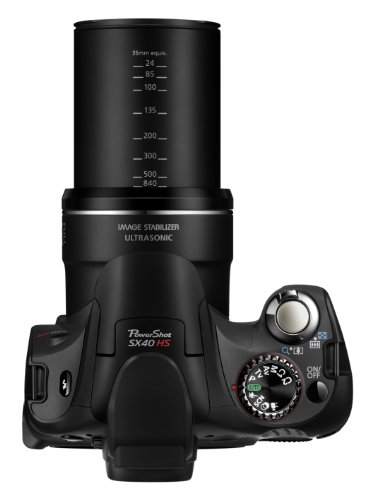
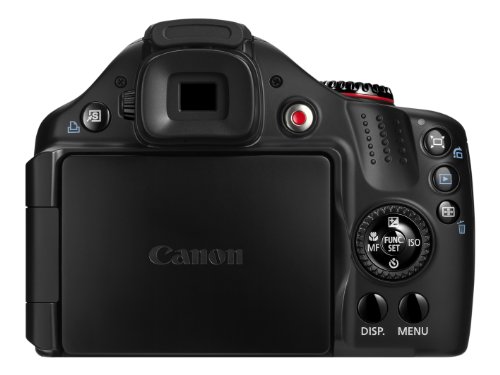
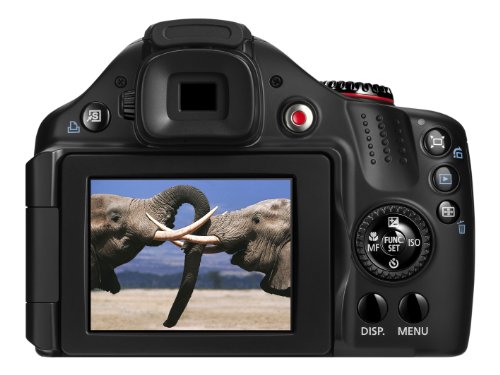
Canon PowerShot SX40 HS review: 112 specs compared

Avg. price:~£130Sensor size:1/2.3"Weight:600 gBattery life (CIPA):400 shots

Canon PowerShot SX40 HS Review: Compare 112 technical specifications and 34 expert and video reviews to see how this product ranks in the Cameras category and whether it is worth buying.
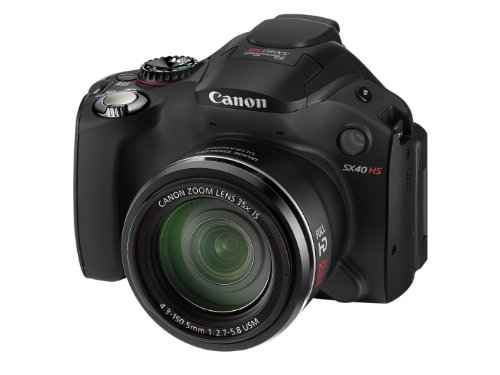
Canon PowerShot SX40 HS
6.3/10

Overall score

Score
6.3/ 10
✕
What it is
Our main score for this model, 1–10. It combines specs, best-of lists, expert reviews and owners.
How we count it
Parts: Technical score 35%, List score 30%, Reviews score 25%, Sentiment score 10%
Marks: Each part gets a mark out of 10. For reviews, lists and owners, a typical model in this category gets about 8 and the best one gets 10.
No data yet: A part with no data shows "?". It counts as the mark of a weaker model in this category (4 in 5 models with data score higher). This way, models with reviews, lists and owners usually come out ahead.
Score distribution
â–¼
<55-66-77-88-99-10
Score components

35%

4.3

Technical score

30%

?

List scoreNot enough data yet, so we use 7.5, the mark of a weaker model in this category

25%

8.3

Reviews score

10%

4.3

Sentiment score

â–¼Worse than 53% of cameras
7.3

Value for money

Value for money
7.3/ 10
✕
What it is
An indicator that combines the camera's overall rating with its cost.
When it matters
When you want to know how much overall quality you get for the price.
Score distribution
â–¼
<55-66-77-88-99-10
Score components

70%

6.3

Overall score

30%

9.8

Price

â–²Better than 70%
4.3

Technical score

Technical score
4.3/ 10
✕
What it is
How good the specs are compared with the other models in this category, 1–10.
How we count it
Areas: We rate the specs in each area against the other models in this category.
Weighting: The areas that matter most to buyers count more. The shares are shown under Score components.
Share: The technical score is 35% of the overall score.
Score distribution
â–¼
<55-66-77-88-99-10
Score components

28%

4.7

Sensor & Image

25%

3.4

Photo Features

18%

4.8

Video & Audio

14%

4.7

Display & Design

8%

5.3

Battery & Power

7%

2.7

Connectivity & Storage

â–¼Worse than 75%
8.3

Reviews score

Reviews score
8.3/ 10
✕
What it is
Average grade from independent test sites, magazines and video reviewers, 1–10.
How we count it
Grades: Each review's own score is converted to 1–10; without one, we grade the review ourselves. Big test sites count more, short reviews half as much as full tests. A video review counts half.
Score: The average grade is 80% of the review mark; the number of reviews is the other 20% (1 review = 5, the typical number in this category = 8, the most-reviewed model = 10).
Enough data: With few reviews, the average grade is pulled toward the typical grade of this category. No reviews yet: 7.5 for now.
Share: Reviews count 25% of the overall score.
Score distribution
â–¼
<55-66-77-88-99-10

80%

8.2

Average grade

20%

8.7

Popularity

Grades by review (34)
27 reviews: 15 with a printed score, 12 estimated from the review. 7 video reviews, each counting half as much as a written test. Reviews count 25% of the overall score.
User ratings collected online are not part of this score.
â–²Better than 70%
?

List score

List score
7.5/ 10
✕
What it is
How often independent test sites, magazines and video reviewers put this model in their best-of lists for this category.
How we count it
Points: The model in the most lists of this category gets 10; the others get 8 to 10 in proportion. In no list yet: 7.5. Lists count 30% of the overall score.
Enough data: Every list counts, even a single one. With fewer than 5 best-of lists in the category, this part is left out.
Lists with this model (0)
Not in any best-of list yet, so this part counts as 7.5. Models in a list get 8 to 10.
Not in any best-of list yet

What reviewers say about the Canon PowerShot SX40 HS

Based on 9 · 7

The huge zoom and easy handling impress, image quality divides opinion, and the screen and viewfinder draw complaints.
Praised
Mixed views
Criticised
Pick a topic to see who said what

What owners say about the Canon PowerShot SX40 HS

Based on 99 owners sharing their experience in online comments

64%positive15%mixed21%negative

Owners praise the camera’s far-reaching zoom and pleasing photos, though focusing and menu controls can be frustrating.

What owners dislike

  • Owners say the focus can be hard to control, especially in manual focus where the button is placed awkwardly and focusing is fiddly for quick shots.7
  • Owners say zoomed shots can come out blurry at longer reaches, and the zoom sometimes stops working or feels unreliable.5
  • Owners find the menus and on-screen instructions confusing and harder to navigate than other cameras in this class, making it slow to find settings.4
  • Some owners report the camera suddenly stops powering on, even with a fully charged battery, and one said it began after accidentally opening the My Menu screen.3
  • Some owners say the screen goes black or fails to show the live image when taking pictures, while photos still show on playback.3
  • Owners report video stops on its own, either at around 4.3 GB or after about 15 minutes, and then has to be restarted by hand.3
  • Owners say night shots can look blurry, noisy, or grainy, and the camera gives little control to fix this, such as changing ISO for long exposures.3
  • Owners say there is no manual control while recording video and no external microphone input.3

Points mentioned by at least 3 owners, most mentioned first.

Loading...
Loading category ranking...

Technical Specifications of camera Canon PowerShot SX40 HS

Technical score
Technical score
4.3/ 10
✕
What it is
How good the specs are compared with the other models in this category, 1–10.
How we count it
Areas: We rate the specs in each area against the other models in this category.
Weighting: The areas that matter most to buyers count more. The shares are shown under Score components.
Share: The technical score is 35% of the overall score.
Score distribution
â–¼
<55-66-77-88-99-10
Score components:

28%

4.7

Sensor & Image

25%

3.4

Photo Features

18%

4.8

Video & Audio

14%

4.7

Display & Design

8%

5.3

Battery & Power

7%

2.7

Connectivity & Storage

4.3
Reviews score
8.3
List score
?
Value for money
Value for money
7.3/ 10
✕
What it is
An indicator that combines the camera's overall rating with its cost.
When it matters
When you want to know how much overall quality you get for the price.
Score distribution
â–¼
<55-66-77-88-99-10
Score components:

70%

6.3

Overall score

30%

9.8

Price

7.3
Sensor size
1/2.3"
This camera has a sensor size of 1/2.3", which is smaller than 59.1% of cameras and the same as 39.1% of cameras.
Sensor resolution
12.1 MP
This camera captures images at 12.1 MP, which is lower than 86.4% of cameras and equal to 6.6% of cameras.
Sensor pixel size
1.53 µm
This camera has sensor pixels measuring 1.53 µm, which are smaller than those in 63.4% of cameras and the same size as those in 1.4% of cameras.
Base ISO
100
This camera has a base ISO of 100, which is lower than 26.7% of cameras and equal to 53.4% of cameras.
Max ISO
ISO 3200 ISO
This camera reaches ISO 3,200, which is lower than 61.5% of cameras and equal to 23.8% of cameras.
Show more
What reviewers say
Lens mount
N/A
Built-in focus motor
no
This camera does not have a built-in focus motor. 10.9% of cameras have a built-in focus motor.
N. of focus points
9
This camera has a focus-point count of 9, which is lower than 66.3% of cameras and equal to 26.2% of cameras.
Phase-detection autofocus (photos)
no
This camera does not support phase-detection autofocus for photos. 36.6% of cameras support phase-detection autofocus for photos.
AF tracking
yes
This camera supports AF tracking. This feature is available on 87.4% of cameras.
Show more
What reviewers say
Max video resolution
1920 px
This camera records at 1920 px, which is higher than the resolution in 28.7% of cameras and the same as in 46.7% of cameras.
Video bitrate
35 Mbps
This camera records video at 35 Mbps, which is higher than 53.4% of cameras and equal to 3.3% of cameras.
approximate value
Video bit depth
8 bit
This camera records in 8 bit, which is higher than the colour depth in 8.2% of cameras and the same as in 79.8% of cameras.
Video chroma subsampling
4:2:0
This camera records with 4:2:0, which is better than the chroma sampling in 8.2% of cameras and the same as in 70% of cameras.
Video codecs
H.264
Show more
What reviewers say
Type
bridge
Weight
600 g
This camera weighs 600 g, which is heavier than 74.7% of cameras and equal to 0.3% of cameras.
Width
122.9 mm
This camera is 122.9 mm wide, which is wider than 57.6% of cameras and equal to 0.2% of cameras.
Height
92.4 mm
This camera is 92.4 mm tall, which is taller than 71.1% of cameras.
Thickness
107.7 mm
This camera is 107.7 mm thick, which is thicker than 95% of cameras.
Show more
What reviewers say
Battery life (CIPA)
400 shots
This camera lasts for 400 shots per charge, which is longer than 67.3% of cameras and equal to 3.4% of cameras.
Battery capacity
920 mAh
This camera has 920 mAh battery capacity, which is smaller than 76.6% of cameras and equal to 0.6% of cameras.
Removable battery
yes
This camera has a removable battery, and 97.8% of cameras include one.
USB Power Delivery (PD)
no
This camera does not support USB Power Delivery. 10.6% of cameras support USB Power Delivery.
Wi-Fi connectivity
no
This camera does not support Wi-Fi. 48.2% of cameras include this feature.
Wi-Fi version
N/A
Bluetooth connectivity
no
This camera does not have Bluetooth. 24.1% of cameras support Bluetooth.
Bluetooth version
N/A
USB Type-C
no
This camera does not include USB Type-C. 16.4% of cameras use USB-C.
Show more
What reviewers say

Canon PowerShot SX40 HS vs the average camera

246810TotalDisplay & DesignSensor & ImagePhoto FeaturesVideo & AudioBattery & PowerConnectivity & Storage
  • More advanced viewfinder
    This camera has a more advanced viewfinder than the average camera (electronic vs none).
    electronic vs none
  • Uses a BSI sensor
    This camera uses a BSI sensor, the average camera does not. 35.7% of cameras use a BSI sensor.
  • Fully articulated screen
    This camera has a fully articulated screen, the average camera does not.
  • Supports slow-motion video
    This camera supports slow-motion video, the average camera does not.
    Supports up to 240 fps high-speed video.
  • 27.7% higher review score
    Reviews score
    8.3/ 10
    ✕
    What it is
    Average grade from independent test sites, magazines and video reviewers, 1–10.
    How we count it
    Grades: Each review's own score is converted to 1–10; without one, we grade the review ourselves. Big test sites count more, short reviews half as much as full tests. A video review counts half.
    Score: The average grade is 80% of the review mark; the number of reviews is the other 20% (1 review = 5, the typical number in this category = 8, the most-reviewed model = 10).
    Enough data: With few reviews, the average grade is pulled toward the typical grade of this category. No reviews yet: 7.5 for now.
    Share: Reviews count 25% of the overall score.
    Score distribution
    â–¼
    <55-66-77-88-99-10

    80%

    8.2

    Average grade

    20%

    8.7

    Popularity

    Grades by review (34)
    27 reviews: 15 with a printed score, 12 estimated from the review. 7 video reviews, each counting half as much as a written test. Reviews count 25% of the overall score.
    User ratings collected online are not part of this score.
    8.3 vs 6.5
  • Supports 24p cinema mode
    This camera supports 24p cinema mode, the average camera does not. 43.1% of cameras support this mode.
  • 70 shots longer battery life
    This camera lasts longer per charge than the average camera (400 shots vs 330 shots). The average camera lasts for 330 shots.
    400 shots vs 330 shots
  • 0.5 stops more stabilisation
    This camera has better stabilisation than the average camera (4.5 stops vs 4 stops). The average camera is rated at 4 stops.
    4.5 stops vs 4 stops
  • 27.7% higher review score
    Reviews score
    8.3/ 10
    ✕
    What it is
    Average grade from independent test sites, magazines and video reviewers, 1–10.
    How we count it
    Grades: Each review's own score is converted to 1–10; without one, we grade the review ourselves. Big test sites count more, short reviews half as much as full tests. A video review counts half.
    Score: The average grade is 80% of the review mark; the number of reviews is the other 20% (1 review = 5, the typical number in this category = 8, the most-reviewed model = 10).
    Enough data: With few reviews, the average grade is pulled toward the typical grade of this category. No reviews yet: 7.5 for now.
    Share: Reviews count 25% of the overall score.
    Score distribution
    â–¼
    <55-66-77-88-99-10

    80%

    8.2

    Average grade

    20%

    8.7

    Popularity

    Grades by review (34)
    27 reviews: 15 with a printed score, 12 estimated from the review. 7 video reviews, each counting half as much as a written test. Reviews count 25% of the overall score.
    User ratings collected online are not part of this score.
    8.3 vs 6.5
  • More advanced viewfinder
    This camera has a more advanced viewfinder than the average camera (electronic vs none).
    electronic vs none
  • Fully articulated screen
    This camera has a fully articulated screen, the average camera does not.
  • 1 more customisable buttons
    This camera has more customisable buttons than the average camera (1 vs 0). The average camera has 0 customisable buttons.
    1 vs 0
  • Uses a BSI sensor
    This camera uses a BSI sensor, the average camera does not. 35.7% of cameras use a BSI sensor.
  • 0.5 stops more stabilisation
    This camera has better stabilisation than the average camera (4.5 stops vs 4 stops). The average camera is rated at 4 stops.
    4.5 stops vs 4 stops
  • Supports focus bracketing
    This camera supports focus bracketing, the average camera does not.
    Automatic multi-shot focus bracketing available.
  • 5.38x more optical zoom
    This camera offers more optical zoom than the average camera (35 x vs 6.5 x). The average camera offers 6.5 x.
    The built-in lens provides 35x optical zoom.
    35 x vs 6.5 x
  • Supports slow-motion video
    This camera supports slow-motion video, the average camera does not.
    Supports up to 240 fps high-speed video.
  • Supports 24p cinema mode
    This camera supports 24p cinema mode, the average camera does not. 43.1% of cameras support this mode.
  • 70 shots longer battery life
    This camera lasts longer per charge than the average camera (400 shots vs 330 shots). The average camera lasts for 330 shots.
    400 shots vs 330 shots
  • Smaller image sensor
    This camera has a smaller sensor than the average camera (1/2.3" vs 2/3"). The average camera's sensor size is 2/3".
    1/2.3" vs 2/3"
  • Fewer megapixels
    This camera has fewer megapixels than the average camera (12.1 MP vs 16.2 MP). The average camera's sensor resolution is 16.2 MP.
    12.1 MP vs 16.2 MP
  • Lacks HDR mode
    This camera does not support HDR mode, the average camera does. 55% of cameras include HDR mode.
  • 2158000 dots lower resolution
    This camera has a softer viewfinder than the average camera (202,000 dots vs 2,360,000 dots). The average camera has a viewfinder resolution of 2,360,000 dots.
    202000 dots vs 2360000 dots
  • 0.3 in smaller screen
    This camera has a smaller screen than the average camera (2.7 in vs 3 in). The average camera has a screen of 3 in.
    2.7 in vs 3 in
  • 3.2 fps slower mechanical burst
    This camera has a slower mechanical burst than the average camera (2.4 fps vs 5.6 fps). The average camera reaches 5.6 fps.
    2.4 fps vs 5.6 fps
  • No RAW photo capture
    This camera does not support RAW photo capture, the average camera does. 61% of cameras support RAW formats.
  • 1.51 µm smaller sensor pixels
    This camera has smaller sensor pixels than the average camera (1.5 µm vs 3.04 µm). The average sensor pixel size is 3.04 µm.
    1.53 µm vs 3.04 µm
  • 40.3% lower sentiment score
    4.3 vs 7.2
  • 2158000 dots lower resolution
    This camera has a softer viewfinder than the average camera (202,000 dots vs 2,360,000 dots). The average camera has a viewfinder resolution of 2,360,000 dots.
    202000 dots vs 2360000 dots
  • 0.3 in smaller screen
    This camera has a smaller screen than the average camera (2.7 in vs 3 in). The average camera has a screen of 3 in.
    2.7 in vs 3 in
  • 210.5 g heavier
    This camera is heavier than the average camera (600 g vs 389.5 g). The average camera weighs 389.5 g.
    600 g vs 389.5 g
  • 61.8 mm thicker
    This camera is thicker than the average camera (107.7 mm vs 45.9 mm). The average camera is 45.9 mm thick.
    107.7 mm vs 45.9 mm
  • 18.7 mm taller body
    This camera is taller than the average camera (92.4 mm vs 73.7 mm). The average camera is 73.7 mm tall.
    92.4 mm vs 73.7 mm
  • Smaller image sensor
    This camera has a smaller sensor than the average camera (1/2.3" vs 2/3"). The average camera's sensor size is 2/3".
    1/2.3" vs 2/3"
  • Fewer megapixels
    This camera has fewer megapixels than the average camera (12.1 MP vs 16.2 MP). The average camera's sensor resolution is 16.2 MP.
    12.1 MP vs 16.2 MP
  • Lacks HDR mode
    This camera does not support HDR mode, the average camera does. 55% of cameras include HDR mode.
  • 1.51 µm smaller sensor pixels
    This camera has smaller sensor pixels than the average camera (1.5 µm vs 3.04 µm). The average sensor pixel size is 3.04 µm.
    1.53 µm vs 3.04 µm
  • 3 years older
    This camera was released earlier than the average camera (2011 vs 2014). The average camera was released in 2014.
    September 2011
    2011 vs 2014
  • 3,200 ISO lower maximum sensitivity
    This camera reaches a lower maximum ISO than the average camera (3,200 ISO vs 6,400 ISO). The average camera's maximum ISO is 6,400 ISO.
    3,200 ISO vs 6,400 ISO
  • 3.2 fps slower mechanical burst
    This camera has a slower mechanical burst than the average camera (2.4 fps vs 5.6 fps). The average camera reaches 5.6 fps.
    2.4 fps vs 5.6 fps
  • No RAW photo capture
    This camera does not support RAW photo capture, the average camera does. 61% of cameras support RAW formats.
  • 14 fewer focus points
    This camera has a lower focus-point count than the average camera (9 vs 23). The average camera has a count of 23.
    9 vs 23
  • 15 s shorter exposure
    This camera allows shorter exposures than the average camera (15 s vs 30 s). The average camera allows exposures up to 30 s.
    15 s vs 30 s
  • 200 mAh less battery capacity
    This camera has a smaller battery than the average camera (920 mAh vs 1,120 mAh). The average camera has 1,120 mAh battery capacity.
    920 mAh vs 1,120 mAh

Video reviews

Hands-on testing, unboxing, and real-world video evaluations

9.0
Kaee The CEO
≈ estimated
17/09/2020
Walkthrough · controls, zoom, flash and menus
Verdict
Canon PowerShot SX40 HS is affordable, good quality and a solid pick for beginners and new YouTubers.
9.0
The Macro Channel
≈ estimated
07/06/2018
Hands-on test · budget macro setup with clip-on lens
Verdict
Canon PowerShot SX40 HS makes a cheap, capable close-up setup, though wind and focusing take patience.
9.0
FatDragon100
≈ estimated
21/11/2011
Owner review · moon, fireworks and fog shots
Verdict
Canon PowerShot SX40 HS is worth the money and easy to recommend, with great zoom and photos despite a few small quirks.
8.0
NeNe J’s World
≈ estimated
01/03/2021
First look · unboxing and features overview
Verdict
Canon PowerShot SX40 HS is a good affordable first camera for beginner YouTubers.
9.0
Linescrew1
≈ estimated
02/09/2012
Unboxing · short test footage at sunset
Verdict
Canon PowerShot SX40 HS is a very good camera for the price, and the creator strongly recommends it.
8.0
Jon Rettinger
≈ estimated
24/11/2011
Hands-on review · image quality, zoom and stabilisation tests
Verdict
Canon PowerShot SX40 HS has clearly better image quality and a strong zoom for the same price, though the screen and controls lag behind.
Not graded
Not graded
Not graded
Shop video
Not graded
Hands-on video, no verdict

Expert reviews

In-depth analysis and verdict from leading tech publications
10
imaging-resource.com
✓ explicit
02/04/2012
Lab tests · Megazoom camera
Verdict
The Canon PowerShot SX40 HS reaches distant subjects with fine detail, but it is heavy to hold for hours and soft in the corners at wide angle.
7.5
cnet.com
✓ explicit
07/12/2011
Lab tests · Megazoom review
Verdict
The Canon PowerShot SX40 HS is a strong pick for long zoom reach and good JPEG colors, but it is slow to focus and shoot compared with rivals.
9.0
ephotozine.com
✓ explicit
18/01/2012
Review · 35x superzoom
Verdict
The Canon PowerShot SX40 HS is a feature-packed 35x zoom for reach and Full HD video, though its small screen and fiddly flash are drawbacks.
8.0
uk.pcmag.com
≈ estimated
08/10/2011
Hands-on test · Superzoom look
Verdict
The Canon PowerShot SX40 HS looks like a DSLR and has a long telephoto reach, but its tiny viewfinder and slow start-up hold it back.
9.0
reviewed.com
≈ estimated
30/09/2011
Expert review · Superzoom verdict
Verdict
The Canon PowerShot SX40 HS is a strong all-round superzoom with very good noise control, but its plastic body and off colors let it down.
9.0
birdguides.com
≈ estimated
20/07/2012
Field review · Bird photography
Verdict
The Canon PowerShot SX40 HS brings 840mm equivalent reach to birders in an easy-to-carry body, without the bulk of a DSLR and telephoto lens.
8.0
uk.pcmag.com
✓ explicit
06/10/2011
Lab-tested review · Telephoto zoom
Verdict
The Canon PowerShot SX40 HS is a good choice for sports and wildlife, with a very long zoom and fast shooting, but it is bulky and not cheap.
8.0
techradar.com
✓ explicit
15/12/2011
Hands-on test · Bridge camera
Verdict
The Canon PowerShot SX40 HS is a fast, quiet bridge camera whose 35x zoom reaches 840mm equivalent, but its electronic viewfinder disappoints.
8.0
cameralabs.com
≈ estimated
11/12/2011
Hands-on test · Video and focus
Verdict
The Canon PowerShot SX40 HS is a solid superzoom for casual video, but autofocus struggles at long zoom, and wobbly pans show more than on rivals.
9.0
dpinterface.com
≈ estimated
03/11/2011
Hands-on review · Feature-packed superzoom
Verdict
The Canon PowerShot SX40 HS suits buyers wanting one long-zoom camera with full controls, though its small screen and dim zoom end are weak points.
8.0
trustedreviews.com
✓ explicit
31/10/2011
Hands-on review · Zoom and effects
Verdict
The Canon PowerShot SX40 HS is a versatile zoom for holiday snaps and point-and-shoot users, but its two main dials make changing settings slow.
9.0
whatdigitalcamera.com
✓ explicit
30/09/2011
Expert review · Superzoom features
Verdict
The Canon PowerShot SX40 HS brings a new sensor and faster bursts to the SX30 design, giving good image quality, though its screen and price are weak points.
E
expertreviews.co.uk
01/10/2011
✓ explicit
10
Summary of the review
P
photoreview.com.au
01/10/2011
✓ explicit
8.1
Summary of the review
7.0
chip.de
≈ estimated
12/12/2011
Test · 35x megazoom
Verdict
The Canon PowerShot SX40 HS is a 35x megazoom with low image noise for buyers who want maximum reach, though corners lose sharpness and the screen is low-resolution.
7.8
computerbild.de
✓ explicit
06/01/2012
Review · Superzoom camera
Verdict
The Canon PowerShot SX40 HS suits anyone who wants the most zoom, though a two-second wait between shots and a flash you lift by hand slow it down.
8.0
dkamera.de
≈ estimated
24/11/2011
Lab test · Superzoom bridge
Verdict
The Canon PowerShot SX40 HS is a versatile 35x zoom bridge with good detail in the center, but sharpness falls off toward the edges and the screen feels outdated.
6.4
connect-living.de
✓ explicit
20/12/2011
Test · Megazoom bridge camera
Verdict
The Canon PowerShot SX40 HS is a well-rounded megazoom with plenty of features, though its 2.7-inch screen is small and its image quality is good rather than outstanding.
9.0
dkamera.de
≈ estimated
Not Dated
Field test · Bridge camera
Verdict
The Canon PowerShot SX40 HS is a solid all-round bridge camera with fast focusing, but its small screen and viewfinder are weak spots.

Third-party reviews

What customers like about Canon PowerShot SX40 HS

  • Incredible 35x optical zoom range providing a massive telephoto reach
  • Excellent image stabilization system that remains highly effective even at full zoom
  • Great overall image and video quality with accurate, vibrant colour reproduction
  • Impressive low-light and high-ISO performance thanks to the back-illuminated CMOS sensor
  • Versatile 2.7-inch fully articulating flip-out LCD screen
  • Comprehensive full manual controls and customizable settings suitable for intermediate users
  • Strong battery life compared to other point-and-shoot bridge camera models

What customers don't like about Canon PowerShot SX40 HS

  • Lacks RAW image capability, restricting advanced post-processing options
  • Relatively low-resolution electronic viewfinder (EVF) and main LCD screen
  • Slow autofocus performance, particularly when fully zoomed or in low-contrast environments
  • Pedestrian shot-to-shot cycle times and sluggish overall startup speed
  • No external microphone jack or headphone port for advanced video recording
  • Rear scroll wheel control dial can feel overly sensitive to the touch
  • Noticeable lens motor noise that can sometimes be picked up on the audio track during video zoom operations

Verdict

The Canon PowerShot SX40 HS is a versatile bridge camera featuring a 12.1-megapixel BSI-CMOS sensor and a powerful 35x optical zoom lens with a 24-840mm equivalent focal range. Powered by the DIGIC 5 processor, it supports Full HD 1080p video recording at 24fps and high-speed burst shooting up to 10.3fps. Key advantages include an effective 4.5-stop Intelligent Image Stabilisation system, a fully articulated 2.7-inch LCD screen for flexible framing, and a built-in electronic viewfinder. However, notable drawbacks include its lack of RAW file support, a relatively low-resolution 230k-dot display, and slower autofocus performance when tracking moving subjects at maximum telephoto lengths.

Compare Canon PowerShot SX40 HS with other products in the Cameras category

1Product to compare no. 1
VS
2Product to compare no. 2
VS
3Product to compare no. 3 (optional)

Graphic comparison of Canon PowerShot SX40 HS and other products in the Cameras category

No results found