Are Rowenta air purifiers good?
Rowenta air purifiers have an average overall score of 6.9, ranking #5 among comparable air purifier brands, and a user rating of 8.6, placing them at #6 based on user reviews.
Rowenta is a convincing middle-ground brand: the range offers genuinely different room capacities, app-connected options, a fan-style Eclipse design, and higher-output Pure Home models. It is more varied than a two-model line, without forcing every buyer into Dyson-level pricing.
The trade-off is specification detail. CADR, filter layers, connectivity, and even the purpose of a model can change between PU and QU references, so the best Rowenta choice depends on the exact product rather than the logo or colourway.
The chart below compares Rowenta with other air purifier brands by average overall score.
[horizontal-chart-14864484804626698665012994058484894238043460741084]
What are the main advantages of Rowenta air purifiers?
The main advantages of Rowenta air purifiers are as follows:
- Broad room-size spread: CADR ranges from compact Essential models around 107 m³/h to Pure Home output above 500 m³/h. This gives buyers a realistic way to size a bedroom, living room, or open-plan area.
- Allergy+ and odour-focused options: Pure Air models can combine a particle filter marketed for allergens with activated carbon or a dedicated odour stage. Read the exact filter stack rather than assuming every PU model has the same cartridge.
- Connected automation: Selected Pure Air Genius, Intense Pure Air Connect, Eclipse Connect, and Pure Home models work with the Rowenta app. Scheduling, live indoor readings, and filter-condition reminders are useful for hands-off operation.
- Different appliance formats: Conventional towers suit purification-first buyers, while Eclipse models add a fan-style design and selected versions add heating. Pure Home sits at the high-output end for larger rooms.
- Quiet everyday modes: Rowenta provides automatic and night-oriented settings on many models, allowing the fan to slow when particle levels fall. The benefit is greatest when the purifier has enough CADR reserve for the room.
What are the main disadvantages of Rowenta air purifiers?
The main disadvantages of Rowenta air purifiers are as follows:
- Crowded naming: Pure Air, Intense Pure Air, Genius, Eclipse, and Pure Home overlap in price and features. The complete PU or QU reference is essential because a retailer’s family label can conceal differences in output, sensors, or app support.
- Uneven filter claims: Allergy+, carbon, NanoCaptur, and other terms are not present on every model. Buyers with smoke or strong odour problems should verify the actual carbon stage and replacement cartridge, not infer it from the series name.
- Connectivity is selective: Some units support the app and voice assistants while others are offline. Connected features also depend on local service and Wi‑Fi compatibility, so they should not be treated as a universal Rowenta benefit.
- Eclipse compromises: The fan-style Eclipse design adds circulation appeal, but its purifier and heating functions vary by QU model and can cost more floor space. It is not automatically the best choice for maximum particle CADR.
- Proprietary running costs: Model-specific filters and reminders make maintenance clear but limit substitution. Check availability and annual cost before choosing a less common reference.
Who makes Rowenta air purifiers?
Rowenta is a consumer-appliance brand owned by Groupe SEB, the French group behind brands including Tefal, Moulinex, Krups and WMF. Groupe SEB has developed Rowenta as one of its principal home-care brands for more than a century.
Product design, engineering and manufacturing are coordinated through Groupe SEB rather than a separate Rowenta parent company. Production can be distributed across the group’s European and international industrial network, while the purifier range draws on Rowenta’s broader experience with airflow, filtration, quiet operation and connected home-cleaning products.
What are the main Rowenta air purifier series?
The main Rowenta air purifier series are as follows:
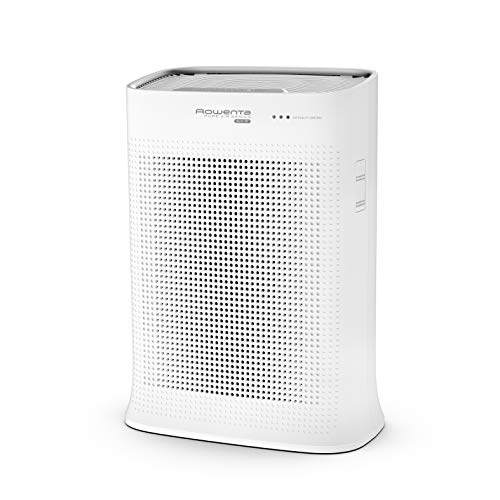
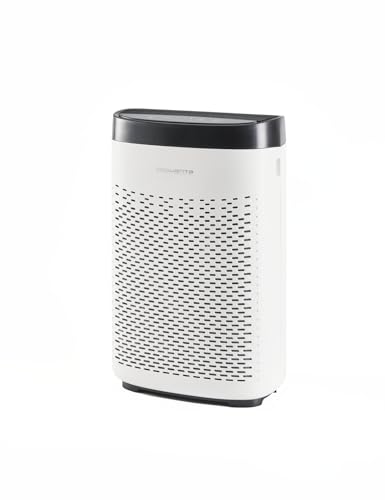
- Pure Air Essential: Entry-level compact models such as PU2530 focus on basic particle cleaning at a modest CADR and price. They suit bedrooms or offices where app control and high airflow are not priorities.
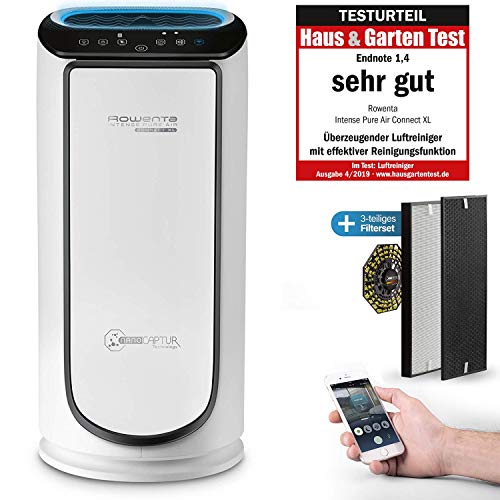
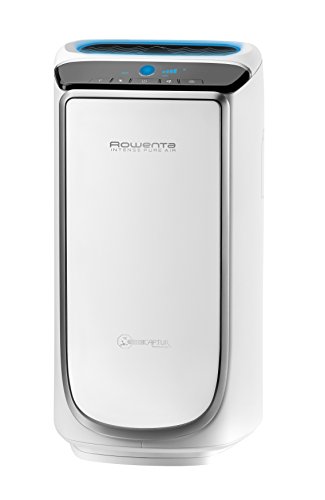
- Intense Pure Air: PU4020 and the Connect XL PU6080 families add more airflow and, on selected versions, connected control and stronger odour or allergy filtration. Check whether the exact variant is the offline or app-enabled model.
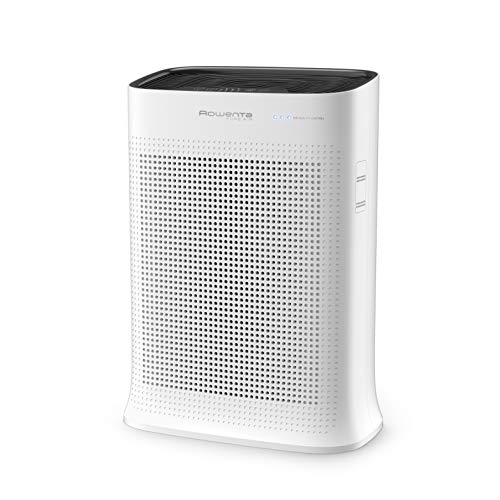
- Pure Air Genius: PU3040 and PU3080 sit in the connected, sensor-led middle of the range. The app, automatic adjustment, and Allergy+ positioning make them useful for buyers who want daily feedback without moving to the largest machines.
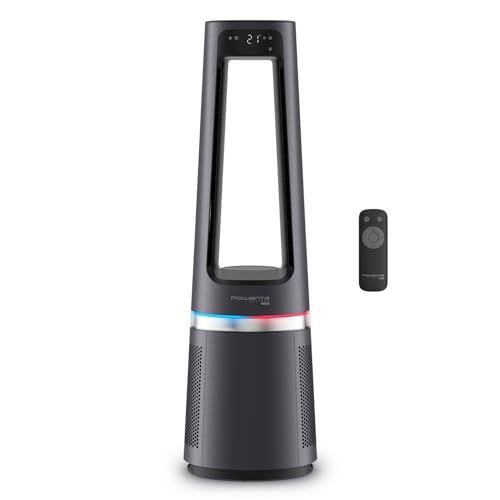
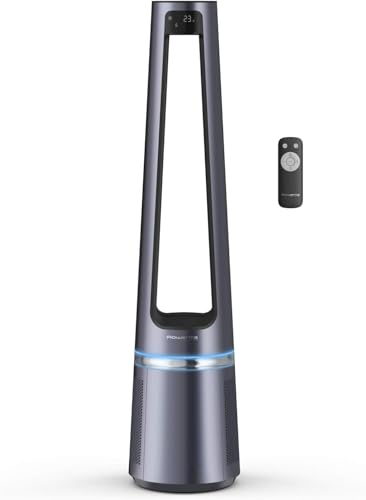
- Eclipse: QU5030 and QU5062 combine air purification with a bladeless fan-style format; QU5062 adds connected features and heating on selected regional versions. Choose Eclipse for the combined appliance concept, not merely for the highest CADR.
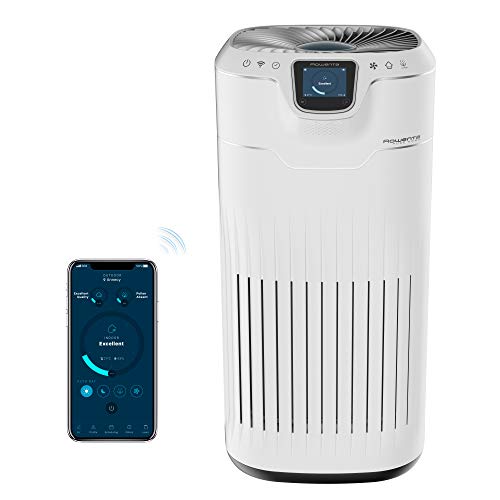
- Pure Home: PU8080 is the high-output option for larger rooms, with app control and a broader filter system. Its size, price, and replacement-filter cost deserve the same scrutiny as its impressive airflow.
How much do Rowenta air purifiers cost?
Rowenta air purifiers generally cost about £130-£470. Pure Air Essential sits at the entry point, connected Genius and Intense Pure Air models fill the middle, and Pure Home and Eclipse variants occupy the upper end.
Spend more only when the extra CADR, app control, fan format, or pollutant-specific filter is useful in your room. A cheaper model with insufficient airflow will need a louder setting and may clean less effectively; a larger model can be wasteful in a small bedroom.
How do Rowenta air purifiers compare with other brands?
Rowenta is a flexible midrange alternative to Dyson: it offers connected control and distinctive fan-style products without making every model a premium appliance. LEVOIT usually provides more low-cost compact choices, while Bosch is simpler and Daikin concentrates on a single high-capacity design.
The meaningful comparison is model-to-model. Check CADR, filter layers, noise, app support, and replacement availability before concluding that a Rowenta model is better; the brand’s broad catalogue is an advantage only when you use its variety intelligently.
What should you consider while choosing the best Rowenta air purifier?
Before choosing a Rowenta air purifier, consider the following factors:
- Required CADR: Match the PU or QU model to room volume and target about four air changes per hour at a tolerable speed. The range spans roughly 107–515 m³/h: Essential suits smaller rooms, Genius and Intense Pure Air cover the middle, and Pure Home is the high-output choice; Eclipse trades some purifier focus for fan-style airflow. Do not buy a compact Essential model for an open-plan space simply because its room-area claim looks generous.
- Filter construction: Confirm whether the exact model includes Allergy+, activated carbon, NanoCaptur, or another named stage. Smoke, pollen, pet dander, and odours require different emphasis, and the family name does not guarantee the same cartridge.
- Connected or offline control: Check for Pure Air app compatibility, schedules, voice assistants, and local Wi‑Fi support. An offline PU model is preferable if you want simple buttons and no account, but it cannot provide remote monitoring.
- Eclipse versus conventional tower: Decide whether fan-style airflow or heating is worth the extra footprint and cost. QU models are combination appliances; their purifier output and filter replacement should still be judged separately.
- Noise in real use: Compare the sound rating at the speed that supplies enough CADR, not only the quietest mode. Automatic and night modes are useful, but low noise is not a substitute for adequate air turnover.
- Filter access and supply: Confirm how the prefilter is cleaned, which cartridge the PU or QU code uses, and whether replacement filters are stocked locally. Include the annual filter budget before choosing a less common premium model.