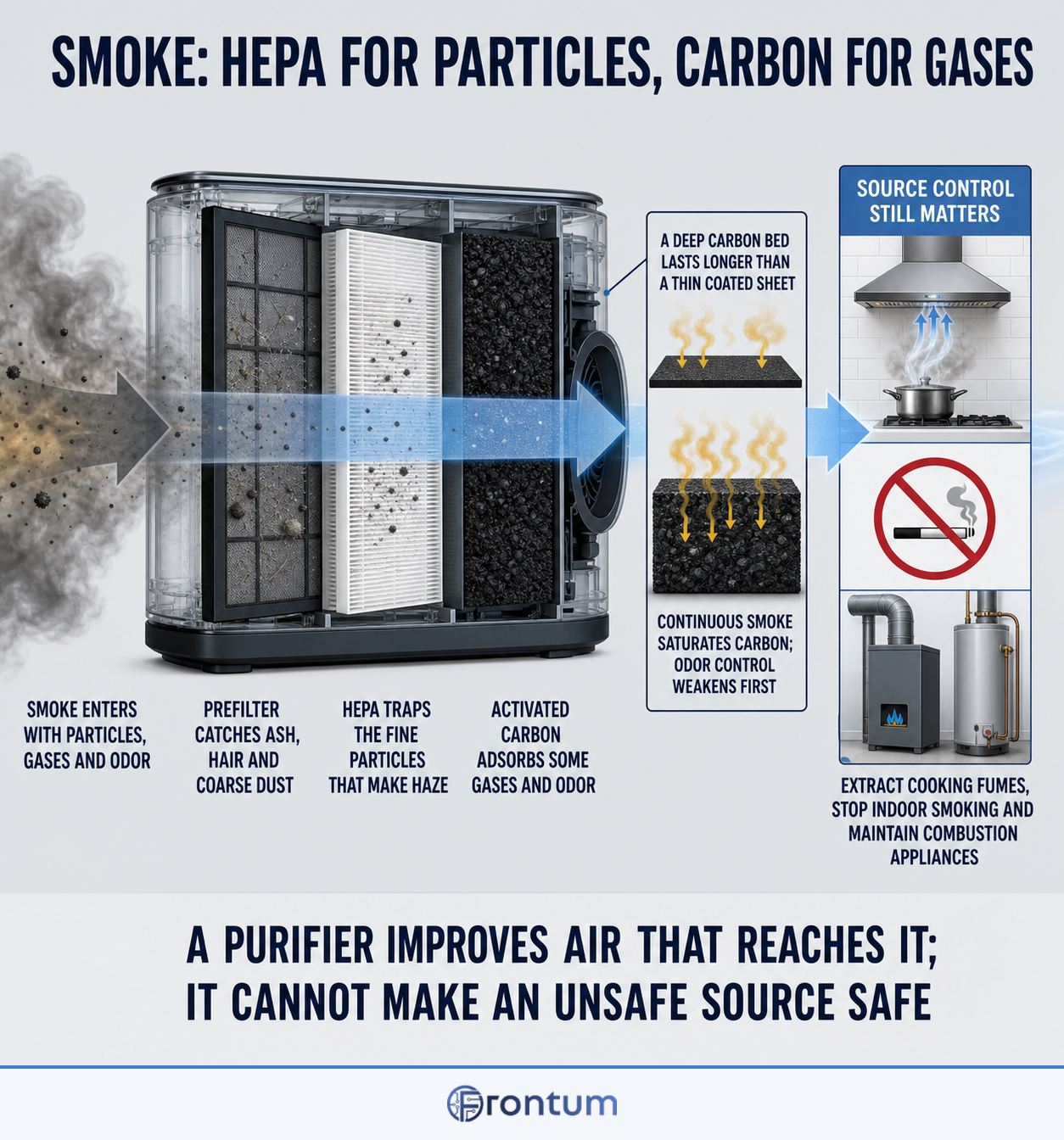
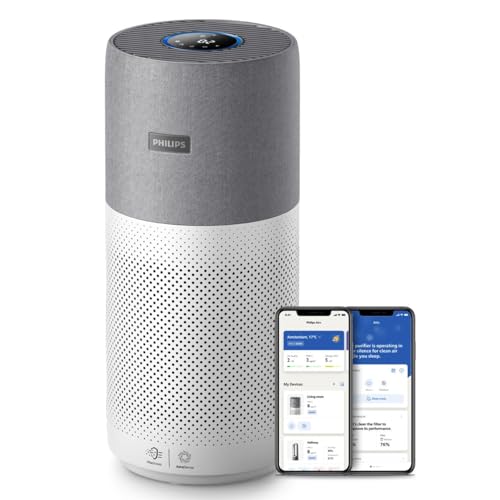
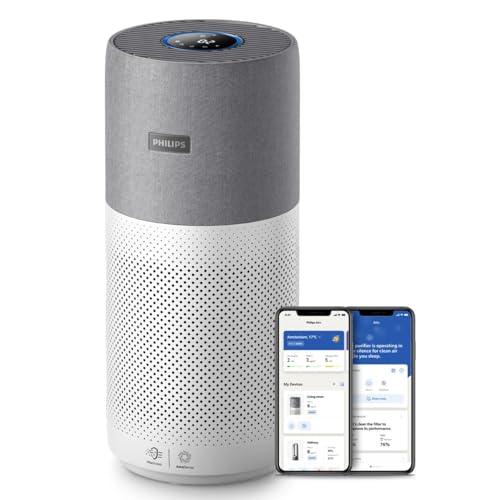
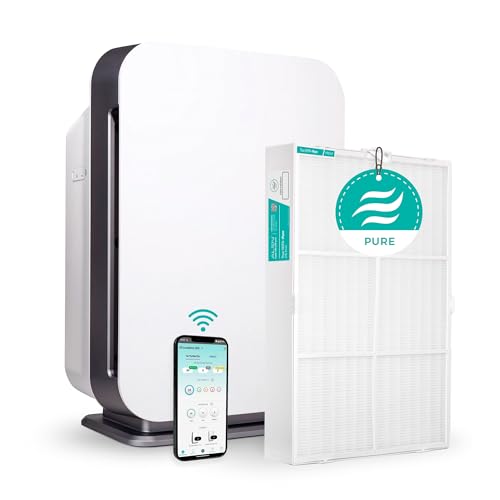
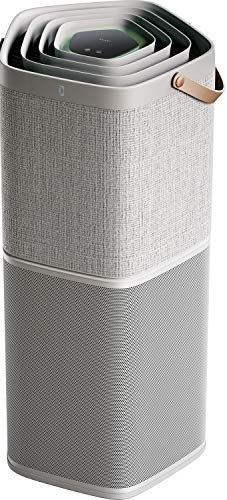
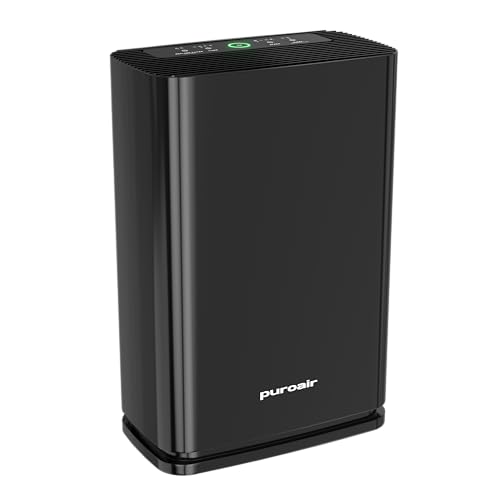
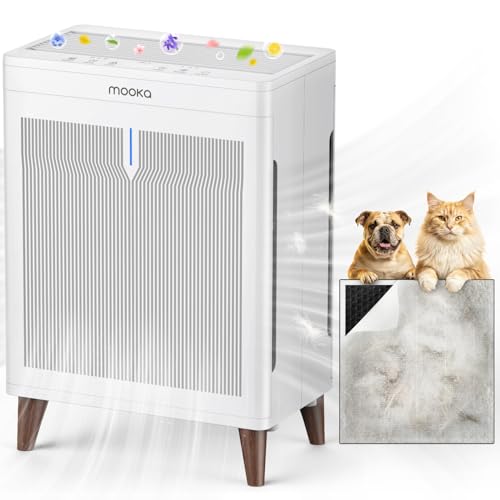
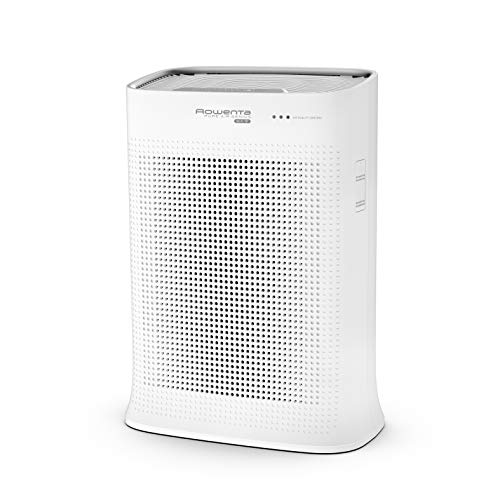
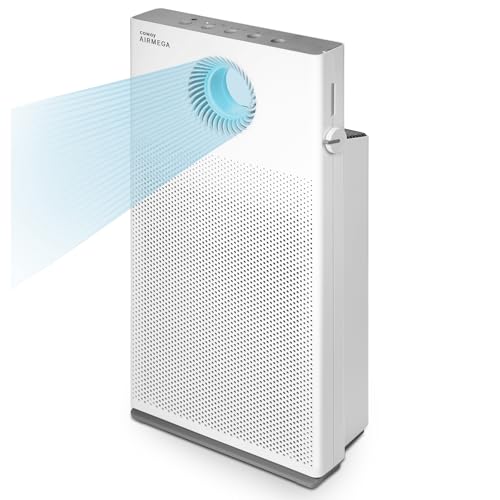
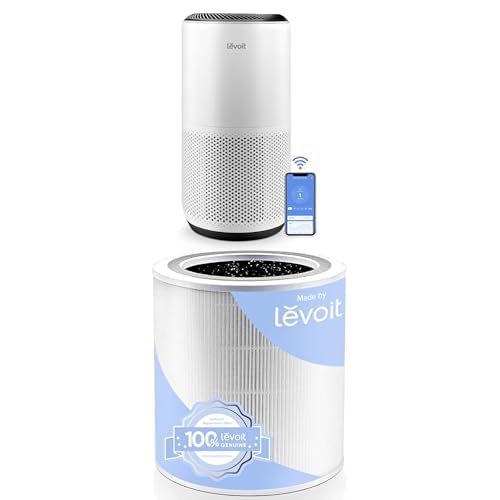
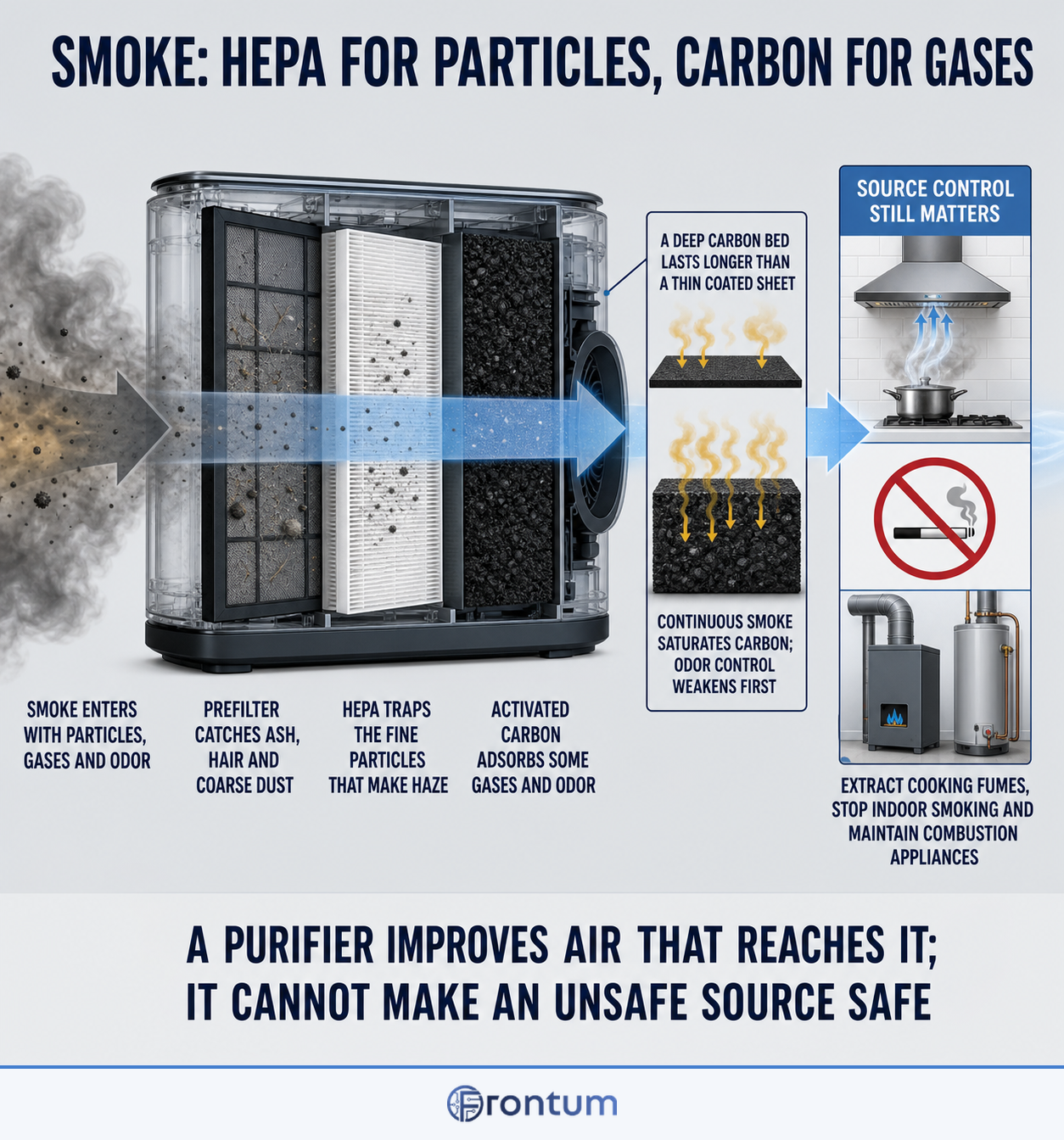
Carbon and HEPA filters help with smoke in different ways, so effective smoke purification needs both. HEPA captures the fine particles that make smoke harmful and visible as haze, while activated carbon adsorbs some gases and the odor that particle filtration leaves behind.
HEPA performance depends on airflow, filter efficiency, and sealing. Choose a purifier capable of roughly four to five air changes per hour in the affected room, and avoid running only a very quiet mode if it moves too little air. A prefilter helps protect the HEPA media from ash, hair, and coarse dust.
Activated carbon is not a magic smoke eraser. A deep, heavy carbon bed offers much more adsorption capacity than a thin carbon-coated sheet, and it eventually saturates when the source is continuous. Check the replacement filter specification and expect odor control to weaken before the filter looks visibly dirty.
Smoke control also requires source action: use extraction for cooking, stop indoor smoking, maintain combustion appliances, and keep a carbon-monoxide alarm where combustion is possible. A purifier improves the air that reaches it but cannot make an unsafe source safe.