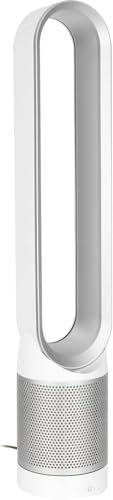
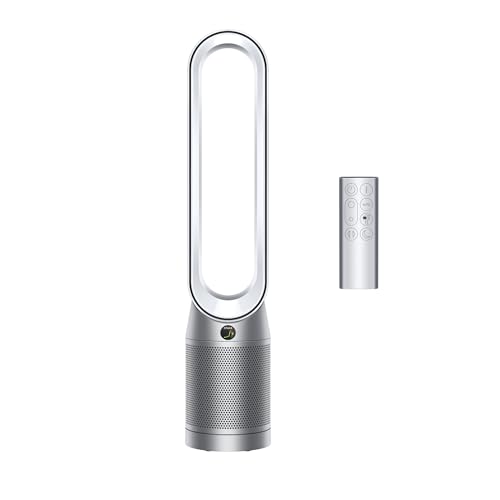
Are Dyson air purifiers good?
Dyson air purifiers have an average overall score of 6.5, ranking #7 among comparable air purifier brands, and a user rating of 8.4, placing them at #7 based on user reviews.
Dyson air purifiers suit buyers who want a polished fan-and-purifier appliance, sealed HEPA and carbon filtration, and clear air-quality feedback. The range also has unusually distinct options: a personal desk model, cooling towers, a heater, and a formaldehyde-focused purifier.
The premium is not automatically justified for every room. Dyson’s fan airflow is not the same as a certified CADR comparison, and Wi‑Fi, heating, and specialised sensing vary by model. Match the exact TP, HP, or BP code to the room and the pollutant you want to address.
The chart below compares Dyson with other air purifier brands by average overall score.
[horizontal-chart-14864484804626698665012994058484894238043460741084]
What are the main advantages of Dyson air purifiers?
The main advantages of Dyson air purifiers are as follows:
- Sealed HEPA and carbon filtration: Dyson’s sealed designs are intended to keep captured particles inside the machine, while carbon media target household odours and gases. Confirm the exact filter specification because carbon capacity and formaldehyde treatment are not identical across the range.
- Fan and purifier in one appliance: Oscillation and wide-angle projection distribute treated air across a room rather than leaving a static column of clean air. That is useful in living spaces, although the fan’s circulation figure should not be mistaken for CADR.
- Useful sensing and displays: Supported models monitor particles and, on specialist versions, formaldehyde or other gases, then show the result on the display. Automatic mode can adjust airflow without constant manual intervention.
- Distinct all-season choices: HP models add heating, TP models focus on cooling airflow, and BP01 is designed for personal spaces. This makes the range easier to match to a specific use than a single one-size-fits-all tower.
- Strong app experience on connected models: Dyson Link can provide remote control, schedules, air-quality history, and filter reminders on supported products. The app is a convenience layer, not a substitute for checking the hardware’s actual airflow and filter life.
What are the main disadvantages of Dyson air purifiers?
The main disadvantages of Dyson air purifiers are as follows:
- Premium pricing: Dyson models cost substantially more than many conventional HEPA towers with similar stated clean-air output. The extra spend buys design, airflow, sensors, and combination functions, so it is poor value if you only need basic particle removal.
- Airflow claims can confuse comparisons: A Dyson fan can move a great deal of air, but that does not make its circulation figure equivalent to CADR. Use the model’s clean-air specification and room target when comparing it with Bosch, Rowenta, or LEVOIT.
- Feature differences under similar names: Pure Cool Link, Purifier Cool, Hot+Cool, and Formaldehyde versions look related but differ in heating, Wi‑Fi, sensors, and filter systems. A retailer’s short title can hide the generation that matters.
- Replacement-filter cost: Dyson uses model-specific sealed cartridges and recommends replacement when prompted by filter-life monitoring. Check local cartridge prices and availability before committing to a premium machine.
- Large footprint and audible high mode: Tower models need clear space around their intake and outlet, and maximum airflow is much louder than the quiet setting. A desk purifier avoids the floor footprint but cannot replace a room-sized unit.
Who makes Dyson air purifiers?
Dyson air purifiers are made by Dyson, the privately held technology company founded by Sir James Dyson. Dyson is headquartered in Singapore, while its purification research and engineering grew from the company campus in Malmesbury, England.
James Dyson established the business after developing the cyclonic DC01 vacuum. The company now applies its in-house work on high-speed motors, aerodynamics, sensing and filtration to purifier-only machines as well as combined fan, heater and formaldehyde-focused models.
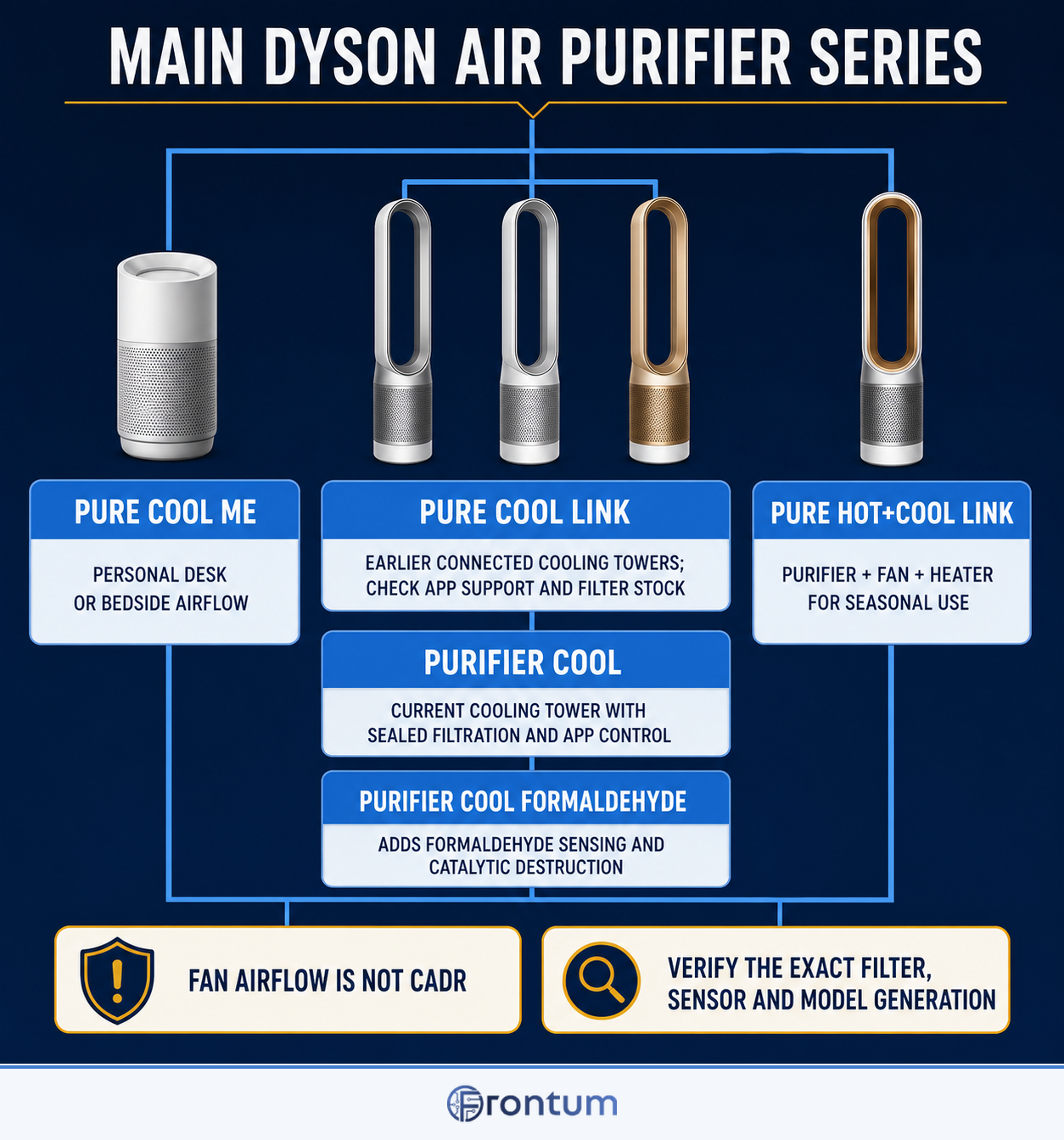
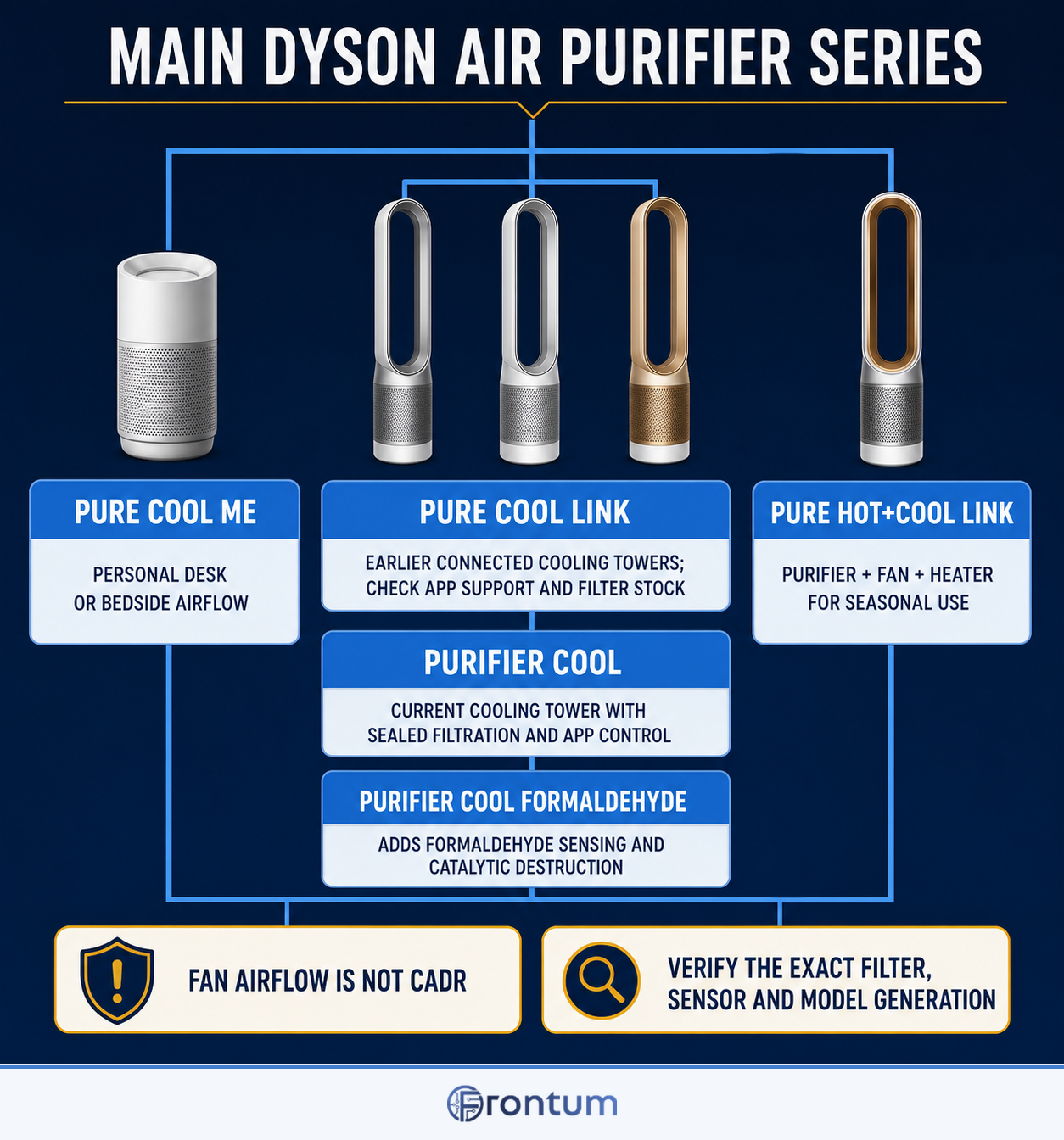
What are the main Dyson air purifier series?
The main Dyson air purifier series are as follows:
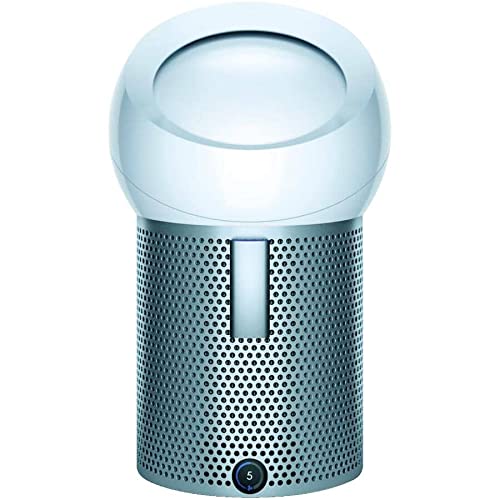
- Pure Cool Me BP01: A personal desk purifier with a focused airflow pattern for close-range use. It suits a workstation or bedside table, not whole-home circulation.
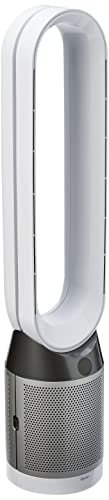
- Pure Cool Link TP02 and TP04: Earlier connected tower families combine particle filtration, carbon, oscillation, and fan airflow. TP04 is the larger-generation option; verify app support and filter availability because older Link models are now sold mainly through remaining stock.
- Purifier Cool TP07: A current cooling-focused tower with particle and gas sensing, sealed filtration, oscillation, and Dyson app support. Its clean-air performance should be compared using CADR rather than the fan’s headline airflow.
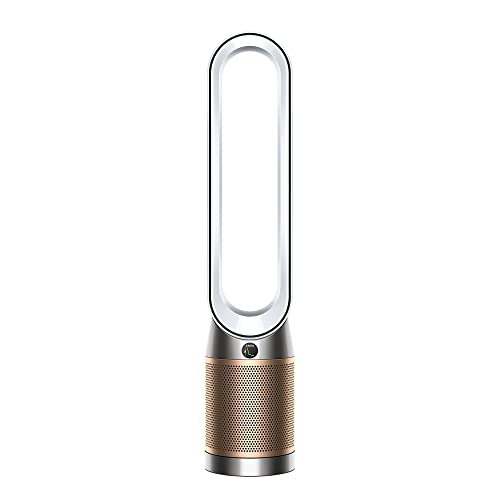
- Purifier Cool Formaldehyde TP09: This specialist tower adds formaldehyde sensing and catalytic destruction to the particle-and-carbon system. Choose it for a credible formaldehyde concern, not simply because the name sounds more advanced.
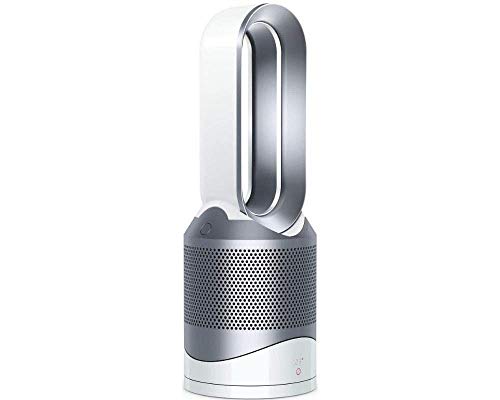
- Pure Hot+Cool Link HP02: A fan-heater-purifier hybrid for buyers who want one appliance across seasons. Heating convenience comes with a higher price and more functions to maintain, while purification still depends on its model-specific cartridge.
How much do Dyson air purifiers cost?
Dyson air purifiers generally cost about £300-£600, with Pure Cool Me at the low end and the TP04, TP09, and HP02 variants near the premium end. The range is therefore a design-and-function purchase as much as a filtration purchase.
Before paying the Dyson premium, compare clean-air output, noise at the intended speed, heating or cooling usefulness, app support, and replacement-filter cost. A conventional purifier with a similar CADR may be the better buy when fan styling and extra sensors are not priorities.
How do Dyson air purifiers compare with other brands?
Dyson is most compelling when the buyer values premium industrial design, fan circulation, app control, or a purifier-heater combination. LEVOIT and Bosch offer simpler routes to HEPA-and-carbon filtration at lower prices, while Rowenta provides more midrange formats and connected choices.
For formaldehyde-specific monitoring, Dyson’s TP09 is more specialised than the mainstream alternatives in this set. For a normal bedroom or living room, however, compare CADR, filter area, sound, and annual filter cost directly; the brand name alone does not determine clean-air performance.
What should you consider while choosing the best Dyson air purifier?
Before choosing a Dyson air purifier, consider the following factors:
- Room size and clean-air rate: Start with the room’s volume and compare the published purification rate at a tolerable fan setting. Do not size a living room from a Dyson fan’s circulation figure alone; a desk BP01 and a tower TP model serve different airflow jobs.
- TP, HP, or BP purpose: Choose BP01 for close personal use, TP for cooling airflow and purification, and HP when winter heating genuinely replaces another appliance. The combination models cost more, so avoid paying for heat or fan features that will sit unused.
- Filter and pollutant target: All the models here use particle filtration, but carbon capacity and formaldehyde treatment differ. Confirm whether your priority is pollen and dust, cooking odours, smoke, or formaldehyde before choosing TP09 over a standard TP purifier.
- Connected controls: Check whether the exact model supports Dyson Link, remote scheduling, air-quality history, and the local Wi‑Fi requirements. App functions are useful for automation, but essential controls and sensor display should still work at the machine.
- Noise and placement: Compare the sound rating at the speed that can deliver the needed cleaning, then leave the intake and outlet unobstructed. Bedrooms benefit from a quiet night mode and display dimming; towers need more floor space than BP01.
- Ownership cost: Price the correct replacement cartridge and its local availability, not just the appliance. Also confirm warranty coverage, filter-life prompts, and whether a discontinued Link generation still has supported app and spare-parts service.