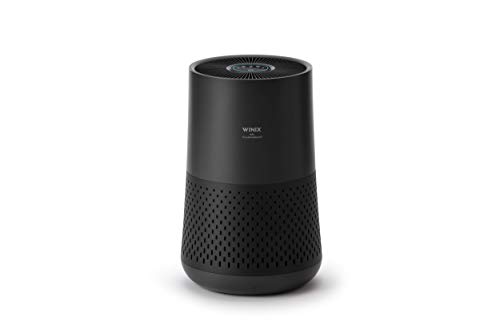
Are Winix air purifiers good?
Winix air purifiers have an average overall score of 7.9, ranking #1 among comparable air purifier brands, and a user rating of 9.4, placing them at #2 based on user reviews.
Winix air purifiers are particularly suitable for buyers who value transparent CADR, automatic sensing, layered particle-and-carbon filters, and strong living-room airflow. ZERO-S and AM90 offer substantially more clean-air capacity than the compact A series.
Winix air purifiers have a fragmented regional catalogue, and PlasmaWave or Wi‑Fi is not consistent across every model. Buyers should confirm the exact suffix, replacement kit, ionisation controls, and local warranty rather than treating similar-looking units as interchangeable.
The chart below compares Winix with other air purifier brands by average overall score.
[horizontal-chart-14864484804626698665012994058484894238043460741084]
What are the main advantages of Winix air purifiers?
The main advantages of Winix air purifiers are as follows:
- Strong clean-air output: Compact A330 and A332 models provide roughly 230–250 m³/h, while ZERO, ZERO-S, and AM90 reach about 390–420 m³/h. The larger models therefore offer useful headroom for living rooms and faster clearing after cooking or outdoor pollution.
- Layered filtration: Winix commonly combines a prefilter, activated carbon, and a high-efficiency particle filter. ZERO-S uses a washable prefilter and carbon pellets before its H13 particle stage, giving large debris, odours, and fine particles distinct treatment layers.
- AHAM-oriented comparisons: Winix participates in the AHAM CADR programme for relevant products and publishes smoke, dust, and pollen performance in markets where models are verified. Those figures support more meaningful room sizing than a large one-air-change area claim.
- Automatic and sleep operation: Air-quality sensors adjust fan speed in Auto mode, while light sensors or manual controls can trigger quieter sleep operation. Real-time colour indicators make the purifier understandable without opening an app.
- Choice of offline and connected models: Most ZERO and A-series units use straightforward appliance controls, while AM90 adds Wi‑Fi and voice support in compatible markets. Buyers can choose connectivity without making it a requirement for core purification.
What are the main disadvantages of Winix air purifiers?
The main disadvantages of Winix air purifiers are as follows:
- Regional model inconsistency: A-series numbers, ZERO suffixes, Wi‑Fi variants, and filter kits differ between Europe and North America. Similar casings do not guarantee identical CADR, PlasmaWave, app support, plug type, or warranty.
- PlasmaWave will not suit everyone: Relevant Winix models use an ionisation-based treatment stage in addition to mechanical filtration. Buyers who prefer particle-and-carbon filtration only should confirm whether the exact model includes PlasmaWave and whether it can remain switched off.
- Wi‑Fi is uncommon in the core range: AM90 provides connected control, but many ZERO and A-series models are offline. Winix is less consistent than Xiaomi or LEVOIT when remote schedules and smart-home integration are priorities.
- Filter sets are proprietary: ZERO-S, AM90, and compact A-series bodies require different replacement kits, often combining carbon and particle stages. Confirm the filter letter or official part number and local price before selecting an imported model.
- Large models need floor and service space: ZERO-S and AM90 are around 7–8 kg and require clear front or side intake access. Their airflow is useful, but they are less discreet than a compact cylindrical purifier and can reach roughly 50–55 dB at maximum speed.
Who makes Winix air purifiers?
Winix air purifiers are made by WINIX Inc., a South Korean appliance manufacturer established in the 1970s and listed on the Korean market. The company’s headquarters are in Hwaseong, Gyeonggi Province, and its portfolio also includes dehumidifiers, humidifiers, dryers and water-related appliances.
Winix operates manufacturing sites in South Korea, China and Thailand, with regional sales and support centres in the United States and the Netherlands. Its long-running focus on indoor-air appliances explains the consistent HEPA, carbon and PlasmaWave architecture across A-series, ZERO and larger-room purifier families, although filter formats and features remain model-specific.
What are the main Winix air purifier series?
The main Winix air purifier series are as follows:
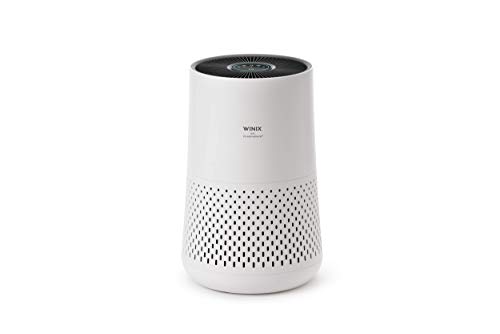
- A330 and A332 compact series: These round-body models provide roughly 230–250 m³/h CADR for bedrooms, offices, and other small or medium rooms. They combine automatic sensing with an all-in-one filter format, but regional versions can differ in prefilter construction and PlasmaWave support.
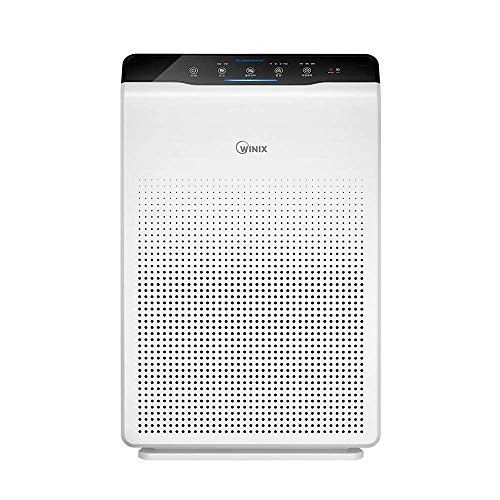
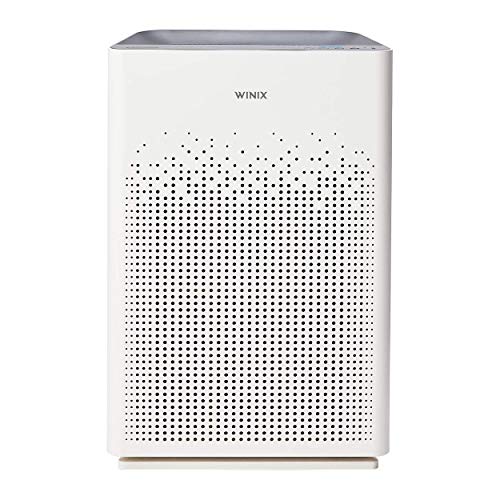
- ZERO and ZERO-S series: The rectangular ZERO family moves to roughly 390–410 m³/h, washable prefilters on relevant models, and larger separate filter layers. ZERO-S is the stronger living-room choice, with H13 filtration, carbon pellets, automatic sensing, and a sleep mode; Wi‑Fi belongs only to specifically named connected variants.
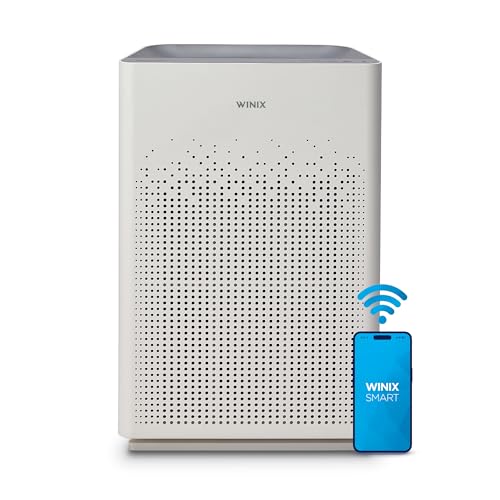
- AM smart series: AM90 combines approximately 420 m³/h CADR with Wi‑Fi, app operation, voice-assistant support, an AOC carbon filter, and PlasmaWave. It suits buyers who want traditional Winix filtration and smart control, but its exact app ecosystem and regional replacement filter must be confirmed.
How much do Winix air purifiers cost?
Winix air purifiers generally cost about £100-£300. Compact A-series products usually sit around £90-£130, mainstream ZERO models around £130-£220, and high-output or connected variants can approach £220-£260.
The price increase normally buys stronger CADR, a larger carbon stage, washable prefilter construction, or Wi‑Fi rather than a completely different purification principle. Include the correct annual replacement kit in the budget: Winix commonly specifies about 12 months for main filters, while the reusable prefilter needs much more frequent cleaning.
How do Winix air purifiers compare with other brands?
Winix air purifiers are stronger than many compact rivals when the priority is a conventional multi-layer filter, automatic sensing, and clearly stated CADR. ZERO-S competes well with midrange Rowenta and larger LEVOIT models for living-room airflow.
Xiaomi and LEVOIT provide more connected and compact choices. Winix reserves Wi‑Fi for specific products such as AM90, but its offline models remain fully usable from the control panel and avoid dependence on a cloud account.
Dyson offers more polished fan, heating, and specialist sensing functions, at a much higher purchase price. Winix is better suited to buyers who want dedicated purification rather than a climate appliance.
The deciding trade-off is PlasmaWave and regional support. Buyers comfortable with the feature gain an extra treatment stage on relevant models; buyers who want purely mechanical filtration should verify its controls or choose a non-ionising alternative with comparable CADR.
What should you consider while choosing the best Winix air purifier?
Before choosing a Winix air purifier, consider the following factors:
- AHAM CADR and room volume: Target about four to five air changes per hour from a comparable smoke CADR or overall clean-air figure. A 60 m³ room needs roughly 240–300 m³/h, while a 90 m³ living room needs about 360–450 m³/h; this separates A-series and ZERO-S use cases clearly.
- Filter layout and carbon: A washable or vacuumable prefilter protects the particle stage, while carbon pellets generally offer more gas contact than a thin coated sheet. For smoke, pets, or cooking odours, compare the exact carbon filter rather than judging from filtration-stage count.
- PlasmaWave preference: Establish whether the regional model includes PlasmaWave and whether the control allows it to remain off. Mechanical particle and carbon filtration should still meet the room requirement independently if ionisation is not desired.
- Connected versus offline use: AM90 is the relevant smart choice, whereas many ZERO and A-series models use only onboard controls. Confirm app availability, 2.4 GHz Wi‑Fi, voice-assistant support, and whether an offline model would be simpler.
- Noise and sleep behaviour: Full speed is commonly around 50–55 dB, while sleep mode lowers fan speed and turns off distracting lights. Size the purifier so adequate cleaning does not require turbo all night, and check whether its light sensor changes mode automatically.
- Regional filter and warranty support: Match the precise A, AM, ZERO, or ZERO-S code to the official replacement kit and local plug. Main filters are commonly replaced around 12 months, but pollutant load changes that interval; reliable local stock is more valuable than a cheap imported purifier.