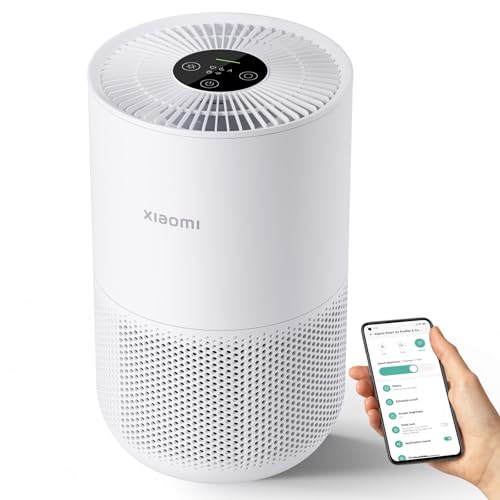
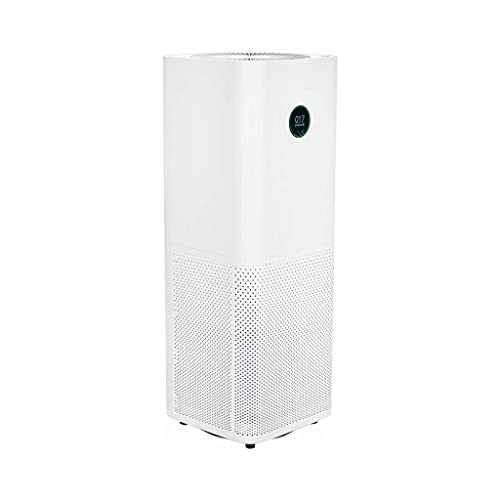
Are Xiaomi air purifiers good?
Xiaomi air purifiers have an average overall score of 7.5, ranking #4 among comparable air purifier brands, and a user rating of 9.1, placing them at #4 based on user reviews.
Xiaomi air purifiers are particularly strong for buyers who want high CADR per euro, compact 360-degree designs, and app control from entry level to Pro. The Smart Air Purifier 4 family provides a clear airflow ladder for bedrooms through larger living rooms.
Xiaomi air purifiers depend more heavily on exact regional hardware, Xiaomi Home server support, and model-specific cartridges than simple offline rivals. Buyers should verify the full model and filter code before choosing a discounted import or older Mi generation.
The chart below compares Xiaomi with other air purifier brands by average overall score.
[horizontal-chart-14864484804626698665012994058484894238043460741084]
What are the main advantages of Xiaomi air purifiers?
The main advantages of Xiaomi air purifiers are as follows:
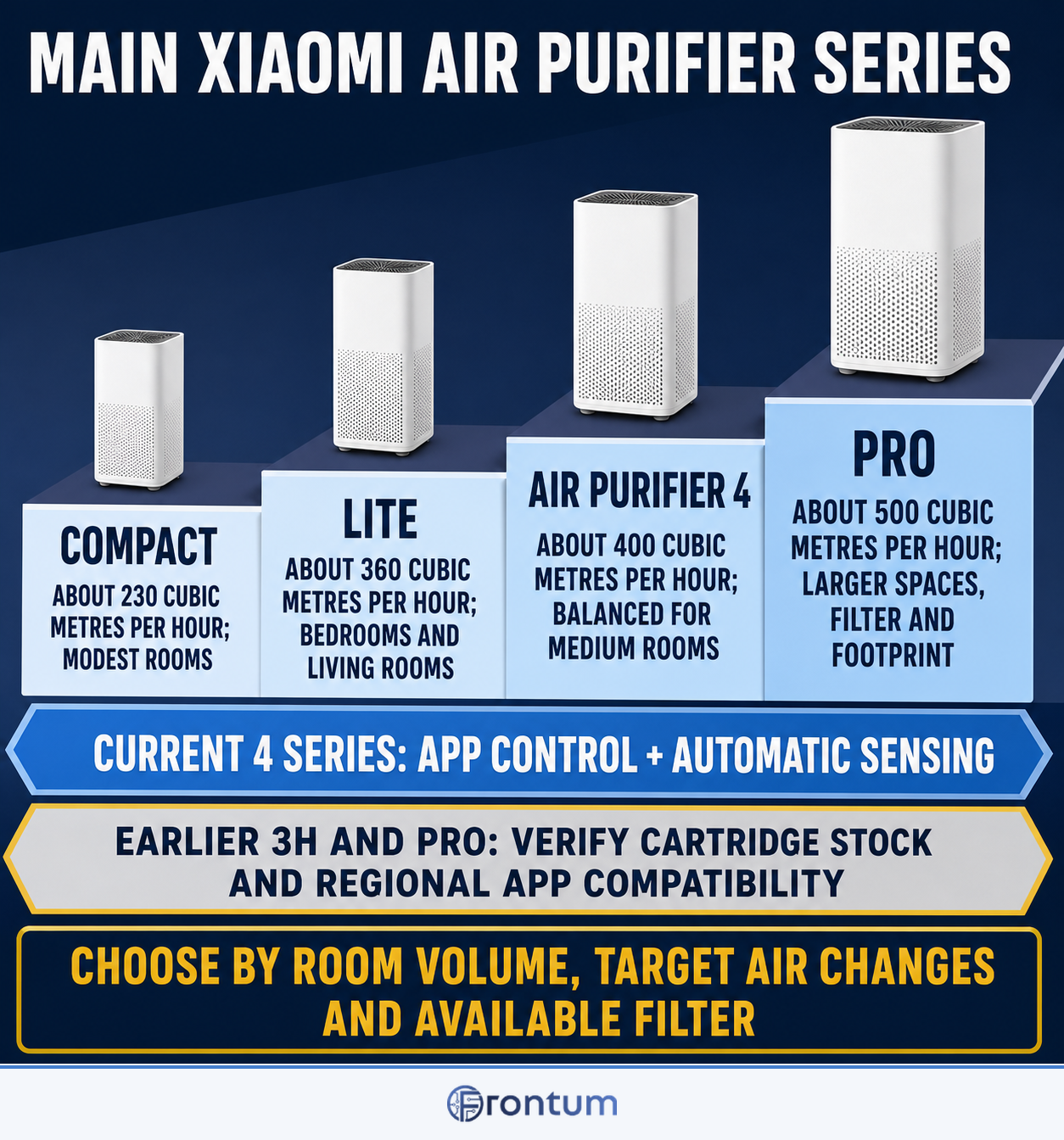
- Strong airflow for the price: Xiaomi offers useful steps from about 230 m³/h in the 4 Compact to 360 m³/h in the 4 Lite, 400 m³/h in the standard 4, and 500 m³/h in the 4 Pro. This makes it possible to buy meaningful CADR headroom without moving immediately to premium appliance pricing.
- Connected control throughout the modern range: Xiaomi Home supports remote operation, schedules, air-quality viewing, child lock, and filter-life reminders on the Smart Air Purifier 4 family. Voice-assistant support varies by market and account region, but the app is not restricted to the most expensive model.
- Efficient three-in-one cartridges: Current models combine a primary filter, Xiaomi high-efficiency particle media, and activated carbon in one cylindrical cartridge. The electrostatic-plus-mechanical media is designed to maintain airflow with less resistance than a traditional dense HEPA sheet.
- Compact 360-degree design: Air enters around the body, allowing a relatively small footprint and flexible room placement. The Compact model is especially easy to place in a bedroom or office, while Pro retains the same basic layout at larger scale.
- Clear automatic feedback: Particle sensors, colour indicators, and displays let supported models adjust speed as conditions change. Night modes reduce lighting and airflow for sleep, while manual high speed remains available for faster clearing.
What are the main disadvantages of Xiaomi air purifiers?
The main disadvantages of Xiaomi air purifiers are as follows:
- Model and filter-code confusion: Mi Air Purifier 3H, older Pro units, and Smart Air Purifier 4 variants do not share one universal cartridge. A listing that says “Xiaomi filter” is insufficient; the complete purifier model and regional filter code must match.
- Carbon capacity depends on the model: Every modern cartridge includes activated carbon, but the amount and gas-cleaning specification vary. Particle CADR therefore does not prove equally strong performance against smoke, cooking odours, or formaldehyde.
- App and region dependencies: Xiaomi Home features, voice assistants, firmware, and server regions can differ between imported and local products. An inexpensive import can become inconvenient if it cannot be added to the buyer’s existing Xiaomi Home region.
- High-speed noise: Maximum output reaches roughly 60–65 dB on several models, even though sleep settings are much quieter. Room sizing should leave enough CADR reserve to avoid running at full speed continuously.
- Shorter standard warranty in some markets: Xiaomi air purifiers may carry a one-year manufacturer warranty where rivals offer two or more years. Local seller support, filter availability, and statutory consumer rights therefore deserve extra attention.
Who makes Xiaomi air purifiers?
Xiaomi air purifiers are Xiaomi Corporation smart-home products. Xiaomi was founded in 2010 and combines consumer electronics with a large IoT platform, so the purifier range is designed to work alongside the Mi Home/Xiaomi Home ecosystem.
Xiaomi specifies the product, software and user experience, while manufacturing can involve different group companies or contracted factories. Compact, Lite, standard and Pro purifier variants share a similar connected design language, but the legal manufacturer and country should still be checked on the exact model’s compliance label rather than inferred from the Xiaomi logo alone.
What are the main Xiaomi air purifier series?
The main Xiaomi air purifier series are as follows:
- Smart Air Purifier 4 Compact: This is the smallest current 4-series model, with about 230 m³/h particle CADR and a body suited to bedrooms, offices, or other modest rooms. It retains app control and automatic sensing, but has less airflow headroom than Lite.
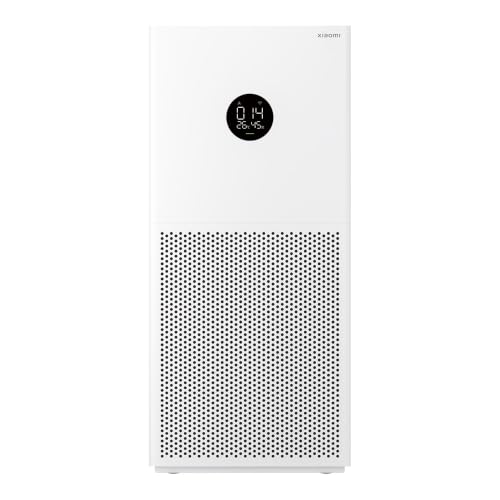
- Smart Air Purifier 4 Lite: Lite raises particle CADR to about 360 m³/h and targets typical bedrooms and living rooms. Its 25–43 m² official coverage is more useful when translated into room volume and desired air changes rather than accepted as a universal maximum.
- Smart Air Purifier 4: The standard model moves to about 400 m³/h and adds a more substantial display and sensor package than Compact. It is the balanced choice for medium rooms where 4 Pro would be unnecessarily large.
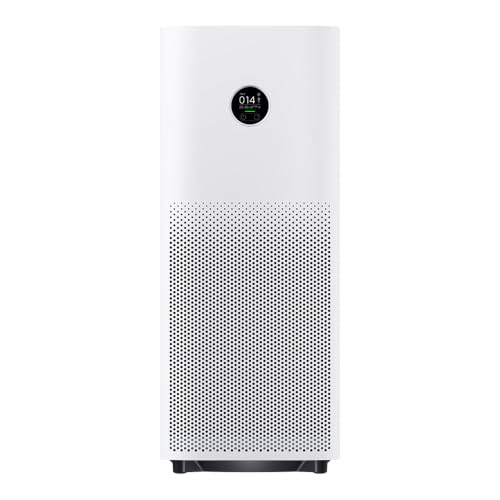
- Smart Air Purifier 4 Pro: Pro reaches about 500 m³/h, monitors both PM2.5 and coarser PM10-range particles, and uses a larger carbon-loaded cartridge. It suits larger living spaces, but its filter, footprint, and purchase price are all higher.
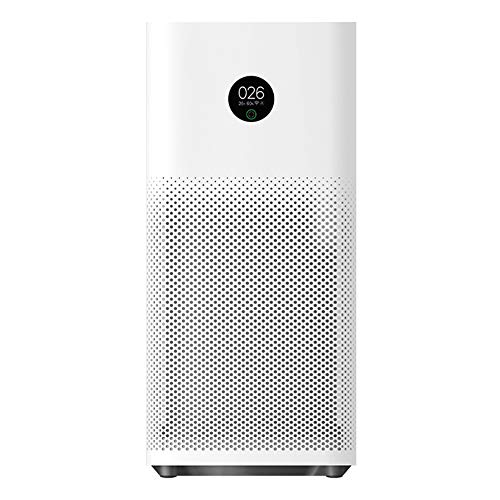
- Mi Air Purifier 3H and earlier Pro models: These legacy families remain common at retailers and use the older Mi naming, app conventions, and replacement filters. Their airflow can still be competitive, but buyers should confirm cartridge stock and regional app compatibility before choosing old inventory.
How much do Xiaomi air purifiers cost?
Xiaomi air purifiers generally cost about £90-£300. The 4 Compact normally occupies the £90 tier, 4 Lite and the standard 4 sit around £130-£220, and 4 Pro commonly reaches roughly £220-£300 depending on the market and promotion.
The useful upgrade is airflow rather than the word “smart,” because app control appears across the current family. Compare CADR, sensor capability, display, cartridge size, and room volume, then add roughly £30-£60 for the correct replacement filter. A discounted legacy model is worthwhile only while its cartridge and app region remain supported.
How do Xiaomi air purifiers compare with other brands?
Xiaomi air purifiers compete most directly with LEVOIT on compact pricing, cylindrical filters, and app-led operation. Xiaomi makes connected control standard across much of the current 4 family, while LEVOIT offers more shapes, filter variants, and larger high-CADR choices.
Against Winix, Xiaomi emphasises Wi‑Fi, compact footprints, and a simple product ladder. Winix counters with AHAM-oriented CADR comparisons, washable prefilters on several models, and PlasmaWave on relevant versions; buyers sensitive to ionisation should verify whether it can be disabled.
Dyson and Rowenta add fan, heating, or premium display options that Xiaomi generally avoids. Xiaomi is the stronger value choice when its filter and app region are locally supported, but a conventional offline purifier can be easier to keep for many years.
What should you consider while choosing the best Xiaomi air purifier?
Before choosing a Xiaomi air purifier, consider the following factors:
- CADR for the room volume: A practical target is four to five air changes per hour, so multiply room volume by 4–5. A 60 m³ bedroom needs about 240–300 m³/h; Compact is near the lower edge, while Lite or the standard 4 provides quieter headroom.
- Exact filter compatibility: Match the full Compact, Lite, 4, 4 Pro, 3H, or older Pro model to its official cartridge. Similar cylindrical shapes are not proof of compatibility, and an incorrect seal can let air bypass the filter.
- Particle and gas priorities: Xiaomi’s particle media and carbon layer address different pollutants. For smoke or strong cooking odours, prefer a model with more carbon and compare gas-cleaning information; high particle CADR alone is not sufficient.
- Xiaomi Home region: The purifier, account server, app, and voice platform should all support the same market. Local-region hardware is safer than a cheap import when schedules, firmware updates, Alexa, or Google Assistant matter.
- Noise at useful airflow: Sleep modes are quiet, but maximum operation can approach 60–65 dB. Choose enough CADR that normal cleaning can happen below full speed, and use display-off controls for a bedroom.
- Running cost and service: Current cartridges commonly cost about £30-£60 and may be rated for roughly 6–12 months depending on use. Check local stock, warranty length, prefilter cleaning instructions, and filter reminders before buying discontinued Mi-generation stock.