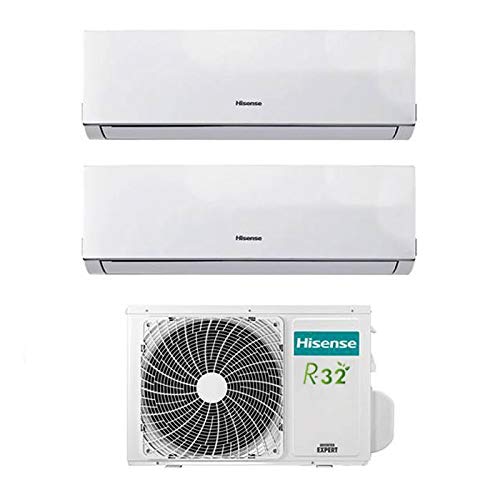
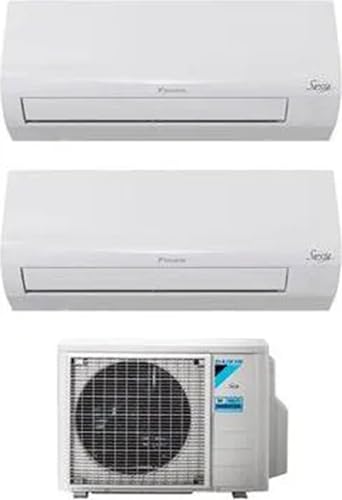
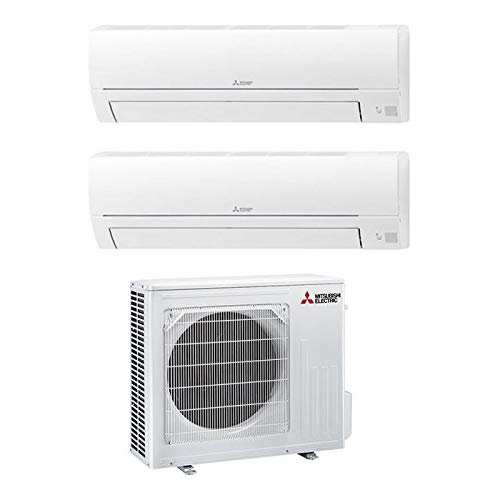
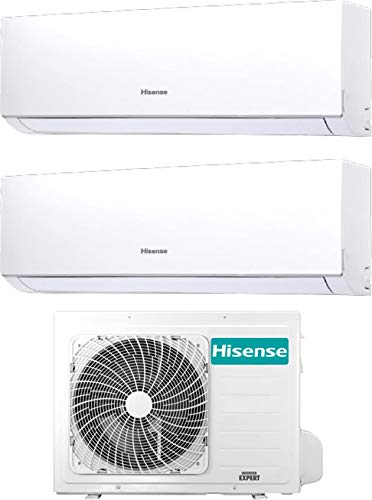
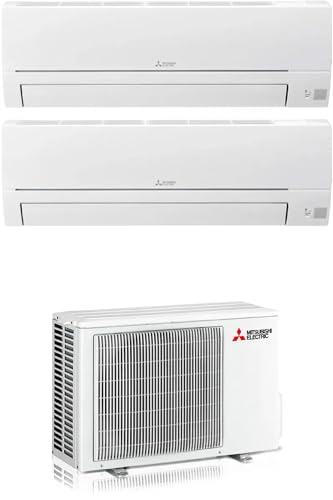
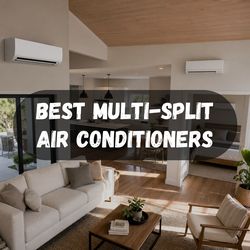
Which brands make the best dual-split air conditioners?
The brands with the highest average scores among dual-split air conditioners are as follows.
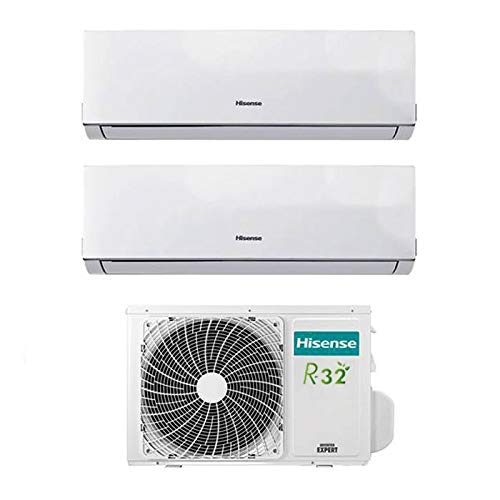
- Hisense (Average overall score: 7.9)
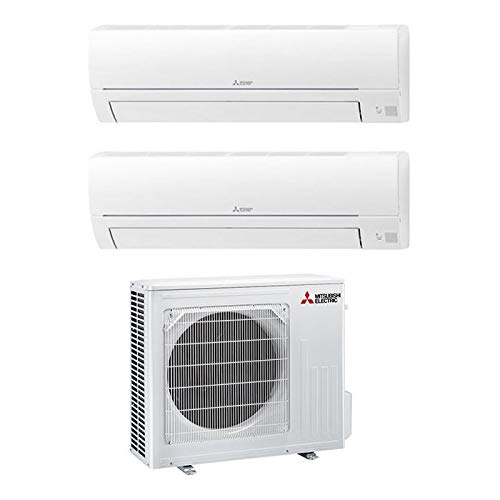
- Mitsubishi (Average overall score: 7.7)
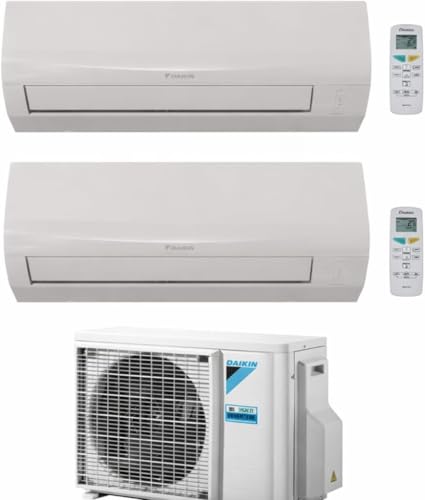
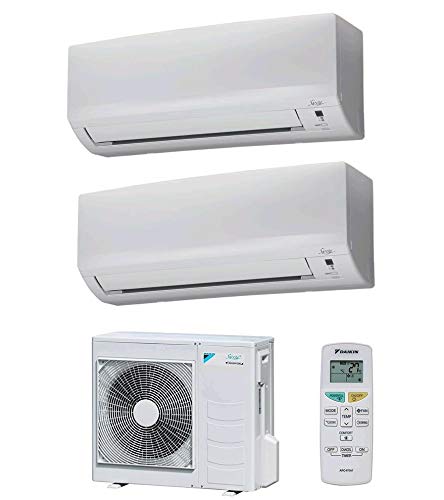
- Daikin (Average overall score: 7.6)
The chart below ranks brands by average overall score for dual-split air conditioners.
[horizontal-chart-04866470345716074890115852529793161547290675014657]
When should you choose a dual-split air conditioner?
Choose a dual-split air conditioner when two rooms need regular cooling but installing two separate outdoor units would be impractical. It is a good fit for a bedroom plus office, two bedrooms, or a living room and adjacent study where the zones can be served by one outdoor unit.
The main advantage is a cleaner installation with coordinated equipment, while each indoor unit can normally set its own temperature and fan mode. The trade-off is shared outdoor capacity: simultaneous operation may divide the available output, and a fault in the outdoor unit can affect both rooms.
Before buying, confirm that both indoor units can operate in the modes you need, that the combined capacity suits the heat load, and that pipe runs remain within the manufacturer’s limits. Choose separate mono-split systems instead when the rooms need independent redundancy or are far apart.
How many indoor units can a dual-split air conditioner support?
A dual-split air conditioner supports two indoor units connected to one outdoor unit, with the available output shared between the rooms. Typical sets use two 2.5–3.5 kW units, but the permitted combination depends on the outdoor model and its capacity table.
Check the exact combination code, connected-capacity ratio, pipe lengths, height difference, and whether both zones can heat or cool simultaneously. Do not add a third indoor unit to a dual-split outdoor unit; use a triple-split system when three rooms are required.
What cooling capacity and room coverage should a dual-split system provide?
A dual-split system should provide enough combined output for both rooms, commonly around 4–7 kW for two bedrooms or a bedroom and living room. A pair of 2.5–3.5 kW units often covers about 25–35 m² per room under ordinary conditions, but the correct selection depends on heat load rather than a fixed area rule.
A sunny room with large glazing, poor insulation, high ceilings, or frequent occupancy can require more capacity. Conversely, oversizing a small bedroom can cause rapid cycling and uneven humidity control. The outdoor unit must also be able to deliver the required output when both indoor units run together.
Ask for a room-by-room calculation and compare nominal cooling capacity, minimum modulation, and the manufacturer’s connected-capacity ratio. The published area should be treated as a reference, not as permission to ignore orientation, insulation, pipe routing, or indoor-unit placement.
How energy-efficient are dual-split air conditioners?
Dual-split air conditioners can be very efficient because one inverter outdoor unit adjusts output across two zones instead of running two separate compressors. A++ and A+++ cooling classes are strong targets, but compare the seasonal SEER figure and the combined-load rating rather than looking at the class alone.
Efficiency is highest when the system is correctly sized and both indoor units can modulate without forcing the outdoor compressor to cycle. Long pipe runs, dirty filters, blocked outdoor airflow, and a very low set temperature increase consumption. Heating performance also needs a separate SCOP check.
For frequent use, prefer an A++ or A+++ system with documented seasonal ratings, low standby draw, and independent scheduling. If the two rooms have very different schedules, two mono-splits may use energy more flexibly even if their combined purchase price is higher.
How much do dual-split air conditioners cost?
Dual-split air conditioners generally cost about £600-£2,200 for equipment, with installation often charged separately. Entry sets can sit near £600-£900, while quiet, high-efficiency systems with premium controls and larger capacity commonly reach £1,000-£1,700 or more.
The complete quote should include the two indoor units, outdoor capacity, brackets, copper pipe, condensate drainage, electrical work, commissioning, and warranty. Compare the combination table and service support as well as the appliance price; the chart below shows the new-product price distribution for dual-split air conditioners.
The chart below shows the new-product price distribution for dual-split air conditioners.
[vertical-chart-09746719017322403021153331607895944584262441293904]
What should you check before buying a dual-split air conditioner?
Before buying a dual-split air conditioner, check the following factors:
- Room-by-room load: Match each indoor unit to its room’s heat load; a combined 5 kW label does not prove that two unevenly sized rooms will stay comfortable.
- Combination table: Confirm the exact indoor/outdoor model combination and the output available when both zones run simultaneously.
- Pipe route: Measure total length, height difference, bends, and condensate drainage before ordering; installation limits affect cost and performance.
- Noise: Compare the low and high indoor sound figures and check outdoor vibration isolation, especially when one room is a bedroom.
- Efficiency: Prefer A++ or A+++ cooling with a published SEER, and check SCOP separately if winter heating matters.
- Controls: Verify independent temperature control, timers, Wi-Fi, and whether the app works without a paid service.
- Service access: Leave enough access around the outdoor unit and confirm filter cleaning, parts supply, warranty, and commissioning responsibilities.