Are Haier air conditioners good?
Haier air conditioners are a practical value-oriented choice when the buyer wants inverter cooling and heating with useful connected features at a moderate equipment price.
Haier air conditioners suit bedrooms, offices, and living rooms where affordable operation and app control matter more than a large premium ecosystem. Revive, Trend, Revive Plus, and Flexis families in supported markets cover a path from straightforward wall units to better-equipped comfort systems.
Haier air conditioners have a smaller local range and service network than LG, Daikin, or Samsung in some markets, so warranty support and installer experience matter. Check the exact model for sound level, Wi-Fi, filtration, heating output, and replacement parts before treating a low purchase price as a complete value judgement.
What are the main advantages of Haier air conditioners?
The main advantages of Haier air conditioners are as follows:
- Accessible pricing: Haier often gives buyers a lower-cost route into inverter split cooling and heating. Compare the included controls, seasonal ratings, and installation support so the equipment saving does not hide a weaker long-term service arrangement.
- Connected controls: Selected systems offer app control, schedules, and remote monitoring. Confirm Wi-Fi inclusion and network requirements because the feature is not universal across all Haier families.
- Practical capacities: The range covers common bedroom and living-room sizes with larger options in selected markets. Correct load calculation still matters more than choosing the cheapest capacity label.
- Heating utility: Many systems provide heating as well as cooling, which can extend use into spring, autumn, and some winter conditions. Compare SCOP and low-temperature capacity when heating is important.
- Simple comfort modes: Timer, sleep, fan, dry, and automatic modes cover common household needs without requiring specialist setup. Check filter access and cleaning instructions before installation.
What are the main disadvantages of Haier air conditioners?
The main disadvantages of Haier air conditioners are as follows:
- Service variation: Installer and spare-part coverage can vary more by region than for the most established premium brands. Confirm who will commission the unit and handle warranty work before ordering.
- Model differences: Wi-Fi, filtration, sound modes, heating output, and seasonal efficiency differ across families and generations. Read the full model code and energy label rather than using the Haier name alone.
- Basic indoor finish: Value units may use a more functional indoor design and simpler airflow control than premium systems. This is acceptable when price matters but less attractive for a prominent living-room wall.
- Installation quality: Correct pipework, charge, drainage, and outdoor clearance remain essential for efficient quiet operation. A low equipment price cannot compensate for poor commissioning.
- Limited specialist features: Buyers seeking advanced humidity management, premium air treatment, or a wide multi-split ecosystem may find more options with Daikin, Mitsubishi, or LG. Choose Haier for the functions it actually supplies.
What are the main Haier air conditioner series?
The main Haier air conditioner families are as follows:
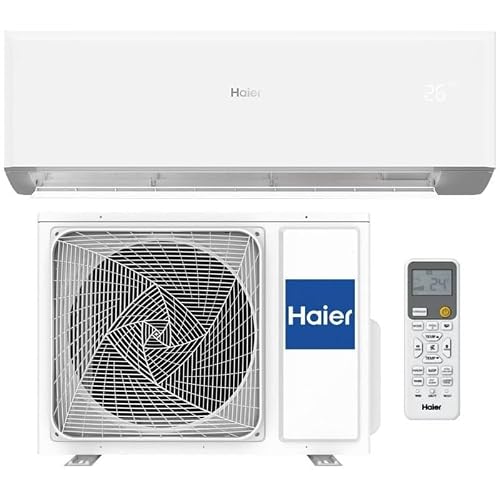
- Revive: Revive is the practical family for everyday split cooling and heating. It suits buyers who want a manageable price and common comfort modes, while checking the exact local Wi-Fi and efficiency specification.
- Trend: Trend targets straightforward value with a clean wall-mounted design and ordinary household controls. It is best for conventional rooms where advanced air treatment is not a priority.
- Revive Plus: Revive Plus sits above the basic value range with a broader comfort or connected specification in supported markets. Verify the exact model because regional suffixes can change included features.
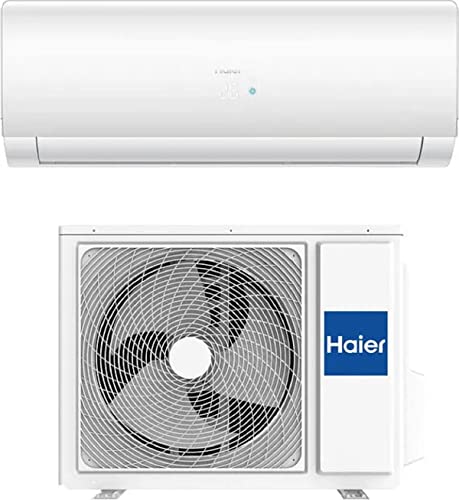
- Flexis: Flexis is the more design- and comfort-focused family where available, with stronger control and indoor-unit styling. It fits frequent users who will use the added functions enough to justify the higher price.
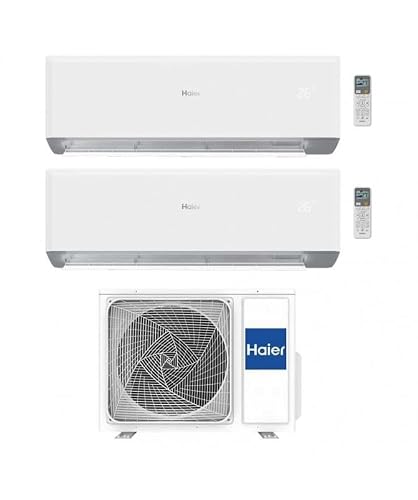
- Haier multi-split: Compatible outdoor units can support several rooms in markets that offer the combination. Confirm simultaneous capacity, approved indoor units, pipe limits, and service support before planning a multi-room system.
How much do Haier air conditioners cost?
Haier air conditioners cost about £300-£860 for equipment in the common split range, with professional installation priced separately. Entry Revive or Trend systems are often around £300-£470, while better-equipped Revive Plus and Flexis models move toward £860.
Add brackets, pipework, electrical work, condensate drainage, commissioning, and any Wi-Fi or multi-split hardware to the total. Haier is most attractive when local service and warranty support remain clear after those installation costs are included.
How do Haier air conditioners compare with LG models?
Haier and LG both offer value-to-midrange inverter air conditioners with app control and common cooling and heating modes. Haier is usually most compelling on equipment price, while LG offers a broader premium profile and stronger brand depth in connected DualCool and design-led systems.
Haier Revive, Trend, Revive Plus, and Flexis provide a focused family path. LG's entry, DualCool, Libero, and premium Artcool-style ranges provide more variation in indoor design and connected comfort, depending on the market.
Choose Haier when the installed price, required capacity, app support, and local service are competitive. Choose LG when its exact airflow, indoor design, quiet mode, or support network is better; compare model-level energy, heating, sound, and warranty details rather than assuming the premium logo is automatically better.
What should you consider while choosing the best Haier air conditioner?
Before choosing a Haier air conditioner, consider the following factors:
- Capacity and heat load: Match the unit to room area, insulation, glazing, ceiling height, and solar gain. A 2.5–3.5 kW class may suit many ordinary rooms, but an installer should verify the actual load.
- Family and feature tier: Use Revive or Trend for straightforward value, Revive Plus for a broader comfort specification, and Flexis when design or connected features matter. Confirm the current local suffix and included equipment.
- Indoor sound: For a bedroom, look for low-mode sound around 20–25 dB and check the maximum value. A quiet mode may reduce airflow, so ensure it can still hold the target temperature during warm weather.
- SEER and SCOP: Compare seasonal ratings at the same capacity and climate assumption. SEER affects summer electricity use, while SCOP and cold-weather output matter when heating is regular.
- Wi-Fi and app: Confirm whether Wi-Fi is built in, which app is required, and what works from the remote if the network fails. Do not assume that a Haier family name guarantees the same connected controls.
- Filters and maintenance: Check filter access, cleaning intervals, replacement cost, and the service route. A low purchase price is less attractive when consumables or parts are hard to source.
- Installation and warranty: Confirm pipework, drainage, outdoor clearance, commissioning, warranty contact, and local service. These practical details determine whether the value proposition survives long-term use.