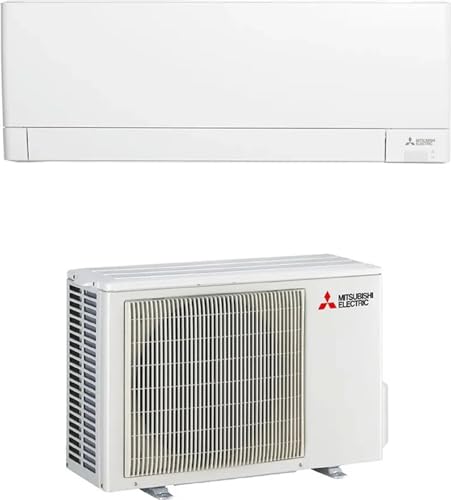
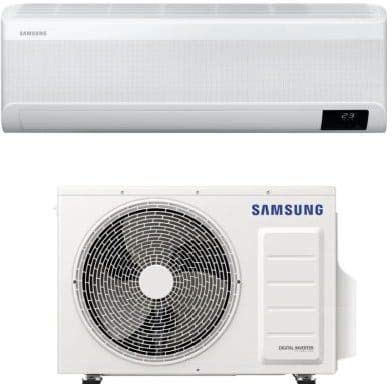
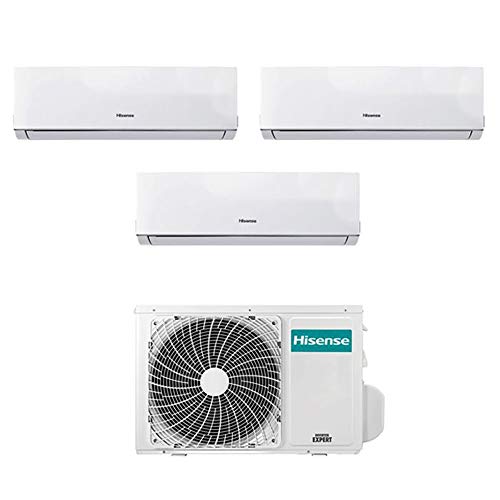
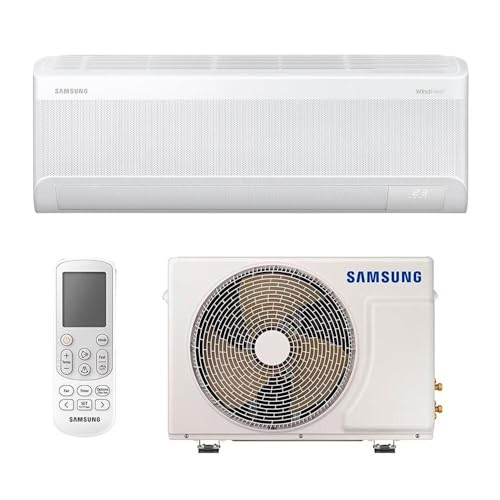
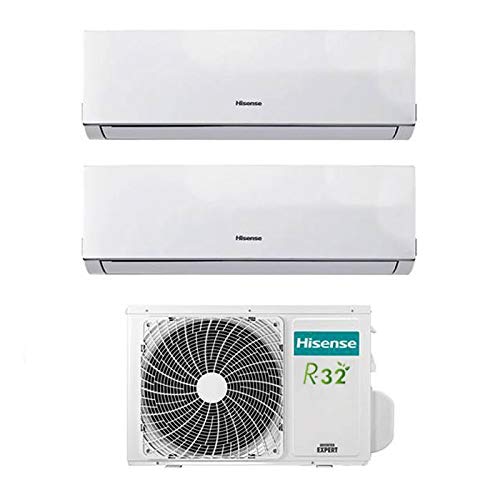
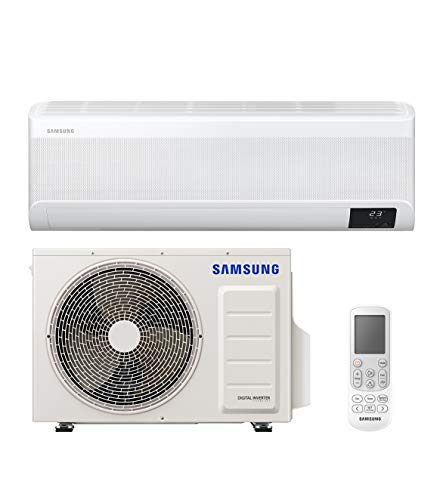
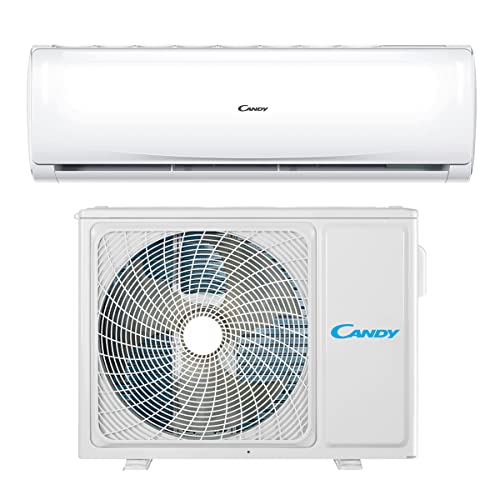
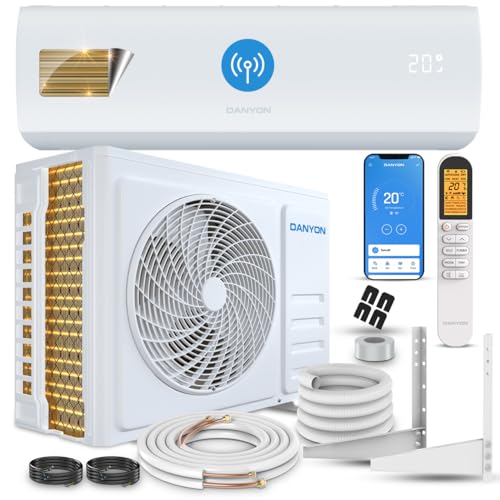
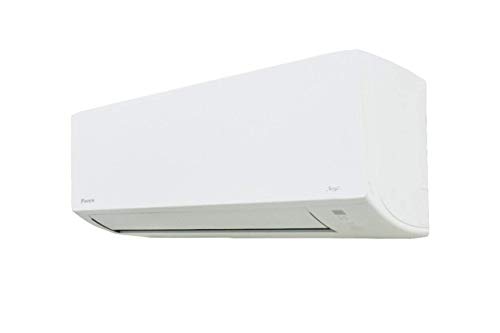
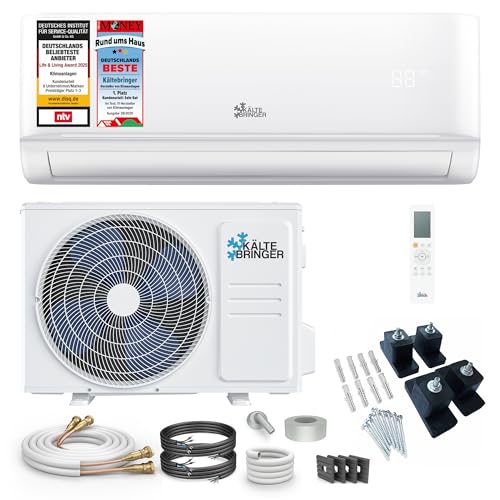
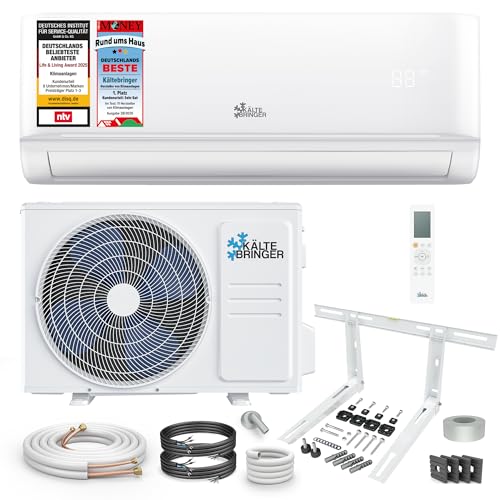
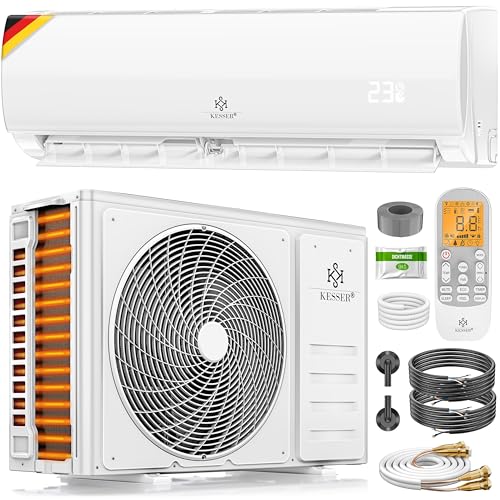
What does smart mean for an air conditioner?
A smart air conditioner connects to a local network or platform so it can be monitored and controlled through an app, schedule, voice assistant, or home automation.
Useful functions include remote start and stop, temperature changes, timers, room status, energy estimates, geofencing, and alerts. The exact set depends on the indoor unit, Wi-Fi module, app, account, and supported platform.
Smart does not automatically mean more efficient or better at cooling. It adds control and information; the actual electricity use still depends on capacity, insulation, set temperature, operating hours, and whether the system is allowed to run sensibly.
Which brands make the best smart air conditioners?
Among air conditioners with Wi-Fi control, the brands with the highest average scores are as follows.
- Midea (Average overall score: 8.4)
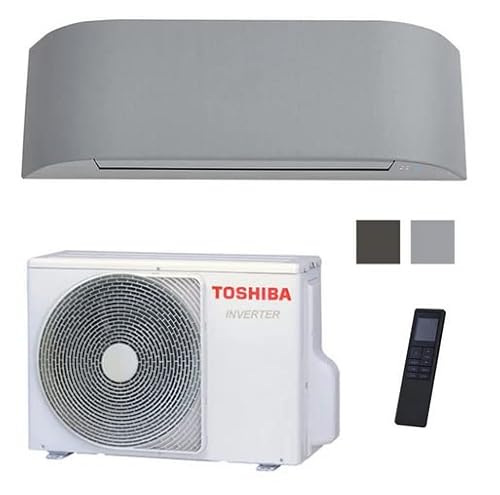
- Toshiba (Average overall score: 8.1)
- Mitsubishi (Average overall score: 8)
The chart below ranks brands by average overall score among air conditioners with Wi-Fi control.
[horizontal-chart-03965154981311836247033753951767540351133361757588]
How do smart air conditioners connect to Wi-Fi and apps?
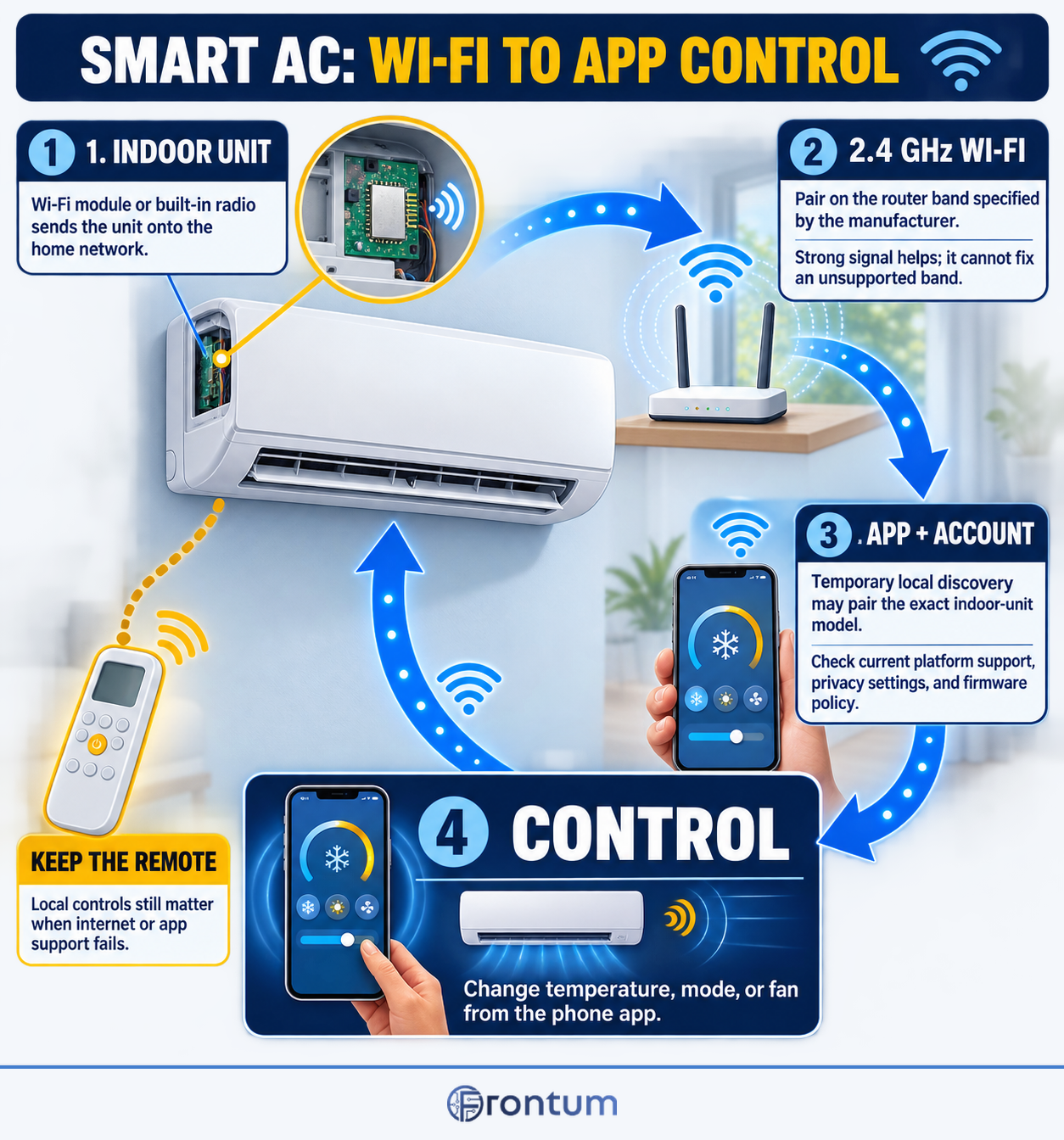
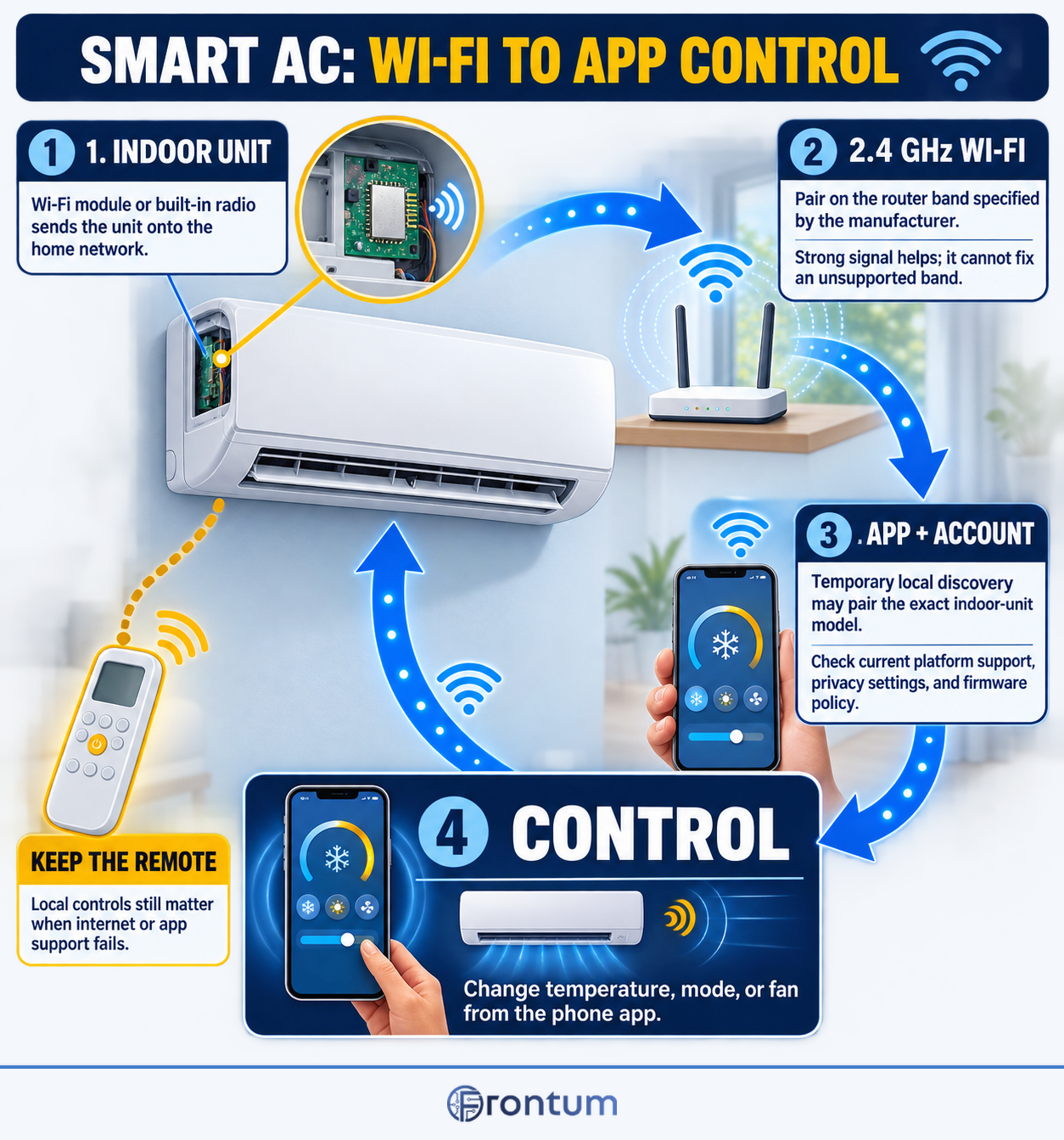
A smart air conditioner usually connects through a manufacturer Wi-Fi module or built-in wireless radio, then pairs with a phone app over the home's 2.4 GHz network or the method specified by the manufacturer. Setup may require the exact indoor-unit model, a user account, and temporary local discovery.
Check the app's current platform support, account requirements, privacy settings, firmware policy, and fallback remote. A strong Wi-Fi signal near the indoor unit helps, but it cannot fix an unsupported router band or an obsolete app.
Which controls and automations do smart air conditioners support?
The most useful smart air-conditioner controls and automations are as follows:
- Remote temperature control: The app can change the set temperature, mode, fan speed, and louvre position from outside the home. Confirm which settings remain available when the unit is offline.
- Schedules: Daily or weekly schedules can pre-cool a room before work or reduce heating when occupants leave. Check whether schedules live in the unit, the app, or a cloud service.
- Geofencing: A geofence can switch the system when household phones leave or approach the property. It needs reliable location permissions and should not override a manual setting unexpectedly.
- Energy monitoring: Some platforms estimate runtime or electricity use and show trends. Treat the figures as guidance unless the system includes a calibrated meter, and compare them with the property meter for real costs.
- Voice and home automation: Compatible systems may work with voice assistants, scenes, or broader smart-home routines. Confirm the exact platform, commands, privacy controls, and what happens if the internet fails.
Can smart air conditioners work without an internet connection?
Smart air conditioners can usually cool and heat without internet access through the handheld remote and the indoor-unit controls, but remote app functions and cloud automations may stop working.
Some models retain local schedules or network control, while others depend heavily on the manufacturer's server. Confirm the offline behaviour before purchase, especially for a holiday property or a room where basic heating protection must continue during an outage.
A good system should keep temperature control, fan modes, timer functions, and safety behaviour available locally. Treat Wi-Fi as a convenience layer rather than the only way to operate the air conditioner.
How much energy can smart air conditioners save?
Smart controls can help reduce energy use by avoiding empty-room operation, scheduling sensible temperatures, and showing when the system runs longer than expected. Timers and geofencing can prevent unnecessary hours, but automation may waste energy if it pre-cools an empty room or uses an extreme set point.
Smart control does not make an inefficient or badly sized unit efficient. Compare SEER, SCOP, inverter control, insulation, and actual operating hours as well as Wi-Fi features, and use the property meter for real billing decisions unless the system includes calibrated measurement.
How much do smart air conditioners cost?
Smart air conditioners cost about £300-£1,400 for equipment, with professional installation priced separately. Entry connected systems often sit around £300-£520, while quieter, larger, WindFree, premium, or better-equipped models reach roughly £500-£1,400.
Check whether Wi-Fi is built in or requires an optional module, and add installation, electrical work, drainage, and commissioning. A cheaper connected unit may be less attractive if its app support, privacy controls, or replacement module is uncertain.
The chart below shows the price distribution of air conditioners with Wi-Fi control.
[vertical-chart-18440829235795101570095809859614037326512308172589]
What should you check before buying a smart air conditioner?
Before buying a smart air conditioner, check the following factors:
- Local fallback: Confirm that the remote and indoor controls still operate cooling, heating, fan, and timer functions without internet. A smart layer should not make basic comfort unavailable during an outage.
- Wi-Fi requirements: Check the required router band, signal strength, account, phone permissions, and setup process. Many units need 2.4 GHz support or a specific pairing sequence.
- App support: Verify current Android or iOS support, firmware policy, privacy settings, and whether the app still supports the exact model generation. Older modules can lose platform support.
- Automation behaviour: Test schedules, geofencing, scenes, and voice commands for manual overrides and fail-safe behaviour. A routine that starts cooling unexpectedly can waste more energy than it saves.
- Energy data: Find out whether the app reports measured electricity or only estimates runtime. Use the property meter for billing decisions unless the air conditioner includes a calibrated measurement path.
- Capacity and efficiency: Choose capacity from the room heat load, then compare SEER, SCOP, sound, and inverter behaviour. Smart control cannot compensate for poor sizing or weak insulation.
- Installation and service: Confirm Wi-Fi module inclusion, electrical work, drainage, commissioning, warranty, app registration, and local service. Keep the remote and model documentation after installation.