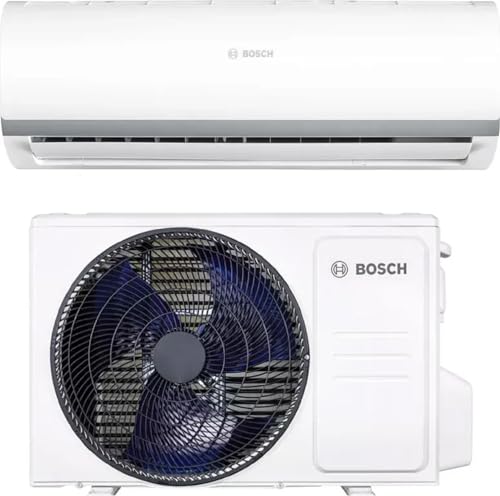
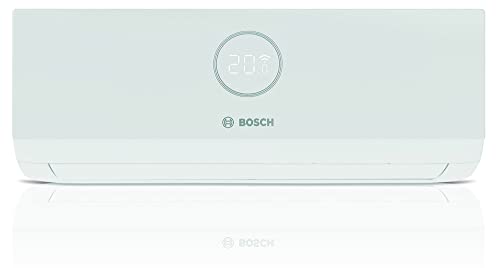
Are Bosch air conditioners good?
Bosch air conditioners are a sensible compact-range choice for buyers who want straightforward inverter cooling and heating from a familiar home-appliance brand.
Bosch air conditioners suit bedrooms, home offices, and living rooms where a clean wall-mounted design and ordinary day-to-day controls matter. The Climate range offers practical cooling capacities, R32 refrigerant, and seasonal ratings that can make it a reasonable mid-market alternative.
Bosch air conditioners have a smaller local range than Daikin or Mitsubishi, so feature choice, multi-split combinations, and installer support need closer checking. Treat Wi-Fi, filtration, sound level, and cold-weather heating as model-specific rather than assuming that every Bosch unit shares the same equipment.
What are the main advantages of Bosch air conditioners?
The main advantages of Bosch air conditioners are as follows:
- Straightforward operation: Bosch systems focus on familiar wall-mounted controls, inverter output, and ordinary cooling and heating modes. This suits households that do not need a long list of specialist comfort functions.
- Practical room sizes: The range includes compact capacities suitable for bedrooms, offices, and living rooms. Correct sizing remains more important than the brand label because a unit that is too large can cycle in a small room.
- R32 refrigerant: Current systems using R32 have a lower global-warming potential than older R410A equipment. Installation and recovery still need a qualified technician and the exact model should be confirmed.
- Familiar service network: Bosch's wider appliance presence can make the brand familiar to installers and homeowners. Air-conditioner service availability still varies locally, so confirm who will commission and maintain the system.
- Clear value position: Bosch can be attractive when a practical unit is priced below premium Japanese ranges. Compare the included controls and seasonal efficiency before treating a lower purchase price as the better long-term choice.
What are the main disadvantages of Bosch air conditioners?
The main disadvantages of Bosch air conditioners are as follows:
- Small range: There are fewer air-conditioner families and local combinations than in the Daikin or Mitsubishi ecosystems. This can limit the choice of capacities, indoor-unit styles, and multi-room layouts.
- Feature variation: Wi-Fi, advanced filtration, humidity functions, and low-night sound modes can vary by model. Read the full technical sheet instead of relying on a broad series description.
- Limited premium depth: Buyers seeking very specialised cold-weather heating or elaborate air treatment may find more choice in premium specialist ranges. Bosch is strongest when the installation is conventional.
- Installer dependence: A compact product can still perform poorly if the charge, drainage, airflow, or outdoor clearance is wrong. Use qualified commissioning and check that the installer supports the exact model.
- Resale and parts questions: Long-term service depends on local stock and the retailer's support arrangements. Confirm filters, remotes, warranty handling, and replacement-part channels before choosing a less common configuration.
What are the main Bosch air conditioner series?
The main Bosch air conditioner families are as follows:
- Climate 2000: Climate 2000 is the value-focused family for basic split cooling and heating. It suits bedrooms and smaller living spaces where a simple control set and restrained equipment cost are more important than premium air treatment.
- Climate 3000i: Climate 3000i adds a broader comfort and control specification in markets where it is sold. Check the current model code for Wi-Fi, sound level, and seasonal ratings because the suffix can change the equipment.
- Climate 5000i: Climate 5000i is a higher-positioned family in selected markets, intended for buyers who want stronger comfort features or larger capacity. Confirm local availability and the exact indoor/outdoor combination before planning a multi-room installation.
- Bosch multi-split combinations: Some markets offer compatible multi-split equipment alongside wall-mounted units. Treat the outdoor-unit capacity, approved indoor combinations, and simultaneous output as project-specific rather than universal.
How much do Bosch air conditioners cost?
Bosch air conditioners cost about £500-£900 for equipment in the compact split range, with installation priced separately. Entry Climate models are often near £500-£600, while larger capacities or better-equipped versions can move toward £860.
Installation adds pipework, electrical work, brackets, drainage, and commissioning. If a multi-room Bosch combination is available locally, the outdoor unit and extra pipe runs can raise the total more than the indoor-unit price suggests.
How do Bosch air conditioners compare with Daikin models?
Bosch and Daikin both offer practical inverter split systems, but Daikin provides a much broader range of capacities, premium comfort families, air-treatment options, and multi-split combinations. Bosch is easier to justify when a conventional room installation and familiar appliance support are the main priorities.
Daikin Sensira and Perfera give buyers more choice between entry price, seasonal efficiency, and specialist comfort. Bosch Climate systems keep the range simpler, which can reduce choice but also makes a straightforward installation easier to specify.
Choose Bosch when the local price, installer, warranty, and required capacity are competitive. Choose Daikin when you need a wider model selection, quieter premium operation, stronger heating options, or a carefully matched multi-room system.
What should you consider while choosing the best Bosch air conditioner?
Before choosing a Bosch air conditioner, consider the following factors:
- Capacity and heat load: Match capacity to room area, insulation, glazing, and solar gain. A 2.5–3.5 kW class may suit many bedrooms or living rooms, but the installer should check the actual load before selecting the unit.
- Climate family: Use Climate 2000 for straightforward value, Climate 3000i for a broader comfort specification, and higher families only when their extra functions are available locally. Check the exact suffix and energy label.
- Indoor sound: For a bedroom, look for low-mode sound around 20–25 dB and verify the maximum figure as well. A quiet rating is useful only if the unit can maintain temperature without running at a louder fan speed.
- Heating requirement: Compare SCOP and declared heating capacity if the air conditioner will provide warmth in autumn or winter. Do not select from cooling capacity alone when heating is a core use.
- Controls and filtration: Confirm Wi-Fi, timers, filtration, and air-quality features on the exact model. Optional controls or filters can change the installed cost and future maintenance.
- Outdoor unit and drainage: Check outdoor clearance, condensate routing, electrical supply, and pipe length before ordering. These practical limits can decide whether a particular Bosch model fits the property.
- Local support: Confirm the installer, commissioning process, warranty contact, filters, and spare remotes. A slightly cheaper unit is poor value if local technical support is uncertain.