Are Toshiba air conditioners good?
Toshiba air conditioners are a solid focused choice for buyers who want quiet inverter cooling and heating without an oversized product ecosystem.
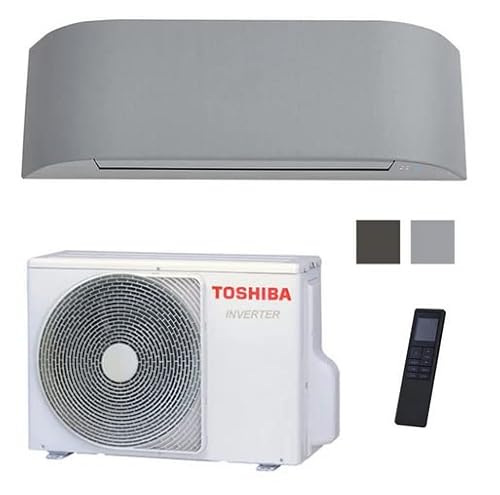
Toshiba air conditioners suit bedrooms and living rooms where low-fan comfort, compact wall units, and straightforward controls matter. Seiya offers a practical route into the range, while Haori and Shorai families in supported markets add more design or comfort features.
Toshiba air conditioners have fewer locally available models than Samsung, Daikin, or Mitsubishi in some markets, so the exact model code and installer support matter. Check Wi-Fi, filtration, heating output, sound level, and multi-split compatibility on the current specification rather than relying on the series name.
What are the main advantages of Toshiba air conditioners?
The main advantages of Toshiba air conditioners are as follows:
- Quiet comfort: Many Toshiba wall units are designed for low fan noise in bedrooms and living rooms. Compare low-mode and maximum sound levels because the room may require a higher fan speed during peak heat.
- Efficient inverter operation: Variable output helps the system track changing room demand and avoid unnecessary full-power cycling. Good sizing and clean airflow are still needed to achieve the expected electricity savings.
- Useful heating: The range can provide both cooling and heating for shoulder seasons and some winter conditions. Compare SCOP and low-temperature capacity if heating is a primary reason for buying.
- Simple range structure: Seiya, Haori, and Shorai give buyers a recognisable path from practical to more design-led systems where locally available. This can make a conventional wall installation easier to compare.
- Indoor design choice: Haori adds a more distinctive fabric-front appearance in supported markets, while conventional lines keep a neutral look. Measure the wall and airflow clearance before choosing the visible unit.
What are the main disadvantages of Toshiba air conditioners?
The main disadvantages of Toshiba air conditioners are as follows:
- Local range depth: Availability and series choice can be narrower than the largest Japanese or Korean brands. This matters when you need unusual capacity, several indoor units, or a particular control platform.
- Model variation: Wi-Fi, air treatment, heating behaviour, and sound modes differ across generations and markets. Read the full model code and current energy label before ordering.
- Premium design cost: Haori and better-equipped ranges can cost more for appearance or comfort features that do not change the required cooling load. Pay for the feature only when it improves the room you will use.
- Installer dependence: Pipework, drainage, refrigerant charge, and outdoor placement strongly affect noise and efficiency. Use an installer who supports the exact Toshiba system rather than choosing on equipment price alone.
- Support questions: Filters, remotes, apps, and replacement parts may be easier to source for popular current models. Confirm local warranty and parts channels before selecting an uncommon variant.
What are the main Toshiba air conditioner series?
The main Toshiba air conditioner families are as follows:
- Seiya: Seiya is the practical wall-mounted family for everyday cooling and heating. It suits buyers who want a restrained system and a manageable equipment cost, while checking the exact local efficiency and control specification.
- Shorai: Shorai sits higher in the range in supported markets, adding a stronger comfort and efficiency specification. It fits frequent users who value lower noise or better seasonal performance over the lowest price.
- Haori: Haori is the design-led family with a distinctive fabric-front indoor unit. Choose it when the wall unit is visible and the appearance matters, but still check capacity, airflow, cleaning, and clearance.
- Toshiba multi-split: Compatible outdoor units can serve several indoor spaces when the market offers the relevant combination. Confirm simultaneous capacity, approved indoor models, pipe limits, and drain routes as a complete project.
How much do Toshiba air conditioners cost?
Toshiba air conditioners cost about £560-£1,200 for equipment in the common split range, with professional installation priced separately. Practical Seiya systems are often around £560-£730, while Shorai, Haori, and larger or better-equipped units move toward £1,200.
Add pipework, brackets, electrical work, condensate drainage, commissioning, and any Wi-Fi or multi-split hardware separately. The design premium on Haori is most useful when the indoor unit will remain visible for years, not simply because the model is more expensive.
How do Toshiba air conditioners compare with Samsung models?
Toshiba and Samsung both offer inverter split systems with cooling, heating, and connected options, but their priorities differ. Toshiba tends to emphasise quiet conventional comfort and restrained indoor design, while Samsung offers broader app integration and WindFree dispersed airflow on selected models.
Toshiba Seiya, Shorai, and Haori provide a focused step-up path. Samsung AR35 and WindFree families cover a wider value-to-premium spread, with more variation in smart controls and airflow features between generations.
Choose Toshiba when the exact sound level, conventional airflow, local specialist, or Haori design fits the room. Choose Samsung when SmartThings, WindFree comfort, or a broader connected feature set matters; compare the installed model's heating, efficiency, and service details rather than brand slogans.
What should you consider while choosing the best Toshiba air conditioner?
Before choosing a Toshiba air conditioner, consider the following factors:
- Capacity and room load: Match capacity to room area, insulation, glazing, ceiling height, and solar gain. A 2.5–3.5 kW class often suits ordinary rooms, but a heat-load check is safer than choosing by floor area alone.
- Seiya, Shorai, or Haori: Use Seiya for straightforward value, Shorai for stronger comfort or efficiency, and Haori when indoor design is a central concern. Verify which family and generation are actually sold in your market.
- Indoor sound: For a bedroom, look for low-mode sound around 20–25 dB and inspect the maximum figure as well. Quiet operation depends on fan mode, placement, and whether the system is powerful enough for the room.
- SEER and SCOP: Compare seasonal ratings at the same capacity and climate assumption. SEER affects summer electricity cost, while SCOP and cold-weather capacity matter when heating is regular.
- Controls and filters: Confirm Wi-Fi, timers, filtration, cleaning, and replacement parts on the exact model. Optional modules can change both installation effort and future support.
- Multi-split planning: If several rooms are involved, confirm outdoor capacity, simultaneous output, approved indoor combinations, pipe lengths, elevation, and drain routing. Do not assume that any Toshiba wall unit can be paired with any outdoor unit.
- Installer and warranty: Confirm commissioning, local service, warranty contact, filters, remotes, and outdoor clearances. A technically suitable model still depends on a qualified installation.