Scored using Smartwatches Methodology v3.0
Smartwatches Methodology v3.0
Mathematical & Unbiased Scoring
Products in this category are scored under Frontum Smartwatches Methodology v3.0: the technical score from the specifications is the base, and independent expert and video reviews (up to ±0.5 points), owner opinions (up to ±0.3) and best-of lists (up to +0.3) move it up or down.
Explore Smartwatches Methodology v3.0

Polar Vantage V review: 127 specs compared

Avg. price:~£440Screen size:1.20 inchBattery life:7 daysDisplay type:LCD

Polar Vantage V Review: Compare 127 technical specifications and 41 expert and video reviews to see how this product ranks in the Smartwatches category and whether it is worth buying.

Polar Vantage V
7.5/10

Overall score

Score
7.5/ 10
✕
What it is
Our main score for this model, 1–10. It combines specs, best-of lists, expert reviews and owners.
How we count it
Parts: Technical score 35%, List score 30%, Reviews score 25%, Sentiment score 10%
Marks: Each part gets a mark out of 10. For reviews, lists and owners, a typical model in this category gets about 8 and the best one gets 10.
No data yet: A part with no data shows "?". It counts as the mark of a weaker model in this category (4 in 5 models with data score higher). This way, models with reviews, lists and owners usually come out ahead.
Score distribution
â–¼
<55-66-77-88-99-10
Score components

35%

6.7

Technical score

30%

?

List scoreNot enough data yet, so we use 7.5, the mark of a weaker model in this category

25%

8.2

Reviews score

10%

8.4

Sentiment score

â–²Better than 65% of smartwatches
7.7

Value for money

Value for money
7.7/ 10
✕
What it is
An indicator that combines the smartwatch's overall rating with its cost.
When it matters
When you are looking for a smartwatch with a good balance between quality and price.
Score distribution
â–¼
<55-66-77-88-99-10
Score components

70%

7.5

Overall score

30%

8.2

Price

â–¼Worse than 56%
6.7

Technical score

Technical score
6.7/ 10
✕
What it is
How good the specs are compared with the other models in this category, 1–10.
How we count it
Areas: We rate the specs in each area against the other models in this category.
Weighting: The areas that matter most to buyers count more. The shares are shown under Score components.
Share: The technical score is 35% of the overall score.
Score distribution
â–¼
<55-66-77-88-99-10
Score components

24%

5.8

Health

21%

9.8

Fitness

16%

7.3

Battery

14%

4.1

Smart features

12%

6.0

Connectivity

9%

6.9

Display & Design

4%

3.1

Hardware

â–²Better than 57%
8.2

Reviews score

Reviews score
8.2/ 10
✕
What it is
Average grade from independent test sites, magazines and video reviewers, 1–10.
How we count it
Grades: Each review's own score is converted to 1–10; without one, we grade the review ourselves. Every review counts the same: written or video, short or full test.
Score: The average grade is 80% of the review mark; the number of reviews is the other 20% (1 review = 5, the typical number in this category = 8, the most-reviewed model = 10).
Enough data: With few reviews, the average grade is pulled toward the typical grade of this category. No reviews yet: 7.4 for now.
Share: Reviews count 25% of the overall score.
Score distribution
â–¼
<55-66-77-88-99-10

80%

8.1

Average grade

20%

8.8

Popularity

Grades by review (41)
27 reviews + 14 videos, average 8.1/10. Reviews count 25% of the overall score.
User ratings collected online are not part of this score.
â–²Better than 66%
?

List score

List score
7.5/ 10
✕
What it is
How often independent test sites, magazines and video reviewers put this model in their best-of lists for this category.
How we count it
Points: The model in the most lists of this category gets 10; the others get 8 to 10 in proportion. In no list yet: 7.5. Lists count 30% of the overall score.
Enough data: Every list counts, even a single one. With fewer than 5 best-of lists in the category, this part is left out.
Lists with this model (0)
Not in any best-of list yet, so this part counts as 7.5. Models in a list get 8 to 10.
Not in any best-of list yet

What reviewers say about the Polar Vantage V

Based on 1 · 7

Reviewers love the power data and training tools, but the display, weak smart features and missing route navigation disappoint.
Praised
Criticised
Pick a topic to see who said what

What owners say about the Polar Vantage V

Based on 137 owners sharing their experience in online comments

35%positive20%mixed45%negative

Owners value its training and recovery tools, but spotty GPS, wrist heart rate, and unfinished software frustrate many.

What owners dislike

  • Wrist heart-rate readings lag during fast intensity changes such as stairs, intervals and hill climbs, and can read 10–20 beats off on some sessions.17
  • GPS tracks can wander onto streets never run, pace can swing wildly during steady runs, and distance may be inflated or drop out mid-workout.13
  • The strap wears raw and wears out within months, buttons are hard to press, and the touchscreen fails with wet fingers during workouts.11
  • Running pace jumps between roughly 4 and 7 min/km during steady runs, and speed readings can spike above 30 km/h.9
  • Pool lap times read a few seconds short, short rest pauses count as swim time, and indoor lap counts are often wrong.8
  • Phone connection drops repeatedly, notifications disappear when the phone is turned off, and some owners see sync mismatches with Strava.8
  • The screen is too dim to read in low light, and lap times and digital seconds are hard to see during training.8
  • Software bugs cause lock-ups and crashes, and swim tracking freezes until the watch is restarted.8
  • Notifications, incoming calls and other smart features are limited, and planned training sessions can only be set to 18:00.7
  • There is no map or route navigation, and owners cannot load a route to follow as a GPS track.6

Points mentioned by at least 3 owners, most mentioned first.

Loading...
Loading category ranking...

Technical Specifications of smartwatch Polar Vantage V

Technical score
Technical score
6.7/ 10
✕
What it is
How good the specs are compared with the other models in this category, 1–10.
How we count it
Areas: We rate the specs in each area against the other models in this category.
Weighting: The areas that matter most to buyers count more. The shares are shown under Score components.
Share: The technical score is 35% of the overall score.
Score distribution
â–¼
<55-66-77-88-99-10
Score components:

24%

5.8

Health

21%

9.8

Fitness

16%

7.3

Battery

14%

4.1

Smart features

12%

6.0

Connectivity

9%

6.9

Display & Design

4%

3.1

Hardware

6.7
Reviews score
8.2
List score
?
Value for money
Value for money
7.7/ 10
✕
What it is
An indicator that combines the smartwatch's overall rating with its cost.
When it matters
When you are looking for a smartwatch with a good balance between quality and price.
Score distribution
â–¼
<55-66-77-88-99-10
Score components:

70%

7.5

Overall score

30%

8.2

Price

7.7
Heart rate monitor
yes
This smartwatch includes a heart rate monitor. 9.5% of smartwatches include a heart rate monitor.
Blood oxygen monitoring
no
This smartwatch does not support blood oxygen monitoring. 69.7% of smartwatches support blood oxygen monitoring.
ECG
no
This smartwatch does not support ECG. 18.2% of smartwatches support ECG.
Irregular heart rate warnings
no
This smartwatch does not support irregular heart rate warnings. 50.6% of smartwatches support irregular heart rate warnings.
HRV tracking
yes
This smartwatch supports HRV tracking. 54.9% of smartwatches support HRV tracking.
Show more
Accelerometer
yes
This smartwatch includes an accelerometer. 0.5% of smartwatches include an accelerometer.
Barometer
yes
This smartwatch includes a barometer. 46.5% of smartwatches include a barometer.
Gyroscope
yes
This smartwatch includes a gyroscope. 28.9% of smartwatches include a gyroscope.
Cadence sensor
yes
This smartwatch includes a cadence sensor. 67.2% of smartwatches include a cadence sensor.
Distance tracking
yes
This smartwatch supports distance tracking. 3.7% of smartwatches support distance tracking.
Show more
What reviewers say
Battery life
7 days
This smartwatch lasts 7 days on a charge, which is longer than 36.1% of Smartwatches and the same as 15.9% of Smartwatches.
Up to 20 days under specific power-saving.
Battery life in training mode
35 h
This smartwatch records workouts for 35 h on a charge, which is longer than 78.4% of Smartwatches and the same as 1.8% of Smartwatches.
Battery life with GPS on
40 h
This smartwatch lasts 40 h with GPS on, which is longer than 83% of Smartwatches and the same as 3.4% of Smartwatches.
Up to 61 hours in power saving mode) if you need the power-saving.
Battery power
275 mAh
This smartwatch has a 275 mAh battery, which is smaller than 64.9% of Smartwatches and the same as 0.8% of Smartwatches.
Charge time
60 min
This smartwatch charges from empty in 60 min, which is quicker than 83.8% of Smartwatches and the same as 12% of Smartwatches.
Normalized from hour-based sources to 60 minutes.
Show more
Operating system
Proprietary OS
This smartwatch runs Proprietary OS, which is less advanced than the system in 54.2% of Smartwatches and equal to 42% of Smartwatches.
Software update frequency
?
Third-party app support
no
This smartwatch does not support third-party apps. 51.6% of smartwatches support third-party apps.
Notifications
yes
This smartwatch supports notifications. 0.3% of smartwatches support notifications.
Voice assistant support
no
This smartwatch does not support voice assistants. 69.3% of smartwatches support voice assistants.
Show more
What reviewers say
Cellular module
no
This smartwatch does not include a cellular module. 16.7% of smartwatches include a cellular module.
SIM cards
0
GPS
yes
This smartwatch supports GPS. 40.3% of smartwatches support GPS.
Galileo support
yes
This smartwatch supports Galileo navigation. 56.5% of smartwatches support Galileo navigation.
Dual-frequency GPS
no
This smartwatch does not support dual-frequency GPS. 15.1% of Smartwatches offer this.
Show more
What reviewers say
Screen size
1.2 inch
This smartwatch has a 1.2 inch screen, which is smaller than 84.6% of Smartwatches and the same as 8.1% of Smartwatches.
Display type
LCD
This smartwatch uses LCD, which is less advanced than the screen in 91.1% of Smartwatches and equal to 6.7% of Smartwatches.
Resolution
240x 240
This smartwatch has a display resolution of 240x240 which is lower than that of 75.3% of smartwatches and equal to that of 14.1% of smartwatches.
Pixel density
283 ppi
This smartwatch has a pixel density of 283 ppi, which is lower than 67.1% of Smartwatches and equal to 4.5% of Smartwatches.
Display brightness
?
Show more
What reviewers say
CPU speed
0.064 GHz
This smartwatch uses a CPU configuration of 0.064 GHz which is slower than that in 93.4% of smartwatches and equal to that in 1.5% of smartwatches.
Processor model
Nordic nRF52832
This smartwatch uses the Nordic nRF52832 processor model.
RAM
?
Internal storage
?
External memory slot
no
This smartwatch does not include an external memory slot. 0.3% of smartwatches include an external memory slot.
Show more

Polar Vantage V vs the average smartwatch

246810TotalHealthFitnessBatteryConnectivityDisplay & DesignSmart featuresHardware
  • 60 min quicker charging
    This smartwatch charges faster than the average smartwatch (60 min vs 120 min). The average smartwatch takes 120 min to charge from empty.
    Normalized from hour-based sources to 60 minutes.
    60 min vs 120 min
  • Readiness score
    This smartwatch supports readiness scores, the average smartwatch does not. 19.8% of smartwatches support readiness scores.
  • 19 h longer GPS battery life
    This smartwatch lasts longer with GPS on than the average smartwatch (40 h vs 21 h). The average smartwatch lasts 21 h with GPS on.
    Up to 61 hours in power saving mode) if you need the power-saving.
    40 h vs 21 h
  • HRV tracking
    This smartwatch supports HRV tracking, the average smartwatch does not. 45.2% of smartwatches support HRV tracking.
  • NFC functionality
    This smartwatch supports NFC, the average smartwatch does not. 45.2% of smartwatches support NFC.
  • 15 h longer training battery life
    This smartwatch lasts longer in training mode than the average smartwatch (35 h vs 20 h). The average smartwatch lasts 20 h in training mode.
    35 h vs 20 h
  • External heart rate monitor support
    This smartwatch supports external heart rate monitor compatibility, the average smartwatch does not. 46.6% of smartwatches support external heart rate monitor compatibility.
  • Cadence tracking
    This smartwatch includes a cadence sensor, the average smartwatch does not. 32.9% of smartwatches include a cadence sensor.
  • 17.1% higher review score
    Reviews score
    8.2/ 10
    ✕
    What it is
    Average grade from independent test sites, magazines and video reviewers, 1–10.
    How we count it
    Grades: Each review's own score is converted to 1–10; without one, we grade the review ourselves. Every review counts the same: written or video, short or full test.
    Score: The average grade is 80% of the review mark; the number of reviews is the other 20% (1 review = 5, the typical number in this category = 8, the most-reviewed model = 10).
    Enough data: With few reviews, the average grade is pulled toward the typical grade of this category. No reviews yet: 7.4 for now.
    Share: Reviews count 25% of the overall score.
    Score distribution
    â–¼
    <55-66-77-88-99-10

    80%

    8.1

    Average grade

    20%

    8.8

    Popularity

    Grades by review (41)
    27 reviews + 14 videos, average 8.1/10. Reviews count 25% of the overall score.
    User ratings collected online are not part of this score.
    8.2 vs 7.0
  • Readiness score
    This smartwatch supports readiness scores, the average smartwatch does not. 19.8% of smartwatches support readiness scores.
  • HRV tracking
    This smartwatch supports HRV tracking, the average smartwatch does not. 45.2% of smartwatches support HRV tracking.
  • Weight tracking
    This smartwatch supports weight tracking, the average smartwatch does not. 41.9% of smartwatches support weight tracking.
    Weight tracking may rely on manual app entry or smart-scale sync.
  • External heart rate monitor support
    This smartwatch supports external heart rate monitor compatibility, the average smartwatch does not. 46.6% of smartwatches support external heart rate monitor compatibility.
  • Cadence tracking
    This smartwatch includes a cadence sensor, the average smartwatch does not. 32.9% of smartwatches include a cadence sensor.
  • 40 more exercise types
    This smartwatch includes more exercise types than the average smartwatch (130 vs 90). The average smartwatch includes 90 exercise types.
    Reported as at least 130 exercise modes.
    130 vs 90
  • 60 min quicker charging
    This smartwatch charges faster than the average smartwatch (60 min vs 120 min). The average smartwatch takes 120 min to charge from empty.
    Normalized from hour-based sources to 60 minutes.
    60 min vs 120 min
  • 19 h longer GPS battery life
    This smartwatch lasts longer with GPS on than the average smartwatch (40 h vs 21 h). The average smartwatch lasts 21 h with GPS on.
    Up to 61 hours in power saving mode) if you need the power-saving.
    40 h vs 21 h
  • 15 h longer training battery life
    This smartwatch lasts longer in training mode than the average smartwatch (35 h vs 20 h). The average smartwatch lasts 20 h in training mode.
    35 h vs 20 h
  • NFC functionality
    This smartwatch supports NFC, the average smartwatch does not. 45.2% of smartwatches support NFC.
  • Galileo satellite support
    This smartwatch supports Galileo navigation, the average smartwatch does not. 43.6% of smartwatches support Galileo navigation.
  • Rugged construction
    This smartwatch has a rugged design, the average smartwatch does not. 41.2% of smartwatches have a rugged design.
  • Stronger display glass
    This smartwatch uses Corning Gorilla Glass display glass, while the average smartwatch uses mineral glass.
    Corning Gorilla Glass vs mineral glass
  • Better case material
    This smartwatch uses stainless steel for the case material, while the average smartwatch uses polycarbonate.
    stainless steel vs polycarbonate
  • No blood oxygen monitoring
    This smartwatch does not support blood oxygen monitoring, the average smartwatch does. 69.6% of smartwatches support blood oxygen monitoring.
  • No third-party apps
    This smartwatch does not support third-party apps, the average smartwatch does. 51.6% of smartwatches support third-party apps.
  • More basic display
    This smartwatch uses a more basic screen than the average smartwatch (LCD vs AMOLED).
    LCD vs AMOLED
  • No irregular heart rate alerts
    This smartwatch does not support irregular heart rate warnings, the average smartwatch does. 50.6% of smartwatches support irregular heart rate warnings.
  • No music playback
    This smartwatch does not support music playback, the average smartwatch does. 57.1% of smartwatches support music playback.
  • No speaker
    This smartwatch does not include a built-in speaker, the average smartwatch does. 56.7% of smartwatches include a built-in speaker.
  • No voice assistant
    This smartwatch does not support voice assistants, the average smartwatch does. 69.2% of smartwatches support voice assistants.
  • No cycle tracking
    This smartwatch does not support menstrual cycle tracking, the average smartwatch does. 66.8% of smartwatches support menstrual cycle tracking.
  • 4x more expensive
    Polar Vantage V is more expensive than the average smartwatch (£440 vs £110).
    £440 vs £110
  • No blood oxygen monitoring
    This smartwatch does not support blood oxygen monitoring, the average smartwatch does. 69.6% of smartwatches support blood oxygen monitoring.
  • No irregular heart rate alerts
    This smartwatch does not support irregular heart rate warnings, the average smartwatch does. 50.6% of smartwatches support irregular heart rate warnings.
  • No cycle tracking
    This smartwatch does not support menstrual cycle tracking, the average smartwatch does. 66.8% of smartwatches support menstrual cycle tracking.
  • No smart scale support
    This smartwatch does not support smart scale compatibility, the average smartwatch does. 57.1% of smartwatches support smart scale compatibility.
  • 3 years older
    This smartwatch was released earlier than the average smartwatch (2018 vs 2021). The average smartwatch was released in 2021.
    September 2018
    2018 vs 2021
  • No voice feedback
    This smartwatch does not support voice feedback, the average smartwatch does. 63.5% of smartwatches support voice feedback.
  • 30 mAh smaller battery capacity
    This smartwatch has a smaller battery than the average smartwatch (275 mAh vs 305 mAh). The average smartwatch has a 305 mAh battery.
    275 mAh vs 305 mAh
  • Less current Bluetooth version
    This smartwatch uses a less current Bluetooth version than the average smartwatch (4 vs 5).
    Bluetooth Low Energy support is indicated.
    4 vs 5
  • More basic display
    This smartwatch uses a more basic screen than the average smartwatch (LCD vs AMOLED).
    LCD vs AMOLED
  • No ambient light sensor
    This smartwatch does not include an ambient light sensor, the average smartwatch does. 63.5% of smartwatches include an ambient light sensor.
  • 0.2 inch smaller display
    This smartwatch has a smaller screen than the average smartwatch (1.2 inch vs 1.4 inch). The average smartwatch has a 1.4 inch screen.
    1.2 inch vs 1.4 inch
  • 21 g heavier
    This smartwatch is heavier than the average smartwatch (66 g vs 45 g). The average smartwatch weighs 45 g.
    66 g vs 45 g
  • 1.3 mm thicker
    This smartwatch is thicker than the average smartwatch (13 mm vs 11.7 mm). The average smartwatch is 11.7 mm thick.
    13 mm vs 11.7 mm
  • Lower resolution
    This smartwatch has a display resolution of 240x240, while the average smartwatch reaches 360x360.
    240x240 vs 360x360
  • 43 ppi less sharp screen
    This smartwatch has a less sharp screen than the average smartwatch (283 ppi vs 326 ppi). The average smartwatch has a pixel density of 326 ppi.
    283 ppi vs 326 ppi
  • 3.5 mm wider case
    This smartwatch has a wider case than the average smartwatch (46 mm vs 42.5 mm). The average smartwatch measures 42.5 mm across.
    46 mm vs 42.5 mm
  • No third-party apps
    This smartwatch does not support third-party apps, the average smartwatch does. 51.6% of smartwatches support third-party apps.
  • No music playback
    This smartwatch does not support music playback, the average smartwatch does. 57.1% of smartwatches support music playback.
  • No voice assistant
    This smartwatch does not support voice assistants, the average smartwatch does. 69.2% of smartwatches support voice assistants.
  • No voice command support
    This smartwatch does not support voice commands, the average smartwatch does. 68.1% of smartwatches support voice commands.
  • No passcode
    This smartwatch does not include passcode protection, the average smartwatch does. 70.4% of smartwatches include passcode protection.
  • No phone finder
    This smartwatch does not include phone finder, the average smartwatch does. 96.4% of smartwatches include phone finder.
  • No smart alarm
    This smartwatch does not support a smart alarm, the average smartwatch does. 50.6% of smartwatches support smart alarms.
  • No widget support
    This smartwatch does not support widgets, the average smartwatch does. 84.4% of smartwatches support widgets.
  • No camera remote
    This smartwatch does not include built-in camera remote control, the average smartwatch does. 85.5% of smartwatches that are equipped with a camera include built-in camera remote control.
  • No speaker
    This smartwatch does not include a built-in speaker, the average smartwatch does. 56.7% of smartwatches include a built-in speaker.
  • 1 fewer microphones
    This smartwatch has fewer microphones than the average smartwatch (0 vs 1). The average smartwatch has 1 microphones.
    0 vs 1
  • Slower CPU speed
    This smartwatch uses a CPU configuration of 0.064 GHz, while the average smartwatch uses 1 GHz.
    0.064 GHz vs 1 GHz

Video reviews

Hands-on testing, unboxing, and real-world video evaluations

9.0
Andy Clark
≈ estimated
11/08/2020
Daily use · cycling review and comparison with a Wahoo
Verdict
Polar Vantage V is a comprehensive training aid for cyclists, though it is not a full smartwatch replacement.
9.0
The Run Experience
≈ estimated
16/07/2020
Long-term review · six months of training use
Verdict
Polar Vantage V is rugged, sleek and feature-rich and worth buying, though a chest strap is advised for accurate zones.
8.0
Professor Xplain
≈ estimated
31/03/2020
Full review · heart rate test and sports features
Verdict
Polar Vantage V is a strong sports watch with accurate heart rate, though the dim screen and sleep data gaps hold it back.
7.0
kofuzi
≈ estimated
18/09/2019
Hands-on review · one week of running, GPS and power
Verdict
Polar Vantage V's wrist power works well and the watch is enjoyable, but heart rate and GPS were inconsistent.
8.0
RoadTrailRun
≈ estimated
30/01/2019
Hands-on review · training data, features and comfort
Verdict
Polar Vantage V is a strong option worth considering for serious training, though its screen and notifications need work.
3.0
Techy Agent
≈ estimated
15/12/2018
Hands-on review · heart rate, steps, screen and price tests
Verdict
Polar Vantage V is not recommended: heart rate and step counts are inaccurate, menus lag and the screen is too dim.
9.0
Lionel Odelana
≈ estimated
10/01/2020
Firmware update review · FitSpark, race pace and Strava segments
Verdict
Polar Vantage V's firmware update looks good so far, with FitSpark and race pace as the highlights.
8.0
Techy Agent
≈ estimated
22/11/2018
First look · unboxing and first impressions
Verdict
Polar Vantage V makes a very positive first impression on design and build quality, with a full review to follow.
8.0
DesFit
≈ estimated
03/11/2018
First impressions · one 5k run with GPS and heart rate
Verdict
Polar Vantage V looks fairly good after the first run, but heart rate and GPS need more testing.
9.0
Watch, Wear & Gear
≈ estimated
29/10/2025
First look · unboxing and first impressions
Verdict
Polar Vantage V is a strong pick for serious multisport training if you don't need smart-assistant features.
Not graded
Brand video

Expert reviews

In-depth analysis and verdict from leading tech publications

8.7
tri247.com
✓ explicit
11/07/2023
Long-term test · Triathlon training watch
Verdict
The Polar Vantage V is a solid training watch with easy controls and long battery life, though it suits training more than everyday smartwatch use.

Third-party reviews

What customers like about Polar Vantage V

  • Long battery life: Up to 40 hours of continuous GPS training.
  • Wrist-based running power: Calculates power metrics directly from the watch without external pods.
  • Premium build: Durable stainless steel bezel and comfortable, flexible silicone strap.
  • Extensive sport profiles: Supports over 130 different sports, including detailed swimming metrics.
  • Comprehensive ecosystem: Access to Polar Flow provides deep analytical insights into training and recovery.
  • Lightweight design: Noted for being lighter and more stylish than previous Polar models.

What customers don't like about Polar Vantage V

  • Dim display: Many users find the screen difficult to read in lower light without the backlight.
  • Inconsistent HR: Wrist-based heart rate monitoring can be erratic, leading many to recommend the H10 chest strap for accuracy.
  • Confusing controls: The hybrid touch and five-button navigation system can be unintuitive at first.
  • Proprietary strap: The watch strap is integrated and not easily user-replaceable, unlike standard 22mm bands.
  • Limited smart features: Lacks common modern conveniences like offline music storage or contactless payments.
  • Slow GPS lock: Some users report it can take several minutes to acquire a satellite signal.

Verdict

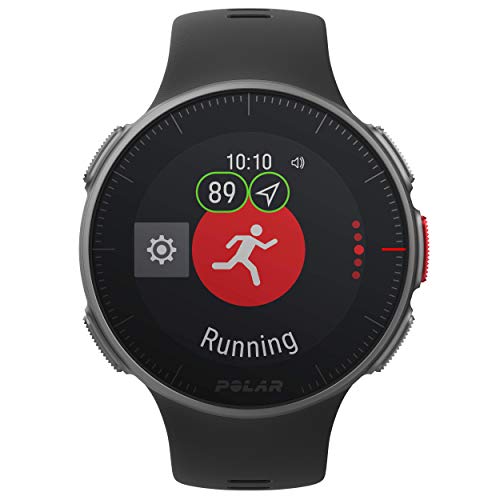
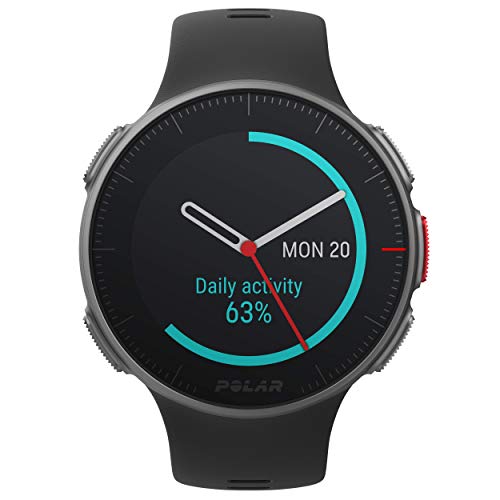
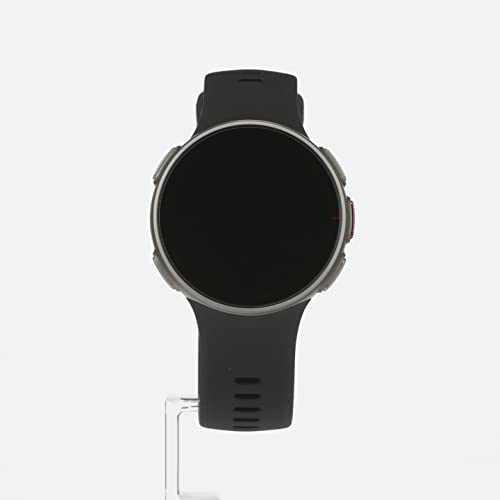
The Polar Vantage V (Medium/Large) is a premium multisport GPS watch featuring a 1.2-inch always-on color touch display (240x240 resolution) protected by Gorilla Glass and a durable stainless steel case. Key specifications include a weight of 66g, 30m water resistance, and an impressive battery life of up to 40 hours in full GPS training mode or 7 days in watch mode. It stands out for its pioneering wrist-based running power measurement and Precision Prime sensor fusion technology for advanced heart rate tracking. Main pros include its comprehensive training and recovery tools like Training Load Pro and Recovery Pro, a comfortable ergonomic fit, and support for over 130 sport profiles. Common cons noted by users include a relatively dim display in bright sunlight, a non-interchangeable strap, and the lack of standard smartwatch features such as offline music storage or contactless payments.

Compare Polar Vantage V with other Smartwatches

1Product to compare no. 1
VS
2Product to compare no. 2
VS
3Product to compare no. 3 (optional)

Graphic comparison of Polar Vantage V and other Smartwatches

No results found