Scored using Smartwatches Methodology v3.0
Smartwatches Methodology v3.0
Mathematical & Unbiased Scoring
Products in this category are scored under Frontum Smartwatches Methodology v3.0: the technical score from the specifications is the base, and independent expert and video reviews (up to ±0.5 points), owner opinions (up to ±0.3) and best-of lists (up to +0.3) move it up or down.
Explore Smartwatches Methodology v3.0

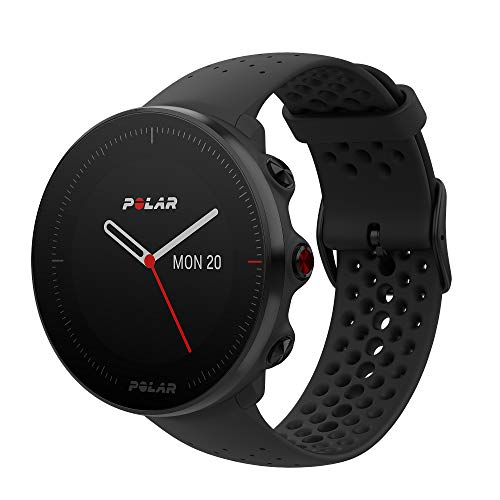
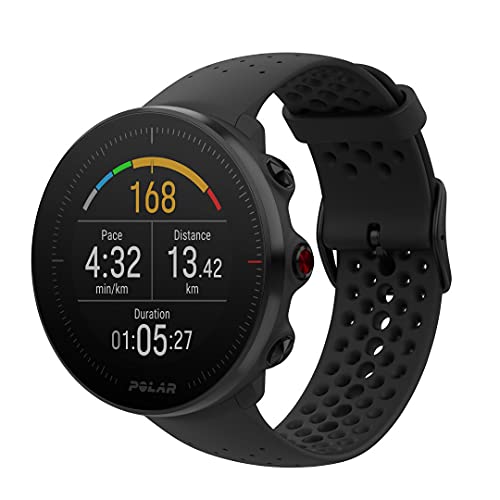
Polar Vantage M review: 127 specs compared

Avg. price:~£140Screen size:1.20 inchBattery life:5 daysDisplay type:LCD

Polar Vantage M Review: Compare 127 technical specifications and 53 expert and video reviews to see how this product ranks in the Smartwatches category and whether it is worth buying.

Polar Vantage M
7.4/10

Overall score

Score
7.4/ 10
✕
What it is
Our main score for this model, 1–10. It combines specs, best-of lists, expert reviews and owners.
How we count it
Parts: Technical score 35%, List score 30%, Reviews score 25%, Sentiment score 10%
Marks: Each part gets a mark out of 10. For reviews, lists and owners, a typical model in this category gets about 8 and the best one gets 10.
No data yet: A part with no data shows "?". It counts as the mark of a weaker model in this category (4 in 5 models with data score higher). This way, models with reviews, lists and owners usually come out ahead.
Score distribution
â–¼
<55-66-77-88-99-10
Score components

35%

6.1

Technical score

30%

?

List scoreNot enough data yet, so we use 7.5, the mark of a weaker model in this category

25%

8.2

Reviews score

10%

9.1

Sentiment score

â–²Better than 61% of smartwatches
8.1

Value for money

Value for money
8.1/ 10
✕
What it is
An indicator that combines the smartwatch's overall rating with its cost.
When it matters
When you are looking for a smartwatch with a good balance between quality and price.
Score distribution
â–¼
<55-66-77-88-99-10
Score components

70%

7.4

Overall score

30%

9.8

Price

â–²Better than 66%
6.1

Technical score

Technical score
6.1/ 10
✕
What it is
How good the specs are compared with the other models in this category, 1–10.
How we count it
Areas: We rate the specs in each area against the other models in this category.
Weighting: The areas that matter most to buyers count more. The shares are shown under Score components.
Share: The technical score is 35% of the overall score.
Score distribution
â–¼
<55-66-77-88-99-10
Score components

24%

5.2

Health

21%

8.9

Fitness

16%

6.0

Battery

14%

4.2

Smart features

12%

5.5

Connectivity

9%

7.0

Display & Design

4%

4.2

Hardware

â–¼Worse than 54%
8.2

Reviews score

Reviews score
8.2/ 10
✕
What it is
Average grade from independent test sites, magazines and video reviewers, 1–10.
How we count it
Grades: Each review's own score is converted to 1–10; without one, we grade the review ourselves. Every review counts the same: written or video, short or full test.
Score: The average grade is 80% of the review mark; the number of reviews is the other 20% (1 review = 5, the typical number in this category = 8, the most-reviewed model = 10).
Enough data: With few reviews, the average grade is pulled toward the typical grade of this category. No reviews yet: 7.4 for now.
Share: Reviews count 25% of the overall score.
Score distribution
â–¼
<55-66-77-88-99-10

80%

8.0

Average grade

20%

9.1

Popularity

Grades by review (53)
27 reviews + 26 videos, average 8.0/10. Reviews count 25% of the overall score.
User ratings collected online are not part of this score.
â–²Better than 66%
?

List score

List score
7.5/ 10
✕
What it is
How often independent test sites, magazines and video reviewers put this model in their best-of lists for this category.
How we count it
Points: The model in the most lists of this category gets 10; the others get 8 to 10 in proportion. In no list yet: 7.5. Lists count 30% of the overall score.
Enough data: Every list counts, even a single one. With fewer than 5 best-of lists in the category, this part is left out.
Lists with this model (0)
Not in any best-of list yet, so this part counts as 7.5. Models in a list get 8 to 10.
Not in any best-of list yet

What reviewers say about the Polar Vantage M

Based on 3 · 7

Reviewers praise the long battery life and sport modes, but are split on heart rate accuracy and dislike the phone notifications.
Praised
Mixed views
Criticised
Pick a topic to see who said what

What owners say about the Polar Vantage M

Based on 191 owners sharing their experience in online comments

42%positive25%mixed33%negative

Owners praise training features and long battery life, while heart rate, GPS accuracy, and screen brightness are frequent complaints.

What owners dislike

  • Optical heart rate often drops or spikes during intervals, hard runs, swimming, and gym work, and owners say a chest strap is more accurate.24
  • GPS distance and route tracks can be off by hundreds of metres on longer runs and cut corners or run across buildings.18
  • The screen is dim and hard to read indoors or in dark gyms, and the backlight only stays on for a few seconds.11
  • Phone notifications and calls often fail to show or stop arriving, and workouts show no notifications or vibration alerts.10
  • Pairing with phones and computers often fails, and some owners cannot sync data to Polar Flow or Strava.10
  • Current pace jumps around a lot during intervals and updates slowly, making it hard to tell the actual running pace.9
  • Pool swimming distance is often badly wrong, skipping lengths or counting far less than the distance swum.7
  • Buttons can stick, stop responding or break after months of use, and the watch can become unusable until restarted.7
  • Support and warranty repairs disappoint owners, with repeat faults after repair and little help from customer service.6
  • The strap feels stiff and cheap, and some owners say it wears out or tears within months.5

Points mentioned by at least 3 owners, most mentioned first.

Loading...
Loading category ranking...

Technical Specifications of smartwatch Polar Vantage M

Technical score
Technical score
6.1/ 10
✕
What it is
How good the specs are compared with the other models in this category, 1–10.
How we count it
Areas: We rate the specs in each area against the other models in this category.
Weighting: The areas that matter most to buyers count more. The shares are shown under Score components.
Share: The technical score is 35% of the overall score.
Score distribution
â–¼
<55-66-77-88-99-10
Score components:

24%

5.2

Health

21%

8.9

Fitness

16%

6.0

Battery

14%

4.2

Smart features

12%

5.5

Connectivity

9%

7.0

Display & Design

4%

4.2

Hardware

6.1
Reviews score
8.2
List score
?
Value for money
Value for money
8.1/ 10
✕
What it is
An indicator that combines the smartwatch's overall rating with its cost.
When it matters
When you are looking for a smartwatch with a good balance between quality and price.
Score distribution
â–¼
<55-66-77-88-99-10
Score components:

70%

7.4

Overall score

30%

9.8

Price

8.1
Heart rate monitor
yes
This smartwatch includes a heart rate monitor. 9.5% of smartwatches include a heart rate monitor.
Blood oxygen monitoring
no
This smartwatch does not support blood oxygen monitoring. 69.7% of smartwatches support blood oxygen monitoring.
ECG
no
This smartwatch does not support ECG. 18.2% of smartwatches support ECG.
Irregular heart rate warnings
no
This smartwatch does not support irregular heart rate warnings. 50.6% of smartwatches support irregular heart rate warnings.
HRV tracking
yes
This smartwatch supports HRV tracking. 54.9% of smartwatches support HRV tracking.
Show more
What reviewers say
Accelerometer
yes
This smartwatch includes an accelerometer. 0.5% of smartwatches include an accelerometer.
Barometer
no
This smartwatch does not include a barometer. 53.6% of smartwatches include a barometer.
Gyroscope
no
This smartwatch does not include a gyroscope. 71.3% of smartwatches include a gyroscope.
Cadence sensor
yes
This smartwatch includes a cadence sensor. 67.2% of smartwatches include a cadence sensor.
Cadence may require external sensor/app pairing on some models.
Distance tracking
yes
This smartwatch supports distance tracking. 3.7% of smartwatches support distance tracking.
Show more
What reviewers say
Battery life
5 days
This smartwatch lasts 5 days on a charge, which is shorter than 65.9% of Smartwatches and the same as 6.1% of Smartwatches.
Up to 30 hours in training mode.
Battery life in training mode
32.5 h
This smartwatch records workouts for 32.5 h on a charge, which is longer than 77.5% of Smartwatches.
Battery life with GPS on
30 h
This smartwatch lasts 30 h with GPS on, which is longer than 68.4% of Smartwatches and the same as 5.7% of Smartwatches.
Battery power
202 mAh
This smartwatch has a 202 mAh battery, which is smaller than 88.7% of Smartwatches.
Battery capacity varies by case size/model variant.
Charge time
?
Show more
What reviewers say
Operating system
Proprietary OS
This smartwatch runs Proprietary OS, which is less advanced than the system in 54.2% of Smartwatches and equal to 42% of Smartwatches.
Software update frequency
?
Third-party app support
no
This smartwatch does not support third-party apps. 51.6% of smartwatches support third-party apps.
Notifications
yes
This smartwatch supports notifications. 0.3% of smartwatches support notifications.
Voice assistant support
no
This smartwatch does not support voice assistants. 69.3% of smartwatches support voice assistants.
Show more
What reviewers say
Cellular module
no
This smartwatch does not include a cellular module. 16.7% of smartwatches include a cellular module.
SIM cards
0
GPS
yes
This smartwatch supports GPS. 40.3% of smartwatches support GPS.
Galileo support
yes
This smartwatch supports Galileo navigation. 56.5% of smartwatches support Galileo navigation.
Dual-frequency GPS
no
This smartwatch does not support dual-frequency GPS. 15.1% of Smartwatches offer this.
Show more
Screen size
1.2 inch
This smartwatch has a 1.2 inch screen, which is smaller than 84.6% of Smartwatches and the same as 8.1% of Smartwatches.
Display type
LCD
This smartwatch uses LCD, which is less advanced than the screen in 91.1% of Smartwatches and equal to 6.7% of Smartwatches.
Resolution
240x 240
This smartwatch has a display resolution of 240x240 which is lower than that of 75.3% of smartwatches and equal to that of 14.1% of smartwatches.
Pixel density
283 ppi
This smartwatch has a pixel density of 283 ppi, which is lower than 67.1% of Smartwatches and equal to 4.5% of Smartwatches.
Display brightness
?
Show more
What reviewers say
CPU speed
?
Processor model
Nordic nRF52832
This smartwatch uses the Nordic nRF52832 processor model.
RAM
?
Internal storage
?
External memory slot
no
This smartwatch does not include an external memory slot. 0.3% of smartwatches include an external memory slot.
Show more

Polar Vantage M vs the average smartwatch

246810TotalHealthFitnessBatteryConnectivityDisplay & DesignSmart featuresHardware
  • HRV tracking
    This smartwatch supports HRV tracking, the average smartwatch does not. 45.2% of smartwatches support HRV tracking.
  • NFC functionality
    This smartwatch supports NFC, the average smartwatch does not. 45.2% of smartwatches support NFC.
  • External heart rate monitor support
    This smartwatch supports external heart rate monitor compatibility, the average smartwatch does not. 46.6% of smartwatches support external heart rate monitor compatibility.
  • Cadence tracking
    This smartwatch includes a cadence sensor, the average smartwatch does not. 32.9% of smartwatches include a cadence sensor.
    Cadence may require external sensor/app pairing on some models.
  • 12.5 h longer training battery life
    This smartwatch lasts longer in training mode than the average smartwatch (32.5 h vs 20 h). The average smartwatch lasts 20 h in training mode.
    32.5 h vs 20 h
  • Galileo satellite support
    This smartwatch supports Galileo navigation, the average smartwatch does not. 43.6% of smartwatches support Galileo navigation.
  • Rugged construction
    This smartwatch has a rugged design, the average smartwatch does not. 41.2% of smartwatches have a rugged design.
    Rugged design supported by MIL-STD/military-grade durability claim.
  • 9 h longer GPS battery life
    This smartwatch lasts longer with GPS on than the average smartwatch (30 h vs 21 h). The average smartwatch lasts 21 h with GPS on.
    30 h vs 21 h
  • 17.1% higher review score
    Reviews score
    8.2/ 10
    ✕
    What it is
    Average grade from independent test sites, magazines and video reviewers, 1–10.
    How we count it
    Grades: Each review's own score is converted to 1–10; without one, we grade the review ourselves. Every review counts the same: written or video, short or full test.
    Score: The average grade is 80% of the review mark; the number of reviews is the other 20% (1 review = 5, the typical number in this category = 8, the most-reviewed model = 10).
    Enough data: With few reviews, the average grade is pulled toward the typical grade of this category. No reviews yet: 7.4 for now.
    Share: Reviews count 25% of the overall score.
    Score distribution
    â–¼
    <55-66-77-88-99-10

    80%

    8.0

    Average grade

    20%

    9.1

    Popularity

    Grades by review (53)
    27 reviews + 26 videos, average 8.0/10. Reviews count 25% of the overall score.
    User ratings collected online are not part of this score.
    8.2 vs 7.0
  • 21.3% higher sentiment score
    9.1 vs 7.5
  • HRV tracking
    This smartwatch supports HRV tracking, the average smartwatch does not. 45.2% of smartwatches support HRV tracking.
  • Weight tracking
    This smartwatch supports weight tracking, the average smartwatch does not. 41.9% of smartwatches support weight tracking.
    Weight tracking may rely on manual app entry or smart-scale sync.
  • External heart rate monitor support
    This smartwatch supports external heart rate monitor compatibility, the average smartwatch does not. 46.6% of smartwatches support external heart rate monitor compatibility.
  • Cadence tracking
    This smartwatch includes a cadence sensor, the average smartwatch does not. 32.9% of smartwatches include a cadence sensor.
    Cadence may require external sensor/app pairing on some models.
  • 40 more exercise types
    This smartwatch includes more exercise types than the average smartwatch (130 vs 90). The average smartwatch includes 90 exercise types.
    Reported as at least 130 exercise modes.
    130 vs 90
  • 12.5 h longer training battery life
    This smartwatch lasts longer in training mode than the average smartwatch (32.5 h vs 20 h). The average smartwatch lasts 20 h in training mode.
    32.5 h vs 20 h
  • 9 h longer GPS battery life
    This smartwatch lasts longer with GPS on than the average smartwatch (30 h vs 21 h). The average smartwatch lasts 21 h with GPS on.
    30 h vs 21 h
  • NFC functionality
    This smartwatch supports NFC, the average smartwatch does not. 45.2% of smartwatches support NFC.
  • Galileo satellite support
    This smartwatch supports Galileo navigation, the average smartwatch does not. 43.6% of smartwatches support Galileo navigation.
  • Rugged construction
    This smartwatch has a rugged design, the average smartwatch does not. 41.2% of smartwatches have a rugged design.
    Rugged design supported by MIL-STD/military-grade durability claim.
  • Better case material
    This smartwatch uses stainless steel, fiber-reinforced polymer for the case material, while the average smartwatch uses polycarbonate.
    stainless steel, fiber-reinforced polymer vs polycarbonate
  • No blood oxygen monitoring
    This smartwatch does not support blood oxygen monitoring, the average smartwatch does. 69.6% of smartwatches support blood oxygen monitoring.
  • No third-party apps
    This smartwatch does not support third-party apps, the average smartwatch does. 51.6% of smartwatches support third-party apps.
  • More basic display
    This smartwatch uses a more basic screen than the average smartwatch (LCD vs AMOLED).
    LCD vs AMOLED
  • No irregular heart rate alerts
    This smartwatch does not support irregular heart rate warnings, the average smartwatch does. 50.6% of smartwatches support irregular heart rate warnings.
  • No barometer
    This smartwatch does not include a barometer, the average smartwatch does. 53.6% of smartwatches include a barometer.
  • No music playback
    This smartwatch does not support music playback, the average smartwatch does. 57.1% of smartwatches support music playback.
  • No gyroscope
    This smartwatch does not include a gyroscope, the average smartwatch does. 71.2% of smartwatches include a gyroscope.
  • Weaker ingress protection
    This smartwatch has weaker ingress protection than the average smartwatch (IPX8 vs IP68).
    Water resistance is listed as 5ATM (ATM/pressure rating, not an official IP code).
    IPX8 vs IP68
  • No blood oxygen monitoring
    This smartwatch does not support blood oxygen monitoring, the average smartwatch does. 69.6% of smartwatches support blood oxygen monitoring.
  • No irregular heart rate alerts
    This smartwatch does not support irregular heart rate warnings, the average smartwatch does. 50.6% of smartwatches support irregular heart rate warnings.
  • No cycle tracking
    This smartwatch does not support menstrual cycle tracking, the average smartwatch does. 66.8% of smartwatches support menstrual cycle tracking.
  • No smart scale support
    This smartwatch does not support smart scale compatibility, the average smartwatch does. 57.1% of smartwatches support smart scale compatibility.
  • 3 years older
    This smartwatch was released earlier than the average smartwatch (2018 vs 2021). The average smartwatch was released in 2021.
    October 2018
    2018 vs 2021
  • No barometer
    This smartwatch does not include a barometer, the average smartwatch does. 53.6% of smartwatches include a barometer.
  • No gyroscope
    This smartwatch does not include a gyroscope, the average smartwatch does. 71.2% of smartwatches include a gyroscope.
  • No live tracking
    This smartwatch does not support live tracking, the average smartwatch does. 89.5% of smartwatches support live tracking.
  • 103 mAh smaller battery capacity
    This smartwatch has a smaller battery than the average smartwatch (202 mAh vs 305 mAh). The average smartwatch has a 305 mAh battery.
    Battery capacity varies by case size/model variant.
    202 mAh vs 305 mAh
  • 2 days shorter battery life
    This smartwatch runs for less time per charge than the average smartwatch (5 days vs 7 days). The average smartwatch runs for 7 days on a charge.
    Up to 30 hours in training mode.
    5 days vs 7 days
  • No compass
    This smartwatch does not include a compass, the average smartwatch does. 56.7% of smartwatches include a compass.
  • Less current Bluetooth version
    This smartwatch uses a less current Bluetooth version than the average smartwatch (4 vs 5).
    4 vs 5
  • More basic display
    This smartwatch uses a more basic screen than the average smartwatch (LCD vs AMOLED).
    LCD vs AMOLED
  • Weaker ingress protection
    This smartwatch has weaker ingress protection than the average smartwatch (IPX8 vs IP68).
    Water resistance is listed as 5ATM (ATM/pressure rating, not an official IP code).
    IPX8 vs IP68
  • 0.2 inch smaller display
    This smartwatch has a smaller screen than the average smartwatch (1.2 inch vs 1.4 inch). The average smartwatch has a 1.4 inch screen.
    1.2 inch vs 1.4 inch
  • Lower resolution
    This smartwatch has a display resolution of 240x240, while the average smartwatch reaches 360x360.
    240x240 vs 360x360
  • 0.8 mm thicker
    This smartwatch is thicker than the average smartwatch (12.5 mm vs 11.7 mm). The average smartwatch is 11.7 mm thick.
    Some sources mention variant-dependent thickness values.
    12.5 mm vs 11.7 mm
  • No touchscreen
    This smartwatch does not have a touch screen, the average smartwatch does. 91.5% of smartwatches have a touch screen.
  • 43 ppi less sharp screen
    This smartwatch has a less sharp screen than the average smartwatch (283 ppi vs 326 ppi). The average smartwatch has a pixel density of 326 ppi.
    283 ppi vs 326 ppi
  • 3.5 mm wider case
    This smartwatch has a wider case than the average smartwatch (46 mm vs 42.5 mm). The average smartwatch measures 42.5 mm across.
    46 mm vs 42.5 mm
  • No third-party apps
    This smartwatch does not support third-party apps, the average smartwatch does. 51.6% of smartwatches support third-party apps.
  • No music playback
    This smartwatch does not support music playback, the average smartwatch does. 57.1% of smartwatches support music playback.
  • No voice assistant
    This smartwatch does not support voice assistants, the average smartwatch does. 69.2% of smartwatches support voice assistants.
  • No voice command support
    This smartwatch does not support voice commands, the average smartwatch does. 68.1% of smartwatches support voice commands.
  • No passcode
    This smartwatch does not include passcode protection, the average smartwatch does. 70.4% of smartwatches include passcode protection.
  • No phone finder
    This smartwatch does not include phone finder, the average smartwatch does. 96.4% of smartwatches include phone finder.
  • No smart alarm
    This smartwatch does not support a smart alarm, the average smartwatch does. 50.6% of smartwatches support smart alarms.
  • No camera remote
    This smartwatch does not include built-in camera remote control, the average smartwatch does. 85.5% of smartwatches that are equipped with a camera include built-in camera remote control.
  • No speaker
    This smartwatch does not include a built-in speaker, the average smartwatch does. 56.7% of smartwatches include a built-in speaker.

Video reviews

Hands-on testing, unboxing, and real-world video evaluations

9.0
Karol Kysiak
≈ estimated
25/04/2021
Motocross review · lap timing and battery use
Verdict
Polar Vantage M is great for tracking motocross lap times, with easy-to-use physical buttons and long battery life.
8.0
The Product Reviewer
≈ estimated
24/04/2021
Week-long test · sport modes, sleep and heart rate
Verdict
Polar Vantage M is a good sport watch, though pricey, with weak calorie and mileage accuracy.
5.0
dj Tomo
≈ estimated
15/03/2021
Hands-on test · heart rate accuracy against chest strap
Verdict
Polar Vantage M's heart rate matched a chest strap at rest, but readings went wrong when the wrist was moving.
7.0
The Quantified Scientist
≈ estimated
24/01/2021
Science test · sleep, heart rate and step accuracy
Verdict
Polar Vantage M's sleep tracking impressed, but step counting undercounted and heart rate struggled in some sessions.
9.0
Running Shoes Guru
≈ estimated
10/09/2020
Hands-on review · six-day battery and app tests
Verdict
Polar Vantage M is an excellent performance watch for the price, but not suited to anyone wanting smartwatch features.
8.0
Goku Runner
≈ estimated
31/07/2020
Hands-on review · battery, screens and workout tests
Verdict
Polar Vantage M is a good watch for runners wanting workout tracking and battery life, but not a full smartwatch.
6.0
Jordan Thomas
≈ estimated
24/10/2019
Full review · about six weeks of multi-sport and race use
Verdict
Polar Vantage M offers good value for multi-sport and race use, but it misses the interval workout tracking that matters most.
3.0
Techy Agent
≈ estimated
15/12/2018
Hands-on review · heart rate, steps, screen and price tests
Verdict
Polar Vantage M is not recommended: heart rate and steps are inaccurate, the interface is laggy and the screen is dim.
7.0
Em Wizz Fitness
≈ estimated
03/11/2018
Hands-on review · GPS, wrist heart rate and app tests
Verdict
Polar Vantage M is strong on data for elite athletes, but not recommended for everyday users, so pair it with a chest strap.
4.0
FIT4MOTO
≈ estimated
03/09/2021
Hands-on review for riders · GPS, heart rate and training tests
Verdict
Polar Vantage M is not recommended for riders, mainly due to wildly inaccurate heart rate and weak training feedback.
8.0
FORDY RUNS
≈ estimated
11/06/2020
Hands-on review · app, screens and heart rate
Verdict
Polar Vantage M is a light, nice-looking watch with accurate heart rate, though app connection and buttons are fiddly.
5.0
Fit Gear Hunter
≈ estimated
25/06/2019
Short review · backlight, notifications and sleep tracking
Verdict
Polar Vantage M is great for runners and CrossFit, but weak sleep tracking and notifications hold it back overall.
More graded video reviews (1)
creator’s own scoreestimated by us

Expert reviews

In-depth analysis and verdict from leading tech publications

8.0
pcmag.com
✓ explicit
12/05/2020
Hands-on review · Running watch
Verdict
The Polar Vantage M is a light, rugged watch for runners who want built-in GPS and heart rate, but running form metrics need an extra sensor.
8.0
uk.pcmag.com
✓ explicit
12/05/2020
Hands-on review · GPS running watch
Verdict
The Polar Vantage M is a light, durable GPS running watch for runners who want to train without their phone, though it lacks advanced form metrics and smartwatch features.
10
expertreviews.co.uk
✓ explicit
01/12/2021
Hands-on review · Casual multisport watch
Verdict
The Polar Vantage M is a stylish, round multisport watch for casual athletes, with a much better look than the M430 but no notifications yet.
9.0
ciclismoafondo.es
≈ estimated
18/01/2019
Hands-on test · Multisport GPS watch
Verdict
The Polar Vantage M suits riders who do other sports too, with accurate heart rate and long battery life, though it is not built just for cycling.

Third-party reviews

What customers like about Polar Vantage M

  • Excellent value for money compared to higher-end multisport watches.
  • Extremely lightweight (45g) and comfortable for 24/7 wear.
  • Impressive battery life, lasting up to 30 hours in GPS training mode and nearly a week in daily use.
  • Intuitive 5-button navigation system that is more practical for sports than touchscreens.
  • Comprehensive sports ecosystem through the Polar Flow app, offering detailed training insights and programs.
  • Reliable GPS and heart rate tracking for most steady-state activities like running and cycling.
  • Standard 22mm interchangeable straps allow for easy style customization.

What customers don't like about Polar Vantage M

  • Severe lack of common smartwatch features such as music controls, built-in storage, or contactless payments.
  • Display is relatively dim and difficult to read in bright sunlight or at a glance without activating the backlight.
  • Optical heart rate sensor can be 'hit and miss' during high-intensity intervals or complex movements.
  • Lacks a built-in barometer, relying on GPS for altitude data which can be less accurate in hilly terrain.
  • The 5mm static border around the screen makes the display appear smaller and slightly dated.
  • Smart notifications are basic and sometimes described as poorly displayed or 'baffling' in implementation.

Verdict

The Polar Vantage M (Medium/Large) is a lightweight multisport GPS watch weighing 45g and featuring a 46mm stainless steel bezel with a 1.2-inch always-on color display (240x240 resolution). Designed for athletes, it utilizes Polar Precision Prime sensor fusion for wrist-based heart rate monitoring and supports over 130 sport profiles, including specialized swimming metrics and Training Load Pro for recovery insights. The device offers up to 30 hours of battery life in full GPS training mode and roughly 5 days in standard watch mode, with a WR30 water resistance rating suitable for swimming. Key pros include its slim, comfortable design for larger wrists (fitting 140–210 mm circumferences), highly accurate GPS tracking, and deep integration with the Polar Flow ecosystem. However, notable cons include a lack of music storage, no contactless payment support, and a non-touchscreen display that can be difficult to read in direct sunlight.

Compare Polar Vantage M with other Smartwatches

1Product to compare no. 1
VS
2Product to compare no. 2
VS
3Product to compare no. 3 (optional)

Graphic comparison of Polar Vantage M and other Smartwatches

No results found