Scored using Smartwatches Methodology v3.0
Smartwatches Methodology v3.0
Mathematical & Unbiased Scoring
Products in this category are scored under Frontum Smartwatches Methodology v3.0: the technical score from the specifications is the base, and independent expert and video reviews (up to ±0.5 points), owner opinions (up to ±0.3) and best-of lists (up to +0.3) move it up or down.
Explore Smartwatches Methodology v3.0

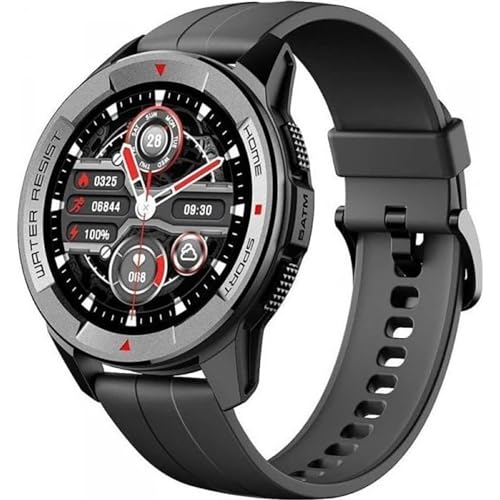
Haylou RS3 review: 127 specs compared

Avg. price:~£35Screen size:1.20 inchBattery life:12 daysDisplay type:AMOLED

Haylou RS3 Review: Compare 127 technical specifications and 20 expert and video reviews to see how this product ranks in the Smartwatches category and whether it is worth buying.
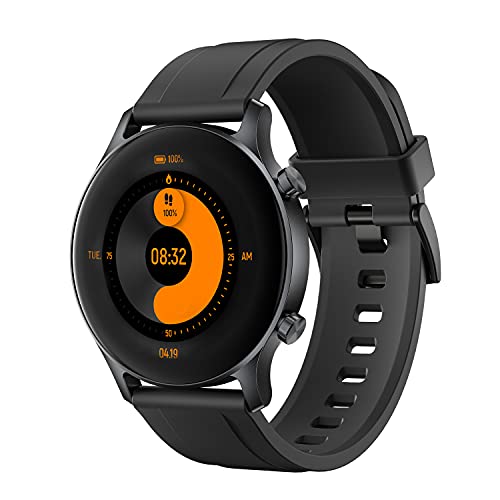
Haylou RS3
6.4/10

Overall score

Score
6.4/ 10
✕
What it is
Our main score for this model, 1–10. It combines specs, best-of lists, expert reviews and owners.
How we count it
Parts: Technical score 35%, List score 30%, Reviews score 25%, Sentiment score 10%
Marks: Each part gets a mark out of 10. For reviews, lists and owners, a typical model in this category gets about 8 and the best one gets 10.
No data yet: A part with no data shows "?". It counts as the mark of a weaker model in this category (4 in 5 models with data score higher). This way, models with reviews, lists and owners usually come out ahead.
Score distribution
â–¼
<55-66-77-88-99-10
Score components

35%

5.9

Technical score

30%

?

List scoreNot enough data yet, so we use 7.5, the mark of a weaker model in this category

25%

5.9

Reviews score

10%

5.9

Sentiment score

â–¼Worse than 74% of smartwatches
7.5

Value for money

Value for money
7.5/ 10
✕
What it is
An indicator that combines the smartwatch's overall rating with its cost.
When it matters
When you are looking for a smartwatch with a good balance between quality and price.
Score distribution
â–¼
<55-66-77-88-99-10
Score components

70%

6.4

Overall score

30%

10

Price

â–¼Worse than 69%
5.9

Technical score

Technical score
5.9/ 10
✕
What it is
How good the specs are compared with the other models in this category, 1–10.
How we count it
Areas: We rate the specs in each area against the other models in this category.
Weighting: The areas that matter most to buyers count more. The shares are shown under Score components.
Share: The technical score is 35% of the overall score.
Score distribution
â–¼
<55-66-77-88-99-10
Score components

24%

5.8

Health

21%

7.6

Fitness

16%

7.0

Battery

14%

3.8

Smart features

12%

5.6

Connectivity

9%

5.6

Display & Design

4%

1.3

Hardware

â–¼Worse than 61%
5.9

Reviews score

Reviews score
5.9/ 10
✕
What it is
Average grade from independent test sites, magazines and video reviewers, 1–10.
How we count it
Grades: Each review's own score is converted to 1–10; without one, we grade the review ourselves. Every review counts the same: written or video, short or full test.
Score: The average grade is 80% of the review mark; the number of reviews is the other 20% (1 review = 5, the typical number in this category = 8, the most-reviewed model = 10).
Enough data: With few reviews, the average grade is pulled toward the typical grade of this category. No reviews yet: 7.4 for now.
Share: Reviews count 25% of the overall score.
Score distribution
â–¼
<55-66-77-88-99-10

5.9

Mark 7.3 is below the typical mark 7.9 of this category, so it cannot lift the score above the technical score

80%

7.2

Average grade

20%

8.1

Popularity

Grades by review (20)
2 reviews + 18 videos, average 6.9/10. Reviews count 25% of the overall score.
User ratings collected online are not part of this score.
â–¼Worse than 72%
?

List score

List score
7.5/ 10
✕
What it is
How often independent test sites, magazines and video reviewers put this model in their best-of lists for this category.
How we count it
Points: The model in the most lists of this category gets 10; the others get 8 to 10 in proportion. In no list yet: 7.5. Lists count 30% of the overall score.
Enough data: Every list counts, even a single one. With fewer than 5 best-of lists in the category, this part is left out.
Lists with this model (0)
Not in any best-of list yet, so this part counts as 7.5. Models in a list get 8 to 10.
Not in any best-of list yet

What reviewers say about the Haylou RS3

Based on 3 · 13

Reviewers love the sharp display, long battery and comfy fit, but notifications and the app disappoint, and GPS splits opinion.
Praised
Mixed views
Criticised
Pick a topic to see who said what

What owners say about the Haylou RS3

Based on 73 owners sharing their experience in online comments

19%positive37%mixed44%negative

Owners praise the vivid AMOLED screen and long battery life, while GPS failures and app problems frustrate many.

What owners dislike

  • GPS often takes about 4 to 6 minutes to find a signal, sometimes never connects, and can still be slow or unreliable after it locks.14
  • The Haylou Fun companion app disconnects often, fails to register workouts or syncs them days late, and some users cannot finish sign-in or pair the watch.9
  • Owners say the workout route map does not appear in the Haylou Fun app or does not export after a GPS run, showing only stats.7
  • Watch face choice is limited, with few faces in the official app, and some faces appear blurry or fail to install on the watch.4
  • The interface lags, and owners say the watch wakes by itself when moved and the sleep-mode button does not work as expected.4
  • The screen sometimes stops responding to touch, and after a reset some watches will not power on or connect and show only a QR code.4
  • Owners report repeated notification vibrations that cannot be turned off from the watch, and some describe phantom vibration alerts.3
  • Some watches fail to charge or power on, including units that show no charging indicator, and one restart left the watch unable to start.3

Points mentioned by at least 3 owners, most mentioned first.

Loading...
Loading category ranking...

Technical Specifications of smartwatch Haylou RS3

Technical score
Technical score
5.9/ 10
✕
What it is
How good the specs are compared with the other models in this category, 1–10.
How we count it
Areas: We rate the specs in each area against the other models in this category.
Weighting: The areas that matter most to buyers count more. The shares are shown under Score components.
Share: The technical score is 35% of the overall score.
Score distribution
â–¼
<55-66-77-88-99-10
Score components:

24%

5.8

Health

21%

7.6

Fitness

16%

7.0

Battery

14%

3.8

Smart features

12%

5.6

Connectivity

9%

5.6

Display & Design

4%

1.3

Hardware

5.9
Reviews score
5.9
List score
?
Value for money
Value for money
7.5/ 10
✕
What it is
An indicator that combines the smartwatch's overall rating with its cost.
When it matters
When you are looking for a smartwatch with a good balance between quality and price.
Score distribution
â–¼
<55-66-77-88-99-10
Score components:

70%

6.4

Overall score

30%

10

Price

7.5
Heart rate monitor
yes
This smartwatch includes a heart rate monitor. 9.5% of smartwatches include a heart rate monitor.
Blood oxygen monitoring
yes
This smartwatch supports blood oxygen monitoring. 30.4% of smartwatches support blood oxygen monitoring.
ECG
yes
This smartwatch supports ECG. 82% of smartwatches support ECG.
Irregular heart rate warnings
yes
This smartwatch supports irregular heart rate warnings. 49.5% of smartwatches support irregular heart rate warnings.
HRV tracking
?
Show more
What reviewers say
Accelerometer
yes
This smartwatch includes an accelerometer. 0.5% of smartwatches include an accelerometer.
Barometer
no
This smartwatch does not include a barometer. 53.6% of smartwatches include a barometer.
Gyroscope
yes
This smartwatch includes a gyroscope. 28.9% of smartwatches include a gyroscope.
Cadence sensor
no
This smartwatch does not include a cadence sensor. 32.9% of smartwatches include a cadence sensor.
Distance tracking
yes
This smartwatch supports distance tracking. 3.7% of smartwatches support distance tracking.
Show more
What reviewers say
Battery life
12 days
This smartwatch lasts 12 days on a charge, which is longer than 68.3% of Smartwatches and the same as 4.3% of Smartwatches.
Battery life in training mode
21 h
This smartwatch records workouts for 21 h on a charge, which is longer than 52% of Smartwatches and the same as 2% of Smartwatches.
Battery life with GPS on
21 h
This smartwatch lasts 21 h with GPS on, which is longer than 48% of Smartwatches and the same as 3.7% of Smartwatches.
Battery power
240 mAh
This smartwatch has a 240 mAh battery, which is smaller than 75% of Smartwatches and the same as 2% of Smartwatches.
Charge time
?
Show more
What reviewers say
Operating system
Proprietary OS
This smartwatch runs Proprietary OS, which is less advanced than the system in 54.2% of Smartwatches and equal to 42% of Smartwatches.
Software update frequency
ended
This smartwatch has ended software update support which is less active than that of 46.1% of smartwatches and equal to that of 53.9% of smartwatches.
Third-party app support
no
This smartwatch does not support third-party apps. 51.6% of smartwatches support third-party apps.
Notifications
yes
This smartwatch supports notifications. 0.3% of smartwatches support notifications.
Voice assistant support
no
This smartwatch does not support voice assistants. 69.3% of smartwatches support voice assistants.
Show more
What reviewers say
Cellular module
no
This smartwatch does not include a cellular module. 16.7% of smartwatches include a cellular module.
SIM cards
0
GPS
yes
This smartwatch supports GPS. 40.3% of smartwatches support GPS.
Galileo support
no
This smartwatch does not support Galileo navigation. 43.6% of smartwatches support Galileo navigation.
Dual-frequency GPS
no
This smartwatch does not support dual-frequency GPS. 15.1% of Smartwatches offer this.
Show more
What reviewers say
Screen size
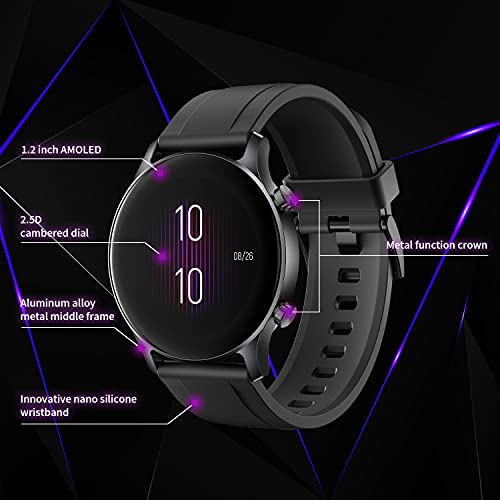
1.2 inch
This smartwatch has a 1.2 inch screen, which is smaller than 84.6% of Smartwatches and the same as 8.1% of Smartwatches.
Display type
AMOLED
This smartwatch uses AMOLED, which is more advanced than the screen in 46.9% of Smartwatches and equal to 53.1% of Smartwatches.
Resolution
390x 390
This smartwatch has a display resolution of 390x390 which is higher than that of 56.8% of smartwatches and equal to that of 6% of smartwatches.
Pixel density
460 ppi
This smartwatch has a pixel density of 460 ppi, which is higher than 80.1% of Smartwatches and equal to 4.8% of Smartwatches.
Display brightness
450 nits
This smartwatch has a screen brightness of 450 nits, which is lower than 87.4% of Smartwatches and equal to 5.6% of Smartwatches.
Show more
What reviewers say
CPU speed
?
Processor model
?
RAM
?
Internal storage
4 GB
This smartwatch has 4 GB of internal storage, which is more than 39.8% of Smartwatches and equal to 25.5% of Smartwatches.
External memory slot
no
This smartwatch does not include an external memory slot. 0.3% of smartwatches include an external memory slot.
Show more

Haylou RS3 vs the average smartwatch

246810TotalHealthFitnessBatteryConnectivityDisplay & DesignSmart featuresHardware
  • ECG support
    This smartwatch supports ECG, the average smartwatch does not. 18.1% of smartwatches support ECG.
  • Supports wireless charging
    This smartwatch supports wireless charging, the average smartwatch does not. 23.4% of smartwatches support wireless charging.
  • NFC functionality
    This smartwatch supports NFC, the average smartwatch does not. 45.2% of smartwatches support NFC.
    NFC hardware is present, but functionality may be limited by region/app support.
  • 5 days longer battery life
    This smartwatch runs longer per charge than the average smartwatch (12 days vs 7 days). The average smartwatch runs for 7 days on a charge.
    12 days vs 7 days
  • 134 ppi sharper screen
    This smartwatch has a sharper screen than the average smartwatch (460 ppi vs 326 ppi). The average smartwatch has a pixel density of 326 ppi.
    460 ppi vs 326 ppi
  • Water intake tracking
    This smartwatch tracks water intake, the average smartwatch does not. 44.1% of smartwatches track water intake.
  • 3 mm slimmer strap
    This smartwatch has a slimmer strap than the average smartwatch (19 mm vs 22 mm). The average smartwatch has a 22 mm strap.
    19 mm vs 22 mm
  • 15 °C higher heat tolerance
    This smartwatch tolerates a higher temperature than the average smartwatch (60 °C vs 45 °C). The average smartwatch is rated up to 45 °C.
    60 °C vs 45 °C
  • ECG support
    This smartwatch supports ECG, the average smartwatch does not. 18.1% of smartwatches support ECG.
  • Water intake tracking
    This smartwatch tracks water intake, the average smartwatch does not. 44.1% of smartwatches track water intake.
  • Supports wireless charging
    This smartwatch supports wireless charging, the average smartwatch does not. 23.4% of smartwatches support wireless charging.
  • 5 days longer battery life
    This smartwatch runs longer per charge than the average smartwatch (12 days vs 7 days). The average smartwatch runs for 7 days on a charge.
    12 days vs 7 days
  • NFC functionality
    This smartwatch supports NFC, the average smartwatch does not. 45.2% of smartwatches support NFC.
    NFC hardware is present, but functionality may be limited by region/app support.
  • 134 ppi sharper screen
    This smartwatch has a sharper screen than the average smartwatch (460 ppi vs 326 ppi). The average smartwatch has a pixel density of 326 ppi.
    460 ppi vs 326 ppi
  • 3 mm slimmer strap
    This smartwatch has a slimmer strap than the average smartwatch (19 mm vs 22 mm). The average smartwatch has a 22 mm strap.
    19 mm vs 22 mm
  • 15 °C higher heat tolerance
    This smartwatch tolerates a higher temperature than the average smartwatch (60 °C vs 45 °C). The average smartwatch is rated up to 45 °C.
    60 °C vs 45 °C
  • No VO2 max measurement
    This smartwatch does not measure VO2 max, the average smartwatch does. 51.3% of smartwatches measure VO2 max.
  • No third-party apps
    This smartwatch does not support third-party apps, the average smartwatch does. 51.6% of smartwatches support third-party apps.
  • No stress monitoring
    This smartwatch does not support stress monitoring, the average smartwatch does. 68.7% of smartwatches support stress monitoring.
  • No automatic activity detection
    This smartwatch does not support automatic activity detection, the average smartwatch does. 81.8% of smartwatches support automatic activity detection.
  • No barometer
    This smartwatch does not include a barometer, the average smartwatch does. 53.6% of smartwatches include a barometer.
  • No coaching features
    This smartwatch does not support coaching, the average smartwatch does. 58.8% of smartwatches support coaching.
  • No music playback
    This smartwatch does not support music playback, the average smartwatch does. 57.1% of smartwatches support music playback.
  • No always-on display
    This smartwatch does not have an always-on display, the average smartwatch does. 70.3% of smartwatches have an always-on display.
  • 15.7% lower review score
    Reviews score
    5.9/ 10
    ✕
    What it is
    Average grade from independent test sites, magazines and video reviewers, 1–10.
    How we count it
    Grades: Each review's own score is converted to 1–10; without one, we grade the review ourselves. Every review counts the same: written or video, short or full test.
    Score: The average grade is 80% of the review mark; the number of reviews is the other 20% (1 review = 5, the typical number in this category = 8, the most-reviewed model = 10).
    Enough data: With few reviews, the average grade is pulled toward the typical grade of this category. No reviews yet: 7.4 for now.
    Share: Reviews count 25% of the overall score.
    Score distribution
    â–¼
    <55-66-77-88-99-10

    5.9

    Mark 7.3 is below the typical mark 7.9 of this category, so it cannot lift the score above the technical score

    80%

    7.2

    Average grade

    20%

    8.1

    Popularity

    Grades by review (20)
    2 reviews + 18 videos, average 6.9/10. Reviews count 25% of the overall score.
    User ratings collected online are not part of this score.
    5.9 vs 7.0
  • 21.3% lower sentiment score
    5.9 vs 7.5
  • 4.1% worse value for money
    Haylou RS3 has a lower value-for-money score than the average smartwatch (7.45 vs 7.8).
    7.45 vs 7.76
  • No VO2 max measurement
    This smartwatch does not measure VO2 max, the average smartwatch does. 51.3% of smartwatches measure VO2 max.
  • No stress monitoring
    This smartwatch does not support stress monitoring, the average smartwatch does. 68.7% of smartwatches support stress monitoring.
  • No cycle tracking
    This smartwatch does not support menstrual cycle tracking, the average smartwatch does. 66.8% of smartwatches support menstrual cycle tracking.
  • No automatic activity detection
    This smartwatch does not support automatic activity detection, the average smartwatch does. 81.8% of smartwatches support automatic activity detection.
  • No barometer
    This smartwatch does not include a barometer, the average smartwatch does. 53.6% of smartwatches include a barometer.
  • No coaching features
    This smartwatch does not support coaching, the average smartwatch does. 58.8% of smartwatches support coaching.
  • No route support
    This smartwatch does not support route support, the average smartwatch does. 54.4% of smartwatches support route support.
  • 76 fewer exercise types
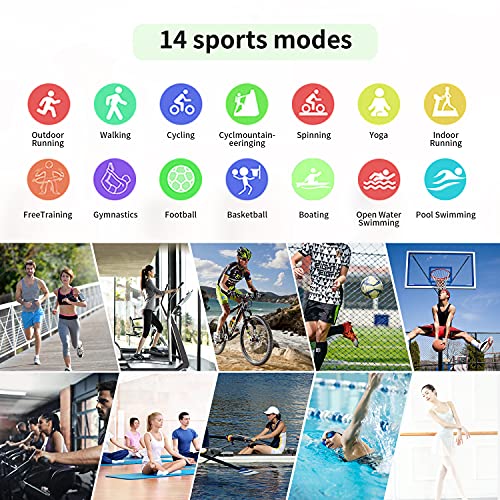
    This smartwatch includes fewer exercise types than the average smartwatch (14 vs 90). The average smartwatch includes 90 exercise types.
    14 vs 90
  • No voice feedback
    This smartwatch does not support voice feedback, the average smartwatch does. 63.5% of smartwatches support voice feedback.
  • 65 mAh smaller battery capacity
    This smartwatch has a smaller battery than the average smartwatch (240 mAh vs 305 mAh). The average smartwatch has a 305 mAh battery.
    240 mAh vs 305 mAh
  • No always-on display
    This smartwatch does not have an always-on display, the average smartwatch does. 70.3% of smartwatches have an always-on display.
  • No ambient light sensor
    This smartwatch does not include an ambient light sensor, the average smartwatch does. 63.5% of smartwatches include an ambient light sensor.
  • 0.2 inch smaller display
    This smartwatch has a smaller screen than the average smartwatch (1.2 inch vs 1.4 inch). The average smartwatch has a 1.4 inch screen.
    1.2 inch vs 1.4 inch
  • 300 nits dimmer screen
    This smartwatch has a dimmer screen than the average smartwatch (450 nits vs 750 nits). The average smartwatch peaks at 750 nits.
    450 nits vs 750 nits
  • 0.8 mm thicker
    This smartwatch is thicker than the average smartwatch (12.5 mm vs 11.7 mm). The average smartwatch is 11.7 mm thick.
    12.5 mm vs 11.7 mm
  • 5.5 mm taller case
    This smartwatch has a taller case than the average smartwatch (50.5 mm vs 45 mm). The average smartwatch is 45 mm tall.
    50.5 mm vs 45 mm
  • No third-party apps
    This smartwatch does not support third-party apps, the average smartwatch does. 51.6% of smartwatches support third-party apps.
  • No music playback
    This smartwatch does not support music playback, the average smartwatch does. 57.1% of smartwatches support music playback.
  • No voice assistant
    This smartwatch does not support voice assistants, the average smartwatch does. 69.2% of smartwatches support voice assistants.
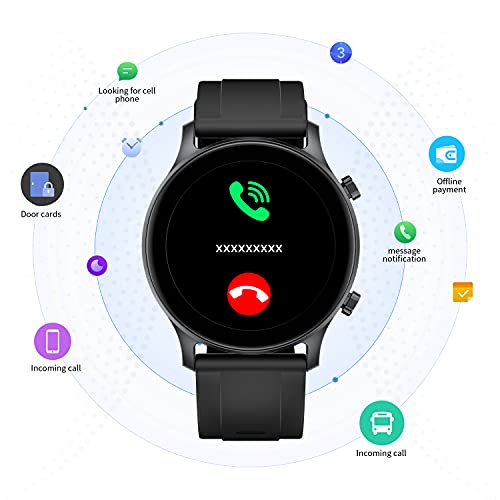
  • No call answering
    This smartwatch does not support call answering, the average smartwatch does. 60% of smartwatches support call answering.
  • No voice command support
    This smartwatch does not support voice commands, the average smartwatch does. 68.1% of smartwatches support voice commands.
  • No widget support
    This smartwatch does not support widgets, the average smartwatch does. 84.4% of smartwatches support widgets.
  • No speaker
    This smartwatch does not include a built-in speaker, the average smartwatch does. 56.7% of smartwatches include a built-in speaker.
  • 1 fewer microphones
    This smartwatch has fewer microphones than the average smartwatch (0 vs 1). The average smartwatch has 1 microphones.
    0 vs 1

Video reviews

Hands-on testing, unboxing, and real-world video evaluations

6.0
bukan pesulap
≈ estimated
05/08/2023
Unboxing · feature walkthrough · short running test
Verdict
Haylou RS3 offers GPS and an AMOLED screen at a low price, but impact resistance is weak and the stopwatch is unremarkable.
9.0
Léo Moreira - Reviews
≈ estimated
15/09/2021
Long-term test · one month of daily use
Verdict
Haylou RS3 is good value and a recommended buy, though its small screen and limited software hold it back.
4.0
Newdroy
≈ estimated
01/08/2021
Hands-on review · notifications, GPS and app tests
Verdict
Haylou RS3 is not recommended for daily use because of notification, touch and GPS problems.
5.0
TechMishka
≈ estimated
23/07/2021
Full review · software, GPS, battery and alternatives
Verdict
Haylou RS3 has good hardware and battery, but weak software makes it hard to recommend over alternatives.
9.0
HEYRIAD
≈ estimated
08/07/2021
Full review · features, GPS, battery and sleep tests
Verdict
Haylou RS3 is a very good pick for the price, with a comfortable build, useful health tracking and long battery life.
8.0
Smart Gadgets
≈ estimated
06/10/2021
Hands-on review · heart rate, blood oxygen and sports tests
Verdict
Haylou RS3 works well and feels very good, though it offers fewer sport and breathing options than expected.
9.0
Badra Jultouriq
≈ estimated
22/09/2021
Waterproof test · 13 minutes swimming in a river
Verdict
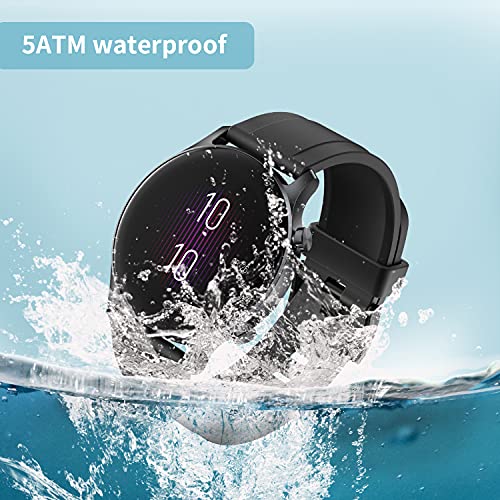
Haylou RS3 survived 13 minutes of river swimming, matching its 5 ATM rating, and is strongly recommended for outdoor use.
8.0
New-Tech
≈ estimated
23/07/2021
Unboxing · first look with menu and sensor tests
Verdict
Haylou RS3 works well and feels very good, though it offers few options and limited sport modes.
7.0
Lim Reviews
≈ estimated
17/06/2021
Hands-on review · display, heart rate, GPS and fit
Verdict
Haylou RS3 is a clear step up from earlier models, but buried notifications and a small case limit it to smaller wrists.
Shop video
Hands-on video, no verdict
Shop video

Expert reviews

In-depth analysis and verdict from leading tech publications

7.0
gbatemp.net
✓ explicit
12/07/2021
Two-week test · Fitness-focused watch
Verdict
The Haylou RS3 is a comfortable watch with long battery life, best for workout tracking, though its plain notifications and few watch faces hold it back.
6.0
tech4all.net
≈ estimated
24/07/2021
Hands-on review · SpO2 fitness watch
Verdict
The Haylou RS3 is a light watch with strong battery life and good heart tracking, but its app and GPS accuracy let it down.

Third-party reviews

What customers like about Haylou RS3

  • Vibrant 1.2-inch AMOLED display with high pixel density and good sunlight visibility
  • Excellent battery life, typically lasting 12 days in daily use mode and up to 21 days in basic mode
  • Built-in Sony GPS module for accurate outdoor activity tracking
  • Durable and sleek build featuring an aluminium alloy frame
  • 5 ATM water resistance, making it suitable for swimming
  • Comprehensive health monitoring including SpO2 (blood oxygen), continuous heart rate, and sleep tracking
  • Includes 14 different workout modes such as open water swimming, yoga, and rowing

What customers don't like about Haylou RS3

  • Lacks essential hardware features like a speaker, microphone, and Always-On Display (AOD)
  • Proprietary operating system is basic and does not support third-party apps
  • User interface can be sluggish or laggy
  • The companion Haylou Fun app is often described as unintuitive, buggy, and slow to sync
  • Limited customisation options for watch faces and non-customisable physical buttons
  • Notification system is basic and lacks support for displaying emojis
  • No NFC support for contactless payments

Verdict

The Haylou RS3 is a sleek, budget-friendly smartwatch featuring a 1.2-inch AMOLED HD display with 390x390 resolution, an aluminum alloy frame, and a 2.5D curved glass finish. Key technical characteristics include built-in Sony GPS for accurate route tracking, 5ATM water resistance suitable for swimming, and a comprehensive health suite with 24-hour heart rate monitoring and SpO2 blood oxygen tracking. It supports 14 workout modes and offers impressive battery life, lasting up to 12 days in daily use mode or 21 days in basic mode from its 230mAh battery. Main pros include its premium build quality, precise GPS, and long battery endurance; however, notable cons include a sluggish user interface, lack of always-on display functionality, and a proprietary software ecosystem that does not support third-party apps or advanced notification interactions like emojis.

Compare Haylou RS3 with other Smartwatches

1Product to compare no. 1
VS
2Product to compare no. 2
VS
3Product to compare no. 3 (optional)

Graphic comparison of Haylou RS3 and other Smartwatches

No results found