Scored using Smartwatches Methodology v3.0
Smartwatches Methodology v3.0
Mathematical & Unbiased Scoring
Products in this category are scored under Frontum Smartwatches Methodology v3.0: the technical score from the specifications is the base, and independent expert and video reviews (up to ±0.5 points), owner opinions (up to ±0.3) and best-of lists (up to +0.3) move it up or down.
Explore Smartwatches Methodology v3.0

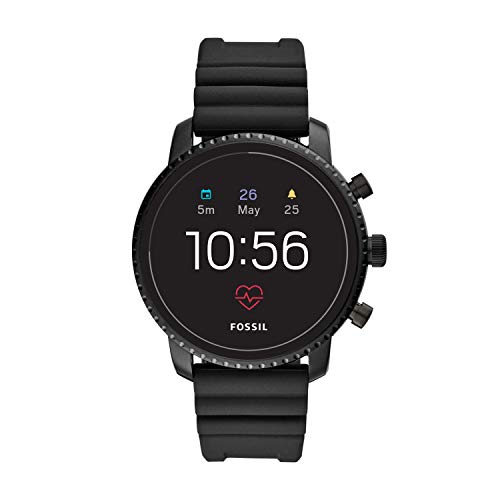
Fossil Q Explorist Gen 4 review: 127 specs compared

Avg. price:~£260Screen size:1.40 inchBattery life:1 daysDisplay type:AMOLED

Fossil Q Explorist Gen 4 Review: Compare 127 technical specifications and 16 expert and video reviews to see how this product ranks in the Smartwatches category and whether it is worth buying.
Fossil Q Explorist Gen 4
6.1/10

Overall score

Score
6.1/ 10
✕
What it is
Our main score for this model, 1–10. It combines specs, best-of lists, expert reviews and owners.
How we count it
Parts: Technical score 35%, List score 30%, Reviews score 25%, Sentiment score 10%
Marks: Each part gets a mark out of 10. For reviews, lists and owners, a typical model in this category gets about 8 and the best one gets 10.
No data yet: A part with no data shows "?". It counts as the mark of a weaker model in this category (4 in 5 models with data score higher). This way, models with reviews, lists and owners usually come out ahead.
Score distribution
â–¼
<55-66-77-88-99-10
Score components

35%

5.5

Technical score

30%

?

List scoreNot enough data yet, so we use 7.5, the mark of a weaker model in this category

25%

5.5

Reviews score

10%

5.5

Sentiment score

â–¼Worse than 83% of smartwatches
7.0

Value for money

Value for money
7.0/ 10
✕
What it is
An indicator that combines the smartwatch's overall rating with its cost.
When it matters
When you are looking for a smartwatch with a good balance between quality and price.
Score distribution
â–¼
<55-66-77-88-99-10
Score components

70%

6.1

Overall score

30%

9.2

Price

â–¼Worse than 90%
5.5

Technical score

Technical score
5.5/ 10
✕
What it is
How good the specs are compared with the other models in this category, 1–10.
How we count it
Areas: We rate the specs in each area against the other models in this category.
Weighting: The areas that matter most to buyers count more. The shares are shown under Score components.
Share: The technical score is 35% of the overall score.
Score distribution
â–¼
<55-66-77-88-99-10
Score components

24%

2.3

Health

21%

8.3

Fitness

16%

4.4

Battery

14%

6.5

Smart features

12%

6.8

Connectivity

9%

7.4

Display & Design

4%

2.8

Hardware

â–¼Worse than 72%
5.5

Reviews score

Reviews score
5.5/ 10
✕
What it is
Average grade from independent test sites, magazines and video reviewers, 1–10.
How we count it
Grades: Each review's own score is converted to 1–10; without one, we grade the review ourselves. Every review counts the same: written or video, short or full test.
Score: The average grade is 80% of the review mark; the number of reviews is the other 20% (1 review = 5, the typical number in this category = 8, the most-reviewed model = 10).
Enough data: With few reviews, the average grade is pulled toward the typical grade of this category. No reviews yet: 7.4 for now.
Share: Reviews count 25% of the overall score.
Score distribution
â–¼
<55-66-77-88-99-10

5.5

Mark 7.3 is below the typical mark 7.9 of this category, so it cannot lift the score above the technical score

80%

7.1

Average grade

20%

7.8

Popularity

Grades by review (16)
4 reviews + 12 videos, average 6.8/10. Reviews count 25% of the overall score.
User ratings collected online are not part of this score.
â–¼Worse than 79%
?

List score

List score
7.5/ 10
✕
What it is
How often independent test sites, magazines and video reviewers put this model in their best-of lists for this category.
How we count it
Points: The model in the most lists of this category gets 10; the others get 8 to 10 in proportion. In no list yet: 7.5. Lists count 30% of the overall score.
Enough data: Every list counts, even a single one. With fewer than 5 best-of lists in the category, this part is left out.
Lists with this model (0)
Not in any best-of list yet, so this part counts as 7.5. Models in a list get 8 to 10.
Not in any best-of list yet

What reviewers say about the Fossil Q Explorist Gen 4

Based on 4 · 12

The design and build win near-universal praise, but short battery life is the overwhelming complaint.
Praised
Mixed views
Criticised
Pick a topic to see who said what

What owners say about the Fossil Q Explorist Gen 4

Based on 46 owners sharing their experience in online comments

28%positive29%mixed43%negative

Many owners like its attractive design and useful features, but battery life and occasional lag are frequent frustrations.

What owners dislike

  • Owners report battery lasting only 3 to 6 hours with heavy use, such as heart-rate tracking or always-on display, and drain is fast even on light days.17
  • Owners say menus lag when switching between screens, and the watch feels slow to respond compared with Samsung and Apple watches.6
  • Owners on iPhone say the watch won't connect reliably, it drops the link often, and replying to messages doesn't work.5
  • Owners say it can't open Android apps or transfer music files, and it lacks features found on Samsung watches, such as a speaker.3
  • Owners say the watch is not water resistant, and one reports the base came loose after about four months.3

Points mentioned by at least 3 owners, most mentioned first.

Loading...
Loading category ranking...

Technical Specifications of smartwatch Fossil Q Explorist Gen 4

Technical score
Technical score
5.5/ 10
✕
What it is
How good the specs are compared with the other models in this category, 1–10.
How we count it
Areas: We rate the specs in each area against the other models in this category.
Weighting: The areas that matter most to buyers count more. The shares are shown under Score components.
Share: The technical score is 35% of the overall score.
Score distribution
â–¼
<55-66-77-88-99-10
Score components:

24%

2.3

Health

21%

8.3

Fitness

16%

4.4

Battery

14%

6.5

Smart features

12%

6.8

Connectivity

9%

7.4

Display & Design

4%

2.8

Hardware

5.5
Reviews score
5.5
List score
?
Value for money
Value for money
7.0/ 10
✕
What it is
An indicator that combines the smartwatch's overall rating with its cost.
When it matters
When you are looking for a smartwatch with a good balance between quality and price.
Score distribution
â–¼
<55-66-77-88-99-10
Score components:

70%

6.1

Overall score

30%

9.2

Price

7.0
Heart rate monitor
yes
This smartwatch includes a heart rate monitor. 9.5% of smartwatches include a heart rate monitor.
Blood oxygen monitoring
no
This smartwatch does not support blood oxygen monitoring. 69.7% of smartwatches support blood oxygen monitoring.
ECG
no
This smartwatch does not support ECG. 18.2% of smartwatches support ECG.
Irregular heart rate warnings
no
This smartwatch does not support irregular heart rate warnings. 50.6% of smartwatches support irregular heart rate warnings.
HRV tracking
no
This smartwatch does not support HRV tracking. 45.2% of smartwatches support HRV tracking.
Show more
What reviewers say
Accelerometer
yes
This smartwatch includes an accelerometer. 0.5% of smartwatches include an accelerometer.
Barometer
no
This smartwatch does not include a barometer. 53.6% of smartwatches include a barometer.
Gyroscope
yes
This smartwatch includes a gyroscope. 28.9% of smartwatches include a gyroscope.
Cadence sensor
no
This smartwatch does not include a cadence sensor. 32.9% of smartwatches include a cadence sensor.
Distance tracking
yes
This smartwatch supports distance tracking. 3.7% of smartwatches support distance tracking.
Show more
Battery life
1 day
This smartwatch lasts 1 day on a charge, which is shorter than 88.1% of Smartwatches and the same as 8.1% of Smartwatches.
Converted from the reported 24-hour battery life.
Battery life in training mode
1 h
This smartwatch records workouts for 1 h on a charge, which is shorter than 99.6% of Smartwatches and the same as 0.5% of Smartwatches.
Battery life with GPS on
?
Battery power
370 mAh
This smartwatch has a 370 mAh battery, which is larger than 66.4% of Smartwatches and the same as 0.7% of Smartwatches.
Charge time
105 min
This smartwatch charges from empty in 105 min, which is quicker than 60% of Smartwatches and the same as 2.1% of Smartwatches.
Approximate value from reported charging range: 105 minutes.
Show more
What reviewers say
Operating system
Wear OS
This smartwatch runs Wear OS, which is more advanced than the system in 80.1% of Smartwatches and equal to 15.8% of Smartwatches.
Software update frequency
ended
This smartwatch has ended software update support which is less active than that of 46.1% of smartwatches and equal to that of 53.9% of smartwatches.
Third-party app support
yes
This smartwatch supports third-party apps. 48.5% of smartwatches support third-party apps.
Notifications
yes
This smartwatch supports notifications. 0.3% of smartwatches support notifications.
Voice assistant support
yes
This smartwatch supports voice assistants. 30.8% of smartwatches support voice assistants.
Show more
What reviewers say
Cellular module
no
This smartwatch does not include a cellular module. 16.7% of smartwatches include a cellular module.
SIM cards
0
GPS
yes
This smartwatch supports GPS. 40.3% of smartwatches support GPS.
Galileo support
no
This smartwatch does not support Galileo navigation. 43.6% of smartwatches support Galileo navigation.
Dual-frequency GPS
no
This smartwatch does not support dual-frequency GPS. 15.1% of Smartwatches offer this.
Show more
Screen size
1.4 inch
This smartwatch has a 1.4 inch screen, which is larger than 48.9% of Smartwatches and the same as 6.7% of Smartwatches.
Some sources mention multiple/uncertain size variants.
Display type
AMOLED
This smartwatch uses AMOLED, which is more advanced than the screen in 46.9% of Smartwatches and equal to 53.1% of Smartwatches.
Resolution
454x 454
This smartwatch has a display resolution of 454x454 which is higher than that of 76.5% of smartwatches and equal to that of 7% of smartwatches.
Pixel density
243 ppi
This smartwatch has a pixel density of 243 ppi, which is lower than 83.1% of Smartwatches and equal to 0.3% of Smartwatches.
Display brightness
?
Show more
What reviewers say
CPU speed
1.2 GHz
This smartwatch uses a CPU configuration of 1.2 GHz which is faster than that in 61% of smartwatches and equal to that in 4.6% of smartwatches.
Processor model
Snapdragon Wear 2100
This smartwatch uses the Snapdragon Wear 2100 processor model.
RAM
0.5 GB
This smartwatch has 0.5 GB of RAM, which is less than 71.8% of Smartwatches and equal to 22.7% of Smartwatches.
512 MB RAM
Internal storage
4 GB
This smartwatch has 4 GB of internal storage, which is more than 39.8% of Smartwatches and equal to 25.5% of Smartwatches.
External memory slot
no
This smartwatch does not include an external memory slot. 0.3% of smartwatches include an external memory slot.
Show more
What reviewers say

Fossil Q Explorist Gen 4 vs the average smartwatch

246810TotalHealthFitnessBatteryConnectivityDisplay & DesignSmart featuresHardware
  • More advanced operating system
    This smartwatch runs a more advanced operating system than the average smartwatch (Wear OS vs Proprietary OS).
    Wear OS vs Proprietary OS
  • Maps support
    This smartwatch supports maps, the average smartwatch does not. 34.4% of smartwatches support maps.
  • NFC functionality
    This smartwatch supports NFC, the average smartwatch does not. 45.2% of smartwatches support NFC.
  • External heart rate monitor support
    This smartwatch supports external heart rate monitor compatibility, the average smartwatch does not. 46.6% of smartwatches support external heart rate monitor compatibility.
    Supported through Wear OS or third-party apps.
  • Supports Wi-Fi
    This smartwatch supports Wi-Fi, the average smartwatch does not. 43.5% of smartwatches support Wi-Fi.
  • 15 min quicker charging
    This smartwatch charges faster than the average smartwatch (105 min vs 120 min). The average smartwatch takes 120 min to charge from empty.
    Approximate value from reported charging range: 105 minutes.
    105 min vs 120 min
  • Stronger display glass
    This smartwatch uses Corning Gorilla Glass display glass, while the average smartwatch uses mineral glass.
    Corning Gorilla Glass vs mineral glass
  • Better band material
    This smartwatch uses silicone, leather, stainless steel for the band material, while the average smartwatch uses silicone.
    silicone, leather, stainless steel vs silicone
  • Water intake tracking
    This smartwatch tracks water intake, the average smartwatch does not. 44.1% of smartwatches track water intake.
  • External heart rate monitor support
    This smartwatch supports external heart rate monitor compatibility, the average smartwatch does not. 46.6% of smartwatches support external heart rate monitor compatibility.
    Supported through Wear OS or third-party apps.
  • 15 min quicker charging
    This smartwatch charges faster than the average smartwatch (105 min vs 120 min). The average smartwatch takes 120 min to charge from empty.
    Approximate value from reported charging range: 105 minutes.
    105 min vs 120 min
  • 65 mAh larger battery capacity
    This smartwatch has a larger battery than the average smartwatch (370 mAh vs 305 mAh). The average smartwatch has a 305 mAh battery.
    370 mAh vs 305 mAh
  • Maps support
    This smartwatch supports maps, the average smartwatch does not. 34.4% of smartwatches support maps.
  • NFC functionality
    This smartwatch supports NFC, the average smartwatch does not. 45.2% of smartwatches support NFC.
  • Supports Wi-Fi
    This smartwatch supports Wi-Fi, the average smartwatch does not. 43.5% of smartwatches support Wi-Fi.
  • Stronger display glass
    This smartwatch uses Corning Gorilla Glass display glass, while the average smartwatch uses mineral glass.
    Corning Gorilla Glass vs mineral glass
  • Better band material
    This smartwatch uses silicone, leather, stainless steel for the band material, while the average smartwatch uses silicone.
    silicone, leather, stainless steel vs silicone
  • Better case material
    This smartwatch uses stainless steel for the case material, while the average smartwatch uses polycarbonate.
    stainless steel vs polycarbonate
  • Higher resolution
    This smartwatch has a display resolution of 454x454, while the average smartwatch reaches 360x360.
    454x454 vs 360x360
  • 2 mm slimmer strap
    This smartwatch has a slimmer strap than the average smartwatch (20 mm vs 22 mm). The average smartwatch has a 22 mm strap.
    20 mm vs 22 mm
  • More advanced operating system
    This smartwatch runs a more advanced operating system than the average smartwatch (Wear OS vs Proprietary OS).
    Wear OS vs Proprietary OS
  • No VO2 max measurement
    This smartwatch does not measure VO2 max, the average smartwatch does. 51.3% of smartwatches measure VO2 max.
  • No blood oxygen monitoring
    This smartwatch does not support blood oxygen monitoring, the average smartwatch does. 69.6% of smartwatches support blood oxygen monitoring.
  • No irregular heart rate alerts
    This smartwatch does not support irregular heart rate warnings, the average smartwatch does. 50.6% of smartwatches support irregular heart rate warnings.
  • No stress monitoring
    This smartwatch does not support stress monitoring, the average smartwatch does. 68.7% of smartwatches support stress monitoring.
  • 19 h shorter training battery life
    This smartwatch lasts less time in training mode than the average smartwatch (1 h vs 20 h). The average smartwatch lasts 20 h in training mode.
    1 h vs 20 h
  • No barometer
    This smartwatch does not include a barometer, the average smartwatch does. 53.6% of smartwatches include a barometer.
  • No pace tracking
    This smartwatch does not support pace tracking, the average smartwatch does. 80.6% of smartwatches support pace tracking.
  • No sleep tracking
    This smartwatch does not support sleep tracking, the average smartwatch does. 93.8% of smartwatches support sleep tracking.
  • 21.4% lower review score
    Reviews score
    5.5/ 10
    ✕
    What it is
    Average grade from independent test sites, magazines and video reviewers, 1–10.
    How we count it
    Grades: Each review's own score is converted to 1–10; without one, we grade the review ourselves. Every review counts the same: written or video, short or full test.
    Score: The average grade is 80% of the review mark; the number of reviews is the other 20% (1 review = 5, the typical number in this category = 8, the most-reviewed model = 10).
    Enough data: With few reviews, the average grade is pulled toward the typical grade of this category. No reviews yet: 7.4 for now.
    Share: Reviews count 25% of the overall score.
    Score distribution
    â–¼
    <55-66-77-88-99-10

    5.5

    Mark 7.3 is below the typical mark 7.9 of this category, so it cannot lift the score above the technical score

    80%

    7.1

    Average grade

    20%

    7.8

    Popularity

    Grades by review (16)
    4 reviews + 12 videos, average 6.8/10. Reviews count 25% of the overall score.
    User ratings collected online are not part of this score.
    5.5 vs 7.0
  • 26.7% lower sentiment score
    5.5 vs 7.5
  • 10.6% worse value for money
    Fossil Q Explorist Gen 4 has a lower value-for-money score than the average smartwatch (7.02 vs 7.8).
    7.02 vs 7.76
  • 2.36x more expensive
    Fossil Q Explorist Gen 4 is more expensive than the average smartwatch (£260 vs £110).
    £260 vs £110
  • No VO2 max measurement
    This smartwatch does not measure VO2 max, the average smartwatch does. 51.3% of smartwatches measure VO2 max.
  • No blood oxygen monitoring
    This smartwatch does not support blood oxygen monitoring, the average smartwatch does. 69.6% of smartwatches support blood oxygen monitoring.
  • No irregular heart rate alerts
    This smartwatch does not support irregular heart rate warnings, the average smartwatch does. 50.6% of smartwatches support irregular heart rate warnings.
  • No stress monitoring
    This smartwatch does not support stress monitoring, the average smartwatch does. 68.7% of smartwatches support stress monitoring.
  • No sleep tracking
    This smartwatch does not support sleep tracking, the average smartwatch does. 93.8% of smartwatches support sleep tracking.
  • No cycle tracking
    This smartwatch does not support menstrual cycle tracking, the average smartwatch does. 66.8% of smartwatches support menstrual cycle tracking.
  • 3 years older
    This smartwatch was released earlier than the average smartwatch (2018 vs 2021). The average smartwatch was released in 2021.
    August 2018
    2018 vs 2021
  • No barometer
    This smartwatch does not include a barometer, the average smartwatch does. 53.6% of smartwatches include a barometer.
  • No pace tracking
    This smartwatch does not support pace tracking, the average smartwatch does. 80.6% of smartwatches support pace tracking.
  • No auto-pause
    This smartwatch does not support auto pause, the average smartwatch does. 62.6% of smartwatches support auto pause.
  • No voice feedback
    This smartwatch does not support voice feedback, the average smartwatch does. 63.5% of smartwatches support voice feedback.
  • 19 h shorter training battery life
    This smartwatch lasts less time in training mode than the average smartwatch (1 h vs 20 h). The average smartwatch lasts 20 h in training mode.
    1 h vs 20 h
  • 6 days shorter battery life
    This smartwatch runs for less time per charge than the average smartwatch (1 days vs 7 days). The average smartwatch runs for 7 days on a charge.
    Converted from the reported 24-hour battery life.
    1 days vs 7 days
  • No compass
    This smartwatch does not include a compass, the average smartwatch does. 56.7% of smartwatches include a compass.
  • Less current Bluetooth version
    This smartwatch uses a less current Bluetooth version than the average smartwatch (4.1 vs 5).
    4.1 vs 5
  • Weaker ingress protection
    This smartwatch has weaker ingress protection than the average smartwatch (IP67 vs IP68).
    Water resistance is listed as 3 ATM (ATM/pressure rating, not an official IP code).
    IP67 vs IP68
  • 20 m shallower water rating
    This smartwatch is rated for shallower water than the average smartwatch (30 m vs 50 m). The average smartwatch is rated to 50 m.
    3 ATM class (ISO 22,810 shallow-water rating, not diving certification).
    30 m vs 50 m
  • 83 ppi less sharp screen
    This smartwatch has a less sharp screen than the average smartwatch (243 ppi vs 326 ppi). The average smartwatch has a pixel density of 326 ppi.
    243 ppi vs 326 ppi
  • 0.8 mm thicker
    This smartwatch is thicker than the average smartwatch (12.5 mm vs 11.7 mm). The average smartwatch is 11.7 mm thick.
    Some sources mention variant-dependent thickness values.
    12.5 mm vs 11.7 mm
  • 3 g heavier
    This smartwatch is heavier than the average smartwatch (48 g vs 45 g). The average smartwatch weighs 45 g.
    48 g vs 45 g
  • No call answering
    This smartwatch does not support call answering, the average smartwatch does. 60% of smartwatches support call answering.
  • No speaker
    This smartwatch does not include a built-in speaker, the average smartwatch does. 56.7% of smartwatches include a built-in speaker.
  • 50% less RAM
    This smartwatch has less RAM than the average smartwatch (0.5 GB vs 1 GB). The average smartwatch has 1 GB of RAM.
    512 MB RAM
    0.5 GB vs 1 GB

Video reviews

Hands-on testing, unboxing, and real-world video evaluations

7.0
MuvoTX
≈ estimated
08/03/2020
Long-term test · 14 months of daily use
Verdict
Fossil Q Explorist Gen 4 has been reliable over 14 months, but battery life and sunlight readability are real compromises.
8.0
Nnamdi Jideani
≈ estimated
07/10/2019
Hands-on review · daily use and features
Verdict
Fossil Q Explorist Gen 4 is a stylish watch with some lag and short battery life, but it is a good gift choice this holiday season.
5.0
MuvoTX
≈ estimated
12/03/2019
Long-term test · 4 months, including an outdoor GPS hike
Verdict
Fossil Q Explorist Gen 4 is hard to recommend, but only suits Android users who can accept about one day of battery with GPS.
4.0
Mac's Tech Toy Box
≈ estimated
23/09/2018
Hands-on review · battery life and daily use
Verdict
Fossil Q Explorist Gen 4 has a great-looking design, but its battery life is so poor that it is not recommended.
8.0
Sunnyside Gaming
≈ estimated
20/09/2018
Hands-on review · build, performance and battery life
Verdict
Fossil Q Explorist Gen 4 is recommended if you can afford it, though battery life is a clear weakness.
7.0
Tech Talks
≈ estimated
27/08/2018
Hands-on review · connectivity, apps, NFC and battery tests
Verdict
Fossil Q Explorist Gen 4 is smooth and feature-rich, but battery life is its biggest weak point for daily use.
4.0
The Appliance Service Coach
≈ estimated
14/03/2020
Owner review · battery and charging problems
Verdict
Fossil Q Explorist Gen 4 is disappointing: its charging ring design is poor, so think carefully before buying.
8.0
FBHD Tech
≈ estimated
23/02/2019
Short review · a few months of use
Verdict
Fossil Q Explorist Gen 4 is recommended for non-heavy users who don't mind charging it every night.
8.0
Custom Adventurist
≈ estimated
01/12/2018
Short hands-on review · band, dial and Wear OS limits
Verdict
Fossil Q Explorist Gen 4 looks good and is solid in most areas, but nothing about it really stands out.
Not graded
Overview video
Hands-on video, no verdict

Expert reviews

In-depth analysis and verdict from leading tech publications

7.0
techradar.com
✓ explicit
14/09/2018
Full review · Wear OS with fitness tech
Verdict
The Fossil Q Explorist Gen 4 suits anyone who wants a classic-looking, big-screen Wear watch and doesn't mind charging it nightly.
7.0
wareable.com
≈ estimated
01/10/2018
Full review · Style-focused Wear watch
Verdict
The Fossil Q Explorist Gen 4 suits buyers who want a good-looking Wear watch with Google Pay, but not for gym training, since its sports tracking lags.
6.0
frandroid.com
✓ explicit
20/09/2023
Full test · Wear OS sports watch
Verdict
The Fossil Q Explorist Gen 4 suits people who want a classic-looking watch with GPS and heart rate, but its slow chip and daily charging hold it back.
7.0
marchealthy.nl
≈ estimated
03/11/2018
Four-week test · Sports and app features
Verdict
The Fossil Q Explorist Gen 4 is a stylish watch for controlling music, messages and Netflix from your wrist, but it needs daily charging and its GPS failed.

Third-party reviews

What customers like about Fossil Q Explorist Gen 4

  • Stylish and attractive traditional watch design that fits various occasions
  • High-resolution, bright, and vibrant AMOLED display with a slim bezel
  • Comprehensive feature set including NFC for Google Pay, built-in GPS, and a heart rate sensor
  • Easy setup process and responsive interface for notifications
  • Customisable experience with programmable hardware buttons and a rotating crown for navigation
  • Lightweight and comfortable feel on the wrist despite its 45mm case size

What customers don't like about Fossil Q Explorist Gen 4

  • Poor battery life, often requiring daily charging and sometimes failing to last a full day with heavy use
  • Dated Qualcomm Snapdragon Wear 2100 chipset leads to occasional performance lag and sluggishness
  • Unreliable charging method due to a weak magnetic connection that can easily disconnect
  • Inaccurate heart rate monitoring during high-intensity exercise compared to chest straps
  • Lack of a built-in speaker, preventing users from taking calls directly from the wrist
  • Limited functionality and connectivity issues when paired with iPhones compared to Android devices
  • Reported durability issues over time, such as charging rings or the back casing coming loose

Verdict

The Fossil Q Explorist Gen 4 is a sophisticated Wear OS smartwatch featuring a 45mm stainless steel case and a vibrant 1.4-inch AMOLED touchscreen display with customizable dials. Powered by the Qualcomm Snapdragon Wear 2100 processor with 512MB of RAM and 4GB of internal storage, it includes key hardware upgrades such as an integrated heart rate sensor, untethered GPS for distance tracking, and NFC for contactless Google Pay transactions. Its swimproof design (3 ATM) makes it suitable for shallow water activities, while the rotating crown and programmable side buttons offer intuitive navigation for notifications and Google Assistant. Main pros include its classic, premium aesthetics that mimic a traditional timepiece, a responsive interface, and a rapid charging feature that reaches 80% in under an hour. However, significant cons include a limited battery life that rarely exceeds 24 hours with typical use, the lack of a built-in speaker for taking calls directly, and occasional performance lag due to its reliance on an aging chipset.

Compare Fossil Q Explorist Gen 4 with other Smartwatches

1Product to compare no. 1
VS
2Product to compare no. 2
VS
3Product to compare no. 3 (optional)

Graphic comparison of Fossil Q Explorist Gen 4 and other Smartwatches

No results found