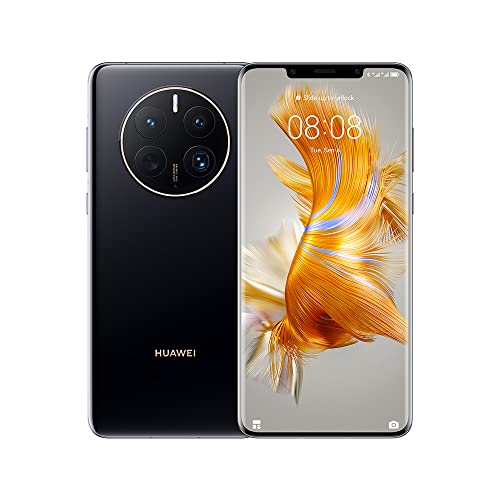
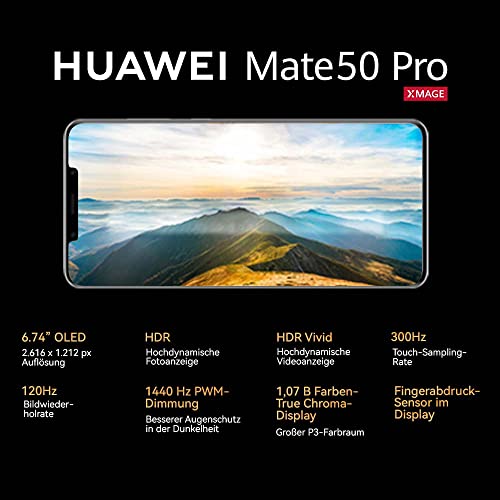
Huawei Mate 50 Pro (8GB + 256GB) review. Compare 197 technical specifications and user reviews to see how this product ranks in the Smartphones category and whether it is worth buying.
Overall score
What it is: An overall evaluation of the smartphone's quality, based on technical analyses and user reviews.
When it matters: When you need a quick reference to identify the best smartphones on the market.
Score components:
90.0%
Technical Score
10.0%
User score
Technical Score
What it is: An assessment of the smartphone's technical performance, covering eight key areas: performance & hardware, software, camera, connectivity, display, battery, audio, and design.
When it matters: When you want to compare smartphones based on technical performance and available features.
Score components:
25.0%
Performance & Hardware
18.0%
Camera
15.0%
Display
15.0%
Battery
10.0%
Software
10.0%
Connectivity
4.0%
Audio
3.0%
Design
User score
What it is: A rating that combines user reviews and the total number of reviews received by the smartphone
When it matters: When you want to know how a smartphone handles daily tasks and how reliable it remains over time according to user feedback.
Score components:
70.0%
User reviews
30.0%
Popularity

Available: ranking among products currently available (including other versions of this product).
All: ranking among all products in the database.
#5 in Best Huawei Phones
#52 in Best Mid-Range Smartphones
#78 in Best Camera Smartphones
#85 in Best Chinese Smartphones
#125 in Best Large-Screen Smartphones
#139 in Best NFC Smartphones
#140 in Best Smartphones
#140 in Best AI Smartphones
#214 in Best Value Smartphones
#551 in Best Battery Life Smartphones
What it is: An assessment of the smartphone's technical performance, covering eight key areas: performance & hardware, software, camera, connectivity, display, battery, audio, and design.
When it matters: When you want to compare smartphones based on technical performance and available features.
Score components:
25.0%
Performance & Hardware
18.0%
Camera
15.0%
Display
15.0%
Battery
10.0%
Software
10.0%
Connectivity
4.0%
Audio
3.0%
Design
What it is: A rating that combines user reviews and the total number of reviews received by the smartphone
When it matters: When you want to know how a smartphone handles daily tasks and how reliable it remains over time according to user feedback.
Score components:
70.0%
User reviews
30.0%
Popularity
What it is: An indicator that combines the smartphone's overall rating with its cost.
When it matters: When you are looking for a smartphone with a good balance between quality and price.
Score components:
60.0%
Overall score
40.0%
Price
Importance: LOW
Importance: HIGH
Importance: HIGH
Good value: >12 GB
Importance: MEDIUM
Good value: >256 GB
Importance: MEDIUM
Good value: >3.2 GHz
Importance: LOW
Importance: MEDIUM
Good value: >1500
Importance: LOW
Good value: >4000
Importance: LOW
Good value: 8+
Importance: LOW
Importance: LOW
Good value: >950 MHz
Importance: LOW
Good value: >700
Importance: LOW
Good value: >1000
Importance: LOW
Good value: >2500
Importance: MEDIUM
Good value: >6000
Importance: LOW
Good value: >8000
Importance: MEDIUM
Good value: >12000
Importance: LOW
Good value: >5000
Importance: LOW
Good value: >1800
Importance: LOW
Good value: >3200 MHz
Importance: LOW
Good value: 5
Importance: LOW
Good value: > 50 GB/s
Importance: LOW
Good value: 4
Importance: LOW
Good value: >16 GB
Importance: MEDIUM
Good value: <6 nm
Importance: MEDIUM
Good value: >9 W
Importance: LOW
Importance: LOW
Good value: >8192 KB
Importance: LOW
Good value: >2048 KB
Importance: LOW
Good value: >512 KB
Importance: LOW
Good value: >100000 million
Importance: LOW
Good value: 3.3
Importance: LOW
Good value: 3.2
Importance: LOW
Good value: 2.0/3.0
Importance: LOW
Importance: LOW
Importance: LOW
Importance: MEDIUM
Importance: LOW
Importance: LOW
Importance: LOW
Importance: LOW
Importance: LOW
Importance: LOW
Importance: LOW
Importance: LOW
Importance: LOW
Importance: LOW
Importance: LOW
Importance: LOW
Importance: LOW
Importance: LOW
Importance: LOW
Importance: LOW
Importance: LOW
Importance: LOW
Importance: LOW
Importance: LOW
Importance: LOW
Importance: LOW
Importance: LOW
Importance: LOW
Importance: LOW
Importance: LOW
Importance: LOW
Importance: LOW
Importance: LOW
Importance: LOW
Importance: LOW
Importance: LOW
Importance: LOW
Importance: MEDIUM
Good value: >50 MP
Importance: MEDIUM
Importance: HIGH
Good value: >60
Importance: LOW
Good value: ≥1.2 µm
Importance: MEDIUM
Good value: >2.5x
Importance: MEDIUM
Importance: LOW
Importance: LOW
Importance: LOW
Importance: LOW
Good value: ≥2
Importance: LOW
Importance: LOW
Importance: LOW
Importance: LOW
Good value: >16 MP
Importance: LOW
Importance: LOW
Importance: LOW
Importance: LOW
Importance: MEDIUM
Importance: LOW
Importance: LOW
Importance: LOW
Importance: LOW
Importance: LOW
Importance: LOW
Importance: LOW
Importance: LOW
Importance: LOW
Importance: LOW
Importance: LOW
Importance: LOW
Importance: LOW
Importance: LOW
Importance: LOW
Importance: LOW
Importance: LOW
Importance: LOW
Importance: LOW
Importance: LOW
Importance: LOW
Good value: >130
Importance: LOW
Good value: >120
Importance: LOW
Good value: ≥2
Importance: LOW
Importance: LOW
Importance: LOW
Importance: LOW
Importance: LOW
Importance: LOW
Good value: >5.2
Importance: LOW
Importance: LOW
Importance: LOW
Importance: LOW
Good value: 3.1/3.2
Importance: LOW
Importance: LOW
Importance: LOW
Good value: ≥2
Importance: LOW
Importance: LOW
Importance: LOW
Importance: LOW
Importance: LOW
Importance: LOW
Importance: LOW
Importance: LOW
Importance: LOW
Importance: LOW
Importance: LOW
Importance: LOW
Importance: LOW
Importance: LOW
Importance: LOW
Importance: LOW
Good value: ≥6.6 inches
Importance: MEDIUM
Importance: LOW
Good value: >400 ppi
Importance: MEDIUM
Importance: MEDIUM
Good value: ≥120 Hz
Importance: LOW
Importance: LOW
Good value: >300 Hz
Importance: LOW
Good value: >800 nits
Importance: LOW
Good value: >1300 nits
Importance: LOW
Good value: >1000 nits
Importance: LOW
Importance: LOW
Importance: LOW
Importance: LOW
Importance: LOW
Importance: LOW
Importance: LOW
Importance: LOW
Importance: HIGH
Good value: >5000 mAh
Importance: MEDIUM
Good value: >60 W
Importance: LOW
Importance: LOW
Good value: <45 min
Importance: LOW
Importance: LOW
Good value: >40 W
Importance: LOW
Importance: LOW
Good value: >10 W
Importance: LOW
Importance: LOW
Importance: MEDIUM
Importance: LOW
Good value: >800
Importance: LOW
Importance: LOW
Importance: LOW
Importance: LOW
Importance: LOW
Good value: ≥3
Importance: LOW
Importance: LOW
Importance: LOW
Importance: LOW
Importance: LOW
Importance: LOW
Importance: LOW
Good value: <162 mm
Importance: LOW
Good value: <75 mm
Importance: LOW
Good value: <8 mm
Importance: LOW
Good value: <190 g
Importance: LOW
Good value: <98cm³
Importance: LOW
Importance: LOW
Importance: LOW
Importance: LOW
Importance: LOW
Importance: LOW
Good value: ≥1.5 m
Importance: LOW
Importance: LOW
Good value: >8
Importance: LOW
Importance: LOW
Importance: MEDIUM
Good value: >2.5x
Importance: HIGH
Good value: >60
Importance: MEDIUM
Importance: LOW
Importance: MEDIUM
Good value: >6000
Importance: MEDIUM
Good value: >3.2 GHz
Importance: LOW
Importance: MEDIUM
Good value: >1500
Importance: LOW
Importance: LOW
Importance: LOW
Good value: >8
Importance: HIGH
Good value: >5000 mAh
Importance: LOW
Good value: >950 MHz
Importance: LOW
Importance: LOW
Good value: <190 g
Importance: LOW
(Reviews last updated: August 2026)
According to a Forbes review, the Huawei Mate 50 Pro is a "hardware masterpiece" notable for its variable aperture camera system, Snapdragon 8+ Gen 1 chip (limited to 4G), and premium design with a 120Hz OLED display, 3D face unlock, and IP68 water resistance. While excelling in low-light photography, its main drawbacks are the lack of Google Mobile Services and a high price tag, making it best suited for photography enthusiasts willing to work around software limitations.
The Huawei Mate50 Pro is hailed as a hardware masterpiece featuring a groundbreaking XMAGE camera system with a 10-size adjustable physical aperture and durable Kunlun Glass. A significant highlight is the integration of GBox, allowing users to run native Google apps like Maps and YouTube, effectively bypassing previous software restrictions. While praised for its premium build and exceptional photography, the device is limited by the lack of 5G connectivity, leaving users with 4G speeds.
The Huawei Mate 50 Pro is noted for its exceptional camera system featuring a unique physical aperture and premium hardware, but its appeal is significantly hindered by software limitations and a high price point. Key strengths include the adjustable physical aperture on the main camera for natural bokeh and excellent low-light photos, a vibrant 120Hz OLED display, fast performance, good battery life with rapid charging, and a durable IP68-rated design. However, the absence of 5G connectivity and reliance on proprietary Nano Memory cards are considered drawbacks. The primary disadvantage is the lack of Google Mobile Services, making many popular apps difficult to use and ultimately making the high price hard to justify for most users in Western markets despite the hardware quality.
NextPit reviewed the Huawei Mate 50 Pro, highlighting its premium hardware and camera system with a 10-step variable aperture as pros, but noting cons such as a dated notch design and proprietary memory format. Despite solid performance and fast charging, the review considers the device "impossible to recommend" for most users due to severe software limitations, lack of Google Mobile Services, and no 5G connectivity.
According to a Root-Nation review, the Huawei Mate 50 Pro is a premium device praised for its futuristic design, durable Kunlun Glass build, long battery life, and fast charging. Its standout feature is arguably the camera system, potentially one of the best on the market, offering an adjustable physical aperture and excellent low-light performance, though the circular camera unit and large notch are noted cons. Despite strong hardware and a capable camera, significant cons include the lack of Google Mobile Services and 5G connectivity, making its high price difficult to justify for mainstream users who may need to sideload apps.
The Huawei Mate 50 Pro is described as a "hardware king" with advanced specifications and a premium design, featuring a 120Hz OLED display with high brightness and a powerful Snapdragon 8+ Gen 1 chipset. However, a significant drawback is its limitation to 4G connectivity and the absence of 5G at a high price point. The standout feature is the XMAGE camera system, praised as "truly outstanding" with a unique 10-step physical variable aperture on the main sensor and versatile telephoto and ultra-wide lenses. While the camera excels, the ultra-wide lens can occasionally experience focus hunting. The most critical con is the lack of Google Mobile Services and the official Play Store; while workarounds exist, they are often unreliable.
According to Tech Advisor, the Huawei Mate 50 Pro features world-class hardware but is hampered by significant software limitations, making it difficult to recommend to most users. Pros include a stunning design, a 6.74-inch OLED display with a 120Hz refresh rate, and a versatile XMAGE camera system with a unique mechanical variable aperture and 3D face unlocking. However, the device lacks 5G and official Google services due to restrictions, with workarounds deemed unreliable; many apps are missing from the AppGallery, and there is limited software support.
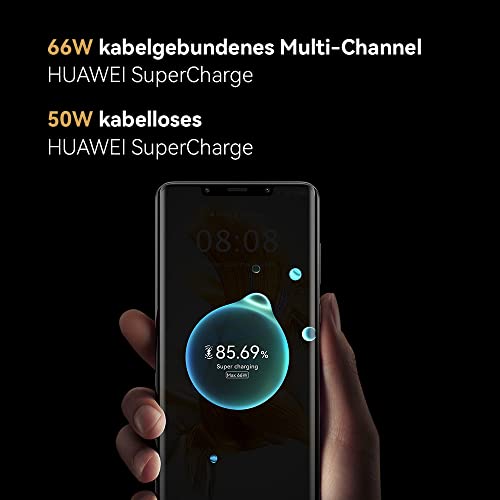
The Huawei Mate 50 Pro is presented as a device with premium hardware but significant software limitations. The phone features a vibrant 120Hz OLED display, a Snapdragon 8+ Gen 1 chipset for smooth performance (though limited to 4G), and praised build quality with a tactile vegan leather back. Its standout feature is the XMAGE camera system with a mechanical variable aperture, providing professional control over depth of field and resulting in outstanding photography, particularly in low light. Key pros highlighted include the stunning display, top-tier camera, excellent weight distribution, and exceptionally fast 66W wired and 50W wireless charging. However, major cons are the absence of Google services, which remains a significant hurdle for many users, and the lack of 5G connectivity. Minor criticisms include a large display notch and occasional focus issues with the ultrawide lens.
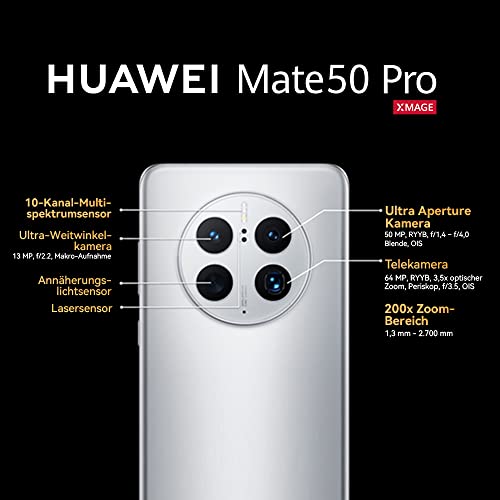
The ZDNET review describes the Huawei Mate 50 Pro as a top-tier flagship that balances exceptional hardware against significant software limitations. The standout feature is the XMAGE camera system, featuring the world's first 10-size adjustable physical aperture (f/1.4 to f/4.0) for precise, natural control over background blur and superior low-light performance. Key advantages include a 6.74-inch 120Hz OLED display protected by durable Kunlun Glass, along with the powerful Snapdragon 8+ Gen 1 chipset. The device boasts strong battery life, clocking over 15 hours in tests, supported by 66W wired and 50W wireless charging, as well as a unique "Low-Battery Emergency Mode". However, the lack of Google Mobile Services (GMS) and 5G connectivity, combined with a premium price of around €1,199, makes it difficult to recommend for users outside China. Although the AppGallery has grown, these omissions "hamper" the overall value proposition compared to fully-featured competitors.
The Huawei Mate 50 Pro features a premium design with a 120Hz OLED display and the powerful Snapdragon 8+ Gen 1 chipset, though it is limited to 4G connectivity and exhibits thermal throttling during heavy tasks. Its standout feature is the innovative XMAGE camera system with a 10-level physical variable aperture, delivering exceptional low-light performance. However, the lack of native Google Mobile Services (GMS) and a high price point make it a difficult recommendation for users outside of China.
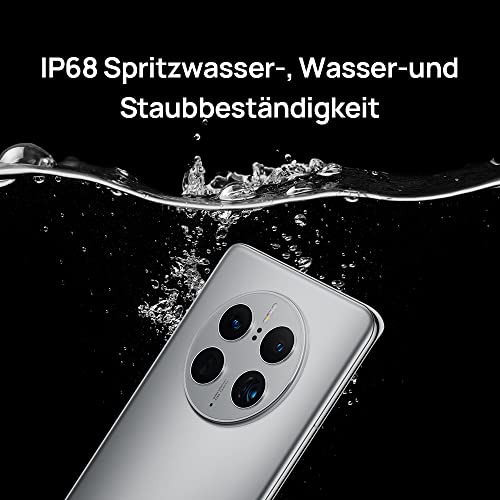
The Huawei Mate 50 Pro features a premium "Space Ring" design, a 6.74-inch 120Hz OLED screen, and a groundbreaking 50MP camera with a physical variable aperture (f/1.4-f/4.0), offering exceptional, "SLR-like" photo quality and low-light performance. Powered by the Snapdragon 8+ Gen 1 chipset, it boasts 66W wired/50W wireless charging, Kunlun Glass durability, and IP68 water resistance. However, the device lacks 5G connectivity and Google Mobile Services (GMS), relying instead on Huawei's AppGallery and proprietary Nano Memory, making it difficult to recommend for users outside the Huawei ecosystem.
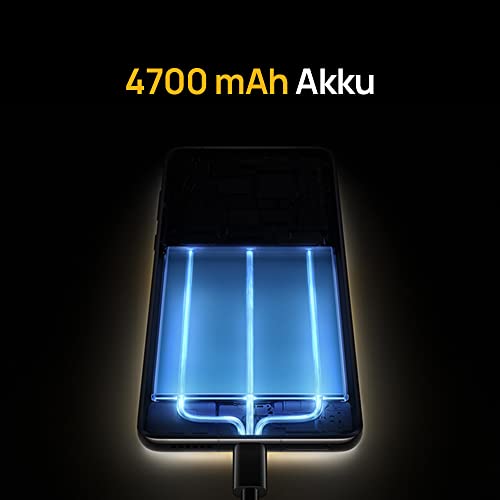
The Huawei Mate 50 Pro is a high-end flagship featuring a premium design with Kunlun Glass, a 6.74-inch 120Hz OLED display, and a 10-step physical variable aperture camera system that provides exceptional, professional-level photography. Powered by a Snapdragon 8+ Gen 1 chipset, the device boasts strong performance and a reliable 4,700 mAh battery with fast 66W wired and 50W wireless charging. However, it is limited by 4G connectivity and the absence of Google Mobile Services (GMS), relying instead on the Huawei AppGallery, which, despite the excellent hardware, makes it a hard recommendation at its high price point.
The Huawei Mate 50 Pro features an innovative 50MP main camera with a physical variable aperture (f/1.4 to f/4.0), delivering exceptional, pro-level bokeh and light intake. Complementing this is a high-quality 6.74-inch 120Hz OLED display, though it includes a large, outdated notch for 3D face unlock. The device boasts top-tier performance via the Snapdragon 8+ Gen 1 chip, enclosed in a premium design with options for vegan leather. However, the lack of Google Mobile Services (GMS) and 5G, along with reliance on the limited AppGallery, poses a significant drawback for users. Additionally, the device requires expensive, proprietary "Nano Memory" cards for storage expansion. Despite these limitations, the hardware, including 66W charging and IP68 water resistance, remains impressive.
The NextPit review labels the Huawei Mate 50 Pro an "extraordinary" yet "impossible to recommend" flagship, highlighting top-tier hardware marred by software limitations and a high price point. The device shines with a 6.74-inch OLED display, IP68 rating, and a 50 MP camera featuring a unique 10-size physical variable aperture. However, it is restricted to 4G connectivity, lacks Google Mobile Services, and utilizes a large, outdated screen notch.
The Heise review describes the Huawei Mate 50 Pro as a top-tier hardware device hampered by significant software and connectivity limitations, resulting in a "missed opportunity" despite its powerful Snapdragon 8+ Gen 1 chip. Key strengths include an exceptional 50 MP main camera with a unique mechanical variable aperture (f/1.4–f/4.0) and a high-quality 6.74-inch 120 Hz AMOLED display, though the large notch design is considered dated. However, the absence of native Google Mobile Services (GMS) and 5G, necessitated by trade restrictions, results in a fragmented user experience that makes it difficult to recommend at a flagship price point.
The Huawei Mate 50 Pro is hailed as a hardware masterpiece featuring a 6.74-inch 120Hz OLED display, a Snapdragon 8+ Gen 1 chipset, and a physical variable aperture camera, yet it is deemed hard to recommend due to severe software limitations. Key pros include the exceptional, versatile camera system—particularly for portraits and night shots—and solid charging speeds, while cons focus on the lack of Google Mobile Services (GMS), the outdated notch design, and the high price. Despite the impressive 4,700 mAh battery and premium build, the reliance on workarounds for app access makes it a "false idol" for average users compared to competitors.
The Huawei Mate 50 Pro features a 50 MP main sensor with a mechanical variable aperture (f/1.4 to f/4.0), providing genuine optical depth of field for exceptional, high-quality photography. Equipped with a 6.74-inch 120Hz OLED display and the powerful Snapdragon 8+ Gen 1 chip, the device stands out for its XMAGE imaging technology and durable "Kunlun Glass" on the orange model. Key advantages include its versatile camera, 66W wired/50W wireless charging, and premium IP68-rated design. However, the lack of native Google Services (GMS) and 5G connectivity due to ongoing US sanctions remains a significant disadvantage for a high-end device. While workarounds like Gspace exist, they do not fully replicate the standard Android experience. Other minor drawbacks include a large screen notch, a fingerprint-prone back, and potential frame rate drops during intense gaming. For more details, visit Business Insider.
The Huawei Mate 50 Pro is recognized for its high-end, durable design and exceptional photography capabilities, featuring a 6.74-inch OLED 120Hz screen and a standout XMAGE camera with a 10-level variable aperture (f/1.4–f/4.0). Its primary advantages include professional-grade, low-light performance, a 64MP telephoto lens, and robust IP68 water resistance, powered by the efficient Snapdragon 8+ Gen 1 chip. However, significant limitations are present due to ongoing trade restrictions, most notably the lack of native 5G connectivity and Google Mobile Services (GMS), necessitating reliance on Huawei’s AppGallery. While the camera hardware is excellent, the device requires a high price point (around €1,199) and features a large, dated notch for 3D facial recognition.
The La Razón review calls the Huawei Mate 50 Pro a hardware masterpiece featuring a 6.74-inch 120Hz display and rugged Kunlun Glass, though it is hindered by software limitations. Key pros include a refined design with IP68 water resistance, top-tier performance from the Snapdragon 8+ Gen 1 chipset, and the advanced XMAGE camera system with a unique physical variable aperture (f/1.4 to f/4.0). However, significant cons include the absence of native Google services and 5G connectivity, along with a high price point that makes it hard to justify against competitors.
The Huawei Mate 50 Pro, highlighted by Business Insider España, is an impressive flagship featuring a premium design, a vibrant 120Hz OLED display, and a top-tier Snapdragon 8+ Gen 1 processor. However, it is severely hampered by the lack of native Google Mobile Services (GMS) and the absence of 5G connectivity. The standout feature is the XMAGE camera system, which includes a unique 10-step physical variable aperture (f/1.4 to f/4.0) for superior, professional-grade low-light performance and bokeh. Other strengths include fast 66W wired charging, reliable 3D face unlock, and solid IP68 water resistance. Despite these strengths, the lack of Google apps (Maps, YouTube, Drive) forces users to rely on cumbersome workarounds via AppGallery or Petal Search. Furthermore, the restriction to 4G connectivity is a significant drawback for a high-end device, making it a challenging recommendation for users relying on 5G networks.
we'r...Mobile Vikings PL Huawei Mate 50 Pro features, camera, specs, priceNov 21, 2022 — Ideal for mobile photographers. While the camera certainly takes the cake for being the most impressive feature on the Huawei Mate...Vulcan PostHuawei Mate 50 Pro reviewDec 28, 2022 — The positioning of this model is quite simple – a top device with very cool cameras. The manufacturer puts great emphasis on them...Root-Nation.com·Anna Smirnova0:11
The Huawei Mate 50 Pro features a 50MP main camera with a 10-step physical aperture and the Snapdragon 8+ Gen 1 chipset, delivering top-tier photography and performance. Its design includes a 6.74-inch 120Hz OLED screen and an IP68-rated, durable chassis. However, the device is limited by a lack of Google Mobile Services (GMS) and 4G-only connectivity, which may not justify its high price for international users.
The Huawei Mate 50 Pro features a groundbreaking Ultra Aperture XMAGE camera system with a 10-step physical variable aperture (f/1.4 to f/4.0), providing exceptional low-light performance and, along with a 64MP periscope lens, sets a high standard for mobile photography. The device boasts a 6.74-inch 120Hz OLED display, Snapdragon 8+ Gen 1 chip, and durable Kunlun Glass, though it is limited to 4G connectivity. Key drawbacks include the absence of native Google Mobile Services, requiring reliance on the Huawei AppGallery, and video performance that trails some competitors. For a detailed look at the camera capabilities, read the analysis at DXOMARK.
The Huawei Mate 50 Pro is a premium, "stately" smartphone featuring a 6.74-inch 120Hz OLED display, top-tier hardware, and a durable design, yet its €1,200 price point makes it a challenging proposition. Key advantages include an innovative variable physical aperture (f/1.4 to f/4.0) camera, the powerful Snapdragon 8+ Gen 1 chipset, and secure 3D facial recognition. However, the lack of Google Mobile Services and 5G connectivity constitutes a major drawback, complicating its competitiveness against flagship rivals.
Andrea Galeazzi's review highlights the Huawei Mate 50 Pro as a premium, high-performance flagship featuring excellent build quality, Kunlun Glass, and a 6.74-inch 120Hz display, though the device is noted to be quite slippery. Powered by the Snapdragon 8+ Gen 1, the phone delivers fast operation, but it is heavily restricted by the lack of native Google Services and 4G-only connectivity. A standout feature is the 50MP camera system with a unique mechanical variable aperture (f/1.4 to f/4.0), offering excellent photo quality, while the battery life excels, lasting nearly two days. Despite these high-end features, the steep €1,199 launch price is considered a drawback given the connectivity and software limitations. Andrea Galeazzi
The Huawei Mate 50 Pro is a high-end flagship featuring a 6.74-inch 120Hz OLED display and a 50MP main camera with a unique variable physical aperture (f/1.4 to f/4.0), which delivers exceptional, natural-looking photos and superior low-light performance. The device is powered by the Snapdragon 8+ Gen 1 chipset, offering strong, fluid performance alongside a robust 4,700 mAh battery supporting 66W wired and 50W wireless charging. However, notable limitations include a lack of 5G connectivity and no native Google Mobile Services (GMS), which hampers the app ecosystem. Despite these software and connectivity compromises, the Mate 50 Pro is praised for its excellent hardware, premium build, and standout camera capabilities.
The Huawei Mate 50 Pro, reviewed on Aranzulla.it, is positioned as a top-tier "camera phone" featuring the world's first 10-stop variable physical aperture (f/1.4 to f/4.0), allowing for professional-grade control over depth of field and light intake. Key pros include exceptional low-light camera performance, a 120Hz OLED display, and high-performance hardware, such as the Snapdragon 8+ Gen 1 chipset. However, significant drawbacks center on the lack of Google Mobile Services (GMS), reliance on the evolving AppGallery, and restricted 4G connectivity.
The Evosmart review characterizes the Huawei Mate 50 Pro as a top-tier hardware masterpiece severely limited by the lack of native Google Mobile Services (GMS) and 5G connectivity. It features a 6.74-inch 120Hz OLED display with durable "Kunlun Glass" and is powered by a 4G-constrained Snapdragon 8+ Gen 1 chipset. Key camera innovations include a world-first physical 10-stop variable aperture (f/1.4 to f/4.0), which delivers exceptional, natural bokeh and low-light performance. Other strengths include a distinct vegan leather design, IP68 water resistance, and rapid 66W wired/50W wireless charging. Despite superior hardware, the absence of GMS and 5G, along with reliance on complex workarounds for apps, makes it a hard recommendation for average users. While EMUI 13 offers handy features like SuperHub, the software restrictions and app limitations are major cons for mainstream adoption.
The Huawei Mate 50 Pro, as reviewed by SmartWorld, features a 6.74-inch 120Hz OLED display and a standout camera system with a physical 10-stop variable aperture (f/1.4 to f/4.0) for exceptional low-light performance. Powered by the Snapdragon 8+ Gen 1, it delivers high performance, though the design is noted for being somewhat slippery with an dated notch. Key hardware limitations include a lack of 5G connectivity and potential thermal throttling under heavy loads. The biggest drawback is the absence of Google Mobile Services (GMS) and the Play Store, forcing reliance on the limited AppGallery and alternative, sometimes insecure, app sources. While software features like "SuperHub" and "SuperStorage" are present, they cannot fully compensate for the lack of native Google app support. Consequently, despite superior photography capabilities, the device is considered hard to recommend for average users looking for a versatile experience.
The Huawei Mate 50 Pro features a 50 MP XMAGE camera with a 10-level physical variable aperture (f/1.4 to f/4.0), delivering exceptional low-light performance and natural bokeh. Powered by the Snapdragon 8+ Gen 1, the device boasts a 6.74-inch 120Hz OLED display, with the "Orange" variant offering high-durability vegan leather and superior water resistance. The device supports fast 66W wired and 50W wireless charging, along with a unique emergency battery mode. Key pros include the innovative camera system, premium display, robust biometrics with 3D face unlock, and rapid charging capabilities. However, the device is significantly hindered by the lack of Google Mobile Services (GMS), limiting app availability to the Huawei AppGallery. Additionally, the phone is limited to 4G connectivity despite its high price point and uses proprietary NM cards for storage expansion. The Huawei Mate 50 Pro is a powerful, design-forward flagship that is hard to recommend for users dependent on the Google ecosystem, despite its superior photography features.

Compare