Scored using Smartphones Methodology v3.0
Smartphones Methodology v3.0
Mathematical & Unbiased Scoring
Products in this category are scored under Frontum Smartphones Methodology v3.0: the technical score from the specifications is the base, and independent expert and video reviews (up to ±0.5 points), owner opinions (up to ±0.3) and best-of lists (up to +0.3) move it up or down.
Explore Smartphones Methodology v3.0

Apple iPhone 15 Pro Max (256GB) review: 196 specs compared

Avg. price:~£1,020RAM capacity:8 GBInternal storage:256 GBScreen size:6.7 inchesMain camera megapixels:48 MP & 12 MP & 12 MP

Apple iPhone 15 Pro Max (256GB) Review: Compare 196 technical specifications, 127 expert and video reviews and 2 best-of lists to see how this product ranks in the Smartphones category and whether it is worth buying.
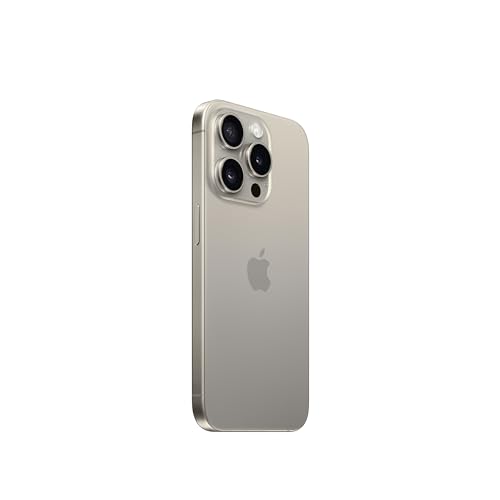
Apple iPhone 15 Pro Max (256GB)
8.3/10

Overall score

Score
8.3/ 10
✕
What it is
Our main score for this model, 1–10. It combines specs, best-of lists, expert reviews and owners.
How we count it
Parts: Technical score 35%, List score 30%, Reviews score 25%, Sentiment score 10%
Marks: Each part gets a mark out of 10. For reviews, lists and owners, a typical model in this category gets about 8 and the best one gets 10.
No data yet: A part with no data shows "?". It counts as the mark of a weaker model in this category (4 in 5 models with data score higher). This way, models with reviews, lists and owners usually come out ahead.
Score distribution
▼
<55-66-77-88-99-10
Score components

35%

8.1

Technical score

30%

8.0

List score

25%

8.7

Reviews score

10%

9.2

Sentiment score

★Better than 95% of smartphones
7.4

Value for money

Value for money
7.4/ 10
✕
What it is
An indicator that combines the smartphone's overall rating with its cost.
When it matters
When you are looking for a smartphone with a good balance between quality and price.
Score distribution
▼
<55-66-77-88-99-10
Score components

70%

8.3

Overall score

30%

5.1

Price

▼Worse than 77%
8.1

Technical score

Technical score
8.1/ 10
✕
What it is
How good the specs are compared with the other models in this category, 1–10.
How we count it
Areas: We rate the specs in each area against the other models in this category.
Weighting: The areas that matter most to buyers count more. The shares are shown under Score components.
Share: The technical score is 35% of the overall score.
Score distribution
▼
<55-66-77-88-99-10
Score components

25%

7.6

Performance

18%

9.0

Camera

15%

8.8

Display

15%

6.8

Battery

10%

9.4

Software

10%

8.6

Connectivity

4%

4.4

Audio

3%

8.1

Design

▲Better than 87%
8.7

Reviews score

Reviews score
8.7/ 10
✕
What it is
Average grade from independent test sites, magazines and video reviewers, 1–10.
How we count it
Grades: Each review's own score is converted to 1–10; without one, we grade the review ourselves. Big test sites count more, short reviews half as much as full tests. A video review counts half.
Score: The average grade is 80% of the review mark; the number of reviews is the other 20% (1 review = 5, the typical number in this category = 8, the most-reviewed model = 10).
Enough data: With few reviews, the average grade is pulled toward the typical grade of this category. No reviews yet: 7.5 for now.
Share: Reviews count 25% of the overall score.
Score distribution
▼
<55-66-77-88-99-10

80%

8.5

Average grade

20%

9.7

Popularity

Grades by review (127)
40 reviews: 25 with a printed score, 15 estimated from the review. 87 video reviews, each counting half as much as a written test. Reviews count 25% of the overall score.
User ratings collected online are not part of this score.
★Better than 95%
8.0

List score

List score
8.0/ 10
✕
What it is
How often independent test sites, magazines and video reviewers put this model in their best-of lists for this category.
How we count it
Points: The model in the most lists of this category gets 10; the others get 8 to 10 in proportion. In no list yet: 7.5. Lists count 30% of the overall score.
Enough data: Every list counts, even a single one. With fewer than 5 best-of lists in the category, this part is left out.
Lists with this model (2)
List score: in 2 of 223 lists (1%)
▲Better than 89%

What reviewers say about the Apple iPhone 15 Pro Max (256GB)

Based on 37 · 108

Reviewers praise the image quality, speed and display, while heat, slow charging and high cost draw complaints; battery opinions are split.
Praised
Mixed views
Criticised
Pick a topic to see who said what

What owners say about the Apple iPhone 15 Pro Max (256GB)

Based on 203 owners sharing their experience in online comments

59%positive14%mixed27%negative

Owners praise the battery, cameras, lighter design, USB-C, and action button, while heat, bugs, scratches, and modest upgrades frustrate.

What owners dislike

  • Owners report the phone gets very hot during FaceTime, video, gaming, CarPlay, charging, or camera use, sometimes to the point of stopping use.13
  • Owners who upgraded from a recent Pro Max say the changes are minor, so the new model feels much like the previous one.12
  • Owners say iPhone lacks Android-style customization, such as flexible settings and background file transfers, and that some everyday features are missing.10
  • Owners say battery life drops quickly after a few weeks, and some report poor endurance during heavy use such as TikTok, games, or camera use.8
  • Owners report WhatsApp problems such as slow photo selection, sent slow-motion videos being cut, proximity sensor glitches during calls, and Face ID lock issues.7
  • Owners say the 5x zoom looks soft or blurry when switching lenses and is too long for portraits, and they miss the 3x lens from earlier models.7
  • Owners find the price very high for what feels like a similar iPhone, and some think the design looks plain and the upgrade does not justify the cost.5
  • Owners report the back glass scratches easily, even from pockets or a shirt pocket, and the frame can chip or crack after a drop.4
  • Owners find the keyboard slow for typing, with autocorrect and cursor placement hard to control when editing words.4
  • Owners find the Files app confusing, and say deleted files can reappear and organizing files is harder than on Android.4

Points mentioned by at least 3 owners, most mentioned first.

Loading...
Loading category ranking...

Technical Specifications of smartphone Apple iPhone 15 Pro Max (256GB)

Technical score
Technical score
8.1/ 10
✕
What it is
How good the specs are compared with the other models in this category, 1–10.
How we count it
Areas: We rate the specs in each area against the other models in this category.
Weighting: The areas that matter most to buyers count more. The shares are shown under Score components.
Share: The technical score is 35% of the overall score.
Score distribution
▼
<55-66-77-88-99-10
Score components:

25%

7.6

Performance

18%

9.0

Camera

15%

8.8

Display

15%

6.8

Battery

10%

9.4

Software

10%

8.6

Connectivity

4%

4.4

Audio

3%

8.1

Design

8.1
Reviews score
8.7
List score
8.0
Value for money
Value for money
7.4/ 10
✕
What it is
An indicator that combines the smartphone's overall rating with its cost.
When it matters
When you are looking for a smartphone with a good balance between quality and price.
Score distribution
▼
<55-66-77-88-99-10
Score components:

70%

8.3

Overall score

30%

5.1

Price

7.4
Processor model
Apple A17 Pro
This smartphone uses the Apple A17 Pro processor which is faster than processors in 84% of smartphones.
Storage type
NVMe
This smartphone uses NVMe storage, which is faster than the storage in 96.6% of smartphones and the same as in 3.5% of smartphones.
RAM capacity
8 GB
This smartphone has a RAM capacity of 8 GB which is larger than the RAM capacity of 28.7% of smartphones and equal to that of 30.5% of smartphones.
Internal storage
256 GB
This smartphone has an internal storage capacity of 256 GB which is larger than the storage of 38.9% of smartphones and equal to that of 38.4% of smartphones.
CPU boost clock speed
3.78 GHz
The CPU boost clock speed of this smartphone is 3.78 GHz which is higher than the boost speed of 94.3% of smartphones and equal to that of 0.6% of smartphones.
Show more
What reviewers say
Operating system
iOS
This smartphone runs iOS, which is less mainstream than the system in 95.3% of smartphones and the same as in 1.9% of smartphones.
iOS 17
Android version
N/A
Direct OS updates
yes
This smartphone receives direct OS updates. 20.1% of smartphones receive direct updates.
Promised software updates
5 years
This smartphone promises 5 years of software updates, which is longer than 7.3% of smartphones and equal to 43.5% of smartphones.
Open-source OS
no
This smartphone does not run an open-source operating system. 94.8% of smartphones offer this.
Show more
What reviewers say
Multi-lens main camera
yes
This smartphone includes a multi-lens main camera system. 93.7% of smartphones include multi-lens setups.
Main camera megapixels
48 MP & 12 MP & 12 MP
This smartphone has a main camera resolution of 48 MP & 12 MP & 12 MP which is lower than that of 77.7% of smartphones and equal to that of 0.3% of smartphones.
Main camera aperture
f/1.78 & f/2.2 & f/2.8
This smartphone has a main camera aperture of f/1.78 & f/2.2 & f/2.8 which is wider than that of 76.7% of smartphones and equal to that of 0.5% of smartphones.
Main camera sensor area
71.4 mm²
This smartphone has a main camera sensor area of 71.4 mm² which is larger than the main camera sensor area of 89.7% of smartphones and equal to that of 0.6% of smartphones.
Main camera pixel size
1.22 µm
This smartphone has a main camera pixel size of 1.22 µm which is larger than in 88.8% of smartphones and equal to the size in 3% of smartphones.
2.44 binned
Show more
What reviewers say
Number of SIM slots
2
This smartphone has 2 SIM slots, which is more than in 3.7% of smartphones and equal to the number in 96.2% of smartphones.
Cellular module
yes
This smartphone includes a cellular module. 100% of smartphones include cellular modules.
eSIM support
yes
This smartphone has eSIM support. 80.2% of smartphones offer this.
5G connectivity
yes
This smartphone supports 5G connectivity. 66.6% of smartphones support 5G.
LTE support
yes
This smartphone supports LTE. 99.7% of smartphones include LTE connectivity.
Show more
What reviewers say
Screen size
6.7 inches
This smartphone has a screen size of 6.7 inches which is larger than the screens of 51.7% of smartphones and equal to those of 10.1% of smartphones.
Screen resolution
1290x 2796 px
This smartphone has a screen resolution of 1290x2796 px which is higher than that of 88.7% of smartphones and equal to that of 0.1% of smartphones.
Pixel density
460 ppi
This smartphone has a pixel density of 460 ppi which is higher than that of 88.3% of smartphones and equal to that of 3.2% of smartphones.
Display type
OLED/AMOLED
This smartphone uses a OLED/AMOLED display type. 58.4% of smartphones use this display technology.
Refresh rate
120 Hz
This smartphone supports a refresh rate of 120 Hz which is higher than in 34.4% of smartphones and equal to that in 55.6% of smartphones.
Show more
What reviewers say
Battery capacity
4,441 mAh
This smartphone has a battery capacity of 4,441 mAh which is smaller than the batteries in 84.9% of smartphones.
Charging speed
27 W
This smartphone supports charging speeds of 27 W which is slower than in 65.9% of smartphones and equal to speeds in 0.9% of smartphones.
Fast charging
yes
This smartphone supports fast charging. 93.2% of smartphones support fast charging.
GSMArena full wired charge time
?
Wireless charging
yes
This smartphone supports wireless charging. 25.1% of smartphones support wireless charging.
Show more
What reviewers say
Stereo speakers
yes
This smartphone includes stereo speakers. 64.3% of smartphones provide stereo audio.
3.5 mm headphone jack
no
This smartphone does not have a headphone jack. 45.1% of smartphones offer this.
Number of microphones
3
This smartphone includes 3 microphones, which is more than in 77.2% of smartphones and equal to the number in 19.7% of smartphones.
FM radio
no
This smartphone does not have an FM radio. 34.3% of smartphones offer this.
aptX Lossless
no
This smartphone does not support aptX Lossless Bluetooth audio. 12.5% of smartphones offer this.
Show more
Height
159.9 mm
This smartphone has a height of 159.9 mm which is shorter than 80.5% of smartphones and equal to that of 0.7% of smartphones.
Width
76.7 mm
This smartphone has a width of 76.7 mm which is wider than 66.4% of smartphones and equal to that of 1.5% of smartphones.
Thickness
8.3 mm
This smartphone has a thickness of 8.3 mm which is thinner than 44.9% of smartphones and equal to that of 6% of smartphones.
Weight
221 g
This smartphone weighs 221 g which is heavier than 82.5% of smartphones and equal to the weight of 0.3% of smartphones.
Device volume
102 cm³
This smartphone has a device volume of 102 cm³ which is smaller than 49.3% of smartphones and equal to that of 3.4% of smartphones.
Show more
What reviewers say

Apple iPhone 15 Pro Max (256GB) vs the average smartphone

246810TotalPerformanceSoftwareCameraConnectivityDisplayBatteryAudioDesign
  • 5 x higher optical zoom
    This smartphone offers stronger optical zoom than the average smartphone (5 x vs 0 x). The average smartphone's optical zoom is 0 x.
    5 x vs 0 x
  • 2.23x larger main camera sensor area
    This smartphone has a larger main camera sensor area than the average smartphone (71.4 mm² vs 32 mm²). The average main camera sensor area is 32 mm².
    71.4 mm² vs 32 mm²
  • 50% smaller process node
    This smartphone uses a smaller process node than the average smartphone (3 nm vs 6 nm). The average process node size is 6 nm.
    3 nm vs 6 nm
  • 3.05x higher Geekbench 6 single-core benchmark score
    This smartphone scores better in Geekbench 6 single-core than the average smartphone (2,876 vs 942). The average smartphone scores 942 in single-core.
    2,876 vs 942
  • Supports wireless charging
    This smartphone supports wireless charging, the average smartphone does not. 25.1% of smartphones are wireless charging compatible.
  • 57.5% higher CPU boost clock speed
    This smartphone has a higher CPU boost clock speed than the average smartphone (3.8 GHz vs 2.4 GHz). The average smartphone has a boost clock speed of 2.4 GHz.
    3.78 GHz vs 2.4 GHz
  • Has optical image stabilization
    This smartphone has optical image stabilization (OIS), the average smartphone does not. 48.4% of smartphones feature OIS.
  • Direct OS updates
    This smartphone supports direct OS updates, the average smartphone does not. 20.1% of smartphones support this feature.
  • 19.2% higher review score
    Reviews score
    8.7/ 10
    ✕
    What it is
    Average grade from independent test sites, magazines and video reviewers, 1–10.
    How we count it
    Grades: Each review's own score is converted to 1–10; without one, we grade the review ourselves. Big test sites count more, short reviews half as much as full tests. A video review counts half.
    Score: The average grade is 80% of the review mark; the number of reviews is the other 20% (1 review = 5, the typical number in this category = 8, the most-reviewed model = 10).
    Enough data: With few reviews, the average grade is pulled toward the typical grade of this category. No reviews yet: 7.5 for now.
    Share: Reviews count 25% of the overall score.
    Score distribution
    ▼
    <55-66-77-88-99-10

    80%

    8.5

    Average grade

    20%

    9.7

    Popularity

    Grades by review (127)
    40 reviews: 25 with a printed score, 15 estimated from the review. 87 video reviews, each counting half as much as a written test. Reviews count 25% of the overall score.
    User ratings collected online are not part of this score.
    8.7 vs 7.3
  • 17.9% higher sentiment score
    9.2 vs 7.8
  • 3.9% higher list score
    List score
    8.0/ 10
    ✕
    What it is
    How often independent test sites, magazines and video reviewers put this model in their best-of lists for this category.
    How we count it
    Points: The model in the most lists of this category gets 10; the others get 8 to 10 in proportion. In no list yet: 7.5. Lists count 30% of the overall score.
    Enough data: Every list counts, even a single one. With fewer than 5 best-of lists in the category, this part is left out.
    Lists with this model (2)
    List score: in 2 of 223 lists (1%)
    8.0 vs 7.7
  • 50% smaller process node
    This smartphone uses a smaller process node than the average smartphone (3 nm vs 6 nm). The average process node size is 6 nm.
    3 nm vs 6 nm
  • 3.05x higher Geekbench 6 single-core benchmark score
    This smartphone scores better in Geekbench 6 single-core than the average smartphone (2,876 vs 942). The average smartphone scores 942 in single-core.
    2,876 vs 942
  • 57.5% higher CPU boost clock speed
    This smartphone has a higher CPU boost clock speed than the average smartphone (3.8 GHz vs 2.4 GHz). The average smartphone has a boost clock speed of 2.4 GHz.
    3.78 GHz vs 2.4 GHz
  • Higher CPU base clock speed
    This smartphone has a higher CPU base clock speed than the average smartphone (2x3.78 GHz & 4x2.02 GHz vs 2x2.2 GHz & 6x2 GHz). The average smartphone has a base clock speed of 2x2.2 GHz & 6x2 GHz.
    2x3.78 GHz & 4x2.02 GHz vs 2x2.2 GHz & 6x2 GHz
  • 16x more L2 cache
    This smartphone has more L2 cache than the average smartphone (16,384 KB vs 1,024 KB). The average L2 cache is 1,024 KB.
    16,384 KB vs 1,024 KB
  • Faster storage type
    This smartphone has faster storage than the average smartphone (NVMe vs UFS 3.1).
    NVMe vs UFS 3.1
  • 3.97x higher 3DMark Wild Life Unlimited benchmark
    This smartphone scores higher in 3DMark Wild Life Unlimited than the average smartphone (15,212 vs 3,827). The average smartphone scores 3,827.
    15,212 vs 3,827
  • 10x more L1
    This smartphone has more L1 cache than the average smartphone (320 KB vs 32 KB). The average L1 cache is 32 KB.
    320 KB vs 32 KB
  • 6x more L3 cache
    This smartphone has more L3 cache than the average smartphone (24,576 KB vs 4,096 KB). The average L3 cache is 4,096 KB.
    24,576 KB vs 4,096 KB
  • 2.94x higher Geekbench 6 multi-core benchmark score
    This smartphone scores better in Geekbench 6 multi-core than the average smartphone (7,458 vs 2,533). The average smartphone scores 2,533 in multi-core.
    7,458 vs 2,533
  • 2.33x faster memory speed
    This smartphone supports faster memory speed than the average smartphone (6,400 MHz vs 2,750 MHz). The average smartphone supports 2,750 MHz memory speed.
    6,400 MHz vs 2,750 MHz
  • 3.46x higher 3DMark Wild Life Extreme benchmark
    This smartphone performs better in 3DMark Wild Life Extreme than the average smartphone (4,236 vs 1,224.5). The average smartphone scores 1,224.5.
    4,236 vs 1,224.5
  • Newer DDR memory version
    This smartphone supports a newer DDR version than the average smartphone (5 vs 4). The average DDR version is 4.
    5 vs 4
  • Better processor
    This smartphone features a better processor than the average smartphone (Apple A17 Pro vs Qualcomm Snapdragon 7 Gen 3).
    Apple A17 Pro vs Qualcomm Snapdragon 7 Gen 3
  • 2x higher memory bandwidth
    This smartphone has higher memory bandwidth than the average smartphone (51.2 GB/s vs 25.6 GB/s). The average memory bandwidth is 25.6 GB/s.
    51.2 GB/s vs 25.6 GB/s
  • 2.25x higher 3DMark Steel Nomad benchmark
    This smartphone performs better in 3DMark Steel Nomad benchmark than the average smartphone (1,366 vs 608). The average score is 608.
    1,366 vs 608
  • 3x more shader units
    This smartphone features more shader units than the average smartphone (768 vs 256). The average smartphone has 256 shader units.
    768 vs 256
  • Direct OS updates
    This smartphone supports direct OS updates, the average smartphone does not. 20.1% of smartphones support this feature.
  • Includes cross-site tracking protection
    This smartphone supports cross-site tracking prevention, the average smartphone does not. 31.9% of smartphones include this feature.
  • Supports AirPlay
    This smartphone supports AirPlay, the average smartphone does not. 2.2% of smartphones are AirPlay compatible.
  • Supports Shareplay
    This smartphone supports SharePlay, the average smartphone does not. 2.1% of smartphones include this feature.
  • Supports fast boot
    This smartphone supports fast boot, the average smartphone does not. 22.1% of smartphones include fast boot capabilities.
  • 5 x higher optical zoom
    This smartphone offers stronger optical zoom than the average smartphone (5 x vs 0 x). The average smartphone's optical zoom is 0 x.
    5 x vs 0 x
  • 2.23x larger main camera sensor area
    This smartphone has a larger main camera sensor area than the average smartphone (71.4 mm² vs 32 mm²). The average main camera sensor area is 32 mm².
    71.4 mm² vs 32 mm²
  • Has optical image stabilization
    This smartphone has optical image stabilization (OIS), the average smartphone does not. 48.4% of smartphones feature OIS.
  • 0.42 µm larger main camera pixel size
    This smartphone has a larger main camera pixel size than the average smartphone (1.2 µm vs 0.8 µm). The average pixel size is 0.8 µm.
    2.44 binned
    1.22 µm vs 0.8 µm
  • 28.3% higher DxOMark Mobile score
    This smartphone has a higher DxOMark Mobile score than the average smartphone (154 vs 120). The average smartphone scores 120.
    154 vs 120
  • Supports RAW photo capture
    This smartphone supports RAW photo capture, the average smartphone does not. 37.3% of smartphones allow RAW files.
  • Uses a BSI sensor
    This smartphone uses a BSI sensor, the average smartphone does not. 40% of smartphones include BSI sensors.
  • Wider front camera aperture
    This smartphone has a wider front camera aperture than the average smartphone (f/1.9 vs f/2.2). The average aperture is f/2.2.
    f/1.9 vs f/2.2
  • Supports Dolby Vision video recording
    This smartphone supports Dolby Vision video recording, the average smartphone does not. 10.4% of smartphones support Dolby Vision.
  • Has a multi-lens front camera
    This smartphone features a multi-lens front camera, the average smartphone does not. 17.4% of smartphones have multiple front lenses.
  • Supports laser autofocus
    This smartphone features laser autofocus, the average smartphone does not. 20.9% of smartphones include laser AF.
  • Better main camera video
    This smartphone records better main camera video than the average smartphone. 22.60x of smartphones support 4K or higher.
    2160x60 fps vs 2160x30 fps
  • 1 more flash LEDs
    This smartphone has more flash LEDs than the average smartphone (2 vs 1). The average smartphone has 1 flash LEDs.
    2 vs 1
  • Supports HDR10 video recording
    This smartphone supports HDR10 video recording, the average smartphone does not. 35.7% of smartphones support HDR10.
  • Has a dual-tone LED flash
    This smartphone features a dual-tone LED flash, the average smartphone does not. 40.8% of smartphones include dual-tone flash.
  • Wider main camera aperture
    This smartphone has a wider main camera aperture than the average smartphone (f/1.78 & f/2.2 & f/2.8 vs f/1.8 & f/2.2 & f/2.4 & f/2.4). The average smartphone has a main camera aperture of f/1.8 & f/2.2 & f/2.4 & f/2.4.
    f/1.78 & f/2.2 & f/2.8 vs f/1.8 & f/2.2 & f/2.4 & f/2.4
  • Has 3D facial recognition
    This smartphone features 3D facial recognition, the average smartphone does not. 4.2% of smartphones support 3D face unlock.
  • Newer Wi-Fi version
    This smartphone has more advanced Wi-Fi than the average smartphone (Wi-Fi 6E (802.11ax), Wi-Fi 6 (802.11ax), Wi-Fi 5 (802.11ac), Wi-Fi 4 (802.11n) vs Wi-Fi 5 (802.11ac), Wi-Fi 4 (802.11n)).
    Wi-Fi 6E (802.11ax), Wi-Fi 6 (802.11ax), Wi-Fi 5 (802.11ac), Wi-Fi 4 (802.11n) vs Wi-Fi 5 (802.11ac), Wi-Fi 4 (802.11n)
  • Supports eSIM
    This smartphone supports eSIM, while the average smartphone does not. 19.9% of smartphones support eSIM.
  • Includes crash detection
    This smartphone features crash detection, the average smartphone does not. 5.6% of smartphones include automatic crash detection.
  • Supports satellite SOS
    This smartphone supports satellite SOS functionality, the average smartphone does not. 7.9% of smartphones offer satellite emergency services.
  • Newer USB version
    This smartphone supports a newer USB version than the average smartphone (3 vs 2). The average version is USB 2.
    3 vs 2
  • Has a barometer
    This smartphone features a barometer, the average smartphone does not. 19.7% of smartphones include a barometer.
  • Has an infrared sensor
    This smartphone includes an infrared sensor, the average smartphone does not. 33.4% of smartphones feature an IR blaster.
  • Newer Bluetooth version
    This smartphone supports a newer Bluetooth version than the average smartphone (5.3 vs 5.2). The average version is Bluetooth 5.2.
    5.3 vs 5.2
  • Higher screen resolution
    This smartphone has a higher screen resolution than the average smartphone (1290x2796 px vs 1080x2400 px). The average smartphone resolution is 1080x2400 px.
    1290x2796 px vs 1080x2400 px
  • Better display glass type
    This smartphone features a better display glass type than the average smartphone (Ceramic Shield vs Corning Gorilla Glass 5). The average smartphone uses Corning Gorilla Glass 5 protection.
    Ceramic Shield vs Corning Gorilla Glass 5
  • 16.5% higher pixel density
    This smartphone has a higher pixel density than the average smartphone (460 ppi vs 395 ppi). The average smartphone has a pixel density of 395 ppi.
    460 ppi vs 395 ppi
  • 893 nits higher GSMArena max display brightness
    This smartphone has a higher GSMArena max display brightness than the average smartphone (1,787 nits vs 894 nits). The average max brightness is 894 nits.
    1,787 nits vs 894 nits
  • Supports Dolby Vision support
    This smartphone supports Dolby Vision, the average smartphone does not. 17.2% of smartphones are Dolby Vision compatible.
  • Supports HDR10+ support
    This smartphone supports HDR10+, the average smartphone does not. 22.4% of smartphones include HDR10+ support.
  • Supports HDR10 support
    This smartphone supports HDR10, the average smartphone does not. 42.6% of smartphones are HDR10 compatible.
  • 1,000 nits higher peak brightness
    This smartphone has a higher peak brightness than the average smartphone (2000 nits vs 1,000 nits). The average peak brightness is 1,000 nits.
    2,000 nits vs 1,000 nits
  • 51.5% higher screen brightness
    This smartphone has a higher screen brightness than the average smartphone (1,000 nits vs 660 nits). The average smartphone brightness is 660 nits.
    1,000 nits vs 660 nits
  • Has an always-on display
    This smartphone features an always-on display, the average smartphone does not. 49.1% of smartphones offer always-on functionality.
  • Higher contrast ratio
    This smartphone has a higher contrast ratio than the average smartphone (2000000:1 vs 1000000:1). The average smartphone contrast ratio is 1000000:1.
    AMOLED/OLED displays have an effectively infinite contrast ratio
    2,000,000:1 vs 1,000,000:1
  • 0.03 inches inch larger screen size
    This smartphone has a larger screen size than the average smartphone (6.7 inches vs 6.67 inches). The average smartphone screen is 6.67 inches.
    6.7 inches vs 6.67 inches
  • Supports wireless charging
    This smartphone supports wireless charging, the average smartphone does not. 25.1% of smartphones are wireless charging compatible.
  • 18.5 more endurance points
    This smartphone has a higher GSMArena battery life endurance score than the average smartphone (118 vs 99.5). The average endurance score is 99.5.
    118 vs 99.5
  • Supports magnetic wireless charging
    This smartphone supports magnetic wireless charging, while the average smartphone does not. 1.8% of smartphones support magnetic wireless charging.
  • Higher GSMArena battery life score
    This smartphone has a higher GSMArena battery life score than the average smartphone (16:01 hour/s vs 13:30 hour/s). The average score is 13:30 hour/s.
    16:1 hour/s vs 13:30 hour/s
  • 1 more microphone/s
    This smartphone has more microphones than the average smartphone (3 vs 2). The average smartphone has 2 microphones.
    3 vs 2
  • 6 m deeper water resistance
    This smartphone has a deeper water resistance rating than the average smartphone (6 m vs 0 m). The average depth rating is 0 m.
    6 m vs 0 m
  • 3.7 mm shorter
    This smartphone is shorter than the average smartphone (159.9 mm vs 163.6 mm). The average smartphone height is 163.6 mm.
    159.9 mm vs 163.6 mm
  • Better IP rating
    This smartphone has a better IP rating than the average smartphone (IP68 vs IP67). The average IP rating is IP67.
    IP68 vs IP67
  • Outdated operating system
    This smartphone runs a worse operating system than the average smartphone (iOS vs Android).
    iOS 17
    iOS vs Android
  • Lacks multithreading support
    This smartphone does not support multithreading, the average smartphone does. 81.4% of smartphones support multithreading.
  • No LDAC support
    This smartphone does not support LDAC, the average smartphone does. 60.1% of smartphones support LDAC.
  • No memory card slot
    This smartphone does not have a memory card slot, the average smartphone does. 53.7% of smartphones feature expandable storage.
  • 11.2% smaller battery capacity
    This smartphone has a smaller battery capacity than the average smartphone (4,441 mAh vs 5,000 mAh). The average smartphone has a capacity of 5,000 mAh.
    4,441 mAh vs 5,000 mAh
  • Lower-resolution main camera
    This smartphone has a lower-resolution main camera than the average smartphone (48 MP & 12 MP & 12 MP vs 50 MP & 8 MP). The average smartphone has a 50 MP & 8 MP main camera.
    48 MP & 12 MP & 12 MP vs 50 MP & 8 MP
  • 33.3% higher TDP (less efficient)
    This smartphone has a higher TDP than the average smartphone (8 W vs 6 W). The average smartphone has a TDP of 6 W.
    8 W vs 6 W
  • No aptX HD
    This smartphone does not support aptX HD, the average smartphone does. 50.2% of smartphones support aptX HD.
  • 3.92x more expensive
    Apple iPhone 15 Pro Max (256GB) is more expensive than the average smartphone (£1,020 vs £260).
    £1,020 vs £260
  • 3.9% worse value for money
    Apple iPhone 15 Pro Max (256GB) has worse value for money than the average smartphone (7.38 vs 7.7).
    7.38 vs 7.66
  • Lacks multithreading support
    This smartphone does not support multithreading, the average smartphone does. 81.4% of smartphones support multithreading.
  • 33.3% higher TDP (less efficient)
    This smartphone has a higher TDP than the average smartphone (8 W vs 6 W). The average smartphone has a TDP of 6 W.
    8 W vs 6 W
  • 28.6% lower maximum RAM capacity
    This smartphone supports less maximum RAM than the average smartphone (10 GB vs 14 GB). The average smartphone supports 14 GB of RAM.
    10 GB vs 14 GB
  • Supports older OpenGL ES version
    This smartphone supports a lower OpenGL ES version than the average smartphone (3 vs 3.2). The average smartphone supports OpenGL ES version 3.2.
    3 vs 3.2
  • 2 fewer CPU threads
    This smartphone supports fewer CPU threads than the average smartphone (6 vs 8). The average smartphone supports 8 threads.
    6 vs 8
  • 1 year/s older release date
    This smartphone is an older model than the average smartphone (2023 vs 2024). 1.00% of smartphones were released more recently.
    September 2023
    2023 vs 2024
  • Outdated operating system
    This smartphone runs a worse operating system than the average smartphone (iOS vs Android).
    iOS 17
    iOS vs Android
  • Lacks multi-user mode
    User score
    8.0/ 10
    ✕
    What it is
    Average of independent expert reviews and videos, graded by us; missing reviews count as 7/10.
    When it matters
    When you want to know how independent test sites and video reviewers rate the product in real use.
    Score distribution
    ▼
    ▼
    <55-66-77-88-99-10
    Apple iPhone 15 Pro Max
    the average smartphone
    Apple iPhone 15 Pro Max (256GB) does not support multi-user mode, the average smartphone does. 96.5% of smartphones allow multiple user profiles.
  • No split-screen support
    This smartphone does not support split-screen, while the average smartphone does. 96.3% of smartphones support split-screen.
  • No dynamic theme support
    This smartphone does not support dynamic themes, the average smartphone does. 82.5% of smartphones support dynamic theming.
  • Lower-resolution main camera
    This smartphone has a lower-resolution main camera than the average smartphone (48 MP & 12 MP & 12 MP vs 50 MP & 8 MP). The average smartphone has a 50 MP & 8 MP main camera.
    48 MP & 12 MP & 12 MP vs 50 MP & 8 MP
  • Lower front camera megapixels
    This smartphone has lower front camera megapixels than the average smartphone (12 MP vs 16 MP). The average smartphone has a 16 MP front camera.
    12 MP vs 16 MP
  • No memory card slot
    This smartphone does not have a memory card slot, the average smartphone does. 53.7% of smartphones feature expandable storage.
  • No fingerprint scanner
    This smartphone does not have a fingerprint scanner, the average smartphone does. 96.6% of smartphones include a fingerprint scanner.
  • 11.2% smaller battery capacity
    This smartphone has a smaller battery capacity than the average smartphone (4,441 mAh vs 5,000 mAh). The average smartphone has a capacity of 5,000 mAh.
    4,441 mAh vs 5,000 mAh
  • 25% slower wireless charging speed
    This smartphone has a slower wireless charging speed than the average smartphone (15 W vs 20 W). The average smartphone wireless charging speed is 20 W.
    15 W vs 20 W
  • 18.2% slower charging speed
    This smartphone has a slower charging speed than the average smartphone (27 W vs 33 W). The average smartphone charges at 33 W.
    27 W vs 33 W
  • No LDAC support
    This smartphone does not support LDAC, the average smartphone does. 60.1% of smartphones support LDAC.
  • No aptX HD
    This smartphone does not support aptX HD, the average smartphone does. 50.2% of smartphones support aptX HD.
  • 12.6% heavier
    This smartphone is heavier than the average smartphone (221 g vs 196.2 g). The average smartphone weighs 196.2 g.
    221 g vs 196.2 g
  • 0.7 mm wider
    This smartphone is wider than the average smartphone (76.7 mm vs 76 mm). The average smartphone has a width of 76 mm.
    76.7 mm vs 76 mm
  • 3.8% lower French repairability index
    This smartphone has a lower French repairability index than the average smartphone (7.7 vs 8). The average smartphone scores 8.
    7.7 vs 8

Video reviews

Hands-on testing, unboxing, and real-world video evaluations

8.0
Techsumer
≈ estimated
09/10/2026
Buying advice · battery health, cameras and software support
Verdict
Apple iPhone 15 Pro Max is still worth buying used, if the battery health is checked before purchase.
9.0
Leizerg
≈ estimated
22/08/2026
Long-term test · over 1000 days of daily use
Verdict
Apple iPhone 15 Pro Max still feels current after three years, a strong used buy though the newer model is better.
9.0
Blaise Exclusive
≈ estimated
29/07/2026
Hands-on review · camera, zoom and LOG footage tests
Verdict
Apple iPhone 15 Pro Max is still as good as the 17 Pro Max for most buyers, and the best value option available today.
9.0
Matthews Tech
≈ estimated
14/06/2026
Hands-on review · performance, speakers, battery and camera checks
Verdict
Apple iPhone 15 Pro Max is still a flagship worth considering, especially for anyone set on buying an iPhone.
9.0
Arthur Brs
≈ estimated
23/04/2026
Long-term review · three years of daily use
Verdict
Apple iPhone 15 Pro Max is still a strong buy on a budget, with heat and an aging battery as the main caveats.
9.0
Digital Slang
≈ estimated
08/04/2026
Long-term review · buying used and daily use
Verdict
Apple iPhone 15 Pro Max is still a strong used buy in 2026, especially for video and photos, as long as the battery is healthy.
9.0
RichMe
≈ estimated
17/09/2025
Long-term review · two years of daily use
Verdict
Apple iPhone 15 Pro Max is a balanced all-round phone and a good used buy compared with newer models.
9.0
Nick Ackerman
≈ estimated
11/08/2025
Long-term review · two years of daily use
Verdict
Apple iPhone 15 Pro Max remains a great phone after two years, especially as a used buy, though signal reliability is weaker.
9.0
Everyday Legends
≈ estimated
08/08/2025
Long-term review · battery, performance and software
Verdict
Apple iPhone 15 Pro Max is a highly recommended used buy, with flagship performance and cameras close to the newest model.
9.0
Andrew Clare
≈ estimated
15/02/2025
Long-term review · a year of daily use
Verdict
Apple iPhone 15 Pro Max is a good upgrade for those who want the 5x zoom, though battery life has limits.
9.0
Matthew Moniz
≈ estimated
24/08/2024
Long-term review · one year of daily use
Verdict
Apple iPhone 15 Pro Max still performs well after a year, with video quality that remains excellent.
9.0
MacRumors
≈ estimated
21/08/2024
Long-term review · one year of daily use
Verdict
Apple iPhone 15 Pro Max is still rock solid after a year; a great phone if you can get it at a good price.
More graded video reviews (23)
creator’s own scoreestimated by us

Expert reviews

In-depth analysis and verdict from leading tech publications
9.0
pcmag.com
✓ explicit
25/09/2023
Hands-on review · Zoom and video
Verdict
The iPhone 15 Pro Max is the pick for video makers, with a strong 5x zoom and ProRes recording, but it is expensive and large.
9.0
tomsguide.com
✓ explicit
20/06/2024
In-depth review · Titanium and zoom
Verdict
The iPhone 15 Pro Max is a powerful, lighter flagship with a strong 5x zoom and a handy Action button, but charging is still slow.
9.0
theguardian.com
≈ estimated
09/10/2023
Review · Lighter, longer zoom
Verdict
The iPhone 15 Pro Max is Apple's best big phone yet, with a lighter titanium body and a useful 5x zoom, though it is still very expensive.
10
imore.com
✓ explicit
20/10/2023
Month-long test · Flagship upgrade
Verdict
The iPhone 15 Pro Max is the best iPhone yet, with a strong 5x zoom and a lighter titanium body, though its edges can discolor.
10
stuff.tv
✓ explicit
02/10/2023
Hands-on review · Pro features
Verdict
The iPhone 15 Pro Max is a sensible, refined upgrade with a useful 5x camera and USB-C, but it is expensive and unlikely to thrill upgraders.
10
expertreviews.co.uk
✓ explicit
02/10/2023
Full review · Lightweight evolution
Verdict
The iPhone 15 Pro Max is Apple's best phone yet, with a lighter body and the same starting price, but it is hard to get excited about.
9.0
lux.camera
≈ estimated
04/10/2023
Camera review · Action Button
Verdict
The iPhone 15 Pro Max is a major photo upgrade over older models, with a 5x lens and steadier shots, but its Action button is hard to reach quickly.
9.0
techradar.com
≈ estimated
24/02/2024
Personal review · Flagship upgrade
Verdict
The iPhone 15 Pro Max is a near-perfect flagship with a lighter titanium body and a great camera, but future iPhones may bring only small upgrades.
9.0
uswitch.com
≈ estimated
07/11/2024
Full review · Camera and battery
Verdict
The iPhone 15 Pro Max is a strong all-round flagship with excellent cameras and battery life, but its premium price suits only buyers who need the best.
8.0
theverge.com
✓ explicit
22/09/2023
Full review · USB-C and camera
Verdict
The iPhone 15 Pro Max is a familiar but refined phone, with a useful 5x lens and USB-C, though its Wi-Fi 6E can drop speeds when you move.
9.2
cnet.com
✓ explicit
19/09/2023
Hands-on test · Zoom camera
Verdict
The iPhone 15 Pro Max is a standout iPhone, with a useful 5x zoom and lighter body, though its Action button can trigger only one action at a time.
8.0
macworld.com
✓ explicit
27/09/2023
Full review · Incremental upgrade
Verdict
The iPhone 15 Pro Max is the best iPhone you can buy, but its changes are safe and predictable, so it suits owners of phones over three years old.
M
mashable.com
19/09/2023
✓ explicit
9.0
Summary of the review
T
techradar.com
09/04/2024
✓ explicit
9.0
Summary of the review
A
androidcentral.com
04/12/2023
✓ explicit
9.0
Summary of the review
10
lesnumeriques.com
✓ explicit
28/09/2023
Hands-on test · Titanium design
Verdict
The iPhone 15 Pro Max is light, well finished and very powerful, with one of the best screens, though its periscope zoom struggles in low light.
8.0
frandroid.com
✓ explicit
16/11/2023
Full test · Camera and features
Verdict
The iPhone 15 Pro Max has a strong main lens and 5x zoom, though its ultrawide lags behind and the Action button stays limited.
8.6
phototrend.fr
✓ explicit
19/10/2023
Photo test · Zoom and portrait
Verdict
The iPhone 15 Pro Max is a top phone for photographers, with a sharp 5x zoom and clever portrait focus, though its 25x zoom looks grainy.
8.0
zdnet.fr
≈ estimated
03/09/2025
Long-term test · Pro iPhone
Verdict
The iPhone 15 Pro Max is a good pick for its 5x zoom and pro camera, though it still struggles to last a full day of heavy photo and video use.
8.0
phonandroid.com
≈ estimated
27/09/2023
Full review · Premium iPhone
Verdict
The iPhone 15 Pro Max is a premium phone with doubled base storage, but it heats up under heavy load and its battery is only average.

Third-party reviews

What customers like about Apple iPhone 15 Pro Max (256GB)

  • Significantly lighter and more comfortable in-hand feel due to the new titanium frame compared to previous Pro Max models.
  • Exceptional camera performance, specifically highlighted by the 5x optical zoom lens and improved low-light photography.
  • Long-lasting battery life that comfortably handles a full day of heavy usage, often lasting into a second day.
  • High-speed performance powered by the A17 Pro chip, enabling smooth multitasking and console-level gaming.
  • Transition to USB-C provides better cable compatibility and faster data transfer speeds.
  • Customizable Action button allows for quick access to various functions like the camera, flashlight, or custom shortcuts.
  • Bright and crisp 6.7-inch Super Retina XDR display with ProMotion technology.

What customers don't like about Apple iPhone 15 Pro Max (256GB)

  • High premium price point remains a major barrier for many users.
  • Reports of overheating, particularly during initial setup, fast charging, or intensive tasks like gaming and 4K video recording.
  • Charging speeds are still considered slow compared to high-end Android competitors.
  • The large 6.7-inch screen size can still feel bulky or difficult to manage for users with smaller hands.
  • Minimal performance or feature improvements for users upgrading from the iPhone 14 Pro Max.
  • The titanium finish and back glass can still be prone to fingerprints and potential durability issues if dropped without a case.

Verdict

The Apple iPhone 15 Pro Max (8GB + 256GB) is a flagship smartphone featuring a durable titanium design and the powerful A17 Pro chip. Its key characteristics include a 6.7-inch ProMotion OLED display with a 120Hz adaptive refresh rate and a versatile pro-grade camera system highlighted by a 5x optical zoom tetraprism telephoto lens. Main pros include exceptional performance, an innovative customizable Action Button, and strong integration within the Apple ecosystem. Potential cons might involve its high price point and the fact that its USB-C port, while a welcome addition, utilizes only USB 3.0 speeds rather than the faster Thunderbolt standard.

Compare Apple iPhone 15 Pro Max (256GB) with other smartphones

1Product to compare no. 1
VS
2Product to compare no. 2
VS
3Product to compare no. 3 (optional)

Graphic comparison of Apple iPhone 15 Pro Max (256GB) and other smartphones

No results found