Scored using Smartphones Methodology v3.0
Smartphones Methodology v3.0
Mathematical & Unbiased Scoring
Products in this category are scored under Frontum Smartphones Methodology v3.0: the technical score from the specifications is the base, and independent expert and video reviews (up to ±0.5 points), owner opinions (up to ±0.3) and best-of lists (up to +0.3) move it up or down.
Explore Smartphones Methodology v3.0

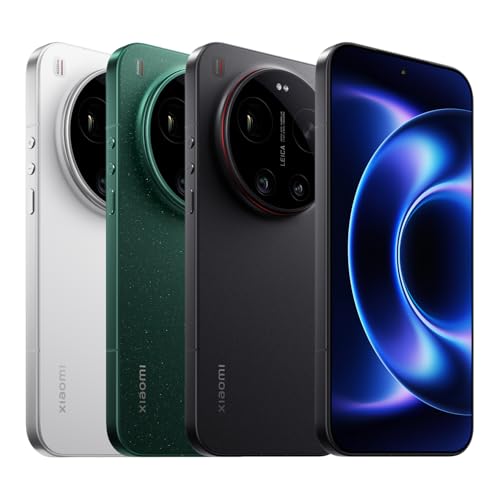
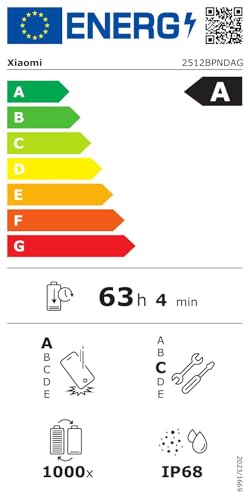
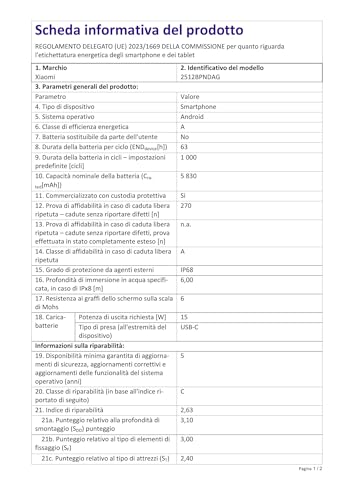
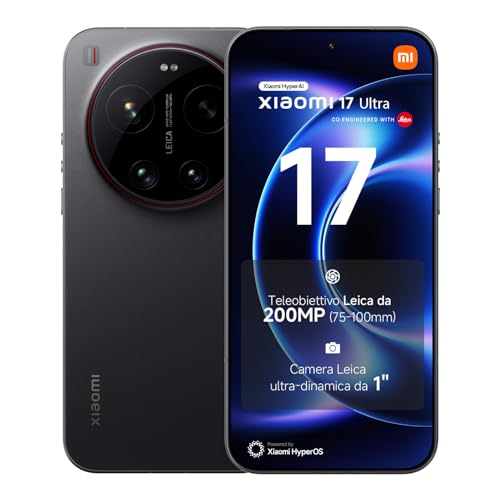
Xiaomi 17 Ultra review: 196 specs compared

Avg. price:~£1,140RAM capacity:16 GBInternal storage:512 GBScreen size:6.9 inchesMain camera megapixels:50 MP & 50 MP & 50 MP

Xiaomi 17 Ultra Review: Compare 196 technical specifications, 103 expert and video reviews and 58 best-of lists to see how this product ranks in the Smartphones category and whether it is worth buying.
Xiaomi 17 Ultra
9.0/10

Overall score

Score
9.0/ 10
✕
What it is
Our main score for this model, 1–10. It combines specs, best-of lists, expert reviews and owners.
How we count it
Parts: Technical score 35%, List score 30%, Reviews score 25%, Sentiment score 10%
Marks: Each part gets a mark out of 10. For reviews, lists and owners, a typical model in this category gets about 8 and the best one gets 10.
No data yet: A part with no data shows "?". It counts as the mark of a weaker model in this category (4 in 5 models with data score higher). This way, models with reviews, lists and owners usually come out ahead.
Score distribution
▼
<55-66-77-88-99-10
Score components

35%

8.9

Technical score

30%

9.1

List score

25%

8.6

Reviews score

10%

9.5

Sentiment score

★Better than 99% of smartphones
7.6

Value for money

Value for money
7.6/ 10
✕
What it is
An indicator that combines the smartphone's overall rating with its cost.
When it matters
When you are looking for a smartphone with a good balance between quality and price.
Score distribution
▼
<55-66-77-88-99-10
Score components

70%

9.0

Overall score

30%

4.5

Price

▼Worse than 61%
8.9

Technical score

Technical score
8.9/ 10
✕
What it is
How good the specs are compared with the other models in this category, 1–10.
How we count it
Areas: We rate the specs in each area against the other models in this category.
Weighting: The areas that matter most to buyers count more. The shares are shown under Score components.
Share: The technical score is 35% of the overall score.
Score distribution
▼
<55-66-77-88-99-10
Score components

25%

9.3

Performance

18%

9.2

Camera

15%

9.2

Display

15%

8.4

Battery

10%

8.6

Software

10%

8.5

Connectivity

4%

8.8

Audio

3%

8.7

Design

★Better than 98%
8.6

Reviews score

Reviews score
8.6/ 10
✕
What it is
Average grade from independent test sites, magazines and video reviewers, 1–10.
How we count it
Grades: Each review's own score is converted to 1–10; without one, we grade the review ourselves. Big test sites count more, short reviews half as much as full tests. A video review counts half.
Score: The average grade is 80% of the review mark; the number of reviews is the other 20% (1 review = 5, the typical number in this category = 8, the most-reviewed model = 10).
Enough data: With few reviews, the average grade is pulled toward the typical grade of this category. No reviews yet: 7.5 for now.
Share: Reviews count 25% of the overall score.
Score distribution
▼
<55-66-77-88-99-10

80%

8.4

Average grade

20%

9.5

Popularity

Grades by review (103)
27 reviews: 16 with a printed score, 11 estimated from the review. 76 video reviews, each counting half as much as a written test. Reviews count 25% of the overall score.
User ratings collected online are not part of this score.
★Better than 92%
9.1

List score

List score
9.1/ 10
✕
What it is
How often independent test sites, magazines and video reviewers put this model in their best-of lists for this category.
How we count it
Points: The model in the most lists of this category gets 10; the others get 8 to 10 in proportion. In no list yet: 7.5. Lists count 30% of the overall score.
Enough data: Every list counts, even a single one. With fewer than 5 best-of lists in the category, this part is left out.
Lists with this model (58)
List score: in 58 of 220 lists (26%)
★Better than 99%
  • xiaomi-17-ultra
  • xiaomi-17-ultra
  • xiaomi-17-ultra
  • xiaomi-17-ultra
  • xiaomi-17-ultra
  • xiaomi-17-ultra
  • xiaomi-17-ultra
  • xiaomi-17-ultra
  • xiaomi-17-ultra
  • xiaomi-17-ultra
  • xiaomi-17-ultra
  • xiaomi-17-ultra
  • xiaomi-17-ultra
  • xiaomi-17-ultra
  • xiaomi-17-ultra
  • xiaomi-17-ultra
xiaomi-17-ultra
xiaomi-17-ultra
xiaomi-17-ultra
xiaomi-17-ultra
xiaomi-17-ultra
xiaomi-17-ultra
xiaomi-17-ultra
xiaomi-17-ultra
xiaomi-17-ultra
xiaomi-17-ultra
xiaomi-17-ultra
xiaomi-17-ultra
xiaomi-17-ultra
xiaomi-17-ultra
xiaomi-17-ultra
xiaomi-17-ultra
Where to buy
*As an Amazon Associate, we earn from qualifying purchases.

What reviewers say about the Xiaomi 17 Ultra

Based on 27 · 87

Reviewers love the photo quality and display, but criticize the software, high price and heavy size, with battery opinions split.
Praised
Mixed views
Criticised
Pick a topic to see who said what
Loading...
Loading category ranking...

Technical Specifications of smartphone Xiaomi 17 Ultra

Technical score
Technical score
8.9/ 10
✕
What it is
How good the specs are compared with the other models in this category, 1–10.
How we count it
Areas: We rate the specs in each area against the other models in this category.
Weighting: The areas that matter most to buyers count more. The shares are shown under Score components.
Share: The technical score is 35% of the overall score.
Score distribution
▼
<55-66-77-88-99-10
Score components:

25%

9.3

Performance

18%

9.2

Camera

15%

9.2

Display

15%

8.4

Battery

10%

8.6

Software

10%

8.5

Connectivity

4%

8.8

Audio

3%

8.7

Design

8.9
Reviews score
8.6
List score
9.1
Value for money
Value for money
7.6/ 10
✕
What it is
An indicator that combines the smartphone's overall rating with its cost.
When it matters
When you are looking for a smartphone with a good balance between quality and price.
Score distribution
▼
<55-66-77-88-99-10
Score components:

70%

9.0

Overall score

30%

4.5

Price

7.6
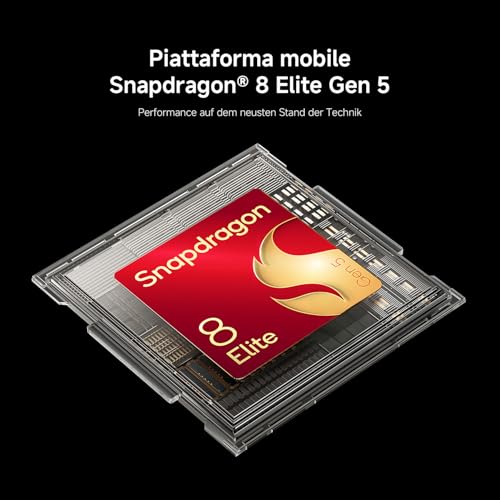
Processor model
Qualcomm Snapdragon 8 Elite Gen 5
This smartphone uses the Qualcomm Snapdragon 8 Elite Gen 5 processor which is faster than processors in 98.1% of smartphones and equal to processors in 1.6% of smartphones.
Storage type
UFS 4.1
Xiaomi 17 Ultra uses UFS 4.1 storage, which is faster than the storage in 90.2% of smartphones and the same as in 6.3% of smartphones.
RAM capacity
16 GB
This smartphone has a RAM capacity of 16 GB which is larger than the RAM capacity of 83.8% of smartphones and equal to that of 11.8% of smartphones.
Internal storage
512 GB
This smartphone has an internal storage capacity of 512 GB which is larger than the storage of 77.4% of smartphones and equal to that of 17.1% of smartphones.
CPU boost clock speed
4.6 GHz
The CPU boost clock speed of this smartphone is 4.6 GHz which is higher than the boost speed of 98.4% of smartphones and equal to that of 1.6% of smartphones.
Show more
What reviewers say
Operating system
Android
This smartphone runs Android, which is more mainstream than the system in 4.8% of smartphones and the same as in 95.2% of smartphones.
Android version
Android 16
This smartphone runs Android version Android 16 which is newer than that found in 95.6% of smartphones and equal to that in 4.4% of smartphones.
Direct OS updates
no
This smartphone does not support direct OS updates. 20.1% of smartphones offer this.
Promised software updates
?
Open-source OS
yes
This smartphone runs an open-source operating system. 5.2% of smartphones offer this.
Show more
What reviewers say
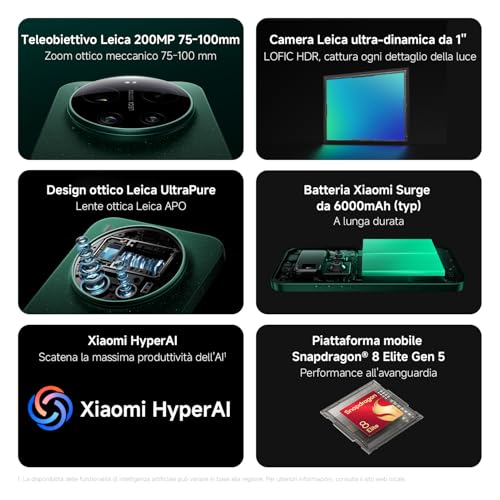
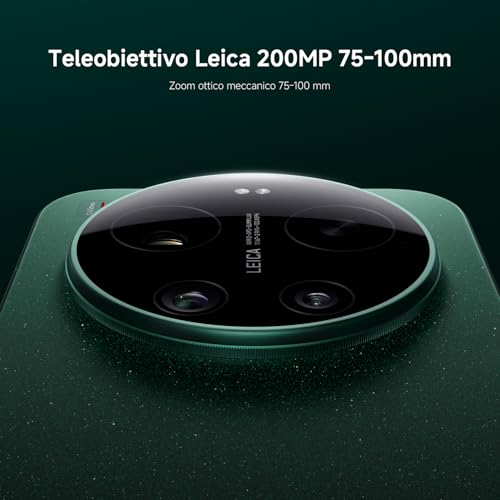
Multi-lens main camera
yes
This smartphone includes a multi-lens main camera system. 93.7% of smartphones include multi-lens setups.
Main camera megapixels
50 MP & 50 MP & 50 MP
This smartphone has a main camera resolution of 50 MP & 50 MP & 50 MP which is higher than that of 72.2% of smartphones and equal to that of 2.5% of smartphones.
Main camera aperture
f/1.7 & f/2.0 & f/2.4
This smartphone has a main camera aperture of f/1.7 & f/2.0 & f/2.4 which is wider than that of 86.4% of smartphones and equal to that of 0.2% of smartphones.
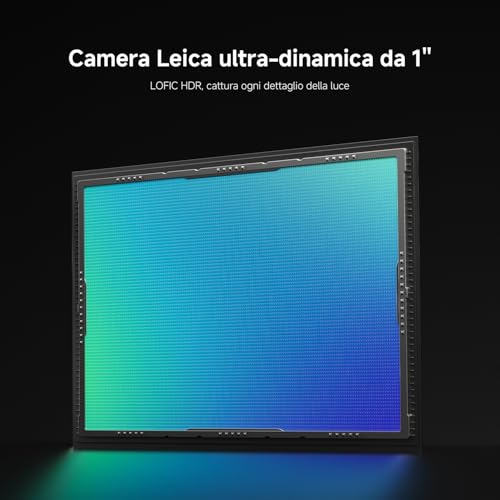
Main camera sensor area
72 mm²
This smartphone has a main camera sensor area of 72 mm² which is larger than the main camera sensor area of 90.3% of smartphones and equal to that of 4.6% of smartphones.
Main camera pixel size
1.2 µm
This smartphone has a main camera pixel size of 1.2 µm which is larger than in 83.8% of smartphones and equal to the size in 5% of smartphones.
Show more
What reviewers say
Number of SIM slots
2
This smartphone has 2 SIM slots, which is more than in 3.7% of smartphones and equal to the number in 96.2% of smartphones.
Cellular module
yes
This smartphone includes a cellular module. 100% of smartphones include cellular modules.
eSIM support
yes
Xiaomi 17 Ultra has eSIM support. 80.2% of smartphones offer this.
5G connectivity
yes
This smartphone supports 5G connectivity. 66.6% of smartphones support 5G.
LTE support
yes
This smartphone supports LTE. 99.7% of smartphones include LTE connectivity.
Show more
What reviewers say
Screen size
6.9 inches
This smartphone has a screen size of 6.9 inches which is larger than the screens of 93.5% of smartphones and equal to those of 2.8% of smartphones.
Screen resolution
?
Pixel density
416 ppi
This smartphone has a pixel density of 416 ppi which is higher than that of 71% of smartphones and equal to that of 0.5% of smartphones.
Display type
OLED/AMOLED
This smartphone uses a OLED/AMOLED display type. 58.4% of smartphones use this display technology.
Refresh rate
120 Hz
This smartphone supports a refresh rate of 120 Hz which is higher than in 34.4% of smartphones and equal to that in 55.6% of smartphones.
Show more
What reviewers say
Battery capacity
?
Charging speed
?
Fast charging
yes
This smartphone supports fast charging. 93.2% of smartphones support fast charging.
GSMArena full wired charge time
?
Wireless charging
yes
This smartphone supports wireless charging. 25.1% of smartphones support wireless charging.
Show more
What reviewers say
Stereo speakers
yes
This smartphone includes stereo speakers. 64.3% of smartphones provide stereo audio.
3.5 mm headphone jack
no
This smartphone does not have a headphone jack. 45.1% of smartphones offer this.
Number of microphones
?
FM radio
no
This smartphone does not have an FM radio. 34.3% of smartphones offer this.
aptX Lossless
yes
This smartphone supports aptX Lossless. 12.5% of smartphones provide aptX Lossless.
Show more
What reviewers say
Height
151.1 mm
This smartphone has a height of 151.1 mm which is shorter than 94.5% of smartphones and equal to that of 0.3% of smartphones.
Width
71.8 mm
This smartphone has a width of 71.8 mm which is narrower than 93.9% of smartphones and equal to that of 0.6% of smartphones.
Thickness
8.1 mm
This smartphone has a thickness of 8.1 mm which is thinner than 59% of smartphones and equal to that of 4.3% of smartphones.
Weight
?
Device volume
?
Show more
What reviewers say

Xiaomi 17 Ultra vs the average smartphone

246810TotalPerformanceSoftwareCameraConnectivityDisplayBatteryAudioDesign
  • 8 GB more RAM
    This smartphone has more RAM capacity than the average smartphone (16 GB vs 8 GB). The average smartphone has 8 GB of RAM.
    16 GB vs 8 GB
  • 2.25x larger main camera sensor area
    This smartphone has a larger main camera sensor area than the average smartphone (72 mm² vs 32 mm²). The average main camera sensor area is 32 mm².
    72 mm² vs 32 mm²
  • 2.6 x higher optical zoom
    This smartphone offers stronger optical zoom than the average smartphone (2.6 x vs 0 x). The average smartphone's optical zoom is 0 x.
    2.6 x vs 0 x
  • 50% smaller process node
    This smartphone uses a smaller process node than the average smartphone (3 nm vs 6 nm). The average process node size is 6 nm.
    3 nm vs 6 nm
  • 91.7% higher CPU boost clock speed
    This smartphone has a higher CPU boost clock speed than the average smartphone (4.6 GHz vs 2.4 GHz). The average smartphone has a boost clock speed of 2.4 GHz.
    4.6 GHz vs 2.4 GHz
  • Supports wireless charging
    This smartphone supports wireless charging, the average smartphone does not. 25.1% of smartphones are wireless charging compatible.
  • Has optical image stabilization
    This smartphone has optical image stabilization (OIS), the average smartphone does not. 48.4% of smartphones feature OIS.
  • 2x more storage
    This smartphone offers more internal storage than the average smartphone (512 GB vs 256 GB). The average smartphone provides 256 GB of internal storage.
    512 GB vs 256 GB
  • 18.2% higher list score
    List score
    9.1/ 10
    ✕
    What it is
    How often independent test sites, magazines and video reviewers put this model in their best-of lists for this category.
    How we count it
    Points: The model in the most lists of this category gets 10; the others get 8 to 10 in proportion. In no list yet: 7.5. Lists count 30% of the overall score.
    Enough data: Every list counts, even a single one. With fewer than 5 best-of lists in the category, this part is left out.
    Lists with this model (58)
    List score: in 58 of 220 lists (26%)
    9.1 vs 7.7
  • 17.8% higher review score
    Reviews score
    8.6/ 10
    ✕
    What it is
    Average grade from independent test sites, magazines and video reviewers, 1–10.
    How we count it
    Grades: Each review's own score is converted to 1–10; without one, we grade the review ourselves. Big test sites count more, short reviews half as much as full tests. A video review counts half.
    Score: The average grade is 80% of the review mark; the number of reviews is the other 20% (1 review = 5, the typical number in this category = 8, the most-reviewed model = 10).
    Enough data: With few reviews, the average grade is pulled toward the typical grade of this category. No reviews yet: 7.5 for now.
    Share: Reviews count 25% of the overall score.
    Score distribution
    ▼
    <55-66-77-88-99-10

    80%

    8.4

    Average grade

    20%

    9.5

    Popularity

    Grades by review (103)
    27 reviews: 16 with a printed score, 11 estimated from the review. 76 video reviews, each counting half as much as a written test. Reviews count 25% of the overall score.
    User ratings collected online are not part of this score.
    8.6 vs 7.3
  • 21.8% higher sentiment score
    9.5 vs 7.8
  • 8 GB more RAM
    This smartphone has more RAM capacity than the average smartphone (16 GB vs 8 GB). The average smartphone has 8 GB of RAM.
    16 GB vs 8 GB
  • 50% smaller process node
    This smartphone uses a smaller process node than the average smartphone (3 nm vs 6 nm). The average process node size is 6 nm.
    3 nm vs 6 nm
  • 91.7% higher CPU boost clock speed
    This smartphone has a higher CPU boost clock speed than the average smartphone (4.6 GHz vs 2.4 GHz). The average smartphone has a boost clock speed of 2.4 GHz.
    4.6 GHz vs 2.4 GHz
  • 2x more storage
    This smartphone offers more internal storage than the average smartphone (512 GB vs 256 GB). The average smartphone provides 256 GB of internal storage.
    512 GB vs 256 GB
  • Better processor
    This smartphone features a better processor than the average smartphone (Qualcomm Snapdragon 8 Elite Gen 5 vs Qualcomm Snapdragon 7 Gen 3).
    Qualcomm Snapdragon 8 Elite Gen 5 vs Qualcomm Snapdragon 7 Gen 3
  • 80.7% higher PCMark Work 3.0 Performance benchmark
    This smartphone has a higher PCMark Work 3.0 performance score than the average smartphone (19,501 vs 10,791). The average score is 10,791.
    19,501 vs 10,791
  • Higher CPU base clock speed
    This smartphone has a higher CPU base clock speed than the average smartphone (2x4.6 GHz & 6x3.62 GHz vs 2x2.2 GHz & 6x2 GHz). The average smartphone has a base clock speed of 2x2.2 GHz & 6x2 GHz.
    2x4.6 GHz & 6x3.62 GHz vs 2x2.2 GHz & 6x2 GHz
  • 11.72x more L2 cache
    This smartphone has more L2 cache than the average smartphone (12,000 KB vs 1,024 KB). The average L2 cache is 1,024 KB.
    12,000 KB vs 1,024 KB
  • 6x more shader units
    This smartphone features more shader units than the average smartphone (1,536 vs 256). The average smartphone has 256 shader units.
    1,536 vs 256
  • Faster storage type
    Xiaomi 17 Ultra has faster storage than the average smartphone (UFS 4.1 vs UFS 3.1).
    UFS 4.1 vs UFS 3.1
  • 92.7% faster memory speed
    This smartphone supports faster memory speed than the average smartphone (5,300 MHz vs 2,750 MHz). The average smartphone supports 2,750 MHz memory speed.
    5,300 MHz vs 2,750 MHz
  • Newer DDR memory version
    This smartphone supports a newer DDR version than the average smartphone (5 vs 4). The average DDR version is 4.
    5 vs 4
  • 26.3% faster GPU clock
    This smartphone has a higher GPU frequency than the average smartphone (1,200 MHz vs 950 MHz). The average smartphone GPU frequency is 950 MHz.
    1,200 MHz vs 950 MHz
  • 2x more L3 cache
    This smartphone has more L3 cache than the average smartphone (8,192 KB vs 4,096 KB). The average L3 cache is 4,096 KB.
    8,192 KB vs 4,096 KB
  • 2 more memory channels
    This smartphone has more memory channels than the average smartphone (4 vs 2). The average smartphone has 2 memory channels.
    4 vs 2
  • Supports newer OpenCL version
    This smartphone supports a newer OpenCL version than the average smartphone (3 vs 2). The average version is 2.
    3 vs 2
  • 14.3% higher maximum RAM
    This smartphone supports more maximum RAM than the average smartphone (16 GB vs 14 GB). The average smartphone supports 14 GB RAM.
    16 GB vs 14 GB
  • 1 year/s newer release date
    This smartphone has a newer release date than the average smartphone (2025 vs 2024). 1.00% of smartphones are released annually.
    2025 vs 2024
  • Newer Android version
    This smartphone features a newer Android version than the average smartphone (Android 16 vs Android 14). The average version is Android 14.
    Android 16 vs Android 14
  • Supports fast boot
    This smartphone supports fast boot, the average smartphone does not. 22.1% of smartphones include fast boot capabilities.
  • 2.25x larger main camera sensor area
    This smartphone has a larger main camera sensor area than the average smartphone (72 mm² vs 32 mm²). The average main camera sensor area is 32 mm².
    72 mm² vs 32 mm²
  • 2.6 x higher optical zoom
    This smartphone offers stronger optical zoom than the average smartphone (2.6 x vs 0 x). The average smartphone's optical zoom is 0 x.
    2.6 x vs 0 x
  • Has optical image stabilization
    This smartphone has optical image stabilization (OIS), the average smartphone does not. 48.4% of smartphones feature OIS.
  • Better main camera video
    This smartphone records better main camera video than the average smartphone. 44.20x of smartphones support 4K or higher.
    4320x30 fps vs 2160x30 fps
  • 0.4 µm larger main camera pixel size
    This smartphone has a larger main camera pixel size than the average smartphone (1.2 µm vs 0.8 µm). The average pixel size is 0.8 µm.
    1.2 µm vs 0.8 µm
  • Supports RAW photo capture
    This smartphone supports RAW photo capture, the average smartphone does not. 37.3% of smartphones allow RAW files.
  • Uses a BSI sensor
    This smartphone uses a BSI sensor, the average smartphone does not. 40% of smartphones include BSI sensors.
  • Supports Dolby Vision video recording
    This smartphone supports Dolby Vision video recording, the average smartphone does not. 10.4% of smartphones support Dolby Vision.
  • Supports laser autofocus
    This smartphone features laser autofocus, the average smartphone does not. 20.9% of smartphones include laser AF.
  • Allows manual shutter speed
    This smartphone allows manual shutter speed control, the average smartphone does not. 29.5% of smartphones include this.
  • 1 more flash LEDs
    This smartphone has more flash LEDs than the average smartphone (2 vs 1). The average smartphone has 1 flash LEDs.
    2 vs 1
  • Higher-resolution main camera
    This smartphone has a higher main camera resolution than the average smartphone (50 MP & 50 MP & 50 MP vs 50 MP & 8 MP). The average smartphone main camera has 50 MP & 8 MP megapixels.
    50 MP & 50 MP & 50 MP vs 50 MP & 8 MP
  • Supports HDR10 video recording
    This smartphone supports HDR10 video recording, the average smartphone does not. 35.7% of smartphones support HDR10.
  • Has a dual-tone LED flash
    This smartphone features a dual-tone LED flash, the average smartphone does not. 40.8% of smartphones include dual-tone flash.
  • Wider main camera aperture
    This smartphone has a wider main camera aperture than the average smartphone (f/1.7 & f/2 & f/2.4 vs f/1.8 & f/2.2 & f/2.4 & f/2.4). The average smartphone has a main camera aperture of f/1.8 & f/2.2 & f/2.4 & f/2.4.
    f/1.7 & f/2.0 & f/2.4 vs f/1.8 & f/2.2 & f/2.4 & f/2.4
  • Newer Wi-Fi version
    This smartphone has more advanced Wi-Fi than the average smartphone (Wi-Fi 7 (802.11be), Wi-Fi 6E (802.11ax), Wi-Fi 6 (802.11ax), Wi-Fi 5 (802.11ac), Wi-Fi 4 (802.11n) vs Wi-Fi 5 (802.11ac), Wi-Fi 4 (802.11n)).
    Wi-Fi 7 (802.11be), Wi-Fi 6E (802.11ax), Wi-Fi 6 (802.11ax), Wi-Fi 5 (802.11ac), Wi-Fi 4 (802.11n) vs Wi-Fi 5 (802.11ac), Wi-Fi 4 (802.11n)
  • Newer USB version
    This smartphone supports a newer USB version than the average smartphone (3.2 vs 2). The average version is USB 2.
    3.2 vs 2
  • Supports eSIM
    Xiaomi 17 Ultra supports eSIM, while the average smartphone does not. 19.9% of smartphones support eSIM.
  • Newer Bluetooth version
    This smartphone supports a newer Bluetooth version than the average smartphone (6 vs 5.2). The average version is Bluetooth 5.2.
    6 vs 5.2
  • Has a heart rate monitor
    This smartphone features a heart rate monitor, the average smartphone does not. 4.8% of smartphones include a built-in heart rate sensor.
  • Supports optical tracking
    This smartphone supports optical tracking, the average smartphone does not. 12.2% of smartphones include optical tracking.
  • Supports motion tracking
    This smartphone supports motion tracking, the average smartphone does not. 21.7% of smartphones offer motion tracking capabilities.
  • Has a barometer
    This smartphone features a barometer, the average smartphone does not. 19.7% of smartphones include a barometer.
  • Has an infrared sensor
    This smartphone includes an infrared sensor, the average smartphone does not. 33.4% of smartphones feature an IR blaster.
  • 2,500 nits higher peak brightness
    This smartphone has a higher peak brightness than the average smartphone (3,500 nits vs 1,000 nits). The average peak brightness is 1,000 nits.
    3,500 nits vs 1,000 nits
  • 0.23 inches inch larger screen size
    This smartphone has a larger screen size than the average smartphone (6.9 inches vs 6.67 inches). The average smartphone screen is 6.67 inches.
    6.9 inches vs 6.67 inches
  • 81.8% higher screen brightness
    This smartphone has a higher screen brightness than the average smartphone (1,200 nits vs 660 nits). The average smartphone brightness is 660 nits.
    1,200 nits vs 660 nits
  • Better display glass type
    This smartphone features a better display glass type than the average smartphone (Xiaomi Dragon Crystal Glass vs Corning Gorilla Glass 5). The average smartphone uses Corning Gorilla Glass 5 protection.
    Xiaomi Dragon Crystal Glass vs Corning Gorilla Glass 5
  • Supports Dolby Vision support
    This smartphone supports Dolby Vision, the average smartphone does not. 17.2% of smartphones are Dolby Vision compatible.
  • Supports HDR10+ support
    This smartphone supports HDR10+, the average smartphone does not. 22.4% of smartphones include HDR10+ support.
  • Higher contrast ratio
    This smartphone has a higher contrast ratio than the average smartphone (5000000:1 vs 1000000:1). The average smartphone contrast ratio is 1000000:1.
    5,000,000:1 vs 1,000,000:1
  • Supports HDR10 support
    This smartphone supports HDR10, the average smartphone does not. 42.6% of smartphones are HDR10 compatible.
  • Has an always-on display
    This smartphone features an always-on display, the average smartphone does not. 49.1% of smartphones offer always-on functionality.
  • 5.3% higher pixel density
    This smartphone has a higher pixel density than the average smartphone (416 ppi vs 395 ppi). The average smartphone has a pixel density of 395 ppi.
    416 ppi vs 395 ppi
  • Has a curved display
    This smartphone features a curved display, the average smartphone does not. 24.1% of smartphones have curved screens.
  • 132 nits higher GSMArena max display brightness
    This smartphone has a higher GSMArena max display brightness than the average smartphone (1,026 nits vs 894 nits). The average max brightness is 894 nits.
    1,026 nits vs 894 nits
  • Supports wireless charging
    This smartphone supports wireless charging, the average smartphone does not. 25.1% of smartphones are wireless charging compatible.
  • Supports reverse wireless charging
    This smartphone supports reverse wireless charging, the average smartphone does not. 23.4% of smartphones offer reverse wireless charging.
  • 2.5x faster wireless charging speed
    This smartphone supports a faster wireless charging speed than the average smartphone (50 W vs 20 W). The average speed is 20 W.
    50 W vs 20 W
  • Supports aptX Adaptive
    This smartphone supports aptX Adaptive, the average smartphone does not. 33.7% of smartphones include aptX Adaptive support.
  • Supports aptX Lossless
    This smartphone supports aptX Lossless, the average smartphone does not. 12.5% of smartphones include aptX Lossless support.
  • Supports aptX
    This smartphone supports aptX, the average smartphone does not. 49.5% of smartphones are aptX compatible.
  • 1.5 m deeper water resistance
    This smartphone has a deeper water resistance rating than the average smartphone (1.5 m vs 0 m). The average depth rating is 0 m.
    1.5 m vs 0 m
  • 4.2 mm narrower
    This smartphone is narrower than the average smartphone (71.8 mm vs 76 mm). The average smartphone width is 76 mm.
    71.8 mm vs 76 mm
  • 12.5 mm shorter
    This smartphone is shorter than the average smartphone (151.1 mm vs 163.6 mm). The average smartphone height is 163.6 mm.
    151.1 mm vs 163.6 mm
  • Better IP rating
    This smartphone has a better IP rating than the average smartphone (IP68 vs IP67). The average IP rating is IP67.
    IP68 vs IP67
  • 0.2 mm thinner
    This smartphone is thinner than the average smartphone (8.1 mm vs 8.3 mm). The average smartphone thickness is 8.3 mm.
    8.1 mm vs 8.3 mm
  • No memory card slot
    This smartphone does not have a memory card slot, the average smartphone does. 53.7% of smartphones feature expandable storage.
  • 4.38x more expensive
    Xiaomi 17 Ultra is more expensive than the average smartphone (£1,140 vs £260).
    £1,140 vs £260
  • 0.5% worse value for money
    Xiaomi 17 Ultra has worse value for money than the average smartphone (7.62 vs 7.7).
    7.62 vs 7.66
  • 4.38x more expensive
    Xiaomi 17 Ultra is more expensive than the average smartphone (£1,140 vs £260).
    £1,140 vs £260
  • 0.5% worse value for money
    Xiaomi 17 Ultra has worse value for money than the average smartphone (7.62 vs 7.7).
    7.62 vs 7.66
  • No memory card slot
    This smartphone does not have a memory card slot, the average smartphone does. 53.7% of smartphones feature expandable storage.

Video reviews

Hands-on testing, unboxing, and real-world video evaluations

9.0
Davis Leo
≈ estimated
27/10/2026
Hands-on review · imaging kit, camera and battery tests
Verdict
Xiaomi 17 Ultra meets expectations and suits everyday users who want better photos.
9.0
@ThunderBear-x3h
≈ estimated
07/10/2026
Hands-on review · camera settings and Leica edition
Verdict
Xiaomi 17 Ultra offers a full Leica-style camera experience in a pocket-sized phone, praised for its camera focus.
9.0
WomanTechFan
≈ estimated
14/09/2026
Long-term test · eight months of daily use
Verdict
Xiaomi 17 Ultra is one of Xiaomi's best recent phones, with excellent cameras and strong value against its rivals.
9.0
LL Techview
≈ estimated
29/08/2026
Field test · street photography with fast shot mode
Verdict
Xiaomi 17 Ultra's fast shot mode is a go-to tool for street photography, with strong moody looks.
9.0
LL Techview
≈ estimated
07/08/2026
Revisited review · camera tests after six months of use
Verdict
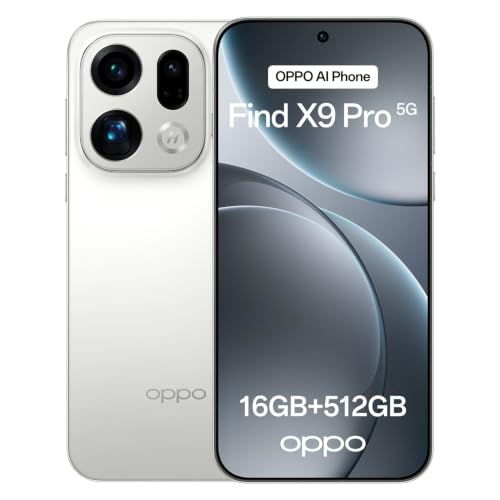
Xiaomi 17 Ultra trails the Oppo slightly on camera, but stays very close near the top.
8.0
Adam Lobo TV
✓ explicit
26/07/2026
Long-term test · 6 months of daily use
Verdict
Xiaomi 17 Ultra's hardware and camera hold up well over time; bloated software is the main gripe, but not a dealbreaker.
9.0
Geeky Stuff
≈ estimated
03/07/2026
Long-term test · three months of daily use
Verdict
Xiaomi 17 Ultra is a great phone overall, with a standout camera; battery life is its main weak point.
9.0
Trakin Tech English
≈ estimated
25/05/2026
Long-term test · 60 days of daily use
Verdict
Xiaomi 17 Ultra offers strong value for an Ultra phone, with compromises that are easy to live with.
4.0
Snowball
≈ estimated
01/05/2026
Hands-on review · camera tests, software and daily use
Verdict
Xiaomi 17 Ultra is fun to test, but not trusted as a daily phone because of camera and software issues.
9.0
DaddyBrotherTV
≈ estimated
19/04/2026
Long-term test · one month of daily use
Verdict
Xiaomi 17 Ultra has a strong camera and display and is recommended for photographers, despite its plastic back and disappointing battery life under camera use.
7.0
Ho Young Won
≈ estimated
01/04/2026
Real-world day test · battery, charging and camera results
Verdict
Xiaomi 17 Ultra has great camera results, but battery life and charging fall short for its large battery.
9.0
Alex Armitage
≈ estimated
30/03/2026
Hands-on review · camera tests and raw image analysis
Verdict
Xiaomi 17 Ultra has a surprisingly strong camera and one standout mode, though low-light tests are still to come.
More graded video reviews (24)
creator’s own scoreestimated by us

Expert reviews

In-depth analysis and verdict from leading tech publications

9.0
notebookcheck.net
✓ explicit
26/01/2026
Full review · Leica zoom flagship
Verdict
The Xiaomi 17 Ultra is an all-round flagship with thin bezels, a bright OLED, strong speakers and Leica cameras, though it produces more waste heat.
8.0
hardwarezone.com.sg
≈ estimated
22/03/2026
Hands-on review · Camera and battery
Verdict
The Xiaomi 17 Ultra is a strong all-rounder whose portraits and telephoto shots stand out, though battery and charging depend on your market.
9.0
androidheadlines.com
✓ explicit
28/02/2026
Hands-on review · Flagship camera
Verdict
The Xiaomi 17 Ultra is a strong flagship for camera users, but its slippery back and missing charger mean buying a case and charger too.
9.5
digit.in
≈ estimated
12/06/2026
Long-term review · Camera phone
Verdict
The Xiaomi 17 Ultra is a camera-first flagship whose 1-inch sensor and 200 MP zoom suit photographers, though extreme zoom softens detail.
9.0
digitalcameraworld.com
✓ explicit
28/02/2026
Hands-on review · Photography test
Verdict
The Xiaomi 17 Ultra is a camera-first phone with an excellent 1-inch sensor and filmic Leica colors, but uneven color between lenses and modest zoom hold it back.
9.0
pcwelt.de
✓ explicit
15/05/2026
Full review · Camera flagship
Verdict
The Xiaomi 17 Ultra is a camera flagship that lasts about two days, a good pick if you can handle its bulk and don't need magnetic accessories.
9.1
connect.de
✓ explicit
28/02/2026
Lab test · Battery and camera
Verdict
The Xiaomi 17 Ultra is a camera-first flagship with excellent battery life and a comfortable flat body, but it is pricey, dimmer in sunlight and needs better software support.
10
digitalphoto.de
✓ explicit
28/02/2026
Camera test · High dynamic range
Verdict
The Xiaomi 17 Ultra is a photo-first phone whose 1-inch sensor handles fireworks, sunsets and night fairs well, though it works best as a second camera for enthusiasts.
9.0
computerwoche.de
≈ estimated
06/06/2026
Full review · Premium flagship
Verdict
The Xiaomi 17 Ultra is a camera-led flagship with a big bright screen and optional photo kits, suiting buyers who want a large phone rather than a compact one.
8.0
china-gadgets.de
≈ estimated
05/06/2026
Full test · Zoom camera phone
Verdict
The Xiaomi 17 Ultra is a top camera phone with smooth optical zoom and long battery life, but it is large and heavy for compact-phone fans.
9.3
smartzone.de
✓ explicit
03/03/2026
Import test · China version
Verdict
The Xiaomi 17 Ultra is a fast, bright phone with an excellent build, but its 224 g weight and top-heavy feel are hard to ignore.
9.0
inside-digital.de
✓ explicit
28/02/2026
Hands-on test · Camera and display
Verdict
The Xiaomi 17 Ultra is a camera-first phone whose portraits and zoom shots impress, but on-screen adverts and heavy bloatware dent its premium feel.
8.5
tomshw.it
✓ explicit
10/04/2026
Hands-on review · Camera phone
Verdict
The Xiaomi 17 Ultra is a photo-first phone with wide dynamic range and usable optical zoom, but software ads and weaker ultra-wide shots hold it back.
9.0
wired.it
✓ explicit
16/03/2026
Full review · Camera-first flagship
Verdict
The Xiaomi 17 Ultra is a well-built camera phone with a 1-inch sensor and strong telephoto, though software tweaks and a smaller global battery hold it back.
8.5
giulianodipaolo.com
✓ explicit
02/03/2026
Hands-on review · Camera for creators
Verdict
The Xiaomi 17 Ultra suits video creators who want Log recording, though HyperOS 3 feels less polished than iOS and One UI.
9.0
gqitalia.it
≈ estimated
01/03/2026
Hands-on review · Photography flagship
Verdict
The Xiaomi 17 Ultra is a flagship for demanding photographers, with a slim body and a telephoto zoom that keeps detail, though extra reach comes from software.
9.0
evosmart.it
≈ estimated
01/03/2026
Hands-on review · Photography focus
Verdict
The Xiaomi 17 Ultra is for buyers who care most about optics, with a 1-inch sensor that holds highlights and a zoom that changes focal length smoothly.
8.0
corriere.it
≈ estimated
09/03/2026
Hands-on review · Telephoto zoom focus
Verdict
The Xiaomi 17 Ultra is a photo-focused phone whose telephoto zoom suits portraits, though it ships with many preinstalled apps and a high list price.
9.0
tg24.sky.it
≈ estimated
01/04/2026
Hands-on review · Camera and battery
Verdict
The Xiaomi 17 Ultra is a camera-like phone with deep, reflex-style depth of field and continuous zoom, suiting photographers, though close-up macro shots lag behind.
8.0
androidplanet.nl
✓ explicit
02/04/2026
Full review · Camera-first phone
Verdict
The Xiaomi 17 Ultra is a camera flagship with excellent main and telephoto lenses and a flat, comfortable body, but its ultra-wide lens and update policy fall short.

Third-party reviews

What customers like about Xiaomi 17 Ultra

  • A 72 mm² main camera sensor is large for a phone, so photos keep more detail in dim light.
  • 16 GB of RAM keeps many apps running at once.
  • 512 GB of storage leaves room for a large library of photos and video.
  • A peak of 3500 nits keeps the screen readable in direct sun.
  • Optical image stabilization steadies handheld video.
  • Dolby Vision video recording makes footage look richer on a compatible screen.

What customers don't like about Xiaomi 17 Ultra

  • There are no direct OS updates, which matters if you keep a phone for years.
  • The 2.6 x optical zoom is short for distant subjects like sports or wildlife.
  • At 151.1 mm tall, it is a big phone for one-handed use.
  • The curved screen edges can make a protector harder to fit.

Verdict

A 72 mm² main camera sensor is the first thing to notice about the Xiaomi 17 Ultra, an Android phone for people who shoot a lot of photos and video. Its 1.2 µm pixels gather plenty of light, so low-light shots stay clean. Inside sits a 3 nm Snapdragon 8 Elite Gen 5 chip, and 16 GB of RAM keeps many apps open at once. The 6.9 inch screen reaches 3500 nits at peak, so it stays readable in bright sun. Wireless charging at 50 W is uncommon, and reverse charging can top up another device. The trade-off is the update policy: there are no direct OS updates, and the 2.6 x zoom is short for distant subjects. It suits a buyer who wants serious camera hardware and does not mind a tall phone.

Compare Xiaomi 17 Ultra with other smartphones

1Product to compare no. 1
VS
2Product to compare no. 2
VS
3Product to compare no. 3 (optional)

Graphic comparison of Xiaomi 17 Ultra and other smartphones

No results found