Scored using Smartphones Methodology v1.0
Smartphones Methodology v1.0
Mathematical & Unbiased Scoring
Products in this category are scored under Frontum Smartphones Methodology v1.0: technical specifications plus authentic consumer ratings, with 0% commercial bias.
Explore Smartphones Methodology v1.0

Samsung Galaxy S25 Ultra 5G (12GB + 512GB) Review | 197 Data compared

Avg. price:~£920RAM capacity:12 GBInternal storage:512 GBScreen size:6.9 inchesMain camera megapixels:200 MP & 50 MP & 10 MP & 10 MP

Samsung Galaxy S25 Ultra 5G (12GB + 512GB) Review: Compare 197 technical specifications and user reviews to see how this product ranks in the Smartphones category and whether it is worth buying.

Samsung Galaxy S25 Ultra 5G (12GB + 512GB)
8.5/10

Overall score

Score
8.5/ 10
✕
What it is
An overall evaluation of the smartphone's quality, based on technical analyses and user reviews.
When it matters
When you need a quick reference to identify the best smartphones on the market.
Score distribution
â–¼
<55-66-77-88-99-10
Score components

90%

8.5

Technical score

10%

9.3

User score

★Better than 96% of smartphones
7.7

Value for money

Value for money
7.7/ 10
✕
What it is
An indicator that combines the smartphone's overall rating with its cost.
When it matters
When you are looking for a smartphone with a good balance between quality and price.
Score distribution
â–¼
<55-66-77-88-99-10
Score components

70%

8.5

Overall score

30%

5.7

Price

â–²Better than 72%
8.5

Technical score

Technical score
8.5/ 10
✕
What it is
An assessment of the smartphone's technical performance, covering eight key areas: performance & hardware, software, camera, connectivity, display, battery, audio, and design.
When it matters
When you want to compare smartphones based on technical performance and available features.
Score distribution
â–¼
<55-66-77-88-99-10
Score components

25%

9.1

Performance & Hardware

18%

8.8

Camera

15%

8.7

Display

15%

7.4

Battery

10%

8.3

Software

10%

8.0

Connectivity

4%

8.2

Audio

3%

7.9

Design

★Better than 95%
9.3

User score

User score
9.3/ 10
✕
What it is
A rating that combines user reviews and the total number of reviews received by the smartphone
When it matters
When you want to know how a smartphone handles daily tasks and how reliable it remains over time according to user feedback.
Score distribution
â–¼
<55-66-77-88-99-10
Score components

70%

9.1

User ratings

30%

9.6

Number of reviews

Based on ratings from across the web.
★Better than 99%
  • samsung-galaxy-s25-ultra
  • samsung-galaxy-s25-ultra
samsung-galaxy-s25-ultra
Best prices
*As an Amazon Associate, we earn from qualifying purchases.
Loading...
Loading category ranking...

Technical Specifications of smartphone Samsung Galaxy S25 Ultra 5G (12GB + 512GB)

Technical score
Technical score
8.5/ 10
✕
What it is
An assessment of the smartphone's technical performance, covering eight key areas: performance & hardware, software, camera, connectivity, display, battery, audio, and design.
When it matters
When you want to compare smartphones based on technical performance and available features.
Score distribution
â–¼
<55-66-77-88-99-10
Score components:

25%

9.1

Performance & Hardware

18%

8.8

Camera

15%

8.7

Display

15%

7.4

Battery

10%

8.3

Software

10%

8.0

Connectivity

4%

8.2

Audio

3%

7.9

Design

8.5
User score
User score
9.3/ 10
✕
What it is
A rating that combines user reviews and the total number of reviews received by the smartphone
When it matters
When you want to know how a smartphone handles daily tasks and how reliable it remains over time according to user feedback.
Score distribution
â–¼
<55-66-77-88-99-10
Score components

70%

9.1

User ratings

30%

9.6

Number of reviews

Based on ratings from across the web.
9.3
Popularity
Popularity
9.6/ 10
✕
What it is
An indicator based on the number of reviews received by the smartphone.
When it matters
When you prefer to purchase a product chosen and reviewed by many other consumers.
Score distribution
â–¼
<55-66-77-88-99-10
Popularity:
Samsung Galaxy S25 Ultra 5G (12GB + 512GB) has a popularity of 9.6 points, which is higher than 90.8% of smartphones.
9.6
Value for money
Value for money
7.7/ 10
✕
What it is
An indicator that combines the smartphone's overall rating with its cost.
When it matters
When you are looking for a smartphone with a good balance between quality and price.
Score distribution
â–¼
<55-66-77-88-99-10
Score components:

70%

8.5

Overall score

30%

5.7

Price

7.7
Brand name
Samsung
Processor model
Qualcomm Snapdragon 8 Elite
This smartphone uses the Qualcomm Snapdragon 8 Elite processor which is faster than processors in 95.2% of smartphones and equal to processors in 2% of smartphones.
RAM capacity
12 GB
This smartphone has a RAM capacity of 12 GB which is larger than the RAM capacity of 59% of smartphones and equal to that of 24.3% of smartphones.
Internal storage
512 GB
This smartphone has an internal storage capacity of 512 GB which is larger than the storage of 77.1% of smartphones and equal to that of 17.2% of smartphones.
CPU boost clock speed
4.47 GHz
The CPU boost clock speed of this smartphone is 4.47 GHz which is higher than the boost speed of 98.1% of smartphones and equal to that of 0.4% of smartphones.
Show more
Operating system
Android
This smartphone uses the Android operating system, which outperforms that of 1%.
Android 15
Android version
Android 15
This smartphone runs Android version Android 15 which is newer than that found in 70.6% of smartphones and equal to that in 25.1% of smartphones.
Direct OS updates
no
This smartphone does not receive direct OS updates. 20.6% of smartphones receive direct updates.
Open-source OS
yes
This smartphone uses an open-source OS. 94.6% of smartphones use an open-source OS.
Dark mode
yes
This smartphone offers dark mode. 95.8% of smartphones support this feature.
Show more
Multi-lens main camera
yes
This smartphone includes a multi-lens main camera system. 93.7% of smartphones include multi-lens setups.
Main camera megapixels
200 MP & 50 MP & 10 MP & 10 MP
This smartphone has a main camera resolution of 200 MP & 50 MP & 10 MP & 10 MP which is higher than that of 98.7% of smartphones.
Main camera aperture
f/1.7 & f/1.9 & f/2.4 & f/3.4
This smartphone has a main camera aperture of f/1.7 & f/1.9 & f/2.4 & f/3.4 which is wider than that of 88.1% of smartphones.
Main camera sensor area
72 mm²
This smartphone has a main camera sensor area of 72 mm² which is larger than the main camera sensor area of 90.4% of smartphones and equal to that of 4.5% of smartphones.
Main camera pixel size
0.6 µm
This smartphone has a main camera pixel size of 0.6 µm which is smaller than in 96.2% of smartphones and equal to the size in 1.4% of smartphones.
2.4 binned
Show more
Number of SIM slots
2
This smartphone has 2 SIM slots, which is more than in 3.8% of smartphones and equal to the number in 96.1% of smartphones.
Cellular module
yes
This smartphone includes a cellular module. 100% of smartphones include cellular modules.
5G connectivity
yes
This smartphone supports 5G connectivity. 66.9% of smartphones support 5G.
LTE support
yes
This smartphone supports LTE. 99.7% of smartphones include LTE connectivity.
Wi-Fi connectivity
yes
This smartphone supports Wi-Fi connectivity. 100% of smartphones offer Wi-Fi support.
Show more
Screen size
6.9 inches
This smartphone has a screen size of 6.9 inches which is larger than the screens of 93.8% of smartphones and equal to those of 2.6% of smartphones.
Screen resolution
1440x 3120 px
This smartphone has a screen resolution of 1440x3120 px which is higher than that of 94% of smartphones and equal to that of 0.8% of smartphones.
Pixel density
498 ppi
This smartphone has a pixel density of 498 ppi which is higher than that of 92.9% of smartphones and equal to that of 0.1% of smartphones.
Display type
OLED/AMOLED
This smartphone uses a OLED/AMOLED display type. 58.6% of smartphones use this display technology.
Refresh rate
120 Hz
This smartphone supports a refresh rate of 120 Hz which is higher than in 34.7% of smartphones and equal to that in 55.2% of smartphones.
Show more
Battery capacity
5,000 mAh
This smartphone has a battery capacity of 5,000 mAh which is larger than the batteries in 28.3% of smartphones and equal to those in 28.8% of smartphones.
Charging speed
45 W
This smartphone supports charging speeds of 45 W which is faster than in 57.1% of smartphones and equal to speeds in 6.6% of smartphones.
Fast charging
yes
This smartphone supports fast charging. 93.1% of smartphones support fast charging.
GSMArena full wired charge time
59 min
This smartphone reaches a full wired charge in 59 min which is faster than 58.2% of smartphones and equal to the time of 0.6% of smartphones.
Wireless charging
yes
This smartphone supports wireless charging. 25.2% of smartphones support wireless charging.
Show more
Stereo speakers
yes
This smartphone includes stereo speakers. 64.4% of smartphones provide stereo audio.
3.5 mm headphone jack
no
This smartphone does not include a 3.5 mm headphone jack. 45.5% of smartphones offer this port.
Number of microphones
3
This smartphone includes 3 microphones, which is more than in 77.2% of smartphones and equal to the number in 19.7% of smartphones.
FM radio
no
This smartphone does not include an FM radio. 34.2% of smartphones offer FM radio functionality.
aptX Lossless
no
This smartphone does not support aptX Lossless. 12.9% of smartphones provide aptX Lossless.
Show more
Height
162.8 mm
This smartphone has a height of 162.8 mm which is shorter than 60.6% of smartphones and equal to that of 1.2% of smartphones.
Width
77.6 mm
This smartphone has a width of 77.6 mm which is wider than 79.9% of smartphones and equal to that of 0.7% of smartphones.
Thickness
8.2 mm
This smartphone has a thickness of 8.2 mm which is thinner than 51.7% of smartphones and equal to that of 6.1% of smartphones.
Weight
218 g
This smartphone weighs 218 g which is heavier than 79.9% of smartphones and equal to the weight of 0.9% of smartphones.
Device volume
99,792 cm³
This smartphone has a device volume of 99,792 cm³ which is larger than 63.4% of smartphones and equal to that of 0.6% of smartphones.
Show more

Samsung Galaxy S25 Ultra 5G (12GB + 512GB) vs the average smartphone

246810TotalPerformance & HardwareSoftwareCameraConnectivityDisplayBatteryAudioDesign
  • 2.25x larger main camera sensor area
    This smartphone has a larger main camera sensor area than the average smartphone (72 mm² vs 32 mm²). The average main camera sensor area is 32 mm².
    72 mm² vs 32 mm²
  • 86.3% higher CPU boost clock speed
    This smartphone has a higher CPU boost clock speed than the average smartphone (4.5 GHz vs 2.4 GHz). The average smartphone has a boost clock speed of 2.4 GHz.
    4.47 GHz vs 2.4 GHz
  • 6.78x higher 3DMark Wild Life benchmark
    This smartphone scores higher in 3DMark Wild Life than the average smartphone (21,126 vs 3,115). The average smartphone scores 3,115.
    21,126 vs 3,115
  • Has optical image stabilization
    This smartphone has optical image stabilization (OIS), the average smartphone does not. 48.3% of smartphones feature OIS.
  • 50% smaller process node
    This smartphone uses a smaller process node than the average smartphone (3 nm vs 6 nm). The average process node size is 6 nm.
    3 nm vs 6 nm
  • 3.31x higher Geekbench 6 single-core benchmark score
    This smartphone scores better in Geekbench 6 single-core than the average smartphone (3,121 vs 942). The average smartphone scores 942 in single-core.
    3,121 vs 942
  • Supports wireless charging
    This smartphone supports wireless charging, the average smartphone does not. 25.2% of smartphones are wireless charging compatible.
  • Higher-resolution main camera
    This smartphone has a higher main camera resolution than the average smartphone (200 MP & 50 MP & 10 MP & 10 MP vs 50 MP & 8 MP). The average smartphone main camera has 50 MP & 8 MP megapixels.
    200 MP & 50 MP & 10 MP & 10 MP vs 50 MP & 8 MP
  • 15.9% higher user score
    User score
    9.3/ 10
    ✕
    What it is
    A rating that combines user reviews and the total number of reviews received by the smartphone
    When it matters
    When you want to know how a smartphone handles daily tasks and how reliable it remains over time according to user feedback.
    Score distribution
    â–¼
    â–¼
    <55-66-77-88-99-10
    Samsung Galaxy S25 Ultra 5G
    the average smartphone
    Samsung Galaxy S25 Ultra 5G (12GB + 512GB) has a higher user score than the average smartphone (9.28 vs 8.000).
    9.28 vs 8
  • 77.3% more popular
    Samsung Galaxy S25 Ultra 5G (12GB + 512GB) is more popular than the average smartphone (9.64 vs 5.4).
    9.64 vs 5.44
  • 4.7% better value for money
    Samsung Galaxy S25 Ultra 5G (12GB + 512GB) has better value for money than the average smartphone (7.68 vs 7.3).
    7.68 vs 7.34
  • 86.3% higher CPU boost clock speed
    This smartphone has a higher CPU boost clock speed than the average smartphone (4.5 GHz vs 2.4 GHz). The average smartphone has a boost clock speed of 2.4 GHz.
    4.47 GHz vs 2.4 GHz
  • 6.78x higher 3DMark Wild Life benchmark
    This smartphone scores higher in 3DMark Wild Life than the average smartphone (21,126 vs 3,115). The average smartphone scores 3,115.
    21,126 vs 3,115
  • 50% smaller process node
    This smartphone uses a smaller process node than the average smartphone (3 nm vs 6 nm). The average process node size is 6 nm.
    3 nm vs 6 nm
  • 3.31x higher Geekbench 6 single-core benchmark score
    This smartphone scores better in Geekbench 6 single-core than the average smartphone (3,121 vs 942). The average smartphone scores 942 in single-core.
    3,121 vs 942
  • 2x more storage
    This smartphone offers more internal storage than the average smartphone (512 GB vs 256 GB). The average smartphone provides 256 GB of internal storage.
    512 GB vs 256 GB
  • Higher CPU base clock speed
    This smartphone has a higher CPU base clock speed than the average smartphone (2x4.47 GHz & 6x3.53 GHz vs 2x2.2 GHz & 6x2 GHz). The average smartphone has a base clock speed of 2x2.2 GHz & 6x2 GHz.
    2x4.47 GHz & 6x3.53 GHz vs 2x2.2 GHz & 6x2 GHz
  • Better processor
    This smartphone features a better processor than the average smartphone (Qualcomm Snapdragon 8 Elite vs Qualcomm Snapdragon 7 Gen 3).
    Qualcomm Snapdragon 8 Elite vs Qualcomm Snapdragon 7 Gen 3
  • 4 GB more RAM
    This smartphone has more RAM capacity than the average smartphone (12 GB vs 8 GB). The average smartphone has 8 GB of RAM.
    12 GB vs 8 GB
  • 3.32x higher memory bandwidth
    This smartphone has higher memory bandwidth than the average smartphone (85.1 GB/s vs 25.6 GB/s). The average memory bandwidth is 25.6 GB/s.
    85.1 GB/s vs 25.6 GB/s
  • 6x more shader units
    This smartphone features more shader units than the average smartphone (1,536 vs 256). The average smartphone has 256 shader units.
    1,536 vs 256
  • 3.85x higher Geekbench 6 multi-core benchmark score
    This smartphone scores better in Geekbench 6 multi-core than the average smartphone (9,750 vs 2,533). The average smartphone scores 2,533 in multi-core.
    9,750 vs 2,533
  • 3.16x higher PassMark single-core benchmark
    This smartphone has a better PassMark single-core score than the average smartphone (3,121 vs 988). The average single-core score is 988.
    3,121 vs 988
  • 4.19x higher 3DMark Steel Nomad benchmark
    This smartphone performs better in 3DMark Steel Nomad benchmark than the average smartphone (2,548 vs 608). The average score is 608.
    2,548 vs 608
  • 6x more L1
    This smartphone has more L1 cache than the average smartphone (192 KB vs 32 KB). The average L1 cache is 32 KB.
    192 KB vs 32 KB
  • 92.7% faster memory speed
    This smartphone supports faster memory speed than the average smartphone (5300 MHz vs 2750 MHz). The average smartphone supports 2750 MHz memory speed.
    5,300 MHz vs 2,750 MHz
  • Newer DDR memory version
    This smartphone supports a newer DDR version than the average smartphone (5 vs 4). The average DDR version is 4.
    5 vs 4
  • Supports ECC memory
    This smartphone supports ECC memory, the average smartphone does not. 2.4% of smartphones support ECC.
  • 26.3% faster GPU clock
    This smartphone has a higher GPU frequency than the average smartphone (1200 MHz vs 950 MHz). The average smartphone GPU frequency is 950 MHz.
    1,200 MHz vs 950 MHz
  • 71.4% higher maximum RAM
    This smartphone supports more maximum RAM than the average smartphone (24 GB vs 14 GB). The average smartphone supports 14 GB RAM.
    24 GB vs 14 GB
  • 2x more L3 cache
    This smartphone has more L3 cache than the average smartphone (8192 KB vs 4096 KB). The average L3 cache is 4096 KB.
    8,192 KB vs 4,096 KB
  • Supports newer OpenCL version
    This smartphone supports a newer OpenCL version than the average smartphone (3 vs 2). The average version is 2.0.
    3.0 vs 2.0
  • Higher on-device AI tier
    This smartphone runs on the agentic AI tier, while the average smartphone runs on fundamental, enabling stronger on-device AI features.
    Cross App Action, AI Select, Now Brief, Now Bar, Circle to Search, Live Translate, Generative Edit, ProScaler
    agentic vs fundamental
  • Includes cross-site tracking protection
    This smartphone supports cross-site tracking prevention, the average smartphone does not. 32.2% of smartphones include this feature.
  • Supports desktop mode
    This smartphone includes desktop mode, the average smartphone does not. 9.4% of smartphones support desktop functionality.
  • Newer Android version
    This smartphone features a newer Android version than the average smartphone (Android 15 vs Android 14). The average version is Android 14.
    Android 15 vs Android 14
  • 2.25x larger main camera sensor area
    This smartphone has a larger main camera sensor area than the average smartphone (72 mm² vs 32 mm²). The average main camera sensor area is 32 mm².
    72 mm² vs 32 mm²
  • Has optical image stabilization
    This smartphone has optical image stabilization (OIS), the average smartphone does not. 48.3% of smartphones feature OIS.
  • Higher-resolution main camera
    This smartphone has a higher main camera resolution than the average smartphone (200 MP & 50 MP & 10 MP & 10 MP vs 50 MP & 8 MP). The average smartphone main camera has 50 MP & 8 MP megapixels.
    200 MP & 50 MP & 10 MP & 10 MP vs 50 MP & 8 MP
  • Better main camera video
    This smartphone records better main camera video than the average smartphone. 44.20x of smartphones support 4K or higher.
    4320x30 fps vs 2160x30 fps
  • Supports RAW photo capture
    This smartphone supports RAW photo capture, the average smartphone does not. 37.1% of smartphones allow RAW files.
  • Uses a BSI sensor
    This smartphone uses a BSI sensor, the average smartphone does not. 40.5% of smartphones include BSI sensors.
  • 21.7% higher DxOMark Mobile score
    This smartphone has a higher DxOMark Mobile score than the average smartphone (146 vs 120). The average smartphone scores 120.
    146 vs 120
  • Supports laser autofocus
    This smartphone features laser autofocus, the average smartphone does not. 21.4% of smartphones include laser AF.
  • Allows manual shutter speed
    This smartphone allows manual shutter speed control, the average smartphone does not. 29.8% of smartphones include this.
  • 1 more flash LEDs
    This smartphone has more flash LEDs than the average smartphone (2 vs 1). The average smartphone has 1 flash LEDs.
    2 vs 1
  • Supports HDR10 video recording
    This smartphone supports HDR10 video recording, the average smartphone does not. 35.9% of smartphones support HDR10.
  • Has a dual-tone LED flash
    This smartphone features a dual-tone LED flash, the average smartphone does not. 41.4% of smartphones include dual-tone flash.
  • Wider main camera aperture
    This smartphone has a wider main camera aperture than the average smartphone (f/1.7 & f/1.9 & f/2.4 & f/3.4 vs f/1.8 & f/2.2 & f/2.4 & f/2.4). The average smartphone has a main camera aperture of f/1.8 & f/2.2 & f/2.4 & f/2.4.
    f/1.7 & f/1.9 & f/2.4 & f/3.4 vs f/1.8 & f/2.2 & f/2.4 & f/2.4
  • Newer Wi-Fi version
    This smartphone supports a newer Wi-Fi version than the average smartphone (Wi-Fi 7 (802.11be), Wi-Fi 6E (802.11ax), Wi-Fi 6 (802.11ax), Wi-Fi 5 (802.11ac), Wi-Fi 4 (802.11n) vs Wi-Fi 5 (802.11ac), Wi-Fi 4 (802.11n)). The average smartphone uses Wi-Fi Wi-Fi 5 (802.11ac), Wi-Fi 4 (802.11n).
    Wi-Fi 7 (802.11be), Wi-Fi 6E (802.11ax), Wi-Fi 6 (802.11ax), Wi-Fi 5 (802.11ac), Wi-Fi 4 (802.11n) vs Wi-Fi 5 (802.11ac), Wi-Fi 4 (802.11n)
  • Newer USB version
    This smartphone supports a newer USB version than the average smartphone (3.2 vs 2). The average version is USB 2.0.
    3.2 vs 2.0
  • Newer Bluetooth version
    This smartphone supports a newer Bluetooth version than the average smartphone (5.4 vs 5.2). The average version is Bluetooth 5.2.
    5.4 vs 5.2
  • Supports ANT+
    This smartphone supports ANT+ technology, the average smartphone does not. 6% of smartphones are ANT+ compatible.
  • Has a barometer
    This smartphone features a barometer, the average smartphone does not. 19.9% of smartphones include a barometer.
  • 1 more external displays supported
    This smartphone supports more external displays than the average smartphone (2 vs 1). The average smartphone supports 1 external displays.
    2 vs 1
  • Higher screen resolution
    This smartphone has a higher screen resolution than the average smartphone (1440x3120 px vs 1080x2400 px). The average smartphone resolution is 1080x2400 px.
    1440x3120 px vs 1080x2400 px
  • Better display glass type
    This smartphone features a better display glass type than the average smartphone (Corning Gorilla Armor 2 vs Corning Gorilla Glass 5). The average smartphone uses Corning Gorilla Glass 5 protection.
    Corning Gorilla Armor 2 vs Corning Gorilla Glass 5
  • 0.23 inches inch larger screen size
    This smartphone has a larger screen size than the average smartphone (6.9 inches vs 6.67 inches). The average smartphone screen is 6.67 inches.
    6.9 inches vs 6.67 inches
  • 26.1% higher pixel density
    This smartphone has a higher pixel density than the average smartphone (498 ppi vs 395 ppi). The average smartphone has a pixel density of 395 ppi.
    498 ppi vs 395 ppi
  • 1,600 nits higher peak brightness
    This smartphone has a higher peak brightness than the average smartphone (2600 nits vs 1000 nits). The average peak brightness is 1000 nits.
    2,600 nits vs 1,000 nits
  • Supports HDR10 support
    This smartphone supports HDR10, the average smartphone does not. 42.7% of smartphones are HDR10 compatible.
  • 523.5 nits higher GSMArena max display brightness
    This smartphone has a higher GSMArena max display brightness than the average smartphone (1417 nits vs 893.5 nits). The average max brightness is 893.5 nits.
    1,417 nits vs 893.5 nits
  • Higher contrast ratio
    This smartphone has a higher contrast ratio than the average smartphone (3000000:1 vs 1000000:1). The average smartphone contrast ratio is 1000000:1.
    AMOLED/OLED displays have an effectively infinite contrast ratio
    3,000,000:1 vs 1,000,000:1
  • Has an always-on display
    This smartphone features an always-on display, the average smartphone does not. 49.2% of smartphones offer always-on functionality.
  • Supports wireless charging
    This smartphone supports wireless charging, the average smartphone does not. 25.2% of smartphones are wireless charging compatible.
  • Supports reverse wireless charging
    This smartphone supports reverse wireless charging, the average smartphone does not. 23.6% of smartphones offer reverse wireless charging.
  • 36.4% faster charging speed
    This smartphone supports a faster charging speed than the average smartphone (45 W vs 33 W). The average charging speed is 33 W.
    45 W vs 33 W
  • 16.7% higher PCMark Work 3.0 battery benchmark
    This smartphone has a higher PCMark Work 3.0 battery benchmark score than the average smartphone (917 min vs 786 min). The average score is 786 min.
    917 min vs 786 min
  • Higher GSMArena battery life score
    This smartphone has a higher GSMArena battery life score than the average smartphone (14:49 hour/s vs 13:30 hour/s). The average score is 13:30 hour/s.
    14:49 hour/s vs 13:30 hour/s
  • 3 min faster GSMArena full wired charge time
    This smartphone has a faster GSMArena full wired charge time than the average smartphone (59 min vs 62 min). The average charge time is 62 min.
    59 min vs 62 min
  • 25% faster wireless charging speed
    This smartphone supports a faster wireless charging speed than the average smartphone (25 W vs 20 W). The average speed is 20 W.
    25 W vs 20 W
  • Supports aptX Adaptive
    This smartphone supports aptX Adaptive, the average smartphone does not. 34.5% of smartphones include aptX Adaptive support.
  • 1 more microphone/s
    This smartphone has more microphones than the average smartphone (3 vs 2). The average smartphone has 2 microphones.
    3 vs 2
  • Supports aptX
    This smartphone supports aptX, the average smartphone does not. 50% of smartphones are aptX compatible.
  • 1.5 m deeper water resistance
    This smartphone has a deeper water resistance rating than the average smartphone (1.5 m vs 0 m). The average depth rating is 0 m.
    1.5 m vs 0 m
  • 6.3% higher French repairability index
    This smartphone has a higher French repairability index score than the average smartphone (8.5 vs 8). The average score is 8.
    8.5 vs 8
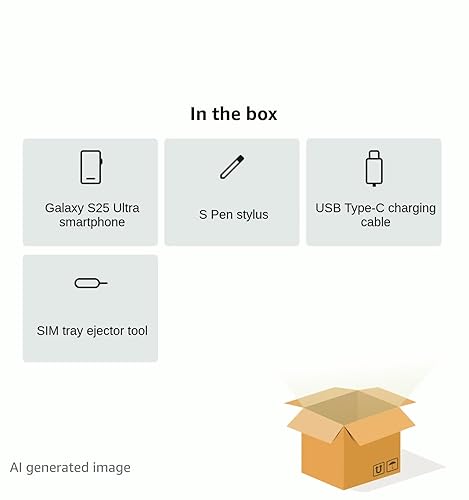
  • Includes a stylus
    This smartphone includes a stylus, the average smartphone does not. 1.4% of smartphones come with a stylus.
  • 1 year/s newer release date
    This smartphone has a newer release date than the average smartphone (2025 vs 2024). 1.00% of smartphones are released annually.
    February 2025
    2025 vs 2024
  • Better IP rating
    This smartphone has a better IP rating than the average smartphone (IP68 vs IP67). The average IP rating is IP67.
    IP68 vs IP67
  • No live text recognition
    This smartphone does not support live text recognition, the average smartphone does. 50.9% of smartphones offer real-time text recognition.
  • No memory card slot
    This smartphone does not have a memory card slot, the average smartphone does. 53.5% of smartphones feature expandable storage.
  • 0.2 µm smaller main camera pixel size
    This smartphone has a smaller main camera pixel size than the average smartphone (0.6 µm vs 0.8 µm). The average smartphone has a pixel size of 0.8 µm.
    2.4 binned
    0.6 µm vs 0.8 µm
  • 3.54x more expensive
    Samsung Galaxy S25 Ultra 5G (12GB + 512GB) is more expensive than the average smartphone (£920 vs £260).
    £920 vs £260
  • 11.1% heavier
    This smartphone is heavier than the average smartphone (218 g vs 196.2 g). The average smartphone weighs 196.2 g.
    218 g vs 196.2 g
  • Lower front camera megapixels
    This smartphone has lower front camera megapixels than the average smartphone (12 MP vs 16 MP). The average smartphone has a 16 MP front camera.
    12 MP vs 16 MP
  • 1.6 mm wider
    This smartphone is wider than the average smartphone (77.6 mm vs 76 mm). The average smartphone has a width of 76 mm.
    77.6 mm vs 76 mm
  • Poor brand origin
    This smartphone has a poorer brand origin compared to the average smartphone. 0.00% of smartphones come from top-tier brand origins.
    South Korea vs China
  • 3.54x more expensive
    Samsung Galaxy S25 Ultra 5G (12GB + 512GB) is more expensive than the average smartphone (£920 vs £260).
    £920 vs £260
  • No live text recognition
    This smartphone does not support live text recognition, the average smartphone does. 50.9% of smartphones offer real-time text recognition.
  • 0.2 µm smaller main camera pixel size
    This smartphone has a smaller main camera pixel size than the average smartphone (0.6 µm vs 0.8 µm). The average smartphone has a pixel size of 0.8 µm.
    2.4 binned
    0.6 µm vs 0.8 µm
  • Lower front camera megapixels
    This smartphone has lower front camera megapixels than the average smartphone (12 MP vs 16 MP). The average smartphone has a 16 MP front camera.
    12 MP vs 16 MP
  • No memory card slot
    This smartphone does not have a memory card slot, the average smartphone does. 53.5% of smartphones feature expandable storage.
  • 10% slower reverse wireless charging speed
    This smartphone has a slower reverse wireless charging speed than the average smartphone (4.5 W vs 5 W). The average smartphone speed is 5 W.
    4.5 W vs 5 W
  • 11.1% heavier
    This smartphone is heavier than the average smartphone (218 g vs 196.2 g). The average smartphone weighs 196.2 g.
    218 g vs 196.2 g
  • 1.6 mm wider
    This smartphone is wider than the average smartphone (77.6 mm vs 76 mm). The average smartphone has a width of 76 mm.
    77.6 mm vs 76 mm
  • Poor brand origin
    This smartphone has a poorer brand origin compared to the average smartphone. 0.00% of smartphones come from top-tier brand origins.
    South Korea vs China

Video reviews

Hands-on testing, unboxing, and real-world video evaluations

Expert reviews

In-depth analysis and verdict from leading tech publications

D
dxomark.com
25/06/2025
Summary of the review
P
petematheson.com
09/09/2025
Summary of the review
F
forbes.com
24/02/2025
Summary of the review
G
gizmodo.com
31/01/2025
Summary of the review
M
mashable.com
02/02/2026
Summary of the review
P
phonearena.com
31/12/2025
Summary of the review
B
businessinsider.com
02/02/2026
Summary of the review
P
pcmag.com
02/02/2026
Summary of the review
D
dxomark.com
01/03/2025
Summary of the review
A
androidcentral.com
12/06/2025
Summary of the review
E
engadget.com
30/01/2025
Summary of the review
T
tomsguide.com
03/09/2025
Summary of the review
C
cnet.com
13/11/2025
Summary of the review
Z
zdnet.fr
04/02/2025
Summary of the review
L
lesnumeriques.com
03/02/2025
Summary of the review
F
frandroid.com
03/02/2026
Summary of the review
L
leclaireur.fnac.com
28/03/2025
Summary of the review
0
01net.com
30/01/2025
Summary of the review
F
frandroid.com
07/01/2026
Summary of the review
0
01net.com
07/01/2026
Summary of the review

Third-party reviews

Based on ratings from across the web.
Reviews last updated: August 2026 · How we calculate this

What we like about Samsung Galaxy S25 Ultra 5G (12GB + 512GB)

  • Class-leading performance powered by a custom Snapdragon 8 Elite chip, which handles gaming and multitasking with ease.
  • Excellent camera system, with a highly versatile 200MP main sensor and improved zoom capabilities that produce bright, detailed images and videos.
  • Stunning 6.9-inch display praised as potentially the best on any phone, featuring high brightness, an anti-reflective coating, and smooth 120Hz refresh rate.
  • Deeply integrated and genuinely useful AI features, such as the 'Audio Eraser' for background noise reduction in videos and multi-tasking voice commands.
  • Long battery life that reliably lasts a full day, and for many users, well into a second day on a single charge.
  • Improved design that is lighter and more comfortable to hold compared to previous models, with a durable titanium frame and Gorilla Armor 2 glass.
  • The integrated S Pen stylus adds significant versatility for productivity and creative tasks.
  • Samsung promises seven years of OS upgrades and security patches, making it a future-proof investment.
  • Very good call quality and loud, clear speakerphone audio.

What we don't like about Samsung Galaxy S25 Ultra 5G (12GB + 512GB)

  • Premium price point (around $1,300), which many feel is too expensive, especially given the smaller S25 and S25+ models offer similar core functionality for less.
  • Incremental upgrades over its immediate predecessor, the Galaxy S24 Ultra, making it a less compelling upgrade for current S24 or even S23 owners.
  • The S Pen no longer has Bluetooth connectivity, meaning it cannot be used for wireless 'Air Actions' or as a remote camera shutter.
  • Qi2 wireless charging support requires purchasing a compatible magnetic case, as the magnets are not built into the phone itself.
  • The overall design is considered somewhat boring or unexciting by some reviewers, lacking character compared to older, more distinct Galaxy Note designs.
  • While general performance is excellent, some specific tasks like video transcoding can be slower than rival phones (e.g., iPhone 16 Pro Max).
  • The screen, while vibrant, may be less scratch-resistant than the previous model, according to some third-party tests.

Verdict

The Samsung Galaxy S25 Ultra (12GB + 512GB) is a top-tier Android flagship featuring a durable titanium frame and anti-reflective 6.9-inch QHD+ Dynamic AMOLED 2X display with a 120Hz refresh rate. Powered by the custom Qualcomm Snapdragon 8 Elite for Galaxy processor and running Android 15 with One UI 7, it delivers blistering performance for gaming and multitasking, enhanced by advanced Galaxy AI features and a 5,000 mAh battery with excellent all-day life. Its standout quad-camera system, including a 200MP main sensor, 50MP ultrawide, and dual telephoto lenses, captures impressive detail and low-light video (up to 8K), complemented by an integrated S Pen stylus for productivity. Pros include its exceptional display, powerful performance, versatile camera with excellent zoom and AI editing, durable build, and promised 7 years of OS updates; however, cons include a high premium price, the removal of the S Pen's Bluetooth remote functionality, and some user reports of the new display being less scratch-resistant than its predecessor.

Compare Samsung Galaxy S25 Ultra 5G (12GB + 512GB) with other smartphones

1Product to compare no. 1
VS
2Product to compare no. 2
VS
3Product to compare no. 3 (optional)

Graphic comparison of Samsung Galaxy S25 Ultra 5G (12GB + 512GB) and other smartphones

No results found