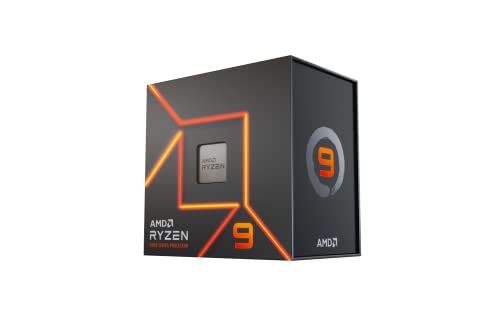
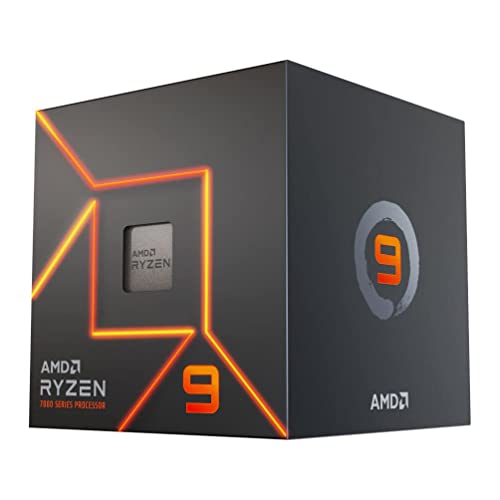
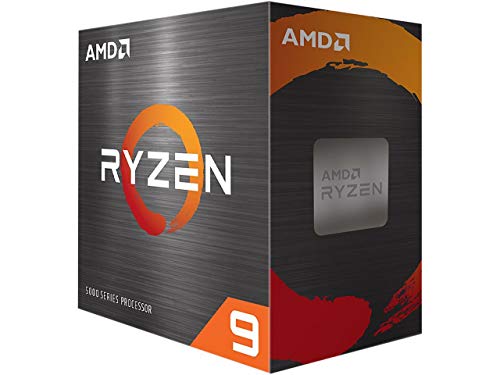
AMD Ryzen 9 7900X Review | 78 Data compared

double-arrow
  • Avg. price in UK: ~£260
  • Avg. price in US: ~$310
  • PassMark benchmark result: 51283
  • N. of physical cores: 12
  • CPU boost clock speed: 5.6 GHz

AMD Ryzen 9 7900X review. Compare 78 technical specifications and user reviews to see how it ranks among processors and if it is worth buying.

8.2

Overall score

What it is: An overall evaluation of the processor's quality, based on technical analyses and user reviews.

When it matters: When you need a quick reference to identify the best processors on the market.

Score components:

90.0%

8.0

Technical Score

10.0%

9.6

User score

Excellent
8.0

Technical Score

What it is: An assessment of the processor's technical performance, covering key areas such as processing performance, core configuration, efficiency, platform support, integrated features, and thermal behavior.

When it matters: When you want to compare processors based on technical performance and available features.

Score components:

60.0%

8.2

Performance

18.0%

8.7

Cache & Architecture

10.0%

8.7

Memory & PCIe

7.0%

3.2

Power & Thermal

4.0%

8.8

Platform

1.0%

7.7

Integrated Graphics

Excellent
9.6

User score

What it is: A rating that combines user reviews and the total number of reviews received by the processor.

When it matters: When you want to know how a processor performs in real workloads and how reliable it is for gaming, productivity, and efficiency according to user feedback.

Score components:

70.0%

9.4

User reviews

30.0%

10

Popularity

User score:
United Kingdom
amazon
4.7
(2536)

(Reviews last updated: May 2026)

Exceptional
  • 8.6
    Gaming

    Score components:

    30.0%

    8.2

    PassMark single-core benchmark score

    25.0%

    8.6

    Geekbench 6 single-core benchmark score

    20.0%

    9.4

    CPU boost clock speed

    17.0%

    10

    L3 cache

    8.0%

    5.1

    N. of physical cores

  • 7.7
    Video editing

    Score components:

    45.0%

    8.1

    Geekbench 6 multi-core benchmark score

    20.0%

    5.1

    N. of physical cores

    20.0%

    7.6

    CPU threads

    15.0%

    10

    L3 cache

  • amd-ryzen-9-7900x
amd-ryzen-9-7900x

Best prices in UK

Best rankings

?

Available: ranking among products currently available (including other versions of this product).
All: ranking among all products in the database.

Verdict

The AMD Ryzen 9 7900X is a high-performance Zen 4 desktop processor featuring 12 cores, 24 threads, a 4.7 GHz base clock, and a 5.6 GHz max boost frequency. Built on a 5nm process for the AM5 socket, it includes 76MB of total cache (64MB L3), supports DDR5-5200 memory, and provides 28 PCIe 5.0 lanes alongside integrated Radeon graphics. Its primary strengths are exceptional multi-threaded productivity for 4K video editing or rendering and strong single-core gaming performance with future-proof platform longevity. However, it lacks a bundled cooler, has a high 170W TDP that leads to significant heat (up to 95°C) requiring premium cooling, and faces stiff competition from cheaper alternatives that offer similar gaming results.

Technical Specifications of processor AMD Ryzen 9 7900X

Technical Score

What it is: An assessment of the processor's technical performance, covering key areas such as processing performance, core configuration, efficiency, platform support, integrated features, and thermal behavior.

When it matters: When you want to compare processors based on technical performance and available features.

Score components:

60.0%

8.2

Performance

18.0%

8.7

Cache & Architecture

10.0%

8.7

Memory & PCIe

7.0%

3.2

Power & Thermal

4.0%

8.8

Platform

1.0%

7.7

Integrated Graphics

8.0
AMD Ryzen 9 7900X has a technical score of 8.01 points, which is higher than that of 95.7% of products in this category.
User score

What it is: A rating that combines user reviews and the total number of reviews received by the processor.

When it matters: When you want to know how a processor performs in real workloads and how reliable it is for gaming, productivity, and efficiency according to user feedback.

Score components:

70.0%

9.4

User reviews

30.0%

10

Popularity

User score:
United Kingdom
amazon
4.7
(2536)

(Reviews last updated: May 2026)

9.6
AMD Ryzen 9 7900X has a user score of 9.58 points, which is higher than that of 96.7% of products in this category.
Popularity
What it is: An indicator based on the number of reviews received by the processor.
When it matters: When you prefer to choose a processor reviewed and selected by many other buyers.
10
AMD Ryzen 9 7900X has a popularity of 10 points, which is higher than 88.3% of products in this category.
Ratio quality/price

What it is: An indicator that combines the processor's overall rating with its cost.

When it matters: When you are looking for a processor with a good balance between performance, efficiency, and price.

Score components:

60.0%

8.2

Overall score

40.0%

9.2

Price

8.5
AMD Ryzen 9 7900X has a quality-to-price ratio of 8.5 points, which is higher than 99.4% of products in this category.
Brand name
What it is: The manufacturer or brand of the product.
When it matters: When you prefer a specific ecosystem, support network, or design philosophy.

Importance: MEDIUM

AMD
Processor type
What it is: The kind of system the processor is built for, such as desktop PCs, laptops, workstations, or servers.
When it matters: When you want a processor meant for the kind of machine you are actually building or buying, rather than a chip aimed at a different class of system.

Importance: HIGH

desktop
AMD Ryzen 9 7900X belongs to the desktop processor class, which is more advanced than that of 56% of processors and equal to that of 37.9% of processors.
CPU socket
What it is: The physical socket the processor fits into on the motherboard.
When it matters: When you need to make sure the CPU can actually be installed on a specific motherboard.

Importance: HIGH

AM5
AMD Ryzen 9 7900X uses the AM5 CPU socket, which is newer than that of 95.7% of processors and equal to that of 2.7% of processors.
Chipset
What it is: The motherboard chipset families officially meant to work with the processor.
When it matters: When you are checking whether a CPU will work with the motherboard features and platform you plan to use.

Importance: HIGH

X870E, X870, B850, B840, X670E, X670, B650E, B650, A620
AMD Ryzen 9 7900X supports X870E, X870, B850, B840, X670E, X670, B650E, B650, A620 chipsets, which is broader compatibility than 91.8% of processors and equal to that of 3.4% of processors.
CPU architecture
What it is: The processor family or design generation behind the chip, such as Zen 4 or Raptor Lake.
When it matters: When you are comparing CPUs across generations and want a clearer sense of their design age, feature level, and expected performance class.

Importance: HIGH

x86-64
AMD Ryzen 9 7900X uses the x86-64 architecture, which is more advanced than that of 1.7% of processors and equal to that of 98.3% of processors.
Show more
N. of physical cores
What it is: The number of physical CPU cores on the processor.
When it matters: When you run workloads that benefit from more real cores.

Importance: HIGH

Good value: 8+

12
AMD Ryzen 9 7900X has 12 CPU cores, which is more than 81.5% of processors and equal to 5.5% of processors.
CPU threads
What it is: The total number of processing threads the CPU can handle at once.
When it matters: When you run heavily threaded workloads or multitask a lot.

Importance: HIGH

Good value: 16+

24
AMD Ryzen 9 7900X offers 24 CPU threads, which is more than 90.3% of processors and equal to 4% of processors.
Threads per core
What it is: The number of threads each physical core can handle at once.
When it matters: When you want to understand how much thread-level parallelism each core can provide in multitasking or heavily threaded work.

Importance: MEDIUM

Good value: 2

2
AMD Ryzen 9 7900X offers 2 threads per core, which is more than 30.4% of processors and equal to 69.6% of processors.
CPU boost clock speed
What it is: The highest clock speed the processor can reach under boost conditions.
When it matters: When you care about peak speed in short bursts.

Importance: HIGH

Good value: >4.7 GHz

5.6 GHz
AMD Ryzen 9 7900X reaches a boost clock of 5.6 GHz which is higher than that of 98.3% of processors and equal to that of 0.7% of processors.
CPU base clock speed
What it is: The processor's normal all-core starting frequency before boost behavior raises clocks temporarily.
When it matters: When you care about steadier performance in longer workloads rather than short burst speed alone.

Importance: MEDIUM

12 x 4.7 GHz
AMD Ryzen 9 7900X has a base clock of 12x4.7 GHz which is equal to that of 100% of processors.
Show more
Semiconductor size
What it is: The manufacturing process node used to produce the processor, usually expressed in nanometers.
When it matters: When efficiency, heat, and the relative modernity of the chip-making process matter to your comparison.

Importance: HIGH

Good value: <10 nm

5 nm
AMD Ryzen 9 7900X uses a 5 nm process node, which is more advanced than that of 85.1% of processors and equal to that of 3.2% of processors.
Foundry
What it is: The semiconductor manufacturer that physically fabricates the processor chip.
When it matters: When process source, manufacturing generation, or foundry differences matter to your comparison more than day-to-day performance alone.

Importance: MEDIUM

TSMC 5 nm
AMD Ryzen 9 7900X is built on the TSMC 5 nm foundry process, which is more advanced than that of 83.7% of processors and equal to that of 3.2% of processors.
L3 cache
What it is: The total amount of L3 cache available on the processor.
When it matters: When you want better performance in cache-sensitive workloads and games.

Importance: MEDIUM

Good value: >=16 MB

64 MB
AMD Ryzen 9 7900X has an L3 cache of 64 MB which is larger than that of 94.6% of processors and equal to that of 2.8% of processors.
L2 cache
What it is: The total amount of L2 cache available across the processor.
When it matters: When you want to compare CPU design efficiency and how much fast intermediate cache the cores have available.

Importance: MEDIUM

Good value: >=6 MB

12 MB
AMD Ryzen 9 7900X has an L2 cache of 12 MB which is larger than that of 84.8% of processors and equal to that of 2.7% of processors.
L1 cache
What it is: The total amount of L1 cache built into the processor, which sits closest to the cores.
When it matters: When you are comparing low-level CPU design details rather than the broader performance picture buyers usually notice first.

Importance: MEDIUM

Good value: >=512 KB

768 KB
AMD Ryzen 9 7900X has an L1 cache of 768 KB which is larger than that of 78.2% of processors and equal to that of 3.4% of processors.
Show more
DDR memory version
What it is: The RAM generation the processor is designed to support, such as DDR4 or DDR5.
When it matters: When you need the CPU to match the kind of memory platform you want to buy or reuse.

Importance: MEDIUM

Good value: DDR5

DDR5
AMD Ryzen 9 7900X supports DDR DDR5, which is newer than that of 66.4% of processors and equal to that of 12.6% of processors.
Maximum memory speed
What it is: The highest official memory speed supported by the processor.
When it matters: When you choose RAM and want to know the supported speed ceiling.

Importance: HIGH

Good value: >=4800 MHz

5,200 MHz
AMD Ryzen 9 7900X supports memory speeds up to 5,200 MHz, which is higher than that of 72.1% of processors and equal to 7% of processors.
Max memory speed (JEDEC)
What it is: The highest official RAM speed the processor supports under standard JEDEC settings, before any memory overclocking profiles are applied.
When it matters: When officially supported stock RAM speed matters more than XMP, EXPO, or manual memory tuning.

Importance: MEDIUM

Good value: >=5600 MHz

DDR5-5200 MHz
AMD Ryzen 9 7900X supports JEDEC memory speeds up to DDR5-5200 MHz, which is higher than that of 74.1% of processors and equal to 5.2% of processors.
Max memory speed (XMP / EXPO)
What it is: The highest memory speed supported through XMP or EXPO profiles.
When it matters: When you want faster RAM through memory profiles.

Importance: MEDIUM

Good value: >=5200 MHz

6,000 MHz
AMD Ryzen 9 7900X supports XMP/EXPO memory speeds up to 6,000 MHz, which is higher than that of 97.1% of processors and equal to 0.1% of processors.
Maximum memory capacity
What it is: The largest total amount of memory officially supported by the processor.
When it matters: When you plan a system with very large RAM capacity.

Importance: HIGH

Good value: >=128 GB

128 GB
AMD Ryzen 9 7900X supports up to 128 GB of memory, which is more than 61.9% of processors and equal to 21.4% of processors.
Show more
Integrated graphics
What it is: Includes built-in graphics, so the system can output video without a separate graphics card.
When it matters: When you want the PC to work without a dedicated GPU, or you are building an office, media, compact, or troubleshooting-friendly system.

Importance: HIGH

yes
AMD Ryzen 9 7900X includes integrated graphics. 87.6% of processors include integrated graphics.
Integrated GPU model
What it is: The model name of the integrated graphics processor, if present.
When it matters: When you plan to use the CPU's built-in graphics.

Importance: MEDIUM

AMD Radeon Graphics
AMD Ryzen 9 7900X uses the AMD Radeon Graphics integrated GPU, which is more advanced than that in 87.8% of processors and equal to that in 1.4% of processors.
Integrated GPU execution units
What it is: The number of execution units available in the integrated graphics part of the processor.
When it matters: When you plan to rely on built-in graphics and want a better sense of its light gaming, display, or media capability.

Importance: MEDIUM

Good value: >=24

2
AMD Ryzen 9 7900X has 2 GPU execution units, which is fewer than 95.6% of processors and equal to 4.4% of processors.
Integrated GPU base frequency
What it is: The base operating frequency of the integrated GPU.
When it matters: When integrated graphics performance matters to you.

Importance: MEDIUM

Good value: >=350 MHz

400 MHz
AMD Ryzen 9 7900X has an integrated GPU clock of 400 MHz which is higher than that of 73.3% of processors and equal to that of 8% of processors.
Integrated media encoders/decoders
What it is: The hardware media formats the processor can encode or decode directly.
When it matters: When you stream, edit video, or rely on hardware media acceleration.

Importance: LOW

H.264 (HW decode/encode), H.265 (HW decode/encode), VP9 (HW decode), AV1 (HW decode)
AMD Ryzen 9 7900X supports H.264 (HW decode/encode), H.265 (HW decode/encode), VP9 (HW decode), AV1 (HW decode) media codecs, which is broader support than 81.6% of processors and equal to 3.2% of processors.
Show more
TDP (Thermal design power)
What it is: The rated thermal design power, which gives a general idea of cooling and power needs.
When it matters: When you choose a cooler or build in a tighter case.

Importance: HIGH

Good value: <30 W

170 W
AMD Ryzen 9 7900X has a TDP of 170 W which is higher than that of 97% of processors and equal to that of 0.2% of processors.
Base power (PL1)
What it is: The sustained power target used for longer CPU loads.
When it matters: When you choose cooling and power delivery for sustained workloads.

Importance: MEDIUM

Good value: <30 W

170 W
AMD Ryzen 9 7900X has a base power of 170 W which is higher than that of 96.9% of processors and equal to that of 0.2% of processors.
Boost power (PL2)
What it is: The short-term boost power limit the processor may draw under heavier turbo loads.
When it matters: When you size cooling and power delivery for peak turbo behavior.

Importance: MEDIUM

Good value: <50 W

230 W
AMD Ryzen 9 7900X has a boost power of 230 W which is higher than that of 95.4% of processors and equal to that of 0.4% of processors.
Tau (power duration limit)
What it is: The time limit the CPU can stay at higher boost power before dropping toward sustained power.
When it matters: When you want to understand turbo behavior under longer loads.

Importance: MEDIUM

Good value: <=28 s

N/A
Configurable TDP
What it is: Allows the processor to run in alternate power modes instead of being fixed to one default TDP target.
When it matters: When you want more control over heat, noise, and power draw in compact systems, quieter builds, or thermally limited machines.

Importance: LOW

yes
AMD Ryzen 9 7900X supports configurable TDP. 52.9% of processors support configurable TDP.
Show more

AMD Ryzen 9 7900X vs the average processor

  • 4.16x better multi-core performance
    AMD Ryzen 9 7900X has a higher multi-core performance than the average processor (11,572 vs 2,783). The average processor scores 2,783 in Cinebench R20 multi-core.
    What it is: A Cinebench R20 score that reflects how well the processor handles long, heavy rendering workloads across many cores.
    When it matters: When you care about sustained multi-core performance in rendering, compiling, heavy creation work, or productivity workloads that use many threads.

    Importance: HIGH

    Good value: >4700

    AMD Ryzen 9 7900X has a higher multi-core performance than the average processor (11,572 vs 2,783). The average processor scores 2,783 in Cinebench R20 multi-core.11,572 vs 2,783
  • 4.87x higher PassMark score
    AMD Ryzen 9 7900X has a higher PassMark benchmark score than the average processor (51,283 vs 10,532.5). The average processor scores 10,532.5 in PassMark benchmark.
    What it is: A benchmark score that gives a broad idea of overall processor performance.
    When it matters: When you want a quick overall performance comparison.

    Importance: HIGH

    Good value: >19000

    AMD Ryzen 9 7900X has a higher PassMark benchmark score than the average processor (51,283 vs 10,532.5). The average processor scores 10,532.5 in PassMark benchmark.51,283 vs 10,532.5
  • 3.8x higher multi-core score
    AMD Ryzen 9 7900X has a higher Geekbench 6 multi-core score than the average processor (18,235 vs 4,793). The average processor scores 4,793 in Geekbench 6 multi-core.
    What it is: A Geekbench 6 score that reflects multi-core CPU performance in mixed modern workloads.
    When it matters: When you want a quick picture of multi-core speed in everyday mixed workloads, multitasking, and broadly optimized software.

    Importance: HIGH

    Good value: >8500

    AMD Ryzen 9 7900X has a higher Geekbench 6 multi-core score than the average processor (18,235 vs 4,793). The average processor scores 4,793 in Geekbench 6 multi-core.18,235 vs 4,793
  • 2x higher single-core score
    AMD Ryzen 9 7900X has a higher Geekbench 6 single-core score than the average processor (2,944 vs 1,471). The average processor scores 1,471 in Geekbench 6 single-core.
    What it is: A Geekbench 6 score that reflects single-core CPU performance in mixed modern workloads.
    When it matters: When you care about snappy everyday performance in lighter apps, browsing, office work, or tasks that do not scale well across many cores.

    Importance: HIGH

    Good value: >2000

    AMD Ryzen 9 7900X has a higher Geekbench 6 single-core score than the average processor (2,944 vs 1,471). The average processor scores 1,471 in Geekbench 6 single-core.2,944 vs 1,471
  • 70.3% better single-core performance
    AMD Ryzen 9 7900X has a higher PassMark single-core score than the average processor (4,229 vs 2,483). The average processor scores 2,483 in PassMark single-core.
    What it is: A benchmark score that reflects single-core CPU performance.
    When it matters: When you care about responsiveness in lighter or older software.

    Importance: HIGH

    Good value: >3200

    AMD Ryzen 9 7900X has a higher PassMark single-core score than the average processor (4,229 vs 2,483). The average processor scores 2,483 in PassMark single-core.4,229 vs 2,483
  • 30.2% higher boost clock
    AMD Ryzen 9 7900X has a higher boost clock speed than the average processor (5.6 GHz vs 4.3 GHz). The average processor reaches boost clock speed of 4.3 GHz.
    What it is: The highest clock speed the processor can reach under boost conditions.
    When it matters: When you care about peak speed in short bursts.

    Importance: HIGH

    Good value: >4.7 GHz

    AMD Ryzen 9 7900X has a higher boost clock speed than the average processor (5.6 GHz vs 4.3 GHz). The average processor reaches boost clock speed of 4.3 GHz.5.6 GHz vs 4.3 GHz
  • 8x larger L3 cache
    AMD Ryzen 9 7900X has a higher L3 cache than the average processor (64 MB vs 8 MB). The average processor has L3 cache of 8 MB.
    What it is: The total amount of L3 cache available on the processor.
    When it matters: When you want better performance in cache-sensitive workloads and games.

    Importance: MEDIUM

    Good value: >=16 MB

    AMD Ryzen 9 7900X has a higher L3 cache than the average processor (64 MB vs 8 MB). The average processor has L3 cache of 8 MB.64 MB vs 8 MB
  • 16 more CPU threads
    AMD Ryzen 9 7900X has more CPU threads than the average processor (24 vs 8). The average processor has 8 CPU threads.
    What it is: The total number of processing threads the CPU can handle at once.
    When it matters: When you run heavily threaded workloads or multitask a lot.

    Importance: HIGH

    Good value: 16+

    AMD Ryzen 9 7900X has more CPU threads than the average processor (24 vs 8). The average processor has 8 CPU threads.24 vs 8
  • Modern CPU socket
    AMD Ryzen 9 7900X uses a more modern CPU socket than the average processor (AM5 vs FP2).
  • Broader instruction support
    AMD Ryzen 9 7900X supports a broader instruction set than the average processor (MMX, SSE, SSE2, SSE3, SSSE3, SSE4A, SSE4.1, SSE4.2, AVX, AVX2, AVX-512, F16C, FMA3, AES, SHA, AMD-V vs MMX, SSE, SSE2, SSE3, SSSE3, SSE4A, SSE4.1, SSE4.2, AVX, AVX2, F16C, FMA3, AES, SHA).
  • Advanced security extensions
    AMD Ryzen 9 7900X provides more advanced security extensions than the average processor (AES-NI, SHA, Secure Processor, Shadow Stack, SME, SEV vs AES-NI, NX bit, Secure Processor).
  • 4.16x better multi-core performance
    AMD Ryzen 9 7900X has a higher multi-core performance than the average processor (11,572 vs 2,783). The average processor scores 2,783 in Cinebench R20 multi-core.
  • 4.87x higher PassMark score
    AMD Ryzen 9 7900X has a higher PassMark benchmark score than the average processor (51,283 vs 10,532.5). The average processor scores 10,532.5 in PassMark benchmark.
  • 3.8x higher multi-core score
    AMD Ryzen 9 7900X has a higher Geekbench 6 multi-core score than the average processor (18,235 vs 4,793). The average processor scores 4,793 in Geekbench 6 multi-core.
  • 2x higher single-core score
    AMD Ryzen 9 7900X has a higher Geekbench 6 single-core score than the average processor (2,944 vs 1,471). The average processor scores 1,471 in Geekbench 6 single-core.
  • 70.3% better single-core performance
    AMD Ryzen 9 7900X has a higher PassMark single-core score than the average processor (4,229 vs 2,483). The average processor scores 2,483 in PassMark single-core.
  • 30.2% higher boost clock
    AMD Ryzen 9 7900X has a higher boost clock speed than the average processor (5.6 GHz vs 4.3 GHz). The average processor reaches boost clock speed of 4.3 GHz.
  • 16 more CPU threads
    AMD Ryzen 9 7900X has more CPU threads than the average processor (24 vs 8). The average processor has 8 CPU threads.
  • 59.1% higher Cinebench R20 single-core score
    AMD Ryzen 9 7900X has a higher Cinebench R20 single-core score than the average processor (770 vs 484). The average processor scores 484 in Cinebench R20 single-core.
  • 6 more CPU cores
    AMD Ryzen 9 7900X has more CPU cores than the average processor (12 vs 6). The average processor has 6 CPU cores.
  • Unlocked for overclocking
    AMD Ryzen 9 7900X has an unlocked multiplier, the average processor does not.
  • 22.3% faster Blender rendering
    AMD Ryzen 9 7900X has a lower Blender BMW27 render time than the average processor (406 vs 331.88). The average processor needs 331.88 for the Blender BMW27 test.
  • 19 higher clock multiplier
    AMD Ryzen 9 7900X has a higher clock multiplier than the average processor (47 vs 28). The average processor has a clock multiplier of 28.
  • 8x larger L3 cache
    AMD Ryzen 9 7900X has a higher L3 cache than the average processor (64 MB vs 8 MB). The average processor has L3 cache of 8 MB.
  • 4.8x larger L2 cache
    AMD Ryzen 9 7900X has a higher L2 cache than the average processor (12 MB vs 2.5 MB). The average processor has L2 cache of 2.5 MB.
  • 3.11x more L3 per core
    AMD Ryzen 9 7900X has more L3 cache per core than the average processor (5.3 MB/core vs 1.714 MB/core). The average processor provides 1.714 MB/core of L3 cache per core.
  • More advanced microarchitecture
    AMD Ryzen 9 7900X uses a more advanced microarchitecture than the average processor (Raphael vs Kaby Lake).
  • 58.3% smaller process node
    AMD Ryzen 9 7900X has a lower process node than the average processor (5 nm vs 12 nm). The average processor uses a process node of 12 nm.
  • More advanced foundry
    AMD Ryzen 9 7900X uses a more advanced foundry process than the average processor (TSMC 5 nm vs Intel 14 nm).
  • 2x more L2 per core
    AMD Ryzen 9 7900X has more L2 cache per core than the average processor (1 MB/core vs 0.5 MB/core). The average processor provides 0.5 MB/core of L2 cache per core.
  • 2x larger L1 cache
    AMD Ryzen 9 7900X has a higher L1 cache than the average processor (768 KB vs 384 KB). The average processor has L1 cache of 384 KB.
  • 2.65x more transistors
    AMD Ryzen 9 7900X has more transistors than the average processor (13.1 billion vs 4.95 billion). The average processor has 4.95 billion transistors.
  • 12 more PCIe lanes
    AMD Ryzen 9 7900X has more PCIe lanes than the average processor (28 vs 16). The average processor offers 16 PCIe lanes.
  • Newer PCIe version
    AMD Ryzen 9 7900X supports a newer PCIe version than the average processor (5 vs 3.0).
  • Supports memory overclocking
    AMD Ryzen 9 7900X supports memory overclocking, the average processor does not.
  • 81.7% higher memory bandwidth
    AMD Ryzen 9 7900X has a higher memory bandwidth than the average processor (83.2 GB/s vs 45.8 GB/s). The average processor offers memory bandwidth of 45.8 GB/s.
  • 77.3% higher memory speed
    AMD Ryzen 9 7900X has a higher maximum memory speed than the average processor (5,200 MHz vs 2,933 MHz). The average processor supports memory speed of 2,933 MHz.
  • Newer DDR support
    AMD Ryzen 9 7900X supports a newer DDR generation than the average processor (DDR5 vs DDR4).
  • 2x more memory capacity
    AMD Ryzen 9 7900X has more maximum memory capacity than the average processor (128 GB vs 64 GB). The average processor supports 64 GB of memory.
  • Supports ECC memory
    AMD Ryzen 9 7900X supports ECC memory, the average processor does not.
  • Flexible PCIe bifurcation
    AMD Ryzen 9 7900X supports more flexible PCIe bifurcation than the average processor (x16, x8/x8, x8/x4/x4, x4/x4/x4/x4 vs x16, x8/x8).
  • Higher JEDEC memory speed
    AMD Ryzen 9 7900X has a higher JEDEC memory speed than the average processor (DDR5-5200 MHz vs DDR4-3200 MHz). The average processor supports JEDEC memory speed of DDR4-3200 MHz.
  • Better integrated GPU
    AMD Ryzen 9 7900X uses a better integrated GPU than the average processor (AMD Radeon Graphics vs Intel UHD Graphics 630).
  • 1 more supported displays
    AMD Ryzen 9 7900X has more supported displays than the average processor (4 vs 3). The average processor supports 3 displays.
  • 5 °C lower CPU temperature
    AMD Ryzen 9 7900X has a lower CPU temperature than the average processor (95 °C vs 100 °C). The average processor runs at a CPU temperature of 100 °C.
  • Older TPM support
    AMD Ryzen 9 7900X supports an older TPM version than the average processor (fTPM 2.0 vs PTT 2.0).
  • 91.7% fewer GPU execution units
    AMD Ryzen 9 7900X has fewer GPU execution units than the average processor (2 vs 24). The average processor has 24 GPU execution units.
  • 3.59x higher boost power
    AMD Ryzen 9 7900X has a higher boost power draw than the average processor (230 W vs 64 W). The average processor has a boost power draw of 64 W.
  • 3.78x higher base power
    AMD Ryzen 9 7900X has a higher base power draw than the average processor (170 W vs 45 W). The average processor has a base power draw of 45 W.
  • 3.78x higher TDP
    AMD Ryzen 9 7900X has a higher TDP than the average processor (170 W vs 45 W). The average processor has a TDP of 45 W.
  • 5 °C lower TJ Max
    AMD Ryzen 9 7900X has a lower TJ Max than the average processor (95 °C vs 100 °C). The average processor has a TJ Max of 100 °C.
  • 3.59x higher boost power
    AMD Ryzen 9 7900X has a higher boost power draw than the average processor (230 W vs 64 W). The average processor has a boost power draw of 64 W.
    What it is: The short-term boost power limit the processor may draw under heavier turbo loads.
    When it matters: When you size cooling and power delivery for peak turbo behavior.

    Importance: MEDIUM

    Good value: <50 W

    AMD Ryzen 9 7900X has a higher boost power draw than the average processor (230 W vs 64 W). The average processor has a boost power draw of 64 W.230 W vs 64 W
  • 3.78x higher base power
    AMD Ryzen 9 7900X has a higher base power draw than the average processor (170 W vs 45 W). The average processor has a base power draw of 45 W.
    What it is: The sustained power target used for longer CPU loads.
    When it matters: When you choose cooling and power delivery for sustained workloads.

    Importance: MEDIUM

    Good value: <30 W

    AMD Ryzen 9 7900X has a higher base power draw than the average processor (170 W vs 45 W). The average processor has a base power draw of 45 W.170 W vs 45 W
  • 3.78x higher TDP
    AMD Ryzen 9 7900X has a higher TDP than the average processor (170 W vs 45 W). The average processor has a TDP of 45 W.
    What it is: The rated thermal design power, which gives a general idea of cooling and power needs.
    When it matters: When you choose a cooler or build in a tighter case.

    Importance: HIGH

    Good value: <30 W

    AMD Ryzen 9 7900X has a higher TDP than the average processor (170 W vs 45 W). The average processor has a TDP of 45 W.170 W vs 45 W
  • 5 °C lower TJ Max
    AMD Ryzen 9 7900X has a lower TJ Max than the average processor (95 °C vs 100 °C). The average processor has a TJ Max of 100 °C.
    What it is: The highest safe operating junction temperature before the CPU starts throttling or protecting itself.
    When it matters: When you tune cooling or monitor thermals under load.

    Importance: LOW

    Good value: >=100 °C

    AMD Ryzen 9 7900X has a lower TJ Max than the average processor (95 °C vs 100 °C). The average processor has a TJ Max of 100 °C.95 °C vs 100 °C
  • 91.7% fewer GPU execution units
    AMD Ryzen 9 7900X has fewer GPU execution units than the average processor (2 vs 24). The average processor has 24 GPU execution units.
    What it is: The number of execution units available in the integrated graphics part of the processor.
    When it matters: When you plan to rely on built-in graphics and want a better sense of its light gaming, display, or media capability.

    Importance: MEDIUM

    Good value: >=24

    AMD Ryzen 9 7900X has fewer GPU execution units than the average processor (2 vs 24). The average processor has 24 GPU execution units.2 vs 24
  • Older TPM support
    AMD Ryzen 9 7900X supports an older TPM version than the average processor (fTPM 2.0 vs PTT 2.0).
    What it is: The kind of TPM security support associated with the processor or its platform.
    When it matters: When operating-system requirements, device encryption, enterprise security, or platform trust features matter.

    Importance: LOW

    AMD Ryzen 9 7900X supports an older TPM version than the average processor (fTPM 2.0 vs PTT 2.0).fTPM 2.0 vs PTT 2.0

Graphic comparison of AMD Ryzen 9 7900X and other processors

Attribute category
Attribute
No results found

Third-party reviews

United Kingdom

(Reviews last updated: May 2026)

What customers like about AMD Ryzen 9 7900X?

  • Excellent multi-threaded performance, making it a powerhouse for professional content creation, video rendering, and 3D animation
  • Strong single-core performance and high boost clocks (up to 5.6GHz) that deliver a top-tier gaming experience
  • Future-proof AM5 platform with support for the latest technologies, including DDR5 memory and PCIe 5.0
  • Great value for mixed workloads, offering workstation-class performance at a significantly lower price than the flagship 7950X
  • Support for AVX-512 and AI instruction sets, which benefits specific professional software and emulation
  • Includes an integrated RDNA 2 GPU, which is useful for basic display output and troubleshooting

What customers dislike about AMD Ryzen 9 7900X?

  • Runs very hot under heavy loads, often reaching its 95°C target temperature by design, requiring high-end liquid cooling
  • High power consumption, with peak package power reaching up to 230W during intense multi-core tasks
  • No stock cooler included in the box, adding to the overall build cost for a necessary third-party solution
  • Diminishing returns for pure gaming, as cheaper 8-core or X3D models often provide similar or better gaming performance
  • Platform entry cost is high due to the mandatory requirement for more expensive DDR5 RAM and AM5 motherboards
  • Slightly awkward market positioning between the more affordable Ryzen 7 models and the significantly more powerful 7950X

Expert reviews

T
tweaktown.com
26/09/2022
Summary of the review
H
hwcooling.net
26/09/2022
Summary of the review
T
techspot.com
04/10/2022
Summary of the review
W
windowscentral.com
17/10/2022
Summary of the review
T
tomshardware.com
19/10/2022
Summary of the review
K
kitguru.net
23/11/2022
Summary of the review
H
hwbusters.com
20/01/2023
Summary of the review
P
pcmag.com
26/04/2023
Summary of the review
K
kitguru.net
23/11/2022
Summary of the review
T
thefpsreview.com
26/09/2022
Summary of the review
T
trustedreviews.com
26/09/2022
Summary of the review
V
vividrepairs.co.uk
21/01/2026
Summary of the review
P
pcgameshardware.de
08. Oktober 2022
Summary of the review
C
computerbase.de
26/09/2022
Summary of the review
C
chip.de
26/09/2022
Summary of the review
L
lesnumeriques.com
02/11/2022
Summary of the review
C
cowcotland.com
26/09/2022
Summary of the review
C
clubic.com
18/10/2022
Summary of the review
G
gameit.es
04/02/2023
Summary of the review
G
geeknetic.es
23 de noviembre de 2022
Summary of the review
P
profesionalreview.com
04/10/2022
Summary of the review
T
thegamesmachine.it
15/11/2022
Summary of the review

Video reviews

Compare AMD Ryzen 9 7900X with other processors

VS
VS

Compare