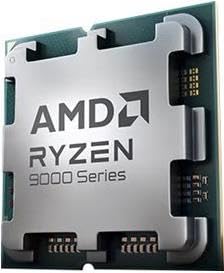
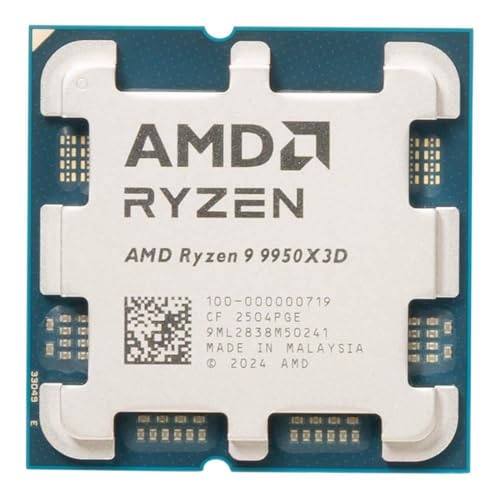
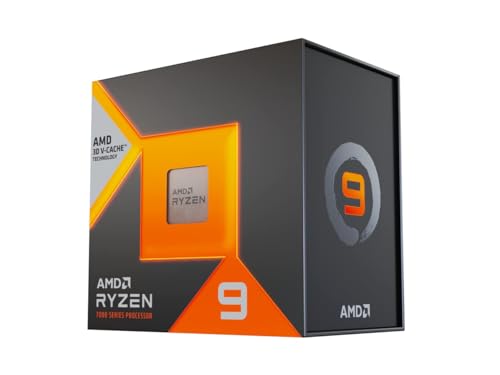
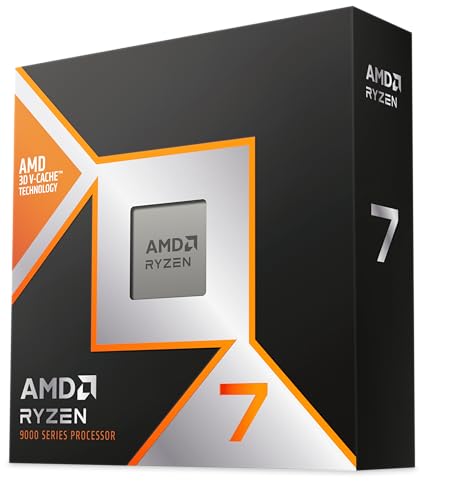
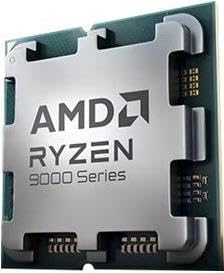
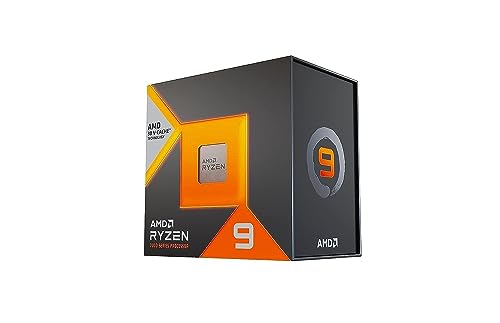
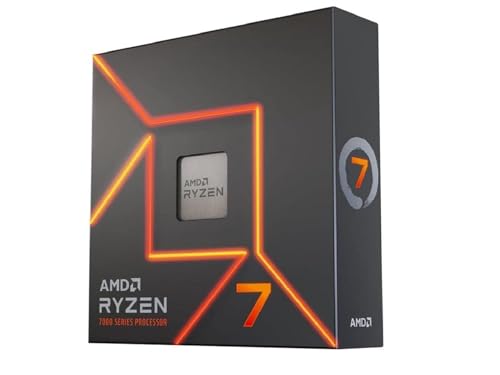
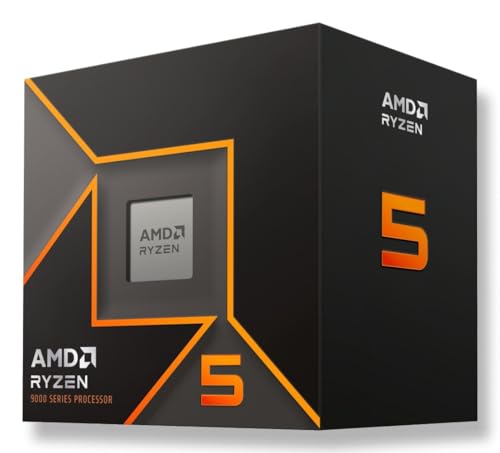
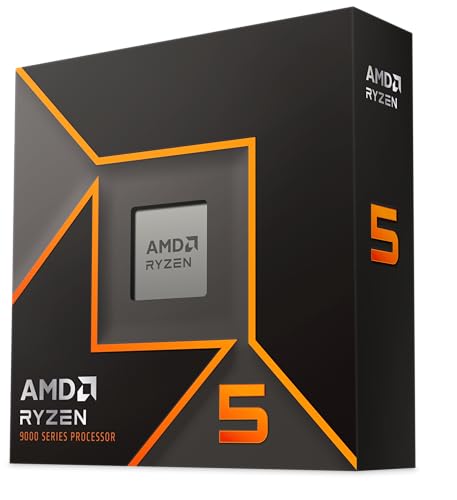
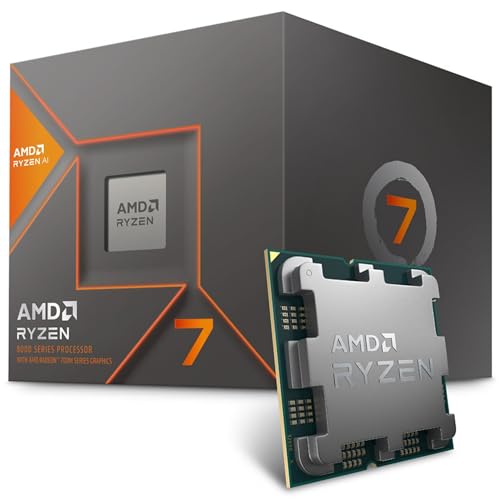
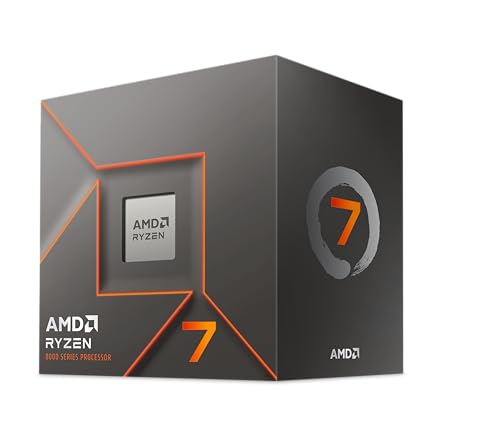
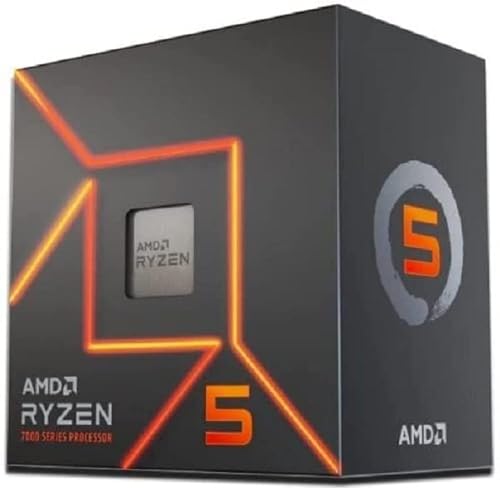
What are AMD AM5 processors?
AMD AM5 are processors that use the AM5 socket, which is the current desktop platform from AMD for Ryzen 7000 series and newer chips. They support DDR5 memory and PCIe 5.0, so they bring higher bandwidth for both RAM and graphics or storage devices.
The switch from AM4 to AM5 also introduced a new LGA design (1718 pins on the socket instead of pins on the CPU), which improves power delivery and durability.
The following chart compares the number of physical cores in AMD AM5 CPUs.
[vertical-chart-01907463311216958634093313828231906447512498915150]
What’s the difference between AM4 and AM5?
The difference between AM4 and AM5 is as follows:
Socket type: AM4 uses a PGA (pin grid array) socket with CPU pins on the processor, while AM5 uses an LGA (land grid array) socket with pins on the motherboard.
Memory support: AM4 supports DDR4 memory, while AM5 supports DDR5 memory which delivers higher bandwidth.
PCIe standard: AM4 supports PCIe 3.0 and 4.0 depending on the CPU, while AM5 supports PCIe 5.0 which doubles bandwidth over PCIe 4.0.
CPU compatibility: AM4 supports Ryzen processors from the first to the fifth generation, while AM5 supports Ryzen 7000 and newer CPUs.
Power and efficiency: AM5 has higher power delivery standards with support for more efficient performance scaling, while AM4 has lower power delivery limits.
Is AM5 good for gaming?
AM5 is good for gaming because it supports the latest Ryzen 7000 series CPUs, which reach high clock speeds and strong single-core performance. These traits are key in gaming workloads where frame rates depend heavily on single-thread efficiency. Games that scale well with multiple cores also benefit, since AM5 CPUs feature higher core and thread counts compared to older AM4 models.
The AM5 platform supports DDR5 memory and PCIe 5.0, which both improve gaming performance in the long term. DDR5 provides higher bandwidth for faster data access, while PCIe 5.0 gives space for future GPUs and storage drives with faster transfer rates.
The best AMD AM5 CPUs are as follows.
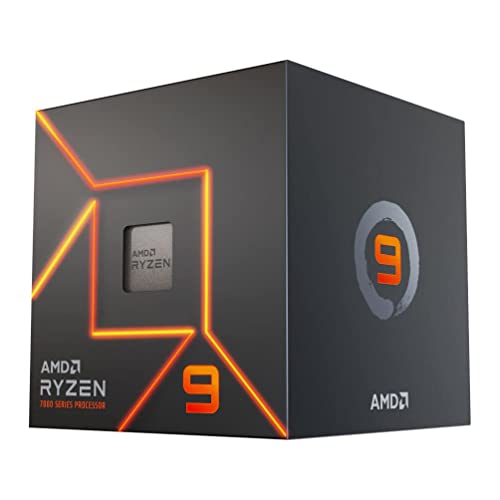
- AMD Ryzen 9 7900 (Overall score: 9.19 points)
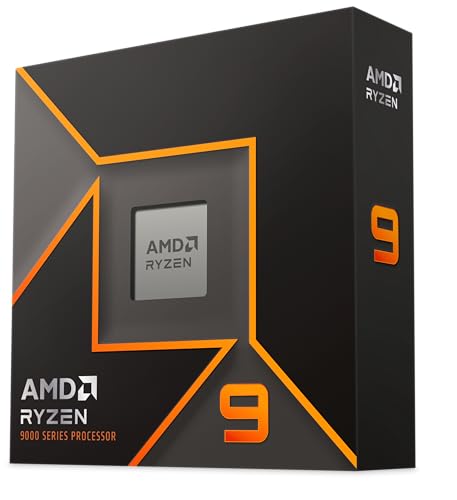
- AMD Ryzen 9 9900X (Overall score: 9.08 points)
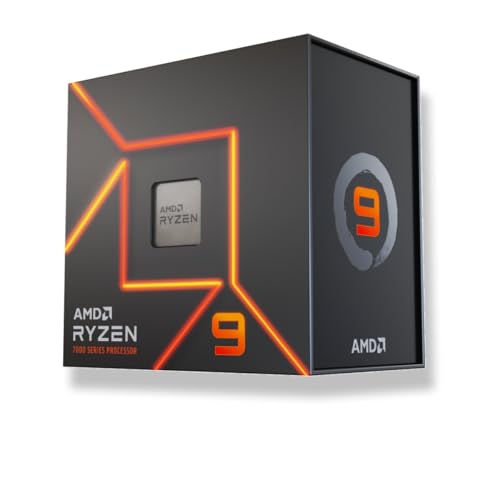
- AMD Ryzen 9 7950X (Overall score: 9.05 points)
How long will AMD support AM5?
AMD will support AM5 until at least 2027 and possibly longer. This means users who buy an AM5 motherboard today can expect several new CPU generations to work with the same platform.
AMD introduced AM5 in 2022 with Ryzen 7000 processors, and it has already been confirmed as the base for Ryzen 8000 and later series.
How much do AMD AM5 CPUs cost in 2025?
AMD AM5 CPUs in 2025 cost between £130 and £600 depending on the model and performance tier.
Entry-level processors such as Ryzen 5 models stay around £130-£220, while mainstream Ryzen 7 CPUs fall in the £260-£390 range. High-end Ryzen 9 models sit between £430 and £600, which places them directly against Intel’s 14th and 15th generation Core chips.
The chart below shows the price distribution of AMD AM5 CPUs.
[vertical-chart-10314578199274689601091461533973123336463025696783]
What should you consider while choosing the best AMD AM5 CPU?
When choosing the best AMD AM5 CPU, you should consider the following key factors:
- Core count and threading: The number of cores directly affects multitasking performance and productivity workloads. The Ryzen 9 7950X features 16 cores with 32 threads while Ryzen 5 models like the 7600X have 6 cores with 12 threads. Higher core counts benefit video editing, streaming, and professional applications, but gaming typically runs well on 6-8 cores.
- Clock speeds and architecture: Both base and boost frequencies determine single-threaded performance and responsiveness. The Ryzen 7000 series delivers up to 5.7 GHz boost clocks on the 7950X and uses the efficient Zen 4 architecture built on 5nm process technology. The architecture provides a claimed 13% increase in Instructions Per Clock (IPC) compared to previous generations, which translates to better performance per core.
- Target use case: Gaming processors like the 7800X3D use 3D V-Cache technology for superior gaming performance, while standard models like the 7900X and 7950X excel at productivity tasks. The 7600 series offers solid gaming performance at lower costs, making it suitable for budget-conscious gamers who don't need extreme multitasking capabilities.
- Memory and platform support: AM5 supports DDR5 memory exclusively with official recommendations of 6000 MT/s speeds. The platform also provides PCIe 5.0 support for future graphics cards and storage devices, along with USB4 connectivity on higher-end chipsets. These features provide better future-proofing compared to older AM4 systems.
- Power requirements and cooling: Higher-end models like the 7950X and 7900X have TDP ratings of 170W with peak power draw up to 230W. This requires robust cooling solutions and quality power supplies, while mid-range models like the 7600X consume less power and generate less heat, making them easier to cool in compact builds.