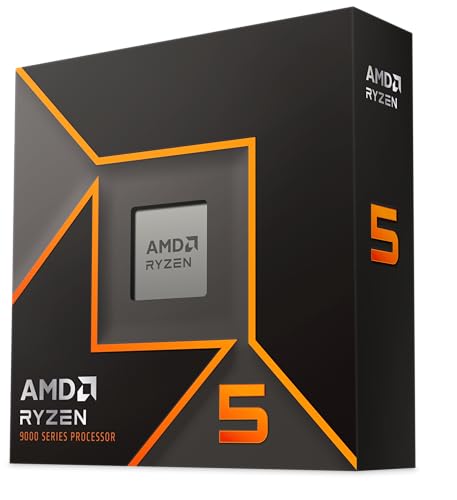
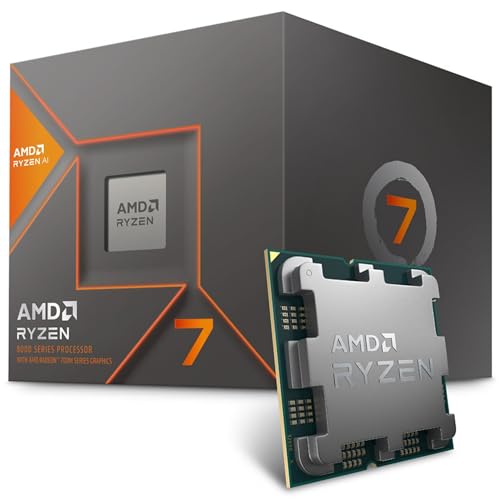
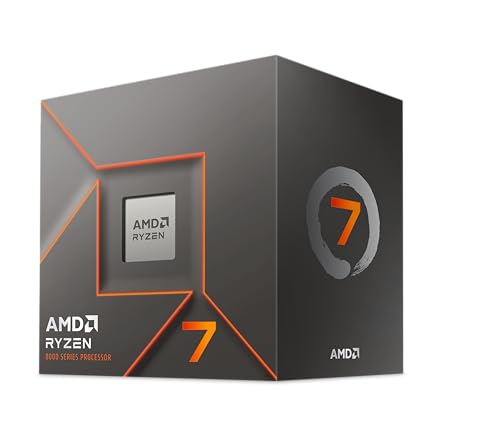
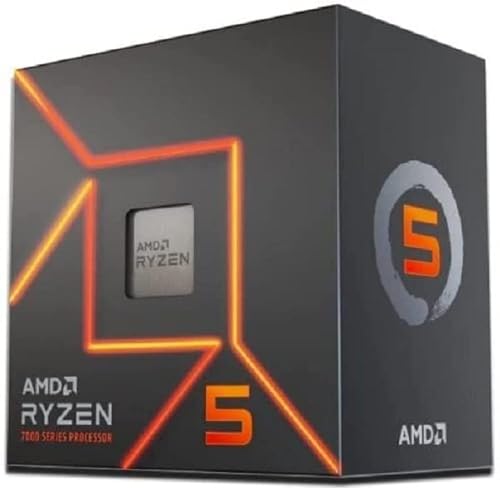
Are AMD processors good?
AMD processors are good because they deliver strong performance in both everyday tasks and demanding workloads.
They use multi-core designs that boost multitasking and productivity, and they compete directly with Intel in gaming, professional software, and general use. Their efficiency and architecture keep them competitive across a wide range of devices from desktops to laptops.
They also tend to have good value compared to alternatives, as they balance cost and performance well. Many users choose AMD because the processors combine high core counts with solid clock speeds, so they perform well in applications that need either single-threaded or multi-threaded power.
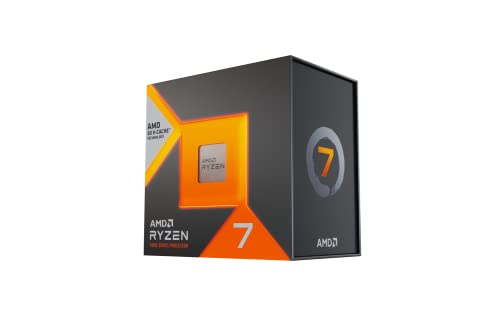
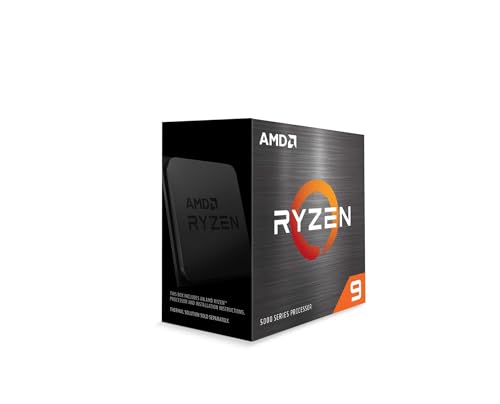
The best AMD CPUs are as follows.
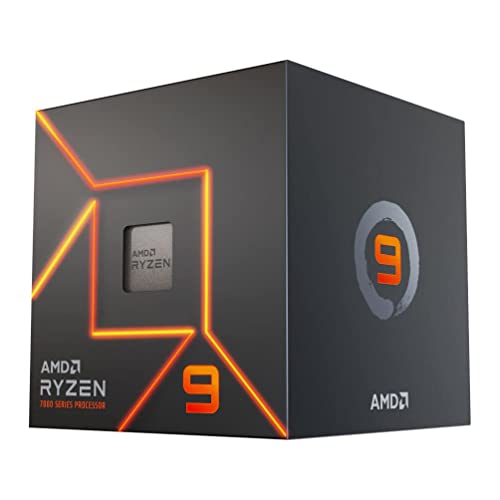
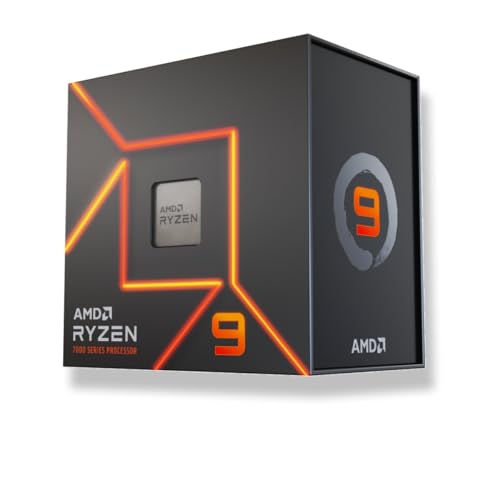
- AMD Ryzen 9 7900 (Overall score: 9.19 points)
- AMD Ryzen Threadripper Pro 7985WX (Overall score: 9.16 points)
- AMD Ryzen Threadripper 7970X (Overall score: 9.1 points)
How do AMD processors compare to Intel?
The choice between AMD and Intel depends on the use case.
AMD chips often use more advanced manufacturing processes which give them an edge in efficiency, and they usually support more cores at a lower price point. Intel CPUs, on the other hand, often reach higher boost speeds and maintain better performance in applications that depend heavily on single-thread speed.
In gaming, Intel often has a slight lead because many titles depend on single-core speed, but AMD competes strongly in newer games and in workloads like rendering, content creation, and heavy multitasking. AMD also integrates strong onboard graphics in its APUs, while Intel includes integrated graphics across most processors but usually with less focus on gaming. Both brands support modern features such as PCIe 4.0 and DDR5 in newer generations, but AMD adopted them earlier, which gave it an advantage in upgrade paths.
For gaming at high frame rates, Intel can deliver slightly better results at the top end, while AMD balances gaming and productivity better with more cores and threads.
For professionals who use software optimized for many cores, AMD often delivers stronger performance per euro, while Intel still remains a preferred choice in scenarios that demand peak single-thread responsiveness.
Who makes AMD processors?
AMD processors are designed by Advanced Micro Devices (AMD), an American semiconductor company founded in 1969 in Sunnyvale, California. The company has its headquarters in Santa Clara, California, and employs over 25,000 people worldwide. AMD competes directly with Intel and NVIDIA in the CPU and GPU markets and is best known for its Ryzen desktop processors, EPYC server CPUs, and Radeon graphics cards.
AMD does not manufacture its own processors. Instead, it uses external foundries to produce its chips. Since 2009, after spinning off its manufacturing arm into GlobalFoundries, AMD has relied mainly on Taiwan Semiconductor Manufacturing Company (TSMC) for production.
How popular are AMD processors?
AMD processors are the second largest x86 CPU vendor worldwide, with shipments in 2024 estimated at around 70 million units and a global market share close to 30 %, which kept AMD behind Intel but ahead in several performance niches. The Ryzen 7000 series for desktops and laptops, based on Zen 4 architecture, drove most sales, while EPYC Genoa and Bergamo chips strengthened AMD’s position in servers.
AMD performed strongest in Asia and Europe, where its share reached about 35 %, while in North America it stayed closer to 25 % because of Intel’s dominance in OEM contracts.
What are the main AMD processor series?
The main AMD CPU series are as follows:
- Ryzen: Consumer processors for desktops and laptops. They cover entry-level to high-end systems with Ryzen 3, 5, 7, 9, and the enthusiast-class Ryzen Threadripper. Ryzen CPUs use the Zen architecture and focus on multi-core performance, efficiency, and support for features like PCIe 4.0 and DDR5 in newer generations.
- Athlon: Entry-level processors for budget desktops and laptops. They have fewer cores and lower clock speeds compared to Ryzen, but they are suitable for basic tasks like web browsing, office work, and light multimedia use.
- EPYC: Server-grade processors built for data centers, enterprise applications, and cloud computing. They feature very high core counts, support for large amounts of memory, and advanced security features. EPYC CPUs compete directly with Intel Xeon processors.
- Threadripper: High-end desktop CPUs designed for enthusiasts and professionals. They deliver extremely high multi-core performance, large amounts of cache, and support for quad-channel memory, which makes them suitable for video editing, 3D rendering, and heavy multitasking workloads.
- FX: An older series of desktop processors that preceded Ryzen. FX CPUs used the Bulldozer architecture, which had high clock speeds but weaker performance per core. They are now discontinued and replaced by Ryzen.
- APU (Accelerated Processing Unit): Processors that combine CPU and GPU cores on a single chip. APUs are used in entry-level desktops and laptops where integrated graphics performance is needed without a separate graphics card. They also power gaming consoles like the PlayStation and Xbox.
How much do AMD processors cost?
AMD processors cost anywhere from about £70 for entry-level models to over £595 for top-tier CPUs.
Entry-level models usually start at around £85 and target basic desktop or office use. Mid-range processors, such as those with more cores and higher clock speeds, generally fall in the £170-£300 range, so they appeal to users who need a balance between gaming and productivity. High-end AMD processors with many cores and advanced features can reach £425 or more, and some top desktop models aimed at enthusiasts or heavy workloads go above £595.
The following chart compares prices across AMD processors.
[vertical-chart-01352879485583448365039572393178594935841142537731]
How many cores and threads do AMD CPUs have?
AMD CPUs have different numbers of cores and threads depending on the series and model.
Entry-level CPUs can start with 2 to 4 cores and 4 to 8 threads, while mid-range models often come with 6 to 8 cores and 12 to 16 threads. High-end desktop CPUs from AMD can reach 12 to 16 cores and up to 32 threads, which makes them strong in both gaming and productivity tasks.
Thread count is always tied to the number of cores through simultaneous multithreading (SMT), which means every physical core can handle two threads. For example, a CPU with 8 cores supports 16 threads. This balance of cores and threads helps AMD CPUs handle multitasking efficiently and deliver strong performance in demanding software.
The following chart compares the number of physical cores in AMD CPUs.
[vertical-chart-06480581835535118708056123644642925742090028746346]
What clock speeds do AMD CPUs have?
AMD CPUs have clock speeds that range from about 3.5 GHz to over 5.7 GHz depending on the model.
The base clock speed sets the minimum guaranteed frequency under standard workloads, and the boost clock speed represents the maximum frequency the CPU can reach under heavier tasks. High-end Ryzen models often reach boost speeds above 5 GHz, while entry-level processors stay closer to the 3.5–4.5 GHz range.
Clock speeds vary between product lines and generations. Ryzen 3 and Ryzen 5 processors usually have lower base and boost frequencies compared to Ryzen 7 and Ryzen 9, which run at higher speeds and sustain them across more cores.
Some models also feature AMD’s Precision Boost technology, which adjusts frequency dynamically depending on workload, thermal conditions, and power limits.
What cache size do AMD CPUs have?
AMD CPUs have different cache sizes that depend on the model and architecture.
Cache in these processors comes in three levels: L1, L2, and L3. L1 cache is usually small and very fast (tens of kilobytes per core), L2 is larger and stores more data (hundreds of kilobytes per core), and L3 is the biggest shared cache measured in megabytes.
Modern AMD Ryzen CPUs use relatively large L3 cache sizes compared to older models. Standard Ryzen chips often range between 16 MB and 64 MB of L3 cache, while high-end models such as Ryzen 9 or Threadripper can reach 128 MB or more. L2 cache usually sits at 512 KB per core in many Ryzen generations, and L1 cache typically remains at 64 KB per core split into instructions and data.
Do AMD CPUs have integrated graphics?
AMD CPUs do not always have integrated graphics, as only specific models include them.
Standard Ryzen desktop processors usually lack integrated graphics, so they need a separate graphics card to run displays. The models with integrated graphics are branded as APUs (Accelerated Processing Units), such as Ryzen processors with “G” in their name, which combine CPU and GPU in a single chip.
Integrated graphics on AMD CPUs use Radeon Vega technology, which gives good performance for everyday computing and light gaming. These APUs can handle video playback, office work, and casual games without a dedicated GPU. However, higher-end Ryzen CPUs skip integrated graphics to focus on higher core counts and stronger performance for demanding tasks, which means they rely fully on external graphics cards.
What is the power consumption of AMD CPUs?
The power consumption of AMD CPUs varies across product lines and depends on the number of cores, clock speeds, and architecture.
Entry-level models often run with a TDP around 35–65 watts, while mid-range CPUs typically fall between 65 and 95 watts. High-performance chips, such as Ryzen 9 and Threadripper processors, can reach 105 watts or even exceed 200 watts in certain workstation and server models.
Do AMD CPUs support overclocking?
AMD CPUs support overclocking, and most of their models unlock this feature by default.
Overclocking raises the processor’s clock speeds beyond the base specifications, which can improve performance in tasks that benefit from higher frequencies. AMD’s Ryzen series, from Ryzen 3 up to Ryzen 9 and Threadripper, all include unlocked multipliers, so users can change settings directly in the BIOS or through AMD’s Ryzen Master software.
Motherboard compatibility plays a key role in overclocking. AMD enables this function on chipsets such as B350, B450, X370, X470, X570, and newer AM5 platforms, while entry-level boards like A320 usually restrict it.
Overclocking increases heat and power consumption, so a stable power delivery system and strong cooling are required to sustain higher speeds.