What makes a humidifier suitable for a baby's room?
A humidifier is suitable for a baby room when it can maintain moderate humidity without creating heat, excessive noise, or a difficult cleaning burden. Cool mist, automatic shut-off, and a hygrostat are the most useful starting features.
For a nursery, a controllable output of roughly 150–300 ml/h is usually easier to manage than an oversized unit that quickly pushes humidity above the target. A separate hygrometer helps confirm the reading because the built-in sensor may sit close to the mist outlet.
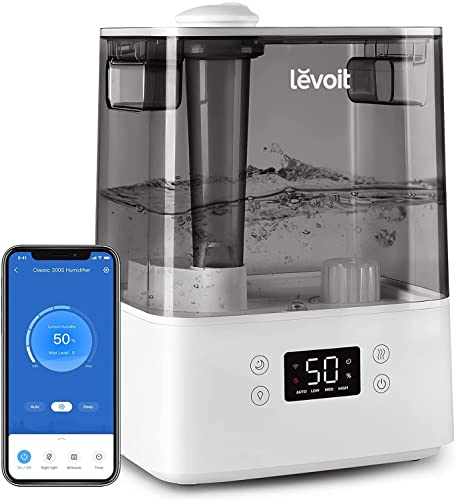
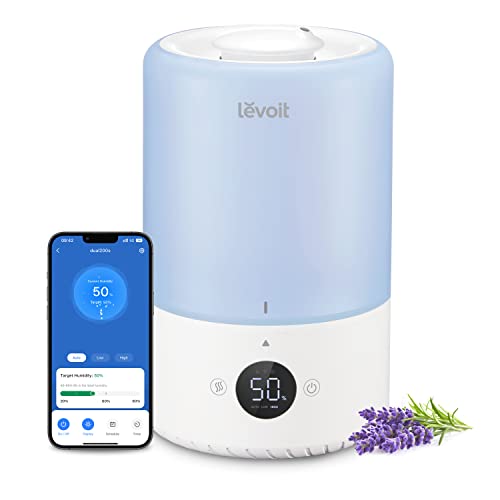
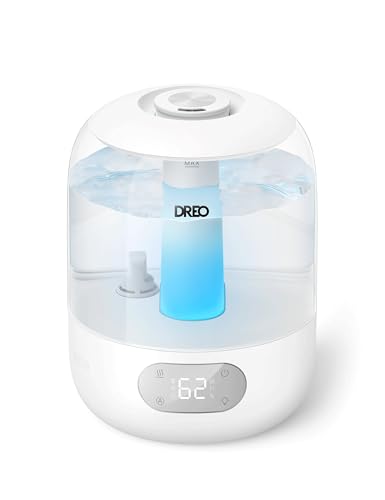
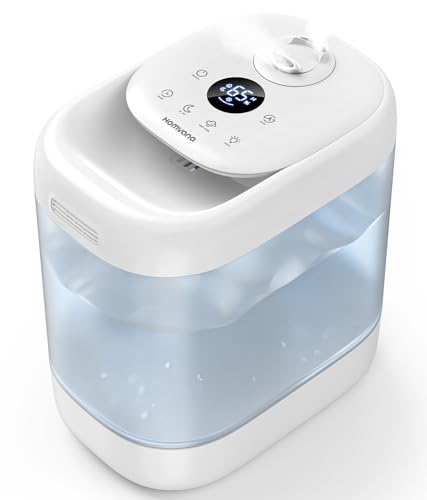
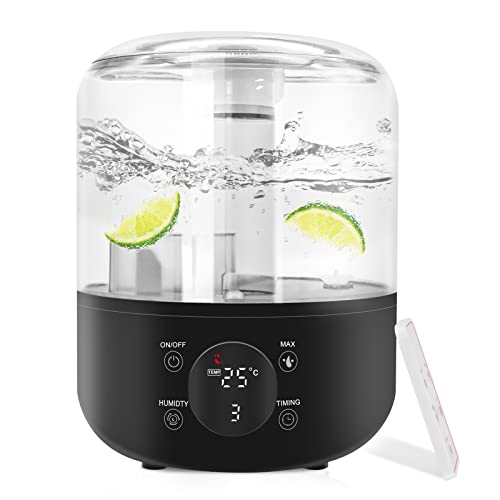
Top-fill access, a 2–5 L tank, a dimmable display, and a stable base reduce night-time handling. Choose a model with smooth water-contact surfaces and no exposed heating element, and place it where the child cannot pull the unit or cable down.
Which type of humidifier is safest for a baby's room?
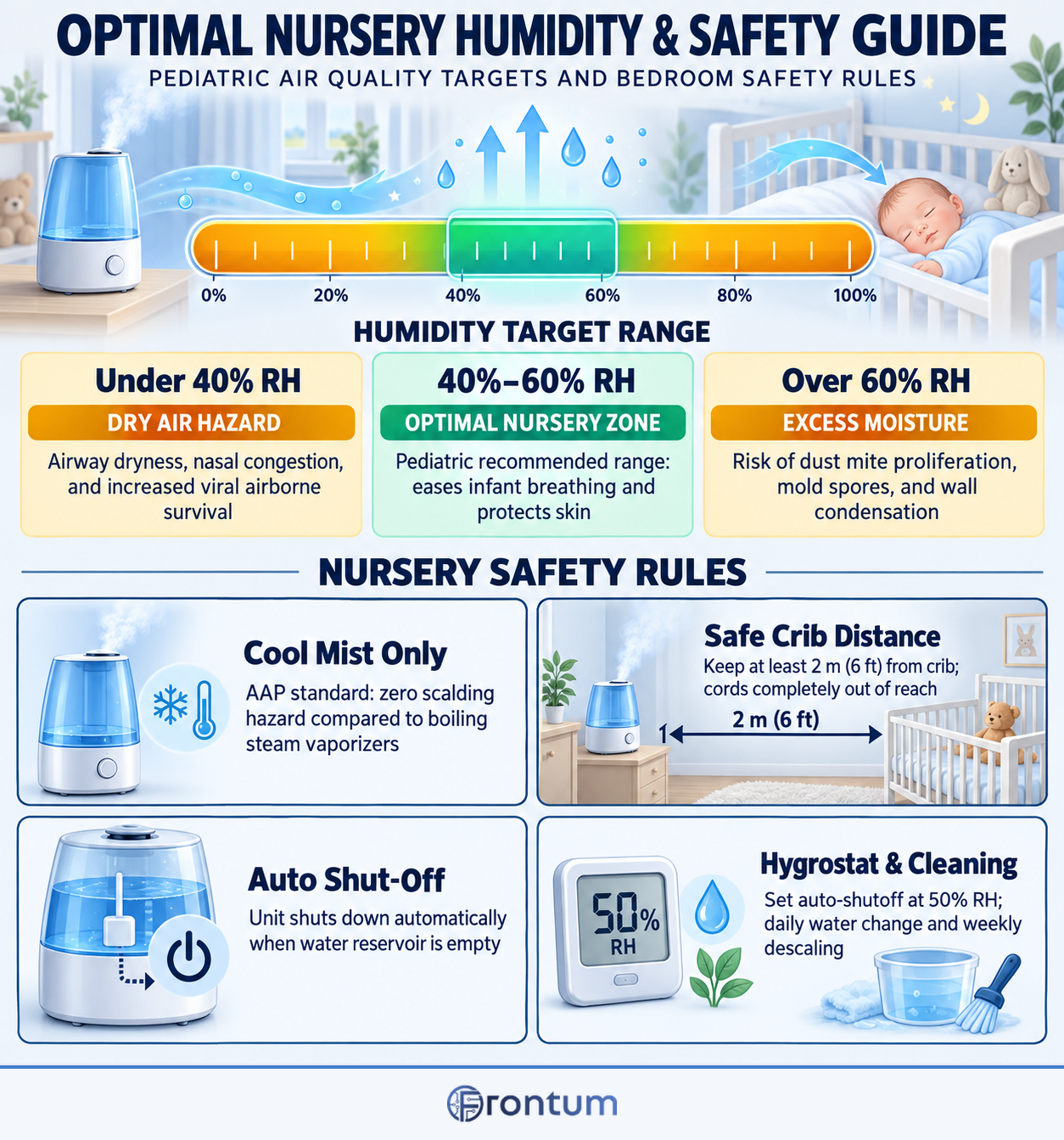
Cool-mist humidifiers are the safest default for a baby room because they do not heat water at the outlet. Ultrasonic and evaporative designs can both work if humidity is controlled and cleaning is consistent.
Warm-mist humidifiers boil water, so the tank, housing, and steam path can burn a child or cause injury if the unit is knocked over. They may be useful only where an adult can keep the appliance completely inaccessible and can handle the hot reservoir safely. For most nurseries, cool mist offers the simpler risk profile.
Is cool mist or warm mist safer for babies?
Cool mist is safer around babies than warm mist because there is no hot water or steam plume that can burn skin. That makes a cool-mist unit the normal choice beside a cot or changing area.
Ultrasonic cool mist is often the quietest option, but it can disperse minerals from tap water and needs frequent reservoir cleaning.
Evaporative cool mist uses a wet wick and fan, so it is usually louder and needs replacement wicks, yet its output is less likely to leave a mineral film. Either type still needs a hygrostat and a low-water shut-off.
What humidity level is best for a baby's room?
Keep a baby room around 30–50% relative humidity, using a separate hygrometer to check the level rather than relying only on the humidifier display. This range can ease dry-air discomfort without making the room persistently damp.
Readings above about 50–60% RH increase the chance of condensation, mould, and dust-mite growth, especially near cold windows or exterior walls. Reduce the output or stop the unit when the target is reached, and investigate a room that remains damp instead of adding more mist.
What makes a humidifier suitable for overnight use in a baby's room?
Overnight suitability depends on quiet output, automatic humidity control, and enough water for the full sleep period. A humidifier should maintain the target without requiring a refill or bright manual adjustment at 2 a.m.
Low settings around 20–30 dB are easier to sleep beside, while a 3–5 L tank can often cover a night at moderate output; actual runtime falls as mist rate rises. A hygrostat, timer, low-water shut-off, and dimmable display prevent over-humidification, dry running, and unnecessary light.
Place the unit on a stable, water-resistant surface away from the cot, curtains, walls, and sockets. Keep the mist from blowing directly at the baby, and check the tank each morning so standing water does not remain for the next night.
What makes a humidifier for babies easy to clean?
An easy-to-clean baby humidifier has a wide tank opening, a removable base or water tray, smooth water-contact surfaces, and no hidden channels that trap residue. Top-fill access is useful only when you can also reach the bottom for wiping and drying.
Empty and rinse the reservoir each day, dry it between uses when possible, and descale mineral deposits about weekly or every one to two weeks in hard-water areas. Follow the manual for disinfecting agents, rinse thoroughly, and never run a cleaning solution through the mist path unless the manufacturer permits it.
A replaceable wick or filter should be easy to obtain and simple to remove. If the outlet, float, or sensor cannot be reached without dismantling the housing, cleaning is likely to be postponed and the nursery air-quality benefit will not last.
Which safety features matter most in a humidifier for babies?
The most important safety features in a humidifier for babies are as follows:
- Cool-mist operation: Cool mist avoids a hot water reservoir and steam plume. It is the safer default near a cot or changing area.
- Automatic low-water shut-off and hygrostat: The unit should stop when empty and reduce mist at the selected humidity target. These controls limit dry running and excessive moisture.
- Stable base and protected cable: A broad, non-slip base and a cable that cannot be easily pulled reduce tip-over risks. Keep the unit out of reach and away from the cot, curtains, walls, and sockets.
- Dimmable display and timer: A dark display and timed operation avoid unnecessary light and limit unattended running during sleep. Concealed or lockable controls reduce accidental changes.
- Cleanable water path: A wide opening, removable tray, and smooth surfaces make daily rinsing and weekly descaling realistic. Do not add essential oils unless the manual provides a dedicated safe compartment.
How much do humidifiers for babies cost?
Humidifiers marketed for baby rooms generally cost about £30-£100, while simple personal units can start near £20 and premium smart or large-tank models can reach £170.
Below £40, expect a smaller tank, basic controls, and fewer automatic settings. Around £40-£90 usually buys a quieter nursery-sized unit with a hygrostat, timer, low-water shut-off, and easier cleaning. Above £90, the extra cost is most useful when it adds reliable humidity sensing, longer runtime, app alerts, or a better-supported filter and tank design rather than decorative lighting alone.