Scored using Graphics cards Methodology v3.0
Graphics cards Methodology v3.0
Mathematical & Unbiased Scoring
Products in this category are scored under Frontum Graphics cards Methodology v3.0: the technical score from the specifications is the base, and independent expert and video reviews (up to ±0.5 points), owner opinions (up to ±0.3) and best-of lists (up to +0.3) move it up or down.
Explore Graphics cards Methodology v3.0

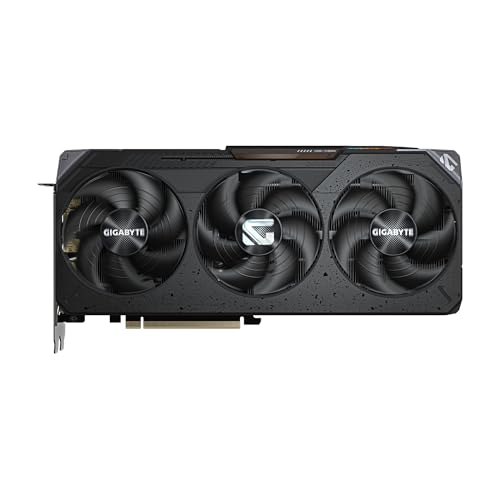
NVIDIA GeForce RTX 5060 Ti 16GB review: 117 specs compared

Avg. price:~£540VRAM:16 GBMemory bus width:128 bitThermal Design Power (TDP):180 W

NVIDIA GeForce RTX 5060 Ti 16GB Review: Compare 117 technical specifications, 25 expert and video reviews and 6 best-of lists to see how this product ranks in the Graphics cards category and whether it is worth buying.
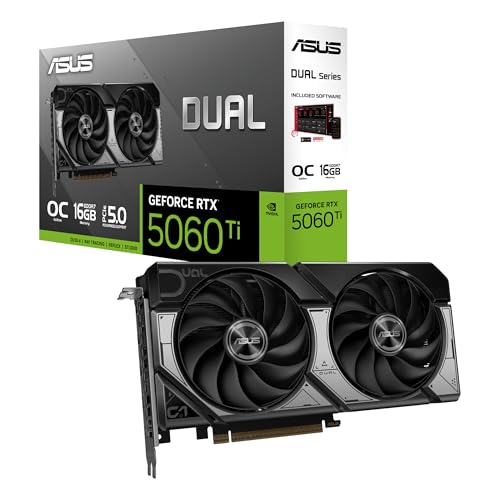
NVIDIA GeForce RTX 5060 Ti 16GB
7.6/10

Overall score

Score
7.6/ 10
✕
What it is
Our main score for this model, 1–10. It combines specs, expert reviews, best-of lists and owners.
How we count it
Parts: Technical score 40%, Reviews score 25%, List score 25%, Sentiment score 10%
Marks: Each part gets a mark out of 10. For reviews, lists and owners, a typical model in this category gets about 8 and the best one gets 10.
No data yet: A part with no data shows "?". It counts as the mark of a weaker model in this category (4 in 5 models with data score higher). This way, models with reviews, lists and owners usually come out ahead.
Score distribution
▼
<55-66-77-88-99-10
Score components

40%

7.4

Technical score

25%

7.4

Reviews score

25%

8.3

List score

10%

7.4

Sentiment score

▲Better than 57% of graphics cards
7.6

Value for money

Value for money
7.6/ 10
✕
What it is
An indicator that combines the graphics card's overall rating with its cost.
When it matters
When you are looking for a graphics card that offers a strong balance of performance, features, and price.
Score distribution
▼
<55-66-77-88-99-10
Score components

70%

7.6

Overall score

30%

7.7

Price

▲Better than 62%
7.4

Technical score

Technical score
7.4/ 10
✕
What it is
How good the specs are compared with the other models in this category, 1–10.
How we count it
Areas: We rate the specs in each area against the other models in this category.
Weighting: The areas that matter most to buyers count more. The shares are shown under Score components.
Share: The technical score is 40% of the overall score.
Score distribution
▼
<55-66-77-88-99-10
Score components

44%

6.2

Performance

24%

6.7

Memory

12%

9.1

Power

11%

9.8

Features

5%

9.3

Design

4%

10

Connectivity

▲Better than 58%
7.4

Reviews score

Reviews score
7.4/ 10
✕
What it is
Average grade from independent test sites, magazines and video reviewers, 1–10.
How we count it
Grades: Each review's own score is converted to 1–10; without one, we grade the review ourselves. Big test sites count more, short reviews half as much as full tests. A video review counts half.
Score: The average grade is 80% of the review mark; the number of reviews is the other 20% (1 review = 5, the typical number in this category = 8, the most-reviewed model = 10).
Enough data: With few reviews, the average grade is pulled toward the typical grade of this category. No reviews yet: 7.6 for now.
Share: Reviews count 25% of the overall score.
Score distribution
▼
<55-66-77-88-99-10

7.4

Mark 7.9 is below the typical mark 7.9 of this category, so it cannot lift the score above the technical score

80%

7.6

Average grade

20%

9.1

Popularity

Grades by review (25)
9 reviews: 3 with a printed score, 6 estimated from the review. 16 video reviews, each counting half as much as a written test. Reviews count 25% of the overall score.
User ratings collected online are not part of this score.
▼Worse than 65%
8.3

List score

List score
8.3/ 10
✕
What it is
How often independent test sites, magazines and video reviewers put this model in their best-of lists for this category.
How we count it
Points: The model in the most lists of this category gets 10; the others get 8 to 10 in proportion. In no list yet: 7.5. Lists count 25% of the overall score.
Enough data: Every list counts, even a single one. With fewer than 5 best-of lists in the category, this part is left out.
Lists with this model (6)
List score: in 6 of 85 lists (7%)
★Better than 99%

What reviewers say about the NVIDIA GeForce RTX 5060 Ti 16GB

Based on 9 · 16

Reviewers like the ample video memory and low power draw, but say rival cards offer more and are split on the generational gain.
Praised
Mixed views
Criticised
Pick a topic to see who said what

What owners say about the NVIDIA GeForce RTX 5060 Ti 16GB

Based on 232 owners sharing their experience in online comments

68%positive6%mixed26%negative

Owners praise smooth gaming and generous memory, while limited VRAM and driver problems frustrate some.

What owners dislike

  • Some owners get black screens or stalled installs after updating Nvidia drivers; a clean DDU reinstall fixed one case.5
  • Some owners say demanding games like Monster Hunter Wilds stay under 60 fps at 1440p without frame generation; a 5070 is faster.3

Points mentioned by at least 3 owners, most mentioned first.

Loading...
Loading category ranking...

Technical Specifications of graphics card NVIDIA GeForce RTX 5060 Ti 16GB

Technical score
Technical score
7.4/ 10
✕
What it is
How good the specs are compared with the other models in this category, 1–10.
How we count it
Areas: We rate the specs in each area against the other models in this category.
Weighting: The areas that matter most to buyers count more. The shares are shown under Score components.
Share: The technical score is 40% of the overall score.
Score distribution
▼
<55-66-77-88-99-10
Score components:

44%

6.2

Performance

24%

6.7

Memory

12%

9.1

Power

11%

9.8

Features

5%

9.3

Design

4%

10

Connectivity

7.4
Reviews score
7.4
List score
8.3
Value for money
Value for money
7.6/ 10
✕
What it is
An indicator that combines the graphics card's overall rating with its cost.
When it matters
When you are looking for a graphics card that offers a strong balance of performance, features, and price.
Score distribution
▼
<55-66-77-88-99-10
Score components:

70%

7.6

Overall score

30%

7.7

Price

7.6
3DMark Time Spy benchmark score
16,030 points
This graphics card scores 16,030 points in 3DMark Time Spy, which is higher than 54.2% of graphics cards and equal to 0.1% of graphics cards.
3DMark Port Royal score
15,488 points
This graphics card scores 15,488 points in 3DMark Port Royal, which is higher than 74.4% of graphics cards and equal to 0.3% of graphics cards.
PassMark (G3D) result
22,785 points
This graphics card scores 22,785 points in PassMark G3D, which is higher than 53.3% of graphics cards and equal to 0.3% of graphics cards.
PassMark (DirectCompute) result
31,834 points
This graphics card scores 31,834 points in PassMark DirectCompute, which is higher than 96.5% of graphics cards.
FP32 performance
23.7 TFLOPS
This graphics card delivers 23.7 TFLOPS FP32 performance, which is higher than that of 52.1% of graphics cards and equal to that of 2.4% of graphics cards.
Show more
What reviewers say
VRAM
16 GB
This graphics card has 16 GB of VRAM, which is more than 62% of graphics cards and equal to 28.1% of graphics cards.
Memory type
GDDR7
This graphics card uses GDDR7 memory, which is newer than on 79.6% of graphics cards and equal to 20.4% of graphics cards.
Memory bus width
128 bit
This graphics card uses a 128 bit memory bus, which is narrower than that of 68.6% of graphics cards and equal to that of 26.7% of graphics cards.
Maximum memory bandwidth
448 GB/s
This graphics card reaches 448 GB/s memory bandwidth, which is higher than that of 41.3% of graphics cards and equal to that of 11.8% of graphics cards.
Effective memory speed
28,000 MHz
This graphics card reaches an effective memory speed of 28,000 MHz, which is faster than that of 78.9% of graphics cards and equal to that of 16.8% of graphics cards.
Show more
What reviewers say
PCI Express (PCIe) version
5
This graphics card supports PCIe 5, which is newer than on 73% of graphics cards and equal to 27% of graphics cards.
PCIe lanes
x8
This graphics card uses x8 PCIe lanes, which is fewer than 75.9% of graphics cards and equal to 22.9% of graphics cards.
DirectX version
12 Ultimate
This graphics card supports DirectX 12 Ultimate, which is more advanced than on 22.8% of graphics cards and equal to 77.2% of graphics cards.
Vulkan version
1.4
This graphics card supports Vulkan 1.4, which is more advanced than on 20.8% of graphics cards and equal to 79.2% of graphics cards.
OpenGL version
4.6
This graphics card supports OpenGL 4.6, which is more advanced than on 2% of graphics cards and equal to 98% of graphics cards.
Show more
What reviewers say
Max displays supported
4
This graphics card supports up to 4 displays, which is more than 9% of graphics cards and equal to 88.2% of graphics cards.
Max digital resolution
7680x4320
This graphics card supports a maximum digital resolution of 7680x4320, which is higher than that of 9.2% of graphics cards and equal to that of 90.9% of graphics cards.
DisplayPort outputs
3
This graphics card offers 3 DisplayPort outputs, which is more than 21.7% of graphics cards and equal to 76% of graphics cards.
DisplayPort version
2.1b
This graphics card supports DisplayPort 2.1b, which is more advanced than on 77.8% of graphics cards and equal to 22.2% of graphics cards.
DisplayPort link rates
80 Gbps
This graphics card supports DisplayPort link rates up to 80 Gbps, which is faster than on 84.9% of graphics cards and equal to 14.9% of graphics cards.
Show more
Thermal Design Power (TDP)
180 W
This graphics card has a TDP of 180 W, which is lower than that of 57.2% of graphics cards and equal to that of 5% of graphics cards.
Power consumption while under peak load
180 W
This graphics card draws 180 W under peak load, which is lower than 60.8% of graphics cards and equal to 4.6% of graphics cards.
Recommended PSU wattage
600 W
This graphics card recommends a 600 W PSU, which is lower than that of 53.2% of graphics cards and equal to that of 8.6% of graphics cards.
Board power limit
180 W
This graphics card has a board power limit of 180 W, which is lower than that of 61.7% of graphics cards and equal to that of 4.4% of graphics cards.
PCIe power spec
180 W
Show more
What reviewers say
Size
241x 111x 40 mm
Length
241 mm
This graphics card is 241 mm long, which is shorter than 74.3% of graphics cards and equal in length to 1.7% of graphics cards.
Height
111 mm
This graphics card is 111 mm tall, which is shorter than 83.6% of graphics cards and equal in height to 5.1% of graphics cards.
Slot width
2 slot/s
This graphics card occupies 2 slot/s, which is slimmer than 52.4% of graphics cards and equal in width to 43.4% of graphics cards.
Weight
781 g
This graphics card weighs 781 g, which is lighter than 72.4% of Graphics cards and equal to 0.1% of Graphics cards.
Show more
What reviewers say

NVIDIA GeForce RTX 5060 Ti 16GB vs the average graphics card

246810TotalPerformanceMemoryFeaturesConnectivityPowerDesign
  • 25.4% higher base clock speed
    This graphics card has a higher base GPU clock than the average graphics card (2,407 MHz vs 1920 MHz). The average graphics card has a base GPU clock of 1920 MHz.
    2,407 MHz vs 1,920 MHz
  • 4 GB more VRAM
    This graphics card has more VRAM than the average graphics card (16 GB vs 12 GB). The average graphics card has 12 GB VRAM.
    16 GB vs 12 GB
  • 47.4% faster memory speed
    This graphics card has a higher effective memory speed than the average graphics card (28,000 MHz vs 19,000 MHz). The average graphics card reaches an effective memory speed of 19,000 MHz.
    28,000 MHz vs 19,000 MHz
  • 2.7% higher boost clock speed
    This graphics card has a higher boost GPU clock than the average graphics card (2,572 MHz vs 2,505 MHz). The average graphics card has a boost GPU clock of 2,505 MHz.
    2,572 MHz vs 2,505 MHz
  • Newer PCIe version
    This graphics card supports a newer PCIe version than the average graphics card (5 vs 4).
    5 vs 4
  • Newer DisplayPort version
    This graphics card supports a newer DisplayPort version than the average graphics card (2.1b vs 1.4a).
    2.1b vs 1.4a
  • 14 mm lower card height
    This graphics card is shorter than the average graphics card (111 mm vs 125 mm). The average graphics card has a height of 125 mm.
    111 mm vs 125 mm
  • 41.2 mm shorter card length
    This graphics card is shorter than the average graphics card (241 mm vs 282.2 mm). The average graphics card has a length of 282.2 mm.
    241 mm vs 282.2 mm
  • 9.2% higher list score
    List score
    8.3/ 10
    ✕
    What it is
    How often independent test sites, magazines and video reviewers put this model in their best-of lists for this category.
    How we count it
    Points: The model in the most lists of this category gets 10; the others get 8 to 10 in proportion. In no list yet: 7.5. Lists count 25% of the overall score.
    Enough data: Every list counts, even a single one. With fewer than 5 best-of lists in the category, this part is left out.
    Lists with this model (6)
    List score: in 6 of 85 lists (7%)
    8.3 vs 7.6
  • 25.4% higher base clock speed
    This graphics card has a higher base GPU clock than the average graphics card (2,407 MHz vs 1920 MHz). The average graphics card has a base GPU clock of 1920 MHz.
    2,407 MHz vs 1,920 MHz
  • 2.7% higher boost clock speed
    This graphics card has a higher boost GPU clock than the average graphics card (2,572 MHz vs 2,505 MHz). The average graphics card has a boost GPU clock of 2,505 MHz.
    2,572 MHz vs 2,505 MHz
  • 2 years newer
    This graphics card was released more recently than the average graphics card (2025 vs 2023).
    April 2025
    2025 vs 2023
  • 69.3% higher ray tracing score
    This graphics card has a higher ray tracing score than the average graphics card (15,488 points vs 9,148 points). The average graphics card has a ray tracing score of 9,148 points.
    15,488 points vs 9,148 points
  • 2.64x higher compute score
    This graphics card has a higher compute score than the average graphics card (31,834 points vs 12,70.5 points). The average graphics card has a compute score of 12,070.5 points.
    31,834 points vs 12,070.5 points
  • 3.13x higher INT8 performance
    This graphics card has a higher INT8 performance than the average graphics card (758 TOPS vs 242 TOPS). The average graphics card has INT8 performance of 242 TOPS.
    758 TOPS vs 242 TOPS
  • 47.4% faster memory speed
    This graphics card has a higher effective memory speed than the average graphics card (28,000 MHz vs 19,000 MHz). The average graphics card reaches an effective memory speed of 19,000 MHz.
    28,000 MHz vs 19,000 MHz
  • 4 GB more VRAM
    This graphics card has more VRAM than the average graphics card (16 GB vs 12 GB). The average graphics card has 12 GB VRAM.
    16 GB vs 12 GB
  • Newer GDDR version
    This graphics card uses a newer GDDR version than the average graphics card (GDDR7 vs GDDR6).
    GDDR7 vs GDDR6
  • 8x more Infinity Cache
    This graphics card has more Infinity Cache than the average graphics card (32 MB vs 4 MB). The average graphics card has 4 MB Infinity Cache.
    32 MB vs 4 MB
  • Newer PCIe version
    This graphics card supports a newer PCIe version than the average graphics card (5 vs 4).
    5 vs 4
  • Newer DisplayPort version
    This graphics card supports a newer DisplayPort version than the average graphics card (2.1b vs 1.4a).
    2.1b vs 1.4a
  • 4x higher HDMI bandwidth
    This graphics card has a higher HDMI bandwidth than the average graphics card (48 Gbps vs 12 Gbps). The average graphics card has HDMI bandwidth of 12 Gbps.
    48 Gbps vs 12 Gbps
  • Newer HDMI version
    This graphics card supports a newer HDMI version than the average graphics card (2.1b vs 2.1a).
    2.1b vs 2.1a
  • 3.7x higher DisplayPort bandwidth
    This graphics card has a higher DisplayPort bandwidth than the average graphics card (80 Gbps vs 21.6 Gbps). The average graphics card has DisplayPort bandwidth of 21.6 Gbps.
    80 Gbps vs 21.6 Gbps
  • 8 °C higher thermal ceiling
    This graphics card has a higher thermal ceiling than the average graphics card (87 °C vs 95 °C). The average graphics card has a thermal ceiling of 95 °C.
    87 °C vs 95 °C
  • 75% lower idle power draw
    This graphics card has a lower idle power draw than the average graphics card (3 W vs 12 W). The average graphics card has an idle power draw of 12 W.
    3 W vs 12 W
  • 16.3% lower TDP
    This graphics card has a lower TDP than the average graphics card (180 W vs 215 W). The average graphics card has a TDP of 215 W.
    180 W vs 215 W
  • 7.7% lower PSU requirement
    This graphics card has a lower PSU requirement than the average graphics card (600 W vs 650 W). The average graphics card has a PSU requirement of 650 W.
    600 W vs 650 W
  • 14 mm lower card height
    This graphics card is shorter than the average graphics card (111 mm vs 125 mm). The average graphics card has a height of 125 mm.
    111 mm vs 125 mm
  • 41.2 mm shorter card length
    This graphics card is shorter than the average graphics card (241 mm vs 282.2 mm). The average graphics card has a length of 282.2 mm.
    241 mm vs 282.2 mm
  • 0.5 slot/s slimmer design
    This graphics card occupies fewer slots than the average graphics card (2 slot/s vs 2.5 slot/s). The average graphics card occupies 2.5 slot/s.
    2 slot/s vs 2.5 slot/s
  • No dual BIOS
    This graphics card does not include dual BIOS, the average graphics card does.
  • 64 bit narrower memory bus
    This graphics card has a narrower memory bus than the average graphics card (128 bit vs 192 bit). The average graphics card has a memory bus width of 192 bit.
    128 bit vs 192 bit
  • Fewer PCIe lanes
    This graphics card has fewer PCIe lanes than the average graphics card (x8 vs x16). The average graphics card has x16 PCIe lanes.
    x8 vs x16
  • No RGB lighting
    This graphics card does not include RGB lighting, the average graphics card does.
  • 16 fewer ROPs
    This graphics card has fewer ROPs than the average graphics card (48 vs 64). The average graphics card has 64 ROPs.
    48 vs 64
  • 40 fewer TMUs
    This graphics card has fewer TMUs than the average graphics card (144 vs 184). The average graphics card has 184 TMUs.
    144 vs 184
  • 23.4% lower pixel rate
    This graphics card has a lower pixel rate than the average graphics card (123.5 GPixel/s vs 161.3 GPixel/s). The average graphics card has a pixel rate of 161.3 GPixel/s.
    123.5 GPixel/s vs 161.3 GPixel/s
  • 4 fewer compute units
    This graphics card has fewer compute units than the average graphics card (36 vs 40). The average graphics card has 40 compute units.
    36 vs 40
  • 4 fewer ray tracing cores
    This graphics card has fewer ray tracing cores than the average graphics card (36 vs 40). The average graphics card has 40 ray tracing cores.
    36 vs 40
  • 64 bit narrower memory bus
    This graphics card has a narrower memory bus than the average graphics card (128 bit vs 192 bit). The average graphics card has a memory bus width of 192 bit.
    128 bit vs 192 bit
  • Fewer PCIe lanes
    This graphics card has fewer PCIe lanes than the average graphics card (x8 vs x16). The average graphics card has x16 PCIe lanes.
    x8 vs x16
  • 2 fewer monitors per output type
    This graphics card supports fewer monitors per output type than the average graphics card (1 vs 3). The average graphics card supports 3 monitors per output type.
    1 vs 3
  • No dual BIOS
    This graphics card does not include dual BIOS, the average graphics card does.
  • No RGB lighting
    This graphics card does not include RGB lighting, the average graphics card does.

Video reviews

Hands-on testing, unboxing, and real-world video evaluations

9.0
Flavor Of The Month
≈ estimated
25/09/2025
Hands-on review · AI image generation and gaming tests
Verdict
NVIDIA GeForce RTX 5060 Ti 16GB is a strong choice for AI image generation thanks to its 16 GB of memory, but skip the 8 GB model.
9.0
Digital Spaceport
≈ estimated
04/08/2025
Hands-on review · local AI benchmarks against RTX 4090
Verdict
RTX 5060 Ti 16GB is a great GPU for local AI at its price, though slower than a 4090 for video generation.
7.0
ErockOnTech
≈ estimated
17/04/2025
Full review · price, VRAM and generational uplift
Verdict
NVIDIA GeForce RTX 5060 Ti 16GB is worth getting if the price drops, but the launch price is hard to justify.
9.0
Techtesters
≈ estimated
16/04/2025
Hands-on review · 45-game benchmarks at three resolutions
Verdict
RTX 5060 Ti 16GB is a clear step up for most buyers, with few rivals at this price.
8.0
ThinkComputers
≈ estimated
16/04/2025
Hands-on review · 1080p and 1440p game tests, cooling and price
Verdict
NVIDIA GeForce RTX 5060 Ti 16GB is worth buying if you can find it near launch price, as value fades above that.
5.0
zWORMz Gaming
≈ estimated
16/04/2025
Gameplay review · about 20 titles at 1440p
Verdict
RTX 5060 Ti 16GB is efficient and low on power draw, but a disappointing step up that sits between the 4060 Ti and 4070.
5.0
Hardware Unboxed
≈ estimated
16/04/2025
Hands-on review · benchmarks, ray tracing and pricing
Verdict
RTX 5060 Ti 16GB offers some memory value over the 3060 Ti, but poor ray tracing and pricing make it hard to recommend.
8.0
Cheap Bastard
≈ estimated
08/11/2025
Benchmark comparison · 8 GB versus 16 GB across games
Verdict
RTX 5060 Ti 16GB is worth choosing for future VRAM needs, though gains vary by game and a cheaper alternative exists.
9.0
Papa PC
≈ estimated
29/10/2025
Long-term test · 6 months of daily use
Verdict
NVIDIA GeForce RTX 5060 Ti 16GB is a strong 1080p and 1440p card and a good pick for most gamers.
Not graded

Expert reviews

In-depth analysis and verdict from leading tech publications
6.0
gamersnexus.net
≈ estimated
17/04/2025
Benchmark test · Mid-range 1440p card
Verdict
The GeForce RTX 5060 Ti is a solid 1440p upgrade over the RTX 4060 Ti, about 20% faster, but it can't match the RTX 5070 at 4K.
9.0
storagereview.com
≈ estimated
30/05/2026
Benchmark test · AI and creator card
Verdict
The PNY GeForce RTX 5060 Ti is a compact 16GB card suited to 1440p gaming and creative tasks, though it trails the RTX 5070 in every benchmark.
7.0
computerbild.de
✓ explicit
21/05/2025
Lab test · Compact 1440p card
Verdict
The Zotac GeForce RTX 5060 Ti Twin Edge is a quiet, low-power card that handles Full HD and WQHD well but struggles at 4K.
7.0
computerbase.de
≈ estimated
16/04/2025
Benchmark test · Entry-level graphics card
Verdict
The Palit RTX 5060 Ti 16GB Infinity 3 is a compact card whose 16GB of memory suits modern games, while the 8GB version is not recommended.
8.0
lesnumeriques.com
✓ explicit
10/06/2025
Lab test · Mid-range 1440p card
Verdict
The RTX 5060 Ti 16GB is a strong 1440p card with the best ray tracing in its class and DLSS 4 frame generation, but it trails the RTX 4070 Super.
8.4
profesionalreview.com
✓ explicit
16/04/2025
Lab test · Partner design
Verdict
The Palit RTX 5060 Ti 16GB Infinity 3 is a plain, 290mm card with fast 16GB memory and four-monitor support, suited to 1440p gaming.
7.0
hwupgrade.it
≈ estimated
16/04/2025
Lab test · Mid-range card
Verdict
The Palit RTX 5060 Ti 16GB is a mid-range card only about 20% faster than the RTX 4060 Ti, but DLSS 4 makes ray-traced games much smoother.
8.0
smartworld.it
≈ estimated
16/04/2025
Hands-on test · Two-model comparison
Verdict
The GeForce RTX 5060 Ti 16GB is a strong Full HD card, but scales poorly at 1440p and 4K, so ray tracing needs DLSS 4 to stay smooth.
8.0
hwupgrade.it
≈ estimated
Not Dated
Lab test · Mid-range card
Verdict
The Palit RTX 5060 Ti 16GB is a mid-range card only about 20% faster than the RTX 4060 Ti, but DLSS 4 makes ray-traced games much smoother.

Third-party reviews

What customers like about NVIDIA GeForce RTX 5060 Ti 16GB

  • Generous 16GB VRAM provides future-proofing and better performance in memory-intensive titles like Indiana Jones and the Great Circle
  • Significant performance leap for users upgrading from the RTX 3060 Ti (~31-41% faster) or RTX 2060 Super (~100% faster)
  • Highly efficient power consumption, typically drawing between 155-165W during gaming
  • DLSS 4 with Multi Frame Generation (MFG) significantly boosts frame rates in supported titles
  • Excellent for AI-driven creative workflows like Stable Diffusion due to high VRAM and Blackwell architecture
  • Runs cool and quiet across most partner models like those from [ASUS](https://www.alktech.co/articles/review-asus-prime-geforce-rtx-5060-ti-16gb-gddr7-oc-edition) and [PNY](https://gamingtrend.com/reviews/pny-geforce-rtx-5060-ti-16gb-review-an-upgrade-worth-waiting-for/)

What customers don't like about NVIDIA GeForce RTX 5060 Ti 16GB

  • Modest generational performance uplift (approx. 13-15%) over the RTX 4060 Ti 16GB in standard rasterisation
  • Narrow 128-bit memory bus can still limit performance at higher resolutions like 4K without DLSS
  • The RTX 5070 is often cited as offering better value-per-dollar for those who can afford the step up
  • Confusing naming convention shared with the significantly less capable 8GB variant
  • Performance degradation on older PCIe 3.0 motherboards due to the x8 lane limitation

Verdict

The Nvidia GeForce RTX 5060 Ti 16GB is a mid-range graphics card based on the Blackwell architecture (GB206 die), featuring 4,608 CUDA cores, a boost clock of 2.57 GHz, and 16GB of fast GDDR7 memory. Its 128-bit memory bus provides a significant 448 GB/s bandwidth, while the card supports PCIe 5.0 x8 and includes 4th-generation RT cores and 5th-generation Tensor cores for enhanced ray tracing and DLSS 4 performance. Main pros include its generous 16GB VRAM which excels in modern, memory-intensive titles and AI applications, a power-efficient 180W TGP, and a competitive starting price of $429. However, cons include a narrow 128-bit memory bus that may bottleneck performance at higher resolutions like 4K and modest incremental rasterization gains over its predecessor.

Compare NVIDIA GeForce RTX 5060 Ti 16GB with other products in the Graphics cards category

1Product to compare no. 1
VS
2Product to compare no. 2
VS
3Product to compare no. 3 (optional)

Graphic comparison of NVIDIA GeForce RTX 5060 Ti 16GB and other products in the Graphics cards category

No results found