Scored using Cameras Methodology v1.0
Cameras Methodology v1.0
Mathematical & Unbiased Scoring
Products in this category are evaluated mathematically under Frontumo Cameras Methodology v1.0 using verified laboratory benchmarks, technical specifications, and authentic consumer ratings with 0% commercial bias.
Explore Cameras Methodology v1.0

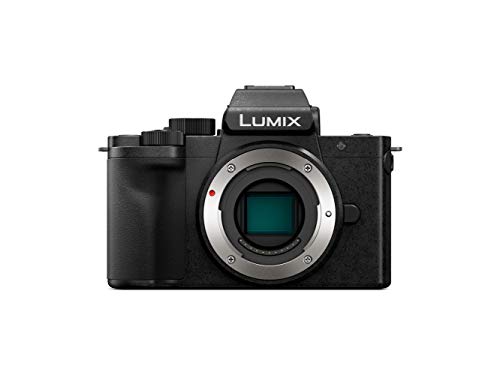
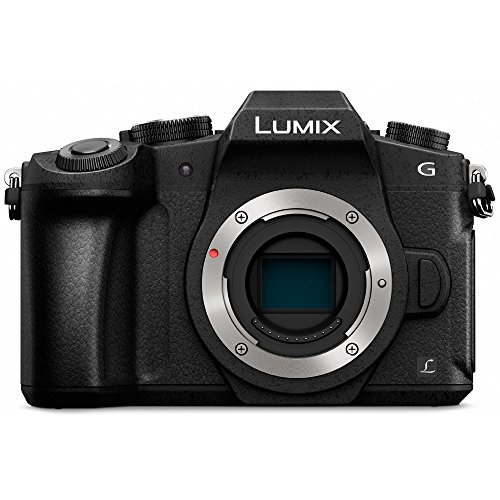
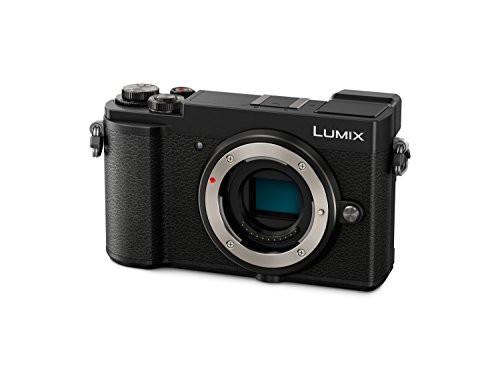
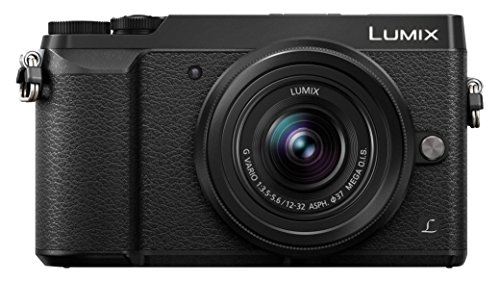
Panasonic LUMIX DC G100 Review | 108 Data compared

Avg. price:~£530Sensor size:four thirdsWeight:345 gBattery life (CIPA):270 shots

Panasonic LUMIX DC G100 Review: Compare 108 technical specifications and user reviews to see how this product ranks in the Cameras category and whether it is worth buying.

6.4

Overall score

Score
6.4/ 10
✕
What it is
An overall evaluation of the camera's quality, based on technical analyses and user reviews.
When it matters
When you need a quick reference to identify the best cameras on the market.
Score distribution
â–¼
<55-66-77-88-99-10
Score components

90%

6.3

Technical score

10%

7.9

User score

â–²Better than 77% of cameras
6.3

Technical score

Technical score
6.3/ 10
✕
What it is
An assessment of technical performance for products in the Cameras category across these key areas: Sensor & Image, Photo Features, Video & Audio, Display & Design, Battery & Power, Connectivity & Storage.
When it matters
When you want to compare cameras based on technical performance and available features.
Score distribution
â–¼
<55-66-77-88-99-10
Score components

28%

6.7

Sensor & Image

25%

4.5

Photo Features

18%

7.2

Video & Audio

14%

8.5

Display & Design

8%

4.1

Battery & Power

7%

5.9

Connectivity & Storage

â–²Better than 77% of cameras
7.9

User score

User score
7.9/ 10
✕
What it is
A rating that combines user reviews and the total number of reviews received by the camera.
When it matters
When real-world owner satisfaction and review volume matter to your decision.
Score distribution
â–¼
<55-66-77-88-99-10
Score components

70%

8.3

User ratings

30%

6.9

Number of reviews

Based on 81 buyer reviews from online shops.
How we calculate this
User ratings – average star rating across all shop listings, weighted by how many reviews each has, on a 1–10 scale.
Number of reviews – how many buyer reviews the product has, on a logarithmic scale; the 8% most-reviewed models in the category get 10.
â–¼Worse than 81% of cameras
Loading...
Loading category ranking...

Technical Specifications of camera Panasonic LUMIX DC G100

Technical score
Technical score
6.3/ 10
✕
What it is
An assessment of technical performance for products in the Cameras category across these key areas: Sensor & Image, Photo Features, Video & Audio, Display & Design, Battery & Power, Connectivity & Storage.
When it matters
When you want to compare cameras based on technical performance and available features.
Score distribution
â–¼
<55-66-77-88-99-10
Score components:

28%

6.7

Sensor & Image

25%

4.5

Photo Features

18%

7.2

Video & Audio

14%

8.5

Display & Design

8%

4.1

Battery & Power

7%

5.9

Connectivity & Storage

6.3
User score
User score
7.9/ 10
✕
What it is
A rating that combines user reviews and the total number of reviews received by the camera.
When it matters
When real-world owner satisfaction and review volume matter to your decision.
Score distribution
â–¼
<55-66-77-88-99-10
Score components

70%

8.3

User ratings

30%

6.9

Number of reviews

Based on 81 buyer reviews from online shops.
How we calculate this
User ratings – average star rating across all shop listings, weighted by how many reviews each has, on a 1–10 scale.
Number of reviews – how many buyer reviews the product has, on a logarithmic scale; the 8% most-reviewed models in the category get 10.
7.9
Popularity
Popularity
6.9/ 10
✕
What it is
An indicator based on the number of reviews received by the camera.
When it matters
When you want to see which cameras attract the most buyer attention and review activity.
Score distribution
â–¼
<55-66-77-88-99-10
Popularity:
Panasonic LUMIX DC G100 has a popularity score of 6.9, which is higher than 67.3% of cameras.
6.9
Value for money
Value for money
6.8/ 10
✕
What it is
An indicator that combines the camera's overall rating with its cost.
When it matters
When you want to know how much overall quality you get for the price.
Score distribution
â–¼
<55-66-77-88-99-10
Score components:

60%

6.4

Overall score

40%

7.7

Price

6.8
Sensor size
four thirds
Sensor size
four thirds
This camera uses a sensor classified as four thirds; it is larger than the sensor in 49% of cameras and the same size as the sensor in 8.1% of cameras.
Main camera megapixels
20.3 MP
Main camera megapixels
20.3 MP
This camera has a sensor resolution of 20.3 MP, which is higher than that of 68.3% of cameras and equal to that of 3.4% of cameras.
Main camera pixel size
3.34 µm
Main camera pixel size
3.34 µm
This camera has sensor pixels measuring 3.34 µm, which are larger than those in 49.8% of cameras and the same size as those in 2% of cameras.
Base ISO
200
Base ISO
200
This camera has a base ISO of 200 which is higher than that of 84.7% of cameras and equal to that of 13.9% of cameras.
Max ISO
ISO 25600 ISO
Max ISO
ISO 25,600
This camera reaches a maximum sensitivity of ISO 25,600, which is higher than that of 75.6% of cameras and equal to that of 12.5% of cameras.
Show more
Lens mount
Micro Four Thirds
Built-in focus motor
no
Built-in focus motor
no
This camera does not have a built-in focus motor. 11% of cameras have a built-in focus motor.
N. of focus points
49
N. of focus points
49
This camera has 49 focus points, more than the number offered by 60.7% of cameras and equal to the number offered by 8% of cameras.
Phase-detection autofocus (photos)
no
Phase-detection autofocus (photos)
no
This camera does not support phase-detection autofocus for photos. 37.5% of cameras support phase-detection autofocus for photos.
AF tracking
yes
AF tracking
yes
This camera supports AF tracking. This feature is available on 88% of cameras.
Show more
Max video resolution
3,840 px
Max video resolution
3,840 px
This camera supports 3,840 px video recording which is higher quality than that of 76% of cameras and equal to that of 19.2% of cameras.
Video bitrate
100 Mbps
Video bitrate
100 Mbps
This camera has a video bitrate of 100 Mbps which is higher than that of 73% of cameras and equal to that of 8.7% of cameras.
Video bit depth
8 bit
Video bit depth
8 bit
This camera supports video at 8 bit, a bit depth higher than that of 7.8% of cameras and equal to that of 80.6% of cameras.
Video chroma subsampling
4:2:2
Video chroma subsampling
4:2:2
This camera supports 4:2:2 video chroma subsampling which is more advanced than that of 77.9% of cameras and equal to that of 22.1% of cameras.
HDMI
Video codecs
H.264
Show more
Type
mirrorless
Weight
345 g
Weight
345 g
This camera weighs 345 g which is lighter than 56.3% of cameras and equal to the weight of 0.2% of cameras.
Width
115.6 mm
Width
115.6 mm
This camera has a width of 115.6 mm which is narrower than 56.7% of cameras and equal to that of 0.1% of cameras.
Height
82.5 mm
Height
82.5 mm
This camera has a height of 82.5 mm which is taller than 59.1% of cameras.
Thickness
54.2 mm
Thickness
54.2 mm
This camera has a thickness of 54.2 mm which is thicker than 54.7% of cameras and equal to that of 0.1% of cameras.
Show more
Battery life (CIPA)
270 shots
Battery life (CIPA)
270 shots
This camera has a CIPA-rated battery life of 270 shots, which is shorter than that of 68% of cameras and equal to that of 1.4% of cameras.
Battery capacity
1,025 mAh
Battery capacity
1,025 mAh
This camera has a battery capacity of 1,025 mAh which is smaller than the batteries in 63.8% of cameras and equal to those in 1.6% of cameras.
Removable battery
yes
Removable battery
yes
This camera has a removable battery, and 98.7% of cameras include one.
USB Power Delivery (PD)
no
USB Power Delivery (PD)
no
This camera does not support USB Power Delivery. 10.1% of cameras support USB Power Delivery.
Wi-Fi connectivity
yes
Wi-Fi connectivity
yes
This camera supports Wi-Fi. This feature is available on 47.8% of cameras.
802.11b/g/n
Wi-Fi version
Wi-Fi 4 (802.11n)
Wi-Fi version
Wi-Fi 4 (802.11n)
This camera uses Wi-Fi version Wi-Fi 4 (802.11n) which is newer than that of 54.2% of cameras and equal to that of 35.6% of cameras.
Bluetooth connectivity
yes
Bluetooth connectivity
yes
This camera has Bluetooth. 22.6% of cameras support Bluetooth.
Bluetooth 4.2.
Bluetooth version
4.2
Bluetooth version
4.2
This camera supports Bluetooth version 4.2 which is newer than that supported by 86.3% of cameras and equal to that of 9.6% of cameras.
USB Type-C
no
USB Type-C
no
This camera does not include USB Type-C. 14.6% of cameras use USB-C.
Show more

Panasonic LUMIX DC G100 vs the average camera

246810TotalDisplay & DesignSensor & ImagePhoto FeaturesVideo & AudioBattery & PowerConnectivity & Storage
  • 19,200 ISO higher maximum sensitivity limit
    Max ISO
    25,600 ISO
    This camera has a higher maximum sensitivity than the average camera (25600 ISO vs 6400 ISO). The average camera reaches a maximum sensitivity of 6400 ISO.
    25,600 ISO vs 6,400 ISO
  • Human eye AF
    Eye detection AF (human)
    yes
    This camera supports human eye-detection AF, the average camera does not.
  • Better viewfinder type
    Viewfinder type
    electronic
    This camera uses a more advanced viewfinder than the average camera (electronic vs none).
    electronic vs none
  • Has microphone input
    Microphone input
    yes
    This camera has microphone input, the average camera does not.
  • Higher video resolution
    Max video resolution
    3,840 px
    This camera records higher-resolution video than the average camera (3840 px vs 1920 px). The average camera records at 1920 px.
    3840 px vs 1920 px
  • Fully articulated screen
    Flip-out screen
    yes
    This camera has a fully articulated screen, the average camera does not.
  • Supports slow-motion video
    Slow-motion video
    yes
    This camera supports slow-motion video, the average camera does not.
    Supports up to 120 fps high-speed video.
  • Has a touchscreen
    Touchscreen
    yes
    This camera has a touchscreen, the average camera does not. 36.6% of cameras support touchscreen input.
  • 9.9% better value for money
    Panasonic LUMIX DC G100 has a better value-for-money score than the average camera (6.81 vs 6.2).
    6.81 vs 6.2
  • Better viewfinder type
    Viewfinder type
    electronic
    This camera uses a more advanced viewfinder than the average camera (electronic vs none).
    electronic vs none
  • Fully articulated screen
    Flip-out screen
    yes
    This camera has a fully articulated screen, the average camera does not.
  • Has a touchscreen
    Touchscreen
    yes
    This camera has a touchscreen, the average camera does not. 36.6% of cameras support touchscreen input.
  • 1330000 dots higher EVF resolution
    EVF resolution
    3,690,000 dots
    This camera has a higher EVF resolution than the average camera (3690000 dots vs 2360000 dots). The average camera has an EVF resolution of 2360000 dots.
    3690000 dots vs 2360000 dots
  • 4 more customizable buttons
    Customizable button count
    4
    This camera has more customizable buttons than the average camera (4 vs 0). The average camera offers 0 customizable buttons.
    4 vs 0
  • 19,200 ISO higher maximum sensitivity limit
    Max ISO
    25,600 ISO
    This camera has a higher maximum sensitivity than the average camera (25600 ISO vs 6400 ISO). The average camera reaches a maximum sensitivity of 6400 ISO.
    25,600 ISO vs 6,400 ISO
  • 7 newer
    Release date
    2020
    This camera is newer than the average camera (2020 vs 2013). The average camera was released in 2013.
    June 2020
    2,020 vs 2,013
  • Higher sensor resolution
    Main camera megapixels
    20.3 MP
    This camera has a higher sensor resolution than the average camera (20.3 MP vs 16.2 MP). The average camera has a sensor resolution of 16.2 MP.
    20.3 MP vs 16.2 MP
  • 100 higher base ISO
    Base ISO
    200
    This camera has a higher base ISO than the average camera (200 vs 100). The average camera has a base ISO of 100.
    200 vs 100
  • Human eye AF
    Eye detection AF (human)
    yes
    This camera supports human eye-detection AF, the average camera does not.
  • Supports touch autofocus
    Touch autofocus
    yes
    This camera supports touch autofocus, the average camera does not. 34.9% of cameras support touch autofocus.
  • 26 more AF points
    N. of focus points
    49
    This camera has more focus points than the average camera (49 vs 23). The average camera offers 23 focus points.
    49 vs 23
  • Supports focus bracketing
    Focus bracketing
    yes
    This camera supports focus bracketing, the average camera does not.
    Available via native Post Focus capture.
  • Has microphone input
    Microphone input
    yes
    This camera has microphone input, the average camera does not.
  • Higher video resolution
    Max video resolution
    3,840 px
    This camera records higher-resolution video than the average camera (3840 px vs 1920 px). The average camera records at 1920 px.
    3840 px vs 1920 px
  • Supports slow-motion video
    Slow-motion video
    yes
    This camera supports slow-motion video, the average camera does not.
    Supports up to 120 fps high-speed video.
  • More complete chroma subsampling
    Video chroma subsampling
    4:2:2
    This camera supports better video chroma subsampling than the average camera (4:2:2 vs 4:2:0). The average camera supports 4:2:0 video chroma subsampling.
    HDMI
    4:2:2 vs 4:2:0
  • 70 Mbps higher video bitrate
    Video bitrate
    100 Mbps
    This camera has a higher video bitrate than the average camera (100 Mbps vs 30 Mbps). The average camera records at 30 Mbps.
    100 Mbps vs 30 Mbps
  • Clean HDMI output
    Clean HDMI output
    yes
    This camera offers clean HDMI output, the average camera does not.
  • Supports live streaming
    Live streaming (first-party)
    yes
    This camera supports live streaming, the average camera does not.
    LUMIX streaming software.
  • Supports log profiles
    Log profile support
    yes
    This camera supports log profiles, the average camera does not.
    V-Log
  • 1 more microphones
    N. of microphones
    3
    This camera has more microphones than the average camera (3 vs 2). The average camera has 2 microphones.
    3 vs 2
  • Built-in timelapse
    Timelapse function
    yes
    This camera includes timelapse capture, the average camera does not.
  • Supports 24p cinema mode
    24p cinema mode
    yes
    This camera supports 24p cinema mode, the average camera does not. 44% of cameras support this mode.
  • Has Bluetooth
    Bluetooth connectivity
    yes
    This camera supports Bluetooth, the average camera does not. 22.7% of cameras support Bluetooth.
    Bluetooth 4.2.
  • Supports Wi-Fi connectivity
    Wi-Fi connectivity
    yes
    This camera supports Wi-Fi, the average camera does not. 47.8% of cameras support Wi-Fi.
    802.11b/g/n
  • Smartphone remote control
    Smartphone remote control
    yes
    This camera supports smartphone remote control, the average camera does not. 46.2% of cameras support smartphone remote control.
    via LUMIX Sync
  • Newer HDMI version
    HDMI version
    2.0
    This camera uses HDMI 2, while the average camera uses HDMI 1.4.
    2.0 vs 1.4
  • Lower RAW bit depth
    RAW bit depth
    12-bit
    This camera supports lower RAW bit depth than the average camera (12-bit vs 14-bit). The average camera supports 14-bit RAW capture.
    12-bit vs 14-bit
  • Smaller sensor
    Sensor size
    four thirds
    This camera has a smaller sensor than the average camera (four thirds vs APS-C).
    four thirds vs APS-C
  • 60 shots fewer shots per charge
    Battery life (CIPA)
    270 shots
    This camera has shorter battery life than the average camera (270 shots vs 330 shots). The average camera delivers 330 shots per charge.
    270 shots vs 330 shots
  • 95 mAh smaller battery capacity
    Battery capacity
    1,025 mAh
    This camera has a lower battery capacity than the average camera (1025 mAh vs 1120 mAh). The average camera has a battery capacity of 1120 mAh.
    1,025 mAh vs 1,120 mAh
  • 0.05 x less viewfinder magnification
    Viewfinder magnification
    0.73 x
    This camera has a lower viewfinder magnification than the average camera (0.7 x vs 0.78 x). The average camera has a viewfinder magnification of 0.78 x.
    0.73 x vs 0.78 x
  • 82.8% more expensive
    Panasonic LUMIX DC G100 is more expensive than the average camera (£530 vs £290).
    £530 vs £290
  • 1.5% lower user score
    User score
    7.9/ 10
    ✕
    What it is
    A rating that combines user reviews and the total number of reviews received by the camera.
    When it matters
    When real-world owner satisfaction and review volume matter to your decision.
    Score distribution
    ▼▼
    <55-66-77-88-99-10
    Panasonic LUMIX DC G100
    the average camera
    Panasonic LUMIX DC G100 has a lower user score than the average camera (7.88 vs 8.000).
    7.88 vs 8
  • 8.6 mm taller body
    Height
    82.5 mm
    This camera is taller than the average camera (82.5 mm vs 73.9 mm). The average camera has a height of 73.9 mm.
    82.5 mm vs 73.9 mm
  • 82.8% more expensive
    Panasonic LUMIX DC G100 is more expensive than the average camera (£530 vs £290).
    £530 vs £290
  • 1.5% lower user score
    User score
    7.9/ 10
    ✕
    What it is
    A rating that combines user reviews and the total number of reviews received by the camera.
    When it matters
    When real-world owner satisfaction and review volume matter to your decision.
    Score distribution
    ▼▼
    <55-66-77-88-99-10
    Panasonic LUMIX DC G100
    the average camera
    Panasonic LUMIX DC G100 has a lower user score than the average camera (7.88 vs 8.000).
    7.88 vs 8
  • 0.05 x less viewfinder magnification
    Viewfinder magnification
    0.73 x
    This camera has a lower viewfinder magnification than the average camera (0.7 x vs 0.78 x). The average camera has a viewfinder magnification of 0.78 x.
    0.73 x vs 0.78 x
  • 8.6 mm taller body
    Height
    82.5 mm
    This camera is taller than the average camera (82.5 mm vs 73.9 mm). The average camera has a height of 73.9 mm.
    82.5 mm vs 73.9 mm
  • Lower RAW bit depth
    RAW bit depth
    12-bit
    This camera supports lower RAW bit depth than the average camera (12-bit vs 14-bit). The average camera supports 14-bit RAW capture.
    12-bit vs 14-bit
  • Smaller sensor
    Sensor size
    four thirds
    This camera has a smaller sensor than the average camera (four thirds vs APS-C).
    four thirds vs APS-C
  • 60 shots fewer shots per charge
    Battery life (CIPA)
    270 shots
    This camera has shorter battery life than the average camera (270 shots vs 330 shots). The average camera delivers 330 shots per charge.
    270 shots vs 330 shots
  • 95 mAh smaller battery capacity
    Battery capacity
    1,025 mAh
    This camera has a lower battery capacity than the average camera (1025 mAh vs 1120 mAh). The average camera has a battery capacity of 1120 mAh.
    1,025 mAh vs 1,120 mAh

Video reviews

Hands-on testing, unboxing, and real-world video evaluations

Expert reviews

In-depth analysis and verdict from leading tech publications

D
dpreview.com
03/05/2021
Summary of the review
C
cameralabs.com
24/06/2020
Summary of the review
E
ephotozine.com
28/07/2020
Summary of the review
R
rtings.com
31/08/2021
Summary of the review
A
amateurphotographer.com
16/04/2025
Summary of the review
D
digitalcameraworld.com
20/07/2020
Summary of the review
T
trustedreviews.com
22/10/2020
Summary of the review
T
techradar.com
27/06/2022
Summary of the review
I
imtest.de
11/03/2024
Summary of the review
D
digitalkamera.de
18/03/2024
Summary of the review
C
computerbild.de
28/09/2024
Summary of the review
C
chip.de
30/04/2021
Summary of the review
D
dkamera.de
07/09/2020
Summary of the review
S
slashcam.de
24/06/2020
Summary of the review
L
lesnumeriques.com
23/07/2020
Summary of the review
C
cnetfrance.fr
05/01/2021
Summary of the review
L
leclaireur.fnac.com
31/01/2024
Summary of the review
Q
quechoisir.org
05/05/2021
Summary of the review
C
camerarace.com
Date non spécifiée
Summary of the review
C
cined.com
06/08/2020
Summary of the review
F
fotografidigitali.it
30/10/2020
Summary of the review
M
micro43italia.it
06/12/2020
Summary of the review
R
reflex-mania.com
28/12/2020
Summary of the review
C
camerarace.com
21/10/2026
Summary of the review
F
fotografiebeginner.nl
No Date Provided
Summary of the review
C
consumentenbond.nl
No Date Provided
Summary of the review
F
focus-review.com
03/08/2020
Summary of the review
G
gadgetgear.nl
27/07/2020
Summary of the review

Third-party reviews

Based on 81 buyer reviews from online shops.
Reviews last updated: July 2026 · How we calculate this

What we like about Panasonic LUMIX DC G100

  • Extremely compact and lightweight design, making it a favorite for travel and street photography
  • High-resolution 20.3MP sensor that delivers pleasing image quality and color accuracy
  • Features a sharp, high-resolution electronic viewfinder (EVF) and a fully articulating touchscreen
  • Innovative built-in OZO Audio system with three microphones for improved sound tracking
  • Easy-to-use menu system and generally good ergonomics despite its small size
  • Includes helpful features like manual controls, microphone input, and V-Log L pre-installed

What we don't like about Panasonic LUMIX DC G100

  • Lack of In-Body Image Stabilization (IBIS), relying only on digital stabilization for video
  • Significant sensor crop when shooting in 4K or when using electronic stabilization
  • Autofocus can be inconsistent, specifically struggling with face tracking or low-light situations
  • Relatively short battery life, typically requiring extra batteries for full-day use
  • Lack of a headphone jack for audio monitoring during recording
  • Limited to older Micro USB charging rather than USB-C, with no weather sealing

Verdict

The Panasonic Lumix DC-G100 is a compact, vlogging-focused mirrorless camera featuring a 20.3MP Micro Four Thirds CMOS sensor and the Venus Engine processor. Key characteristics include 4K UHD video recording at 30p, a fully articulating 3.0-inch 1.84M-dot touchscreen, and an innovative OZO Audio system by Nokia that uses three internal microphones for directional tracking. Its main pros are its exceptionally lightweight, 352g portable body, a high-resolution 3.68M-dot equivalent electronic viewfinder, and the pre-installed V-Log L profile for expanded dynamic range. However, it has notable cons, including a significant crop when shooting 4K video with electronic stabilization, the lack of in-body image stabilization (IBIS), mediocre battery life rated at approximately 270 shots, and a contrast-detect autofocus system that can struggle with hunting during video recording.

Compare Panasonic LUMIX DC G100 with other products in the Cameras category

1Product to compare no. 1
VS
2Product to compare no. 2
VS
3Product to compare no. 3 (optional)

Graphic comparison of Panasonic LUMIX DC G100 and other products in the Cameras category

No results found