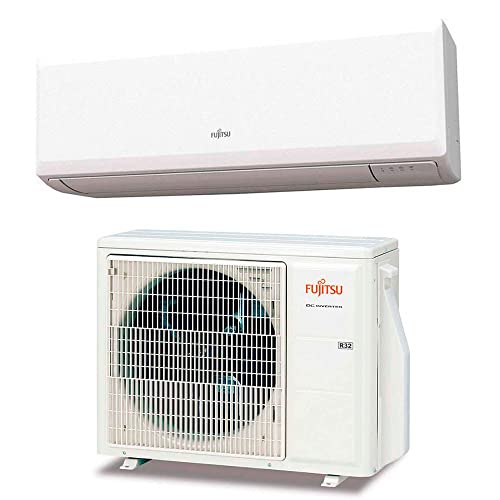
Are Fujitsu air conditioners good?
Fujitsu air conditioners are a sensible choice for buyers who want a focused inverter split system with quiet comfort and useful heating.
Fujitsu air conditioners suit ordinary bedrooms and living rooms where dependable cooling, a compact wall unit, and restrained controls matter. ASYG and related model families cover practical mono-split installations, with higher-positioned versions adding stronger seasonal efficiency or comfort functions in selected markets.
Fujitsu air conditioners have less visible range depth than Daikin or Mitsubishi in some local markets, so check the exact model, installer, and service channel carefully. Wi-Fi, filtration, heating output, and multi-split compatibility should be confirmed on the current product sheet rather than inferred from the brand name.
What are the main advantages of Fujitsu air conditioners?
The main advantages of Fujitsu air conditioners are as follows:
- Quiet everyday use: Fujitsu wall units can provide low-fan comfort suitable for bedrooms and studies. Check the low-mode and maximum sound values because room acoustics and fan speed still determine what the household hears.
- Efficient inverter output: Variable capacity helps the system adjust to changing heat load instead of using repeated full-power cycles. The effect depends on correct sizing, clean filters, and an outdoor unit with enough airflow.
- Heating capability: Many split systems provide both cooling and heating for shoulder seasons and ordinary winter use. Compare SCOP and low-temperature capacity if heating is more than an occasional convenience.
- Focused range: The range is relatively straightforward, which can make a normal mono-split installation easier to specify. Buyers who need unusual layouts should still confirm the exact local combination.
- Compact design: Selected indoor units have a restrained footprint that works in bedrooms and living spaces. Measure depth, side clearance, and airflow direction before choosing a model for a tight wall.
What are the main disadvantages of Fujitsu air conditioners?
The main disadvantages of Fujitsu air conditioners are as follows:
- Limited local availability: Some markets offer fewer Fujitsu capacities and series than the larger Japanese brands. This can make replacement or multi-room planning more dependent on one installer or distributor.
- Model-code complexity: ASYG, ASY, and regional suffixes can carry different controls, efficiency, or heating details. Compare the full indoor and outdoor model codes rather than a shortened family name.
- Feature variation: Wi-Fi, advanced filtration, humidity control, and premium sound modes are not universal. Confirm each feature in the exact configuration and include optional-module costs.
- Service dependence: Correct refrigerant charge, drainage, and commissioning have a large effect on comfort and noise. Ensure the installer can support Fujitsu parts and warranty procedures locally.
- Narrow premium choice: Fujitsu can be less suitable when the buyer wants a highly design-led indoor unit or a large menu of specialist air-treatment functions. A broader premium range may then offer more alternatives.
How much do Fujitsu air conditioners cost?
Fujitsu air conditioners cost about £470-£770 for equipment in the common wall-mounted range, with professional installation priced separately. Practical compact systems are often near £470-£600, while larger or better-equipped versions move toward £770.
Add pipework, brackets, electrical work, condensate drainage, commissioning, and any Wi-Fi or filtration module to the project budget. If a local distributor offers only a narrow selection, replacement parts and service arrangements are worth checking before purchase.
How do Fujitsu air conditioners compare with Daikin models?
Fujitsu and Daikin both offer efficient inverter split systems, but Daikin gives buyers a broader spread of entry, premium, humidity-control, and multi-split equipment. Fujitsu is attractive when a focused, quiet mono-split installation and local specialist support are the main priorities.
Fujitsu ASYG and related families cover ordinary room cooling and heating without the wide premium taxonomy found in Daikin's Sensira, Perfera, Emura, and Stylish ranges. Daikin therefore offers more choice, while Fujitsu can keep a conventional installation easier to understand.
Choose Fujitsu when the exact sound level, capacity, installer, price, and service channel fit the room. Choose Daikin when you need more indoor-unit styles, air-treatment functions, or multi-room combinations; compare current model codes and seasonal ratings rather than brand reputation alone.
What should you consider while choosing the best Fujitsu air conditioner?
Before choosing a Fujitsu air conditioner, consider the following factors:
- Capacity and room load: Match the system to room area, insulation, glazing, ceiling height, and solar gain. A compact 2.5–3.5 kW unit may suit many bedrooms or living rooms, but the installer should verify the actual heat load.
- Exact model family: Compare the full ASYG or ASY model code, not just the Fujitsu name. This is where Wi-Fi, filtration, heating output, energy class, and indoor-unit dimensions can differ.
- Bedroom sound: For a sleeping room, look for a low-mode indoor sound figure around 20–25 dB and check the maximum level as well. A quiet specification is useful only if the unit can maintain temperature without a louder fan mode.
- Heating use: Compare SCOP and declared heating capacity at lower outdoor temperatures when the air conditioner will heat regularly. Cooling capacity alone does not show winter performance.
- Controls and filters: Confirm timers, Wi-Fi, filtration, and any optional modules on the exact indoor unit. Ask about cleaning intervals and replacement-filter availability before installation.
- Outdoor installation: Check pipe length, drain routing, electrical supply, outdoor clearance, and noise at the property boundary. These details can rule out a model even when the indoor capacity looks correct.
- Service support: Confirm local commissioning, warranty handling, spare remotes, filters, and qualified service. A less common system needs especially clear support arrangements.