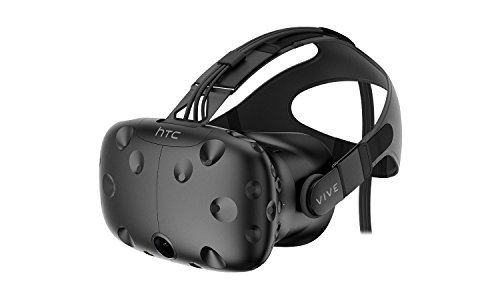
HTC VIVE review. Compare 89 technical specifications and user reviews to see how it ranks among VR headsets and if it is worth buying.
Overall score
What it is: An overall evaluation of the VR headset's quality, based on technical analyses and user reviews.
When it matters: When you need a quick reference to identify the best VR headsets on the market.
Score components:
80.0%
Technical Score
20.0%
User score
Technical Score
What it is: An assessment of the VR headset's technical performance, covering eight key areas: display quality, tracking, comfort, controllers, connectivity, audio, battery, and design.
When it matters: When you want to compare VR headsets based on technical performance and available features.
Score components:
58.0%
Display & Optics
22.0%
Tracking & Sensors
10.0%
Controls & Audio
4.0%
Hardware
3.0%
Connectivity
3.0%
Design & Power
User score
What it is: A rating that combines user reviews and the total number of reviews received by the VR headset.
When it matters: When you want to know how a VR headset performs in real use and how reliable it remains over time according to user feedback.
Score components:
70.0%
User reviews
30.0%
Popularity
Score components:
40.0%
Refresh rate
35.0%
Touch controllers
25.0%
Resolution
Score components:
40.0%
Resolution
35.0%
Display type
25.0%
Visible FoV (horizontal)
Available: ranking among products currently available (including other versions of this product).
All: ranking among all products in the database.
#6 in Best VR Headsets for PC
#12 in Best VR Headsets for Steam
#13 in Best VR Headsets
#21 in Best Gaming VR Headsets
What it is: An assessment of the VR headset's technical performance, covering eight key areas: display quality, tracking, comfort, controllers, connectivity, audio, battery, and design.
When it matters: When you want to compare VR headsets based on technical performance and available features.
Score components:
58.0%
Display & Optics
22.0%
Tracking & Sensors
10.0%
Controls & Audio
4.0%
Hardware
3.0%
Connectivity
3.0%
Design & Power
What it is: A rating that combines user reviews and the total number of reviews received by the VR headset.
When it matters: When you want to know how a VR headset performs in real use and how reliable it remains over time according to user feedback.
Score components:
70.0%
User reviews
30.0%
Popularity
What it is: An indicator that combines the VR headset's overall rating with its cost.
When it matters: When you are looking for a VR headset with a good balance between quality and price.
Score components:
60.0%
Overall score
40.0%
Price
Importance: HIGH
Importance: LOW
Importance: HIGH
Good value: >100 Hz
Importance: HIGH
Good value: >105 °
Importance: HIGH
Good value: >97 °
Importance: HIGH
Importance: HIGH
Good value: >850 ppi
Importance: MEDIUM
Good value: >120 nits
Importance: MEDIUM
Importance: MEDIUM
Good value: >44 mm
Importance: HIGH
Importance: MEDIUM
Importance: MEDIUM
Importance: LOW
Importance: LOW
Importance: LOW
Importance: MEDIUM
Importance: LOW
Importance: MEDIUM
Good value: >4
Importance: LOW
Good value: >700 Hz
Importance: LOW
Importance: MEDIUM
Importance: LOW
Importance: LOW
Importance: MEDIUM
Importance: MEDIUM
Importance: MEDIUM
Importance: LOW
Importance: LOW
Importance: LOW
Importance: LOW
Importance: LOW
Importance: LOW
Importance: LOW
Importance: LOW
Importance: LOW
Importance: LOW
Importance: LOW
Importance: LOW
Importance: LOW
Importance: LOW
Importance: LOW
Good value: >0
Importance: LOW
Importance: LOW
Importance: LOW
Importance: LOW
Importance: LOW
Importance: LOW
Importance: MEDIUM
Importance: LOW
Importance: LOW
Importance: LOW
Importance: LOW
Importance: LOW
Importance: LOW
Importance: LOW
Importance: LOW
Good value: >20 hours
Importance: LOW
Importance: LOW
Good value: <135 g
Importance: LOW
Importance: LOW
Importance: LOW
Good value: >3 GHz
Importance: LOW
Importance: LOW
Good value: >8 GB
Importance: LOW
Good value: >128 GB
Importance: LOW
Good value: >3000
Importance: LOW
Good value: >850
Importance: LOW
Good value: >5000 MHz
Importance: LOW
Good value: >690 MHz
Importance: LOW
Good value: >6
Importance: LOW
Importance: LOW
Good value: >3
Importance: LOW
Good value: <7 nm
Importance: LOW
Importance: LOW
Importance: LOW
Good value: >4900 mAh
Importance: LOW
Good value: <2.5 hours
Importance: LOW
Good value: <500 g
Importance: LOW
Importance: LOW
Importance: LOW
Good value: <100 mm
Importance: LOW
Good value: <180 mm
Importance: LOW
Good value: <116 mm
Importance: LOW
Importance: LOW
Importance: LOW
Good value: >35 °C
Importance: LOW
Good value: <3 °C
Importance: LOW
Good value: >2020
Importance: MEDIUM
Importance: HIGH
Good value: >97 °
Importance: MEDIUM
Good value: >120 nits
Importance: MEDIUM
Importance: MEDIUM
Importance: LOW
Importance: MEDIUM
Importance: LOW
Importance: LOW
Importance: HIGH
Importance: HIGH
Importance: HIGH
Good value: >850 ppi
Importance: LOW
Importance: LOW
Importance: LOW
Importance: LOW
Importance: LOW
Good value: <135 g
(Reviews last updated: July 2026)
The HTC Vive delivers a groundbreaking, immersive VR experience featuring accurate, room-scale tracking via "lighthouse" sensors and a rich software library via SteamVR. Key strengths include intuitive motion controllers, physical, active gameplay, and solid hardware construction. However, the $800, 2016-era headset is burdened by a high cost and a heavy, unwieldy design. The setup process is complex, the experience can be buggy, and much of the initial software library feels unpolished.
HTC Vive Review Summary The HTC Vive provides an unmatched, highly immersive room-scale virtual reality experience by utilizing two light-emitting sensor boxes and precise motion-tracking hardware. Its core strengths lie in its sharp visuals, highly responsive wireless controller-wands, and the innovative "Chaperone" safety system. The Chaperone system uses an integrated front-facing camera to project a glowing blue grid, warning users of physical walls and real-world obstacles while they are blindfolded by the headset. Driven by Valve's open SteamVR platform, the device features a stellar launch lineup of games and creative applications that naturally leverage physical movement and manual interaction. However, this cutting-edge immersion demands a substantial trade-off in convenience, cost, and space. On the downside, the Vive requires an expensive, high-end gaming PC to run and relies on a bulky, 15-foot tether of cables that frequently tangles around the user's feet. The setup process is complex and enthusiast-level, requiring users to mount or tripod-stabilize tracking boxes with clear lines of sight across a large, clear floor area. Furthermore, users may experience occasional software glitches, such as tracking hiccups where controllers...
The HTC Vive provides a highly immersive room-scale virtual reality experience powered by Valve’s precise, laser-based Lighthouse tracking system, though it requires a significant real estate commitment of at least 2M x 1.5M of clear floor space. On the positive side, the hardware features an expertly robust build with comfortable face cushioning, an excellent wide field of view, and highly functional physical adjustments for Interpupillary Distance (IPD) and eye relief. Its wireless SteamVR controllers offer intuitive haptic feedback and pinpoint accuracy, backed by the safety-focused Chaperone grid and a helpful front-facing camera that prevents users from blindly colliding with walls. Furthermore, active room-scale gameplay delivers an engaging, intuitive user experience that doubles as physical exercise. However, the system has notable drawbacks, chief among them the mandatory, daunting clutter of breakout boxes, power bricks, and long cables needed for setup. Optically, Fresnel lens artifacts like glare and visible concentric ridges are quite obvious in high-contrast scenes. A major hardware omission is the lack of integrated audio, forcing users into an awkward "headphone dance" with the included ear buds or personal headsets....
The Wareable review praises the original HTC Vive as a groundbreaking VR system, highlighting its exceptional Room Scale capabilities, precise dual hand-tracking controllers, and the safety-focused Chaperone system. While offering a highly immersive, glasses-friendly experience, the device is positioned as a luxury for early adopters due to its high price and requirement for a powerful PC. Key drawbacks noted include a complex installation process involving wall-mounted trackers, a noticeable "screen door effect" where the display appears pixelated, and a content library initially limited to shorter tech demos rather than full-length games.
The Mashable review of the HTC Vive highlights the headset as a groundbreaking but imperfect first-generation consumer VR experience. A major pro is its inclusion of two hand controllers right in the box, which allow for natural physical interactions like painting in mid-air within apps like Tilt Brush. Furthermore, its "room-scale VR" utilizes wall-mounted sensors to translate physical spaces into playable environments, offering unmatched physical immersion and a true sense of "presence". The physical hardware assembly is surprisingly straightforward, needing only two main cords attached to an included Link Box and standard headphone connectivity.
The April 2016 Business Insider review by Ben Gilbert describes the HTC Vive as the premier, albeit expensive, consumer virtual reality experience, praising its groundbreaking room-scale tracking, responsive motion controllers, and intuitive Chaperone safety system. The headset is lauded for being comfortable, lightweight, and offering a pass-through camera for environmental awareness. Conversely, the review notes significant drawbacks, including the high cost of the unit and necessary PC, a frustratingly designed strap mechanism, and potential for tangling with the thick, tethered cable. Additionally, the complex setup process and occasional tracking glitches are highlighted as areas for improvement. Business Insider
The HTC Vive delivers an unprecedented and near-magical virtual reality experience by utilizing two groundbreaking features: room-scale VR capability and highly precise motion-tracked handheld controllers. Powered by two Lighthouse sensor beacons, the headset tracks a user's physical position as they move around a designated open space of at least six by five feet. It provides astonishingly accurate one-to-one movement translation. The dual OLED screens offer a combined resolution of 2160x1200, delivering wide and immersive visuals that easily outshine older gaming motion systems. The hardware is further lauded for its comfortable foam face padding, high build quality, robust controller battery life, and the effective Chaperone boundary safety system. It earned a highly positive 9.3 "Amazing" review score due to its revolutionary game interactions. However, these futuristic features come with heavy trade-offs in practicality, reliability, and price. Launching at a hefty $800, the Vive demands a powerful gaming PC and an elaborate setup process involving five separate power cables. It requires an intrusive 15-minute assembly and disassembly cycle. Performance is marred by frequent tracking glitches where the controllers disappear or the screen...
The Telegraph's review hails the HTC Vive as a groundbreaking, deeply immersive VR system, specifically praising its highly accurate room-scale tracking and responsive controllers. Key advantages include innovative safety features like the Chaperone system and a front-facing camera, alongside integrated phone services for a polished user experience. However, the review highlights significant drawbacks, including a complex, time-consuming setup process and a heavy, obtrusive tethering cable. Additionally, the requirement for permanent, high-mounted external sensors and a powerful PC makes it a challenging, high-cost entry into virtual reality.
The HTC Vive is praised as an incredibly immersive, sci-fi-esque virtual reality experience that provides a genuine "wow factor" through high-end hardware and superb tracking accuracy. Driven by a powerful PC and a dual 1200 x 1080 OLED screen layout, the headset remains surprisingly comfortable at 555g for extended play sessions. Its "Lighthouse" base stations offer lightning-fast, low-latency laser tracking of the headset and handheld controllers, enhanced further by convincing haptic feedback. Beyond gaming, the review highlights the device's immense long-term potential in fields like education and healthcare, noting how applications like "The Lab" and "Tiltbrush" offer jaw-dropping proof of concept for spatial 3D visualization and interaction. However, the hardware is weighed down by steep entry barriers, a clunky setup, and a noticeable lack of deep software. Financially, it is restricted to early adopters due to its hefty £750 price tag, and physically, it demands an immense room presence requiring anywhere from a 6.5 x 5ft minimum to a 15 x 15ft maximum clear playing space. The thick connection cabling trailing down the user's back presents an awkward weight and...
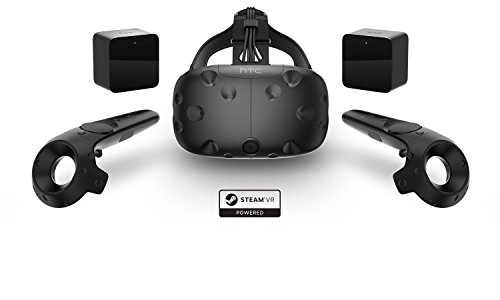
The HTC Vive is an excellent, immersive PC-tethered virtual reality system designed in collaboration with Valve that stands out for its robust support of whole-room VR and motion controls. Operating on the SteamVR platform, the system delivers a crisp visual experience with a 90Hz refresh rate and a resolution of 1,200 by 1,080 pixels per eye. Setting up the system takes about 20 minutes and requires a high-performance gaming PC equipped with at least an Nvidia GTX 970 or Radeon R9 290 GPU. The hardware bundle includes the main headset, a connection link box, two base stations for position tracking, and two identical motion-tracking wands featuring circular touchpads and triggers. Software experiences like The Lab and Job Simulator successfully showcase the platform's accuracy, though demanding applications can occasionally cause loading screen judder on lower-tier compatible hardware. System Pros & Cons Pro: Highly immersive whole-room VR capabilities. Pro: Chaperone boundary safety feature works exceptionally well. Pro: Smooth visual motion tracking with a strong SteamVR library. Con: Expensive retail pricing compared to standalone or mobile entry points. Con: The 10-foot physical tethering...
HTC Vive Review Summary The HTC Vive is a highly capable virtual reality headset that delivers an unmatched level of immersion thanks to its room-scale tracking and bespoke handheld controllers. It features a sharp 2160×1200 high-resolution display running at a smooth 90Hz refresh rate, which effectively eliminates lag and lens distortion to create a remarkably life-like visual experience. Equipped with over 70 internal sensors, it perfectly translates minute head movements to 1/10 of a degree. Setting up the system is highly customisable; users can easily map out their play area using the controllers, and the base stations can be mounted on tripods to avoid permanent wall drilling. Furthermore, its unique Bluetooth connectivity enables convenient smartphone notifications directly inside the virtual environment, while built-in front cameras let users safely view the physical world to untangle themselves or check surroundings. Despite its technical brilliance, the headset suffers from notable design and content drawbacks. The most glaring physical flaw is its heavy-duty wired cable, which runs down the user's back and regularly causes tripping or tangling during fast-paced movements, ultimately breaking the magic...
The HTC Vive is a highly immersive virtual reality headset developed in collaboration with Valve, running on the SteamVR platform, but its advanced capabilities come with a premium price and noticeable physical strain. Setting up the system takes about 30 minutes and requires a high-end PC alongside the installation of two wireless base stations to map out a room-scale play area. It excels at delivering unparalleled "presence"—the convincing feeling of actually being inside a virtual world—outperforming competitors with its dual 1080x1200 pixel OLED displays, highly accurate motion tracking, and an integrated webcam featuring a "Chaperone" safety system to prevent users from crashing into real-world objects. Bundled titles like The Lab and Tilt Brush brilliantly showcase its ability to translate natural hand and body movements into the virtual environment. However, the hardware suffers from significant ergonomic limitations, as the headset is noticeably heavy, bulky, and relies on an cumbersome arrangement of three long cables trailing over the user's head. Unlike the Oculus Rift, it lacks integrated audio, requiring users to manually plug in earbuds or external headphones. This extra bulk causes...
The HTC Vive virtual reality headset launched as an ambitious $799 competitor to the Oculus Rift, offering unmatched immersion through its standout "room-scale" tracking system. Guided by two Lighthouse infrared sensors, the headset enables users to walk physically through virtual environments, utilizing highly accurate, solid motion-tracked controllers that organically mimic real-world tools. Additional functional highlights include an integrated front-facing camera and a "chaperone system" that maps out physical boundaries, safely revealing real-world surroundings without needing to remove the headset. Quality optics and a tight nose-gap seal further enhance user isolation, making the Vive a premier, highly futuristic piece of technology. However, the hardware demands significant physical and technical compromises. Setting up the system is tedious, requiring a vast amount of dedicated floor space that may force users to rearrange furniture. The physical design of the headset is notably bulky and unrefined compared to the Rift, lacking integrated headphones and featuring a thick, heavy tethering cord that frequently tangles during room-scale movements. Furthermore, the overall user experience is hindered by a buggy and counterintuitive in-headset Steam interface, performance drops and dizziness...
The HTC Vive delivers an incredibly immersive virtual reality experience that effortlessly transports users into digital worlds, making active games like Space Pirate Trainer and Selfie Tennis feel highly engaging. Its standout features include a customisable digital play space and a built-in "chaperone mode" that maps real-world obstacles to help users navigate safely. However, the hardware feels distinctively first-generation due to its heavy headset, which causes noticeable neck soreness and physical fatigue after short sessions, alongside a cumbersome web of physical wires that are easy to step on. The software experience presents significant hurdles, requiring frequent troubleshooting, navigating inconsistent user interfaces, and managing disconnects that often require an outside "spotter" at the PC to help launch games. Furthermore, using a standard gamepad instead of the native Vive controllers frequently induces motion sickness. Combined with an intricate setup process and a steep $800 price tag, the review concludes that the Vive is a stellar but unpolished first attempt best suited for hardcore PC gamers rather than casual consumers.
The HTC Vive provides an exceptional and deeply immersive virtual reality experience, distinguished by its incredibly precise Lighthouse room-scale tracking system. Operating with two individual OLED panels running at a smooth 90 Hz refresh rate, the headset allows users to physically walk, duck, and interact naturally within a designated 2-by-2-meter gaming zone. The system relies on premium components, including highly responsive and intuitive motion controllers that transform seamlessly into virtual tools or weapons, and built-in "Chaperone" safety boundaries that successfully protect users from bumping into real-world walls. Despite its top-tier performance, the system suffers from significant logistical and financial drawbacks. On the downside, the heavy, thick tethering cable constantly disrupts movement and poses a tripping hazard, while the display suffers from a noticeable "screen-door effect" where individual pixels remain visible to the wearer. Additionally, the overall cost is remarkably high; the package requires a complex physical setup with mounting tripods, an expensive headset, and a high-end gaming PC equipped with top-tier graphics cards to run smoothly.
The HTC Vive marks an ambitious collaboration between HTC and Valve, delivering a highly immersive virtual reality experience powered by the SteamVR platform. On the positive side, the system offers exceptional motion tracking capabilities through its 360-degree laser tracking system, outstanding controller ergonomics, and high responsiveness that deeply pulls users into virtual worlds. The hardware features dual OLED displays with an initial rendering resolution of 3024 x 1680 pixels at a fluid 90 frames per second, complete with smart safety integration like a front-facing camera and virtual boundary lines to keep players safe during room-scale gameplay. However, this first-generation premium hardware comes with major spatial, financial, and physical constraints. On the negative side, it is incredibly expensive, requiring a steep financial investment alongside an exceptionally high-end PC equipped with a top-tier graphics card just to meet minimum requirements. Additionally, setting up the bulky external tracking pods is frustrating, and users must dedicate a large physical area of at least 4m² to play. During extended play sessions, comfort quickly degrades due to a heavy 4.5-metre tether cable that causes tripping hazards...
The review by Les Numériques awards the original HTC Vive a 4 out of 5 rating, praising it as the most impressive and immersive virtual reality headset on the market at its release. Tested with a high-end Nvidia GTX 980 Ti PC, the system stands out for its groundbreaking "Room Scale" full-body immersion, which lets users physically move within a calibrated area of 3 to 20 square metres. The core strengths of the Vive include the exceptional precision of its motion tracking via twin "Lighthouse" base stations, the outstanding ergonomic design of its lightweight controllers, and the highly intuitive Steam VR interface. Additionally, the front-facing camera is highlighted as a major positive, as it safely projects the real world onto the screen to prevent users from losing contact with reality. In terms of software, titles like The Lab, Vanishing Realms, and Space Pirate Trainer are commended for perfectly showcasing the headset's magical, highly reactive gameplay capabilities. However, the reviewer notes several prominent drawbacks that hinder the overall user experience and limit its mass-market appeal. Weighing a heavy 600 grams with...
The HTC Vive, developed with Valve, offers a highly immersive VR experience featuring two 2160 x 1200 OLED screens at 90 Hz, which successfully eliminate motion sickness and eye strain. Despite its somewhat bulky design, the headset is balanced and comfortable, providing an impressive, precise, and high-quality setup. The system includes excellent controllers with a five-hour battery life and features a 3.5mm jack for custom audio, though a lens-to-eye adjustment dial proved to be largely ineffective in practice. Setting up the HTC Vive is straightforward, allowing users to define their play area using SteamVR tracking. While the hardware quality is lauded as excellent, the primary drawbacks include the extensive physical space required for operation and the potential to experience neck fatigue over time. Overall, the review highlights the Vive as a robust, revolutionary device for virtual reality, despite the constraints of its physical design.
The HTC Vive is a premium virtual reality headset developed through an alliance between HTC and Valve, featuring dual OLED screens with a 2160 x 1200 total resolution, a 90 Hz refresh rate, and a 110-degree field of view. Designed to compete directly with the Oculus Rift, this system sets itself apart by offering a highly immersive, interactive environment via Steam's rich library, making the user an active participant rather than a passive spectator. The reviewer notes that while the initial visual experience is breath-taking, the hardware demands a powerful PC configuration, including at least an NVIDIA GTX 970 graphics card and 4 GB of RAM, to navigate its immersive titles. Pros and Cons Pros: Exceptional build quality and tracking precision from the base stations and two bundled controllers. It delivers excellent overall image sharpness with well-constructed lenses and a seamless Steam interface. The device also triggers less motion sickness compared to competitors like the PSVR. Cons: Ergonomically flawed, as its 600-gram weight is front-heavy and strains the neck, offering less comfort than the Oculus Rift or PSVR. The setup...
Comprehensive Review Summary The HTC Vive is an exceptionally powerful, first-generation virtual reality headset that delivers highly precise tracking and deeply immersive experiences. Its standout features include a remarkably straightforward setup process that takes less than an hour, driven by clear step-by-step animations and helpful tutorial playlists. On the technical side, the device boasts flawless real-time motion detection accurate to the centimeter, a built-in front camera that introduces augmented reality capabilities, and highly intuitive controllers featuring accessible touchpads and triggers. Despite its hefty weight of 600 grams, the headset remains remarkably comfortable during extended play sessions thanks to well-padded foam contours and adjustable velcro straps. However, the hardware suffers from a few notable drawbacks, primarily its steep price tag of €899. When factoring in the robust PC specifications required to run the unit—such as a GTX 970 graphics card and an i5-4590 processor—the total investment quickly escalates to between €2000 and €3000. Ergonomically, the side buttons on the controllers can feel awkward to grip tightly, and the heavy physical cables connecting the headset to the PC occasionally trail across the...
The 01net review hails the HTC Vive as the most stunning and immersive virtual reality headset of its time, delivering a highly precise "room-scale" experience. Developed in partnership with Valve, the system relies on two external laser base stations (Lighthouse tracking) that accurately trace the headset and motion controllers in real time, granting players unparalleled freedom to walk around physical spaces. The hardware features a combined screen resolution of 2160 x 1200 pixels at a 90 Hz refresh rate and a 110-degree field of view, providing rich, fluid, and highly interactive graphical experiences through the SteamVR platform. YouTube · Key Pros and Cons Pros: Flawless Tracking: The room-scale motion sensing is exceptionally precise, translating body movements into virtual space with almost zero latency. Innovative Ergonomics: The dual haptic controllers feel durable and organic, transforming intuitively into weapons or artistic tools. Integrated Safety Features: The Chaperone system and pass-through front-facing camera protect users from physical walls and furniture without requiring them to remove the helmet. YouTube · Cons: Cumbersome Architecture: It requires a complex, multi-component setup, a significant amount of open...
The HTC Vive is a highly immersive, premium virtual reality package developed by HTC and Valve that offers a robust and comfortable user experience with zero motion sickness during extended play sessions. Priced at over 900 euros, the comprehensive bundle includes the headset, motion-tracking controllers, and two room-scaling sensors, though it requires a high-end PC equipped with at least an NVIDIA 970 graphics card to run. Setting up the hardware takes roughly 30 minutes, requiring at least a 1.5x2 meter space to accurately scan room boundaries that display virtual barrier warnings so users do not collide with physical walls. Driven primarily by Steam, the platform supports precise interaction across various creative and gaming experiences like Tilt Brush, Job Simulator, and theBlu.
The HTC Vive offers an impressive and highly immersive virtual reality experience that stands out due to its precise room-scale tracking and real-time hand-movement monitoring. Setting up the system is relatively straightforward and takes under 30 minutes using the guided assistant. Key pros include its highly intuitive controls, an outstandingly accurate tracking system for both the headset and controllers (utilising 32 and 24 sensors respectively), and an innovative "chaperone" safety feature that uses an integrated front-facing camera to display virtual grid walls so users do not collide with physical obstacles. However, the device suffers from several notable cons. The heavy, thick 5-metre cable connecting the headset to the Link Box acts as a literal tripping hazard and breaks the overall sense of immersion. Additionally, the device requires a massive initial investment, requiring a high-end PC with a powerful GPU and costing nearly €900 on its own. It also demands a large, completely clear physical play area (minimum 2 x 1.5 metres), which is impractical for standard-sized rooms. Finally, the platform currently lacks a blockbuster franchise game, leaving users with an...
This review highlights the HTC Vive as the most advanced and immersive virtual reality system of its time, though it suffers from significant setup and content hurdles. On the positive side, the headset offers an unparalleled "room-scale" experience that allows players to physically walk, duck, and interact naturally within a virtual space. It features highly precise, responsive wireless controllers that track hand movements flawlessly, alongside advanced positional tracking that creates a seamless sense of presence unmatched by competitors like the Oculus Rift. However, the device is held back by several practical and technical drawbacks. Its initial installation is an incredibly tedious process, requiring a massive box of components, extensive software calibration, and a total of five separate power outlets just for the VR hardware. Physically, the headset is notably heavy, and users run the risk of tripping over its thick tethering cable or accidentally striking real-world objects. Ultimately, the reviewer notes that despite its stellar $799 hardware, the launch catalog is deeply disappointing, consisting mostly of short tech demos rather than fully-fleshed, expansive games that can hold a player's attention...
The ComputerHoy review details the HTC Vive as a groundbreaking virtual reality system that successfully delivers the core promises of immersive technology. A major advantage highlighted in the analysis is its ability to generate an open virtual environment where users can interact with total freedom. The precision tracking maps physical movements accurately into 3D environments, vastly expanding gameplay and non-gaming tools beyond traditional seated experiences. Additionally, platform integration via SteamVR provides users with customizable environments, desktop viewing capabilities, and a wide array of software options right from the start. YouTube · Despite these spectacular strengths, the review notes significant technical and practical drawbacks that limit its mainstream appeal. On the negative side, the physical headset is considered heavy, front-heavy, and industrial, which can cause physical fatigue during extended gaming sessions. Setting up the hardware is highly complex, requiring multiple power adapters, a designated link box, and the diagonal mounting of two laser lighthouse towers. Furthermore, the thick, trailing three-wire cable bundle tethers the user to a high-end PC, presenting a constant real-world tripping obstacle. The software ecosystem also suffers from...
The Xataka review highlights the HTC Vive Pre as an outstanding, highly immersive virtual reality system developed in collaboration with Valve. A major pro is its advanced tracking ecosystem, which smoothly registers whether the user is standing, sitting, or walking. This complete physical immersion is further enhanced by dual internal screens delivering a sharp 1200 x 1080 pixel resolution per eye paired with a fluid 90 fps refresh rate to eliminate motion sickness. The reviewer praises the physical build for including interchangeable cushioning and multiple nosepiece sizes to ensure broad ergonomics. Additionally, the inclusion of a multi-functional front-facing camera acts as a crucial safety feature by revealing subtle green outlines of real-world obstacles or providing a full external view so users don't have to remove the headset during breaks. If you like, I can: Compare these original specs to modern VR headsets Detail the PC system requirements needed to run it Explain how its SteamVR Lighthouse tracking works
The HTC Vive represents a highly immersive leap forward in virtual reality, developed through a partnership between HTC and Valve. In terms of pros, the headset offers a truly 100% immersive experience by tracking full physical movement rather than just where the user looks. Driven by over 70 sensors across the headset and controllers, alongside two room-mapping lasers, it accurately translates real-world movements into virtual space. This setup includes a clever, realistic safety grid that generates a virtual boundary whenever a user gets too close to a physical wall, successfully preventing injuries. The hands-on experience is highly interactive, featuring intuitive controllers equipped with capacitive thumb sensors, and interactive software demos like a deep-sea shipwreck, a cooking simulator, and a highly polished encounter with GLaDOS from Valve's Portal universe. However, the hardware does face several prominent cons and future roadblocks. At the time of this preview, the device lacks a concrete launch date, an official price point (though it is explicitly noted that it will be very expensive), and a definitive list of PC system requirements. Furthermore, everything tested so far...
Overview and Technical Performance This 2016 review from Multiplayer.it highlights the HTC Vive as the most technologically advanced and immersive virtual reality headset on the market, standing out against competitors like PlayStation VR and Oculus Rift. Developed through a collaboration between Valve and HTC, the device features a PenTile OLED display with a resolution of 2160x1200 (1080x1200 per eye), a 90 Hz refresh rate, and a 110-degree field of view. The reviewer praises its exceptional tracking reactivity, seamless integration with SteamVR, and the innovative "Chaperone" mode, which uses an integrated front-facing camera to display grid boundaries so users do not collide with physical walls. Unlike its competitors, the Vive is sold as an all-inclusive bundle priced at €899 (plus roughly €60 shipping) that contains everything needed for the full experience, including two advanced 3D motion controllers and the necessary external base stations. Pros, Cons, and Spatial Requirements The primary pros of the HTC Vive are its unmatched level of total immersion, the inclusion of all essential hardware and wireless 3D controllers right in the box, and its flawless, unified integration...
The HTC Vive stands out as a highly immersive virtual reality headset, largely due to its superior room-scale tracking and precise motion controllers. Unlike older motion peripherals, the Vive tracks movements with incredible accuracy, allowing users to naturally interact with virtual objects as if they were real. The headset features dual OLED screens providing a sharp 2160x1200 combined resolution, along with a comfortable foam face mask and adjustable velcro straps that fit larger head sizes well. Additionally, it includes a unique front-facing camera that lets users view their real-world surroundings without taking the headset off. However, the system has notable drawbacks regarding practicality, setup, and hardware design. Preparing the device is a complex 15-minute process that requires a powerful PC, an expansive clear floor space of at least 1.8 by 1.5 metres, and an array of five different power cables. A thick, heavy bundle of three cables remains constantly attached to the user during movement, which can break immersion. Furthermore, the Vive lacks built-in headphones, forcing users to clumsily manage separate audio gear, and its lenses have a narrow sweet...
The HTC Vive is a highly complete, room-scale virtual reality system developed by HTC and Valve that relies on the SteamVR ecosystem and the newer Viveport store. Its standout features include highly accurate motion controllers with broad analog triggers and a flawless, low-latency tracking system capable of perfectly mapping the user's real-world environment. This high-fidelity positional tracking successfully tricks the senses, creating immersive gaming experiences in titles like Raw Data and Budget Cuts where physical movements such as ducking behind cover or aiming weapon accessories feel completely natural. However, the hardware suffers from complex installation demands and sub-optimal ergonomics, requiring users to mount bulky base stations at high angles and carefully calibrate a complex web of physical cables. The mandatory connection to the PC uses a thick, flat cable assembly that easily tangles and poses a persistent tripping hazard during active movement. Additionally, the heavy, highly elastic head strap makes adjusting lenses difficult and creates comfort issues over prolonged sessions, while the physical grip buttons on the controllers are overly stiff and awkward to press.
of the HTC Vive The HTC Vive offers a revolutionary virtual reality experience by allowing users to move freely within a tracked, physical environment up to a 5-meter diagonal area. Developed alongside Valve, the system utilizes a headset, two wireless controllers, and two laser base stations to track real-world movements with flawless precision. However, this advanced spatial mapping demands significant computing power, requiring strict minimum PC hardware specifications (such as an NVIDIA GTX 970 GPU and an Intel i5-4590 CPU) to prevent latency and motion sickness. Additionally, the physical setup process is complex and tedious, taking roughly an hour to map out the mandatory 1.5 x 2-meter minimum play zone. Pros and Cons Pros Cons Flawless tracking system that seamlessly translates physical motion to the virtual environment. Cumbersome physical hardware, including a heavy headset and a bulky, intrusive trailing cable. Deeply immersive immersion that makes games and basic graphics feel incredibly realistic. Visual imperfections such as a noticeable screen-door pixel grid and concentric lens reflections. Intuitive chaperone system that uses the front-facing camera to display boundaries and keep players safe....
Andrea Galeazzi's review of the HTC Vive, experienced in a Milanese bookstore, highlights the headset's advanced, immersive capabilities, distinct from competitors, with a final score of 8/10. He emphasizes its potential for interactive applications beyond gaming, such as educational, architectural, or interior design simulations, offering high-precision motion tracking and a realistic, fluid visual experience. andreagaleazzi.com The main strengths noted include total interaction with the virtual environment, precise motion tracking of the user's head, body, and hands, and realistic, well-calibrated lenses, with a notable downside being the potential for motion sickness, which Galeazzi experienced only after a significant period of usage. andreagaleazzi.com
The initial impressions of the HTC Vive highlight an incredibly comprehensive but highly complex hardware kit. Setting up the device took roughly 15 minutes, which involved positioning two wireless, cube-shaped tracking sensors diagonally across a bedroom. Pros mentioned in the review include the surprisingly swift software installation via Steam VR, ergonomic and lightweight wireless controllers equipped with responsive touchpads, and a well-designed headset strap system that efficiently distributes the hardware's weight once properly adjusted on the face. Conversely, the review notes several logistical cons, starting with a steep purchase price of approximately €930 including taxes and shipping. The physical package is massive compared to earlier development kits, creating an immediate clutter of long wires running through a dedicated link box to the PC. Furthermore, the base sensors demand a clear line of sight and mandatory proximity to electrical outlets due to short power cables, adding difficulty to clean cable management. The provided audio earphones also feature a restrictive, short cable.
This review details a first-hand testing experience of the HTC Vive VR headset during its initial unveiling at the Mobile World Congress. The device is highlighted as a highly advanced virtual reality system developed in collaboration with Valve. A major pro emphasized by the reviewer is its innovative room-scale tracking capability, powered by wall-mounted laser sensors. This hardware allows users to move freely in a physical environment, walk around, and naturally interact with 360-degree virtual spaces using two handheld controllers. Crucially, this physical movement drastically minimizes or entirely removes "motion sickness" (the nausea frequently experienced with stationary VR headsets like the Oculus Rift or Samsung Gear VR) by keeping the brain aligned with physical motion. The system successfully delivers deeply immersive experiences, ranging from interactive 3D space painting and viewing cinematic sci-fi battles to realistic, vertically-inducing simulator games.
Based on the provided article, this 2016 review compares the consumer versions of the Oculus Rift and HTC Vive virtual reality headsets, highlighting that both devices successfully deliver an unprecedented level of user immersion for gaming, tourism, and cinema. The primary advantages (pros) shared by both systems include highly accurate head and body tracking, responsive and high-resolution OLED displays that heavily reduce motion sickness/nausea compared to early prototypes, and directional audio calibrated with head tracking to create a totally believable auditory experience. Furthermore, they feature premium mechanical adjustment systems and cutting-edge optical lenses. However, the review points out distinct differences and disadvantages (cons) for each ecosystem. A major drawback shared by both headsets is the restrictive wired connection directly linking the casquet to the PC to handle high-speed video data, alongside high retail prices driven by their premium components. In a direct comparison, the HTC Vive holds a tracking and control advantage through its SteamVR platform, using two "Lighthouse" base stations and dual controllers to let users naturally walk around an environment of roughly 4.5 x 4.5 meters; yet, this...
HTC Vive Review Summary The HTC Vive provides an immersive virtual reality experience, distinguished by its innovative Lighthouse roomscale tracking system and precise motion controllers. The hardware includes dual OLED displays delivering a 90Hz refresh rate, an adjustable lens distance system, and an integrated front-facing camera. On the software side, the headset relies heavily on the SteamVR interface and uses the Chaperone system to project virtual grid boundaries for physical safety. Performance is maintained via automatic interleaved reprojection to handle brief drops below 90 frames per second. The testing environment showed that games like Hover Junkers, Space Pirate Trainer, and The Lab run smoothly at full framerate on a standard Nvidia GTX 970 or AMD Radeon R9 290 graphics card. Pros and Cons Pro: Precise roomscale tracking allows physical movement in virtual spaces. Pro: Responsive controllers translate accurately as hands or weapons. Pro: Chaperone system safely warns players before they hit obstacles. Pro: Front camera allows checking surroundings without removing the headset. Con: Bulky triple-cable harness easily tangles and creates a tripping hazard. Con: High room requirements demand moving furniture...
The TechPulse review of the HTC Vive highlights it as a highly spectacular and natural virtual reality experience, though its initial excitement fades over time. The reviewer notes several prominent pros, including an incredibly immersive room-scale tracking system that pinpoints every motion with razor-sharp precision. It features an integrated monochrome camera to view the real world and depth-adjustable lenses that provide a highly comfortable experience for users wearing glasses. Furthermore, its native integration with SteamVR opens up a massive library of over 300 compatible games, including titles like Job Simulator. However, the review outlines major cons regarding its setup and everyday comfort. The initial space calibration can be tedious if furniture moves, and the multi-cable hub layout means it takes up to five minutes just to start playing. Physically, the headset weighs 555 grams—making it 85 grams heavier than its primary rival, the Oculus Rift—and it places heavy pressure on the user's forehead and nose bone during extended sessions. Additionally, the lack of built-in headphones requires users to fiddle with external audio cables, and the motion controllers are described as...
HTC Vive Review Summary The IGN Review of the HTC Vive highlights the hardware as an unprecedented and groundbreaking virtual reality system that delivers an unmatched level of presence. The reviewer praises the system's incredibly precise, one-to-one room-scale tracking and highly responsive hand-tracking controllers, noting they are vastly superior to older motion tech like the Wii or Kinect. The combined 2160 x 1200 resolution screen offers clear visuals for reading text and appreciating in-game details. Safety concerns are effectively answered by the integrated Chaperone system, which builds an illuminated virtual cage to keep users from colliding with physical walls, while a front-facing pass-through camera allows a quick peek into the real world. Navigation is also remarkably fluid thanks to its natural integration with Steam VR. YouTube · However, the hardware comes with significant caveats, primarily its demanding setup process and premium cost. It requires a hefty financial commitment, including a high-end, VR-capable PC, a massive open floor space, and managing a messy bundle of five distinct power cables and a thick tethering cord. The headset itself is slightly front-heavy, and...
Based on 14 user reviews on Tweakers, the HTC Vive is highly praised for offering an incredibly immersive, "wow-moment" virtual reality experience driven by its superb room-scale tracking accuracy and highly responsive included motion controllers. Multiple users noted that the precision of the tracking—which functions down to the millimetre—along with interactive features like the built-in passthrough camera, chaperone boundary system, and instant haptic feedback, makes interacting with virtual objects feel natural and accessible. Reviewers appreciated its high compatibility across the expanding SteamVR library. They found the initial awe factor easily masks early-generation visual flaws, making it feel like a worthwhile investment despite its premium price tag. However, the headset has notable drawbacks, with users consistently criticising the low screen resolution where pixels are clearly visible ("screen-door effect") and smaller text appears blurry. Hardware and setup friction are also prominent issues; the system requires a powerful, high-end gaming PC, demands a large physical space, and relies on tedious, heavy cabling that users frequently trip over unless routed through the ceiling. Additional complaints include physical discomfort during long sessions, non-washable foam padding,...
Compare