HTC VIVE Focus Review | 89 Data compared

double-arrow
  • Avg. price in UK: ~£1,080
  • Avg. price in US: ~$600
  • Weight: 702 g
  • Resolution: 1440x1600
  • Refresh rate: 75 Hz
  • Display type: OLED
  • Device type: standalone

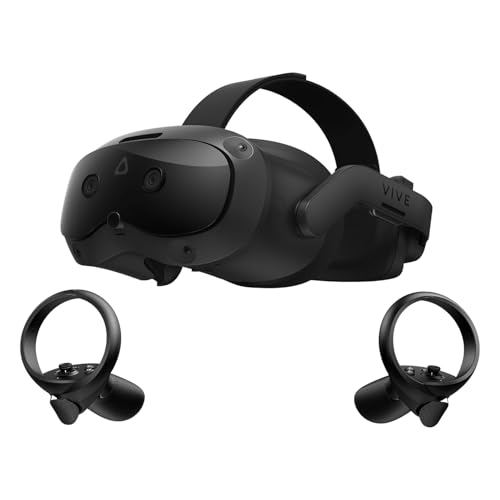
HTC VIVE Focus review. Compare 89 technical specifications and user reviews to see how it ranks among vr headsets and if it is worth buying.

6.7

Overall score

What it is: An overall evaluation of the VR headset's quality, based on technical analyses and user reviews.

When it matters: When you need a quick reference to identify the best VR headsets on the market.

Score components:

80.0%

6.7

Technical Score

20.0%

?

User score

Good
6.7

Technical Score

What it is: An assessment of the VR headset's technical performance, covering eight key areas: display quality, tracking, comfort, controllers, connectivity, audio, battery, and design.

When it matters: When you want to compare VR headsets based on technical performance and available features.

Score components:

58.0%

5.9

Display & Optics

22.0%

7.8

Tracking & Sensors

10.0%

9.3

Controls & Audio

4.0%

4.7

Hardware

3.0%

8.0

Connectivity

3.0%

6.4

Design & Power

Good
?

User score

What it is: A rating that combines user reviews and the total number of reviews received by the VR headset.

When it matters: When you want to know how a VR headset performs in real use and how reliable it remains over time according to user feedback.

Score components:

70.0%

?

User reviews

30.0%

?

Popularity

  • 6.3
    Gaming

    Score components:

    40.0%

    3.3

    Refresh rate

    35.0%

    10

    Touch controllers

    25.0%

    6.1

    Resolution

  • 7.5
    Movies

    Score components:

    40.0%

    6.1

    Resolution

    35.0%

    8.8

    Display type

    25.0%

    ?

    Visible FoV (horizontal)

  • No image
No image

Best prices in UK

Best rankings

?

Available: ranking among products currently available (including other versions of this product).
All: ranking among all products in the database.

Verdict

The HTC Vive Focus Vision is a hybrid VR headset featuring a combined 5K resolution (2448 x 2448 pixels per eye), a 120° field of view, and a 90Hz refresh rate that can reach 120Hz in DisplayPort mode. Powered by the Snapdragon XR2 chipset with 12GB of RAM, it offers integrated eye-tracking with auto-IPD adjustment, full-color passthrough for mixed reality, and a hot-swappable battery system that allows for continuous use without powering down. Its main pros include high visual fidelity, balanced ergonomics due to the rear-mounted battery, and the versatility of switching between standalone use and lossless PC VR streaming. However, its notable cons are a high price point of approximately $999, a lackluster library of standalone content compared to competitors, and the use of older Fresnel lenses which can introduce visual artifacts like god rays.

Technical Specifications of HTC VIVE Focus

Technical Score

What it is: An assessment of the VR headset's technical performance, covering eight key areas: display quality, tracking, comfort, controllers, connectivity, audio, battery, and design.

When it matters: When you want to compare VR headsets based on technical performance and available features.

Score components:

58.0%

?

Display & Optics

22.0%

?

Tracking & Sensors

10.0%

?

Controls & Audio

4.0%

?

Hardware

3.0%

?

Connectivity

3.0%

?

Design & Power

6.7
HTC VIVE Focus has a technical score of 6.68 points, which is higher than 61.2% of VR headsets.
User score

What it is: A rating that combines user reviews and the total number of reviews received by the VR headset.

When it matters: When you want to know how a VR headset performs in real use and how reliable it remains over time according to user feedback.

Score components:

70.0%

0.0

User reviews

30.0%

1.0

Popularity

?
Popularity
What it is: An indicator based on the number of reviews received by the VR headset.
When it matters: When you prefer to buy a product chosen and reviewed by many other consumers.
1.0
HTC VIVE Focus has a popularity of 1 points, which is lower than 65.3% of products in this category.
Ratio quality/price

What it is: An indicator that combines the VR headset's overall rating with its cost.

When it matters: When you are looking for a VR headset with a good balance between quality and price.

Score components:

60.0%

6.7

Overall score

40.0%

4.8

Price

6.1
HTC VIVE Focus has a quality-to-price ratio of 6.1 points, which is lower than 81.6% of products in this category.
Resolution
What it is: The total number of pixels displayed on the screen, expressed as width x height, determining sharpness.
When it matters: When you want crisp text and sharp details in photos and videos.

Importance: HIGH

1440x1600
HTC VIVE Focus has a screen resolution of 1440x1600 which is lower than that of 51.3% of VR headsets and equal to that of 15.4% of VR headsets.
Screen size
What it is: The physical diagonal measurement of the display area, usually expressed in inches.
When it matters: When you want a larger image area that can feel more immersive in games, movies, and VR apps.

Importance: LOW

Good value: >4.41 inches

3.5 inches
Refresh rate
What it is: The number of times per second the display updates the image, measured in Hertz (Hz); higher rates offer smoother motion.
When it matters: When you want scrolling to feel fluid and games to look smoother.

Importance: HIGH

Good value: >102 Hz

75 Hz
HTC VIVE Focus supports a refresh rate of 75 Hz which is lower than in 82.1% of VR headsets and equal to that in 2.6% of VR headsets.
Visible FoV (horizontal)
What it is: Measures the visible horizontal field of view of the image, expressed in degrees.
When it matters: When you want a wider left-to-right view for racing, shooters, and room-scale immersion.

Importance: HIGH

Good value: >105.7 °

?
Visible FoV (vertical)
What it is: Measures the visible vertical field of view of the image, expressed in degrees.
When it matters: When a taller visible image helps scenes feel less cropped above and below your view.

Importance: HIGH

Good value: >97.5 °

96 °
HTC VIVE Focus offers a vertical FoV of 96 ° which is wider than that of 52.8% of VR headsets and equal to that of 13.9% of VR headsets.
Show more
Tracking type
What it is: Specifies the tracking method used for positional detection, such as inside-out or outside-in.
When it matters: When you want to know whether tracking depends on onboard cameras or external hardware.

Importance: LOW

inside-out
360° head tracking
What it is: Shows whether the headset can track head movement across a full 360-degree space.
When it matters: When you turn around often in room-scale games and do not want tracking blind spots.

Importance: MEDIUM

yes
HTC VIVE Focus supports full 360° head tracking. 2% of VR headsets support this tracking mode.
N. of tracking sensors
What it is: Counts the integrated sensors used for positional or motion tracking.
When it matters: When you compare how much built-in hardware the headset uses for motion tracking.

Importance: LOW

Good value: >4.2

2
N. of cameras
What it is: Counts the built-in cameras used for tracking, passthrough, or environmental sensing.
When it matters: When passthrough quality, room mapping, and inside-out tracking matter to your setup.

Importance: MEDIUM

Good value: >4.2

2
HTC VIVE Focus has 2 cameras which is more than in 39.6% of VR headsets and equal to that in 18.8% of VR headsets.
Tracking frequency
What it is: Indicates how often the tracking system updates position data, measured in hertz.
When it matters: When you want fast motion tracking to stay stable during quick head or hand movement.

Importance: LOW

Good value: >718 Hz

?
Show more
Operating system
What it is: The primary system software that manages the headset's hardware, apps, and core functions.
When it matters: When you have a preference for the user interface and app ecosystem.

Importance: LOW

Android
OpenXR support
What it is: Indicates whether the headset supports the OpenXR standard for compatible VR software.
When it matters: When you want broader compatibility with VR apps across different software platforms.

Importance: LOW

yes
HTC VIVE Focus supports OpenXR. 37.8% of VR headsets support this cross-platform VR standard.
Wireless PC streaming
What it is: Shows whether the headset can receive PC VR content over a wireless connection.
When it matters: When you want PC VR without a cable running from the headset to your computer.

Importance: LOW

yes
HTC VIVE Focus supports wireless PC streaming. 65.3% of VR headsets support cable-free PC VR streaming.
Wi-Fi connectivity
What it is: The ability of the headset to connect to a wireless network.
When it matters: When you want wireless downloads, streaming, updates, or online features without relying on a cable.

Importance: LOW

yes
HTC VIVE Focus has Wi-Fi. 63.3% of VR headsets have Wi-Fi connectivity.
Wi-Fi version
What it is: Version of Wi-Fi standard supported.
When it matters: When compatibility with your router and wireless setup affects download speeds, streaming quality, or latency.

Importance: LOW

Wi-Fi 5
HTC VIVE Focus supports Wi-Fi Wi-Fi 5, which is more advanced than 67.4% of VR headsets and equal to 8.2% of VR headsets.
Show more
Touch controllers
What it is: Shows whether dedicated motion controllers are included for hand-based input in VR.
When it matters: When your favorite games rely on precise hand input rather than hand tracking alone.

Importance: MEDIUM

yes
HTC VIVE Focus includes touch controllers. 28.6% of VR headsets come with dedicated hand controllers.
Game controller included
What it is: Indicates whether game controllers are included in the standard package.
When it matters: When you want a complete VR package and do not want to buy controllers separately.

Importance: LOW

yes
HTC VIVE Focus includes a game controller. 36.7% of VR headsets ship with controllers in the box.
Spatial audio
What it is: Supports immersive spatial audio playback.
When it matters: When movies, games, and VR experiences feel better with more immersive positional sound.

Importance: LOW

yes
HTC VIVE Focus supports spatial audio. 10.6% of VR headsets support spatial audio.
N. of speakers
What it is: Counts the built-in speakers used for audio playback.
When it matters: When you plan to use the headset without separate headphones or external speakers.

Importance: LOW

2
HTC VIVE Focus has 2 speakers which is more than in 39.1% of VR headsets and equal to that in 60.9% of VR headsets.
N. of microphones
What it is: The number of microphones built into the headset or its integrated hardware.
When it matters: When voice chat, voice commands, or in-headset recording quality matter to your setup.

Importance: LOW

2
HTC VIVE Focus includes 2 microphones, which is more than 44.2% of VR headsets and equal to 48.8% of VR headsets.
Show more
Device type
What it is: Describes the overall headset class, such as standalone, PC VR, or mixed reality.
When it matters: When you choose between a standalone headset, a PC VR model, or mixed-reality use.

Importance: LOW

standalone
Chipset
What it is: The central System-on-Chip (SoC) that houses the CPU, GPU, modem, and other core processing components.
When it matters: When you want to know the specific engine powering your device's speed and features.

Importance: LOW

Snapdragon 835
HTC VIVE Focus uses the Snapdragon 835 processor model which is slower than processors in 64.7% of VR headsets and equal to processors in 11.8% of VR headsets.
CPU clock speed
What it is: Indicates the base operating frequency of the main processor, measured in gigahertz.
When it matters: When you compare standalone headset speed for games, menus, and mixed-reality apps.

Importance: LOW

Good value: >2.86 GHz

2.45 GHz
HTC VIVE Focus has a CPU clock speed of 2.45 GHz which is lower than that of 64.7% of VR headsets and equal to that of 11.8% of VR headsets.
GPU model
What it is: The official model name of the graphics processor used in the tablet.
When it matters: When you compare graphics hardware for gaming, video editing, or benchmarks.

Importance: LOW

Adreno 540
HTC VIVE Focus uses the Adreno 540 GPU model, which is less advanced than that used in 66.7%.
RAM capacity
What it is: States the installed RAM capacity used for system operation and multitasking.
When it matters: When you want smoother multitasking and better headroom for demanding VR apps.

Importance: LOW

Good value: >9.3 GB

4 GB
HTC VIVE Focus has 4 GB of RAM, which is less than 66.7% of VR headsets and equal to 11.1% of VR headsets.
Show more
Battery capacity
What it is: The amount of electric charge the battery can store, usually measured in mAh.
When it matters: When you want longer untethered play time without recharging the headset too often.

Importance: LOW

Good value: >4980 mAh

4,000 mAh
HTC VIVE Focus has a battery capacity of 4000 mAh mAh which is lower than that of 52.9% of VR headsets and equal to that of 5.9% of VR headsets.
Charging time
What it is: Time required for a full charge.
When it matters: When charging speed, charging method, or battery upkeep convenience matters to your routine.

Importance: LOW

Good value: <2.3 hours

2 h
HTC VIVE Focus recharges in 2 h, which is faster than 46.2% of VR headsets and equal to 38.5% of VR headsets.
Weight
What it is: The total weight of the headset, affecting how heavy it feels during use.
When it matters: When you want a headset that feels lighter and more comfortable during longer VR sessions.

Importance: LOW

Good value: <484.2 g

702 g
HTC VIVE Focus weighs 702 g which is heavier than 77.8% of VR headsets and equal to the weight of 2.2% of VR headsets.
Headstrap type
What it is: Identifies the design of the headstrap used to secure the headset on the user's head.
When it matters: When comfort, balance, and pressure distribution matter during long VR sessions.

Importance: LOW

rigid halo
HTC VIVE Focus uses a rigid halo headstrap, which is more comfortable than the design on 44.9%.
Body material
What it is: The main material used for the headset body or housing.
When it matters: When you care about how sturdy, premium, or lightweight the headset feels over time.

Importance: LOW

plastic
Show more

HTC VIVE Focus vs the average VR headset

  • Supports hand tracking
    HTC VIVE Focus supports hand tracking, the average VR headset does not. 26% of VR headsets support hand tracking.
    What it is: Shows whether the headset can track the user's hands without relying on controllers.
    When it matters: When you want controller-free interaction for menus, MR apps, or casual media use.

    Importance: MEDIUM

    HTC VIVE Focus supports hand tracking, the average VR headset does not. 26% of VR headsets support hand tracking.
  • Supports body tracking
    HTC VIVE Focus supports body tracking, the average VR headset does not.
    What it is: Shows whether the system supports tracking of the user's body beyond head and hands.
    When it matters: When full-body avatars, dance games, or external sensor expansion matter to you.

    Importance: LOW

    HTC VIVE Focus supports body tracking, the average VR headset does not.
  • 18 h longer controller battery life
    HTC VIVE Focus has a higher controller battery life than the average VR headset (30 h vs 12 h). The average controller battery lasts 12 h.
    What it is: States the maximum operating time of the controllers before the batteries need recharging or replacement.
    When it matters: When you play often and do not want controller batteries interrupting long sessions.

    Importance: LOW

    Good value: >22.5 hours

    HTC VIVE Focus has a higher controller battery life than the average VR headset (30 h vs 12 h). The average controller battery lasts 12 h.30 h vs 12 h
  • Includes remote control
    HTC VIVE Focus includes a remote control, the average VR headset does not.
    What it is: Indicates whether a physical remote control is included with the soundbar.
    When it matters: When you want easier everyday control.

    Importance: LOW

    HTC VIVE Focus includes a remote control, the average VR headset does not.
  • Wider IPD adjustment range
    HTC VIVE Focus has a higher IPD adjustment range than the average VR headset (60.5–74 mm vs 60–70 mm). The average VR headset supports an IPD adjustment range of 60–70 mm.
    What it is: Defines the range within which the lens spacing can be adjusted, usually measured in millimeters.
    When it matters: When you need the headset to fit users with narrower or wider interpupillary distance.

    Importance: MEDIUM

    HTC VIVE Focus has a higher IPD adjustment range than the average VR headset (60.5–74 mm vs 60–70 mm). The average VR headset supports an IPD adjustment range of 60–70 mm.60.5–74 mm vs 60–70 mm
  • Includes compass
    HTC VIVE Focus features a compass, the average VR headset does not. 35.6% of VR headsets include a compass sensor.
    What it is: A digital magnetometer that determines the device's orientation relative to the Earth's magnetic north.
    When it matters: When you are hiking or navigating on foot and need to know which direction you are facing.

    Importance: LOW

    HTC VIVE Focus features a compass, the average VR headset does not. 35.6% of VR headsets include a compass sensor.
  • Larger tracking area
    HTC VIVE Focus has a higher tracking area than the average VR headset (33x30 m vs 10x10 m). The average VR headset supports a tracking area of 10x10 m.
    What it is: Defines the usable play area available for tracked VR or mixed-reality movement.
    When it matters: When you have limited room or want enough space for active room-scale sessions.

    Importance: LOW

    HTC VIVE Focus has a higher tracking area than the average VR headset (33x30 m vs 10x10 m). The average VR headset supports a tracking area of 10x10 m.33x30 m vs 10x10 m
  • Wireless PC VR streaming
    HTC VIVE Focus supports wireless PC streaming, the average VR headset does not.
    What it is: Shows whether the headset can receive PC VR content over a wireless connection.
    When it matters: When you want PC VR without a cable running from the headset to your computer.

    Importance: LOW

    HTC VIVE Focus supports wireless PC streaming, the average VR headset does not.
  • Wider IPD adjustment range
    HTC VIVE Focus has a higher IPD adjustment range than the average VR headset (60.5–74 mm vs 60–70 mm). The average VR headset supports an IPD adjustment range of 60–70 mm.
  • 1 ° wider vertical FoV
    HTC VIVE Focus has a higher vertical visible FoV than the average VR headset (96 ° vs 95 °). The average VR headset offers a vertical visible FoV of 95 °.
  • Supports hand tracking
    HTC VIVE Focus supports hand tracking, the average VR headset does not. 26% of VR headsets support hand tracking.
  • Supports body tracking
    HTC VIVE Focus supports body tracking, the average VR headset does not.
  • Includes compass
    HTC VIVE Focus features a compass, the average VR headset does not. 35.6% of VR headsets include a compass sensor.
  • Larger tracking area
    HTC VIVE Focus has a higher tracking area than the average VR headset (33x30 m vs 10x10 m). The average VR headset supports a tracking area of 10x10 m.
  • Wireless PC VR streaming
    HTC VIVE Focus supports wireless PC streaming, the average VR headset does not.
  • Has Wi-Fi
    HTC VIVE Focus has Wi-Fi, the average VR headset does not. 38% of VR headsets have Wi-Fi connectivity.
  • Compatible with Android
    HTC VIVE Focus is compatible with Android, the average VR headset is not. 50% of VR headsets support Android pairing or companion apps.
  • Compatible with iOS
    HTC VIVE Focus is compatible with iOS, the average VR headset is not. 34.7% of VR headsets support iPhone or iPad integration.
  • 18 h longer controller battery life
    HTC VIVE Focus has a higher controller battery life than the average VR headset (30 h vs 12 h). The average controller battery lasts 12 h.
  • Includes remote control
    HTC VIVE Focus includes a remote control, the average VR headset does not.
  • 22.6% lighter controllers
    HTC VIVE Focus is lighter than the average VR headset (120 g vs 155 g). The average controller weighs 155 g.
  • Has a memory card slot
    HTC VIVE Focus features a memory card slot, the average VR headset does not. 14.3% of VR headsets support expandable storage.
  • 16% faster GPU clock
    HTC VIVE Focus has a higher GPU clock speed than the average VR headset (710 MHz vs 612 MHz). The average VR headset has a GPU clock speed of 612 MHz.
  • Battery level indicator
    HTC VIVE Focus has a battery level indicator, the average VR headset does not. 46% of VR headsets include a battery level indicator.
  • 16.7% lower refresh rate
    HTC VIVE Focus has a lower refresh rate than the average VR headset (75 Hz vs 90 Hz). The average VR headset has a refresh rate of 90 Hz.
  • 0.2% lower pixel density
    HTC VIVE Focus has a lower pixel density than the average VR headset (615 ppi vs 616 ppi). The average VR headset has a pixel density of 616 ppi.
  • Old Bluetooth version
    HTC VIVE Focus supports an older Bluetooth version than the average VR headset (5 vs 5.2). The average VR headset uses Bluetooth 5.2.
  • 75% less storage
    HTC VIVE Focus has a lower internal storage than the average VR headset (32 GB vs 128 GB). The average VR headset offers 128 GB of internal storage.
  • 2 fewer memory channels
    HTC VIVE Focus has fewer memory channels than the average VR headset (2 vs 4). The average VR headset supports 4 memory channels.
  • 4 GB less RAM
    HTC VIVE Focus has a lower RAM capacity than the average VR headset (4 GB vs 8 GB). The average VR headset has a RAM capacity of 8 GB.
  • 3,467 MHz slower memory speed
    HTC VIVE Focus has a lower RAM speed than the average VR headset (1,866 MHz vs 5,333 MHz). The average VR headset has a RAM speed of 5,333 MHz.
  • 0.39 GHz lower CPU clock speed
    HTC VIVE Focus has a lower CPU clock speed than the average VR headset (2.5 GHz vs 2.84 GHz). The average VR headset has a CPU clock speed of 2.84 GHz.
  • 3 nm larger process node
    HTC VIVE Focus has a higher process node than the average VR headset (10 nm vs 7 nm). The average VR headset uses a process node of 7 nm.
  • 510.5 lower multi-core score
    HTC VIVE Focus has a lower Geekbench 5 multi-core score than the average VR headset (1,461 vs 1,971.5). The average VR headset has a Geekbench 5 multi-core score of 1,971.5.
  • 20.4% heavier
    HTC VIVE Focus is heavier than the average VR headset (702 g vs 583 g). The average VR headset weighs 583 g.
  • 16.7% lower refresh rate
    HTC VIVE Focus has a lower refresh rate than the average VR headset (75 Hz vs 90 Hz). The average VR headset has a refresh rate of 90 Hz.
    What it is: The number of times per second the display updates the image, measured in Hertz (Hz); higher rates offer smoother motion.
    When it matters: When you want scrolling to feel fluid and games to look smoother.

    Importance: HIGH

    Good value: >102 Hz

    HTC VIVE Focus has a lower refresh rate than the average VR headset (75 Hz vs 90 Hz). The average VR headset has a refresh rate of 90 Hz.75 Hz vs 90 Hz
  • 75% less storage
    HTC VIVE Focus has a lower internal storage than the average VR headset (32 GB vs 128 GB). The average VR headset offers 128 GB of internal storage.
    What it is: The total built-in space available for apps, media, and files.
    When it matters: When you keep large libraries of photos, videos, and apps directly on your device.

    Importance: LOW

    Good value: >188.8 GB

    HTC VIVE Focus has a lower internal storage than the average VR headset (32 GB vs 128 GB). The average VR headset offers 128 GB of internal storage.32 GB vs 128 GB
  • 2 fewer memory channels
    HTC VIVE Focus has fewer memory channels than the average VR headset (2 vs 4). The average VR headset supports 4 memory channels.
    What it is: Counts the memory channels available between the processor and system memory.
    When it matters: When memory bandwidth can limit how smoothly the headset handles heavier workloads.

    Importance: LOW

    Good value: >3.4

    HTC VIVE Focus has fewer memory channels than the average VR headset (2 vs 4). The average VR headset supports 4 memory channels.2 vs 4
  • 4 GB less RAM
    HTC VIVE Focus has a lower RAM capacity than the average VR headset (4 GB vs 8 GB). The average VR headset has a RAM capacity of 8 GB.
    What it is: States the installed RAM capacity used for system operation and multitasking.
    When it matters: When you want smoother multitasking and better headroom for demanding VR apps.

    Importance: LOW

    Good value: >9.3 GB

    HTC VIVE Focus has a lower RAM capacity than the average VR headset (4 GB vs 8 GB). The average VR headset has a RAM capacity of 8 GB.4 GB vs 8 GB
  • 20.4% heavier
    HTC VIVE Focus is heavier than the average VR headset (702 g vs 583 g). The average VR headset weighs 583 g.
    What it is: The total weight of the headset, affecting how heavy it feels during use.
    When it matters: When you want a headset that feels lighter and more comfortable during longer VR sessions.

    Importance: LOW

    Good value: <484.2 g

    HTC VIVE Focus is heavier than the average VR headset (702 g vs 583 g). The average VR headset weighs 583 g.702 g vs 583 g
  • 3,467 MHz slower memory speed
    HTC VIVE Focus has a lower RAM speed than the average VR headset (1,866 MHz vs 5,333 MHz). The average VR headset has a RAM speed of 5,333 MHz.
    What it is: The rate at which the device’s RAM can transfer data, measured in MHz or GB/s.
    When it matters: When you need faster app loading times and snappier overall system responsiveness.

    Importance: LOW

    Good value: >4945.6 MHz

    HTC VIVE Focus has a lower RAM speed than the average VR headset (1,866 MHz vs 5,333 MHz). The average VR headset has a RAM speed of 5,333 MHz.1866 MHz vs 5333 MHz
  • 0.39 GHz lower CPU clock speed
    HTC VIVE Focus has a lower CPU clock speed than the average VR headset (2.5 GHz vs 2.84 GHz). The average VR headset has a CPU clock speed of 2.84 GHz.
    What it is: Indicates the base operating frequency of the main processor, measured in gigahertz.
    When it matters: When you compare standalone headset speed for games, menus, and mixed-reality apps.

    Importance: LOW

    Good value: >2.86 GHz

    HTC VIVE Focus has a lower CPU clock speed than the average VR headset (2.5 GHz vs 2.84 GHz). The average VR headset has a CPU clock speed of 2.84 GHz.2.45 GHz vs 2.84 GHz
  • 3 nm larger process node
    HTC VIVE Focus has a higher process node than the average VR headset (10 nm vs 7 nm). The average VR headset uses a process node of 7 nm.
    What it is: States the manufacturing process of the main chip, usually measured in nanometers.
    When it matters: When efficiency, heat, and battery life matter in a standalone headset chipset.

    Importance: LOW

    Good value: <7 nm

    HTC VIVE Focus has a higher process node than the average VR headset (10 nm vs 7 nm). The average VR headset uses a process node of 7 nm.10 nm vs 7 nm

Graphic comparison of HTC VIVE Focus and

Attribute category
Attribute
No results found

Third-party reviews

What customers like about HTC VIVE Focus?

  • High-resolution 5K visuals and vibrant display panels
  • Excellent weight distribution with rear-mounted battery to reduce neck strain
  • Hot-swappable battery system allows for continuous use without powering down
  • Physical IPD adjustment dial for precise lens alignment and improved clarity
  • Fast 'instant-on' setup and easy-to-use quick-release head strap
  • Active cooling system prevents overheating during intense standalone sessions

What customers dislike about HTC VIVE Focus?

  • High retail price compared to consumer-focused competitors like the Meta Quest series
  • Fresnel lenses can suffer from glare, 'god-rays,' and a small sweet spot
  • Original model featured a limited 3DOF controller that lacked precision
  • Native software library is limited compared to mainstream VR platforms
  • Passthrough mode can have noticeable latency and graininess
  • Software issues including frequent loss of play area boundaries or floor height

Expert reviews

S
skarredghost.com
05/07/2018

Overview and Design The HTC Vive Focus stands out as an early standalone VR headset featuring a unique, bulky design with rigid wings and a 3K AMOLED display offering a sharp 2880 x 1600 resolution. It is heavily praised for its exceptionally fast "instant-on" physical comfort setup, an adjustable mechanical IPD lever, and smart battery management that efficiently enters a deep...Read more

W
wareable.com
01/03/2018

The Wareable review highlights the HTC Vive Focus as a capable standalone headset featuring six-degrees-of-freedom (6DoF) inside-out tracking, eliminating the need for external sensors. Its design is described as lightweight and comfortable, and it delivers sharp 8K video playback, despite utilizing a mobile processor. However, a significant drawback is the bundled controller, which...Read more

E
elespanol.com
28/02/2018

The EL ESPAÑOL Omicrono review from MWC 2018 highlights the HTC VIVE Pro as a major leap forward in virtual reality, emphasizing its shift from a pure entertainment device to a powerful professional tool. The reviewer notes its practical deployment in corporate training, such as a project with Volkswagen that allows factory workers to interact with hyper-realistic digital parts to...Read more

X
xataka.com
05/03/2018

The HTC Vive Pro offers a massive leap forward in visual quality, comfort, and immersion compared to its predecessor, making it excellent for high-end gaming and professional use. The reviewer noted highly specific visual upgrades, such as being able to see intricate splinters and textures on a virtual wooden floor, sharper text on signs, and a significantly enhanced depth of field...Read more

V
vr-italia.org
06/05/2025

The HTC Vive Focus Vision is a hybrid VR headset tailored for enterprise and expert PC VR users, balancing high-end features with some notable hardware compromises. On the positive side, the headset offers a high resolution of nearly 5K (2.448 x 2.448 pixels per eye), providing sharp visuals that make reading texts and user interfaces effortless. It features an automatic IPD...Read more

Video reviews

Compare HTC VIVE Focus with

VS
VS

Compare