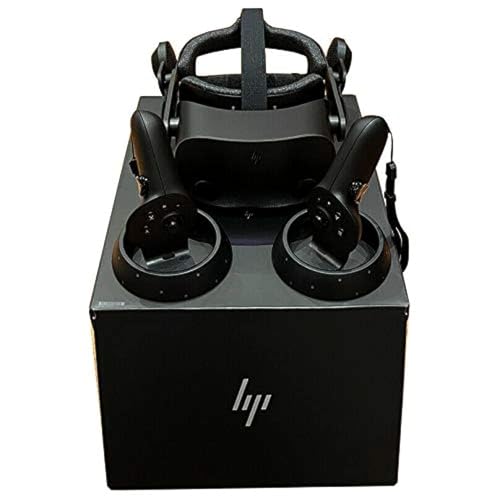
HP Reverb G2 review. Compare 89 technical specifications and user reviews to see how it ranks among VR headsets and if it is worth buying.
Overall score
What it is: An overall evaluation of the VR headset's quality, based on technical analyses and user reviews.
When it matters: When you need a quick reference to identify the best VR headsets on the market.
Score components:
80.0%
Technical Score
20.0%
User score
Technical Score
What it is: An assessment of the VR headset's technical performance, covering eight key areas: display quality, tracking, comfort, controllers, connectivity, audio, battery, and design.
When it matters: When you want to compare VR headsets based on technical performance and available features.
Score components:
58.0%
Display & Optics
22.0%
Tracking & Sensors
10.0%
Controls & Audio
4.0%
Hardware
3.0%
Connectivity
3.0%
Design & Power
User score
What it is: A rating that combines user reviews and the total number of reviews received by the VR headset.
When it matters: When you want to know how a VR headset performs in real use and how reliable it remains over time according to user feedback.
Score components:
70.0%
User reviews
30.0%
Popularity
Score components:
40.0%
Refresh rate
35.0%
Touch controllers
25.0%
Resolution
Score components:
40.0%
Resolution
35.0%
Display type
25.0%
Visible FoV (horizontal)
Available: ranking among products currently available (including other versions of this product).
All: ranking among all products in the database.
#11 in Best VR Headsets for PC
#12 in Best Gaming VR Headsets
#17 in Best VR Headsets for Steam
#21 in Best VR Headsets
What it is: An assessment of the VR headset's technical performance, covering eight key areas: display quality, tracking, comfort, controllers, connectivity, audio, battery, and design.
When it matters: When you want to compare VR headsets based on technical performance and available features.
Score components:
58.0%
Display & Optics
22.0%
Tracking & Sensors
10.0%
Controls & Audio
4.0%
Hardware
3.0%
Connectivity
3.0%
Design & Power
What it is: A rating that combines user reviews and the total number of reviews received by the VR headset.
When it matters: When you want to know how a VR headset performs in real use and how reliable it remains over time according to user feedback.
Score components:
70.0%
User reviews
30.0%
Popularity
What it is: An indicator that combines the VR headset's overall rating with its cost.
When it matters: When you are looking for a VR headset with a good balance between quality and price.
Score components:
60.0%
Overall score
40.0%
Price
Importance: HIGH
Importance: LOW
Importance: HIGH
Good value: >100 Hz
Importance: HIGH
Good value: >105 °
Importance: HIGH
Good value: >97 °
Importance: HIGH
Importance: HIGH
Good value: >850 ppi
Importance: MEDIUM
Good value: >120 nits
Importance: MEDIUM
Importance: MEDIUM
Good value: >44 mm
Importance: HIGH
Importance: MEDIUM
Importance: MEDIUM
Importance: LOW
Importance: LOW
Importance: LOW
Importance: MEDIUM
Importance: LOW
Importance: MEDIUM
Good value: >4
Importance: LOW
Good value: >700 Hz
Importance: LOW
Importance: MEDIUM
Importance: LOW
Importance: LOW
Importance: MEDIUM
Importance: MEDIUM
Importance: MEDIUM
Importance: LOW
Importance: LOW
Importance: LOW
Importance: LOW
Importance: LOW
Importance: LOW
Importance: LOW
Importance: LOW
Importance: LOW
Importance: LOW
Importance: LOW
Importance: LOW
Importance: LOW
Importance: LOW
Importance: LOW
Good value: >0
Importance: LOW
Importance: LOW
Importance: LOW
Importance: LOW
Importance: LOW
Importance: LOW
Importance: MEDIUM
Importance: LOW
Importance: LOW
Importance: LOW
Importance: LOW
Importance: LOW
Importance: LOW
Importance: LOW
Importance: LOW
Good value: >20 hours
Importance: LOW
Importance: LOW
Good value: <135 g
Importance: LOW
Importance: LOW
Importance: LOW
Good value: >3 GHz
Importance: LOW
Importance: LOW
Good value: >8 GB
Importance: LOW
Good value: >128 GB
Importance: LOW
Good value: >3000
Importance: LOW
Good value: >850
Importance: LOW
Good value: >5000 MHz
Importance: LOW
Good value: >690 MHz
Importance: LOW
Good value: >6
Importance: LOW
Importance: LOW
Good value: >3
Importance: LOW
Good value: <7 nm
Importance: LOW
Importance: LOW
Importance: LOW
Good value: >4900 mAh
Importance: LOW
Good value: <2.5 hours
Importance: LOW
Good value: <500 g
Importance: LOW
Importance: LOW
Importance: LOW
Good value: <100 mm
Importance: LOW
Good value: <180 mm
Importance: LOW
Good value: <116 mm
Importance: LOW
Importance: LOW
Importance: LOW
Good value: >35 °C
Importance: LOW
Good value: <3 °C
Importance: LOW
Good value: >2020
Importance: MEDIUM
Importance: HIGH
Importance: MEDIUM
Good value: >120 nits
Importance: LOW
Importance: LOW
Importance: LOW
Importance: MEDIUM
Good value: >4
Importance: LOW
Good value: <180 mm
Importance: LOW
Good value: <116 mm
Importance: HIGH
Importance: HIGH
Good value: >97 °
Importance: LOW
Importance: LOW
Good value: <135 g
Importance: LOW
Importance: HIGH
Good value: >105 °
Importance: MEDIUM
Importance: LOW
(Reviews last updated: July 2026)
Overview of the HP Reverb G2 The HP Reverb G2 stands out as a high-fidelity virtual reality headset, praised primarily for its exceptional visual performance. Boasting dual 2,160 × 2,160 LCD displays, it delivers a class-leading resolution that virtually eliminates the screen door effect, offering striking image sharpness and detailed depth perception. HP also successfully collaborated with Valve to incorporate high-quality, off-ear headphones that provide immersive audio without touching the user's ears. Additionally, the redesigned controllers are a significant improvement over older Windows Mixed Reality (WMR) models, adopting an ergonomic layout that closely mimics Oculus Touch inputs for seamless game compatibility. However, the headset comes with notable compromises in tracking and optical design. While the upgrade to four tracking cameras improves general coverage, dead zones still persist above and below the headset, and the tracking exhibits higher latency and jitter compared to Oculus or SteamVR systems. Optically, the G2 relies on Fresnel lenses that introduce noticeable god rays in high-contrast scenes, while its actual field of view feels narrower than the Valve Index, closely matching the 90°–95° range of the...
The HP Reverb G2 is a comfortable, lightweight Windows Mixed Reality headset developed in partnership with Valve, bringing features like the Valve Index’s magnetic facial interface and dual-element Fresnel lenses to a more affordable device. It boasts incredible display clarity with dual 90Hz LCD panels delivering a 2160 x 2160 per-eye resolution, alongside impressive, immersive over-the-ear speakers that provide loud, balanced audio without touching the ears. HP has also redesigned the bundled controllers with smooth, rounded, ergonomic handles that vastly improve on Microsoft's reference design, and simplified the setup process by utilizing an inside-out camera-based tracking system that requires no external base stations. However, the headset is heavily held back by its tracking performance, which serves as its fatal flaw and prevents a full recommendation unless used strictly without motion controllers. The Windows Mixed Reality tracking system proves to be a major disappointment, and the hardware adjustable IPD slider is limited to a relatively narrow range of 60mm to 68mm. Additionally, the headset features a narrower field of view than desired—claiming 114 degrees but testing closer to a 90-degree horizontal...
The HP Reverb G2 stands out as a highly immersive enthusiast VR headset, primarily due to its revolutionary 2160 x 2160 resolution per eye lenses, which effectively eliminate the "screen door" effect. Priced at $599.99, it undercuts high-end competitors like the Valve Index while delivering superior visual specs and a comfortable, lightweight 1.1 lb design. Setup is exceptionally straightforward thanks to built-in Windows Mixed Reality inside-out tracking cameras, removing the need for external base stations. Furthermore, its seamless integration with Steam VR grants gamers access to massive, high-fidelity libraries like Half-Life: Alyx. However, the headset does compromise on motion tracking precision, as the absence of external base stations occasionally causes the standard Windows Mixed Reality controllers to lose alignment. The physical layout also presents minor inconveniences: the mandatory 6-meter tethering cable cannot be unplugged from its breakout box, leaving a mass of wires to manage when not in use. Additionally, capitalizing on the headset's ultra-high resolution demands a powerful, premium PC setup, rendering it poorly optimized for modest or low-powered hardware.
The HP Reverb G2 is the best Windows Mixed Reality (WMR) headset yet, offering a high-end PC VR experience developed in collaboration with Valve. It delivers an incredibly sharp visual experience with a 2,160 by 2,160 resolution per eye, a 90Hz refresh rate, and a 114-degree field of view, completely eliminating the "screen door effect" found in lower-resolution alternatives. Additional major pros include Valve’s excellent near-field speakers that provide immersive, robust audio without the discomfort of headphones, an upgraded four-sensor "inside-out" tracking system, and a comfortable, sturdier headband design that fits easily over large-framed glasses. However, the headset is held back by notable cons, most significantly its middling, cheap-feeling controllers which feature unresponsive buttons, a hollow build, and lack the premium haptic feedback of competitors like Oculus or Valve Index. The six-meter-long tethering cable can also feel awkward and cause tripping hazards. At a price point of $600, it faces incredibly stiff competition; while it serves as a solid middle-ground for gearheads who cannot afford the $999 Valve Index, it remains tough to recommend over the much cheaper and more...
The ProVideoCoalition review identifies the HP Reverb G2 as an ambitious headset offering a premium PCVR experience characterized by a high-resolution 2160×2160 display per eye, which effectively eliminates the screen-door effect. Key pros include this industry-leading visual fidelity, superior to competitors like the Valve Index and Quest 2, alongside highly immersive audio from integrated, Valve-designed off-ear speakers. Conversely, the review highlights critical, long-term cons centered on severe reliability issues and hardware failures. Following initial flawless performance, the unit suffered from audio dropouts, frequent black screens, and eventual total failure, suggesting a fragile cable or internal connection defect that compromises the otherwise excellent,,,, visual performance. ProVideo Coalition
The Tech Advisor review of the HP Reverb G2 highlights its fantastic resolution (2160×2160 pixels per eye) and great sound from Valve-designed off-ear headphones. The reviewer praises its inside-out tracking, which means you do not need to set up external wall sensors. It provides amazing visual clarity that completely removes the "screen-door effect" of older headsets, making in-game text easy to read. Priced at $599, it offers a high-end 4K VR experience for less than half the cost of premium competitors like the HTC Vive Pro 2. However, the review points out several major cons. The lenses have a very tiny sweet spot, meaning the image becomes blurry if you look away from the exact center or if the headset shifts on your head. The G2 also has severe compatibility issues with AMD-based PCs, requiring a messy web of hubs and adapters just to prevent the video from cutting out. Furthermore, setting up the Windows Mixed Reality software is buggy and frustrating, tracking fails in small or poorly lit spaces, and the physical controllers feel cheap and unpolished.
The HP Reverb G2 is highlighted as a premium Windows Mixed Reality headset offering incredible visual clarity, featuring dual LCD panels that, for $399.99 on sale, provide superior resolution for flight and racing simulations compared to the Oculus Quest 2 and Valve Index. The device boasts an upgraded four-camera array that significantly improves the tracking volume over previous models, allowing for more natural and immersive gameplay experiences, particularly for seated experiences. However, the headset is hampered by disappointing and wonky controller tracking, which fails to keep pace during fast-paced, intense movements. While the ergonomics are improved, the tracking limitations make it less ideal for high-precision games compared to its visual performance. The review concludes that the G2 is an excellent choice for simulation enthusiasts prioritizing visual fidelity over flawless, rapid-motion tracking.
The $599.99 HP Reverb G2 is a high-resolution, tethered VR headset lauded by PCMag for its superior 2,160-by-2,160 per-eye display that eliminates the screen door effect, combined with comfortable, adjustable ergonomics. Designed with Valve, the off-ear speakers provide excellent spatial audio, while the inside-out tracking removes the need for external base stations, ensuring a simple, accessible setup. Conversely, the headset's reliance on camera-based inside-out tracking causes tracking loss when controllers leave the immediate field of view, and the open-back audio design offers no noise isolation. Additionally, while offering higher fidelity than the Oculus Quest 2, it lacks the flexibility of a standalone system and requires a robust PC, creating stiff market competition.
HP Reverb G2 Review Summary The HP Reverb G2 is a mid-range, PC-powered VR headset priced at $599 / £599 that includes proprietary controllers as standard. It features an understated matte black design with a comfortable, detachable fabric memory foam face cushion that accommodates glasses. Equipped with two 2160 x 2160 LCD screens (one per eye), it provides excellent visual quality and sharp image resolution, making titles like Half-Life: Alyx look visually stunning. Setup is incredibly straightforward via the Windows Mixed Reality portal, requiring no external base stations because it utilizes four built-in tracking cameras. Additionally, it includes off-ear directional speakers that deliver quality sound while keeping the headset's physical weight down. Despite these strong features, the headset sits in a difficult "middle ground" between casual standalone units and ultra-premium setups. A notable con is its 90 Hz refresh rate, which lags behind higher-end competitors like the 120 Hz Valve Index and can occasionally cause minor stuttering during rapid head movements. The inside-out camera tracking, while convenient, is less precise than base station systems and is sensitive to room lighting....
The HP Reverb G2 VR headset offers the highest overall visual quality among tested models, delivering immaculate text and graphics with an impressive 2,160 pixels per eye resolution. Its high-resolution displays significantly minimize the "screen door effect," making individual pixels virtually unnoticeable during gameplay. Setup is streamlined because of four built-in camera sensors that eliminate the need for external base stations. For daily wear, the device features thick face padding and a convenient, spring-loaded elastic strap system that retains its fit after the initial adjustment. Additionally, it includes convenient swing-away integrated headphones and an optional lower-resolution mode to accommodate less powerful computers. However, the inside-out tracking system suffers from precision limits, exhibiting minor pixel snapping and tracking "weirdness" when controllers travel outside the cameras' peripheral field of view. While suitable for casual gaming like Half-Life Alyx, it consistently misses notes during high-speed, 360-degree songs in Beat Saber. Setting up the room boundary is also less intuitive than competing units, as it requires physically walking the headset around the room while aiming it at the PC monitor. Physically, the single-sided cable...
HP Reverb G2 Review Summary The HP Reverb G2 is an impressive virtual reality headset co-developed with Microsoft and Valve, designed to seamlessly bridge the gap between Windows Mixed Reality and SteamVR. Its standout feature is its exceptional visual fidelity, boasting dual 2.89-inch LCD panels that deliver a massive total resolution of 4320 x 2160 (2160 x 2160 per eye), effectively eliminating the screen door effect experienced in older VR generations. Weighing only 500 grams, the headset offers a highly comfortable, cushioned faceplate and innovative, off-ear integrated speakers that deliver immersive spatial audio without overheating the user. Setting up the device is streamlined thanks to its inside-out tracking, which uses four built-in cameras to completely bypass the need for external base stations. Additionally, the Windows Mixed Reality integration provides convenient software features, such as a virtual view of your PC desktop directly inside the VR environment. Despite its premium features, the Reverb G2 does come with a few notable drawbacks. The hardware interpupillary distance (IPD) slider is restricted to a narrow 60mm to 68mm range, which might not accommodate all...
The HP Reverb G2 (specifically the updated V2 model) is a Windows Mixed Reality headset that offers an unparalleled, best-in-class visual experience for PC-based VR at a highly competitive $449 price point. Developed in collaboration with Valve, the headset features impressive dual 2160x2160 LCD lenses that virtually eliminate the screen-door effect and god rays, alongside a robust off-ear spatial audio speaker system. It provides a lightweight, balanced, and highly comfortable fit featuring thick, antimicrobial foam padding and zero light leakage. The V2 refresh introduces structural improvements including a new multi-piece face gasket that expands the field of view (FOV) by letting users drop eye relief from 15mm to 9mm, a longer 20-foot cable that resolves prior AMD motherboard connectivity issues, and a revised link box with a dedicated power toggle button. Despite its hardware and visual triumphs, the headset's primary drawback remains its reliance on the Windows Mixed Reality controller ecosystem. The included controllers lack touch-capacitive sensors, meaning users cannot perform natural hand gestures like pointing or giving a thumbs-up in virtual spaces. Furthermore, while the V2's updated camera layout...
The HP Reverb G2 is a tethered virtual reality headset praised for delivering an incredibly sharp and immersive visual experience. Its primary highlights include a massive resolution of 2160x2160 pixels per eye, a 90Hz refresh rate, a 114-degree field of view, and the complete elimination of the "screen door effect". Reviewer Dave Johnson explicitly notes that it is the most comfortable headset he has ever worn, featuring soft face padding, a light 1.2-pound build, and a convenient flip-up design to easily view the real world. Additionally, the headset includes high-quality pivoting speakers borrowed from the Valve Index, a continuous IPD slider for precise eye-distance adjustment, and a thinner, lighter 20-foot tethering cable compared to its predecessor. Despite these strengths, the headset's underlying, older architecture makes it feel trapped in the past compared to standalone options like the Oculus Quest 2. The main drawback is its reliance on a wired connection, which results in a messy "rat's nest" of cables and power boxes that frequently trip up players. Furthermore, its inside-out tracking—which relies on only four built-in cameras—frequently fails and loses...
The HP Reverb G2 is a PC-tethered virtual reality headset that offers a remarkably sharp visual experience for its price, boasting an impressive resolution of 2,160 by 2,160 pixels per eye at a 90Hz refresh rate. Priced at £599, this redesigned model introduces welcome physical improvements over its predecessor, including a more comfortable cloth-lined memory foam facemask and ergonomics-focused motion controllers that integrate control buttons instead of clunky touchpads. Setting up the device is straightforward through the Windows Mixed Reality portal, and it now connects to SteamVR much more reliably, allowing users to effortlessly access a massive library of games where the built-in, off-ear speaker drivers deliver excellent, clear spatial audio. Despite these strengths, the headset sits in an awkward middle ground within the VR market, held back by tracking limitations and platform stagnation. Because it relies entirely on four built-in cameras rather than external base stations, the controller tracking suffers from occasional hiccups if you move your hands out of the headset's direct line of sight. Additionally, the audio drivers lack physical earpads, causing audio to bleed into the...
The HP Reverb G2 is a PC VR headset that delivers an unmatched visual and audio experience, though it requires a robust PC setup with at least a GTX 1080 or a 2060 Super graphics card to run smoothly. Its standout features include an incredibly sharp 2160 x 2160 per-eye resolution display that effectively eliminates the screen-door effect, alongside high-quality off-ear speakers borrowed from the Valve Index that provide powerful, open-ear audio. Furthermore, the headset is exceptionally comfortable for multi-hour sessions due to its excellent weight distribution, plush cushioning, and convenient magnetic face lining that allows the main 6-metre cable to be easily unplugged for tidy storage. However, the hardware suffers from major flaws regarding its tracking and ecosystem. While the headset's internal inside-out tracking is stable, the redesigned controllers frequently lose tracking accuracy when dropped to the waist or brought too close to the face, making archery, boxing, and two-handed weapon mechanics frustratingly inconsistent. Additionally, the controllers feel awkwardly proportioned, top-heavy, and lack touch-sensitive sensors or strong haptic feedback. The user experience is further bogged down by its reliance...
HP Reverb G2 Review Summary The HP Reverb G2 stands out as a highly compelling and affordable virtual reality headset, particularly praised for its exceptional visual and audio quality. It features MURA-free 2160 x 2160 LCD panels per eye that completely eliminate the jarring "screen door effect," delivering a remarkably clear display alongside integrated over-ear speakers that provide immersive, spatial audio. The setup is relatively straightforward for Windows 10 users, and the hardware offers excellent weight distribution and comfortable padding, making it an ideal choice for seated VR experiences and flagship games like Half-Life: Alyx. However, the headset compromises on certain features to maintain its accessible price point. Its inside-out tracking relies on four cameras, which works well within the headset's line of sight but lacks the precision of premium room-scale tracking systems. The 114-degree field of view is somewhat restrictive compared to pricier rivals, and the included 6-meter cable feels heavy and cumbersome during use. Additionally, the standard Windows Mixed Reality controllers suffer from mediocre battery life—requiring frequent AA replacements—and users who wear glasses may find the internal facial...
HP Reverb G2 Review Summary The HP Reverb G2 stands out primarily for its exceptional visual performance, offering a class-leading resolution of 2,160 x 2,160 pixels per eye that delivers an incredibly sharp image nearly free of the screen-door effect, ghosting, or god-rays. Developed in collaboration with Valve, it incorporates highly comfortable off-ear speakers that provide high-quality audio, alongside a lightweight design and a well-cushioned facial interface that remains comfortable during extended sessions. Simulation enthusiasts will particularly appreciate the addition of a mechanical interpupillary distance (IPD) slider ranging from 60mm to 68mm, as well as a streamlined head strap without a bulky rear adjustment knob, allowing users to comfortably lean back into racing seats or flight chairs. However, the headset falls short in its tracking capabilities and field of view. Despite upgrading to a four-camera inside-out tracking system, the Windows Mixed Reality controller tracking remains mediocre, frequently hitching or losing connection when hands are held near the waist, abdomen, or close to the face during fast-paced games like boxing. Additionally, the stock field of view is notably narrow compared to...
HP Reverb G2: Performance & Specifications The HP Reverb G2 is a Windows Mixed Reality headset that offers a compelling PC VR experience with an easy inside-out tracking setup, eliminating the need for external base stations. It features an impressive resolution of 2160x2160 pixels per eye, a 90 Hz refresh rate, and a 114-degree field of view, delivering incredibly sharp visuals and a generous sweet spot for game environments like Skyrim VR or Pavlov VR. The hardware design prioritises hygiene and comfort, featuring a magnetically attached face mask that is easy to remove and wipe down after intense gaming sessions. Additionally, the off-ear headphones provide high-quality immersive sound, even though they allow ambient environment noise to bleed through. Pros, Cons & Software Experience Pros: Exceptional high-resolution display, straightforward hardware setup without sensors, large sweet spot, and an easily swappable magnetic face cushion. Cons: Intermittent software crashes when transitioning between games, audio stuttering, and inconsistent floor-height calibration during initial setup. The review highlights that the software relationship between Windows Mixed Reality and SteamVR is the device's main weak point, often requiring...
HP Reverb G2 Review Summary The HP Reverb G2 is a visually elegant and exceptionally comfortable PC VR headset that delivers elite-tier visual clarity. Its standout feature is an RGB stripe-matrix display boasting an impressive resolution of 2160 x 2160 pixels per eye, resulting in incredibly sharp images, natural colours, and a virtually non-existent screen-door effect. Backed by a generous six-metre total cable length, an effortless setup process via the Windows Mixed Reality Portal, and seamless SteamVR integration, it provides an outstanding interface for compatible games. Furthermore, the headset stays remarkably cool during prolonged use, accommodates glasses comfortably, features an easily washable magnetic face cushion, and boasts phenomenal built-in off-ear audio speakers. However, the headset is heavily held back by critical design flaws regarding its field of view (FoV), controller ecosystem, and tracking accuracy. The reviewer notes a severely restricted FoV (94° vertical / 78° horizontal), resulting in a jarring "toilet paper roll" tunnel vision effect—especially for users with a narrow interpupillary distance (IPD) below 61 mm. The included Windows Mixed Reality controllers feel cheap, lack capacitive touch and finger-tracking...
The Heise Online review highlights the HP Reverb G2 for its outstanding visual quality, driven by a high 2160 × 2160 pixel resolution per eye and top-tier lenses. Priced at approximately 700 Euro, this PC-based VR headset provides exceptionally sharp, vibrant, and clear visuals that often outperform more expensive alternatives. heise online However, the review points to a significant imbalance in the hardware, criticizing the bundled controllers for being outdated, clunky, and inconsistent in tracking performance. While the visual experience sets a new benchmark in its price segment, these sub-par peripherals ultimately hold the headset back from achieving its full potential.
The HP Reverb G2 positions itself as an exceptional VR headset tailored for simulation gaming, largely owing to its outstanding visual and ergonomic performance. Developed in collaboration with Valve, it incorporates high-quality lenses and the acclaimed off-ear headphones directly from the Valve Index. While its 2.160 x 2.160 resolution per eye is no longer the highest on the market—having been surpassed by the HTC Vive Pro 2—the RGB LCD panels still deliver superb contrast, high brightness, and reduced pixel persistence to mitigate motion sickness. Additionally, the headset introduces a mechanical IPD adjustment slider ranging from 60 to 68 mm and expands the display's "sweet spot" for a much larger sharply rendered area compared to its predecessor. Despite these strengths, the headset's initial rollout was severely marred by technical flaws and sub-par controller tracking. Launch users frequently encountered severe USB connection and power supply issues, particularly on modern AMD Ryzen motherboards. HP eventually resolved these connectivity issues a year later by issuing a revised connection cable, which the manufacturer provides as a free replacement for affected users. While the inside-out tracking...
The HP Reverb G2 is a high-end, tethered VR headset developed in collaboration with Valve and Microsoft, designed to run primarily on the Windows Mixed Reality platform. The standout feature of this device is its exceptional display quality, featuring dual 2.98-inch screens with a 2160 x 2160 resolution per eye and a 90 Hz refresh rate, which delivers a remarkably sharp image that makes text easily legible and completely eliminates the "screen-door effect". Additionally, it offers a highly comfortable wearing experience due to its thick foam padding and dual-headband system that evenly distributes its 550-gram weight. To ensure freedom of movement despite requiring a wired connection to a powerful PC, HP includes a generous 6-metre-long cable connected to a centralized link box. However, the review highlights several notable drawbacks, particularly regarding software compatibility and controller design. While the hardware is excellent, the headset suffers from performance bugs and compatibility issues when connecting to SteamVR, and the native Windows Mixed Reality ecosystem lacks a diverse selection of applications. The included controllers are another weak point; they follow Microsoft's reference design and...
The HP Reverb G2 is a PC-only virtual reality headset developed in partnership with Valve that stands out for its exceptional display quality, offering an ultra-high resolution of 2160 x 2160 pixels per eye. This high pixel density almost entirely eliminates the "screen-door effect" and delivers crisp text and highly realistic textures, provided it is paired with a powerful, high-end graphics card like an RTX 3080. It features a comfortable, rigid headband design inspired by the Valve Index, a magnetically attached facial cushion for easy cleaning, and an updated four-camera inside-out tracking system that improves upon first-generation Windows Mixed Reality headsets. Furthermore, its physical interpupillary distance (IPD) adjustment helps users fine-tune optical comfort. However, the headset comes with several notable drawbacks, including a narrow field of view and noticeable chromatic aberrations on the outer edges of the lenses. The off-ear audio system lacks low-end bass extension and suffers from acoustic bleeding, which is worsened by the total absence of a mini-jack port to plug in alternative headphones. Users will also face high thermal build-up inside the visor during gameplay, and...
The HP Reverb G2 is a high-definition, PC-tethered virtual reality headset praised for its exceptional visual performance and integrated audio, earning an overall score of 8/10. Key advantages highlighted in the review include a stellar 2160 x 2160 pixels per eye resolution (4320 x 2160 combined) that makes text highly legible and renders the screen-door effect nearly non-existent. The headset delivers bright, sharp, and precise imagery, bolstered by highly successful, integrated off-ear speakers inherited from the Valve Index. Additionally, it offers a well-balanced, lightweight build at 550 grams, smooth IPD adjustment (60–68 mm), a generous 6-meter cable length, and a relatively straightforward installation process. On the downside, utilizing the headset's full high-definition capabilities requires a massive and expensive PC configuration, as lower-tier GPUs struggle to maintain fluid frame rates at maximum details. The included controllers are bulky, heavy, and suffer from precision issues and tracking "dead zones" outside the camera field of view. Testers also noted that the headset tends to heat up significantly near the eyes and forehead during longer sessions due to its passive cooling system. Ergonomically, the...
The HP Reverb G2 virtual reality headset delivers an industry-leading visual display but offers only average controller tracking performance. Tested by the ETR team, its standout feature is the exceptionally high screen resolution of 2160 × 2160 pixels per eye, which provides a significantly sharper, clearer image and superior crispness compared to its competitors. This exceptional display quality makes it an outstanding choice for visual fidelity, particularly when running immersive simulations and high-end games like Half-Life: Alyx. However, the headset's main drawback is its motion controller tracking, which is described as merely average and comparable to the tracking of an Oculus Quest 2. While the bundled controllers perform perfectly fine for standard, everyday VR applications, they lack the precision and speed required for highly competitive or fast-paced gaming. To mitigate this limitation and achieve a top-tier setup, the review highlights that users can alternatively pair the HP Reverb G2 headset with Valve Index controllers, though this requires an additional hardware investment.
This review evaluates the HP Reverb G2 headset specifically for sim racing in iRacing, comparing it directly to the Valve Index using an actor-based motion simulator chassis. The reviewer notes that the HP Reverb G2 stands out for its exceptional sharpness and image clarity because of its high-resolution display (2160 x 2160 per eye), easily surpassing the Valve Index when detecting distant details. Additional advantages include its lightweight design, affordable price tag (roughly half the cost of the Index), simple setup without external base stations, lower CPU overhead, and an integrated physical power switch on the cable box. Furthermore, the headset is immune to electromagnetic interference (EMI) from motion simulators, which has historically plagued the Valve Index setup. However, the G2 has several limitations, particularly regarding immersion and tracking precision. Its field of view (FOV)—especially the vertical FOV—is substantially narrower than the Valve Index, creating a noticeable "diving mask" effect. The "sweet spot" (the area of perfect lens clarity) is smaller, forcing players to turn their entire head rather than just moving their eyes. Performance-wise, the headset is capped at...
Review Overview The HP Reverb G2 is a wired PC virtual reality headset developed in collaboration with Microsoft and Valve, featuring an inside-out tracking system powered by four built-in cameras and a display resolution of 4320 x 2160 px. It is highly praised for its exceptional display sharpness, impeccable screen colorimetry, and high level of comfort during long gaming sessions. User reviews highlight that the visual rendering is breathtaking and incredibly sharp, making it an outstanding choice for simulations like Microsoft Flight Simulator and Assetto Corsa. Additionally, the headset provides a reliable movement tracking system and a simple, user-friendly software environment. Drawbacks and Performance Requirements Despite its visual strengths, the headset has several notable downsides, including a somewhat narrow field of view (114°) and chromatic aberrations on the lens edges. The device suffers from high heat buildup inside the visor, and the wireless controllers have a very short battery life of around ten hours using two AA batteries each. While the built-in off-ear audio system receives mixed reviews—with editorial staff calling it unstable and noting the lack of a mini-jack...
The HP Reverb G2 is a PC VR headset designed to address the flaws of its predecessor, notably upgrading from two to four tracking cameras and integrating superior Valve-designed lenses. Retailing at a competitive €577 including two lightweight, redesigned controllers, it stands out as an affordable enterprise or entry-level PC VR solution compared to pricey rivals like the HTC Vive Pro 2 and Varjo Aero. The headset is highly praised for its exceptional comfort due to its lightweight 498-gram chassis, magnetic removable face padding, and crisp dual-LCD displays that deliver an impressive resolution of 2160×2160 pixels per eye at a smooth 90 Hz refresh rate. Additional advantages include user-friendly inside-out tracking that removes the need for external base stations, seamless integration with SteamVR via a Windows Mixed Reality plugin, and high-quality integrated speakers positionally offset from the ears to maintain environmental awareness. Despite these strengths, the headset has notable limitations in technical features and immersion when compared to higher-end models. A major hardware drawback is its narrow 98-degree horizontal field of view, which significantly reduces user immersion when compared to...
The HP Reverb G2 is a PC VR headset developed in collaboration with Valve, targeting a blend of professional and gaming markets. On the positive side, it offers an exceptional display resolution of 2160 x 2160 pixels per eye. This effectively eliminates the screen-door effect and delivers unmatched visual clarity in the center of the image. The integrated Valve-designed BMR off-ear speakers provide excellent audio quality and spatial depth. Furthermore, the headset is praised for its comfortable weight distribution, a mechanical IPD slider, an innovative magnetic facial interface for easy swapping, and improved controllers featuring proper analog joysticks. Conversely, the headset suffers from a noticeably narrow field of view (FOV) and a reduced "sweet spot," resulting in blurriness around the outer edges of the lenses. This reduction is exacerbated by a thick facial interface design that places the user's eyes further from the lenses. The inside-out tracking system, despite upgrading to four cameras, provides a restricted tracking volume that frequently loses input during natural movements like resting hands at the waist or performing close-up actions. Additional drawbacks include significant lens...
The HP Reverb G2 is a high-quality VR headset that stands out for its superior visual performance and integrated audio, earning it a "good choice" recommendation for simulator enthusiasts. The review highlights its exceptional image quality, noting that it offers impressive sharpness and eliminates the "mura effect" entirely. Furthermore, its built-in headphones deliver spectacular sound quality while maintaining high comfort. The build construction is solid, the facial interface is comfortable, and the tracking system functions flawlessly without coverage issues or graphic popping. These strengths make running immersive titles like Half-Life: Alyx or Assetto Corsa an excellent experience. Are you looking to buy a PC-tethered headset specifically for racing/flight simulators, or are you also considering standalone options? Let me know so I can help you compare.
The HP Reverb G2 stands out as an exceptionally high-quality virtual reality headset, developed in close collaboration with Valve. Its primary strength lies in its incredible visual performance, delivering a razor-sharp resolution of 2160 x 2160 pixels per eye. Tested extensively with demanding titles like Half-Life: Alyx, the headset provides an immersive gaming experience by making virtual worlds remarkably detailed and clear. Furthermore, despite packed-in advanced optics, it maintains a comfortable, balanced weight of 550 grams, which minimizes physical strain during extended, multi-hour gaming sessions. However, the hardware does present notable limitations that impact overall utility. Its field of view feels slightly constricted compared to some competitors, and the camera-based inside-out tracking system occasionally experiences hiccups when controllers move outside the sensors' immediate line of sight. It also demands substantial computer processing power to run smoothly at its native resolution, requiring users to own a high-end gaming PC. Crucially, potential buyers must note that Microsoft is officially discontinuing Windows Mixed Reality (WMR) support on 1 November 2026, meaning downloading required drivers and integrating the headset natively with SteamVR will no...
The Hobby Consolas review labels the HP Reverb G2 as the best Windows Mixed Reality (WMR) headset available on the market. It shines with an amazing 4K resolution (2160 x 2160 pixels per eye), making games look clean, sharp, and realistic. The headset is very comfortable thanks to its thick foam padding, lightweight frame, and a smooth mechanical dial to adjust the lenses to your eyes (IPD). It also features great off-ear speakers that provide immersive audio. Setting it up is quick and easy because it uses built-in cameras instead of external room sensors. However, the review points out several drawbacks. The biggest issue is limited motion tracking. The cameras struggle to follow the controllers if they go near your forehead or waist, which causes glitches in shooting or boxing games. The review also criticises the cheap velcro adjustment straps and a flimsy cable clip that feels easy to break. Furthermore, you need a highly powerful PC to handle the heavy 4K resolution at 90 Hz. Finally, the headset lacks a standard 3.5 mm headphone jack, meaning you must wire...
The HP Reverb G2 is a second-generation Windows Mixed Reality (WMR) PC VR headset developed by HP in close collaboration with Valve and inspired by Oculus design elements. The absolute highlight of the headset is its dual 2160 x 2160 LCD display panels that virtually eliminate the screen-door effect while delivering exceptionally vivid colours, outstanding contrasts, and powerful brightness. Its hybrid lenses—engineered by Valve—combine Fresnel and aspheric technologies to offer unparalleled, monitor-like clarity in the center of the field of view. Furthermore, it stands out as the most comfortable out-of-the-box headset according to the reviewer, boasting exceptional weight distribution and an industry-leading off-ear audio system inherited directly from the Valve Index. Performance-wise, its direct DisplayPort connection optimizes visual rendering, allowing mid-range graphics cards to deliver a stable, high-fidelity experience without streaming latency. However, the headset is held back by several notable design trade-offs and technical flaws. While the central lens clarity is extraordinary, maximum sharpness is concentrated in a tight 15-20% sweet spot, leaving the surrounding Fresnel area noticeably blurrier during eye movements. Additionally, the thick, rigid 5-metre cable can...
The HP Reverb G2 review on DDay.it highlights the PC-only virtual reality headset as a massive visual milestone that is heavily weighed down by hardware execution flaws. Priced at €699, its standout feature is the exceptional clarity delivered by its dual 2.89-inch displays, which boast a market-leading resolution of 2160x2160 pixels per eye. Developed in collaboration with Valve, the device includes high-quality off-ear headphones, premium Fresnel lenses, a physical IPD slider, and an incredibly lightweight (550 grams), light-blocking design that remains highly comfortable during long play sessions. The resulting image quality practically eliminates the "screen-door effect," allowing players to effortlessly view intricate details in games like Half-Life: Alyx or the cockpits of Star Wars: Squadrons. However, this hyper-realistic clarity requires steep system requirements, needing at least an Nvidia GTX 1080 or AMD Radeon RX 5700 to run at its full 90 Hz potential. Despite these remarkable visual achievements, the headset suffers from severe functional drawbacks, particularly concerning its tracking and controllers. Even though HP upgraded the layout to a quad-camera system to widen the optical tracking volume, the review notes...
summary of the HP Reverb G2 VR headset: The HP Reverb G2 stands out as a highly premium, exceptionally comfortable, and well-constructed PC VR headset that delivers some of the best visual fidelity on the market. Its standout features (Pros) include a massive combined resolution of 4320 x 2160 pixels (2160 x 2160 per eye) across two 2.89" LCD screens, which effectively eliminates the "screen-door effect" and offers a wide 114-degree field of view. The headset borrows excellent components directly from the Valve Index, specifically the high-quality, off-ear integrated audio speakers and the outer-tilted dual-element lenses. Ergonomically, it is incredibly easy to wear—even with glasses—thanks to well-balanced weight distribution (550 grams), a spring-loaded rear strap mechanism, and a soft, magnetically attached facial cushion that provides excellent light isolation. However, the hardware is held back by notable performance bottlenecks and software quirks (Cons). The primary drawback is its unreliable controller tracking; users frequently experience moments where the controllers briefly drop out of the headset's four tracking cameras during active gameplay, though this is less detrimental for flight or driving simulators that...
The HP Reverb G2 is a specialized PC VR headset that delivers exceptional visual clarity and immense immersion, making it highly recommended for single-player games, flight simulators, and cockpit-based racing games. Its standout pros include an incredibly high-resolution display with a virtually non-existent screen-door effect, stunning contrast, vibrant brightness, and excellent central lens sharpness. The headset offers superb long-term comfort due to excellent weight distribution and soft, non-abrasive fabric cushions that mold to the user's face over time. Furthermore, its motion reprojection system handles frame drops exceptionally well—minimizing ghosting and graphical artifacts—which keeps the visual experience remarkably fluid during demanding simulation games. However, the headset is held back by several notable cons, with its inside-out camera tracking being the most significant flaw. The tracking system struggles with a restricted vertical volume, completely losing sight of controllers when hands are dropped in a natural resting position, and occasionally experiencing stuttering or physical ring-collisions during fast-paced shooters. The controllers themselves feel cheap and plasticky, feature a loud and jarring haptic vibration, and require specific 1.5V batteries to track properly. Additionally, the Reverb...
Here is a summary of the HP Reverb G2 first-impressions review from VR Italia: Summary of the Review Visor Comfort and Visual Fidelity The reviewer shares an overwhelmingly positive first impression of the VR headset itself, noting that it is arguably the most comfortable, lightweight, and well-finished headset they have ever worn. A major standout feature is the pairing of the high-quality lenses and high-resolution display, which delivers exceptional clarity, uncovering fine in-game details that go unnoticed on other devices like the Meta Quest 2. Furthermore, the headset performs very smoothly at 90Hz compared to competitor devices. However, the reviewer highlights that achieving this elite graphical performance requires a bulky, cumbersome cable linking the headset directly to a PC, making a third-party pulley system nearly mandatory for a good experience. Controllers, Tracking, and Initial Setup In contrast to the premium headset design, the controllers feel like a step down in build quality and material finish, especially for users transitioning from older Oculus Touch models. The tracking rings are also quite large and can physically clash when performing actions like reloading...
The HP Reverb G2 V.2 is an incremental but significant refresh of the PCVR headset, maintaining its standout dual 2.89'' LCD displays with a sharp resolution of 2160 x 2160 pixel per eye and a 114° diagonal field of view. This high fidelity delivers crisp texturing and removes the screen-door effect, though it acts as a double-edged sword by clearly exposing low-quality game assets and 2D textures. The V.2 model addresses major complaints from the original version by implementing a new two-piece facial interface that allows users to sit closer to the lenses for an increased horizontal field of view, alongside repositioned tracking cameras that expand the tracking volume by up to 30% to significantly reduce dead zones. Furthermore, a redesigned connection box successfully resolves previous AMD hardware compatibility issues, while Windows 11 users benefit from direct SteamVR access that bypasses the resource-heavy Windows Mixed Reality environment. The review highlights distinct advantages and drawbacks, cementing the device as an excellent entry-level option in terms of price for dedicated PCVR simulation enthusiasts. On the positive side, the pros include its exceptional...
The HP Reverb G2 is a mid-range, tethered virtual reality headset priced at €699 that requires a PC and utilizes built-in tracking cameras rather than external base stations. The review highlights its standout dual 2.89-inch LCD displays, which deliver an impressive resolution of 2160 x 2160 pixels per eye at a 90 Hz refresh rate, virtually eliminating the "screen door effect" and producing vibrant colors and deep contrasts. Additionally, the headset earns strong praise for its exceptional comfort, excellent weight distribution, and an immersive facial gasket that blocks out external light effectively, allowing for long gaming sessions without neck strain. It natively supports Windows Mixed Reality and integrates smoothly with SteamVR for high-end titles like Half-Life: Alyx. However, the review points out several notable drawbacks, particularly regarding its hybrid lens system, which combines a sharp central aspherical lens with peripheral Fresnel lenses. This design creates a jarring transition where visual clarity drops drastically if you move your eyes away from the exact center, forcing users to constantly turn their heads to maintain a sharp image. Furthermore, the included wireless controllers...
The HP Reverb G2 is a high-resolution PCVR headset priced at €699 (including controllers) that operates natively with Windows Mixed Reality and integrates smoothly into SteamVR via a dedicated plug-in. Its standout feature is its phenomenal visual performance, utilizing two LCD panels that deliver an impressive 2160x2160 pixels per eye. Paired with high-quality Fresnel lenses co-developed by Valve, the headset provides outstanding clarity from the centre to the edges of the display, completely eliminating the screen-door effect and reducing "God rays" better than competitor models. Additionally, it features high-quality near-ear spatial speakers, also designed by Valve, which deliver excellent sound quality while maintaining comfortable airflow and situational awareness. However, the headset has notable ergonomic and technical limitations. The standard magnetic faceplate features a tight curvature tailored for narrower heads, which forces users with wider faces further away from the lenses, consequently shrinking the field of view and introducing a restrictive "tunnel vision" effect. Technical downsides also extend to the tracking and controllers. The inside-out tracking utilizes four cameras that are slightly angled downwards, leaving a dead zone directly above the...
The HP Reverb G2 is highlighted as one of the most comfortable, lightweight, and sharpest virtual reality headsets available, though it faces severe market competition. Among its prominent pros are its upgraded fit featuring plush fabric cushioning and a remarkably lightweight design that minimises facial pressure during extended use. It eliminates the distracting "screen-door effect" entirely through an impressive 2160 by 2160 per-eye resolution, delivering a crystal-clear environment. Additionally, it features an innovative, high-quality audio system with floating speakers borrowed from the Valve Index, alongside built-in camera tracking that removes the need for annoying external room sensors.
Based on user and editorial reviews from the Dutch tech platform Tweakers, the HP Reverb G2 is widely praised as an exceptional PCVR headset for simulation enthusiasts, specifically for flight and racing sims. Its standout feature is its superb visual fidelity, boasting a high-resolution display with impressive clarity, vivid colors, and virtually no screen-door effect. Reviewers consistently highlight its lightweight design, hardware-adjustable IPD slider, and high-quality, off-ear integrated speakers that deliver excellent spatial audio while letting in ambient room sound. Additionally, the headset provides high wearing comfort and seamless compatibility with SteamVR, without requiring a Meta/Facebook account.
The NWTV review of the HP Reverb G2 highlights it as a highly improved second-generation VR headset that delivers a premium, immersive experience at a reasonable price. The reviewer praises its simplified setup, requiring only a DisplayPort and a USB-C connection, which significantly reduces cable clutter compared to typical VR setups. Major pros include its exceptional high-resolution display that practically eliminates the "screen door" pixel grid effect, built-in floating speakers that provide crystal-clear audio, a comfortable weight distribution for long sessions, and a light-blocking facial interface. Additionally, the redesigned controllers are a vast ergonomic improvement over the bulky first-generation model, offering a sleeker, more streamlined, and well-balanced feel. However, the review also identifies several cons and limitations. While the built-in cameras provide convenient inside-out tracking without external sensors, the tracking system is still not as flawlessly accurate as dedicated base stations. It suffers from occasional hiccups, minor errors, and blind spots when making very fast, precise movements or when the controllers are held completely out of the camera's line of sight (such as behind the user's back). Finally, a notable...
Compare