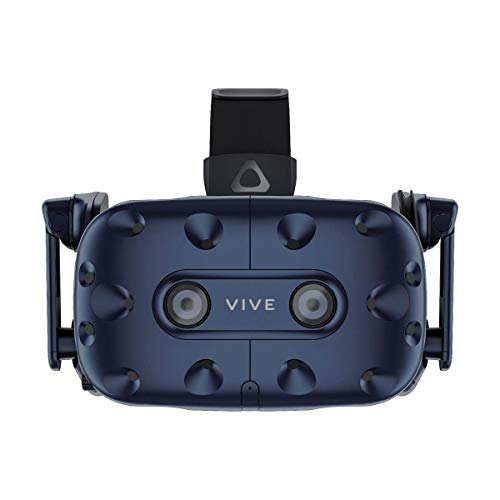
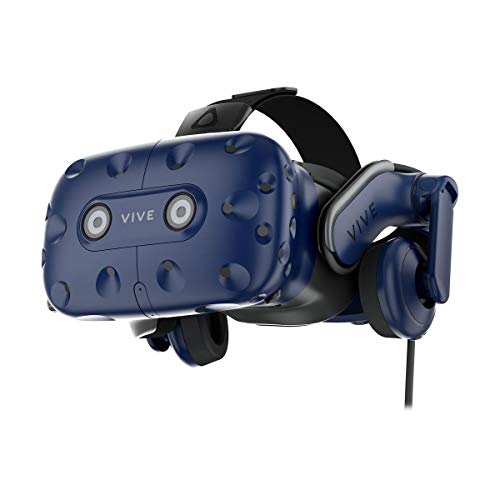
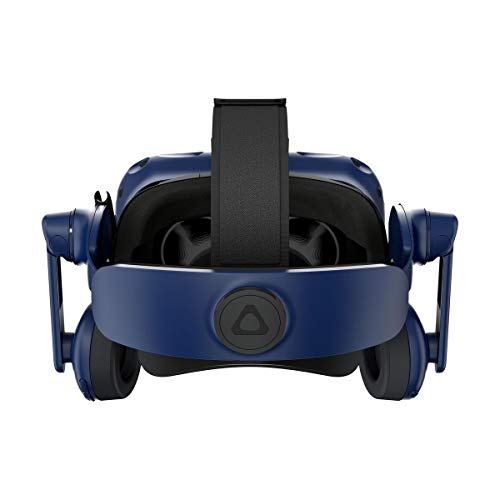
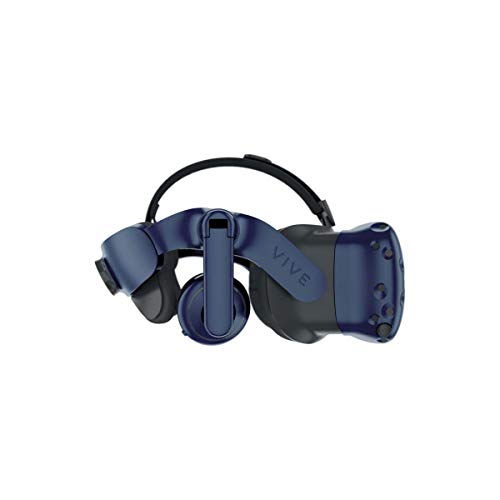
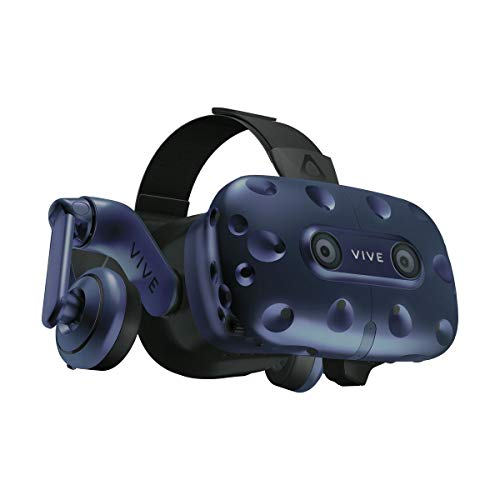
HTC VIVE Pro review. Compare 89 technical specifications and user reviews to see how it ranks among VR headsets and if it is worth buying.
Overall score
What it is: An overall evaluation of the VR headset's quality, based on technical analyses and user reviews.
When it matters: When you need a quick reference to identify the best VR headsets on the market.
Score components:
80.0%
Technical Score
20.0%
User score
Technical Score
What it is: An assessment of the VR headset's technical performance, covering eight key areas: display quality, tracking, comfort, controllers, connectivity, audio, battery, and design.
When it matters: When you want to compare VR headsets based on technical performance and available features.
Score components:
58.0%
Display & Optics
22.0%
Tracking & Sensors
10.0%
Controls & Audio
4.0%
Hardware
3.0%
Connectivity
3.0%
Design & Power
User score
What it is: A rating that combines user reviews and the total number of reviews received by the VR headset.
When it matters: When you want to know how a VR headset performs in real use and how reliable it remains over time according to user feedback.
Score components:
70.0%
User reviews
30.0%
Popularity
Score components:
40.0%
Refresh rate
35.0%
Touch controllers
25.0%
Resolution
Score components:
40.0%
Resolution
35.0%
Display type
25.0%
Visible FoV (horizontal)
Available: ranking among products currently available (including other versions of this product).
All: ranking among all products in the database.
#8 in Best VR Headsets for PC
#14 in Best VR Headsets for Steam
#16 in Best VR Headsets
#17 in Best Gaming VR Headsets
What it is: An assessment of the VR headset's technical performance, covering eight key areas: display quality, tracking, comfort, controllers, connectivity, audio, battery, and design.
When it matters: When you want to compare VR headsets based on technical performance and available features.
Score components:
58.0%
Display & Optics
22.0%
Tracking & Sensors
10.0%
Controls & Audio
4.0%
Hardware
3.0%
Connectivity
3.0%
Design & Power
What it is: A rating that combines user reviews and the total number of reviews received by the VR headset.
When it matters: When you want to know how a VR headset performs in real use and how reliable it remains over time according to user feedback.
Score components:
70.0%
User reviews
30.0%
Popularity
What it is: An indicator that combines the VR headset's overall rating with its cost.
When it matters: When you are looking for a VR headset with a good balance between quality and price.
Score components:
60.0%
Overall score
40.0%
Price
Importance: HIGH
Importance: LOW
Importance: HIGH
Good value: >100 Hz
Importance: HIGH
Good value: >105 °
Importance: HIGH
Good value: >97 °
Importance: HIGH
Importance: HIGH
Good value: >850 ppi
Importance: MEDIUM
Good value: >120 nits
Importance: MEDIUM
Importance: MEDIUM
Good value: >44 mm
Importance: HIGH
Importance: MEDIUM
Importance: MEDIUM
Importance: LOW
Importance: LOW
Importance: LOW
Importance: MEDIUM
Importance: LOW
Importance: MEDIUM
Good value: >4
Importance: LOW
Good value: >700 Hz
Importance: LOW
Importance: MEDIUM
Importance: LOW
Importance: LOW
Importance: MEDIUM
Importance: MEDIUM
Importance: MEDIUM
Importance: LOW
Importance: LOW
Importance: LOW
Importance: LOW
Importance: LOW
Importance: LOW
Importance: LOW
Importance: LOW
Importance: LOW
Importance: LOW
Importance: LOW
Importance: LOW
Importance: LOW
Importance: LOW
Importance: LOW
Good value: >0
Importance: LOW
Importance: LOW
Importance: LOW
Importance: LOW
Importance: LOW
Importance: LOW
Importance: MEDIUM
Importance: LOW
Importance: LOW
Importance: LOW
Importance: LOW
Importance: LOW
Importance: LOW
Importance: LOW
Importance: LOW
Good value: >20 hours
Importance: LOW
Importance: LOW
Good value: <135 g
Importance: LOW
Importance: LOW
Importance: LOW
Good value: >3 GHz
Importance: LOW
Importance: LOW
Good value: >8 GB
Importance: LOW
Good value: >128 GB
Importance: LOW
Good value: >3000
Importance: LOW
Good value: >850
Importance: LOW
Good value: >5000 MHz
Importance: LOW
Good value: >690 MHz
Importance: LOW
Good value: >6
Importance: LOW
Importance: LOW
Good value: >3
Importance: LOW
Good value: <7 nm
Importance: LOW
Importance: LOW
Importance: LOW
Good value: >4900 mAh
Importance: LOW
Good value: <2.5 hours
Importance: LOW
Good value: <500 g
Importance: LOW
Importance: LOW
Importance: LOW
Good value: <100 mm
Importance: LOW
Good value: <180 mm
Importance: LOW
Good value: <116 mm
Importance: LOW
Importance: LOW
Importance: LOW
Good value: >35 °C
Importance: LOW
Good value: <3 °C
Importance: LOW
Good value: >2020
Importance: MEDIUM
Importance: MEDIUM
Importance: MEDIUM
Good value: >120 nits
Importance: LOW
Importance: HIGH
Good value: >97 °
Importance: LOW
Importance: LOW
Importance: MEDIUM
Importance: HIGH
Importance: LOW
Importance: LOW
Importance: LOW
Good value: <500 g
Importance: LOW
Good value: <135 g
Importance: LOW
Good value: >20 hours
Importance: LOW
Importance: LOW
(Reviews last updated: July 2026)
The PCMag review highlights the HTC Vive Pro as a premium virtual reality headset offering a significant technical upgrade over the original, featuring crisp dual OLED displays (2880-by-1600 resolution), improved comfort via a rigid strap, and integrated high-quality headphones. However, a major disadvantage is the $799 price, which only covers the headset itself and excludes the necessary base stations and controllers, making the total package expensive for the performance boost provided. Consequently, it is recommended primarily for enterprise users or hardcore enthusiasts rather than mainstream consumers.
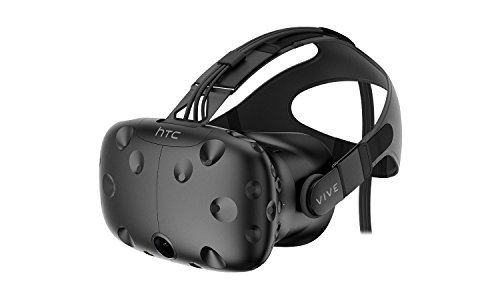
Summary Pros and Design Upgrades The HTC Vive Pro is a remastered VR headset featuring a deep blue plastic design that is significantly lighter and better balanced than its predecessor, mimicking the ergonomics of Sony’s PlayStation VR. Its most notable upgrades include dual OLED displays boasting a 1,440 by 1,600 pixel-per-eye resolution—a 78% increase over the original Vive—which dramatically improves visual clarity and text readability. It fixes the clunky, triple-velcro system of the older model with a streamlined, dial-adjustable rigid head strap. Additionally, the headset integrates built-in, well-padded adjustable headphones that enhance immersion, alongside substantially thicker, easier-to-clean plush cushioning around the faceplate and rear strap for prolonged comfort. Cons, Pricing, and Hardware Requirements Despite its premium enhancements, the Vive Pro suffers from an incredibly high standalone price of $799, which excludes the necessary Lighthouse tracking sensors and controllers. Even with a discounted $299 accessory bundle, a complete setup costs a steep $1,098, making it a tough sell compared to the $399 Oculus Rift or the $499 Samsung HMD Odyssey. It retains the older 110-degree field of view rather than pushing...
Here is a specific summary of the HTC Vive Pro review: Summary of the HTC Vive Pro Review The HTC Vive Pro offers the highest quality, most immersive virtual reality experience currently available, featuring a major visual overhaul compared to the original model. Its dual AMOLED screens provide a combined resolution of 2880 x 1600 pixels, which increases pixel density by 37% and makes text sharper and screen pixels invisible. On the positive side (pros), the headset is comfortable and ergonomic due to a redesigned headrest that balances weight and distributes facial pressure evenly. It also features integrated headphones that deliver rich spatial audio, and it has an adjusted nose area that blocks out external light. However, the reviewer highlights several major drawbacks (cons), most notably its incredibly high price tag of £799 for just the headset. Because the box does not include controllers or tracking base stations, a newcomer must buy them separately, pushing the total cost over £1,000. Furthermore, setting up the hardware is highly complicated, requiring a powerful gaming PC, ample room space (at least 2m by...
The HTC Vive Pro is evaluated as the best consumer virtual reality headset available at its release, representing a significant mid-cycle refresh that targets a premium, luxury market rather than budget-conscious buyers. Priced at $800 for the standalone headset—requiring an additional $300 starter kit for base stations and controllers if the user does not already own the original Vive—it demands a steep total investment of $1,100 alongside a high-end gaming PC. While the price point shocked the public, the review argues that HTC's focus on high-margin luxury hardware is a strategic pivot to stay afloat financially, justifying the cost through extensive physical and functional overhauls rather than a simple display upgrade. The headset boasts several key advantages, including best-in-class image quality powered by a 78% increase in pixel resolution compared to the standard Vive, excellent build quality, and native readiness for next-generation Valve SteamVR Tracking 2.0 systems. It is also praised as the most comfortable head-mounted display (HMD) to date due to an updated head strap and improved weight distribution. However, it is held back by notable drawbacks, such as...
The Wareable review characterizes the HTC Vive Pro as a "Vive 1.5" iteration, offering significant improvements over the original via dual-AMOLED displays with a 2880 x 1600 resolution (a 78% pixel increase) that sharpens visuals and reduces the screen-door effect. Design improvements include a more comfortable, balanced head strap with integrated audio for better ergonomics. However, the headset retains the original’s 110-degree field of view and requires a more powerful, costly PC to run, making it a high-priced, niche upgrade intended primarily for developers and prosumers rather than casual users. The review notes that tracking and overall room-scale experience remain largely similar to the first generation. YouTube
The Mashable review by Raymond Wong positions the HTC Vive Pro as a premium, top-tier virtual reality headset engineered specifically for hardcore VR enthusiasts who are willing to spend serious money to obtain the absolute best consumer rig available. The prominent advantage highlighted in the evaluation is its sharp visual upgrade, courtesy of dual-OLED displays boasting a higher resolution of 2,880 x 1,600 pixels (1,440 x 1,600 per eye), which effectively makes text crisper, reduces pixelation, and minimizes eye dryness. Additionally, the review praises the major ergonomic enhancements, including a sleek navy blue color scheme, an adjustable crown-like strap design that shifts front-heavy pressure away from the face, thicker lens padding, and a single, streamlined cable setup. The integration of built-in, on-ear headphones and adjustable facial-lens spacing also adds considerable structural convenience over its predecessor. mashable.com However, the reviewer outlines significant drawbacks that prevent the headset from being a recommended choice for casual users or newcomers. The primary drawback is its prohibitive pricing; at $800 for just the standalone headset, it lacks the required controllers and Lighthouse base stations, while...
HTC Vive Pro Review Summary The HTC Vive Pro is a professional-grade virtual reality headset aimed at business users, design studios, and early adopters seeking high visual fidelity. A major standout feature is its upgraded display, which increases resolution to 2,880 x 1,600 (a 37% pixel-per-inch increase over the original Vive), successfully eliminating the "screen door" pixel effect for a much more immersive experience. Comfort is significantly improved by a rigid plastic headband and a rear counterweight that evenly distributes the hardware's mass, preventing neck strain during long sessions. Performance is stellar with flawless motion tracking, a stable 90Hz refresh rate, and streamlined single-cable management. On-ear headphones provide rich 3D audio, active noise cancellation, and a safety feature that shifts sound direction if an outside hazard is detected. New nose-flaps also enhance immersion by blocking lower light leakages. Despite these excellent upgrades, the headset suffers from a poor value proposition at its high price point of £799, especially since it is sold standalone without necessary base stations or controllers. It is bulky on the face and makes the user look...
The WIRED review rates the HTC Vive Pro 6/10, highlighting it as an ultra-premium, immersive upgrade targeting professionals and hardcore enthusiasts. Key advantages include significantly improved comfort, dual AMOLED screens with 2,880 x 1,600 combined resolution for better visuals, and a redesigned chassis with built-in headphones and intuitive adjustment controls. WIRED Conversely, the review identifies the high cost, which excludes necessary base stations and controllers, as a major drawback. Additionally, the Vive Pro requires high-end PC specifications, limits connectivity to DisplayPort, and features finicky, layout-dependent sensor tracking.
The HTC Vive Pro is a premium VR headset that offers top-tier performance but suffers from a prohibitively high price tag and complex setup. On the positive side, the headset excels in interactiveness and visual immersiveness, boasting highly accurate motion tracking controllers and a combined resolution of 2880x1600 (1440x1600 per eye) with a wide 110° field of view. It is exceptionally comfortable due to well-balanced weight, generous padding, and integrated noise-canceling headphones, making it suitable for long gaming sessions even when wearing glasses. Once fully installed, it is highly user-friendly with intuitive volume controls located directly on the headphones. Conversely, the headset's main drawbacks are its exorbitant $899 list price and poor overall value, especially since it performs only slightly better than its much cheaper predecessor. The setup process is a significant hassle, taking about an hour and frequently running into software hiccups with Steam VR and the external sensors. Furthermore, it requires hefty peripheral costs, including a powerful gaming PC with a dedicated GPU worth around $1,000. Tightening the straps too much while wearing glasses can also cause uncomfortable...
The HTC Vive Pro is evaluated as a top-tier, professional-grade virtual reality headset that significantly improves upon its predecessor, though its premium price point keeps it out of reach for casual users. The hardware boasts a massive visual upgrade featuring a 3.5-inch AMOLED display with a 2,880 x 1,600 resolution, which sharply reduces the "screen-door" effect and makes text far easier to read. Additional design pros include vastly superior comfort through enhanced faceplate cushioning, lighter weight, better overall weight distribution, and integrated high-fidelity headphones and dual microphones. It tracks seamlessly across expansive spaces up to 33 x 33 feet and offers highly flexible, modular tracking solutions explicitly catered toward commercial use, business training, and enterprise environments. Despite these impressive hardware leaps, the review highlights several notable cons, most prominently the restrictive price tag ranging between £799 and £1,399 depending on the configuration. This high financial barrier is further amplified by demanding PC system requirements, requiring at least an Intel Core i5-4590 processor and an NVIDIA GTX 1060 / AMD Radeon RX 480 graphics card to run. Furthermore, the 110-degree field...
The HTC Vive Pro is an iterative VR headset upgrade that primarily focuses on design comfort and display improvements, making it highly suitable for enthusiasts and commercial users. A standout pro is its enhanced dual-OLED display, which bumps resolution to 1440 x 1600 pixels per eye (2880 x 1600 combined), making in-game text substantially easier to read and visual edges much crisper. Additionally, it features excellent ergonomics by swapping the old elastic bands for a PlayStation VR-style mechanical crank tightening system, adding thick anti-irritation padding, and integrating high-res 3D spatial audio headphones with active noise cancellation and a helpful "Conversation Mode". The headset is also future-proofed with support for SteamVR Tracking 2.0, which allows up to four base stations to track massive 10x10m play spaces. Despite these polished refinements, the headset's major con is its steep and confusing pricing structure, which fails to justify the upgrades for average consumers. At its reviewed price of $599/£599, the package includes only the headset standalone. It completely excludes the mandatory base stations and controllers, forcing newcomers to shell out $899/£899 for a Starter...
The HTC Vive Pro is a professional-grade, dual AMOLED VR headset designed for high-budget enthusiasts, praised for its massive visual leap to a 2880 x 1600 resolution and vastly improved weight distribution. Its updated ergonomics feature a sturdy head harness with an adjustable turn knob, comfortable plush face padding, and built-in adjustable headphones that provide convenient on-ear volume controls. Additionally, the hardware streamlines cables down to a manageable single wire and introduces dual front-facing cameras to better support developers working on augmented reality applications. However, the headset comes with notable drawbacks, particularly its steep price point—ranging from $599 for the headset alone up to $1,199 for the full kit—plus the high cost of the recommended high-end PC graphics cards needed to run it. The setup process can be highly problematic and prone to jittery tracking errors on older hardware, turning troubleshooting into a trial of patience. Furthermore, because it does not ship with upgraded controllers or base stations, it relies on first-generation peripherals, which makes the expensive device feel like a partial hardware step-up rather than a completely next-generation VR...
The HTC Vive Pro represents a premium, incremental upgrade to the original Vive VR, delivering the market's best virtual reality experience in 2018 despite its high financial barrier. On the positive side, it boasts vastly improved hardware specs, transitioning from 1,200 x 1,080 pixels per eye to a crisper 1,440 x 1,600 resolution that eliminates blurred lens effects and makes fine text easily readable. It also introduces exceptional design comfort by swapping the old webbing strap for an easily adjustable, weight-distributing low-sling band, and simplifies the user setup down to a single cable connected to the PC breakout box. Furthermore, its dual front-mounted cameras and 3D sensors enhance room-scale motion tracking via Chaperone technology, while laying the groundwork for early-access augmented reality capabilities using the SRWorks SDK. However, the headset suffers from a massive price tag and strict technical barriers. Its primary cons are the steep £800 base cost and high PC system demands, requiring a powerful computer with at least an Intel Core i5-4590 or AMD FX-8350 CPU and an Nvidia GTX 970 or AMD R9 290 GPU. Crucially,...
The HTC Vive Pro is a premium virtual reality headset tailored specifically for high-end VR enthusiasts and arcade owners who prioritize maximum visual fidelity. Boasting a 3.5-inch Dual AMOLED display with a 2880 x 1600 resolution, it drastically reduces image graininess and jagged edges, making text, menus, and texture packs look incredibly crisp and lifelike. The headset maintains a 90Hz refresh rate, a 110-degree field of view, and highly responsive one-to-one tracking, allowing users to move seamlessly across massive room-scale playspaces up to 5 by 5 meters. However, this luxury experience comes with distinct performance and usability hurdles. Its steep system requirements mandate powerful graphics cards like the Nvidia GTX 1070 or AMD Vega 56, meaning budget users or those with older PCs will not see significant performance improvements without an expensive hardware upgrade. Additionally, the multi-component software setup is notoriously tedious, requiring frequent firmware troubleshooting across the headset, controllers, and lighthouses. Minor performance flaws also include occasional, nausea-inducing visual judder during loading screen transitions, and built-in headphones that are prone to crackling at high volume levels.
The Rocket Chainsaw review describes the HTC Vive Pro as a top-tier professional VR system offering unmatched resolution, improved comfort, and precise tracking. Key advantages include superior visual fidelity and integrated audio, though the high cost and requirement for a powerful PC limit its appeal to enthusiasts and enterprise users. Significant drawbacks highlighted include the need for a large physical space and the frustration that the standalone headset lacks the essential base stations and controllers needed for operation, substantially raising the total investment. The review concludes that while the hardware is exceptional, the barrier to entry is high, necessitating additional purchases to achieve a complete setup.
HTC Vive Pro Review Summary The HTC Vive Pro is a premium virtual reality headset designed for professionals and enthusiast gamers seeking the absolute best home VR experience. It features a hassle-free, intuitive setup identical to its predecessor. It is built with high-quality materials and a robust, evenly balanced design that improves long-term comfort and easily accommodates glasses. Its standout feature is an impressive display upgrade to a maximum resolution of 2,880 × 1,600 (1,400 × 1,600 per eye), which reduces the "screen door effect" and makes in-game details look incredibly sharp. Additionally, users benefit from a mature ecosystem with an expansive software and game library available across Steam VR and HTC's Viveport. Despite these advancements, the headset suffers from a cutthroat, exceptionally high price tag of $800 for the headset alone. This price does not include the essential lighthouse sensors or controllers, forcing newcomers to spend $1,100 all-in. While the physical tethering is streamlined into a single thick strand that resists tangles, the cable still gets in the way and limits the room-scale exploration unless you buy a separate...
Overview and Setup The HTC Vive Pro is a high-end virtual reality headset aimed primarily at enthusiasts and enterprise users, offering notable upgrades in resolution and comfort over its predecessor. Setting up the system is relatively simple through SteamVR, which guides users through sensor positioning, controller pairing, and room-scale boundary configuration—requiring a minimum space of 1.5 × 2 meters. However, achieving smooth performance demands an expensive, top-tier PC equipped with at least an Nvidia GTX 1080 or AMD equivalent to handle the demanding graphical rendering. Pros, Cons, and Verdict The review highlights several key advantages, including its high resolution, stable and comfortable ergonomic fit adjusted via a rear dial, and surprisingly high-quality integrated audio. These features create a highly immersive gaming experience in titles like Skyrim VR and Space Pirate Trainer. On the negative side, the device suffers from a very high price point, the fact that base stations and controllers must be purchased separately for private users, and an annoying tethering cable that can break immersion. Furthermore, the lenses are recycled from the original Vive, meaning the image quickly...
The HTC Vive Pro is evaluated as the best virtual reality headset on the market at its release, primarily due to its outstanding visual upgrade over the standard Vive and Oculus Rift. Its standout feature is the inclusion of dual 1440 x 1600 pixel OLED displays, which significantly enhance image quality, sharpness, and depth perception while extending the clear viewing distance up to approximately eight metres. Positive aspects highlight a seamless, 15-minute installation process for existing Vive setups, perfect software compatibility across the SteamVR ecosystem, and well-performing integrated headphones that can be flipped up to stay aware of surroundings. Furthermore, it supports Valve's SteamVR Tracking 2.0, ensuring strong future-proofing for high-end enthusiasts. Conversely, the headset's steep price tag of 879 Euros for the standalone headset alone—excluding controllers and base stations—stands out as its biggest drawback. The reviewer expresses disappointment that HTC reused the original, flaw-prone Fresnel lenses and the older Vive controller wands rather than introducing upgraded ergonomics or tracking innovations. Structurally, the hardware remains wuchtig (bulky and clunky) in its form factor, failing to match the sleeker designs of...
The HTC Vive Pro is positioned as a high-end VR upgrade targeted at enthusiasts and business clients, offering notable improvements in ergonomics and design over its predecessor. Key advantages highlighted in the review include its vastly enhanced comfort, featuring an adjustable adjustment wheel on the back of the head strap that balances weight distribution during long gaming sessions, a clever cable management system that reduces cable tugging, and an adjustable front mechanism that provides excellent comfort for users wearing glasses. Additionally, the integrated headphones deliver a clear and balanced audio quality, and the headset successfully manages heat dissipation externally, ensuring users remain comfortable and sweat-free. However, the hardware also introduces several technical drawbacks and demanding performance requirements. A major oversight is the lack of updated, ergonomic motion controllers at launch, leaving users reliant on the less immersive original Vive wands. Connectivity has also changed, entirely removing the HDMI port in favour of a DisplayPort (1.2 or higher) connection and requiring a USB 3.0 port instead of USB 2.0, which led to occasional initialization errors on smaller hardware setups. Finally, the...
Based on the review provided by CHIP, the HTC Vive Pro is praised as an exceptional advancement in virtual reality technology, earning the title of the best VR headset they have ever tested. The review highlights several major hardware improvements over the original model. On the positive side, the headset features a significantly upgraded display boasting a combined maximum resolution of 2,880 x 1,600 pixels running at a smooth 90 Hz. This pixel boost delivers high visual clarity, drastically minimizing the noticeable "screen-door effect" (pixel grid) and making text in static menus look much crisper and less jagged compared to its predecessor. Furthermore, user comfort has been greatly enhanced through a newly redesigned, highly ergonomic headband and the convenient inclusion of high-quality, integrated headphones. Despite these performance and comfort upgrades, the review points out a few prominent drawbacks. The most significant disadvantage is the exceptionally high price point, which makes purchasing the headset an impractical or unwise investment for the average consumer. Additionally, the reviewer notes that while the pixel grid is minimized, a subtle screen raster pattern remains visible...
The Golem.de review of the HTC Vive Pro concludes that the device is an impressive virtual reality headset built on a very solid overall concept. Its flagship advantage lies in the major technical upgrades over the original model, particularly the integration of significantly sharper, higher-resolution dual OLED displays that noticeably reduce the screen door effect. The headset also features major ergonomic enhancements, including a redesigned, more comfortable rigid head strap with a rotating adjustment dial that vastly improves weight distribution, alongside integrated, heavily-padded on-ear headphones with built-in amplification. However, despite these premium design and performance milestones, the review expresses serious doubts regarding the product's ultimate market success due to critical financial and logistical bottlenecks. The most prominent con highlighted is the exceptionally high purchase price for what amounts to a standalone headset upgrade. At launch, the premium pricing structure fails to include any of the essential base station tracking sensors or motion controllers required for its basic operation. This severe lack of out-of-the-box accessories means that new users face exorbitant hidden costs to assemble a functional system, effectively limiting the...
The HTC Vive Pro represents a significant upgrade over the original Vive, establishing itself as a top-tier first-generation VR headset through marked visual, audio, and ergonomic advancements. Its primary strength lies in its 77% resolution increase to 2,880 × 1.600 pixels, which dramatically sharpens image quality, reduces text blurring, and minimizes background pixelation. Additionally, the introduction of high-quality, integrated on-ear headphones with noise-canceling microphones eliminates the clunky need for separate audio gear while delivering stellar immersion. Comfort is further elevated by a bicycle-helmet style dial strap system that redistributes weight and expands internal room to easily accommodate glasses users. The tracking also stands out as excellent, with newer bundles fully supporting SteamVR Tracking 2.0 to expand the playable area up to 10 × 10 meters. Despite these clear upgrades, the device carries several distinct drawbacks, most notably its steep pricing that positions it primarily for enterprise and hardcore enthusiasts—ranging from €879 for the standalone headset to €1,399 for the full Tracking 2.0 bundle. Optically, because it retains the same 110-degree field of view and original Fresnel lenses, users will still...
The HTC Vive Pro, as reviewed by Games.ch, is positioned as a premium, well-engineered VR headset designed for enthusiasts, featuring a significantly improved, balanced design with a rigid strap and superior OLED display resolution (2880x1600) that reduces the screen-door effect. It offers improved comfort and integrated, high-performance audio, making it a robust, high-end experience. However, the headset is marred by a very high price point that, as noted in various reviews, does not include base stations or controllers, and it requires a powerful PC to run efficiently. Furthermore, it retains the "god ray" lens artifacts found in earlier models.
The HTC Vive Pro is a high-end virtual reality headset designed primarily for professional users, offering a minor evolution over the original Vive rather than a complete redesign. On the positive side, it features an improved, rigid headband that significantly enhances comfort for spectacle wearers and makes it easier to put on. The connection system is upgraded to a single, more flexible cable that causes fewer obstructions during room-scale movements. Furthermore, its dual Samsung OLED displays deliver excellent color reproduction, infinite contrast ratios, and a 78% increase in pixels (2880 x 1800 px total) that noticeably enhances image sharpness. However, the headset is held back by several notable design flaws and a highly restrictive launch price. Despite the resolution jump, the PenTile sub-pixel structure means the screen-door effect remains highly visible and disruptive. The headset also suffers from high heat retention, frequently exceeding 40°C inside the visor, and its weight distribution remains poor, causing it to press heavily on the user's nose. Finally, while the integrated audio headphones technically deliver high-quality sound, poor mechanical ergonomics make them incredibly difficult—and for...
In his review for IGN, Dan Stapleton gives the HTC Vive Pro a score of 7 out of 10, characterizing it as a significant but overly expensive upgrade. On the positive side, the headset offers a notable 78% increase in pixels with a combined AMOLED resolution of 2880x1600px, which delivers excellent image quality, vastly reduces the screen-door effect, and makes text highly legible. Ergonomically, it is vastly superior to the original Vive, incorporating a highly comfortable rigid head strap, high-quality removable headphones, a streamlined single-cable connection, and functional nose padding that eliminates outside light bleed. Additionally, the redesigned lenses eliminate the annoying halo and glare issues found on rival headsets like the Oculus Rift. Conversely, the reviewer highlights major drawbacks regarding its stagnating technical specifications and astronomical cost. Despite the premium labeling, the headset keeps the exact same 110-degree field of view and 90Hz refresh rate as its predecessor. It also features two front-facing cameras that serve no functional purpose at launch. The most damning downside is the pricing structure: the €880 base price includes only the headset itself, forcing...
The HTC Vive Pro is a high-end virtual reality headset designed for professionals and hardcore VR enthusiasts, building upon the solid foundation of the original HTC Vive. The device features a dual AMOLED display with a combined resolution of 2880 x 1600 pixels (1440 x 1600 per eye), maintaining a 90 Hz refresh rate and a 110-degree field of view. It transitions from the original's anthracite look to a dark blue aesthetic and incorporates a rigid head strap architecture with a rear adjustment dial, similar to the PlayStation VR, to vastly improve weight distribution and long-term user comfort. Connection requires a DisplayPort and USB 3.0 via a link box, completely dropping the previous model's HDMI support. It is sold as a standalone headset, meaning users must repurpose or separately purchase the original Vive controllers and Lighthouse base stations. The primary advantages of the Vive Pro are its significantly sharper visual rendering, which makes text much easier to read, alongside notable improvements in ergonomic comfort, beefed-up face padding, and a highly integrated, well-spatialized native audio system. Additionally, professionals will benefit from...
The HTC Vive Pro is a hardware upgrade over the original Vive, targeting professional users with a significant boost in display resolution and visual fidelity. The headset features dual AMOLED displays with a combined resolution of 2880 × 1600 pixels (1440 × 1600 per eye), offering a sharper 3K image quality and a 110-degree field of view. Beyond optics, its pros include major ergonomic improvements, such as a redesigned headband that distributes weight better to relieve neck strain, integrated headphones with good noise isolation that can be detached if you prefer your own audio, and a streamlined cable system that reduces the wire clutter from three cords down to one. However, these benefits come with substantial cons, most notably its steep pricing and restrictive hardware demands. The standalone headset costs €879, ballooning to an estimated €1,469 once the necessary base stations (€150 each) and controllers (€145 each) are added. To run the higher resolution smoothly, users must upgrade their PC setup to at least an Nvidia GeForce GTX 1070 or AMD Radeon Vega 56 graphics card. Additionally, it drops support...
This review covers the first-hand testing of the HTC Vive Pro and HTC Focus virtual reality headsets at MWC 2018. The HTC Vive Pro stands out for its superior hardware comfort, reduced weight, and built-in active noise-cancelling headphones. Its greatest pro is its market-leading image quality, offering sharp pixel-level details, highly rich textures, and deep visual immersion. When combined with official trackers and wireless modules, it allows lag-free, multi-user experiences over an expanded 100-square-meter area without any cables. The main cons for the Pro model are its professional and high-end consumer positioning, alongside unannounced pricing and availability details at the time of the review. In contrast, the standalone HTC Focus targets a more casual, budget-friendly market at around $200, operating entirely without a smartphone, PC, or external cables. Its pros include absolute freedom of movement and a highly accessible entry price for casual gaming and immersive video consumption. However, its cons are significant; the built-in audio lacks immersion due to open speakers, the overall image quality is uninspiring, and the motion controller suffers from frequent desynchronisation. Furthermore, movement tracking in...
Overview The HTC Vive Pro is evaluated as a transitional evolution of the original HTC Vive, offering substantial screen advancements while maintaining a conservative approach to its optics. On the positive side, the headset features dual AMOLED QHD displays with a resolution of 1440x1600 per eye, which marks a 33% increase in pixels per degree (PPD) and raises pixel density to 615 PPI. This technical boost significantly minimizes the screen door effect (SDE) and dramatically enhances clarity, legibility, and visual depth. Users can finally read fine text, enjoy sharp cinematic experiences, and view expansive landscapes easily without feeling forced to lean into the display. Additionally, it retains a high general brightness and offers a mechanical interpupillary distance (IPD) adjustment system ranging from 60.9mm to 73.5cm to accommodate varied facial structures. Conversely, the review criticizes HTC's decision to avoid major design breakthroughs, choosing a "comfort zone" approach instead of revolutionizing the hardware. The most notable drawback is the recycling of the heavily criticized Fresnel lenses from the original model. This continuation preserves existing optical flaws, such as circular aberrations outside the...
The HTC Vive Pro offers a premium upgrade over the original HTC Vive, noticeably improving design, audio comfort, and visual performance. Its standout pro is the upgraded dual-AMOLED display, which bumps the resolution to 2880 x 1600 (a 615 PPI density) to drastically reduce the screen-door effect and sharpen objects at a distance. Ergonomically, the headset features a sturdier, more balanced head strap layout that prevents face marking, physical volume and mute controls, dual front-facing tracking cameras, and built-in Hi-Res certified audio headphones. However, these enhancements come with strict drawbacks, most notably its steep pricing and higher PC hardware requirements. The main con is its cost; the Vive Pro standalone headset launched at $800, climbing to $1,400 for a full starter kit with two controllers and Lighthouse trackers—a massive jump compared to the original Vive's inclusive $500 package. Additionally, it demands more powerful graphics cards, requiring at least a GTX 1060 or RX 480 (GTX 1070/Vega 56 recommended), completely drops support for older operating systems like Windows 7, and offers no expansion to the original's field of view.
HTC Vive Pro Review Summary The HTC Vive Pro marks a major step forward in virtual reality, offering notable improvements in comfort, visuals, and audio over its predecessor, though at a steep financial cost. On the positive side, the headset features a significantly sharper dual AMOLED display with a 2880 x 1600 resolution (a 78% pixel increase), which drastically improves text legibility and allows users to easily read virtual computer screens. Comfort is enhanced through a redesigned head-adjustment dial on the back, improved face foam that lets the skin breathe to prevent lens fogging, and built-in adjustable headphones that support crucial 3D spatial audio via a streamlined single-cable setup. Furthermore, it retains industry-leading motion tracking precision and full compatibility with SteamVR and Viveport. However, these premium features come with prominent drawbacks, most notably the high price tag of $800 for the standalone headset and link box, which swells past $1,100 when factoring in the mandatory base stations and controllers needed for new users. The integrated headphones feature an on-ear design rather than over-ear padding, allowing ambient room noise to easily...
At the MWC 2018 exhibition in Barcelona, the HTC Vive Pro was reviewed as a highly advanced virtual reality system that represents a significant leap forward from the first-generation HTC Vive. The primary pros of this upgraded model include a vastly improved dual-screen visual resolution of 2880 x 1600 pixels combined, which provides incredible graphical clarity and deep immersion. Ergonomically, the headset is praised for being lighter and more comfortable, which greatly reduces eye and neck fatigue during long sessions. Additionally, it introduces high-quality integrated 3D spatial audio, dual front-facing cameras for environment tracking, and features high versatility for professional sectors—evidenced by its implementation in Volkswagen's factory assembly training and Manchester United's player rehabilitation programs. Despite these powerful advancements, the review outlines noticeable cons regarding the system's design and physical footprint. The hardware configuration is still described as somewhat bulky and cumbersome, making it exhausting to wear or operate if used continuously for too long. Furthermore, while testing HTC's new wireless transmission adapter—which attaches to a user's pocket to drastically free up motion—the reviewer noted that the overall baseline ecosystem...
The HTC Vive Pro is a premium virtual reality headset that delivers technical excellence but carries a prohibitive price tag. Its standout features include dual 3.5-inch OLED displays with a combined resolution of 2880x1600 pixels (a 78% increase over its predecessor), which dramatically minimizes the screen-door effect and significantly improves text readability. Ergonomically, the headset is a major step forward, replacing old velcro straps with a robust plastic headband and adjustment dial that evenly distributes its heavy 809-gram frame. It also introduces a single streamlined connection cable, integrated adjustable headphones that resolve previous audio friction, and dual front-facing cameras capable of registering depth for potential augmented reality applications. Despite these clear pros, the headset suffers from substantial cons regarding value and hardware demands. At €879 for the standalone headset or €1,399 for the full bundle, it is priced over three times higher than an Oculus Rift kit, failing to justify this massive premium for the average consumer. Furthermore, its lenses remain prone to edge blurriness with a restricted 110-degree field of view and visible Fresnel rings. Performance benchmarks using a...
The HTC Vive Pro 2 is a high-end PC VR headset that delivers exceptional visual and audio upgrades over its predecessor, though it requires a significant financial investment. Reviewers highlight its industry-leading 5K resolution screen and a smooth 120 Hz refresh rate, making it perfectly suited for fast-paced gaming. Additional strengths include a wider 120-degree field of view to eliminate distracting borders, integrated 3D spatial audio, an adjustable head strap with a rear dial for easy fitment, and highly accurate hand and finger tracking. The ecosystem also benefits from premium, optional modular expansions like the HTC Wireless Adapter for tether-free movement and the Vive Pro Eye accessory for precise eye-tracking. However, these premium features come with steep requirements that may deter casual users. The most notable downside is the headset's high price tag, as it stands out as one of the most expensive VR setups on the consumer market. Furthermore, users must own a very powerful gaming PC to handle its intense graphical demands, with the absolute minimum baseline requiring an Intel Core i5-4590 or AMD FX 8350 processor alongside...
The Hardware Info review outlines the HTC Vive Pro as a premium, highly capable PC-VR headset that significantly enhances image quality and ergonomics over the original Vive, though at a steep financial cost. On the positive side, it delivers an impressive 78% resolution increase to 1440x1600 pixels per eye using dual OLED panels, offering much sharper text and visuals while maintaining a smooth 90 Hz refresh rate and a 110-degree field of view. Ergonomics are massively upgraded via a rigid, adjustable plastic headstrap with an integrated on-ear headphone system, a widened face cushion for better weight distribution, and a new dual front-facing camera system. It seamlessly utilizes Valve's SteamVR inside-out tracking platform, which remains highly accurate. However, the primary drawback highlighted is the exorbitant price tag, making it difficult to justify for the average consumer. The standalone headset costs €879 as a mere upgrade kit, while the full bundle with base stations and controllers spikes to €1400, demanding a heavy premium over standard options. Furthermore, it removes standard HDMI support in favor of a DisplayPort 1.2 interface, which restricts compatibility...
The review from c't magazine highlights that the HTC Vive Pro brings significant visual and ergonomic upgrades over its predecessor, though it comes at a steep financial cost. Its core advantage lies in the upgraded dual OLED displays, which now feature a resolution of 1440 × 1600 pixels per eye—minimising subpixel visibility and reducing the screen-door effect for a noticeably sharper image. Comfort is also greatly improved thanks to an integrated headphone strap that makes putting the headset on and off much easier, alongside a slightly widened visor that accommodates glasses wearers.
Compare