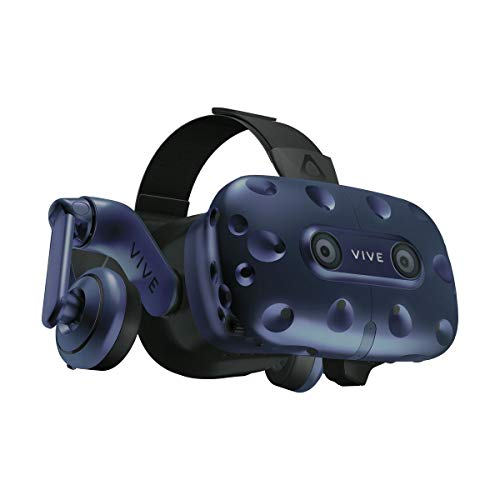
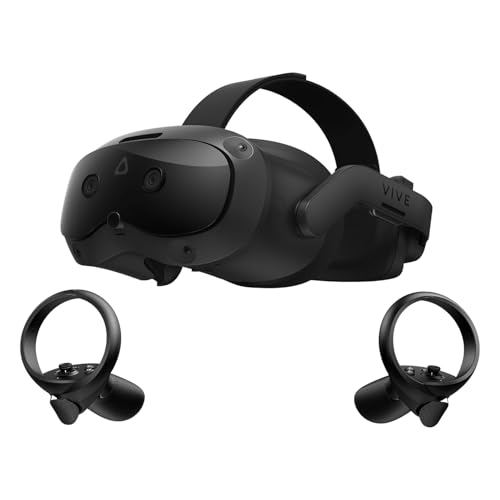
HTC VIVE Pro 2 Review | 89 Data compared

double-arrow
  • Avg. price in UK: ~£770
  • Avg. price in US: ~$700
  • Weight: 850 g
  • Resolution: 2448x2448
  • Refresh rate: 120 Hz
  • Display type: LCD
  • Device type: PC VR

HTC VIVE Pro 2 review. Compare 89 technical specifications and user reviews to see how it ranks among VR headsets and if it is worth buying.

7.6

Overall score

What it is: An overall evaluation of the VR headset's quality, based on technical analyses and user reviews.

When it matters: When you need a quick reference to identify the best VR headsets on the market.

Score components:

80.0%

7.6

Technical Score

20.0%

?

User score

Very good
7.6

Technical Score

What it is: An assessment of the VR headset's technical performance, covering eight key areas: display quality, tracking, comfort, controllers, connectivity, audio, battery, and design.

When it matters: When you want to compare VR headsets based on technical performance and available features.

Score components:

58.0%

8.3

Display & Optics

22.0%

6.6

Tracking & Sensors

10.0%

7.3

Controls & Audio

4.0%

4.0

Hardware

3.0%

8.1

Connectivity

3.0%

5.7

Design & Power

Very good
?

User score

What it is: A rating that combines user reviews and the total number of reviews received by the VR headset.

When it matters: When you want to know how a VR headset performs in real use and how reliable it remains over time according to user feedback.

Score components:

70.0%

?

User reviews

30.0%

?

Popularity

  • 9.8
    Gaming

    Score components:

    40.0%

    10

    Refresh rate

    35.0%

    10

    Touch controllers

    25.0%

    9.3

    Resolution

  • 8.0
    Movies

    Score components:

    40.0%

    9.3

    Resolution

    35.0%

    5.2

    Display type

    25.0%

    10

    Visible FoV (horizontal)

  • No image
No image

Best prices in UK

Best rankings

?

Available: ranking among products currently available (including other versions of this product).
All: ranking among all products in the database.

Verdict

The HTC Vive Pro 2 is a premium PC-VR headset featuring a class-leading 5K resolution (2448x2448 pixels per eye), a smooth 120Hz refresh rate, and an expansive 120-degree horizontal field of view. Key characteristics include its professional-grade SteamVR Tracking 2.0, dual-element lenses, and 3D spatial audio with Hi-Res certified headphones. Its main pros are the exceptional visual clarity with minimal 'screen door effect' and excellent tracking precision; however, it suffers from several cons, including high hardware requirements, issues with heat during extended use, and a significant total cost as base stations and controllers are often sold separately.

Technical Specifications of HTC VIVE Pro 2

Technical Score

What it is: An assessment of the VR headset's technical performance, covering eight key areas: display quality, tracking, comfort, controllers, connectivity, audio, battery, and design.

When it matters: When you want to compare VR headsets based on technical performance and available features.

Score components:

58.0%

?

Display & Optics

22.0%

?

Tracking & Sensors

10.0%

?

Controls & Audio

4.0%

?

Hardware

3.0%

?

Connectivity

3.0%

?

Design & Power

7.6
HTC VIVE Pro 2 has a technical score of 7.57 points, which is higher than 81.6% of VR headsets.
User score

What it is: A rating that combines user reviews and the total number of reviews received by the VR headset.

When it matters: When you want to know how a VR headset performs in real use and how reliable it remains over time according to user feedback.

Score components:

70.0%

0.0

User reviews

30.0%

1.0

Popularity

?
Popularity
What it is: An indicator based on the number of reviews received by the VR headset.
When it matters: When you prefer to buy a product chosen and reviewed by many other consumers.
1.0
HTC VIVE Pro 2 has a popularity of 1 points, which is lower than 65.3% of products in this category.
Ratio quality/price

What it is: An indicator that combines the VR headset's overall rating with its cost.

When it matters: When you are looking for a VR headset with a good balance between quality and price.

Score components:

60.0%

7.6

Overall score

40.0%

6.5

Price

7.2
HTC VIVE Pro 2 has a quality-to-price ratio of 7.2 points, which is higher than 77.6% of products in this category.
Resolution
What it is: The total number of pixels displayed on the screen, expressed as width x height, determining sharpness.
When it matters: When you want crisp text and sharp details in photos and videos.

Importance: HIGH

2448x2448
HTC VIVE Pro 2 has a screen resolution of 2448x2448 which is higher than that of 89.7% of VR headsets and equal to that of 5.1% of VR headsets.
Screen size
What it is: The physical diagonal measurement of the display area, usually expressed in inches.
When it matters: When you want a larger image area that can feel more immersive in games, movies, and VR apps.

Importance: LOW

?
Refresh rate
What it is: The number of times per second the display updates the image, measured in Hertz (Hz); higher rates offer smoother motion.
When it matters: When you want scrolling to feel fluid and games to look smoother.

Importance: HIGH

Good value: >100 Hz

120 Hz
HTC VIVE Pro 2 supports a refresh rate of 120 Hz which is higher than in 74.4% of VR headsets and equal to that in 20.5% of VR headsets.
Visible FoV (horizontal)
What it is: Measures the visible horizontal field of view of the image, expressed in degrees.
When it matters: When you want a wider left-to-right view for racing, shooters, and room-scale immersion.

Importance: HIGH

Good value: >105 °

120 °
HTC VIVE Pro 2 offers a horizontal FoV of 120 ° which is wider than that of 91.7% of VR headsets and equal to that of 5.6% of VR headsets.
Visible FoV (vertical)
What it is: Measures the visible vertical field of view of the image, expressed in degrees.
When it matters: When a taller visible image helps scenes feel less cropped above and below your view.

Importance: HIGH

Good value: >97 °

96 °
HTC VIVE Pro 2 offers a vertical FoV of 96 ° which is wider than that of 51.4% of VR headsets and equal to that of 14.3% of VR headsets.
Show more
Tracking type
What it is: Specifies the tracking method used for positional detection, such as inside-out or outside-in.
When it matters: When you want to know whether tracking depends on onboard cameras or external hardware.

Importance: LOW

outside-in
360° head tracking
What it is: Shows whether the headset can track head movement across a full 360-degree space.
When it matters: When you turn around often in room-scale games and do not want tracking blind spots.

Importance: MEDIUM

yes
HTC VIVE Pro 2 supports full 360° head tracking. 2% of VR headsets support this tracking mode.
N. of tracking sensors
What it is: Counts the integrated sensors used for positional or motion tracking.
When it matters: When you compare how much built-in hardware the headset uses for motion tracking.

Importance: LOW

32
N. of cameras
What it is: Counts the built-in cameras used for tracking, passthrough, or environmental sensing.
When it matters: When passthrough quality, room mapping, and inside-out tracking matter to your setup.

Importance: MEDIUM

Good value: >4

2
HTC VIVE Pro 2 has 2 cameras which is more than in 39.6% of VR headsets and equal to that in 18.8% of VR headsets.
Tracking frequency
What it is: Indicates how often the tracking system updates position data, measured in hertz.
When it matters: When you want fast motion tracking to stay stable during quick head or hand movement.

Importance: LOW

Good value: >700 Hz

1,000 Hz
HTC VIVE Pro 2 has a tracking frequency of 1000 Hz which is higher than that of 27.8% of VR headsets and equal to that of 66.7% of VR headsets.
Show more
Operating system
What it is: The primary system software that manages the headset's hardware, apps, and core functions.
When it matters: When you have a preference for the user interface and app ecosystem.

Importance: LOW

Windows
OpenXR support
What it is: Indicates whether the headset supports the OpenXR standard for compatible VR software.
When it matters: When you want broader compatibility with VR apps across different software platforms.

Importance: LOW

yes
HTC VIVE Pro 2 supports OpenXR. 35.6% of VR headsets support this cross-platform VR standard.
Wireless PC streaming
What it is: Shows whether the headset can receive PC VR content over a wireless connection.
When it matters: When you want PC VR without a cable running from the headset to your computer.

Importance: LOW

yes
HTC VIVE Pro 2 supports wireless PC streaming. 63.3% of VR headsets support cable-free PC VR streaming.
Wi-Fi connectivity
What it is: The ability of the headset to connect to a wireless network.
When it matters: When you want wireless downloads, streaming, updates, or online features without relying on a cable.

Importance: LOW

no
HTC VIVE Pro 2 does not have Wi-Fi. 38.8% of VR headsets have Wi-Fi connectivity.
Wi-Fi version
What it is: Version of Wi-Fi standard supported.
When it matters: When compatibility with your router and wireless setup affects download speeds, streaming quality, or latency.

Importance: LOW

N/A
Show more
Touch controllers
What it is: Shows whether dedicated motion controllers are included for hand-based input in VR.
When it matters: When your favorite games rely on precise hand input rather than hand tracking alone.

Importance: MEDIUM

yes
HTC VIVE Pro 2 includes touch controllers. 28.6% of VR headsets come with dedicated hand controllers.
Game controller included
What it is: Indicates whether game controllers are included in the standard package.
When it matters: When you want a complete VR package and do not want to buy controllers separately.

Importance: LOW

no
HTC VIVE Pro 2 does not include a game controller. 65.3% of VR headsets ship with controllers in the box.
Spatial audio
What it is: Supports immersive spatial audio playback.
When it matters: When movies, games, and VR experiences feel better with more immersive positional sound.

Importance: LOW

yes
HTC VIVE Pro 2 supports spatial audio. 10.6% of VR headsets support spatial audio.
N. of speakers
What it is: Counts the built-in speakers used for audio playback.
When it matters: When you plan to use the headset without separate headphones or external speakers.

Importance: LOW

2
HTC VIVE Pro 2 has 2 speakers which is more than in 39.1% of VR headsets and equal to that in 60.9% of VR headsets.
N. of microphones
What it is: The number of microphones built into the headset or its integrated hardware.
When it matters: When voice chat, voice commands, or in-headset recording quality matter to your setup.

Importance: LOW

2
HTC VIVE Pro 2 includes 2 microphones, which is more than 44.2% of VR headsets and equal to 48.8% of VR headsets.
Show more
Device type
What it is: Describes the overall headset class, such as standalone, PC VR, or mixed reality.
When it matters: When you choose between a standalone headset, a PC VR model, or mixed-reality use.

Importance: LOW

PC VR
Chipset
What it is: The central System-on-Chip (SoC) that houses the CPU, GPU, modem, and other core processing components.
When it matters: When you want to know which processor powers the headset’s performance and supported features.

Importance: LOW

N/A
CPU clock speed
What it is: Indicates the base operating frequency of the main processor, measured in gigahertz.
When it matters: When you compare standalone headset speed for games, menus, and mixed-reality apps.

Importance: LOW

Good value: >3 GHz

N/A
GPU model
What it is: The official model name of the graphics processor used in the VR headset.
When it matters: When you compare graphics hardware for gaming, video editing, or benchmarks.

Importance: LOW

N/A
RAM capacity
What it is: States the installed RAM capacity used for system operation and multitasking.
When it matters: When you want smoother multitasking and better headroom for demanding VR apps.

Importance: LOW

Good value: >8 GB

N/A
Show more
Battery capacity
What it is: The amount of electric charge the battery can store, usually measured in mAh.
When it matters: When you want longer untethered play time without recharging the headset too often.

Importance: LOW

Good value: >4900 mAh

N/A
Charging time
What it is: Time required for a full charge.
When it matters: When charging speed, charging method, or battery upkeep convenience matters to your routine.

Importance: LOW

Good value: <2.5 hours

N/A
Weight
What it is: The total weight of the headset, affecting how heavy it feels during use.
When it matters: When you want a headset that feels lighter and more comfortable during longer VR sessions.

Importance: LOW

Good value: <500 g

850 g
HTC VIVE Pro 2 weighs 850 g which is heavier than 97.8% of VR headsets.
Headstrap type
What it is: Identifies the design of the headstrap used to secure the headset on the user's head.
When it matters: When comfort, balance, and pressure distribution matter during long VR sessions.

Importance: LOW

rigid halo
HTC VIVE Pro 2 uses a rigid halo headstrap, which is more comfortable than the design on 44.9%.
Body material
What it is: The main material used for the headset body or housing.
When it matters: When you care about how sturdy, premium, or lightweight the headset feels over time.

Importance: LOW

plastic
Show more

HTC VIVE Pro 2 vs the average VR headset

  • Higher screen resolution
    HTC VIVE Pro 2 has a higher screen resolution than the average VR headset (2448x2448 vs 1440x1600). The average VR headset has a screen resolution of 1440x1600.
    What it is: The total number of pixels displayed on the screen, expressed as width x height, determining sharpness.
    When it matters: When you want crisp text and sharp details in photos and videos.

    Importance: HIGH

    HTC VIVE Pro 2 has a higher screen resolution than the average VR headset (2448x2448 vs 1440x1600). The average VR headset has a screen resolution of 1440x1600.2448x2448 vs 1440x1600
  • 33.3% higher refresh rate
    HTC VIVE Pro 2 has a higher refresh rate than the average VR headset (120 Hz vs 90 Hz). The average VR headset has a refresh rate of 90 Hz.
    What it is: The number of times per second the display updates the image, measured in Hertz (Hz); higher rates offer smoother motion.
    When it matters: When you want scrolling to feel fluid and games to look smoother.

    Importance: HIGH

    Good value: >100 Hz

    HTC VIVE Pro 2 has a higher refresh rate than the average VR headset (120 Hz vs 90 Hz). The average VR headset has a refresh rate of 90 Hz.120 Hz vs 90 Hz
  • 20 ° wider horizontal FoV
    HTC VIVE Pro 2 has a higher horizontal visible FoV than the average VR headset (120 ° vs 100 °). The average VR headset offers a horizontal visible FoV of 100 °.
    What it is: Measures the visible horizontal field of view of the image, expressed in degrees.
    When it matters: When you want a wider left-to-right view for racing, shooters, and room-scale immersion.

    Importance: HIGH

    Good value: >105 °

    HTC VIVE Pro 2 has a higher horizontal visible FoV than the average VR headset (120 ° vs 100 °). The average VR headset offers a horizontal visible FoV of 100 °.120 ° vs 100 °
  • Supports eye relief adjustment
    HTC VIVE Pro 2 supports eye relief adjustment, the average VR headset does not. 25% of VR headsets support eye relief adjustment.
    What it is: Shows whether the distance between the eyes and lenses can be adjusted for comfort or glasses clearance.
    When it matters: When you wear glasses or need more space between your eyes and the lenses.

    Importance: MEDIUM

    HTC VIVE Pro 2 supports eye relief adjustment, the average VR headset does not. 25% of VR headsets support eye relief adjustment.
  • See-through mode
    HTC VIVE Pro 2 supports see-through mode, the average VR headset does not. 44.9% of VR headsets offer passthrough viewing.
    What it is: Shows whether the headset can display the outside world through passthrough cameras.
    When it matters: When you switch often between VR and seeing your room, keyboard, or nearby people.

    Importance: MEDIUM

    HTC VIVE Pro 2 supports see-through mode, the average VR headset does not. 44.9% of VR headsets offer passthrough viewing.
  • 50 nits higher peak brightness
    HTC VIVE Pro 2 has a higher peak brightness than the average VR headset (150 nits vs 100 nits). The average VR headset has a peak brightness of 100 nits.
    What it is: The absolute maximum brightness a small portion of the screen can achieve briefly, usually when displaying HDR content.
    When it matters: When you watch HDR content and want highlights like explosions or sunlight to look realistic.

    Importance: MEDIUM

    Good value: >120 nits

    HTC VIVE Pro 2 has a higher peak brightness than the average VR headset (150 nits vs 100 nits). The average VR headset has a peak brightness of 100 nits.150 nits vs 100 nits
  • 54.2% higher pixel density
    HTC VIVE Pro 2 has a higher pixel density than the average VR headset (950 ppi vs 616 ppi). The average VR headset has a pixel density of 616 ppi.
    What it is: The concentration of pixels on the display, measured in pixels per inch (PPI), affecting image clarity.
    When it matters: When you want the image to look perfectly smooth with no visible pixels.

    Importance: HIGH

    Good value: >850 ppi

    HTC VIVE Pro 2 has a higher pixel density than the average VR headset (950 ppi vs 616 ppi). The average VR headset has a pixel density of 616 ppi.950 ppi vs 616 ppi
  • Supports body tracking
    HTC VIVE Pro 2 supports body tracking, the average VR headset does not.
    What it is: Shows whether the system supports tracking of the user's body beyond head and hands.
    When it matters: When full-body avatars, dance games, or external sensor expansion matter to you.

    Importance: LOW

    HTC VIVE Pro 2 supports body tracking, the average VR headset does not.
  • Higher screen resolution
    HTC VIVE Pro 2 has a higher screen resolution than the average VR headset (2448x2448 vs 1440x1600). The average VR headset has a screen resolution of 1440x1600.
  • 33.3% higher refresh rate
    HTC VIVE Pro 2 has a higher refresh rate than the average VR headset (120 Hz vs 90 Hz). The average VR headset has a refresh rate of 90 Hz.
  • 20 ° wider horizontal FoV
    HTC VIVE Pro 2 has a higher horizontal visible FoV than the average VR headset (120 ° vs 100 °). The average VR headset offers a horizontal visible FoV of 100 °.
  • Supports eye relief adjustment
    HTC VIVE Pro 2 supports eye relief adjustment, the average VR headset does not. 25% of VR headsets support eye relief adjustment.
  • 50 nits higher peak brightness
    HTC VIVE Pro 2 has a higher peak brightness than the average VR headset (150 nits vs 100 nits). The average VR headset has a peak brightness of 100 nits.
  • 54.2% higher pixel density
    HTC VIVE Pro 2 has a higher pixel density than the average VR headset (950 ppi vs 616 ppi). The average VR headset has a pixel density of 616 ppi.
  • Wider IPD adjustment range
    HTC VIVE Pro 2 has a higher IPD adjustment range than the average VR headset (57–70 mm vs 60–70 mm). The average VR headset supports an IPD adjustment range of 60–70 mm.
  • 0.5 ° wider vertical FoV
    HTC VIVE Pro 2 has a higher vertical visible FoV than the average VR headset (96 ° vs 95.5 °). The average VR headset offers a vertical visible FoV of 95.5 °.
  • See-through mode
    HTC VIVE Pro 2 supports see-through mode, the average VR headset does not. 44.9% of VR headsets offer passthrough viewing.
  • Supports body tracking
    HTC VIVE Pro 2 supports body tracking, the average VR headset does not.
  • Wireless PC VR streaming
    HTC VIVE Pro 2 supports wireless PC streaming, the average VR headset does not.
  • Supports SteamVR
    HTC VIVE Pro 2 supports SteamVR, the average VR headset does not. 50% of VR headsets support this PC VR ecosystem.
  • 3 newer release date
    HTC VIVE Pro 2 is newer than the average VR headset (2021 vs 2018). The average VR headset was released in 2018.
  • Basic display type
    HTC VIVE Pro 2 uses LCD for display type, while the average VR headset uses Micro-OLED.
  • Requires base stations
    HTC VIVE Pro 2 requires external base stations, the average VR headset does not. 0% of VR headsets work without external base stations.
  • Old Bluetooth version
    HTC VIVE Pro 2 supports an older Bluetooth version than the average VR headset (4.2 vs 5.2). The average VR headset uses Bluetooth 5.2.
  • No game controller included
    HTC VIVE Pro 2 does not include a game controller, the average VR headset does. 64% of VR headsets ship with controllers in the box.
  • 6 h shorter controller battery life
    HTC VIVE Pro 2 has a lower controller battery life than the average VR headset (6 h vs 12 h). The average controller battery lasts 12 h.
  • 31% heavier controllers
    HTC VIVE Pro 2 is heavier than the average VR headset (203 g vs 155 g). The average controller weighs 155 g.
  • 45.8% heavier
    HTC VIVE Pro 2 is heavier than the average VR headset (850 g vs 583 g). The average VR headset weighs 583 g.
  • Basic display type
    HTC VIVE Pro 2 uses LCD for display type, while the average VR headset uses Micro-OLED.
    What it is: The type of display panel used in the headset, such as LCD, OLED, or micro-OLED.
    When it matters: When you compare panel technologies that affect contrast, brightness, motion clarity, and black levels.

    Importance: HIGH

    HTC VIVE Pro 2 uses LCD for display type, while the average VR headset uses Micro-OLED.LCD vs Micro-OLED
  • Requires base stations
    HTC VIVE Pro 2 requires external base stations, the average VR headset does not. 0% of VR headsets work without external base stations.
    What it is: Shows whether external base stations are needed for full positional tracking.
    When it matters: When you want to avoid buying and mounting extra tracking stations around the room.

    Importance: LOW

    HTC VIVE Pro 2 requires external base stations, the average VR headset does not. 0% of VR headsets work without external base stations.
  • 45.8% heavier
    HTC VIVE Pro 2 is heavier than the average VR headset (850 g vs 583 g). The average VR headset weighs 583 g.
    What it is: The total weight of the headset, affecting how heavy it feels during use.
    When it matters: When you want a headset that feels lighter and more comfortable during longer VR sessions.

    Importance: LOW

    Good value: <500 g

    HTC VIVE Pro 2 is heavier than the average VR headset (850 g vs 583 g). The average VR headset weighs 583 g.850 g vs 583 g
  • No game controller included
    HTC VIVE Pro 2 does not include a game controller, the average VR headset does. 64% of VR headsets ship with controllers in the box.
    What it is: Indicates whether game controllers are included in the standard package.
    When it matters: When you want a complete VR package and do not want to buy controllers separately.

    Importance: LOW

    HTC VIVE Pro 2 does not include a game controller, the average VR headset does. 64% of VR headsets ship with controllers in the box.
  • 6 h shorter controller battery life
    HTC VIVE Pro 2 has a lower controller battery life than the average VR headset (6 h vs 12 h). The average controller battery lasts 12 h.
    What it is: States the maximum operating time of the controllers before the batteries need recharging or replacement.
    When it matters: When you play often and do not want controller batteries interrupting long sessions.

    Importance: LOW

    Good value: >20 hours

    HTC VIVE Pro 2 has a lower controller battery life than the average VR headset (6 h vs 12 h). The average controller battery lasts 12 h.6 h vs 12 h
  • 31% heavier controllers
    HTC VIVE Pro 2 is heavier than the average VR headset (203 g vs 155 g). The average controller weighs 155 g.
    What it is: States the weight of one controller, usually measured in grams.
    When it matters: When controller comfort matters during long sessions or active rhythm and fitness games.

    Importance: LOW

    Good value: <135 g

    HTC VIVE Pro 2 is heavier than the average VR headset (203 g vs 155 g). The average controller weighs 155 g.203 g vs 155 g
  • Old Bluetooth version
    HTC VIVE Pro 2 supports an older Bluetooth version than the average VR headset (4.2 vs 5.2). The average VR headset uses Bluetooth 5.2.
    What it is: Version of Bluetooth supported by the device.
    When it matters: When compatibility with your phone, computer, accessories, or wireless setup affects how well the headset fits into your ecosystem.

    Importance: LOW

    HTC VIVE Pro 2 supports an older Bluetooth version than the average VR headset (4.2 vs 5.2). The average VR headset uses Bluetooth 5.2.4.2 vs 5.2

Graphic comparison of HTC VIVE Pro 2 and

Attribute category
Attribute
No results found

Third-party reviews

What customers like about HTC VIVE Pro 2?

  • Industry-leading 5K resolution (2448x2448 pixels per eye) providing exceptional image clarity
  • Smooth 120 Hz refresh rate for fluid motion and reduced motion sickness
  • Wide 120-degree horizontal field of view (FOV) enhancing immersion
  • Precise SteamVR 'Lighthouse' tracking remains a gold standard for accuracy
  • Compatible with the Vive Wireless Adapter for cable-free high-end VR
  • Design is accommodating for users who wear prescription glasses

What customers dislike about HTC VIVE Pro 2?

  • Extremely high total cost, especially when adding required base stations and controllers
  • Tends to run noticeably hot during extended sessions, leading to lens fogging and discomfort
  • Small 'sweet spot' on the lenses makes it difficult to maintain perfect focus
  • Included 'Wand' controllers feel outdated and clunky compared to Valve Index 'Knuckles'
  • Significant lens glare and 'god rays' in high-contrast scenes due to dual-Fresnel lens design
  • Vertical FOV feels restricted or 'letterboxed' compared to the horizontal width
  • Demands a very high-end PC (RTX 30-series recommended) to utilize its full resolution

Expert reviews

T
techradar.com
27/05/2021
Summary of the review
E
engadget.com
23/07/2021
Summary of the review
C
cnet.com
03/07/2021
Summary of the review
N
notebookcheck.net
20/07/2021
Summary of the review
B
bbc.co.uk
27/05/2021
Summary of the review
T
techgearlab.com
16/10/2023
Summary of the review
S
space.com
08/11/2021
Summary of the review
M
mrtv.co
28/05/2021
Summary of the review
P
pcmag.com
13/08/2021
Summary of the review
E
expertreviews.co.uk
14/09/2021
Summary of the review
L
livescience.com
08/04/2022
Summary of the review
G
godisageek.com
30/07/2021
Summary of the review
G
gamingnexus.com
01/07/2021
Summary of the review
V
vrx.vr-expert.com
11/05/2021
Summary of the review
T
tomshardware.com
01/07/2021
Summary of the review
G
gamingtrend.com
17/06/2021
Summary of the review
M
mixed.de
13/06/2021
Summary of the review
N
notebookcheck.com
19/07/2021
Summary of the review
V
vr-legion.de
27/05/2021
Summary of the review
I
inside-digital.de
17/04/2022
Summary of the review
T
test.de
14/12/2022
Summary of the review
V
vrx.vr-expert.com
11/05/2021
Summary of the review
M
mrtv.co
29/05/2021
Summary of the review
L
lesnumeriques.com
03/06/2021
Summary of the review
V
vrx.vr-expert.com
11/05/2021
Summary of the review
N
notebookcheck.biz
21/07/2021
Summary of the review
C
casques-vr.com
02/06/2021
Summary of the review
D
distritoxr.com
19/10/2022
Summary of the review
R
realidadvirtualmx.com
29/06/2021
Summary of the review
V
vr-italia.org
31/01/2022
Summary of the review
G
global.techradar.com
27/05/2021
Summary of the review
N
notebookcheck.nl
21/07/2021
Summary of the review
V
vr-bril.nl
10/06/2021
Summary of the review

Video reviews

Compare HTC VIVE Pro 2 with

VS
VS

Compare