
Are Proscenic vacuum cleaners good?
Proscenic vacuum cleaners have an average overall score of 8.2, ranking #4 among comparable vacuum-cleaner brands, and a user rating of 8.6, placing them at #21 based on user reviews.
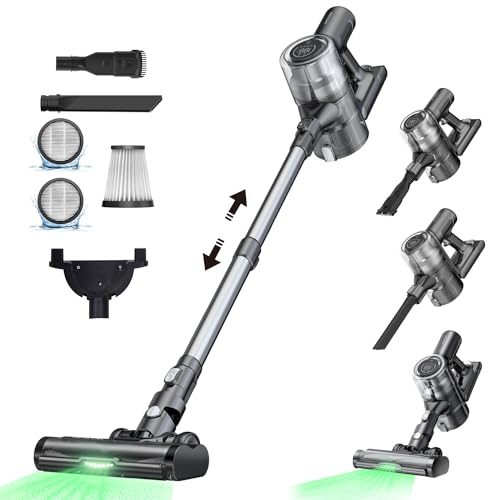
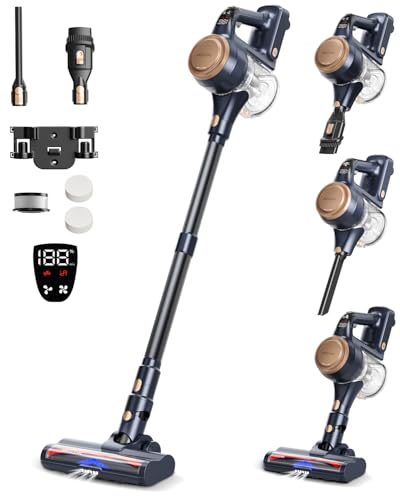
Proscenic vacuum cleaners are a strong value option when high published pressure, a large bin and a removable battery matter more than a premium dock or long-established service network. P12–P16 models combine LED or green-light heads, touch displays and anti-tangle rollers at prices near £90-£150.
Proscenic vacuum cleaners require careful interpretation of their published specifications. A 55 kPa pressure claim cannot be compared directly with another brand's air watts, and a 70-minute Eco runtime says little about maximum suction. Independent pickup, filtration and parts availability should support the headline numbers.
The chart below compares vacuum-cleaner brands by average overall score.
[horizontal-chart-05060405232908929908180547999782892589572867802681]
What are the main advantages of Proscenic vacuum cleaners?
The main advantages of Proscenic vacuum cleaners are as follows:
- Strong value specifications: P11–P16 models offer 25–55 kPa claims, brushless motors and digital displays at roughly £70-£150.
- Large bins on newer models: P12, P13 and P15 hold about 1.2 L, while P16 reaches approximately 1.5 L, reducing emptying compared with many 0.5 L sticks.
- Removable batteries: Most dry models use detachable packs, allowing replacement and sometimes off-board charging.
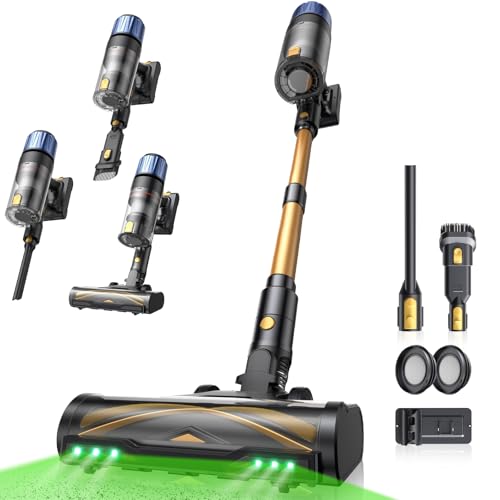
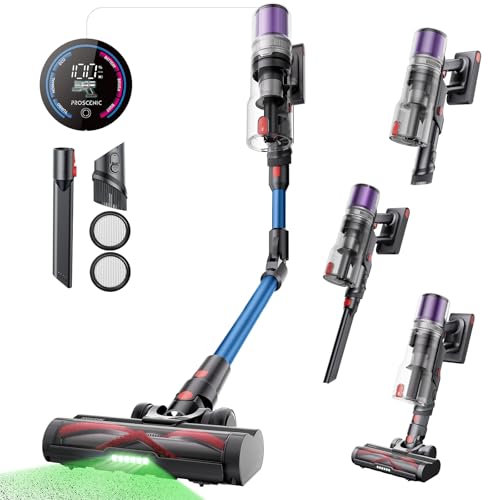
- Visible-dust lighting: LED or green-light heads help reveal fine debris on hard floors, while V-shaped rollers target hair tangles.
- Several specialised choices: P11 can add a simple wiping tank, P15/P16 prioritise suction and runtime, and WashVac F20 provides separate wet-and-dry hard-floor cleaning.
What are the main disadvantages of Proscenic vacuum cleaners?
The main disadvantages of Proscenic vacuum cleaners are as follows:
- Marketing numbers are hard to compare: kPa, motor watts and air watts appear across different models and modes. A higher number in a different unit does not prove better floor pickup.
- High mode is much shorter: Eco claims reach 40–70 minutes, while maximum operation can fall near 10–15 minutes depending on battery and head.
- Model progression is not linear: P11 Ultra, P12, P13, P15 and P16 change bin, motor and features in ways that do not follow price or number consistently.
- Parts support needs checking: Batteries, rollers and filters may be available mainly through online channels and can change between closely related versions.
- Wiping attachments are limited: A magnetic mop tank drags a damp pad; it does not scrub and recover dirty water like WashVac F20.

Who makes Proscenic vacuum cleaners?
Proscenic is a Chinese smart-home and cleaning-appliance brand. It develops cordless vacuums, wet-and-dry cleaners and robotic products for online and international retail markets.
Its product generations change quickly, and similarly named packages may be supplied by different regional sellers. Warranty and parts channels should therefore be checked before importing.
Use the full P-series or WashVac model designation when buying a battery, charger, filter or roller. P11 components are not automatically compatible with P12–P16 machines.
What are the main series of Proscenic vacuum cleaners?
The main Proscenic vacuum-cleaner series are as follows:
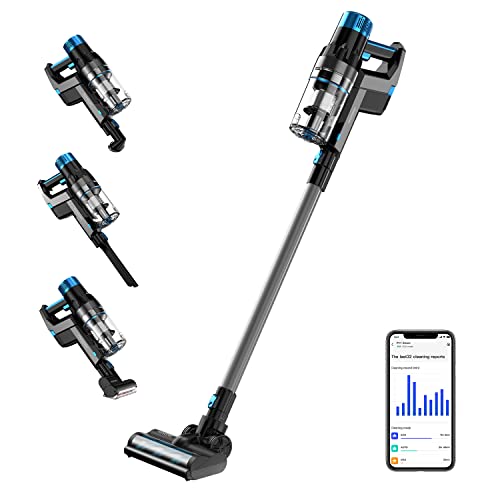
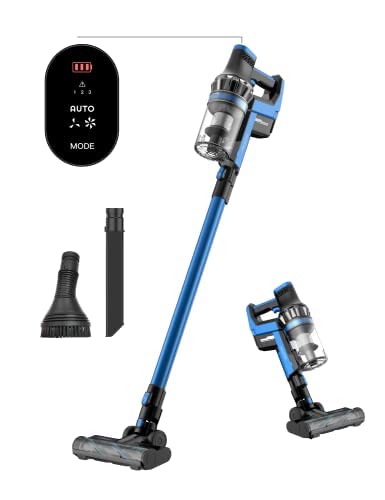
- P11, P11 Lite and P11 Ultra: P11 and P11 Lite are accessible dry sticks, with selected P11 packages adding a magnetic wiping tank. Ultra raises the published pressure and adds self-standing storage.
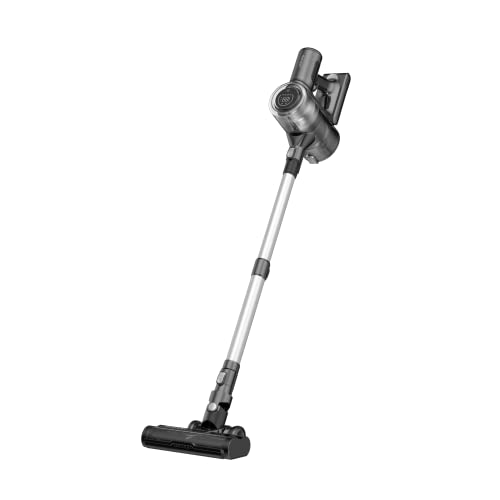
- P12 and P13: P12 moves to a roughly 1.2 L bin, four modes and about 120 AW alongside a 33 kPa claim. P13 raises the pressure claim and improves the anti-tangle head.
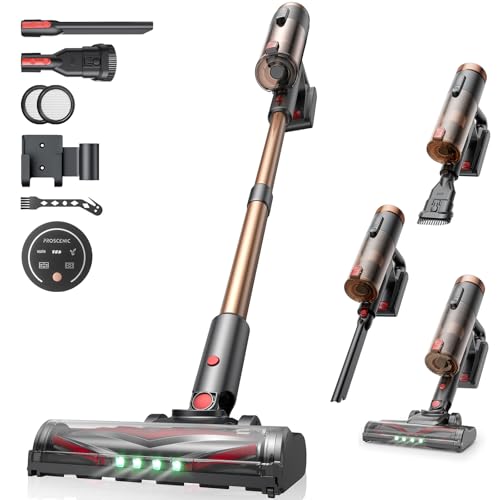
- P15 and P16: P15 combines a 55 kPa claim with up to 70 minutes in Eco, while P16 adds a roughly 1.5 L bin in a light body. These are the newer higher-output sticks.
- i10: i10 is a midrange cordless stick with a roughly 25 kPa claim and automatic carpet boost. It suits buyers who want simpler automatic adjustment.
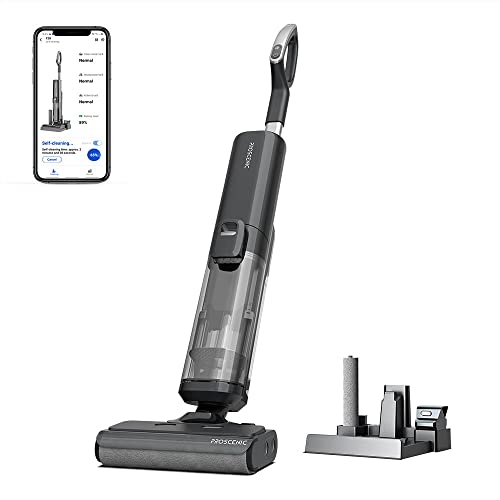
- WashVac F20: WashVac F20 is a wet-and-dry hard-floor washer with separate 1 L clean and dirty tanks. It is not a dry-stick successor and requires roller and water-path maintenance.
How much do Proscenic vacuum cleaners cost?
Proscenic vacuum cleaners generally cost about £70-£190. P11 Lite, P11 Ultra, P15 and P16 are concentrated around £70-£100, while i10, P12 and P13 sit roughly between £130 and £150.
WashVac F20 reaches about £190 because it adds water tanks and a driven washing roller. The newest or highest-numbered dry model is not automatically the most expensive, so compare suction unit, bin, battery and head rather than price order.
How do Proscenic vacuum cleaners compare with Dreame?
Proscenic and Dreame both sell high-spec cordless sticks, but Proscenic competes more aggressively below £170, while Dreame extends into £300-£300 premium dry models and a £770 auto-empty station.
Based on our research, Proscenic averages roughly £120 with published pressure around 35–40 kPa, whereas Dreame averages about £260 and around 200 AW across many dry models. Pressure and air watts describe different properties, so those averages do not establish a suction winner.
Choose Proscenic for a large 1.2–1.5 L bin, removable battery and value-focused specification. Choose Dreame for a more established premium series, stronger accessory package or station. Compare like-for-like pickup, high-mode runtime and local parts.
What should you check before buying a Proscenic vacuum cleaner?
Consider the following factors before buying a Proscenic vacuum cleaner:
- Dry stick or WashVac: P and i models collect dry debris; WashVac F20 washes sealed hard floors. A P11 wiping tank is not equivalent to dirty-water recovery.
- Suction unit: P12 publishes about 120 AW and 33 kPa, while P15/P16 claim 55 kPa. Compare pressure with pressure and air watts with air watts under similar modes.
- Runtime: Eco claims range from roughly 40 to 70 minutes. Obtain the maximum-mode and powered-head figure, especially for carpet.
- Bin: Newer models offer 1.2–1.5 L, substantially more than many cordless sticks. Check the usable fill line, cyclone space and emptying path.
- Battery: Confirm that the pack is detachable, its capacity, separate charging and replacement price. Battery shape varies across the P series.
- Head and filtration: Look for a sealed multi-stage path, effective anti-tangle roller and useful edge pickup. Green lighting reveals dust but does not measure removal.
- Support and package: Verify the exact tools, charger plug, warranty seller and availability of filters, rollers and batteries before choosing an imported bargain.